Articles

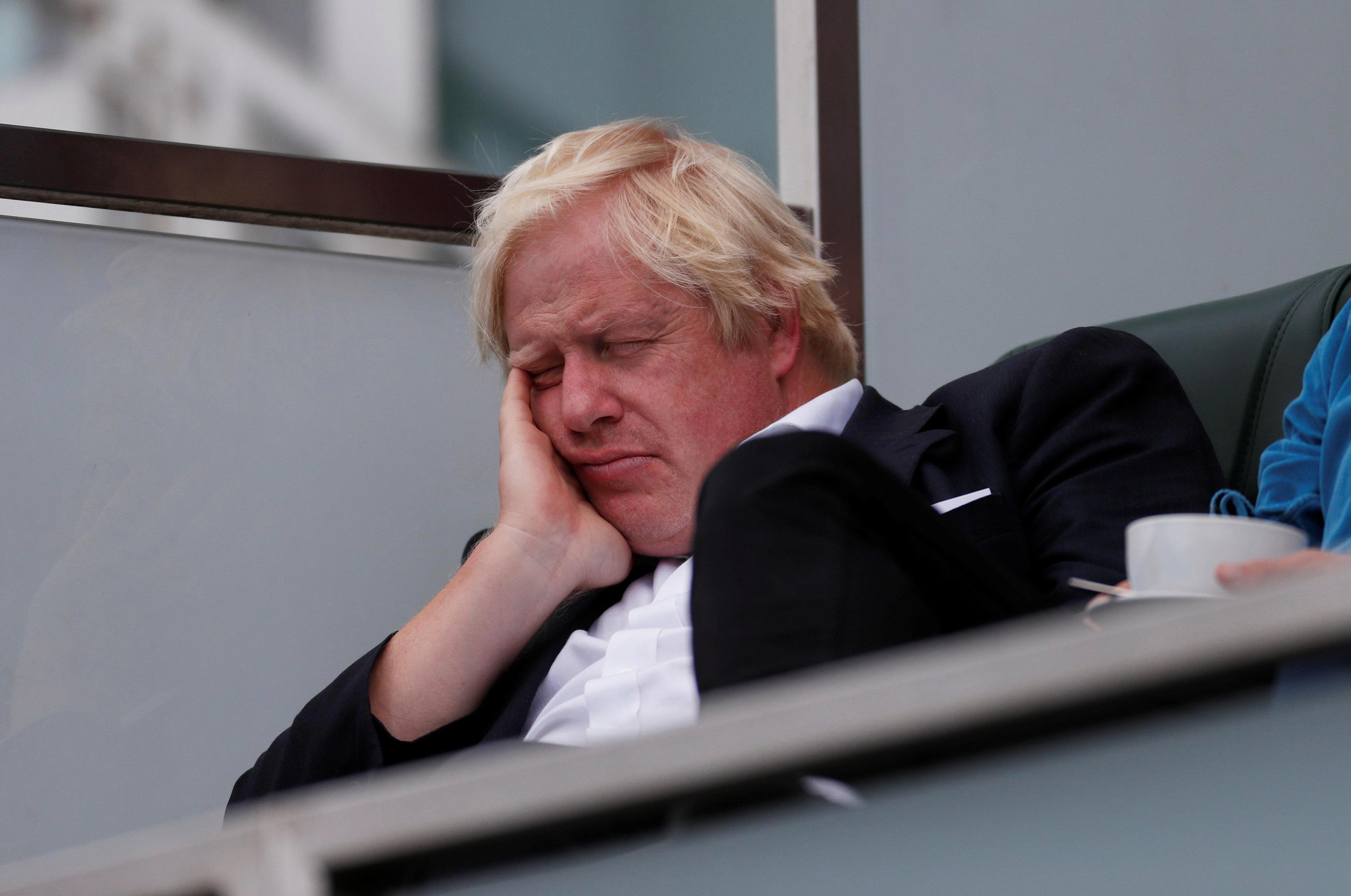
Boris Johnson on exams: from falling asleep at Balliol to ‘robust’ A Levels

In Uncategorized on August 13, 2020 by kmflett

Boris Johnson, who is on another holiday, is reported as describing today’s A Level results in England as ‘robust’. Robust certainly for students at private (public)schools for who a Tory algorithm reportedly appears to have enhanced results while at the same time downgrading them for many of those at more plebeian genuinely public schools in the State sector.

Johnson has an interesting history when it comes exams.

At Balliol College, Oxford University he narrowly missed a first after what he would presumably now call a robust viva (personal examination by tutors).

As Sonia Purnell notes in her biography Just Boris, he had spent much of the last term partying rather than studying.After falling asleep in a classics class shortly before his final exams his Master at Balliol noted that he might just get a third class degree.

Instead he managed a good Upper Second on the basis not of hard work or intellectual achievement but because as one Don quoted by Purnell suggests he was ‘so evidently a good egg’.

Unfortunately those with lowered A Level grades today were not the beneficiaries of such class solidarity

Articles

The Battle of Lewisham, 13th August 1977 & why it remains important 48 years on

In Uncategorized on August 13, 2020 by kmflett

The Battle of Lewisham 13th August 1977,48 years on
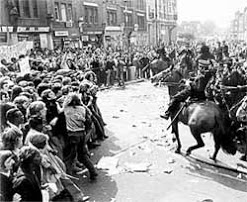
13th August marks the 48th anniversary of the Battle of Lewisham, when the fascist National Front were stopped by anti-fascists from marching in the area of London around New Cross.

The NF’s provocative march came just months after the Battle of Wood Green when the fascists attempt to march had resulted in it being split in two by anti-fascists.

It was part of a strategy of tension by the fascists designed to whip up racist sentiment and show that they controlled the streets.

As events at Lewisham 48 years ago underlined, they did not.

A coach load of anti-fascists left Wood Green tube station in North London on the morning of 13th August and I was one of them.

Memory is a doubtful thing and I’ve been at many anti-fascist protests over the years so one tends to blur into another.

The only real abiding memory I have of Lewisham is of at one point being in a group that had ended up on the wrong side of police lines. These days we’d probably have been arrested. In 1977 the police loaded us on to a London bus and told the driver to take us back over to the anti-fascist protest.

As often on such occasions there was a division between those who wanted to protest at the fascists and those who wanted to stop them. I would invariably be on the latter side ( and still would) but the emphasis on a divided strategy was important.

At the Battle of Wood Green there had likewise been those who wished just to make a peaceful protest against racism and fascism and those who wanted to confront the fascists. The two were successfully combined in the umbrella of a united protest.

The Anti Nazi League was formed from the confrontation with the NF at Lewisham and it was certainly one of the motors for it.

The Observer published a good account of what took place on the day:

https://www.theguardian.com/uk-news/2017/aug/13/battle-of-lewisham-national-front-1977-far-right-london-police

It underlines that the NF chose to march in the area because they had been gathering local support in some quarters. It also points to the use by police of riot shields for the first time and the hardline tactics used against anti-fascists. In part these were likely to have been developed after the earlier Battle of Wood Green on 23rd April 1977.

There is one gap in the report. It notes that 4,000 protesters ‘turned up’. Of course they did not just turn up any more than the NF did. They were organised. Local churches and the Communist Party organised the morning march. The confrontation was certainly rooted in the local community but organised by the left, the Socialist Worker, the Labour Party and anti-racists and community activists

48 years on what took place at Lewisham and what came out of it remain important for the continuing fight against racism and fascism

Articles

Marx beard shaving photographs mystery resolved

In Uncategorized on August 13, 2020 by kmflett

Beard Liberation Front

10th April

Contact Keith Flett 07803 167266

Marx beard shaving photographs mystery resolved

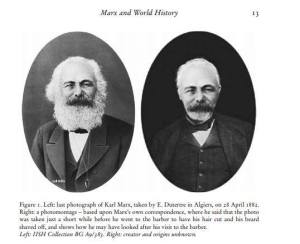
The Beard Liberation Front, the informal network of beard wearers, has said it believes it has resolved the long running mystery about why Karl Marx had his beard shaved off while in Algiers in April 1882 and whether a photograph of him without the beard actually exists.

While there is no doubt that Marx did visit an Algerian barber to have his beard shaved and hair trimmed the reason for this has remained obscure.

While in letters to Engels from Algiers in April 1882 Marx describes the weather as very changeable with rain and high winds he notes in a letter to Engels on Friday 28th April 1882:

‘Apropos; because of the sun I have done away with my prophet’s beard and my crowning glory (but in deference to my daughters) had myself photographed before offering up my hair on the altar of an Algerian barber. I shall receive the photographs next Sunday (30th April). Specimina will be sent to you from Marseilles.

The photograph was taken by E Dutretre and is in the archive of the International Institute of Social History. It is thought to be the last one to be taken of Marx while alive.

Another purporting to show Marx clean shaven is a fake, probably a photomontage of what he might have looked like.

Intriguingly Marx wrote to Laura Lafargue from Monte Carlo on 6th May 1882 stating ‘I enclose one photo for you another for Fred; no art can make the man look worse

This suggests that a photo of the clean shaven Marx may exist but is not extant. From the 1860s small passport sized photographs were frequently taken as mementoes and Marx and Engels were probably no different in doing so. However very few photos are known to survive although it is entirely possible that are some in private collections or archives that have not come to the attention of researchers

BLF Organiser Keith Flett said, given the hot weather currently, the key point is now clear. Marx thought heat was a reasonable excuse to shave the beard even if the result didn’t look great.

Articles

Stilton & the Tories. The politics of cheese

In Uncategorized on August 12, 2020 by kmflett


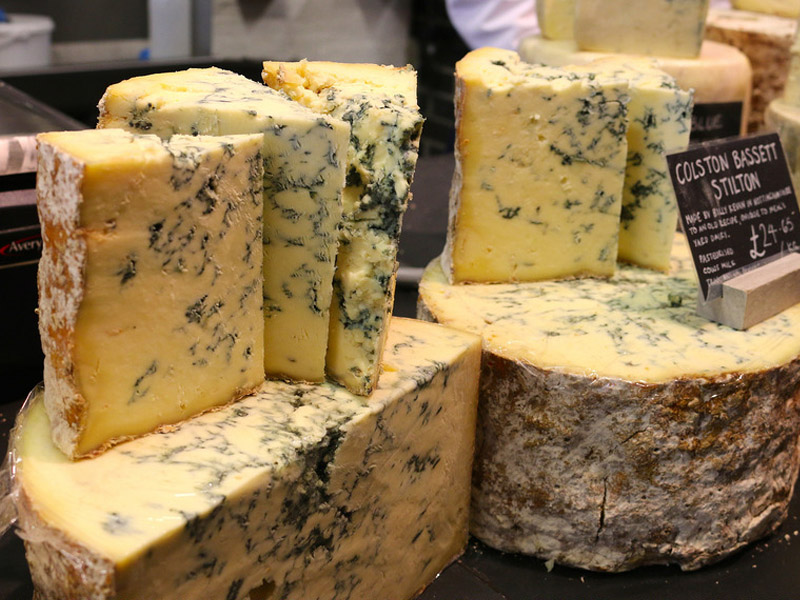
I note that the Tory obsession with using Stilton cheese as part of Brexit trade talks continues. A trade deal with Japan is reportedly revolving around whether it will take a fairly small amount of Stilton and some undefined ‘blue cheese’

Stilton is protected under EU law(and by a 1996 judgement in the UK High Court and can only be made in three Counties, Derbyshire, Leicestershire and Nottinghamshire.

There have been Tory attempts to promote cheese production in Stilton itself, which is in Cambridgeshire, not one of the three Stilton producing areas.

https://www.bbc.co.uk/news/uk-england-leicestershire-51358752

Meanwhile nothing is said about the only traditional Stilton made with unpasteurised milk, Stichelton, which is also produced just outside the protected area,hence the name tweak. Craft cheese makers like many others have had a tough time this year and deserve support beyond being a pawn in the Tories Brexit trade games.

Articles

181 years ago on 12th August the ultimate Staycation started: the Grand National Holiday

In Uncategorized on August 12, 2020 by kmflett

181 years ago today the ultimate Staycation started: the Grand National Holiday

On 12th August 1839 a Grand National Holiday was declared by the Chartists.

Particularly in the north of England there was widespread stoppage of work.

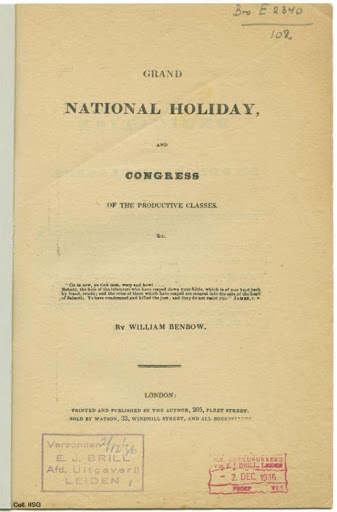
The plan for the Holiday had been laid out, some years before by the veteran radical activist William Benbow. Benbow was pre-emptively arrested on 4th August 1839

A holiday signifies a holy day, and ours is to be of holy days the most holy. It is to be most holy, most sacred, for it is to be consecrated to promote- to create rather- the happiness and liberty of mankind. Our holy day is established to establish plenty, to abolish want, to render all men equal! In our holy day we shall legislate for all mankind; the constitution drawn up during our holiday, shall place every human being on the same footing. Equal rights, equal liberties, equal enjoyments, equal toil, equal respect, equal share of production: this is the object of our holy day – of our sacred day, – of our festival!

William Benbow, Grand National Holiday

Even at this early stage of the radical and labour movement the precise form the Holiday should take was controversial.

An Editorial in the Northern Star (10th August 1839) claimed that the ‘Sacred Month’ had been carried by a ‘mad vote’ at the Chartist General Convention and had now been rescinded following an intervention by Chartist leader Feargus O’Connor.

The Editorial noted that O’Connor had backed a ‘holiday’ of two or three days but argued that a single day would achieve as much as a month.

The Star backed the ‘moral power’ of the people and suggested that the Holiday had been characterised by opponents as an ‘attack on property’

The Editorial concluded that instead of taking a holiday as much as the month’s wages as could be spared should be given to obtaining the means to protect life and property from violence by the authorities.

Suffice to say the Holiday did go ahead although certainly not for a month

A more detailed explanation of what took place:

https://kmflett.wordpress.com/2017/08/22/august-1839-not-a-bank-holiday-but-a-grand-national-holiday/

Benbow’s text is at this link

https://www.marxists.org/history/england/chartists/benbow-congress.htm


Articles

Beard trimming & shaving guidelines updated as hot weather continues

In Uncategorized on August 12, 2020 by kmflett

Beard Liberation Front

12th August

Beard trimming & shaving guidelines updated as hot weather continues

The Beard Liberation Front, the informal network of beard wearers, has issued updated guidelines for trimming or shaving the beard, as hot weather continues across much of England and Wales.

The campaigners say that many will prefer to keep their beards, which can offer some protection from the sun.

However hot weather combined with high levels of humidity can make organic beards in particular problematic.

The updated BLF guidelines are based on what Karl Marx did following hot weather in a visit to Algiers at the end of April 1882 when he did indeed have his beard shaved off.

BLF Organiser Keith Flett said, I’ve trimmed my beard today, very much along the guidelines provided by Marx with the exception that I did not visit a barber. This is not advised.

August 2020 Hot Weather beard trimming and shaving guidelines

1 DO NOT visit a barbers. During the current health crisis it is ill advised to have your beard trimmed by a barber and is not permitted in Wales

2 Before trimming, dampen the beard with a little water so that the hairs are supple

3 Use a pair of fine scissors and a comb. DO NOT use any form of battery or electric powered shaver.

4 Make sure you are in front of a good sized mirror in a well-lit room

5 Be sure to cover the area where beard trimmings may fall and collect these afterwards. They may be useful to spread on the garden.

6 Snip judiciously and lightly and take time to review regularly

7 Make sure that trimming is symmetrical on both sides

8 When satisfied, wash the beard and comb it through.


Articles

Not Pointless. Richard Osman named Sideburns Wearer of the Year

In Uncategorized on August 11, 2020 by kmflett

Beard Liberation Front

11th August 2020

Contact Keith Flett 07803 167266

Not Pointless. Richard Osman named Sideburns Wearer of the Year

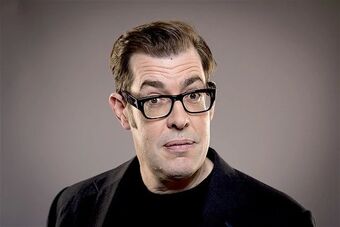
The Beard Liberation Front, the informal network of beard wearers, has said Pointless’s Richard Osman has been named Sideburns Wearer of the Year after an extensive review of fashionable sideburns wearers

The ninth National Sideburns Day on 11th August, reflects the growing popularity of a range of facial hair styles.

National Sideburns Day was originally held to mark Bradley Wiggins Olympic victory in 2012

The campaigners say that sideburns, sometimes known as mutton chops, and named after US Civil War General Ambrose Burnside were often worn by Victorian politicians

Bradley Wiggins reinvented the post-1945 tradition of sideburns from Elvis Presley to Noddy Holder and the late Lemmy and Alvin Stardust, turned them into something no self-respecting hipster would be without

BLF Organiser Keith Flett said, this year, Richard Osman is sometimes fully hirsute but he is regular flourishing of well styled sideburns on Pointless has kept the traditional but still fashionable style in the public eye.


Articles

Repertoires of Contention. Petitions & the Small Brewers Duty Relief proposals (Sign!)

In Uncategorized on August 11, 2020 by kmflett

Repertoires of Contention. Petitions & the Small Brewers Duty Relief proposals (Sign!)

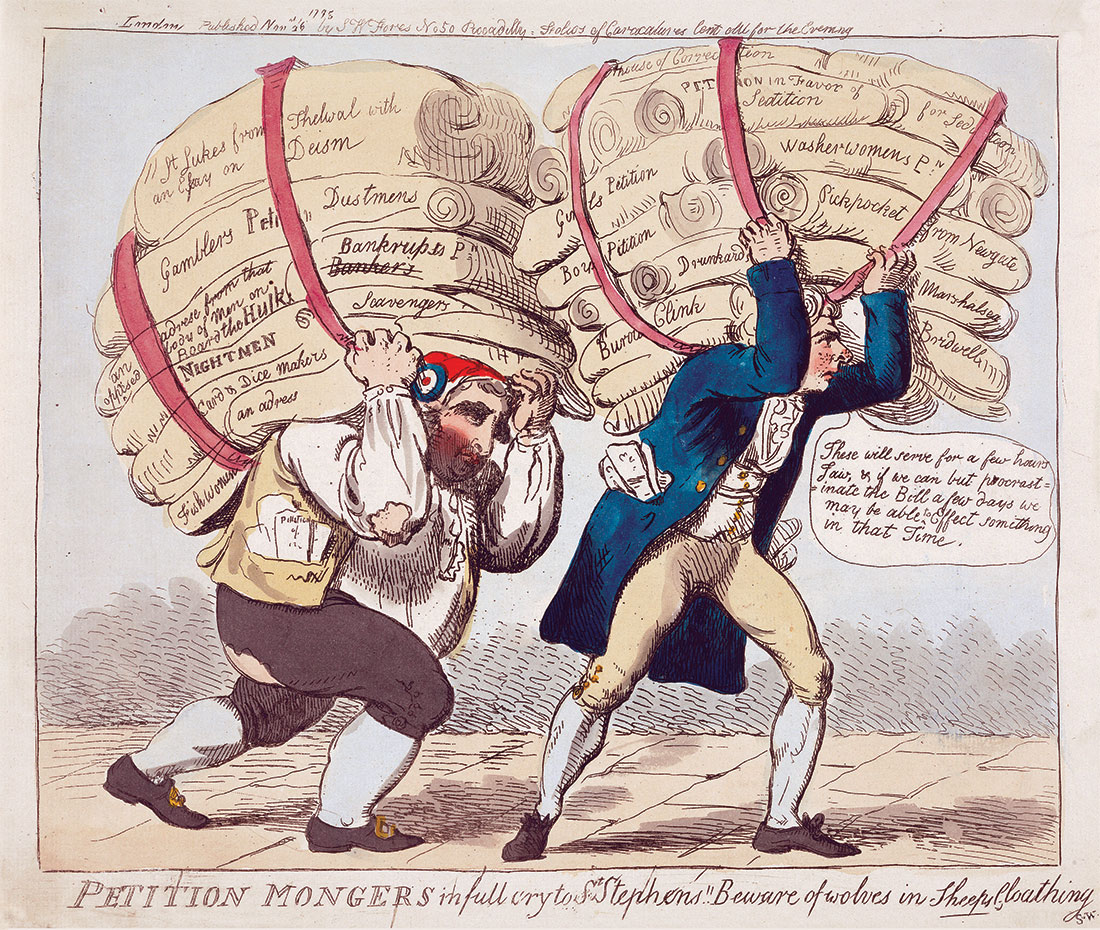
Petitions are part of the history of British democracy. Indeed before the mid-nineteenth century they were one of the few legal ways to push for changes from Parliament. Matters were governed by the 1661 Tumultuous Petitioning Act and subsequent legislation.

The great campaigns of the first half of the nineteenth century, the People’s Charter for the vote and the Anti-Corn Law League on bread prices focused centrally on petitions.

Few thought they were enough in themselves. They were part of what the historical sociologist Charles Tilly called a repertoire of contention.

The Chartists themselves tried general strikes and armed risings as well as petitions.

Neither of these are likely to be required in the campaign to get the Government to review its plans to change the Small Brewers Duty Relief in a way that will benefit larger regional to national brewers.

At the same time petitioning won’t be enough. I’m sure SIBA, CAMRA and others continue to lobby MPs. If the petition gets a decent number of signatures (100,000 is the benchmark set by Parliament) the lobbying will be more effective.

Of course these days lobbying and petitioning is often an on-line activity. However in person lobbying can be particularly effective (but don’t stand so close to me..).

The Parliamentary petition now has a map which allows you to see how many people in your Constituency have signed. If it’s a decent number then contacting your MP directly is always worth a try. Not all are receptive (or possibly even alive in some cases) but many are.

Direct action, also part of the repertoire of contention, has also been mentioned. In effect this means stunts which get media publicity. One might, for example, pour a pint of beer over Boris Johnson’s head. I wouldn’t recommend it. It’s been done several times and the response was ‘thank you for refreshing me’. But banner drops could be effective.

Likewise boycotts of those breweries who backed the changes. Of course people can do this individually but its collective organised boycotts that really impact. Here I remain sceptical because I’m not sure you’re going to get a Harvey’s Best or Taylor’s Landlord drinker to stop because a brewery that produces a beer they probably don’t drink is impacted by tax changes their brewery of choice supports. A few might do.

In the meantime sign the petition and encourage others to do so:

https://petition.parliament.uk/petitions/334066


Articles

England’s victory in the First Test on Saturday was a classic but it wasnt part of the national conversation

In Uncategorized on August 10, 2020 by kmflett

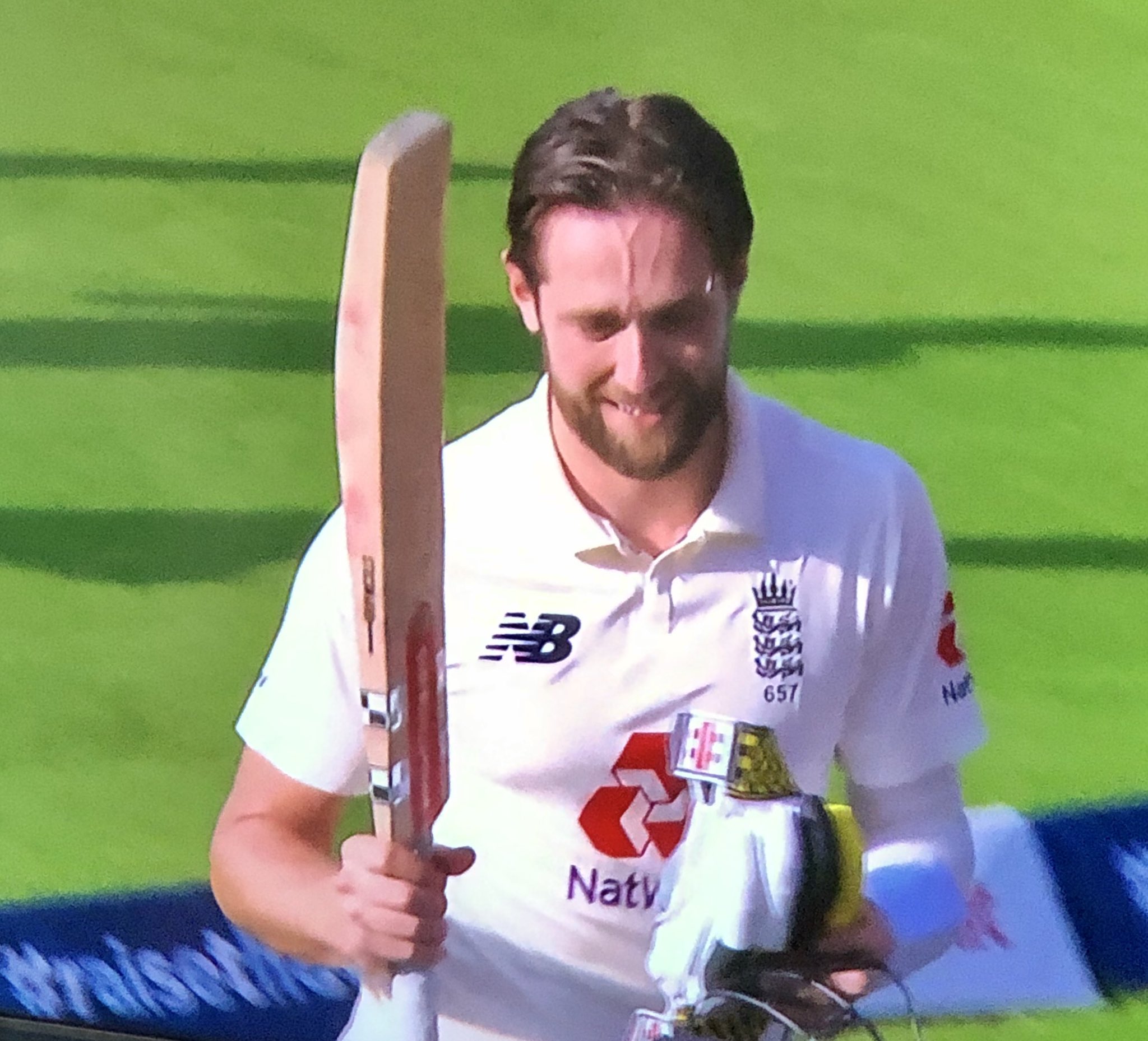
England beat Pakistan at Old Trafford in the First Test last Saturday by 3 wickets and claimed a magnificent and surprising victory.

With 5 wickets down for not much more than a hundred chasing 277 it looked like Pakistan’s game until Jos Buttler and Chris Woakes produced a superb lower order batting partnership.

Full details of the scores are here:

https://www.bbc.co.uk/sport/cricket/scorecard/ECKO46762

The Telegraph published the viewing figures for Saturday. Sky the pay channel got a maximum audience of 1.7m while the highlights on BBC2 attracted 1.5m viewers. It was a very warm day and no doubt others were checking it on social media, checked clips later or were listening to Test Match Special on the radio.

Nevertheless when England beat Australia at the Oval on 12th September 2005 to regain the Ashes the audience for the free to air Channel 4 coverage was 7.4m.

The reality is that great as it was England’s Test victory on Saturday was not part of the national conversation while the 2005 one definitely was.

Of course in cricketing terms the Ashes victory was more significant than the one at Old Trafford but in in times like these actually it was the only international cricket going on anywhere.

I’m an advocate of free to air cricket precisely to put the game back into national life, but its not the whole answer given the sheer volume of competitive cricket played now compared to 2005. Even so the matter cannot and should not be ignored.

Articles

Niall Ferguson gets it wrong on TikTok & drinking Coke

In Uncategorized on August 10, 2020 by kmflett

Niall Ferguson gets it wrong on TikTok and drinking Coke

Right-wing historian Niall Ferguson has opined in his latest Bloomberg column (link below) that TikTok, a video sharing App, is a key weapon in a Chinese culture war with the US.

I’ll write more on the wider point.

In the piece he uses a couple of entertaining references to how such culture wars have worked in the past. They are similar to the way Eric Hobsbawm illustrated historical points with topical examples.

Hobsbawm’s examples were sharply drawn, Ferguson’s less so.

Perhaps the US culture Ferguson refers to did persuade French youth that the Red Army wasn’t the way forward. However the practical impact it had on the world was to inflict Johnny Hallyday on us:

https://en.wikipedia.org/wiki/Johnny_Hallyday

Further as Ferguson must have noticed whether or not the French were drinking coke and enjoying US and UK soul and rock music it hasn’t stopped them protesting


In 1986, the French leftist philosopher and comrade-in-arms of Che Guevara, Jules Régis Debray, lamented, “There is more power in rock music, videos, blue jeans, fast food, news networks and TV satellites than in the entire Red Army.” The French Left sneered at “Coca-colonization.” But Parisians, too, drank Coke.

https://www.bloomberg.com/opinion/articles/2020-08-09/tiktok-is-the-superweapon-in-china-s-cultural-warfare