Articles

16th August 1848. The last armed rising on English soil (it was in central London)

In Uncategorized on August 16, 2020 by kmflett

16th August 1848- the last armed rising on English soil
1848 was a year of revolutions across Europe, except in Britain.

Here the Chartist demonstration for the vote on Monday 10th April 1848 did not lead, as the authorities feared, to an attempt to take power. The gathering on Kennington Common was the biggest demonstration in British history to that date, but rain intervened as well as a very serious mobilisation of police, army and special constables on the side of the authorities.

Yet that was not the end of the British 1848, even if Victorian chroniclers spent some effort in trying to suggest that it was.

Ireland faced a revolutionary threat and that found its echo on the mainland, particularly after 10th April when Irish nationalists [confederates] joined with the Chartists in many areas.

The Chartist protest of 10th April was repeated on 12th June with meetings this time around the UK.

The Liberal Home Secretary Russell banned these meetings and again mobilised the police and troops to stop them.

The Chartists gathered at Bishop Bonners Fields [now part of Victoria Park in the East End] in large numbers but did not attempt to have a meeting.

It was this sequence of events that led first the national Chartist leadership, and then as they were arrested, the London leadership to start planning an insurrection.

Planning or plotting meetings took place in pubs and coffee houses from June to August 1848. We know this because the meetings were infiltrated by several police spies.

The frustrations of the Chartists can be understood. They had seen revolutions sweep away autocratic regimes across Europe and in Britain they had faced bans and arrests if they protested peacefully.

In addition as the historian of London Chartism David Goodway points out, London had a conspiratorial political tradition to which some of those involved in 1848 were heirs.

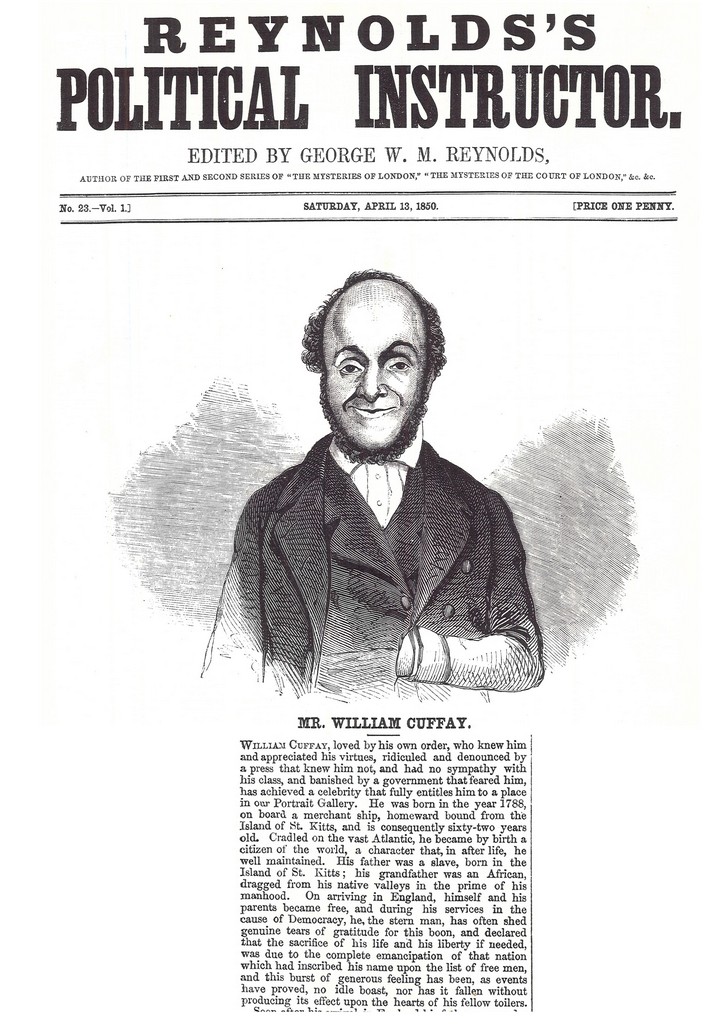
William Cuffay the black leader of London Chartism became the effective leader of the attempt at revolution in the days up to the 16th August, although whether his aim was to control it or prosecute it has never been clear.

Even so there was a clear plan and this was to barricade an area of central London and take effective control of the Capital. There was also less clear plans to put effect to this by firing gas mains thereby causing fires and explosions.

The plan for a revolutionary rising was clear enough then. Victorian historians argued that very few supported it at the time and like 10th April 1848 it was a damp squib. As Goodway again points out this was not the case. He estimates that around 5000 Chartists and confederates were mobilised in London on 16th August. That number would certainly have been a good match for the authorities’ forces.

In reality neither side seemed prepared to actually do the deed. While the authorities had intelligence of what was planned the police who were mobilised at Seven Dials on 16th August neither went into action or, on the day itself, made arrests.

The Chartists who gathered at Seven Dials on the evening of 16th August around 9pm did not attempt to occupy it either. On word that the police knew of the plan they dispersed.

Arrests, including that of Cuffay and some others did take place in the days that followed.

Aside from being something that has been hidden from history and is worth recalling the events at Seven Dials 170 years ago this month have another resonance.

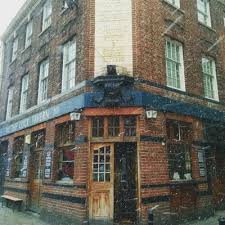
While the area is very different in some ways to how it was then- a very poor area with a pub on each of its seven corners- the actual physical layout of the space remains very much as it was. One of the pubs that was there in August 1848, the Crown, remains in place with essentially the same structure that it had then.

This weekend why not re-live a moment of London’s revolutionary past and stop off for a pint at the Crown as some of the Chartist insurrectionaries of that summer certainly did themselves.
Articles

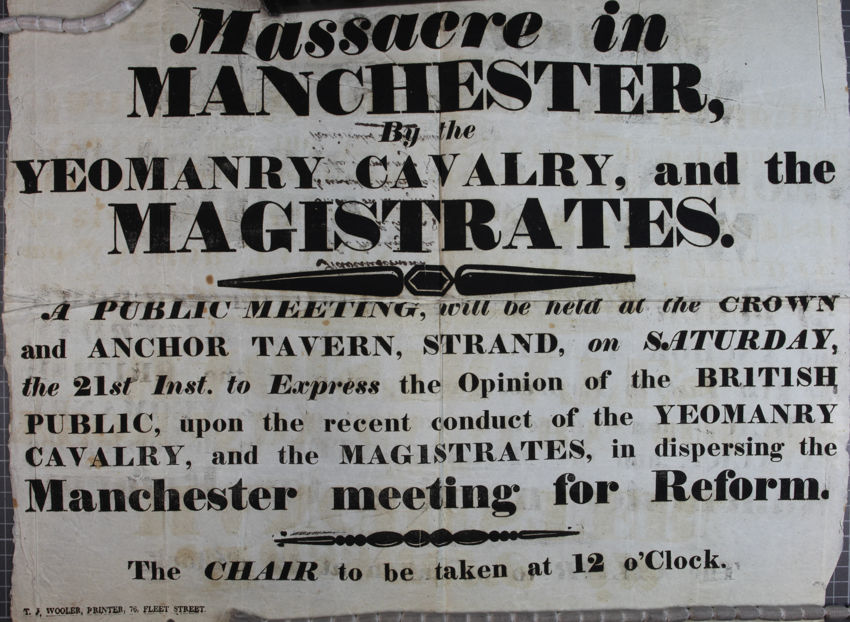
The Publicans who rode with the Yeomanry at Peterloo on 16th August 1819 & why they did

In Uncategorized on August 16, 2020 by kmflett

The Publicans & Cheesemongers who rode with the Yeomanry at Peterloo, Manchester 16th August 1819

206 years ago today on 16th August 1819 a large crowd gathered at St Petersfield in central Manchester to demand the right to vote. They were attacked by the Manchester Yeomanry wielding sabres on horseback. At least 15 were killed and hundreds were injured in what is known as the Peterloo Massacre.

There is a fascinating list of many of those who were there on the day:

http://peterloomassacre.org/names.html

I’ve picked out the names of Publicans who rode with the Yeomanry (& a couple of cheesemongers for good measure) to underline that in the nineteenth century those who brewed beer and sold it tended to be Conservative in political affiliation, even if this was not true of many of their customers.

According to Ian Beckett in his book The Amateur Military Tradition 1558-1945 a possible reason for the participation of Publicans in the Yeomanry was fear of the magistrates withdrawing their licence of they did not.

Samuel Bamford’s classic account of Peterloo and the time around it, Passages in the Life of a Radical has a considerable number of references to cheese, bread (and sometimes beer) in the meetings and gatherings before 16th August 1819.

Publicans at Peterloo who rode with the Yeomanry

John Beeston, Windsor Castle (George Inn) Deansgate

William Bowker, Kings Head, Old Shambles

George Burgess late of Hen & Chickens, Deansgate

Jacob Chadderton, Wool Pack, Pendleton

Cope (first name missing) Liquor Vaults, Corner of Bridge St

Edward Hulms, Blue Cap, Salford

Lees (first name missing) Crown & Thistle, Half St

John Reid, Globe, Gartside St

Cheesemongers at Peterloo who rode with Yeomanry

Anthony Joseph, 32 Deansgate

Heyward (first name missing) St Mary’s gate

As Robert Poole noted in his 2019 history of Peterloo, publicans were susceptible to pressure from the authorities who might threaten their licence.

Then as now there was concern at what the ‘lower classes’ got up to in ‘low’ public houses were authority might find it difficult to have spies or informers without being discovered. Hence information from landlords was important. Actually riding with the Yeomanry was a rather different matter- a mark of social class, or aspiration to it.

Again as Poole notes of the 100 or so Yeomanry publicans were the largest single specific group does suggest a high probability that some if not most of them were drunk by the time they cut down protesters.

There is some reference to pubs in a range of reports to the authorities that were made in July and August 1819 and published in Hansard later in the year:

The common toasts with the lower class in the public-houses, are, “the Cap of Liberty,” and, “May the Wings of Liberty never lose a Feather.”

https://hansard.parliament.uk/Commons/1819-11-24/debates/0ff523ed-31b2-461a-acc3-4b2b70976ab3/PapersRelativeToTheInternalStateOfTheCountry

The actions of publicans on 16th August 1819 did not go un-noticed or un-actioned.

An Oldham paper, The Chronicle printed an account of how radicals reacted by boycotting pubs (29th October 1955)

Following the massacre at Peterloo, or St. Peter’s Square, Manchester, Oldham’s reformers had rather a rough time and it was dangerous to be known as a reformer. Many publicans – and publicans were a privileged class – acted as spies and informers. This was repugnant to the reformers and they took steps to alter this state of things.

Action was taken one Oldham Wakes. The Radicals erected tents and brewed their own beer. They held conversations as to what was, what ought to be, and what ought not to be, and what should be. They had a strict look-out to see that none were present except men known for their views on politics. In a very short time many publicans let it be known that the time was ripe for change.

In spite of the publicans’ change of heart many Radicals still met in private houses, principally on Sunday afternoons. A peck of ale would be brewed and the eatables would be muffins and toasted cheese. One of the favourite meeting places was at the home of Ben-at-Peacote’s, near Sholver.

At the meetings it was customary for someone who could read to read aloud Cobbett’s “Twopenny Trash” as opponents described Cobbett’s ‘Political Register’, Hetherington’s ‘The Poor Man’s Guardian’ and the ‘Dispatch’, in which the leader was sometimes written by William Johnson Fox, later to be M.P. for Oldham.

————————-

Articles

The Ambridge Socialist: Twitchers in Turmoil

In Uncategorized on August 16, 2020 by kmflett

The Ambridge Socialist

16th August

Twitchers in Turmoil

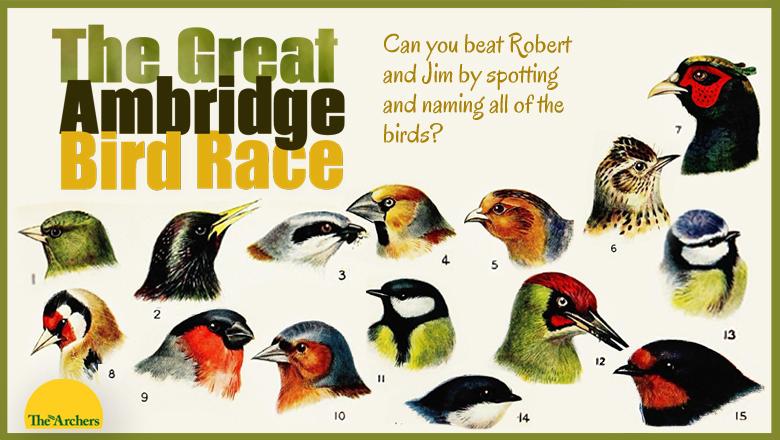
Robert was unhappy on a recent visit to the Hide because he found Jim there with new Ambridge resident Edmund and felt he couldn’t socially distance. He left but became suspicious of rare bird sightings that Edmund had posted on his blog. Robert vaguely recalled he had an IT background and checking the provenance of the blog found at least one of the photos posted to be fake. He has suggested to Jim that Edmund should be reported to the Ornithology Society.

The question is, who is Edmund?

Adam is boring

After his unfortunate collision with a landrover Adam remains at home and is pontificating at length. Unfortunately Leave Voter Adam is boring, although he may not be the most boring person in Ambridge as competition is intense.

Tractor Driving at Home Farm

Ed has been offered a tractor driving job at Home Farm with Alice agreeing to pay double time (that will be £10 an hour in total at usual Home Farm rates…). The Ambridge Socialist urges Ed to get this commitment in writing from Alice, pronto.

In Other News

Lynda has a bad back. Our sympathies


Articles

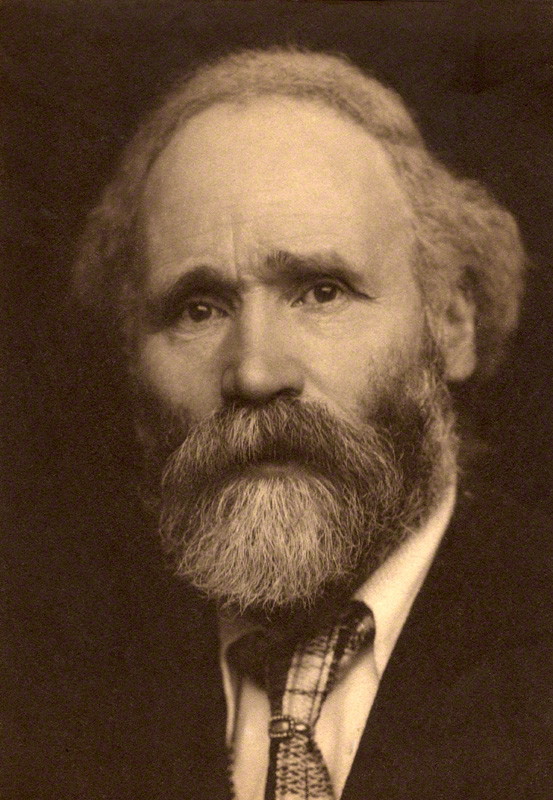
Anniversary of Keir Hardie’s birth marked. One of only two Labour leaders named Keir…

In Uncategorized on August 15, 2020 by kmflett

by George Charles Beresford, sepia-toned platinotype print, 1905

Keir Hardie, one of only two leaders of the Labour Party with a beard, was born on 15th August 1856

Hopefully the anniversary will provide some, all too rare, reflections on British labour history in the crucial period around the formation of the Labour Party in 1900.

Hardie’s original base, from the late 1870s, was amongst first the Lanarkshire and then the Ayrshire miners in Scotland. He was a trade unionist, a full time organiser, with a Lib-Lab, that is a trade unionist within the Liberal Party, perspective on the world that focused strongly on issues of respectability such as temperance and religious observance.

Hardie stood as an independent labour candidate election in Lanark in April 1888 and in August of the same year he became the first Secretary of the new Scottish Labour Party.

In 1892 he travelled to the East End of London, another centre of a newly organising working class, to stand, without Liberal opposition, as a small ‘l’ labour candidate for Westminster. Hardie won and in August 1892 took his seat as an MP.

Questions were asked about where Hardie’s campaign funds came from. While Hardie presented himself as moving beyond his trade union background, as Caroline Benn’s definitive biography underlines, unemployment was even more of an issue in West Ham than it was in Ayrshire. The Scottish miners understood the link well enough and certainly gave some of the money for Hardie’s election.

The following year he was one of those who formed the Independent Labour Party.

When it came to the 1900 General Election Hardie, in era when it was possible to stand in more than one seat, was nominated in Preston and Merthyr in South Wales.

Preston was never likely at this point, on a still restricted franchise, to return a labour MP.

Hardie’s chances in Merthyr weren’t thought to be too good either. After all he was a Scot who had held a seat in London’s East End and was largely unknown in the area.

Hardie however had two things going for him. Firstly he had been a miner and a miner’s union official. Merthyr was a mining seat, but one which remained firmly Lib-Lab. This though was the period when the new Trades Councils were being formed in the area, and they were often a bedrock of support for independent labour politics

In a two member seat Hardie was elected MP and in the 1906 General Election was re-elected with an increased majority.

Hardie’s politics remained as they had developed from his background. A pacifist, he opposed war, and the First World War on that basis, not that of anti-imperialism. He was a determined advocate of an independent labour politics (although one that did deals early on with the Liberals) and a supporter of women’s suffrage which at that time placed him on the left of the labour movement. On the left, but certainly no revolutionary as Victor Grayson the MP for the Colne Valley was

The central historical point is that Hardie’s trajectory as a union and labour activist demonstrates that while issues of national independence are important ones, class politics transcends boundaries.

The spectre of united working class internationalism that Hardie in a way personified, continues to not only haunt the right but be of great relevance for the labour movement.

The beard of course was the symbol of his socialist politics

Articles

The battle for opportunity in education: memoirs of a comprehensive school student

In Uncategorized on August 15, 2020 by kmflett

The battle for opportunity in education: memoirs of a comprehensive school student

I was the first in my family ever to go to University. My father had professional qualifications as a librarian but no degree. My mother left education at 14 to get a job in the late 1930s. She told me women were not encouraged to continue with studying.

I went to a North London Comprehensive School (in Muswell Hill) and then to a first degree at one of the newish Polytechnics in Teesside. I was keen to understand what life was like Oop North as opposed to North London and tbh the experience of those years was probably more educational than the degree…

I went on to study at the Institute of Education, London University (now part of University College London)where I got a PhD in the History of Education.

I was the first school year in London not to sit the 11+ exam (I still remember the teacher announcing this)and hence the first fully comprehensive year. Clearly it never did me any harm as by the end of it in 1975 I had become a revolutionary socialist.

The wider point was that the boom of the 1960s and the arrival of a Labour Government in 1964 had underwritten both a significant extension of higher education as the need for a more skilled workforce was appreciated (tho strangely I learnt those kind of skills, as an engineer, on the job in telecoms)and a belief that education in general was a good thing for everyone, not just the well to do

The progress made in the second half of the 1960s was arguably a high water mark from which successive Governments have been retreating ever since. Its true though that during the New Labour years from 1997-2010 that while the retreat was not halted or reversed it certainly slowed a bit- at least until tuition fees made a policy appearance.

Below is a piece I wrote in 2017 about the advances that were made in education and what they meant:

Grammar schools had been part of a tri-partite system of education introduced by the 1944 Butler Education Act. Butler was a Tory but had consulted widely on the contents of the Act which aimed to set the framework for a new education system at the end of the Second World War.

The Act was implemented by the 1945 Attlee Government and provided for Grammar Schools, Secondary Technical Schools and Secondary Schools. The decision as to which secondary school a pupil would attend was made by pupils sitting an 11+ exam. Hence the future life chances of many were determined at that age. The Grammar School could be the route to University and a successful career, while the secondary modern school indicated a life of often poorly paid manual labour. It was without doubt a class system of education, albeit one allegedly based, because of the exam, on a meritocracy.

The 1944 Act did allow for comprehensive schools, taking in pupils of all abilities, and some of these were set up in the years that followed.

The left in particular campaigned for a move to a fully comprehensive school system. The 1944 Act consigned many able working class students to the academic scrap heap simply because they failed an exam at 11 years old. It did the same for numbers from better off backgrounds too.


The unfairness and inequality of this inspired the left but capitalism itself was changing. The economy required more skilled workers and the Robbins Report in 1963 led to a wave of new Universities to meet the expanding requirement for graduates in the post-war economic boom.

The push for comprehensive schools to provide a greater number of University entrants also met that economic need.

The most prominent of the campaigners for comprehensive education were Caroline Benn and a Marxist Professor of Education Brian Simon. The campaign often met in the office of Benn’s partner, Tony.

The election of a Labour Government in 1964 with a modernising agenda meant the way was clear for a move to comprehensive education. Under new Education Secretary Anthony Crosland the Department of Education’s Circular 10/65, issued in July 1965, underlined a clear preference for comprehensive schools.

The DES however had no direct power to order Local Authorities to move away from the tri-partite model. What Government did have was funding.

With a post-war boom in childbirth Local Authorities were faced with providing more schools and DES circular 10/66 made it clear that funding for these would only be forthcoming if the schools were comprehensives.

This policy lasted until the election in 1970 of a Tory Government with new Education Secretary Margaret Thatcher countermanding it in favour of allowing a few hardline Tory areas to stick with grammar schools.

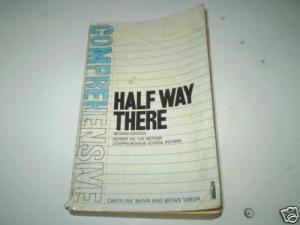
Yet by then the switch to Comprehensive education was well underway. In 1970  Caroline Benn and Brian Simon published Halfway There, a 600 page report on progress towards a fully comprehensive system which appeared as a Penguin paperback book.

The history of why and how the comprehensive school came about is well worth remembering as successive Governments try to turn the educational clock back to the 1950s.


Articles

Nominations for Beard Friendly Pub of Summer 2020 open,ahead of vote

In Uncategorized on August 15, 2020 by kmflett

Beard Liberation Front

Media Release

15th August

Contact Keith Flett 07803 167266

Nominations for Beard Friendly Pub of Summer 2020 open, ahead of vote

The Beard Liberation Front has said that nominations for the Beard Friendly Pub of Summer 2020 are now open, with a vote to follow between 14th and 30th September.

The Beard Friendly Pub of the Year is an annual feature in January each year and the vote will run as usual in January 2021.

However in the extraordinary circumstances of summer 2020, the Beard Liberation Front has decided to run a one-off additional vote to find the Beard Friendly Pub of the Summer.

The decisive winner in the Beard Friendly Pub of the Year 2020 poll which saw 11,000 votes cast in 10 days was the Bumble Inn micropub in Peterborough. The runner up was the Cock Tavern in Hackney

Both of these pubs will be automatically on the poll.

BLF Inspectors will survey pubs for beard friendliness and finalise a list including nominations from drinkers.

BLF Organiser Keith Flett said, we appreciate that not all pubs have felt its safe to re-open and equally that not everyone will want to venture to a pub just yet. However for those who have been able to re-open safely we felt a chance to discover which is the most beard friendly in such exceptional circumstances would be an appropriate thing to do.

The criteria for the Award include:

A safe environment for all. Hand Sanitiser, Customer details taken for track and trace, socially distanced seating, safe serving methods, safe toilet facilities

Beard Friendly Pub: a pub that welcomes the hirsute and often has a significant number of hirsute customers, including but certainly not confined to those with modern styles of beards.

Beard Friendly Ambience: a pub that may have fewer hirsute customers but is welcoming to the hirsute through some bearded bar staff and beard friendly beers, plus has a generally relaxed atmosphere for all.

The campaign group says it welcomes diversity in both appearance and drinking. The truly beard friendly pub will have a genuine mix of customers not just a load of old blokes grumbling about life.

Write in a nomination OR post a comment to the post


Articles

A story of Small Brewers Duty Relief,a Surrey brewery & Michael Gove

In Uncategorized on August 15, 2020 by kmflett

A story of the Small Brewers Duty Relief, a Surrey brewery & Michael Gove

The Government has announced plans to review Small Brewers Duty Relief. A period of consultation will now occur but the intention is to help larger regional to national brewers and impact negatively on smaller, often craft brewers.

A very good explanation of what it all means can be found in this piece by Jonny Garrett

https://www.goodbeerhunting.com/sightlines/7/23/controversial-tax-hike-hits-small-uk-brewers-while-regional-breweries-claim-victory

A note of caution about what follows. This is NOT a story about some kind of conspiracy or something done underhand. Rather this is a story about class and politics. All the quotes and links below are freely available on the internet. The point is to understand what they mean

Responding to Tory MP Angela Leadsom in a Commons debate (Daily Express 24th November 2016) Michael Gove MP said:

“Food and drink production has flourished under your leadership.

“As we have just heard, record levels of hard cheese and sour grapes are emanating from that side of the chamber.

“In my own constituency, the Hogs Back Brewery, a very successful micro-brewery, is doing a roaring trade.

“Could I invite you to join me for a knees-up in my brewery, something the other side of the House could never organise?”

Mrs Leadsom replied: “Yes – absolutely be delighted to do that.”

The brewery concerned was Hogs Back. Mr Gove published on his constituency website details of a no doubt enjoyable visit.

https://www.michaelgove.com/news/michael-gove-mp-visit-hogs-back-brewery

Hogs Back has been one of the leading breweries lobbying for a change to the Small Brewers Duty Relief. When the proposed change was announced the owner said:

Such unexpected great news that the brewing industry hasn’t been forgotten during the year of crisis. A 15-year struggle to get a review, however small, is a momentous day and hopefully we can now unify as an industry to move on together and have fewer restraints to growth.”

Rupert Thompson, Owner, Hogs Back Brewery

In October 2016 Michael Gove was asking a Parliamentary question about what plans there were to review the Duty Relief

https://www.parliament.uk/business/publications/written-questions-answers-statements/written-question/Commons/2016-10-26/50360

He returned to the subject in the Commons on 18 Oct 2018, then responding himself to a question from another MP

My hon. Friend does brilliant work as the chairman of the all-party beer group, and he is absolutely right to say that we must look at beer duty. In particular, a case has been forcefully made for looking at duty relief for small brewers in order to maximise growth in that sector, so that we can all enjoy great British beer.

Clearly Hogs Back and others had lobbied the Government and influential MPs for a change to Duty Relief and this has now been successful.

Rupert Thompson is perhaps right to be surprised because while the Conservative Party is meant to be the Party of business recently this has often seemed to mean business globally rather than specifically Britain.

The Tories have traditionally had links to larger breweries and at least one of those who lobbied for Duty Relief to change, Robinsons of Stockport has donated money to the Party (but not much!)

James Calder of SIBA which represents many smaller craft brewers has complained that he thought the Government was on the side of small business. I presume (and hope) this was a campaigning point rather than something he actually thinks is true.

The potential changes to Small Brewers Duty Relief are a reminder that the Government is on the side of larger business particularly when effective lobbying such as that of Mr Thompson reminds it that it is supposed to be.

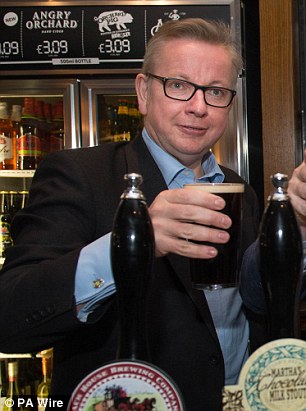
Michael Gove lives in West London and is believed to be a craft beer drinker…

Articles

Bad Light in cricket, VAR in football, Algorithms in A Level exams: Gradgrindism rules

In Uncategorized on August 14, 2020 by kmflett

Bad Light in cricket, VAR in football, Algorithms in A Level exams: Gradgrindism rules

Thomas Gradgrind, sir.  A man of realities.  A man of facts and calculations.  A man who proceeds upon the principle that two and two are four, and nothing over, and who is not to be talked into allowing for anything over.  Thomas Gradgrind, sir—peremptorily Thomas—Thomas Gradgrind.  With a rule and a pair of scales, and the multiplication table always in his pocket, sir, ready to weigh and measure any parcel of human nature, and tell you exactly what it comes to.  It is a mere question of figures, a case of simple arithmetic.

Charles Dickens, Hard Times

It is perhaps not unexpected in our neo-liberal times but examples of human judgement being swept aside by mechanical decision making continue to abound.

On Friday several interruptions for bad light in the Second Test between England and Pakistan at Southampton took place. These were based not on an assessment by the Umpires about whether the light was dangerous to players but on the reading of a light meter.

It appeared rather similar to VAR in football where the referee is by-passed by video decisions about whether a player’s toe was offside and hence a goal must be disallowed.

On Thursday there was widespread protest after 2020 A Level results were determined not by the human judgement of teachers but by an algorithm.

In every case the spirit of Gradgrind hovers like a spectre.

Articles

Warwick University Ltd in the 2020s. What is the bigger concern? Thatcherism or China

In Uncategorized on August 14, 2020 by kmflett

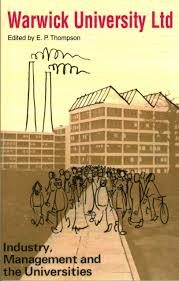
Peter Wilby has written an interesting take on what EP Thompson’s expose of Coventry University as the ‘business University’ that was published as Warwick University Ltd in 1970 in the Guardian means for the 2020s:

https://www.theguardian.com/education/2020/aug/11/academic-freedom-is-precious-so-why-have-uk-universities-sold-out-to-china

He points out that unlike in the late 1960s when Universities mainly relied on State funding in the 2020s every University is a business. Members of the UCU, the union that organises in further and higher education understand the point very well.

Wilby expresses concern about the extent of Chinese funding in UK Universities. I agree with the concern to the extent I firmly believe that Universities should not be businesses but institutions committed to a liberal education funded by public investment.

There is an undercurrent of Sinophobia about Wilby’s point though. As a socialist I’m no more of a fan of the Chinese system than Thompson himself was. That said I tend to think that Chinese influence in UK higher education is less about specific control and more about extending a sphere of influence and edging out the US.

I would hardly be a veteran hirsute Marxist if I didnt feel a smidgeon of sympathy with China’s reported aim of rooting out incorrect thinking in the academy but we are in the UK not Beijing.

The influence of business in UK Universities is significant and its not interested in rooting out incorrect thinking. If a subject is not contributing in a measurable way to the bottom line funding stops and so does the study of the subject. There is no space for thinking correct, or incorrect.

As in 1970 when it comes to the business University the main enemy is at home.

Articles

Beard, Shorts & Sandals Season. New Ban on ‘Farage style’ shorts issued

In Uncategorized on August 14, 2020 by kmflett

Beard Liberation Front

14th August

Contact Keith Flett 07803 1672

Beard, Shorts & Sandals Season. New Ban on ‘Farage style’ shorts issued

The Beard Liberation Front, the informal network of beard wearers, has said that while the middle of August is peak Beard, Shorts and Sandals Season, it has issued a new ban on wearing shorts above the knee.

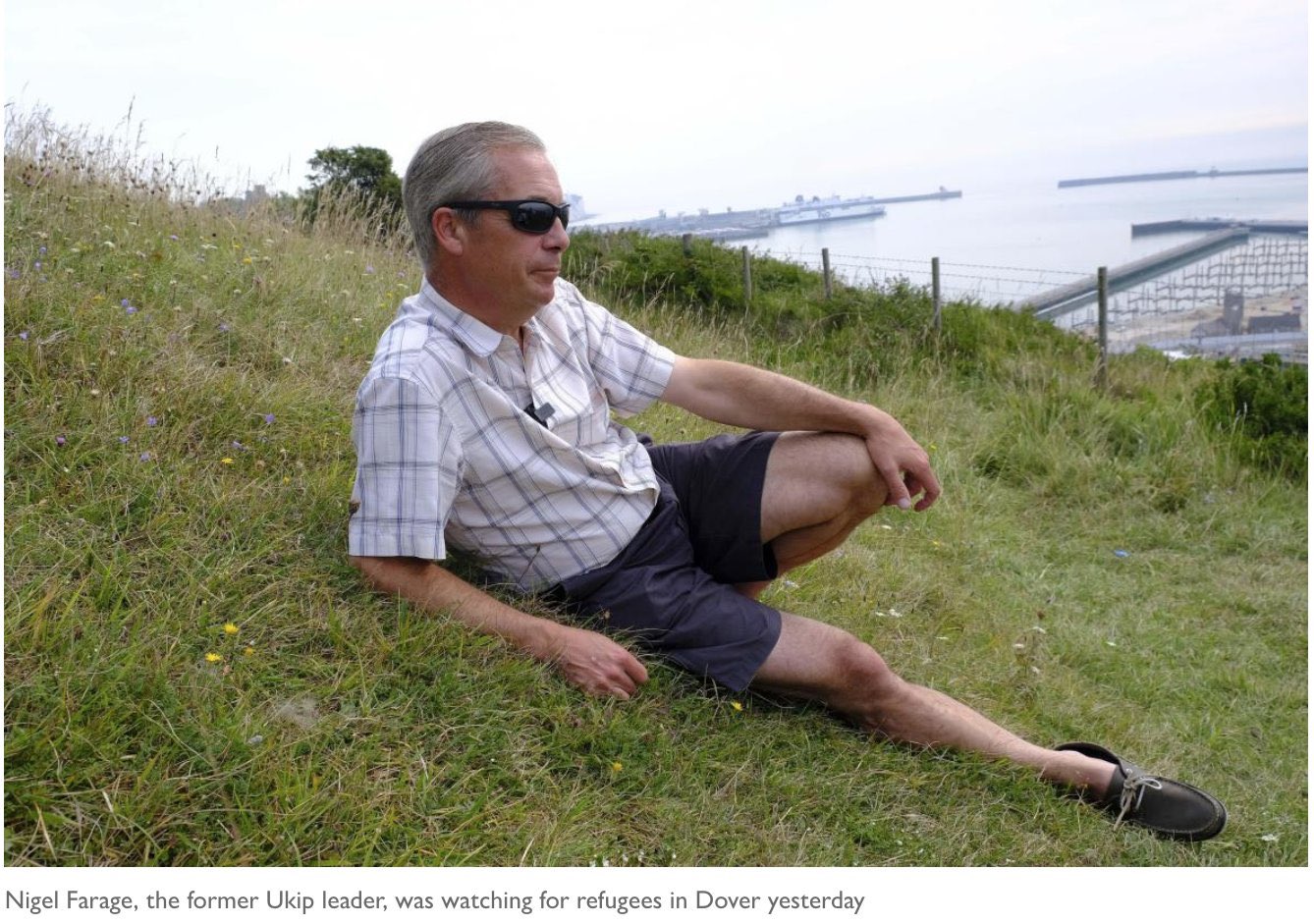
The ban comes after notoriously clean shaven publicity seeker Nigel Farage was photographed lounging in shorts above the knee on Thursday.

The campaigners say that anyone wearing such shorts with a beard and sandals would risk bringing the hirsute into serious disrepute.

BLF Organiser Keith Flett said, August is a time to enjoy the Beard, Shorts and Sandals Season and we regret placing a new restriction on it, but we cannot risk the hirsute being brought into disrepute.

1] Shorts should ideally be three-quarter length-‘culottes’ for the  2020 season. The length of shorts is particularly important as climate change may mean that unprotected legs get sunburnt.

1a) Shorts of the length worn by Nigel Farage in a picture shared on 13th August are strictly forbidden

2] Footwear should be casual. There is a considerable range of sandal type footwear now available. Some leaves parts of the feet and toes open to public view, while some does not. The BLF is not prescriptive about the matter.

3] Socks should generally not be worn. However if the beard, shorts and sandals are to be displayed in relatively busier urban areas it is likely to be prudent to wear closed rather than open casual footwear and ankle socks, not visible to others may be worn.

4] There is no prescription or definition on what type of beard may be worn, or how this may match with the shorts and sandals. This is left up to the individual.

5] If venturing out in accordance with lockdown rules in force at the time social distance should be kept at all times.