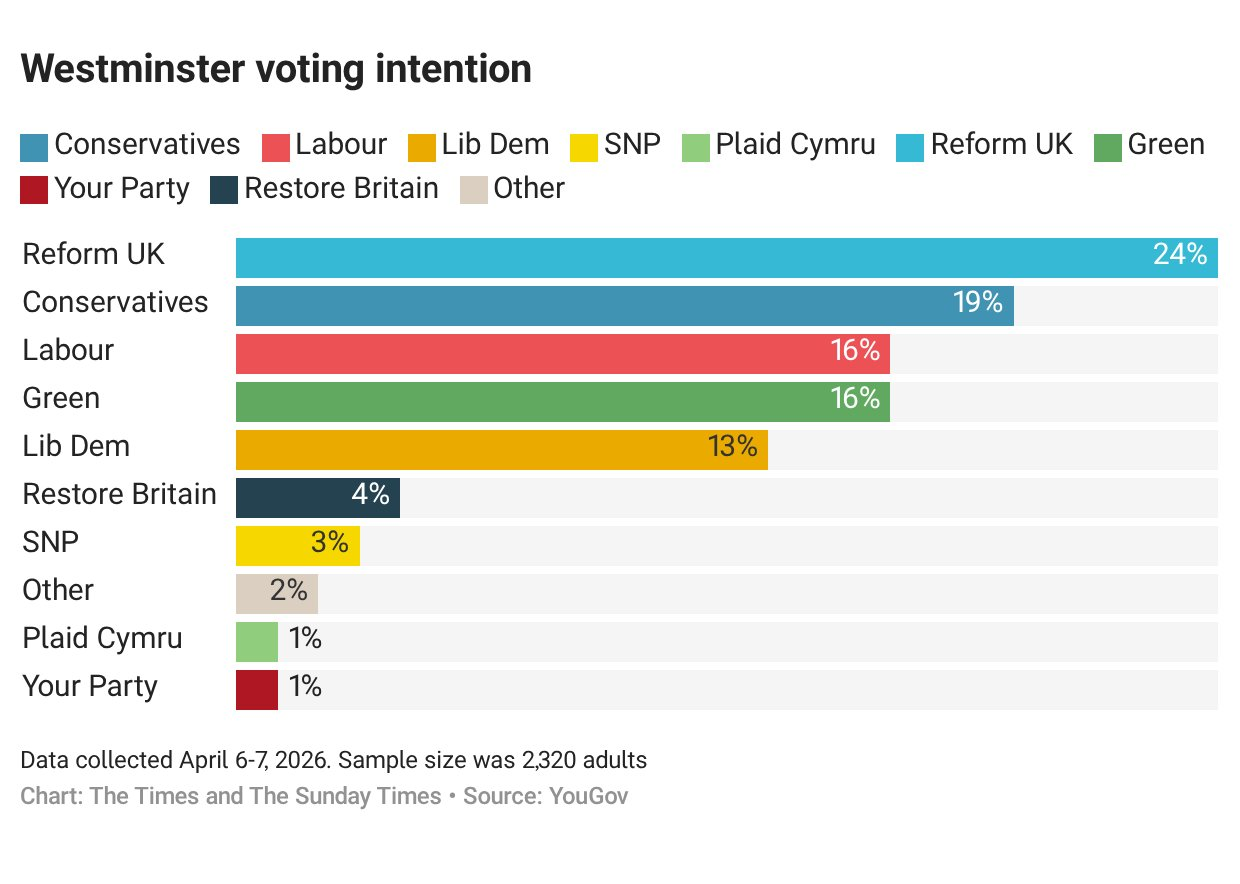
For the first time a YouGov poll has recognised the splintered nature of UK Party Politics.
It provides figures for Rupert Lowe’s fascist Restore Britain as well Your Party on the left.
It looks like Restore is taking support away from Reform as it outflanks Farage on the far right (difficult though this can sometimes be).
The Your Party figure is more complicated because in respect of the May 7th elections its not standing (as far as I can see) under its own name but backing a serious of community independent challenges around the UK. These will be recognised locally but will be difficult to capture in a national poll.
The support for Plaid and the SNP btw is obviously in the context that they only stand on Wales and Scotland. Plaid may be happy with 1% compared to the SNP’s 3% given that Scotland has roughly twice the population of Wales.
Opinion polls however are just that, reality may differ.
Allister Heath is the Editor of the (UK)right-wing Sunday Telegraph. This random headline generator is the work of the New World. It often mirrors reality surprisingly closely
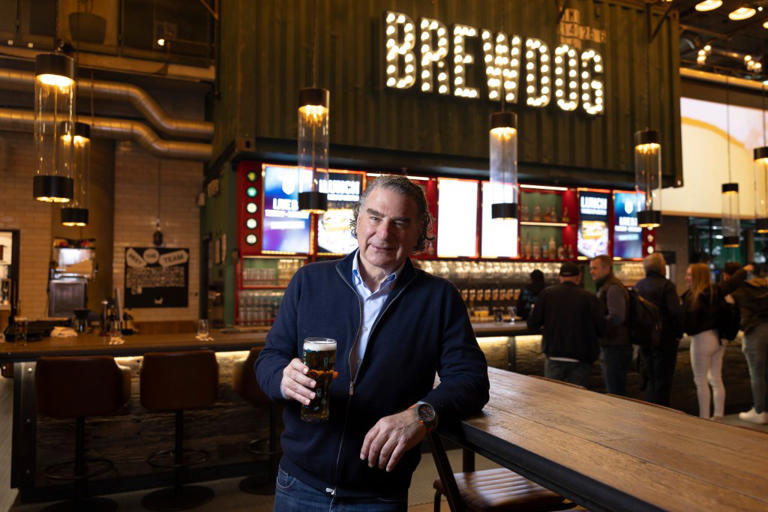
The US cannabis and craft beer company Tilray bought Brewdog’s UK brewery, its brand and eleven bars on March 2nd 2026. 38 bars were closed and 484 workers sacked on the spot.
Subsequently Tilray acquired Brewdog assets in America and Australia while the German operation was closed pre-sale. A number of Brewdog franchise pub remain around the globe including several in the UK.
At the top level there was an argument on LinkedIn and the media between James Watt and Tilray CEO Dwight Simon. Watt claimed concern about the Equity for Punks ordinary shareholders and said he had spoken to Simon about this. Apparently he had at some point before the March 2026 sale- Simon said Tilray had previously looked at bids for Brewdog. Simon also underlined that he had not spoken to Watt post sale and that the Stigma of Watt was an issue for Brewdog.
Having examined the books further Tilray announced plans to acquire five more Brewdog pubs from the Administrators and press reports suggested they had attempted to re-hire workers. Unite the Union condemned this as fire and rehire (which will be illegal from January 2027) but it’s not clear where this is now going.
The Administrators appear to be better at offloading ex-Brewdog pubs than Brewdog was itself after previous closures and numbers of bars including Plymouth, Bristol and Basingstoke have reopened under new indy owners.
Meanwhile Tilray has announced plans to market Brewdog beers in areas of the US, including some New York location, where they were not previously available. Tilray also announced that it had the contract to brew Carlsberg beers in the US.
As a result of acquisitions Tilray is the fourth largest craft brewer in the US and Simon announced plans to sell Montauk Brewing beers in Brewdog bars in the UK and market them in Europe.
Brand wise Lords cricket ground pulled out of their contract with Brewdog and an announcement on a new provider is awaited although the MCC did reassure members that cask beer will still be available in the Pavillion.
By contrast St Helens rugby who play at the Brewdog stadium are keeping the link and announced a new image based on Tilray’s health and community work.
I haven’t provided links but I’m not trying to be the new Matthew Goodwin. All of the above should be easy to Google (which is where I found it). Reports of errors gratefully received and will be corrected.
Meanwhile my piece for Culture Matters on how Brewdog might have survived if it had been run rather differently. What is clear is that Brewdog is now a rather smaller brand than it was a few months ago and Tilray is on a voyage of discovery. It would help if it recognised Unite the Union
Turning the World Upside Down after Easter: Hocktide
British traditions are varied and confusing and those around Easter are no exception.
A strand of radicalism is a frequent thread. That is, the existing order of power relations is subverted in some way. The most common form of this is the Lord of Misrule, a character who is the precise reverse of the existing order of monarchs and other leaders. The figure is meant to be one of fun but as often disorder and riot are also present.
Easter has little association with Misrule but there is still a subverting tradition- that of Hocktide. In more recent times (and I’m not sure it existed widely beyond the early nineteenth century) it took place on Easter Monday or Tuesday. Earlier it was to be found at the end of a much longer Easter festival- two weeks or so after Easter Sunday.
Hocktide involved most commonly groups of women, married or single, kidnapping men and holding them to ransom for money. Originally the money raised went to local Church funds but it appears that later it was used to fund sporting activities.
In a male dominated society it was a rare expression of female power.
Hocktide, like many other religious associated customs was discouraged under the Long Parliament in the 1640s and even more so during the period of Cromwellian Government in the 1650s.
With the Restoration in 1660 it returned and it wouldn’t be surprising to find even today some echoes of the tradition taking place.
US bomber taking off from RAF Fairford in Gloucestershire on April 6th 2026 (Guardian)
Labour’s Janus faced warmongers from Harold Wilson to Keir Starmer.
Keir Starmer has won plaudits even from some of his many detractors for not backing one hundred per cent Trump and Netanyahu’s illegal war against Iran. Of course the position has limits. US B52 bombers are taking off from bases in East Anglia and no doubt both the RAF and Navy are involved in various ways in supporting the war as they have been with Gaza. Even so Starmer has arguably been partly successful in appearing to distance himself a bit from Trump, a distinct change of policy.
What th altogether more wily politician Harold Wilson did on Vietnam is often mentioned in media coverage but his position was not that different to Starmers.
Unlike Australia and New Zealand, Britain did not commit forces to US efforts to prop up the corrupt Diem regime in South Vietnam from 1962-1975.
If Britain did not commit front line troops in Vietnam, British Government support for American action was largely unwavering. In March 1965 Harold Wilson told the Commons that the Government fully supported ‘the action of the United States in resisting aggression in Vietnam’.
He was echoing a line developed by the Tory PM before him Alec Douglas Home and backed by the Tory PM after him, Heath, as well.
What did this full support mean?
While no troops were officially committed, the SAS fought in Vietnam under the banner of the Australasian forces. Other troops were seconded to the US and fought under those auspices.
These were not rank and file soldiers but specialists and experts in jungle warfare.
Indeed Britain trained US, Vietnamese and Thai troops in its Malaysian facilities in the late 1960s.
It was not just training and expertise that was provided.
The British monitoring station at Little Sai Wan in Hong Kong was used by the Americans to help them target bombing raids on North Vietnam.
All that said Wilson also resisted considerable pressure from Democratic President Johnson to publicly back the US with troops on the ground in Vietnam. He resisted, perhaps because he recognised the potential political consequences and that may well have been related to the strength of opposition to the Vietnam War in the UK.
Tony Benn noted in his Diary on June 13th 1965 the first of ‘US style’ teach-ins being held at LSE. He felt they would have influence and recorded that each time Harold Wilson’s name was mentioned there was booing.
Wilson also, at least up to the Tet Offensive in Spring 1968 when it became clear that the US was in any case losing the war, associated himself very closely with international negotiations to secure a ceasefire and peace in Vietnam, albeit essentially on US terms.
It might be argued that Starmer has a more difficult task in committing British forces to the war against Iran while maintaining publicly that he is doing no such thing. Firstly in the age of social media it is easier to track what the Royal Navy and RAF are up to, whatever the mainstream media may or may not report. Secondly Starmer has to deal with Trump who simply blurts out often incoherent and contradictory statements on his Truth Social site.
As with Wilson the extent of Starmer’s ability to appear Janus faced on Trump and Iran rests on the strength of opposition to the war.
This no doubt is related to continuing official efforts to restrict Palestinian protest, but it might be recalled that the big anti-Vietnam War protests in London in 1968 saw massive mobilisations of police and the creation of the unit that we now as Spycops
As ever, protest and survive, is essential when it comes to Labour leaders and warmongering
When the English working class made, how change happens & the case of Bank Holidays
E P Thompson’s Making of the English Working Class situated that process between the 1790s and the 1830s. The timespan may have been purely practical. His partner Dorothy Thompson worked on the Chartist period and the book was already nearly a thousand pages long.
Eric Hobsbawm (Worlds of Labour) countered that the hiatus between the Chartist period and the late Victorian one meant that it was more accurate to see the working class being made between 1870 and 1914. Characteristically for Hobsbawm he evidenced statistics on the building of seaside piers and Bank Holiday train excursions as evidence for a mass working class public.
Yet at least some of the institutions that remain characteristic of the working class in 2025 in fact date from the period between 1850 and 1870, for example the Co-Operative Movement and the TUC.
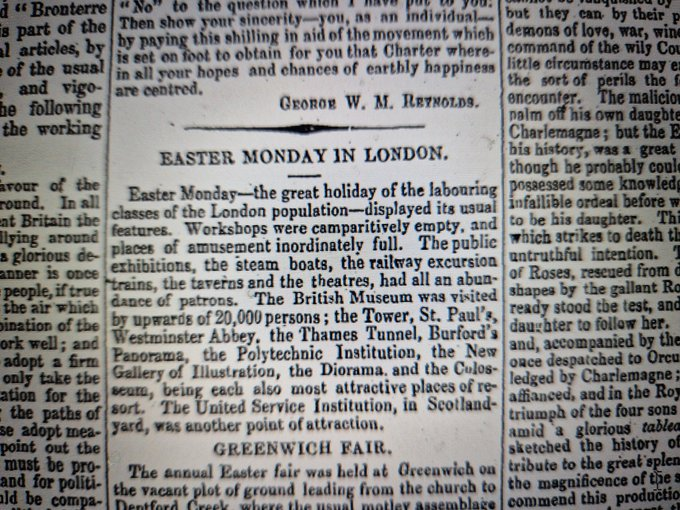
Easter Monday did not become a Bank Holiday until 1871 but evidence suggests that it was taken as a working class break- a practice known as Saint Monday-much earlier. The Chartist Northern Star reported on Easter Monday in London in 1850, 176 years ago, noting it as the ‘great holiday of the labouring classes’ where workshops were comparatively empty and places of amusement inordinately full.
From this it can be argued that the presence of an organised working class after 1850 from the New Model Unions to the Reform League and International Working Men’s Association meant that the State had to act to formalise Bank Holidays that many workers were in fact taking anyway- the traditional practice of Saint Monday.
Research work in progress, thoughts welcome, perhaps in particular whether (and for example) the London practice of observing Easter Monday as a holiday was also to be found in the mill towns of northern England where work-discipline was perhaps different..
Donald Trump’s war on Iran backed inevitably by veteran war criminal Netanyahu whose mission remains a regional war in the Middle East, made a social media post on 5th April including several expletives. Whether he is insane, suffering from dementia or other issues, I’ll leave to those qualified to make a professional comment (I’m the wrong kind of Doctor for that). It does suggest that Trump is the first President since Nixon to potentially put the future of humanity at risk (of course others- Reagan etc- were contenders).
Trump unlike Nixon does not, as far as we know drink, but other substances are available..
The bottom line here is that Nixon was losing the war with Vietnam and Trump is losing the war with Iran. The experience of defeat is significant.
Will Lloyd writing in the New Statesman (10th April) suggests an interesting distinction between Nixon and Trump. Towards the end of his Presidency Nixon was focused on two things- getting drunk and trying to start a nuclear war. Nixon would however at least be sober in the morning after the night before and Kissinger was available to handle night time issues. By contrast since Trump does not drink, from the moment he wakes up he is a lunatic and since he has surrounded himself with sycophants there is no one to intervene to head off the nuclear war temptation
Hunter S Thompson wrote about the last US President to be as deranged as Trump (thanks to Rick Halpern for posting it)
“The power of the presidency is so vast that it is probably a good thing, in retrospect, that only a very few people in this country understood the gravity of Richard Nixon’s mental condition during his last year in the White House. There were moments in that year when even his closest friends and advisers were convinced that the president of the United States was so crazy with rage and booze and suicidal despair that he was only two martinis away from losing his grip entirely and suddenly locking himself in his office long enough to make that single telephone call that would have launched enough missiles and bombers to blow the whole world off its axis or at least kill 100 million people.
. . . But it was mainly a matter of luck that Nixon’s mental disintegration was so obvious and so crippling that by the time he came face to face with his final option, he was no longer able to even recognize it. When the going got tough, the politician who worshiped toughness above all else turned into a whimpering, gin-soaked vegetable… But it is still worth wondering how long it would have taken Haig and Kissinger to convince all those SAC generals out in Omaha to disregard a Doomsday phone call from the president of the United States because a handful of civilians in the White House said he was crazy.
Hunter S Thompson, Fear & Loathing on the Campaign Trail 1976 via Rick Halpern
EP Thompson on polemic, academic rigour & the Matthew Goodwin issue
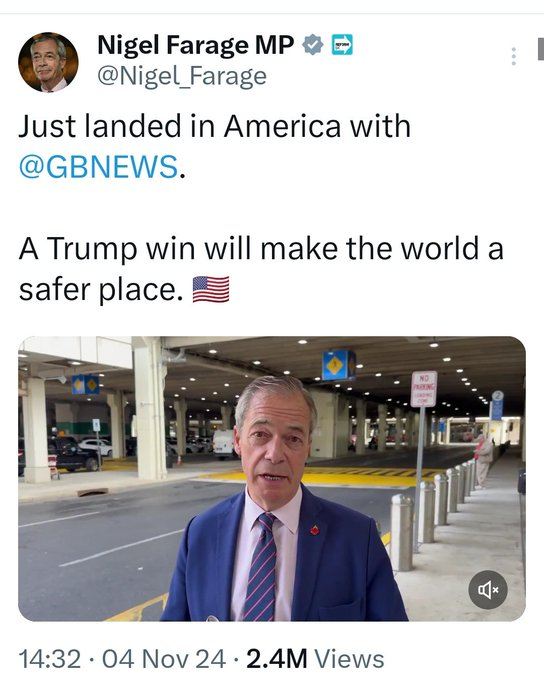
The socialist historian E P Thompson died in 1993 and certainly never heard of or knew Matthew Goodwin the GBNews presenter and former academic.
It is perhaps worth noting how I came across a Thompson paragraph that relates directly to the issues Goodwin has faced with his latest volume. Namely that while his status has been that of an academic he is currently a polemicist. As critics have pointed out while the polemic may appeal to some (not myself) is it not soundly based academically.
I was trying to check if Thompson had actually delivered a series of lectures on his book Customs in Common (1991) before it was published at Queens University Canada in the Spring of 1998.
A Canadian Professor had pinged me a flyer for the lecture series on BlueSky but other sources seem to suggest that Thompson was worried about how rigorous his research was at this point and perhaps did not actually lecture. I haven’t yet found a definitive answer.
Thompson most well-known book The Making of the English Working Class (1963 and still in print) was a lengthy and well researched book but it was aimed at a general audience and perhaps particularly a left activist one. The book contained ground breaking historical research but also polemic.
Thompson was criticised from the right for doing this and as he noted he made a distinct effort to keep his researches and his polemics separate even if they often informed each other.
Goodwin might usefully ponder Thompson’s words, but I don’t think he will
Thompson wrote in a monograph
I have been invited to say something about the relationship between writing, history and politics, as it comes to me through my own experience. In one sense, there is little to say that is not obvious. Or so it seems to me. One writes history as a historian and engages in political polemic as a citizen, and the one does not exclude the other. Yes, the two roles may sometimes overlap or become confused, but this need not be made into a big deal. It is less a theoretical problem than a practical one, which practical measures can sort out. I am very much against mixing teaching with political (or any other sort of) proselytising, since this is to take unfair advantage of the students. It is my decided impression that this offence is more flagrantly committed from the Right –who sometimes suppose, in all innocence, that its views are the only possible “objective” orthodoxy- than from the Left. But that is no excuse for the Left to imitate the offenders.