Articles

Making sure Black Lives Matter in cricket

In Uncategorized on July 10, 2020 by kmflett

Making sure Black Lives Matter in cricket

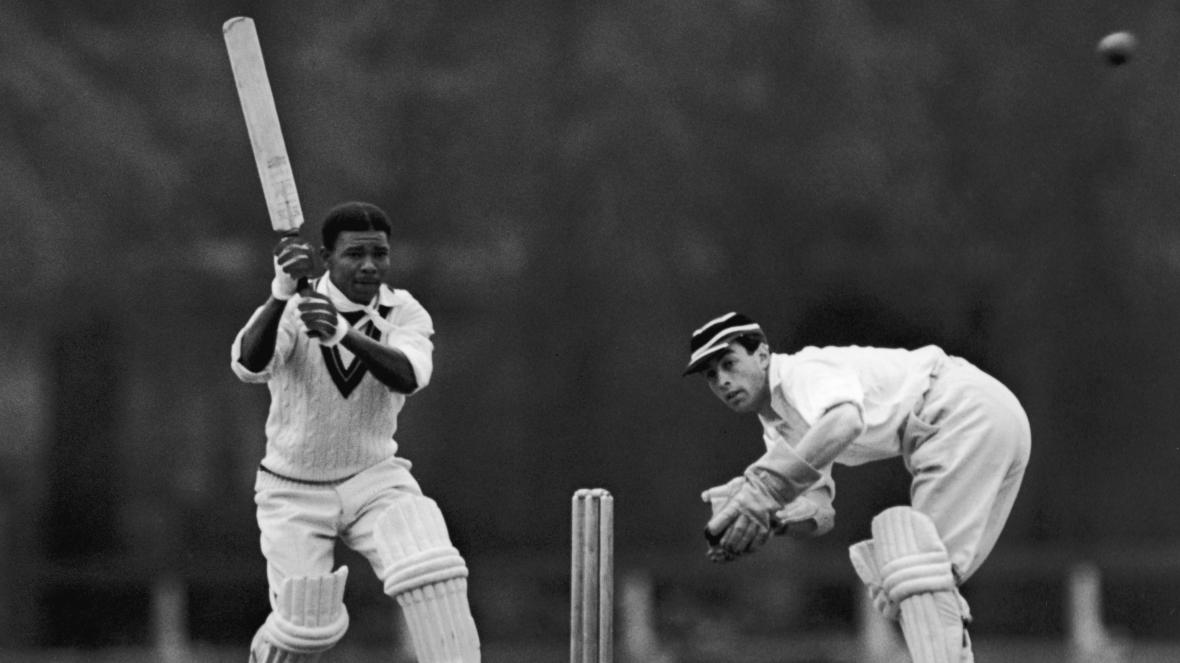
The death of the great West Indian cricketer Sir Everton Weekes recently was a powerful reminder of the history of issues around race and cricket. When Weekes played as part of the three Ws in the West Indies Test side of the 1950s the permanent captain was always white, although never the match of Weekes, Walcott and Worrell. That changed with Sir Frank Worrell being appointed captain in 1961 after a considerable campaign led by CLR James:

https://kmflett.wordpress.com/2020/07/09/sir-everton-weekes-1925-2020-a-powerful-reminder-of-why-black-lives-matter/

Moving to the present day a great worldwide movement has arisen against racism and injustice following the police killing of George Floyd.

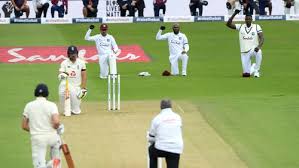
Its impact has been felt in sport and at the start of the First Test between England and the West Indies all players and officials took the knee, the symbol of solidarity. This was underlined by powerful statements by Michael Holding, Ebony Rainford Brent and others.

I was impressed, and tbh I rarely am, by Tom Harrison, CEO of England and Wales Cricket when he spoke to Jonathan Agnew on Test Match Special. He was clear that there was a need to address issues of racism and inequality in cricket and that Black Lives Matter had been the motor for this.

As a trade union officer in the private sector I’ve also been impressed by statements from some major employers on BLM and commitments to address issues in injustice and inequality (albeit long pressed for).

Fine words and action plans are one thing but making them happen is another matter. They need to be worked through and monitored in detail. In that respect its good to see the Guardian report that Ebony Rainford Brent is to meet Tom Harrison with the aim of making sure words lead to action.

This is work in long overdue progress.

https://www.theguardian.com/sport/2020/jul/10/ebony-rainford-brent-says-cricket-is-switched-on-to-racism-message?CMP=share_btn_tw


Articles

The internationalist history of the Welsh First Minister’s favourite cheese

In Uncategorized on July 10, 2020 by kmflett

The internationalist history of the Welsh First Minister’s favourite cheese

As a cheese lover and frequenter of the original Neals Yard cheese shop in the 1980s (which was actually in Neal’s Yard in Covent Garden) I’ve been an enthusiast for British and Irish farmhouse cheeses (preferably unpasteurised) ever since.

Like cask beer they represented a survival of a craft and artisanal tradition that big business tried to wipe out in favour of bland, mass market products.

Big business failed thanks to a consumer revolt although the last few months have been tough ones for artisan cheesemakers as for many others.

It was good to hear Welsh First Minister Mark Drakeford in a Q&A this week be diverted into talking about the love of cheese he had since his youth. It was just a glimpse of normal life during a period when he has done in my view a decent job of trying to manage a very difficult time, compared to some one could think of.

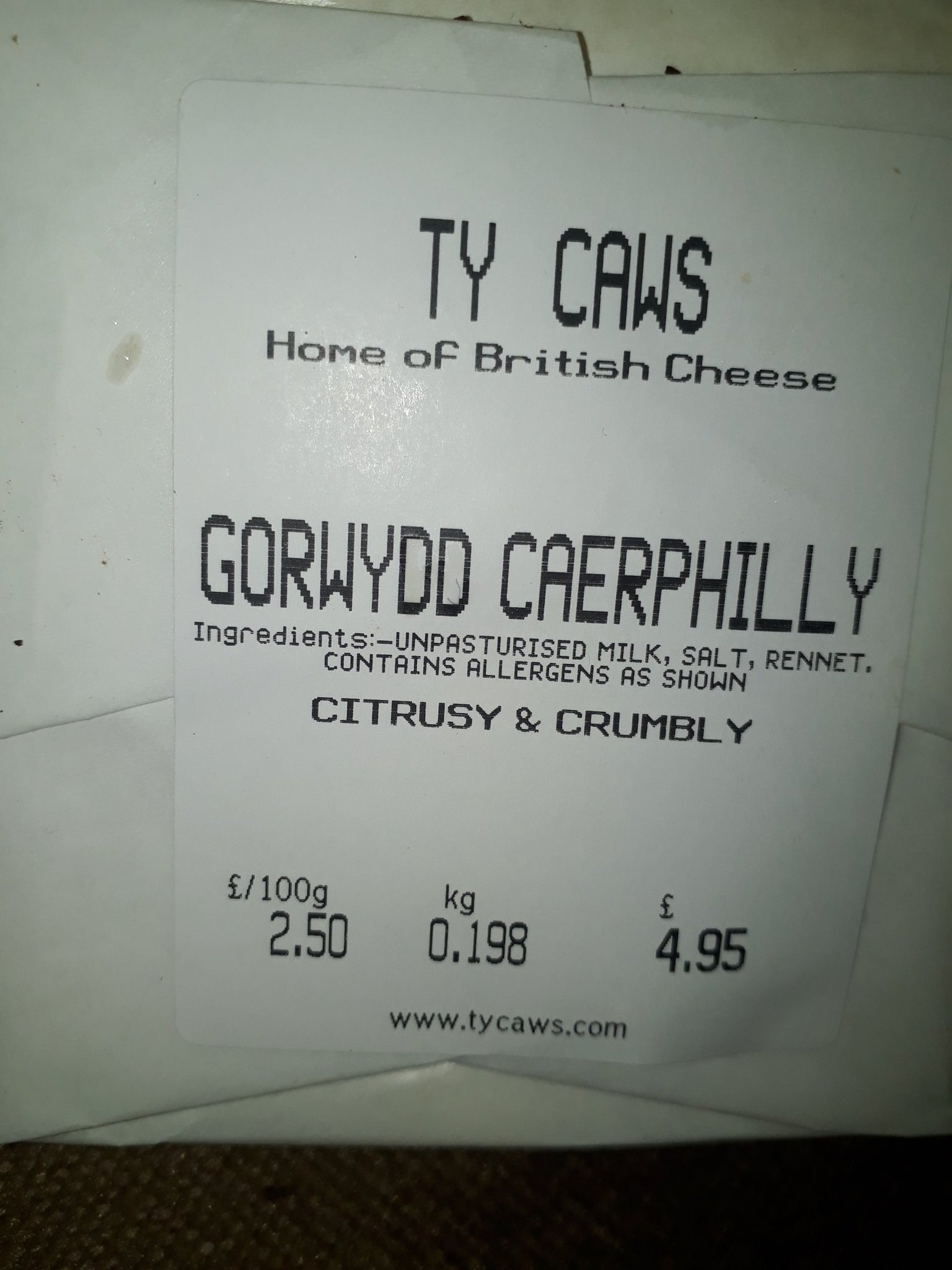
He mentioned of course Caerphilly a salty, crumbly cheese. Interestingly for socialists and internationalists probably the best current example of it is made by the Trethowan creamery as Gorwydd in North Somerset. That is no accident because as the link below underlines there is a tradition of making the classically Welsh cheese just across the Bristol Channel.

A reminder too that the great miners leader in 1926 A J Cook who was a Welsh miner was actually born in Wookey, Somerset.

Good cheese like labour politics knows no boundaries.

Gorwydd Caerphilly

Articles

Vote for the best beard of lockdown is now open

In Uncategorized on July 10, 2020 by kmflett

Beard of Liberation Front

10th July

Contact Keith Flett 07803 167266

Vote for the best beard of lockdown

The Beard Liberation Front, the informal network of beard wearers, has launched a one-off poll to find the best beard of lockdown.

Lockdown has seen numbers grow a beard, as they were working from home in many cases, and hairdressers and barbers were shut.

The campaigners say that its usual quarterly and annual votes for the best beard emphasise their positive impact in the public eye. By definition, such an impact has been very limited during lockdown.

However with communication via Zoom, Skype and Teams, it has been possible to identify some contenders for Beard of Lockdown.

BLF Organiser Keith Flett said, lockdown beards have been a big thing and as lockdown eases we thought it would be good to mark the period by trying to find the best lockdown beard.

The vote is open now and will close at midday on Friday 24th July

Beard of Lockdown

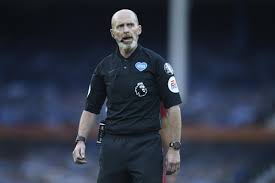
Mike Dean, Football referee, appeared with a beard for the first time

Al Murray, ‘The Pub Landlord’ grew a lockdown beard

Andy Murray, the tennis champion often has facial hair but grew out his beard in lockdown

Michael Sheen, actor who has grown an organic lockdown beard

Michael Rosen, author who spent many weeks in hospital. Fortunately both he and his beard have survived lockdown

Andy Carroll, footballer who briefly appeared with controversial ‘mutton chops’ facial hair

Chris Woakes, cricketer, who has grown an organic lockdown beard

Andros Townsend, footballer who now sports a fully organic beard

David Beckham, often has facial hair but in lockdown the model for Cottagecore

Tony Archer, Archers character who grew a Hagrid radio beard before being made to shave

Articles

Neither Wetherspoons or Neverspoons but a beard friendly pub

In Uncategorized on July 9, 2020 by kmflett

Beard Liberation Front

9th July

Contact Keith Flett 07803 167266

Neither Wetherspoons or Neverspoons but a beard friendly pub

The Beard Liberation Front the informal network of beard wearers, has said that as some pubs are in various stages of preparing to re-open or are re-opening across the four nations, it is not supporting a boycott of Wetherspoons or the app that promotes it Neverspoons.

The Beard Liberation Front says that Wetherspoons have never featured on the Beard Friendly Pub of the Year list but some pubs may well be beard friendly. By contrast Neverspoons which is an App free to download, features the locations of Wetherspoons and pubs nearby to each one.

BLF researchers have checked the App and found that many of the alternative pubs listed are not beard friendly.

In contrast the campaigners are urging people, where they feel safe to visit a pub, to check out beard friendly pubs.

A list of the finalists in the vote for Beard Friendly Pub of the Year 2020 is below. Not all are currently open but the winner, the Bumble Inn in Peterborough and the runner-up, the Cock Tavern in Hackney are both open.

Later in July details of a special vote for the Beard Friendly Pub of Summer 2020 will be announced with a an on-line poll during September.

A focus will be on pubs that have satisfactory arrangements for beards, and everybody and everything else, to be socially distanced and safe allowing contemplative imbimbing to occur while occasionally tweaking the beard.

BLF Organiser Keith Flett said, we’d rather focus on positives at the moment. If you are venturing out to a pub why not try a beard friendly one and take care out there

Beard Friendly Pubs of the Year 2020. NOT ALL ARE CURRENTLY OPEN. PLEASE CHECK FIRST

Bundobust, Manchester/Leeds/Liverpool

Bubs, Cardiff

The Chesham Arms, Hackney

Cock Tavern, Hackney

Hanging Bat, Edinburgh

Mother Kelly’s (Bethnal Green)

Small Bar, Bristol

Stoneworks, Peterborough

Whitelocks/Turks Head, Leeds

Magic Rock Brewery Tap, Huddersfield

Wellington, Birmingham

Tom’s Tap & Brewhouse, Crewe

The Experiment, Hackney

Fell Brewery Taproom, Kendal

High Cross, Tottenham

Bumble Inn, Peterborough

Cloudwater Tap Manchester

Ship & Mitre, Liverpool

Kernel Tap, Bermondsey


Articles

Eric Hobsbawm’s personas & histories revisited

In Uncategorized on July 9, 2020 by kmflett

Eric Hobsbawm’s personas and histories revisited

Bryan D Palmer’s review of Richard Evans life of Eric Hobsbawm is I think the most insightful I’ve read (link below)

Palmer is a distinguished and long standing socialist historian himself who has written a good deal about E P Thompson amongst a range of subjects.

Two points in particular I’d pull out.

Firstly Palmer argues, correctly I think, that Hobsbawm’s capacity as a Marxist historian to analyse capitalism and where it might be going was diminished after the demise of the Soviet Union. He had perhaps become sceptical about the material basis of progress in history before that, for example with his essay The Forward March of Labour Halted whose title hints at the point.

Secondly Palmer is particularly good on Hobsbawm’s multiple personas. Hobsbawm saw himself as the perpetual outsider, the refugee from Germany, who as a Communist was kept out of much official life. His advancement as an academic was long delayed and his request to review his security service files was denied.

Yet at the same time Hobsbawm was appointed a Companion of Honour a mark of an insider in the British Establishment. Palmer’s point is that Evans was the ideal person to write a biography which positions Hobsbawm in this area but less good on Hobsbawm as an outsider.

There is certainly space for more biographies of Hobsbawm. Evans is not the last word.

Evans provides the final irony. Hobsbawm resisted handlers all his life, but he has succumbed to one in death. If he had any choice in naming his biographer, Hobsbawm may well have given Evans his blessing in taking up the task, for he could probably intuit that Evans would do little to disturb his reputation as a “National Treasure.” Such a designation, for a Marxist of Hobsbawm’s internationalist sensibilities, would surely have elicited public mockery from “Eric the Red,” who treasured no identification with any national entity, considering himself always “someone who does not wholly belong to where he finds himself.” Yet at the same time, the Hobsbawm we have come to know better through Evans’s account would undoubtedly have taken a certain private pleasure in being fêted in this way.

https://jacobinmag.com/2020/07/eric-hobsbawn-life-history-richard-evans


Articles

Sir Everton Weekes (1925-2020). A powerful reminder of why Black Lives Matter

In Uncategorized on July 9, 2020 by kmflett

Sir Everton Weekes. A powerful reminder of why Black Lives Matter

The former West Indian cricketer Everton Weekes who died aged 95 on 1st July was a powerful reminder of why Black Lives Matter. A silence was held to remember him at the start of the England v West Indies Test in Southampton on 8th July.

Weekes was one of a trio of West Indian batsmen, the others being Sir Frank Worrell and Sir Clyde Walcott, known collectively as the three Ws who formed a powerful presence in Test cricket from the late 1940s and for more than a decade after that.

Weekes Wiki entry is here:

https://en.wikipedia.org/wiki/Everton_Weekes

Its right certainly to recall and celebrate Weekes as a cricketing giant but his impact went far wider than that.

During the time the three Ws were central to West Indies Test cricket the permanent captain of the side was always white, an imperial legacy. It wasn’t until 1961 that Frank Worrell became the first permanent black West Indian to captain the side.

Central to the campaign for that to happen was  CLR James. James had been the Guardian’s cricket correspondent in the 1930s and wrote perhaps the greatest ever book on cricket Beyond a Boundary. James was a Trotskyist who met Trotsky himself and also wrote the classic history of the Haitian Revolution, the Black Jacobins.

https://en.wikipedia.org/wiki/C._L._R._James#

Black Lives Matter is hugely relevant to cricket in 2020 and the history is important too


Articles

Ben Stokes becomes first England cricket captain since Flintoff to have Beard Power as Test starts

In Uncategorized on July 8, 2020 by kmflett

Beard Liberation Front

7th July

Contact Keith Flett 07803 167266

Ben Stokes becomes first England cricket captain since Flintoff to have Beard Power

Getty/Guardian

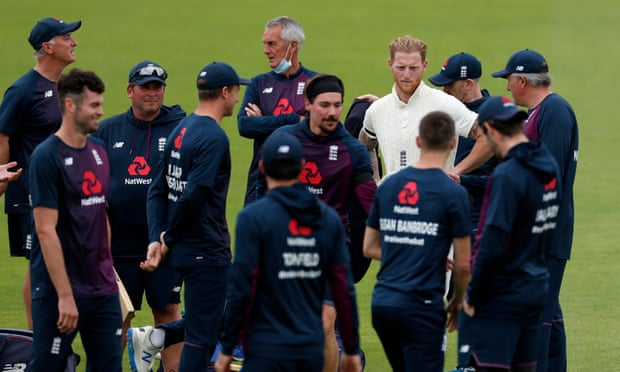
The Beard Liberation Front, the informal network of beard wearers, has celebrated the appointment of Ben Stokes as England cricket captain for the first Test against the West Indies..

He becomes the first England captain since former Beard of the Year Freddie Flintoff led England unsuccessfully in the 2006/7 Ashes.

Stokes replaces Joe Root temporarily as his partner is due to give birth to their baby.

Root is the latest in a line of England captains who have either been occasionally hirsute such as Alastair Cook or perpetually clean shaven such as Andrew Strauss and Michael Vaughan.

The campaigners say that facial hair can provide an important tactical advantage in men’s cricket in 2020 and Ben Stokes will be in a good position to beard the West Indies.

BLF Organiser Keith Flett said, Ben Stokes came close to being voted Beard of the Year in 2019 and he if successfully deploys his captain’s beard in the First Test he will be in a good place for a 2020 challenge.

Articles

Does criticising David Starkey equal ‘cancel culture’?

In Uncategorized on July 8, 2020 by kmflett

Does criticising David Starkey equal ‘cancel culture’?

An open letter to the US magazine Harpers signed mainly by figures on the right or centre but with some on the left such as Noam Chomsky has criticised the cancel culture where people that make what are to many offensive comments on race, gender and belief are criticised.

https://www.theguardian.com/books/2020/jul/08/harpers-cancel-culture-letter-rowling-amis-and-atwood-faces-widespread-criticism?utm_source=dlvr.it&utm_medium=twitter

The letter agrees that the main force behind attempts to silence opinions in the US is Donald Trump but argues that some on the left are also involved.

This raises a wide range of issues but it was interesting to see who in the UK was backing it. Perhaps predictably Claire Fox of the Institute of Ideas seemed keen and Toby Young of the ‘Free Speech Union’ was definitely on board.

Tobes agreed that comments by David Starkey had gone a bit far and noted that he had apologised. He seemed however to think that one comment was at issue. Rather there was a 60 minute interview with Darren Grimes which contains a significant amount of contentious comment.

Starkey was stripped of various honours as a result and Young argues this was akin to George Orwell’s ‘two minute hate’.

What has really happened of course is that Starkey has been criticised and such were the views expressed that on this occasion he found few defenders.

I as socialist historian criticised and suggested he might usefully return to the archives to check whether his view that there is no significant black Tudor history is correct based on recent research.

https://kmflett.wordpress.com/2020/07/07/historians-say-david-starkeys-non-apology-deserves-a-term-in-the-archives/

Does this mean Starkey has been silenced? I don’t think so and I certainly have no ability or desire to do that. He can still no doubt find space in the columns of the Mail and the Telegraph if he wants. His apology for his remarks such as it was appeared on the front page of the BBC news website.

By contrast a press release from the London Socialist Historians on Starkey (see above) got no coverage at all. This is the reality of ‘cancel culture’ and the balance of power in society.

Articles

After lockdowns,riots & revolutions?

In Uncategorized on July 8, 2020 by kmflett

Lockdowns, riots and revolutions
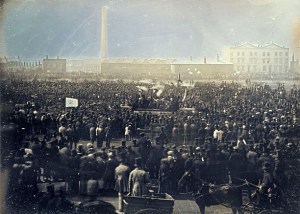
Guardian Editorials are often ponderous affairs bordering on the pious but a commentary on the ending of Lockdown at the beginning of July suddenly opined that ‘Revolutions are not inevitable’ and went on to note that sharp jolts to the system often saw ‘normality’ return later.

It sounded rather like the Guardian urging its readers to keep calm in the face of possible social upheaval, which they might applaud around the world but be more doubtful about closer to home.

There certainly is a link between epidemics of disease, their impact and social unrest.

In pre-modern history plagues could wipe out significant sections of the population and create conditions for what is now known as ‘regime change’. The Black Death in 1348-9 is thought to have killed around 40% of the population in some cases for example, sparking social upheaval.

From the nineteenth century on this has been less the case. Societies began to be able to control and disease better. While successive epidemics of diseases like Cholera and TB swept the world in the 1800s-and in fact still do in some parts the globe- and large numbers died as a result, the proportion of now much larger populations impacted was more limited. Even the most severe cholera epidemics killed at local peaks 15-20% of people.

The relationship between epidemics, their impact on society and protest and change has been more complex in the last 200 years but a relationship there still definitely is.

Haiti Dictator ‘Papa Doc’ Dhuval was ousted in 1986 following popular unrest. This related to a rise in AIDS case in the country which put off visitors from the US, sensibly or not, and caused a collapse in the tourist trade, a central feature  of the Haiti economy. The resulting job losses led to revolt.

This pattern can be broadly seen in nineteenth century cholera epidemics.

The two largest took place between 1830-32 and 1848-49. These were times of social change and revolution around the world. Wars and revolutions, also provoke population movements and refugees. This was a way epidemics spread in the nineteenth century and remains so in 2020.

The link between epidemics and revolution was a strong one at least in the mind of reactionaries. In France in 1849 some called cholera a ‘revolutionary infection’ seeing its spread as being caused by the ‘dangerous classes’ every bit as much as revolt could be.

More often though it was not revolution but riot and protest around epidemics and their impact that was seen. With job losses, poverty and lack of adequate food the issue was who to focus protest on. Governments were an obvious and relevant area with claims that they did little because they were not troubled by deaths of poor people. Sometimes it was medical authorities themselves who were faced with protests that they had not done enough. Much of this may seem rather familiar in 2020 as well.

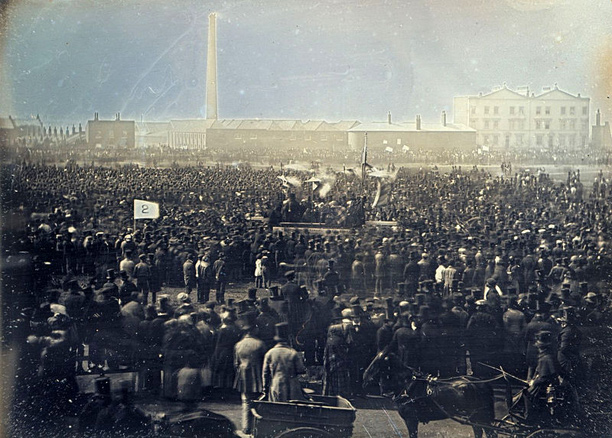
How to address the impact of an epidemic and what measures need to be taken is not new either. In a New Year Editorial on 1st January 1849 the Chartist Northern Star addressed the matter.

Let the rich cleanse the dwellings of the poor and substitute comfortable homes for wretched ones. Let employment be found for the unemployed that they may exchange their rags for warm and fitting clothing, and target hunger’s pangs by obtaining a fair share of food which of right belongs to them.. let the rich, the privileged and the proud, pause in their career, and ‘learn to do justice and love mercy’.

Sentiments that still hold true 171 years on.

This post appeared in the Morning Star 7th July 2020

Articles

Historians say David Starkey’s non-apology deserves a term in the archives

In Uncategorized on July 7, 2020 by kmflett

London Socialist Historians Group

7th July

Contact Dr Keith Flett 07803 167266

Historians say David Starkey’s non-apology deserves a term in the archives

The London Socialist Historians Group, which organises the socialist history seminar at the Institute of Historical Research in central London has said that David Starkey’s apology for comments he made about slavery and Black Lives Matter doesn’t go far enough

The comments were made in a  widely publicised YouTube interview on Thursday July 2nd when Starkey made a number of bigoted comments about the Black Lives Matters movement. The interviewer Darren Grimes has since apologised himself for not picking up Starkey up at the time.

The historians say that while Starkey has apologised ‘unreservedly’ for his most recent outburst his record of making racist comments stretches back a good number of years. The BBC received many complaints when Starkey offered a qualified defence of Enoch Powell’s Rivers of Blood speech on Newsnight in 2011.

Moreover he needs to accept that simply rubbishing the idea of black Tudor history is not appropriate. In the interview he suggested that Dr Miranda Kaufman’s book on the Black Tudors consisted of chapters that were half in italics because there was little historical evidence. In fact the first paragraph of each chapter is italicised and the remainder is copiously footnoted

London Socialist Historians convenor Dr Keith Flett said, David Starkey’s apology mostly about the impact on himself. The media need to stop using him as a ‘go to’ historian on matters about which he has no specialist knowledge. He needs to acknowledge that it is not what his remarks have ‘cost’ him but their impact in reinforcing racist ideas. A period of silence from Dr Starkey while he returns to the archives to review the evidence for black Tudor history would be very welcome.