Articles

Boris Johnson,gestures & stunts

In Uncategorized on July 7, 2020 by kmflett

Boris Johnson, gestures and stunts

Boris Johnson has been widely criticised for saying that he would not ‘take the knee’,a symbol of solidarity with the late George Floyd, because he doesn’t believe in gesture politics.

Taking the knee is not a gesture but a political act of solidarity, something that doesn’t really exist in Johnson’s known universe.

Even so he often does make gestures and also indulges in stunts.

The two have been confused in media commentary. It is perhaps to reference another current discussion the difference between a moment and a movement.

Johnson is not about to contend with authority (whatever he may occasionally claim) but the matter is a distant cousin to the social movement theorist Charles Tilly’s Repertoires of Contention.

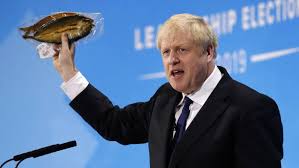
When Johnson clapped for the NHS momentarily on the doorstep of 10 Downing St or waved a kipper about at a rally these were gestures-typically meaningless ones.

When he was involved with writing things on the side of a Brexit campaign bus or indeed getting stuck on a zipwire when he was London Mayor these are stunts, part of a wider campaign.

Clearly I’m no fan of Johnson but politics is in part theatre and gestures and stunts are all part of it. What for example was the purpose of Keir Starmer’s appearance at Brewdog TowerHill on Monday about if not to engage in a media focused activity. In this case it was at least one that had a decent purpose to it.

Articles

Is it time for a trade unon in craft beer & pubs?

In Uncategorized on July 6, 2020 by kmflett

Is it time for a trade union in craft beer?

Below is an edited post from 2018 that is getting a lot of interest today.

I’m not entirely sure why but it may relate to the re-opening of Wetherspoons pubs in England and a call from their unionised employees not to boycott the Company but publicise the need for more to join unions.

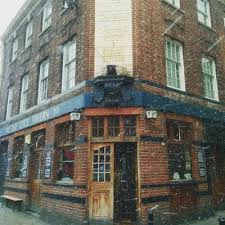
It probably also relates to Keir Starmer’s visit to Brewdog Tower Hill today. Its a brewpub and the kit produces decent beer,somewhat better to my taste than Brewdog’s standard range. Brewdog is a Living Wage employer but it doesnt recognise a union. It should.

My occasional posts on the matter usually attract little obvious attention. Beer (aside from Big Beer) is largely not organised by unions and someone working in the sector reposting such a piece might find themselves victimised or blacklisted by their employer. Both are illegal but taking effective action in that context is hard work.

Maybe the impact of COVID-19, furlough and potential and actual job cuts as opened a moment when the trade union movement can organise craft beer. Its not union officials in Head Offices that’ll do that though, its workers on the ground pushing for it.

Brewdog lost an Employment Tribunal case in 2018 against a former employee who took a case around the issue that the brewer had failed to make adequate adjustments in a situation where the individual had failing eyesight. I haven’t read the Tribunal judgement but would merely note that it is not particularly easy to win ET cases.

The Bakers Union (BFAWU) balloted for and took strike action at two Wetherspoons pubs in Brighton over a demand for a £10 living wage and union recognition. The Bakers have been pioneering in efforts to unionise companies like McDonalds.

Of course Big Beer is largely unionised, mainly by Unite and Unite also has membership in some craft brewers as does the independent union IWW.

Craft Beer is much smaller and mostly union free though, even if more progressive employers do pay the living wage. On the whole in recent times while union organisation in large scale private sector employers is robust (I’m a union officer in this environment) in smaller private sector areas unionisation is poor.

In short if people have an issue they quit and go somewhere else. Not always ideal for either employee or employer.

Of course there is nothing to stop anyone working for a craft beer brewer from joining a union. They will get personal representation and advice and much cheaper and much better informed advice too than consulting a lawyer.

Collective recognition is a different matter. Unions like anyone else have to look at resource and cost as well as the important principle of trade union organisation and recognition.

A handful of craft brewers are probably large enough to warrant collective representation. Brewdog, Beavertown and Camden come to mind. That doesn’t mean ‘everybody out’ by the way. It mainly means a better organised way of reflecting and dealing with workplace and workforce issues.

The same applies to bars which is why the BFAWU initiative at Spoons is interesting.

So when it comes to unions in craft beer and pubs, perhaps the question is, if not now,when?

Articles

After the hyperbole, a note on the social role of the pub

In Uncategorized on July 6, 2020 by kmflett

After the hyperbole, a note on the social role of the pub

With some pubs re-opening in England on 4th July there was considerable media hyperbole about thousands rushing to the local and getting drunk. No doubt some did but most who use the pub regularly know its core reason is much more than just selling drink.

One need only look for example at radical working-class history in the first half of the nineteenth century to see that from the Luddites to the Chartists the pub was a central meeting place. This was perhaps particularly so after the 1830 Beerhouse Act which led to a considerable increase in pubs, perhaps a little like the micro-pubs of today.

The idea of the ‘pub as the hub’ of local community activity has long been one promoted by the Campaign for Real Ale (CAMRA) CAMRA was  founded in 1971 to combat moves by the big corporate brewers to replace traditional cask ales with bland artificially carbonated keg beer. To its credit, it has been one of the most successful consumer campaigns of recent decades and  has also been active in trying to stop pub closures. Recent legislation in England, supported by CAMRA, allowing pubs under threat to be classified as Assets of Community Value (ACV) has helped.

Traditionally many pubs have supported a variety of social activities ranging from pub games through support for local music, theatre and other performing arts, to support for local football clubs and beer festivals. A pub which recognises its important role in the local community and offers well-kept beer at a fair price is far more than just a boozer. It’s a social location and inclusive of community.

Of course that doesn’t describe every pub, there are an infinite variety, the good, the bad, the indifferent. But they have a vital role in society. At the height of the temperance movement in the late nineteenth and early twentieth century temperance pubs and hotels were opened. They didn’t of course sell alcohol (or not much anyway) but with or without drink people are social.

This is an edited and updated extract from a piece that first appeared in Culture Matters in Autumn 2018.

Phil Mellows @philmellows has written a very good piece on the subject in the Morning Star (4th July).  https://morningstaronline.co.uk/article/c/why-we-should-now-be-more-drink-aware-ever

Unusual times indicate unusual measures. There will be a special poll for the Beard Friendly Pub of the Summer in September. Details a little later in July

Articles

Paying tribute to Nye Bevan on 72nd birthday of the NHS. One statue that must never be toppled

In Uncategorized on July 5, 2020 by kmflett

I’ve divided my time between Tottenham and central Cardiff (where my partner lives) for 25 years and when lockdown was announced I was in Wales and remain so for a little while longer.

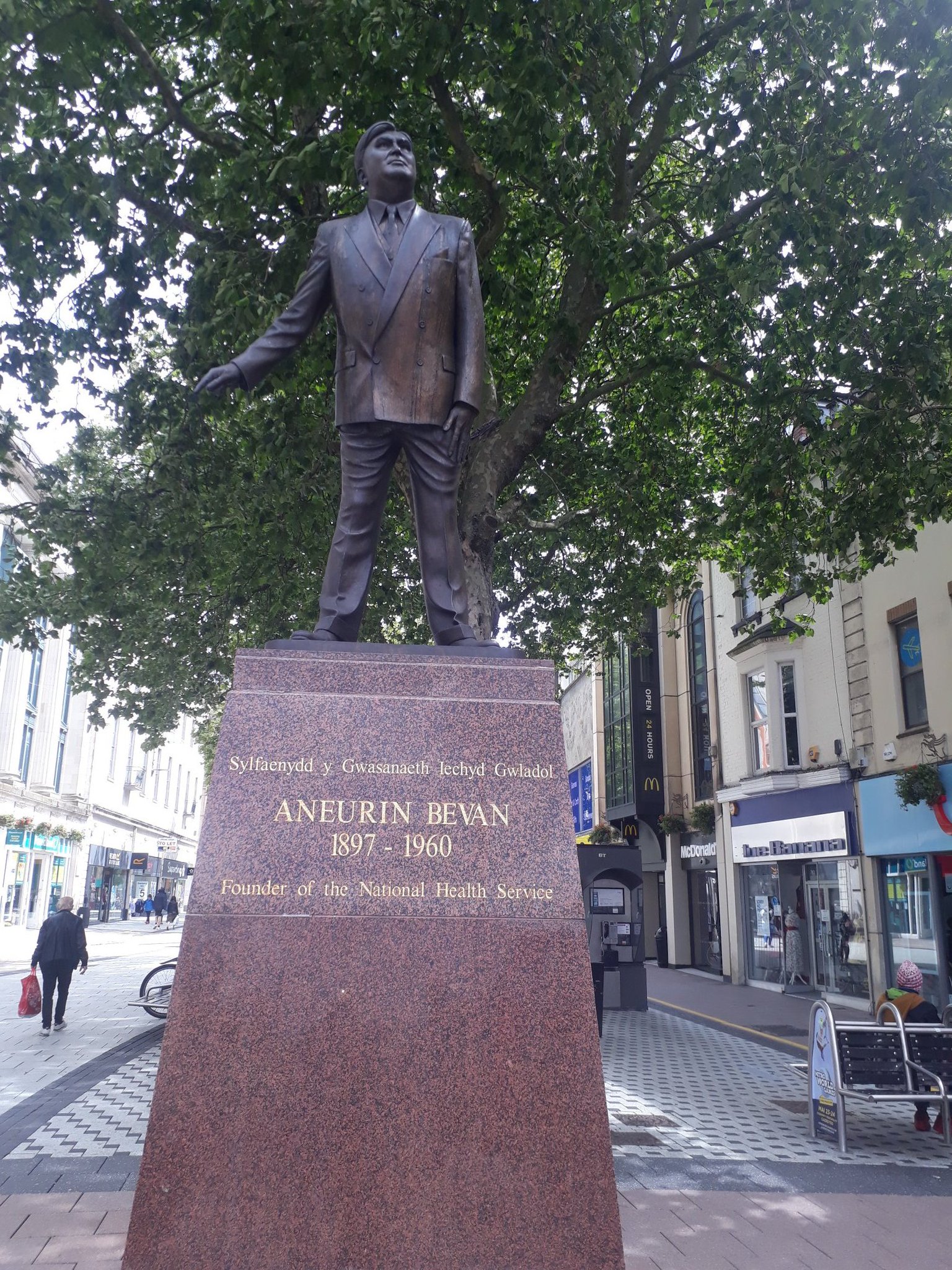
Hence on the 72nd birthday of the NHS I was able to take the ten minutes or so walk from the house to pay tribute to the founder of the NHS Nye Bevan who died 60 years ago in 1960.

There is a statue of Nye at the end of Queen St, one of the main Cardiff shopping streets (think Oxford St but pedestrianised for many decades). Nye’s statue looks out over Cardiff castle.

Nye’s statue looked as it if had been cleaned for the anniversary, free of its usual decorations (think seagulls).

As a labour historian (albeit Nye is not my period) Ive read a good deal about Bevan. He’s never struck me as being always the easiest person to get on with and when you consider that battle he had to bring the NHS into being in 1948 that is just as well.

Even so Tony Benn described him in his diary (7th February 1951) as ‘open, honest, good-humoured and devastating.

Since the fall of Edward Colston in Bristol a few Sundays ago, there has been much discussion about which statues should come down and which should go up.

There are though some statues that must never be toppled, and Nye’s is one.

Articles

The Ambridge Socialist. David Archer confesses to pushing Nigel off Lower Loxley roof in 2011

In Uncategorized on July 5, 2020 by kmflett

The Ambridge Socialist

July 5th

David Archer confesses to pushing Nigel off the roof

On 2nd January 2011 David Archer and Nigel Pargetter were on the roof of Lower Loxley removing Xmas banners. Nigel fell and died. There was a perfunctory investigation and nothing was done, an all too familiar story. The Ambridge Socialist has always maintained that David Archer pushed Nigel deliberately.

The matter has now re-surfaced. Dum Tee Dum have been running a series of Friday evening zoom meetings hosted by Roifield Brown with guests from the Archers. In June Graham Seed (Nigel) appeared and underlined that he had been pushed by David Archer and that justice must prevail. On 3rd July Tim Bentinck (David Archer) was the guest and freely confessed that he had pushed Nigel. ‘Somebody had to do it’ he claimed. Surely it is time for a murder inquiry to be opened?

The Ambridge Socialist poll

Is it time for Sergeant Burns to arrest David Archer for the murder of Nigel Pargetter

Susan Carter set for the sack?

Susan Carter has been continuing her recent career as a Radio Borsetshire DJ this week, with the usual inappropriate comments.  Back in the real world though the BBC has announced cuts to regional broadcasting. We wonder if Susan’s new job is under threat…

The Horrabins and the Aldridges. Class struggle news

This was also the week of the Bull quiz. A complete list of the questions and answers doesn’t seem to be available but we do know that Susan was on the same team as Jennifer- it was family- and that this led to an outbreak of class war as Susan corrected Jennifer on a Latin saying. Could it be that the Horrabins are competing with the Grundys for the right to be the main proletarian challengers to the Archer Dynasty now that Joe has gone?

Tracy Horrabin and the cricket team

Tracy has rightly told Susan that there has always been privilege in Ambridge and for that reason she is determined to hang on to her role as cricket club captain. Very shortly now we’ll see how effective her training sessions have been.

In Other News

Freddie has fixed a toilet at Lower Loxley, albeit it took him all week.

Elizabeth has had an on-line ‘date’ with Ifty. It was apparently ‘boring’. Its Ambridge, what did she expect?


Articles

Beard trims pose barbers shop safety risk; grow a Yeard instead say campaigners

In Uncategorized on July 4, 2020 by kmflett

Beard Liberation Front

Media Release

4th July

Contact Keith Flett 07803 167266

Campaigners say beard trims pose barbers shop safety risk; Grow a Yeard instead

The Beard Liberation Front, the informal network of beard wearers, has said that with hairdressers and barbers re-opening in England from 4th July beard trimming is likely to pose a safety risk and should be avoided.

The campaigners say that while it is understood and accepted that after a lengthy period of closure many want to have their hair cut or styled, including Labour leader Sir Keir Starmer, beard trimming is a very different matter.

Barbers shops are a confined space that should require a mask to be worn. Trimming the beard cannot however be done while wearing a mask.

The Beard Liberation Front has called on people who have grown lockdown beards to focus on achieving a Yeard instead. This is a year’s growth of beard, uncut although trimming and styling is allowed

BLF Organiser Keith Flett said, by all means go to the hairdresser or barber in England now but leave the beard alone.  Trimming it is not safe. Growing a Yeard is the way forward

Articles

Some pubs are back in England. On temperance, working conditions & safety

In Uncategorized on July 4, 2020 by kmflett

Some pubs are back in England. On temperance, working conditions and safety

Pubs can re-open in England today. Not all will for a variety of reasons but some big chains such as Wetherspoons are and Greene King will from Monday.

There is already a bit of a media storm about it and there will be more.

I will be paying no attention to the hyperbole and no doubt a good deal of ill-intentioned misinformation as well.

There are all sorts of issues. There is of course the question of customer safety where there are guidelines. There is also the important question of staff safety and conditions, which in a poorly unionised sector adds an important additional concern.

If you are going into a pub today particularly a chain do take time to thank bar staff and have a word about joining a union if they haven’t already.

The reality is of course that with a lengthy closure we were reaching the point where many pubs might have closed for ever (some still will) and people put out of work not just in pubs but across a much wider related industrial sector.

We will be hearing from those that don’t think the pubs should be opening, essentially in two categories.

Firstly those who think on safety grounds it’s a bit soon. I’m in sympathy here (but see above) and as someone in a higher risk category for COVID-19 I’ll be waiting to see how things work in practice before venturing in. If that argument is made though it needs to go hand in hand with a call to extend the furlough for areas that cant or shouldn’t re-open so that redundancies processes don’t start.

Secondly those who are in fact supporters of temperance who’d be happy if pubs never re-opened. These days such people often style themselves as being concerned about alcohol. There are indeed real concerns about misuse and health.

To that I’d add a different concern about a recurrent feature of lockdown of large groups gathering in random places to drink in un-supervised and un-regulated ways. Pubs have a number of roles in society and social responsibility is one. Phil Mellows has an excellent piece on this in the Morning Star (4th July)

If you are in this second category please own it. Supporting temperance and being anti-drink is a perfectly reasonable and respectable view. In the labour movement it has been an ever present strand and I’ve been known to be puritanical about drinking before or in meetings. In a democratic pluralist society it must be accepted though that many do enjoy a drink in a pub and mostly they do it responsibly.

I hope to be back in the beard and beer bars of north-east London soon, but not quite yet. I’ll be raising a glass at home to good beer, good pubs and the many that work hard to make both happen.

Articles

Johnson maintains ban on recreational cricket. Is Dominic Cummings to blame?

In Uncategorized on July 3, 2020 by kmflett

Boris Johnson has refused to lift the ban on recreational cricket today.

A BBC report is here:

https://www.bbc.co.uk/sport/cricket/53276717

He has moved on from blaming the ball to arguing that its changing rooms and teas that are the issues.

I dont often agree with former England captain Michael Vaughan but his view that Johnson’s statement is ‘utter garbage’ is right.

The puzzle is what is really behind Johnson’s increasingly illogical statements on cricket. My theory, which in keeping with the whole affair appears fairly illogical is in today’s Morning Star. The detail is below:

The refusal of Boris Johnson to allow the return of grassroots cricket is a puzzle. After all Johnson is a cricketer himself, captaining in or playing in the annual Spectator v Lord Althorp game in Northamptonshire every June.However an account of the game played on June 25th 2016 just after the EU Referendum result may provide a clue. According to journalist Harry Mount, Johnson was meant to be at Dominic Cummings house in Islington sorting out his bid to be Tory leader in the light of David Cameron’s resignation. Instead he chose to play cricket and opted out of the contest. That delayed Cummings chance to wreck Britain by a full three years and possibly left him with a dislike of cricket too, the result of which we can now see.

Articles

Historians accuse David Starkey of avoiding the realities of Black Tudor History

In Uncategorized on July 3, 2020 by kmflett

London Socialist Historians Group

3rd July

Contact Dr Keith Flett 07803 167266

Historians accuse David Starkey of avoiding realities of Tudor history

The London Socialist Historians Group, which organises the socialist history seminar at the Institute of Historical Research in central London has accused David Starkey of avoiding the realities of Tudor history.

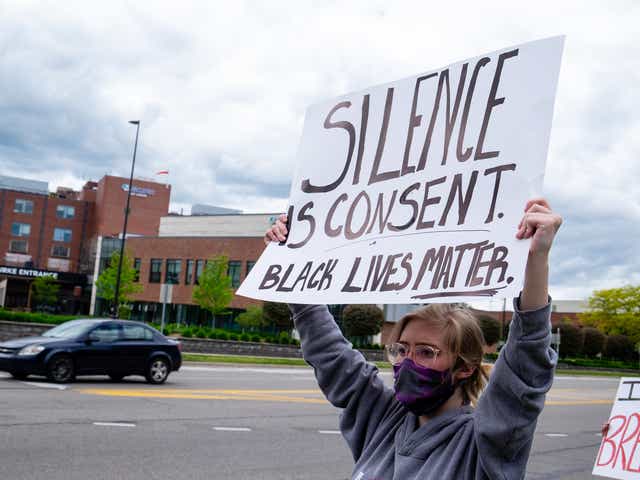
In a widely publicised YouTube interview on Thursday Starkey made a number of bigoted comments about the Black Lives Matters movement.

However in a brief section he touched on the area that he has been a specialist in, Tudor history.

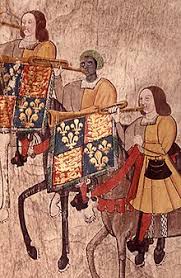
Starkey claimed that while one could find examples of black people in Tudor England such as Henry V111’s trumpeter John Blanke, there was little wider evidence.

He suggested that Dr Miranda Kaufman’s book on the Black Tudors consisted of chapters that were half in italics because there was little historical evidence. In fact the first paragraph of each chapter is italicised and the remainder is copiously footnoted

On Thursday Starkey resigned as a member of the Mary Rose Trust Board suggesting that he privately recognises that his public statements don’t fit historical reality. Attempts were made, documented by Dr Kaufman, to raise the ship in the Tudor period, involving African diving specialist Jacques Francis.

London Socialist Historians convenor Dr Keith Flett said, David Starkey’s Tudor history is out of date and his wider views belong in the Victorian era. Its time for him to leave public life.

Articles

We dont need to talk about David Starkey

In Uncategorized on July 2, 2020 by kmflett

We don’t need to talk about David Starkey

David Starkey has been opining about Black Lives Matter. His views are as predictable as if someone had asked me if I think beards are a good thing.

You can google his comments if you wish but take care out there.

Below for background is something I wrote in 2011 (edited for 2020 relevance) on Starkey which remains relevant, except Starkey is getting even more reactionary as he gets older.

In between he’s managed to attack the likes of Mary Beard, Jeremy Corbyn and Keir Starmer too amongst others. Bigoted remarks of a racist and sexist nature are now his stock in trade. He usually claims when making them to be an historian of some sort (which he is) although the remarks have absolutely nothing to do with his historical work.

David Starkey [1945-] is a Tudor historian who has made the leap from being an academic to one of a small group of ‘TV historians’ who popularise history for a wider audience.

He caused outrage by appearing on a BBC Newsnight programme about the August 2011 riots in England and stating that Enoch Powell’s Rivers of Blood speech was right to argue that Britain was heading for civil unrest. He did qualify this by noting that Powell had been wrong to argue that this would be racially motivated.

Even so for someone to claim on a mainstream news programme that part of Powell’s far right and racist political agenda had turned out to be correct was something entirely worthy of the storm of protest that it has caused.

I have had the dubious pleasure of meeting Starkey and there is no doubt that he is, or at least was, a genuine research historian of the Tudor period. He can talk engagingly and interestingly about his subject in a way that one wishes more historians working on their latest monographs could.

Even so the fact remains that historians have their ‘periods’.

I am, for example, a nineteenth and twentieth British labour historian a not over populated area. If you find me opining on an historical issue outside of my ‘period’ it would be as well to consider that I’m more likely to be expressing an opinion rather than something I’ve actually researched.

Starkey has in recent decades made a name for himself as a right-wing ‘Kings and Queens’ historian of the sixteenth century in England.

Left-wing historians tend to be more interested in the next century, the seventeenth, which saw the English Civil War, so there are few effective counter authorities to Starkey on the left.

Starkey now seems intent though on promoting a second career as a right-wing controversialist and should be understood as such.

Dr Keith Flett,is the convenor of the socialist history seminar at the Institute of Historical Research, University of London