Articles

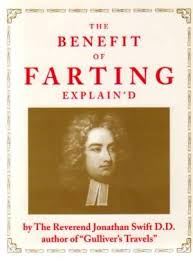
Farting as an act of resistance

In Uncategorized on June 17, 2020 by kmflett

A man in Vienna has reportedly been fined 500 Euros for farting with ‘full intent’ at police officers in a park

https://www.bbc.co.uk/news/world-europe-53072756

Apparently farting in general is not an offence but the man’s fart was judged to be provocative.

Breaking wind as we might more politely call it,is something that happens to everyone from time to time. It can be embarrassing in a social or work setting and I dont expect many will need reminding that it can be a rather tedious source of schoolboy type humour. The French Dalek who ‘farts in your general direction’ at Dr Who is at the rare better end of that sort of ‘joke’.

But in these lockdown times when all sorts of additional laws and rules exist for authority to play with (most very neccesary, a few perhaps less so) it may be that farting is one act of resistance, that the Vienna incident notwithstanding, can still make a point.

James C Scott in his book Weapons of the Weak. He quotes E P Thompson on eighteenth century England:

On the surface all is consensus, deference, accommodation; the dependents petition abjectly for favour; every hand is touching his forelock, not a word against..the Glorious Constitution breaks the agreeable waters of illusion. Then from an anonymous or obscure level there leaps to view for a moment violent Jacobite or levelling abuse’.

Thompson argues that both the deference and the abuse could spring from the same mind, depending on a calculation of what was possible.

We can in that sense understand the Vienna fart as an act of resistance but dont try this at home….
Articles

London Socialist Historians Newsletter Summer 2020 on-line: a focus on Black History Matters

In Uncategorized on June 17, 2020 by kmflett

A little later than usual, but these are unusual times,the London Socialist Historians summer 2020 newsletter is now on-line:

http://londonsocialisthistorians.blogspot.com/2020/06/london-socialist-historians-group.html

Thanks to John Burton who does the work of designing and putting the newsletter together.

The newsletter has been published three times a year since 1997 and the contents of all issues are on-line, just follow the link above.

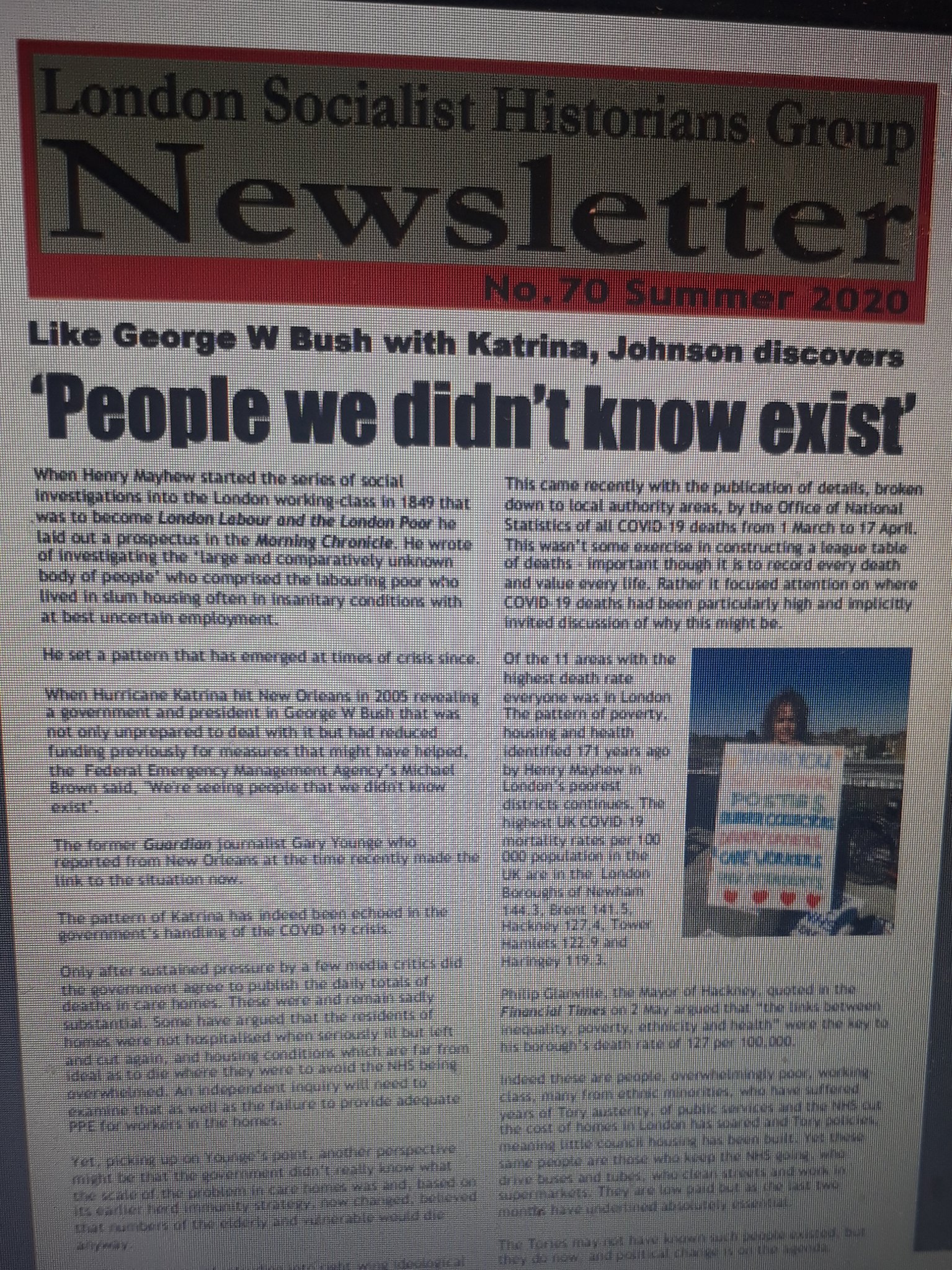
This issue has a particular focus on Black History, looking at some of the historical background to the BAME death toll from COVID-19.

There is also a review of a new book on London Chartism in 1848 that places the black leader of London Chartism in that year centre stage.

The newsletter also carries a piece on new research on the impact of the Cato St Conspiracy 200 years after it took place.

Interesting times and times when history is needed more than ever.

Articles

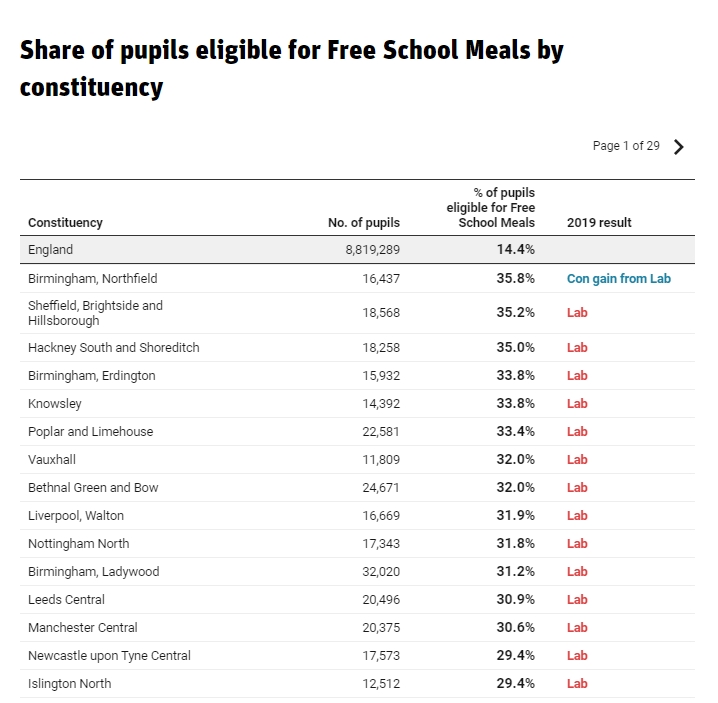
Class & Politics. Of top 100 Parliamentary seats with highest eligibility for free school meals 78 are Labour

In Uncategorized on June 16, 2020 by kmflett

Ben Walker, New Statesman

Boris Johnson has U-Turned on providing free school meals for those eligible over the summer after a campaign led by footballer Marcus Rashford and pursued today in Parliament by Labour.

Full marks to Ben Walker at the New Statesman for compiling a list of the Parliamentary Constituencies and the percentage of pupils eligible for free school meals.

You should be able to look at the whole thing here:

https://www.newstatesman.com/politics/education/2020/06/other-reason-government-u-turned-free-school-meals

Walker’s point is that one reason for the Tory U-Turn is that after the last Election the Tories now hold rather more seats with a high eligibilty than they did before- the Red Wall issue.

A more fundamental point does however strike me. Of the top 100 constituencies with the most pupils eligible for free school meals 78 are Labour held. A crude but interesting measure of class politics in 2020 if ever there was one.

Articles

How a racist media portrayed the black leader of London Chartism in 1848

In Uncategorized on June 16, 2020 by kmflett

How a racist media portrayed the black leader of London Chartism in 1848

In 1848 just as it now would racism played a key part in how the media depicted William Cuffay, the black leader of London Chartism. Cuffay was the organiser of the Chartist demonstration for the vote on 10th April 1848 at Kennington Common. He also played a role in the attempted Chartist rising at Seven Dials in central London on 16th August 1848. He was arrested on 18th August 1848 and sentenced to be transported to Tasmania. There he remained politically active and died in 1870.

A key racist caricature was from Punch. The context is explained below:

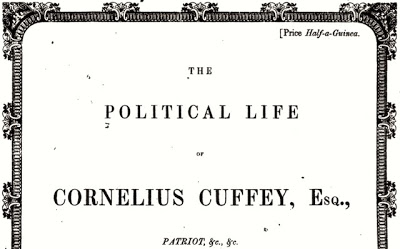
In 1848 particularly Cuffay was lampooned in print, in newspapers like the Times, and the Observer, in magazines like Punch and the London Illustrated News. While he was in Newgate Gaol awaiting transportation Punch carried The Three Christmas Waits a lampooning poem by William Makepeace Thackeray. A book titled The Political Life of Cornelius Cuffey, Esq., Patriot, &c, &c., was on sale for half a guinea. It consisted of a poem that was lavishly illustrated with hand-coloured lithographed plates protected by tissue guards, and claimed  to have been “Printed for Sale at the Bazaar in Aid of the Governesses’ Benevolent Institution”. This organisation was an invention of Punch in 1846.

The Judge did me transport,

To go beyond the sea:

And so for life, from his dear wife

They took poor old Cuffee.

I have extracted only a few lines here from a much longer text which manages to be racist, Anti-Semitic and anti-Irish

https://cuffay.blogspot.com/2011/04/thackeray.html

Articles

The moral economy of post-lockdown Britain. A history of the present

In Uncategorized on June 16, 2020 by kmflett

The moral economy of post-lockdown Britain. A history of the present

A report in the Guardian (15th June) indicated that the advice of the World Health Organisation is that lockdown should not be lifted in the UK until an effective track and trace system is in place.

If Johnson bothers to respond to this at all he will no doubt meet it with the usual Johnsonian obfuscation that either it is or it will be shortly.

More needs to be said and done. It should not be a choice between a risky lifting of lockdown or condemning millions to perpetual tough times. Those who have had little or no income since March and more that soon won’t have as Government help is phased down.

It is a moment for people to be put before profit and for proper Government support to be put in place over a sustained period as is the case in a number of other European countries. The cost of sustained support for those likely to be hardest and longest hit, from airline workers to freelancers in broadcasting and entertainment and those in hospitality will be but a fraction of the bank bailout in 2008.

It must be a case of a new normal rather than a return to the old usual. If the Government wont act, the people must.

There is an historical example. In the summer of 1839 the Chartists called a Grand National Holiday a disengagement with the system involving a general strike, closure of pubs and withdrawal of savings from banks.

The aim was to get the early market economy tempered by a moral economy. The term attributed to E P Thompson refers to a system where profits are not abolished but constrained and everyone has enough to live on. It is might be seen as a variant on a universal basic income now. Perhaps it might be something Sir Keir Starmer could have a look at, although obviously with maximum caution in due course.

The Chartist strategy didnt work in 1839 but another try now must be worth a go, with the kind of energy for change from below we’ve seen in the Black Lives Matter movement it might just work now.

Articles

Boris Johnson on Churchill & history 2014-2020. The Times They Are A Changin’

In Uncategorized on June 15, 2020 by kmflett

Boris Johnson on Churchill and history 2014-2020. The Times They Are A Changin’

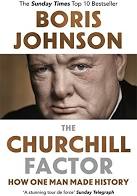
Boris Johnson has been opining on history, and Churchill, in a piece for the Daily Telegraph (15th June). In 2014 he published a book on Churchill.

I’ve looked at both so you don’t have to.

His 2014 volume as he more or less admits is not a serious history- indeed he makes it clear that he is not an historian-but simply an attempt to re-cement Churchill’s status as a national hero in a Britain that might either have forgotten about or simply doesn’t agree this is the case if it does recall him.

Johnson is much better at journalism than he is at being a politician, so his writing is always entertaining in a sort of full on BS way.

In 2014 he agrees that Churchill’s reputation cannot be taken for granted. He also notes that understanding history can be a matter of dispute. He argues that:

‘he is the resounding human rebuttal to all Marxist historians who think history is the story of vast and impersonal economic forces. The point of the Churchill Factor is that one man can make all the difference’

However by 2020 in the Telegraph non-historian Johnson has changed his mind that history can be a matter of dispute:

‘we need to address the present, not attempt to rewrite the past- and that means we cannot and must not get sucked into never-ending debate about which well-known historical figure is sufficiently pure or politically correct to remain in public view’.

That of course was precisely what is his 2014 book on Churchill was doing.

Because history while fact based is also the subject of interpretation and debate Johnson has also changed his view on Churchill and agrees that in a long career he expressed all kinds of views that are ‘totally unacceptable to modern ears’. That sounds a bit like Johnson making a reference to racism. At least he fought the Nazis, Johnson notes.

There are think we can agree…


Articles

Lockdown: a sense of place & time. The importance of pub closing time over the centuries

In Uncategorized on June 15, 2020 by kmflett

Lockdown: A sense of place and time. The importance of closing time

The working class did not arise like the sun at an appointed time, it was present at its own making

E P Thompson, Making of the English Working Class


Glennie and Nigel Thrift’s 2009 volume Shaping the Day looks at changing ideas about the measurement of time in Bristol- primarily because that City has maintained good records of municipal and commercial affairs over a lengthy period.

One place where those with little or no access to what the time was (many people before the C19th) could find out the time in most cases was the pub clock. Glennie and Thrift quoting Jonathan Barry estimate that early C18th Bristol had between 600 and 700 pubs that is one for every 56 inhabitants.

Not every pub had a clock but most did to allow them to enforce licensing hours and to give drinkers a way of checking how much drinking time they had and perhaps more particularly to be sure that licensing magistrates were aware that they were doing so.

Jonathan Barry suggests that in the eighteenth century official pub closing times tended to be related more closely to hours of daylight meaning 9pm in winter and 10pm in summer. Whether the clock or the fading of the light was more significant here is not clear.

For Thompson plebeian culture, pre-industrial working patterns, did not have a ‘predictive’ sense of time. That is people did not plan out their day or week, with so many hours work, so many hours leisure and so on. Rather time was seized as of the moment. If there was little or no work to do, then an extended amount of time might be spent in a pub for example.

The role of the pub clock not only provided order to drinking time and hours, it also reflected the change to a measured and disciplined pattern of working time.

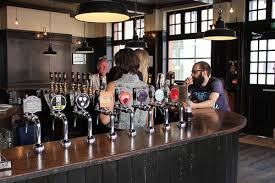
Nowadays of course most people have watches or check the time on their mobiles but the ringing of last orders and of time in a pub is still one of the more distinctive ways that time is marked in any day.

And with lockdown the structure to the day that means the pub (mostly)closes at 11pm Mon-Thurs and probably a bit later on Fri-Sat is absent.

That doesn’t mean I spend my time drinking during the day (there is work to do) but the rhythm of life around a beer or two at a specific time is missing. A sense of time and place is missing.


Articles

Note to Boris Johnson: It’s not about statues but here are some that should be put up

In Uncategorized on June 15, 2020 by kmflett

Note to Boris Johnson: It’s not about statues but here are some that should be put up

Writing in the Telegraph I note that Johnson says he will resist calls to remove a statue of Winston Churchill in Whitehall. Who is making this call? No one. It is not a demand of Black Lives Matter or anyone else. These are not the words of a Prime Minister but prime quality BS from a Tory politician who just isn’t up to the job of running the country and prefers instead a permanent campaign.

There is rightly some focus on re-situating some statues of prominent slave traders and imperialists away from very public positions. There is no demand to take down any war memorial, not even that of Bomber Harris in Aldwych which is probably amongst the most contentious.

Black Lives Matters is not about taking down or putting up statues but since the issue has been raised I list below a handful that seem long overdue. I’m sure there are others. The link is to a Stephen Bush piece in the New Statesman where he rightly suggests that putting up statues is something that might be usefully reviewed and draws attention to a plan by the London Mayor to do just that.

The previous London Mayor had nothing at all to say on the matter. His name? Johnson

https://www.newstatesman.com/politics/uk/2020/06/what-sadiq-khan-gets-right-and-wrong-about-statues

Sylvia Pankhurst (1882-1960) socialist suffragette
Mary Wollstonecraft (1759-1797) Author of A Vindication of the Rights of Women
William Cuffay (1788-1870) Black Chartist leader in London
Jayaben Desai (1933-2010) Led Grunwick strike of Asian women, for equal pay, against racism

Articles

Hidden from History. Red Saunders image of London Chartist William Cuffay

In Uncategorized on June 14, 2020 by kmflett

The reality that the history of the black leader of London Chartism in the 1840s, William Cuffay, has been largely unknown has been known for a while.

Efforts to end this editing of history and to restore Cuffay to prominence as one of those who led the fight for the vote have been underway for a while.

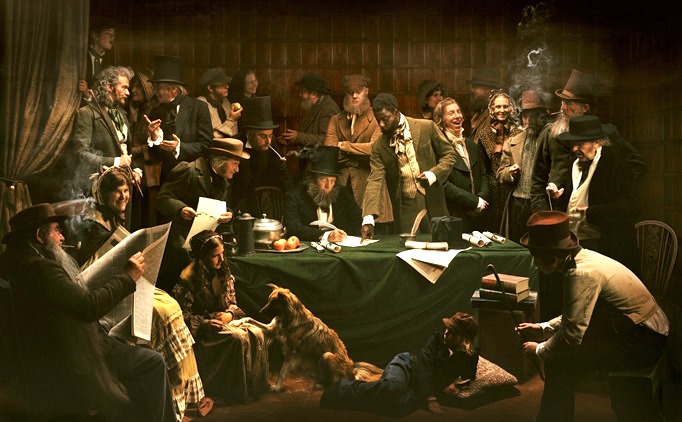
Above is a montage featuring William Cuffay centre stage.

The wording reads:

The 1832 Reform Act had extended the vote to more men with property but the working class still did not have a vote. A nationwide campaign involving men and women called for change and they became known as The Chartists, the first mass working class movement in Britain. The People’s Charter of 1838 demanded votes for all men, constituencies of equal size, the abolition of the property qualification, annual parliaments and salaries for members of Parliament. Portrayed is a meeting of the London Chartists in Whitechapel, in 1842, with William Cuffay, the son of a slave and the elected President of the London Chartists. He was transported to Tasmania for his endeavours, later pardoned, and continued to be politically active there.

http://www.redsaundersphoto.eu/1842.html

Red Saunders has created a number of images of key moments in British radical history,the most recent being a series marking the 200th anniversary of Peterloo in 1819.

The pictures for the montage were shot at Chat’s Palace, Homerton.

I provided some historical advice and can be spotted in the picture, third figure from the left of Cuffay, wearing a false beard..

Articles

Ambridge Socialist. Black Lives Matter. Slave trader statue at Felpersham Guildhall must go

In Uncategorized on June 14, 2020 by kmflett

Ambridge Socialist

14th June

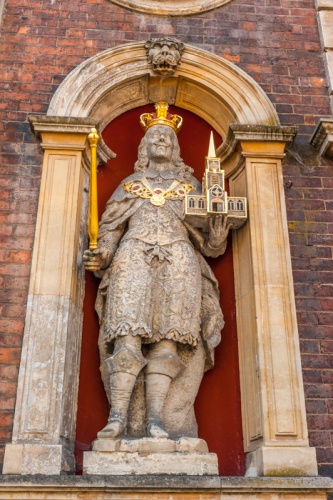
Black Lives Matter: Statue of slave trader Charles 1st at Felpersham Guildhall must go

The Archers whether in new normal format or traditional format is recorded several weeks in advance so its not realistic to think that the recent Black Lives Matter protests after the death of George Floyd will find their way into BBC reports from Ambridge.

That doesn’t mean they aren’t happening of course. There is the question, quite long standing, of whether an Ambridge luminary should be erected on the village green, which we’ll address separately.

However as Roifield Brown questioned on the Dum-Tee-Dum podcast on Friday is there not a statue that needs taking down in Ambridge?

Ambridge Socialist reporters have been looking into this. It is understood that a focus of concern for Black Lives Matters protesters in Borsetshire is a statue of King Charles 1st to be found on the front of Felpersham Guildhall.

In 1632 Charles 1st granted a licence to a syndicate of traders that gave them royal approval to transport enslaved Africans from Guinea.

The Ambridge Socialist supports calls for the statue to be removed from its present position and placed in an appropriate museum.

The new normal Archers

There seems to have been an increase in complaints this week about the new normal Archers consisting of monologues rather than dialogue.

Its perhaps understandable after a week of discussion of Tony’s beard and hair that there is a demand for something a little less tedious. The Ambridge Socialist works closely with the Beard Liberation Front who were in contrast pleased at this week’s Archers. Beard stories in Ambridge are rare even if, perhaps predictably, the wrong conclusion was reached.

It must also be said that Natasha in lockdown monologue just isn’t obnoxious enough.

Next week Lilian will be unleashed, as it were, as will Kate. Expect more complaints.

Happy Birthday Peggy Woolley

Peggy(aka June Spencer) is 101 today. The Ambridge Socialist wishes her a happy birthday, although we are reasonably certain that she doesnt read us…

A reminder though that in 2017 we defended Hilda Ogden

Peggy’s cat Hilda has been framed for the murder of a number of small creatures in Ambridge simply because Robert Snell spotted it with a mouse in its mouth. A cat, catching a mouse? Shocking. If only to Snell. An Ambridge Socialist poll has acquitted Hilda of involvement in the murders and suggested the person most likely was of course David Archer..