Articles

National Beard Week Hirsute Personality 2020 poll (all BAME shortlist)

In Uncategorized on June 13, 2020 by kmflett

Beard Liberation Front

Press release June 13th

Contact Keith Flett 07803 167266

National Beard Week Hirsute Personality 2020 poll has all BAME shortlist

The Beard Liberation Front, the informal network of beard wearers, has said that with Beard Week set to bristle off to a start on 22nd June it has launched the annual search for Hirsute Personality of the Year.

In 2020 as in 2019 the shortlist features all BAME beards

The BLF says that it has become increasingly concerned that images of the hirsute overwhelmingly feature young white men. While this is positive in terms of beard impact in the public eye it downplays and often ignores the importance of BAME beards.

The shortlist comprises well known beard wearers, focusing not just on their place in the public eye but the gravitas and impact their beard adds to their public image and appearance.

Unlike the Beard of the Year in December, those on the short-list don’t need to have a full-time beard. Rather they need to have been in the public eye while hirsute. Neither is the contest about who has the ‘best’ beard.

The winner of the on-line poll which opens on 13th June will be announced at the beginning of Beard Week 2020 on June 22nd. Other Awards that feature during the week, designed to promote a positive image of beards, are the Beard Friendly Sandwich of the Year, Hirsute Broadcaster of the Year and the Beard Friendly Employer of the Year.

BLF Organiser Keith Flett We are looking as ever for superb examples of hirsuteness in the public eye which also add gravitas. It means a beard plus presence equalling a maximum hirsute public impact

Raheem Sterling, footballer

Virat Kohli, cricketer

Lenny Henry, actor

Benjamin Zephaniah, poet

Andros Townsend, footballer

Moeen Ali, cricketer

David Olusoga, historian

Idris Elba, actor

Lowkey, rapper

Vaughan Gething, politician


Articles

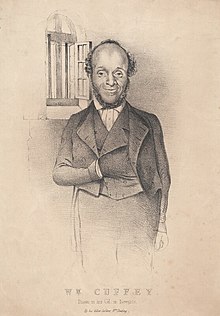
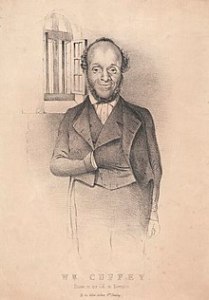
No Editing of History: On 150th anniversary of his death time for a statue of black Chartist leader William Cuffay

In Uncategorized on June 13, 2020 by kmflett

No Editing of History. On 150th anniversary of his death time for a statue of black Chartist leader William Cuffay
Boris Johnson is very rarely right about anything but when he tweeted that history should not be edited on Friday he was right.

Black Lives Matter and fighting racism is about far more than statues but while hard right Tory MPs chunter on about Winston Churchill, about whom there is a great deal of public history, the long delayed memorial to the black leader of London Chartism William Cuffay remains…delayed.

There is a case for erecting a statue in Chatham and in central London and Billy Bragg has today added a welcome voice to the call (link below).

One hopes Boris Johnson is listening, although he didn’t do anything when he had more direct responsibility as Mayor of London.

William Cuffay was born in Gillingham in the Medway Towns in 1788, the son of a local woman and a former slave from St Kitts who had made his way to Britain by working on a Royal Navy ship. Many of those aboard Navy vessels in the late eighteenth century were black.

Little is known about Cuffay’s time in Medway.

We do know however that by 1819 Cuffay was in London and had learnt the trade of a tailor.

No doubt Cuffay would have been exposed to the radical working class politics of London in the 1820s and he was certainly involved in the strike called by the Grand National Consolidated Trade Union in 1834.

Cuffay went on to become, by the end of the 1830s, a leader of a group of London Chartist tailors.

In 1840 Cuffay was 52- very old for a Chartist activist at that time- and he became a central and trusted figure in London Chartism.

The best way to understand him is as the key ‘backroom’ organiser of Chartism in the Capital- raising money for jailed Chartists and being appointed to oversee the funds of the Chartist Land Bank.

By 1842 Cuffay had been elected from London to the national Chartist Executive. These positions were fiercely contested, so Cuffay will have had a considerable constituency of support.

Details of Cuffay’s work in this period can be tracked in the Chartist paper, the Northern Star, which is now available in digital format free on-line.

Martin Hoyles 2013 book on Cuffay has also revealed that during this period Cuffay was performing as a singer on the London stage.

Although more research is required it now seems clear that Cuffay was the organiser of the great Chartist demonstration on Monday 10th April 1848.

Chartists gathered at various points across London and marched south to rally at Kennington Common. The idea was then to proceed back across Blackfriars Bridge to present a giant petition for the vote to Parliament.

It was a strategic mistake- it’s unclear what part Cuffay played in deciding the venue for the rally. Police and soldiers blocked the way back over the River Thames and the national leader of Chartism Feargus O’Connor agreed with the police that the Chartists would not try to march.


Cuffay was understandably very annoyed at this decision and is reported as arguing that the march should go ahead.

We now know that there was hand to hand fighting between Chartists and troops on the south side of Blackfriars Bridge but a heavy April shower caused the attempt to be abandoned.

Later in the year, in August 1848, Cuffay was arrested for his part in an alleged revolutionary conspiracy at Seven Dials, Covent Garden. Arms were found in Cuffay’s house. His precise role in the events is unclear but it is very likely that as the London Chartist leader he was at the very least aware of what was planned.

Tried at the Old Bailey, Cuffay was sentenced to 21 years transportation to Australia.

Arriving in Hobart Tasmania, now over 60, Cuffay could have been forgiven for retiring from political activity. He did not. Instead he was active in a range of radical causes in the earliest years of the Australian labour movement. He was pardoned after 3 years but remained in Australia, dying in 1870.

Modern interest in Cuffay can be traced back to a chapter in Staying Power by the late Peter Fryer which recovered much of the history of black people in Britain.

Cuffay left no diary, autobiography or papers, but research to uncover details of his life and activity is continuing. There has been considerable effort in Australia and in Britain there have been plans to erect a blue plaque for Cuffay in the Strand. So far over some years they have got nowhere.

The Times in 1848 referred to Cuffay and the Chartists as ‘the black man and his party’ and we can now see that this was not hyperbole but a recognition that the London organisation of the world’s first working class movement was led by the son of an ex-slave from St Kitts.

Cuffay came from the imperial diaspora to challenge imperialism at its heart in London to find himself exiled to another part of the British Empire in Australia as a reward for his efforts

Time to recognise William Cuffay as one of the great figures in British history

Cuffay website

http://cuffay.blogspot.co.uk/

Billy Bragg song

https://www.youtube.com/watch?v=MttVdtd3zL8&feature=youtu.be


Articles

Historians challenge Boris Johnson on ‘editing the past’. Call for black history to be taught in schools

In Uncategorized on June 12, 2020 by kmflett

London Socialist Historians

12th June

Contact Dr Keith Flett 07803 167266

Historians challenge Boris Johnson on ‘editing the past’. Call for black history to be taught in schools

The London Socialist Historians Group, which organises the socialist history seminar at the Institute of Historical Research, has challenged Boris Johnson to ‘put his money where his mouth is’ when it comes to history teaching in schools.

Commenting on the Black Lives Matter movement and the debate around statues of historical figures the Prime Minister tweeted on 12th June.

“We cannot now try to edit or censor our past,” he said. “We cannot pretend to have a different history. The statues in our cities and towns were put up by previous generations. They had different perspectives, different understandings of right and wrong. But those statues teach us about our past, with all its faults. To tear them down would be to lie about our history, and impoverish the education of generations to come.”

The historians say they agree that the past should not be edited or censored, although that does not suggest, for example, that statues have to be displayed in the same spot for ever.

However the reality is that the history of British imperial activities and colonialism remains largely absent from school history teaching, as does the record of black and white people’s opposition to slavery and racism.

LSHG Convenor Dr Keith Flett said, it is more than time that the history of Britain’s imperial past, moved on from being ‘our island story’ to a recognition of the plunder of the wealth of other countries and the racism that it all too often represented. Its time to stop editing and censoring that history and we call on Boris Johnson to recognise that.

Articles

Confirmation that Michael Rosen will feature on Beard of Summer shortlist

In Uncategorized on June 12, 2020 by kmflett

Beard Liberation Front

12th June

Contact: Keith Flett 07803 167266

Confirmation that Michael Rosen will feature on Beard of Summer shortlist

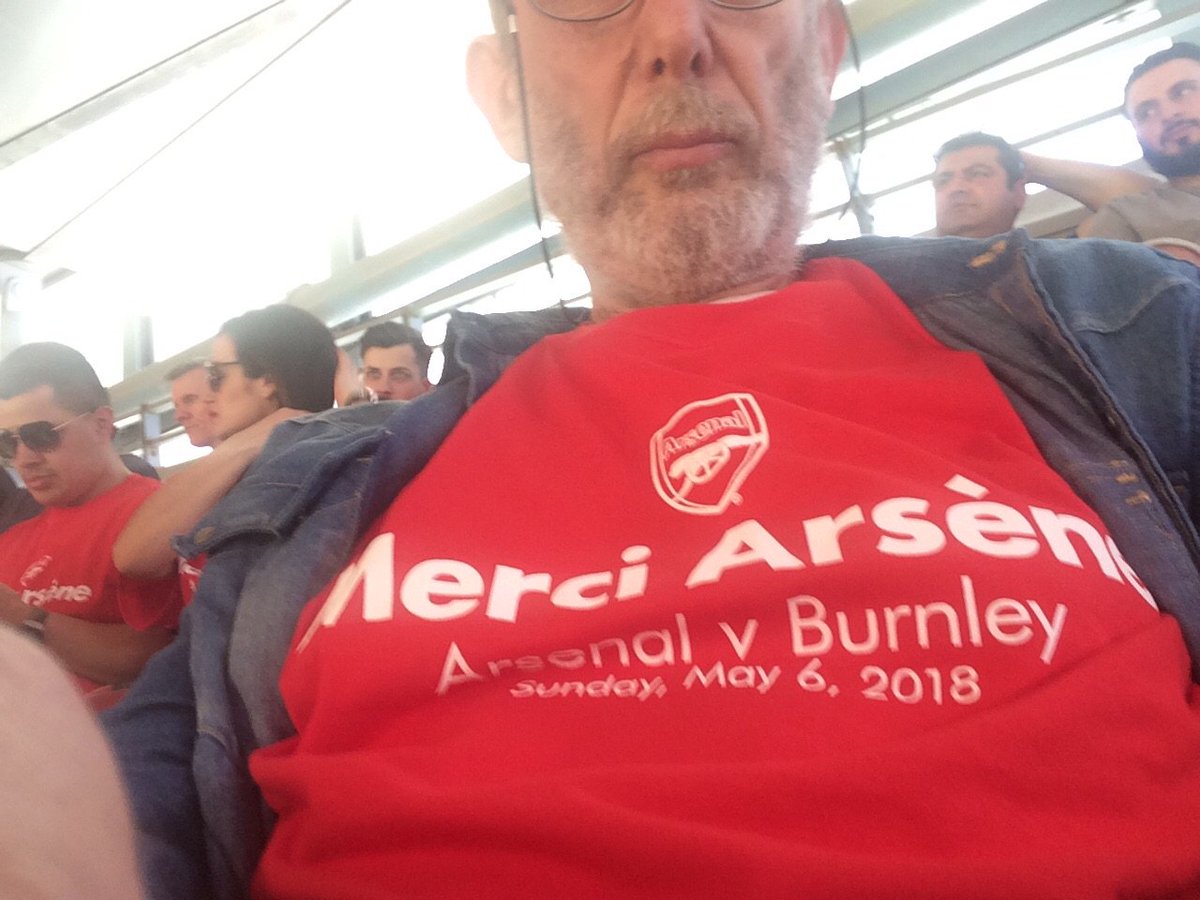
The Beard Liberation Front, the informal network of beard wearers, has confirmed that author, broadcaster and Arsenal fan Michael Rosen will head the shortlist for Beard of Summer 2020 announced on 20th June.

Beard of Summer is the third of four quarterly Beard Awards that culminate in Beard of the Year in December.

Beard of Summer which is announced this year on 27th June is part of an annual celebration of beards, National Beard Week, which starts on 22nd June.

Michael Rosen has been unwell recently and bedbound. He tweeted on 11th June that his beard had become ‘flattened’ as a result. However the BLF says that the gravitas of Mr Rosen’s beard is very unlikely to have been diminished as a result.

BLF Organiser Keith Flett said, Michael Rosen’s beard has been amongst those which has provided a consistently positive public image of the hirsute. Heading up the shortlist for Beard of Summer underlines that he still has beard power.


Articles

The politics of London statues: what gets taken down & what goes up

In Uncategorized on June 12, 2020 by kmflett

The politics of London statues: what gets taken down & what goes up

In the wake of the fall of the statue of slave trader Edward Colston in Bristol on Sunday a petition to secure the removal of a statue of slaver Robert Milligan at West India Dock in London saw immediate success. It was removed on Tuesday

When a statue of suffragist Millicent Fawcett was unveiled in Parliament Square on 24th April 2018 the London Socialist Historians Group which I convene welcomed it.

Fawcett unlike the Suffragettes, pushed for votes for woman through traditional means and did not back direct action.

There are very few statues of significant women in the UK and more are welcome, although the debate about whether Mrs Thatcher should be amongst them is unresolved.

However what statues get taken up or taken down are a sign of the times. The Guardian (25th April 2018) made the point well in a comment that has stood the test of time:

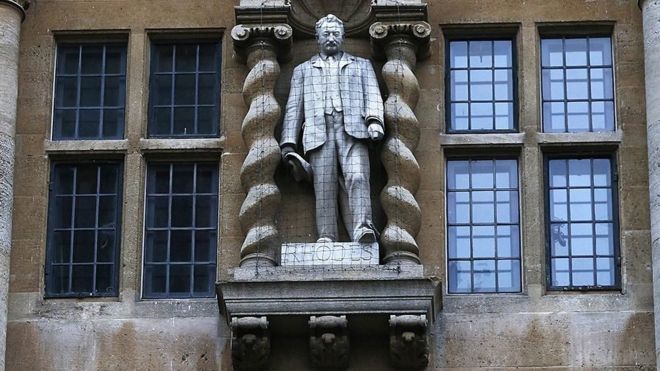
But as Mr Khan argued, statues do provide a barometer of the values of a time and a place. Putting them up – and taking them down – can become acts freighted with significance, arousing fierce passions. In the American south, the erection of confederate statues during the era of the civil rights movement reflected a desire to uphold notions of white supremacy. Footage of the toppling of the statue of Saddam Hussein in Baghdad in April 2003 flashed around the world – at the time, it was invoked as symbol of the swift victory of the US and its allies, but later came to signify the bathetic overreach of their ambition. Recent arguments over the commemoration of Cecil Rhodes have been bitter. Whether to commemorate Sylvia Pankhurst – suffragette, anti-colonialist, radical – in a sculpture in London is the subject of a current debate.

In 2018 the London Historians Group renewed its call for a statue of Sylvia Pankhurst who campaigned for the vote for working women in the East End of London and was briefly associated with the early Communist Party before moving further left.

The historians pointed out then that in the year of the 100th anniversary of some women getting the vote all those who campaigned for the suffrage should be remembered, from Fawcett who was a reformer to the Pankhursts who backed direct action and Sylvia Pankhurst who organised working women.

Generally socialist historians are more likely to back the pulling down of statues than their erection but there is plenty of space for many more statues of significant women and Sylvia Pankhurst must be amongst them.

Articles

Geoffrey Boycott on women sports commentators

In Uncategorized on June 11, 2020 by kmflett

With his departure from Test Match Special last weekend Geoffrey Boycott has been doing one of his favourite things, voicing his opinions.

In the Telegraph on Monday amongst other things he gave some thoughts on women sports commentators:

To provide expert analysis you need to have experienced the heat of Test cricket and understand what it takes to succeed.

You have to know the pressure, emotions and technique required and I do not believe you can learn that from reading a book or because you played club cricket, second X1 cricket, or, with great respect, women’s cricket. As good as the women are at their game, it bears no resemblance to the power and pace of men’s cricket

There is room for commentating,fronting as presenters and reporting. Many are excellent at it, such as Gabby Logan, Alison Mitchell and Clare Balding. But as an expert summariser in men’s cricket you need to have been out in the middle.

I’m not sure the new Ambridge cricket captain Tracy Horrabin would be impressed with this perspective and I’d describe it as weapons grade BS.


Articles

How Bristol’s Merchant Venturers sabotaged efforts to update the Colston statue

In Uncategorized on June 11, 2020 by kmflett

How Bristol’s Merchant Venturers sabotaged efforts to update the Colston statue

The statue of Bristol slave trader Edward Colston was toppled by Black Lives Matters protesters on 7th June who deposited it in Bristol Harbour.

It was a Grade 11 listed statue but it wasn’t disdain for that kind of history that drove the protesters but a disgust that attempts to reflect Colston’s actual history with a new plaque for the statue had failed.

The failure was at least in part due to the efforts of Francis Greenacre who acts as a sort of historian for the Society of Merchant Venturers.

Founded in 1552 the SMV benefited financially from the activities of slavers like Colston and while in 2020 they appear to acknowledge something like that, they evidently try and block criticism of him.

The statue of Colston was erected in 1895 (he died in 1721) as a sort of cult effort to find a figurehead for imperial Bristol.

Bristol Radical History Group have excellent background on this:

https://www.brh.org.uk/site/articles/myths-within-myths/

In recent times there have been attempts to put the Colston statue into a more modern context with a new plaque. The details of the efforts made is here:

https://www.brh.org.uk/site/articles/the-edward-colston-corrective-plaque/

Ultimately the new plaque didn’t happen and Francis Greenacre seems to have been central to stopping it according to the Bristol News:

https://www.bristolpost.co.uk/news/bristol-news/row-breaks-out-merchant-venturer-1925896

The Merchant Venturers Website describes Greenacre thus:

Francis Greenacre

Member since 1995

Francis was Curator, Fine Art, at Bristol Museum and Art Gallery from 1969 to 1997. He is an art historian, fine art consultant and valuer, lecturer and the author of several publications.

He was a member of the Arts Council Exhibitions Committee, the South Bank Art Advisory Group, the British Empire and Commonwealth Museum Trust and the Clifton Suspension Bridge Trust. He is a former chairman of Clifton and Hotwells Improvement Society, and a former president of the Canynges Society and of St Stephen’s Ringers.

Greenacre who has co-authored a book on the Public Sculptures of Bristol is undoubtedly qualified to assess the excellence of Colston’s statue. Clearly he has a view on Colston but it is no more relevant than my view, as a labour historian, on the quality of the statue.

Why Greenacre and the SMV were allowed to sabotage legitimate attempts to place Colston’s statue in a modern context I’m not sure but it did not end well.

The Mayor of Bristol has now committed, the statue having been retrieved from the harbour, to a wide consultation on what should now happen to it. That is the democratic thing to do. No doubt the SMV will have a view but not a veto on a decision.


Articles

Marmite crisis: campaigners to call on Johnson to act

In Uncategorized on June 11, 2020 by kmflett

Marmite Defence League

11th June

Contact: Keith Flett 07803 167266

Marmite crisis: campaigners call on Johnson to act

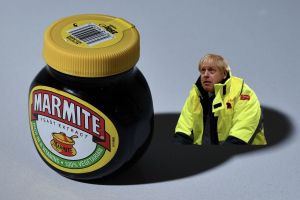
The Marmite Defence League has called on Boris Johnson to act on a crisis of marmite production.

Marmite have tweeted that they have temporarily stopped production of larger 400g jars because of a shortage of repurposed yeast.

This is a by-product of brewing and with brewers reducing production in some cases due to the closure of pubs during lockdown Marmite say there is a shortage.

The campaigners say that the Government needs to address the Marmite crisis by nationalising a brewery, allowing brewing to restart and along with it the supply of the essential ingredient for marmite.

MDL organiser Keith Flett said, now is the time for noted Marmite lover Boris Johnson to put his money where his mouth is for once.

Where we stand on Marmite

Marmite is a natural product deriving from brewer’s yeast. It is historically a by-product of brewing

It was ‘invented’ by a German scientist Justus von Liebig

Originally Marmite was derived from the Bass brewery in Burton on Trent.

Marmite is salty but also has some health enhancing elements to it including vitamins.

Its recent marketing focuses on a ‘love it or hate it’ element to Marmite, and it is a ‘which side are you on’ food.

Boris Johnson on Marmite

https://kmflett.wordpress.com/2019/11/13/was-johnson-telling-the-truth-when-he-said-he-liked-marmite/

Marmite on Twitter (June 10th)

due to brewers yeast being in short supply (one of the main ingredients in Marmite) Supplies of Marmite have been affected.

As a temporary measure we have stopped production of all sizes apart from our 250g size jar which is available in most major retailers.


Articles

What is the best lockdown image for Tony Archer?

In Uncategorized on June 10, 2020 by kmflett

Beard Liberation Front

10th June

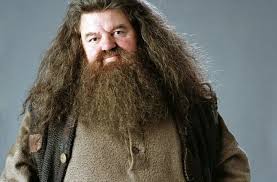
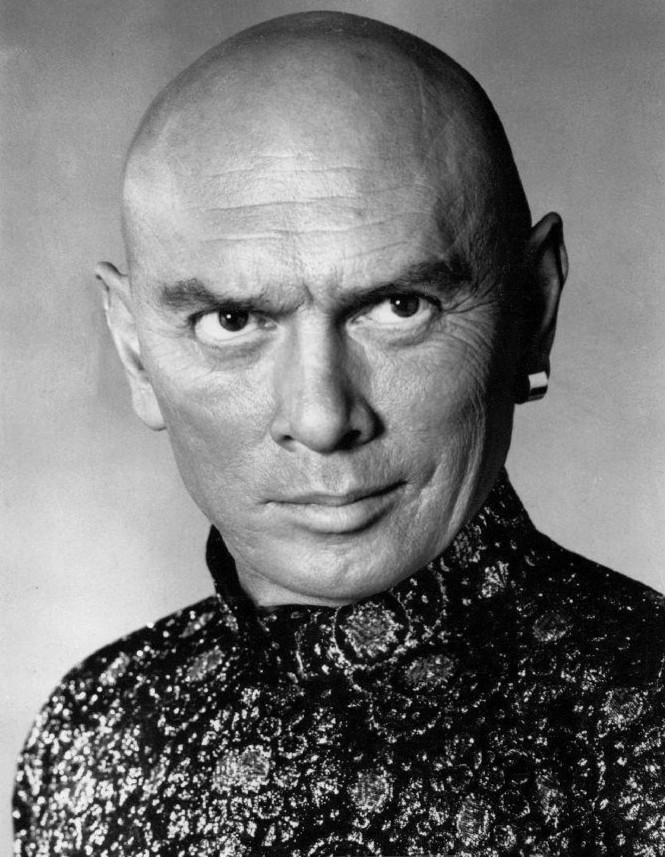
At the beginning of the week Tony Archer of Bridge Farm Ambridge had what was described on the Archers as a beard that made him look like Hagrid. He claimed he looked like Jerry Garcia. He was then forced by Bridge Farm pogonophobes to shave the beard (& his head) and reportedly now looks like Yul Brynner

We ask, what is the best lockdown look? Beard or Bald or both

Articles

Temporary suspension of Beards,Shorts & Sandals Season due to inclement weather

In Uncategorized on June 10, 2020 by kmflett

Beard Liberation Front

10th June

Contact Keith Flett 07803 1672

Temporary suspension of Beards,Shorts & Sandals Season due to inclement weather

The Beard Liberation Front, the informal network of beard wearers, has announced the temporary suspension of the 2020 Beard, Shorts & Sandals season from 7pm on 10th June until Midday on 12th June.

The suspension comes as inclement weather is forecast for much of the UK until conditions start to change for the better at the weekend.

It is expected that there will be showers and heavier bursts of rain, together with significant wind and windchill in some areas

BLF Organiser Keith Flett said, it just wont be the weather for shorts and sandals over the next couple of days, so we have acted promptly to temporarily suspend the season.


Guidelines for the 2020 Beard, Shorts and Sandals Season

1] Shorts should ideally be three-quarter length-‘culottes’ for the  2020 season. The length of shorts is particularly important as climate change may mean that unprotected legs get sunburnt.

1a) Shorts of the length worn by Nigel Farage in a video recorded in April are strictly forbidden

2] Footwear should be casual. There is a considerable range of sandal type footwear now available. Some leaves parts of the feet and toes open to public view, while some does not. The BLF is not prescriptive about the matter.

3] Socks should generally not be worn. However if the beard, shorts and sandals are to be displayed in relatively busier urban areas it is likely to be prudent to wear closed rather than open casual footwear and ankle socks, not visible to others may be worn.

4] There is no prescription or definition on what type of beard may be worn, or how this may match with the shorts and sandals. This is left up to the individual.

5] If venturing out in accordance with lockdown rules in force at the time social distance should be kept at all times. On no account should there be any groups of beard, shorts and sandals wearers. Discussion of styles should be confined to social media.