Articles

The Sunday Times Rich List 2020: The Beerage in crisis?

In Uncategorized on May 17, 2020 by kmflett

The Sunday Times Rich List 2020: The Beerage in crisis?
I’ve criticised the rigour of the Sunday Times rich list before not least because the rich don’t often make it easy to understand how much they are really worth, all part of the joys of capitalism.

To be fair to the 2020 list however it is noted that while they had completed 800 valuations by February 2020 they have reviewed everything to try and capture the early impact of COVID-19. They note that the impact will be felt over some years and will certainly be greater than the financial crash of 2008 when 37% of the wealth of the rich had been wiped out in the 2009 list. That said they note that already the number of billionaires is down from 147 to 143. Crowdfunding anyone?

As in 2019 I’ve  had a look through for members of the ‘Beerage’ (wealthy people associated with beer). I don’t reference below the several that have attained wealth through gin and whisky.

There aren’t that many but given my first para this isn’t hugely surprising. This isn’t an attempt to find out how many people have got seriously rich through beer. Rather it is a list of the seriously rich who are in the public eye who have got seriously rich through beer which is not quite the same thing.

This means that the list is idiosyncratic

Charlene De Carvalho-Heineken is at the top. She is 9th (down from 7th) on the rich list with a wealth of £10.3bn. That is down £1.7bn from 2019 but it was £11.1bn in 2018. So, er, cheers still, particularly in this case for the UK craft breweries where Heineken have a stake…

Next at 69 are Alejandro Santo Domingo and Lady Charlotte Wellesley.  The latter is a descendant of Queen Victoria which may interest Perry Anderson and a certain strand of New Left Review thought. The former however was instrumental in selling SAB Miller to ABInBev. He still has a 1.7% holding which was worth £1.63bn in 2019 but has now dropped significantly to £1.14bn.  Their overall wealth is valued at £2.031bn down from £2.835bn in 2019.

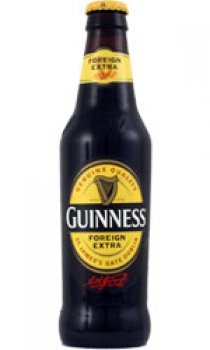
Meanwhile the Earl of Iveagh (Ned to you) and the Guinness Family are 158th on the list with a wealth of £906m down from £973m. The ST reports that the Guinness family have launched a new crazy-golf venture called bunkers…

Others are well down the list

Brewdog’s Martin Dickie is worth £228m and is 537th and James Watt by contrast has £262m and is at 495th on the list. The valuation of their wealth hasn’t changed since 2019 representing the difficulty of working out what exactly it is. A summary of a recent attempt by Private Eye to do just that is here:

https://kmflett.wordpress.com/2020/03/13/private-eyes-analysis-of-crafty-brewers-brewdog/

Tim Martin of Spoons is at 416 on the list down from 310th and is worth £311m which is £126m down from 2019 which itself was £11m down on 2018. It doesn’t look like Brexit was good for business for Tim after all. Perhaps collecting tins on the bar then?

David McMullen and family, the Hertford brewers are at 684 and worth £181m (up from £173m in 2019) even though COVID-19 has reduced the valuation of the brewery itself.

At 876 are Anthony Woodhouse and Family the owners of brewers Hall and Woodhouse and 200 plus pubs are worth £137m up from £134m in 2019

It still begs the question why at least some other regional brewers don’t feature.

It appears from this that there is still money in beer, brewing and pub ownership at least for some seriously wealthy individuals. It will be interesting to see what the 2021 List brings though..

Articles

Neil Davidson (1957-2020) on the Scottish Crowd 1705-1707

In Uncategorized on May 17, 2020 by kmflett

Neil Davidson (1957-2020) on the Scottish Crowd 1705-1707

Below is the introduction and conclusion to the chapter that the sadly late Neil Davidson wrote on the Scottish Crowd and riots 1705-1707. It appears in the History of Riots collection edited by myself (CSP 2015)

Below is a link to a brief appreciation of Neil’s work and his work with the London Socialist Historians Group:

http://londonsocialisthistorians.blogspot.com/2020/05/neil-davidson.html

THE SCOTTISH PRE-INDUSTRIAL URBAN CROWD AND THE RIOTS AGAINST

THE TREATY OF UNION, 1705–1707

NEIL DAVIDSON

Introduction

The Scottish riots against the Treaty of Union present a particularly complex mixture of motives on the part of their participants. Ostensibly acting from a simple patriotic imperative to prevent one of the most intensely political transformations imaginable—the dissolution of one state (Scotland) and its absorption into another (Great Britain)—the rioters were also responding to the certainty of increased taxation (an “economic” issue) and the potential threat to the integrity of the Church of Scotland (a “social” and “cultural” issue). Nor was it only the crowd which displayed complex motivations. The figures who inspired or sometimes actually led them adhered to political positions which were often in direct opposition to each other, ranging from Jacobites who rejected the Union with England because they—in effect—supported one with absolutist France, to those who wanted Scotland to become an independent republic, through to those who opposed the terms of the Treaty rather than the Union itself, with several intermediary positions between. This episode therefore provides us with an important example of the possibilities and limitations of the urban riot as a means of effecting political change in the pre-industrial, pre-democratic period.

Conclusion

What conclusions can we draw from this episode? First, although the crowd was unable to prevent the ratification of the Treaty of Union, it did achieve a number of amendments—in effect a form of “reform by riot”—by securing the central role of the Kirk in Scottish society and, although on a much shorter-term basis, the withdrawal of some of the proposed tax increases. Second, the riots were effective because they were aligned with resistance to the treaty in the rural areas where the majority of the population lived, often through a joint adherence to radical Presbyterian beliefs among the leading figures. Third, participants in the demonstrations and riots were politically sophisticated enough to understand that launching a full-scale attempt to overthrow the parliament would lead to military intervention by both France and England, and either the conquest of Scotland and England by the former or the forcible subjugation of Scotland, along Irish lines, by the latter. Fourth, and consequently, there were major structural limitations on the independence and capacity for self-activity of pre-industrial crowds during the transition to capitalism. Ironically, it would be the union which many of the participants opposed which lead to the completion of the transition and the emergence of a unified working class on both sides of the border.

Articles

The Ambridge Socialist: Locked Down Ambridge looms

In Uncategorized on May 17, 2020 by kmflett

The Ambridge Socialist

17th May

Locked Down Ambridge looms but key Archives issues still wanted

The BBC’s reports from Ambridge resume on Bank Holiday Monday with various ruminations on life in locked down Ambridge. It’ll be interesting of course in a new normal format

However that will account for only four broadcasts a week leaving Friday and Sunday Archers free. The Ambridge Socialist ran a poll to see what Archive editions that the BBC haven’t broadcast were in demand.

For some reason the one featuring Sid and Jolene in the shower was not much in demand. By contrast there was significant interest in hearing David push Nigel off the roof of Lower Loxley again and some interest in the occasion when the Archers visited Glastonbury.

Either way there is surely room for new and old Archers at the moment.

God in Ambridge

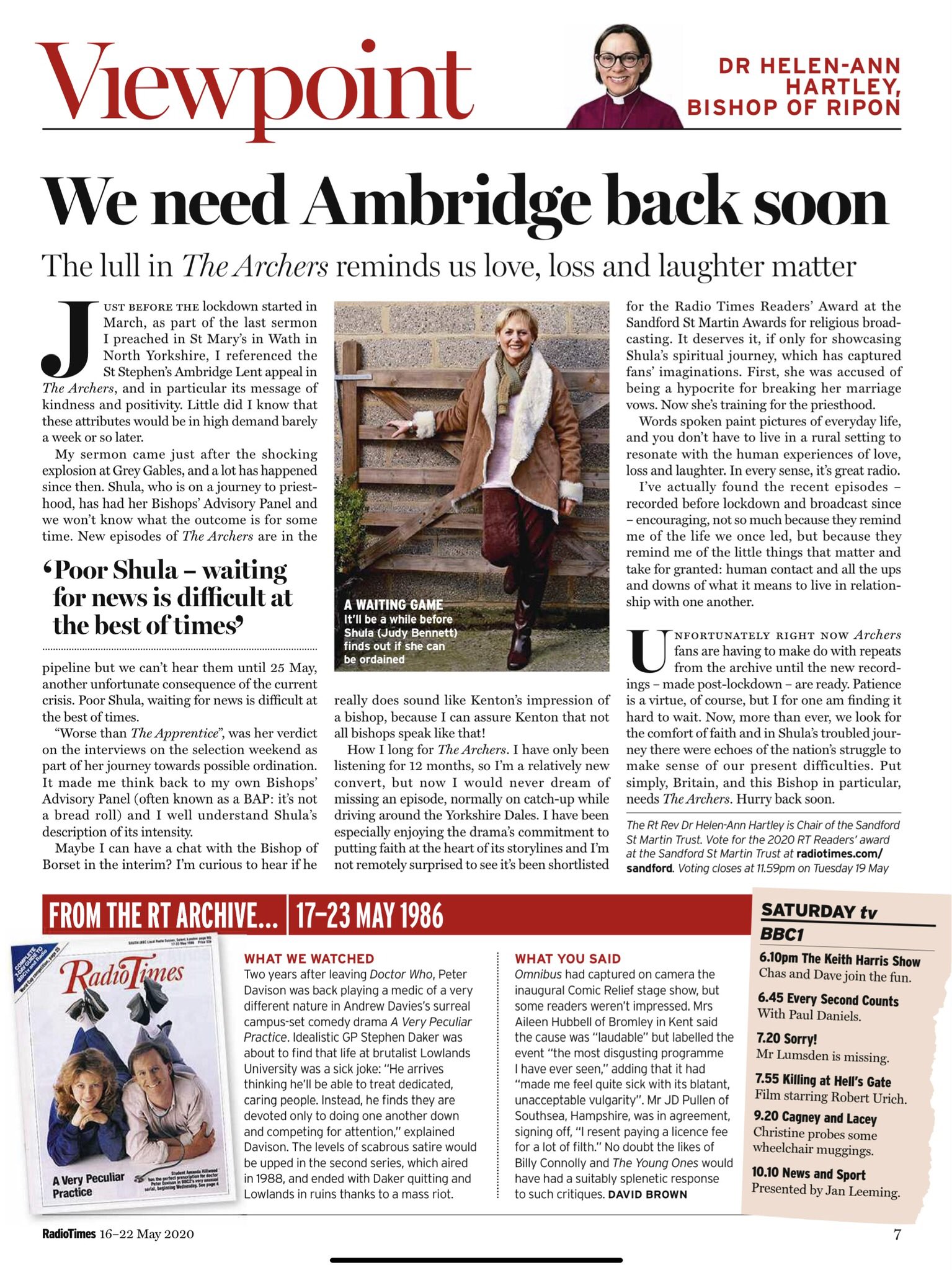
Spurred by an article in the Radio Times by the Bishop of Ripon, Helen-Ann Hartley demanding the Archers return so it could be revealed if Shula is now a priest, the Ambridge Socialist asked on Archerless Friday if there was that much interest in Saint Shula futures

https://kmflett.wordpress.com/2020/05/15/the-ambridge-socialist-do-we-need-to-know-if-its-saint-shula/

We do know that Shula is not a Saint of course and is unlikely to qualify even after her demise but it is one of the politer words used to describe her.

The Ambridge Socialist doesn’t really do God, although there was for a period a sister publication The Ambridge Secularist, so we were interested that the issue sparked off quite a few social media comments about how the Archers handles religion.

The Ambridge Socialist of course simply seeks out the class struggle but there are other ways of understanding what happens in Ambridge. Here is a sample tweet:

Brine never mentioned to have brought Rhuari to mass over the Easter holidays nor at Christmas. No Catholic Church ever mentioned. Joe was Chapel yet funeral was at St Stephen’s. Usha’s beliefs really skirted over reduced to Diwali #TheArchers

Articles

Conchita Wurst’s 2014 Eurovision win remains Farage’s worst moment

In Uncategorized on May 16, 2020 by kmflett

Beard Liberation Front

16th May

Conchita Wurst’s 2014 Eurovision win remains Farage’s worst moment

The Beard Liberation Front, the informal network of beard wearers, has said that with Eurovision 2020 only taking place virtually its time to celebrate again one of Eurovision’s greatest moments, the 2014 victory of Conchita Wurst.

The BLF statement made on the night of 10th May 2014 is below

BLF Organiser Keith Flett said, Eurovision 2014 continues to mark Nigel Farage’s wurst moment.

Conchita Wurst went on to be voted Beard of the Year 2014

____________________________________________________________________________

The Beard Liberation Front the informal network of beard wearers has welcomed the win for Austria’s Conchita Wurst in the Eurovision Song Contest as a victory for a diverse Europe over transphobia and pogonophobia.

The BLF has long campaigned for the right of people to be able to dress and appear as they want.

BLF Organiser Keith Flett said Conchita Wurst’s victory is Nigel Farage’s worst nightmare, a beard friendly tolerant Europe

Articles

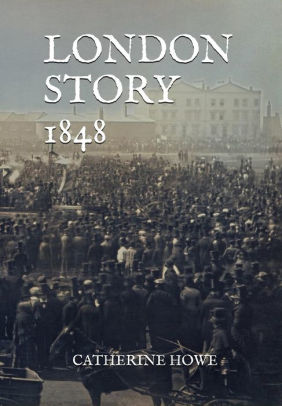
1848, a London Story by Catherine Howe: a hidden history of revolutionary working-class politics

In Uncategorized on May 16, 2020 by kmflett

1848 A London Story, Catherine Howe (APS Books 2020)

Rewriting the hidden revolutionary history of British working class politics

It is the 200th anniversary of the Cato St Conspiracy. On 23rd February 1820 a number of men met in a hayloft in Cato St off Edgware Rd in London. They planned to go to the house of Lord Harrowby in Grosvenor Square where they believed a Cabinet dinner was taking place and murder those attending.

Following that they intended to announce a Provisional Government.

There never was a Cabinet dinner. The men had been misled and betrayed by a Government agent Edwards. The plotters were surprised by police and troops and one officer, Smithers was killed. Five of the conspirators including the leader Arthur Thistlewood were tried at the Old Bailey and hung on May 1st 1820.

They are often portrayed as fantasists but while the method may seem extreme it is thought they had and expected considerable support if the plot had worked not just in London but in the north of England and Scotland. Indeed March and April 1820 saw a series of attempted risings which the Government took very seriously.

Part of the London support were Irish labourers who were part of tradition of Irish political revolt dating back to the United Irishmen in 1798 and Colonel Despard who was hung for treason in 1803. Despard was a follower of Thomas Spence as were the Cato St conspirators.

As E P Thompson noted in the Making of the English Working Class those who were possibly engaged in underground revolutionary activity did not leave much in the way of records of their activities, for understandable reasons.

Catherine Howe’s book is about London Chartism in 1848 not Cato St but she puts a case forward for the same tradition.

While the book tells an historical story rather than representing research history it is solidly based in terms of references to primary and secondary sources.

The key point is what the author makes of those sources in terms of putting forward an understanding of the events of the first 8 months of 1848 in London Chartism.

February 1848 had seen a revolution in France and this began to spark large scale Chartist activity in March in Trafalgar Square and Camberwell in South London. The culmination of this phase of protest was the gathering on Kennington Common on Monday 10th April 1848.

There then followed a reorganisation of Chartism and a series of demonstrations in June 1848. The Chartist leader and friend of Marx and Engels Ernest Jones was arrested following a speech he made at Bishop Bonners Fields in East London.

The putative rising centred on Seven Dials in central London in August 1848 was the crescendo of the Chartist reaction to the French events earlier in the year. Historians have disputed whether William Cuffay, a leading black Chartist, was centrally involved as the authorities claimed he was. Howe’s account does place him firmly amongst the conspirators.

Again this is a matter of interpretation rather than specific evidence. Cuffay was the leader of London Chartism and the organiser on the day of the Kennington demonstration on 10th April 1848. Northern Star reports of the Chartist delegate meeting held around that event show Cuffay to be considerably more militant than the national leadership and he may well have been reflecting the temper of London Chartists in that respect.

David Goodway’s book on London Chartism in 1848 argues that the attempted rising at Seven Dials marked the conclusion to a conspiratorial radical politics dating back 50 years and more.

Catherine Howe adds a further dimension to the issue by looking at the activity of Irish radicals, central to British working class politics throughout the nineteenth century but often overlooked by historians. E P Thompson’s classic account of this period of course refers specifically to the ‘English working class’, but that included many Irish workers.

Some recent historical research, not least around Cato St, has started to put back the Irish tradition of revolt into British radical politics and Howe is very much on that page.

Chartist attempts at revolution in 1848 ended in failure and as Howe notes history is written by the victors. Yet it is important to understand that there was a revolutionary working-class tradition in Britain and one that the State took very seriously.

Keith Flett, May 2020

Articles

New study which claims Organic Beards protect against punches stereotypes beard wearers

In Uncategorized on May 16, 2020 by kmflett

Beard Liberation Front

15th May

Contact Keith Flett 07803 167266

New Study which claims Organic Beards protect against punches stereotypes beard wearers

The Beard Liberation Front, the informal network of beard wearers, has said that a new study by researchers at the University of Utah stereotypes the hirsute.

The study argues ‘that hair is indeed capable of significantly reducing the force of impact from a blunt strike and absorbing energy, thereby reducing the incidence of failure. If the same is true for human facial hair, then having a full beard may help protect vulnerable regions of the facial skeleton from damaging strikes, such as the jaw. Presumably, full beards also reduce injury, laceration, and contusion, to the skin and muscle of the face’

The researchers did not test their theory by whacking men with full beards in the face, prudently for them. Rather they constructed a model using sheep wool to test their thesis. A link to the full results is below.

They suggest that ‘men with full beards are reportedly perceived as being more masculine, socially dominant, and behaviorally aggressive in comparison to clean-shaven men’

The campaigners say that perception is not proof however. While the research findings cite Darwin, himself the wearer of a full beard in his later years, he regarded beards as an ‘ornament’ serving no practical use in modern society.

BLF Organiser Keith Flett said, while the study is interesting it does stereotype men with organic beards as masculine types not averse to the occasional punch-up. In reality not just biological but also cultural and social factors at a play. Men with organic beards are just as likely to be pacifists and pugilists.

Impact Protection Potential of Mammalian Hair: Testing the Pugilism Hypothesis for the Evolution of Human Facial Hair

E A Beseris, S E Naleway, D R Carrier

Integrative Organismal Biology, Volume 2, Issue 1, 2020

https://academic.oup.com/iob/article/2/1/obaa005/5799080


Articles

The Ambridge Socialist: Do we need to know if its Saint Shula?

In Uncategorized on May 15, 2020 by kmflett

The Ambridge Socialist

15th May

In this week’s Radio Times the Bishop of Ripon Helen-Ann Hartley has written a piece arguing that one reason why the absence of BBC updates from Ambridge are missed (return 25th May)is that we dont yet know whether Shula has been accepted as a priest.

The Bishop makes the point that the Archers does God and spirituality well. She does admit though to being a recent, er, convert, to listening to life in Ambridge and so may not have come across the rather robust views that Professor Jim Lloyd sometimes expresses on religion.

The Ambridge Socialist Editorial Board probably has a majority of atheists on it but of course we would always defend people’s right to have religious faith and practice it where appropriate.

That does not unfortunately take away from the fact that Saint Shula is very boring. Nor does it excuse the BBC’s long term failure to focus on the Grundy’s Methodist ideas, when they have them

Articles

National Working From Home Day 15th May: dont forget the beard!

In Uncategorized on May 15, 2020 by kmflett

Beard Liberation Front

15th May

contact Keith Flett 07803 167266


The Beard Liberation Front, the informal network of beard wearers, has said that with Friday May 15th being the annual National Working From Home Day, there is no excuse not to mark it by wearing a beard, where appropriate.

The campaigners say that for obvious reasons many more people are working from home today and for the forseeable future than would usually be the case.

However the usual culture of WFH still applies. A Beard Liberation Front survey this week, confirming a YouGov survey, has revealed that few people trouble to wear formal work clothes or shave before attending a virtual meeting.

Survey shows rise in beard wearing at working from home video meetings

BLF Organiser Keith Flett said, working from home today, whether by choice or circumstances, really should be a chance to celebrate one of the positive aspects of the experience: wearing a beard (where appropriate). What else you do or do not wear is up to you of course.

Working From Home beard. How to maintain your beard

1 Check twice daily for any split ends or misplaced hairs and remove them

2 Wash & comb through the beard every day at least once, preferably more often.

3 To maintain hair quality beard oils or balms are used by some, while others marinate briefly in imperial stout or porter.

4 Occasional pruning will help to strengthen hair growth and make sure you desired style is maintained. Pruning where required and appropriate should be on a weekly review basis

5 Don’t forget to post the occasional picture of your well maintained beard on social media to encourage others.

Articles

Survey shows rise in beard wearing at working from home video meetings

In Uncategorized on May 15, 2020 by kmflett

Beard Liberation Front

Media Release 15th May

Contact Keith Flett 07803 167266

Survey shows rise in beard wearing at working from home video meetings

The Beard Liberation Front, the informal network of beard wearers, has said that a survey of its supporters has found that only a minority of men now shave before attending a work video meeting in their homes.

The result echoes that of a YouGov survey which showed that while 22% dressed as they would for work when joining a meeting via Skype, Zoom or Teams, 73% remained  in casual attire.

The BLF survey saw 86% respond that they wore a beard when attending a virtual meeting with only 14% suggesting they would consider shaving.

BLF Organiser Keith Flett said, the poll underlines that just as working from home more may be a permanent outcome of the current crisis so will the lockdown beard. Far more people now feel its ok to wear beards in formal meetings

  • The BLF surveyed 250 supporters between 13th and 15th May

Articles

After the Care homes response: Boris Johnson’s long history of bluster & bluffing

In Uncategorized on May 15, 2020 by kmflett

Boris Johnson’s long history of bluster and bluffing

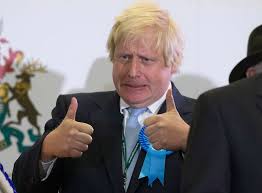
At Prime Minister’s Questions on 13th May Labour leader Keir Starmer put Boris Johnson on the spot about the Government’s official line on whether COVID-19 would or would not be a concern in care homes. As Starmer pointed out the view at least until March 12th was that it was unlikely to be an issue. It turned out to be a dreadful and perhaps even deliberate error (an independent inquiry will need to look at that). Johnson of course did not own up, attracting considerable media comment.

Whether Johnson cares about that (or anything much beyond his own ambitions) is open to question. Starmer did an effective job in calling Johnson to account but the wider question is, who didn’t know? Those who did not vote Tory and for Johnson one suspects already knew that Johnson is a perpetual BSer and worse. Those who did vote Tory one must presume did know in the main and either don’t care or think Johnson’s behaviour is in some way admirable. Whether there is a significant number who really don’t or didn’t know about Johnsonism means the polls may tells us in a bit.

A brief reminder though of the history. In 2012 Johnson was London Mayor and after the riots in August 2011 was under pressure to show what he had been doing (very little obviously). Sonia Purnell’s biography Just Boris details one episode.

Johnson claimed to the Commons Home Affairs Select Committee that he had massively cut young reoffending rates. He hadn’t. He used figures which were unreliable and that he knew to be so. He was called out by Sir Michael Scholar Chair of the UK Statistics Authority. Johnson claimed Scholar, a former Private Secretary to Thatcher, was a ‘Labour Stooge’. Johnson went on to boast about his youth reoffending achievement, based on the at best dodgy stats in both the Sun and the Telegraph.

It is a pattern of behaviour of someone whose relationship with truth and reality is a conditional one.