Articles

Writing letters to the NME Part 2. A world we have lost

In Uncategorized on February 8, 2020 by kmflett

Writing letters to the NME Part 2. A world we have lost
Anyone who is still following this will recall that the question was posed on social media about what the subject matter of letters I wrote to the NME in the 1980s and 1990s was.

My memory doesn’t stretch that far and anyway I’m disinclined to rely on memory as a way of remembering things.

Fortunately there is a fairly easy to find out.

As a research historian Ive had a readers ticket at the British Library since the mid-1980s and I still stop by at least once a week.

The Humanities 2 reading room has bound hard copies of the NME on open access (for most books etc you have to order in advance). That means you can pull out a volume or two at will.

How long the bound volumes will last is another matter. It is to be hoped digitisation will occur so that the NME can be viewed on-line and electronically searched.

It would certainly make it easy to search for letters from Keith Flett, London N17 or similar.

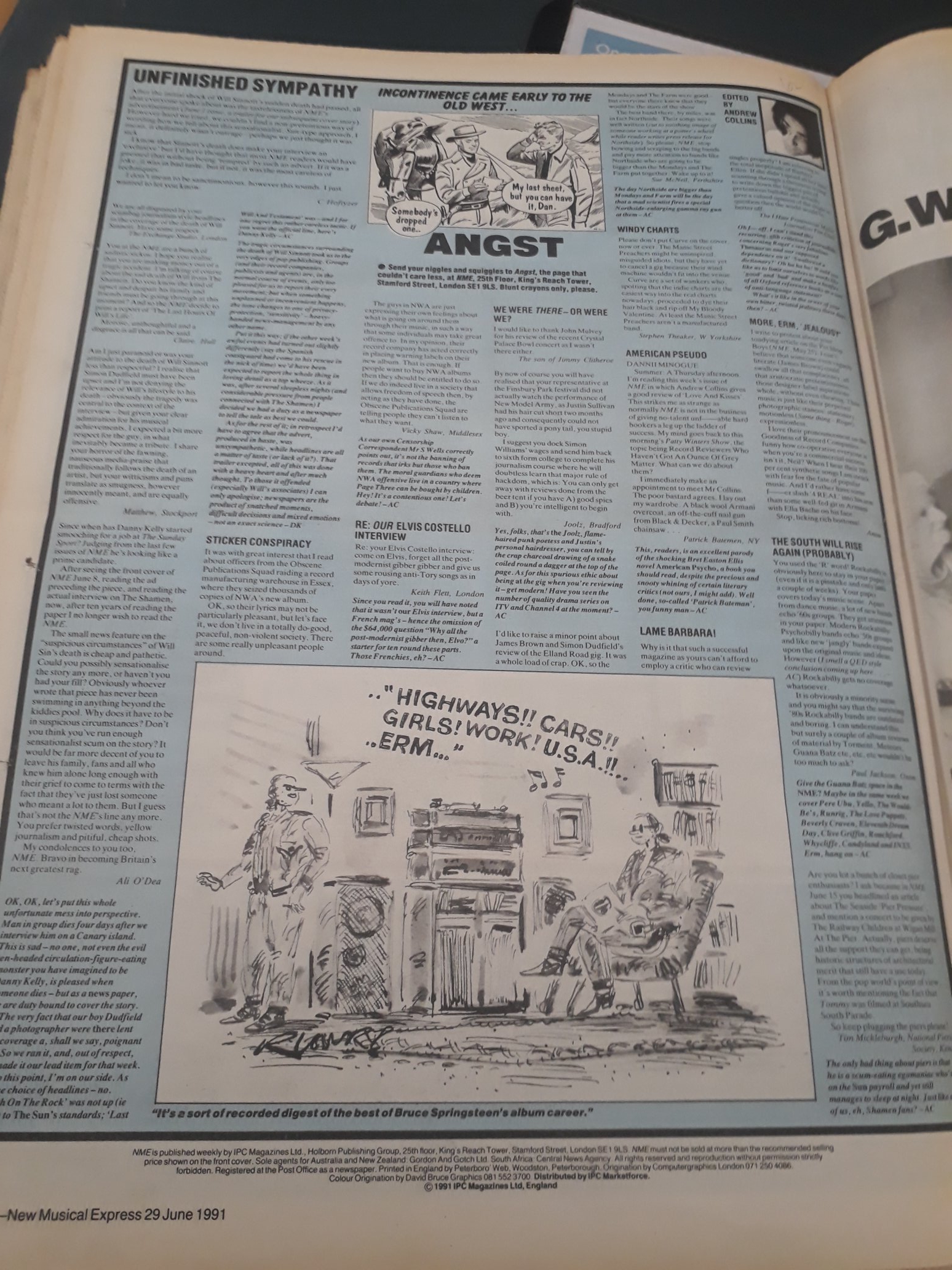
Fortunately it is not that difficult. Certainly for the volumes for 1991 I looked at-January to August (two months per volume)the letters page- Angst- was on the inside back page.

It is difficult to think such a letters page would exist now.

For a start a lot of letters were printed- far more than you’d find now on still existing letters pages in most cases.

Secondly they were letters. A snail mail address-25th Floor Kings Reach Tower- is given. This was before e-mail and while I think fax machines were used at the time, no number is given.

Hence each letter had to be word processed, placed in an envelope, stamped and despatched via a post-box (a round red thing you’ll find occasionally on street corners). Admittedly in general it was easier to do that now that it is now when getting hold of stamps and finding a post-box requires dedication.

I think I was very much in a minority in using my actual name when writing to the NME. Most letters were pseudonymous, sometimes amusingly so. On occasion (frequently in my case) a letter was accompanied by an acerbic comment from an NME staffer in bold underneath.

Looking at the volumes for 1991 there were quite a few fletters. It tended to go in waves. Several would be printed, then I’d get ‘banned’, and would re-appear a few issues later.

It’s a reminder of a lively letter writing world that has been lost

Pt 1

Writing letters to the NME


Articles

Save The Bull petition update: Wrecker Snell on the retreat. Time to press our advantage. Sign!!

In Uncategorized on February 7, 2020 by kmflett

Ambridge Socialist

7th February

Save the Bull Petition Update: Wrecker Snell on the retreat. Time to press our advantage. Sign!!

Lynda Snell’s attempt to wreck a recent night at the Bull by sending Bert Fry & Jazzer to tell stories to a younger than normal Bull clientele failed miserably. The stories were a big hit & Snell is in retreat. Even so the Bull is still officially quiet. It’s time to press our advantage. While Snell is on the backfoot we can get signatures on our real petition to save the pub and get Lilian to scrap the name change.

Now is the time to keep the pressure up and get more people signing the real petition to Save The Bull

https://www.change.org/p/residents-of-ambridge-and-listeners-to-the-archers-save-the-bull-ambridge?recruiter=45817997&utm_source=share_petition&utm_medium=twitter&utm_campaign=share_petition&recruited_by_id=c320f9e0-7d09-0130-ecdf-00221964dac8


Articles

Beards, the British Left & Eric Hobsbawm

In Uncategorized on February 7, 2020 by kmflett

Beards, the British Left & Eric Hobsbawm

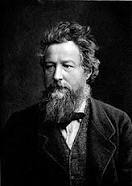
William Morris, had one, a beard that is as well as a temper. So did Morris’s nemesis H M Hyndman.

By the 1920s however if facial hair was worn at all on the left it was a moustache. The beard of Keir Hardie had passed into history as he had himself

A clean shaven culture developed ( left politics being a largely male affair…) which linked to a concept of working-class respectability. If you came from a background where it was a struggle to wash and get clean then there was a premium on appearing clean cut and shaven. Beards by contrast suggested perhaps the opposite.

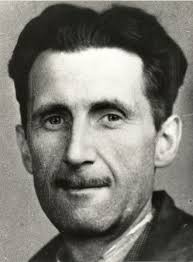
George Orwell, himself a veteran moustache wearer wrote in The Road to Wigan Pier about:

all that dreary tribe of high-minded’ women and sandal-wearers and bearded fruit-juice drinkers who come flocking towards the smell of ‘progress’ like bluebottles to a dead cat

Raphael Samuel hints in The Lost World of British Communism that facial hair was frowned upon in the Communist Party. The idea of CPGB leader Harry Pollitt with a beard is unthinkable as it is for senior Labour figures like Nye Bevan.

Indeed after Hardie no Labour leader had a beard until Jeremy Corbyn

At some point in the 1950s beards however made a re-entry to the left. Perhaps it was part of post-1945 youth culture and/or CND but by the late 1960s hair was big on the left.

Eric Hobsbawm who again never seems to have a beard did however opine on them once in a programme he did for the BBC Third Programme, now Radio 3.

It is covered in the 2019 biography of Hobsbawm by Richard Evans.

After the Second World War Hobsbawm was barred from a full time job at the BBC because he was a Communist. He worked as a junior academic instead.

However the BBC and the Third Programme were prepared to employ him on an ad hoc basis with proposals for programmes assessed individually.

One talk on the French satirical magazine Le Canard enchaine had a section on ‘The beard and the Third Republic’. Evans suggests this was because Hobsbawm felt listeners needed to be ‘entertained’.

The focus was on the ‘Effect of the disappearance of bearded Radical-Socialists on their most loyal tormenters’. The point being apparently that like its British broad equivalent the magazine liked making jokes about socialists with beards but found it harder to joke about their beards if they didn’t have one.

The whole episode underlines the point that before the arrival of the hirsute revolt and revival in the 1950s, beard wearers were regarded as at best a joke on the left.

Articles

Will the Brexit Beard be a thing?

In Uncategorized on February 7, 2020 by kmflett

Will the Brexit Beard be a thing?

If you Google ‘beards+news’ you can find all the latest beard stories from across the globe. Most are exceptionally tedious but once every few months something comes up that is, in most cases, so outrageous as to require rebuttal, or, less often, interesting.

The Vox article on beards grown by defeated politicians and those changing their status in life has been picked up and slightly elaborated on by the Guardian:

https://www.theguardian.com/fashion/2020/feb/06/stubble-in-mind-what-growing-a-crisis-beard-represents

My thanks to @sharkastic for alerting me to it on social media.

The story itself is factual. Some politicians do grow beards in defeat. Ed Miliband had one briefly for example.

Whether there is  such a thing as a Brexit Beard is another matter as is who might grow one.

Given that Jeremy Corbyn has had a beard for ever we might expect him to be at full ZZ Top by now, but that isn’t the case.

The host of senior Tories who didn’t agree with Brexit or Johnson and in some cases were purged as a result were perpetually clean shaven and have shown no sign of beard growth since December 12th that has been reported to the Beard Liberation Front.

Perhaps therefore we need to look towards the leaders of the People’s Vote campaign. No sign of an Alastair Campbell or a Peter Mandelson beard yet, but there is time.


Articles

‘My Hairy Valentine’ Poll: Who has the ‘hottest’ beard?

In Uncategorized on February 7, 2020 by kmflett

Beard Liberation Front

PRESS RELEASE 7th February

contact Keith Flett 07803 167266

‘MY HAIRY VALENTINE’ POLL: WHO HAS THE ‘HOTTEST’ BEARD?

The Beard Liberation Front, the informal network of beard wearers, which campaigns against irrational prejudice against the hirsute, has said that with Valentine’s Day a week off competition is hotting up in the vote for the ‘sexiest’ beard of 2020.

Jeremy Paxman joined the poll earlier in the week and well-known portrait artist Daniel Fooks now completes the hairy list after specially growing a Valentine’s beard

BLF Organiser Keith Flett said, the weather may not be too hot but we’re looking for the beard that can make it hotter

My Hairy Valentine Shortlist

Idris Elba

Prince Harry

Tom Jones

Gary Lineker

Mauricio Pochettino

George Clooney

Mo Salah

Justin Trudeau

Chris Woakes

Peter Mac Ciarrai

Drew McIntyre

Jeremy Paxman

Daniel Fooks

What is the criteria for the sexiest Valentine’s Day Beard?

Beauty is in the eye of the beholder & likewise what people find sexy can vary widely

1] A beard from Clint Eastwood stubble to full Brian Blessed organic

2] A stylish deployment of the beard, at least sometimes in the public eye

3] An attractive disposition in relation to the beard (the fulfillment of this criteria is up to the voter)

4] An appealing beard in terms of length, colour, style. Again its a matter for the voter


Articles

Michael Rosen’s Missing: a model of research history & a vital message for our times

In Uncategorized on February 6, 2020 by kmflett

Amongst other things I’m a research historian. I convene the socialist history seminar at the Institute of Historical Research at the University of London School of Advanced Study and have done for many years.

As socialist historians we’re left-wing of course but we’re robust in our research. Rigour is expected as are awkward questions and uncomfortable findings.

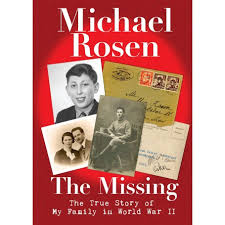
I mention this because a brief review of Michael Rosen’s Missing, about what happened to some of his relatives in World War Two,has been in the queue for a while.

Rosen is known as an author and broadcaster, a socialist and anti-racist and come to that a beard wearer and Arsenal fan.

He is not known as a research historian but that doesnt mean he cant be one.

The Missing is a brief volume of short chapters and some poems.

It does have references and an index at the end but it lacks the kind of academic apparatus that we look for in research history. Where for example are the footnotes??

Partly the answer is that the Missing is a book aimed primarily at young people, aiming to get across in deeply personal terms what the Holocaust actually meant.

But partly it doesnt matter. Rosen has spent decades researching his family history and the research methods cannot be faulted.

Of course in 2020 the internet can be helpful but cant be relied on as a definitive source. Rosen doesnt do that. He seeks out obscure books that mention his family and contacts libraries in France to see if they have any records.

What he finds doesnt make for particularly happy reading but it is important, vital, even reading for our times.

He notes:

With every passing year, the number of Holocaust survivors gets smaller. We need to keep them the memory of them alive: the people who died and those who survived. That’s partly why I wrote this book.

The other reason, Rosen notes, is because the wider message of The Missing is about refugees and that is still with us.

That means the book is not only fascinating and important history but it has relevance now, as the best history should have.

And the awkward questions raised? Surely why there is not more research on this that gets out of the seminar room and into the public domain, because it needs to be read, understood and discussed

You can buy it here:

https://www.waterstones.com/book/the-missing/michael-rosen//9781406386752


Articles

Brewdog rebrands for ‘tomorrow’

In Uncategorized on February 6, 2020 by kmflett

Brewdog have announced a re-brand. Details are here:

https://www.brewdog.com/blog/the-new-brewdog-starts-here

For those like me who dont like market capitalism,what is required out of a brewery is decent beer, which Brewdog sometimes manage.

However we do actually live in a market capitalist economy (in fact we currently live in a market society)so image and brand are important ways of differentiating products and selling them.

As at least some who read this blog know I’m a union officer who represents managers and professionals in the private sector. In that capacity I represent people whose job it is to brand and re-brand large companies.

They tend to move around because its quite rare to create a brand that escapes criticism from some.

Brewdog have evidently employed some brand consultants and provided some appropriate words about climate change and responsible capitalism (which is where progressive business is)

They have not however totally avoided basic BS as the rebranding announcement ends with the following line:

We are determined to continuously raise the bar and set a new standard for beer and business.

Raise the bar is not currently in use as management speak in 2020 because it was called out as completely meaningless twaddle. Oh well. There always the next re-brand

Articles

E P Thompson on the right to protest: ‘the impatience of the more luxurious part of society'(William Morris)

In Uncategorized on February 6, 2020 by kmflett

William Morris

Met Police Chief Cressida Dick wants new laws on protest…

….The Chartist, Radical Liberal, Irish Nationalist and formative Labour movements were distinguished by their sensitivity to libertarian issues, and their suspicion of the polity of statism. When the police forces were enlarged and rationalized (or, as some would have it today, ’modernized’) in the mid-nineteenth century, this was a victory for bourgeois utilitarian bureaucratic policy in the face of intense resistance extending from old Tory localism through Radical Liberalism to outright Chartist opposition— for Chartists and trade unionists very well understood what kind of imperatives dictated government policies. As a consequence of this opposition, the presence of the police in British public life remained unusually subdued. They must be seen as ‘servants’ of… either the gentry or ’the public’, and they must in no circumstances exhibit a brash public presence. And, as a more concrete evidence of the old libertarian tradition, which endures to this day, the British police (at least in Britain) must go about the streets unarmed.

There were some anticipations of the statism of the twentieth century in the increasingly intrusive and punitive presence of the police in Britain in the 1880s. This was a natural reaction of the propertied classes, who reacted to the rumour that there were now socialist agitators in the streets (making speeches against their property!) with seemly terror. In general the police were impartial, attempting to sweep off the streets with an equable hand street-traders, beggars, prostitutes, street-entertainers, pickets, children playing football and free-thinking and socialist speakers alike. The pretext, very often, was that a complaint of interruption of trade had been received from a shopkeeper. William Morris remarked on the impatience of ’the more luxurious part of society’ to ’clear the streets of costermongers, organs, processions, and lecturers of all kinds, and make them a sort of decent prison corridors, with people just trudging to and from their work’….

E P Thompson, the Secret State

Articles

Tribute paid to Kirk Douglas. His clean shaven Spartacus reflected a beard ban in US film in early 60s

In Uncategorized on February 6, 2020 by kmflett

Beard Liberation Front

6th February

The Beard Liberation Front, the informal network of beard wearers, has paid tribute to the actor Kirk Douglas who has died at 103.

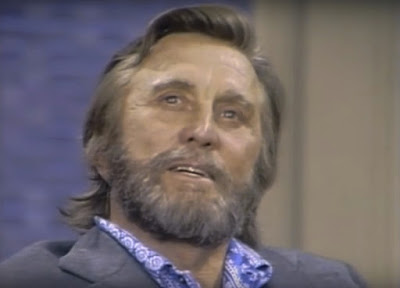
Douglas was often hirsute in later life, often sporting a magnificent beard.

However for perhaps his best known character, Spartacus, 1960, he was clean shaven.

This was despite the fact that while the imperial oppressors, the Romans, were known to prize a clean shaven appearance, slaves, of whom Spartacus  was an outstanding example, were usually beard wearers, due to lacking the means to shave regularly.

The campaigners say that clean shaven US film culture was not yet ready to accept a bearded hero in 1960.

BLF Organiser Keith Flett said, Kirk Douglas was an outstanding actor. In 1960 as Spartacus film culture dictated that he could not wear a beard even though it would have been historically accurate. He made up for it in later life though.

Articles

Writing letters to the NME

In Uncategorized on February 5, 2020 by kmflett


According to a Mr J. Rotten, late of Finsbury Park:

How many ways to get what you want

I use the best, I use the rest

I use the NME

I use anarchy

(Anarchy in the UK)

On Tuesday someone tweeted to me to ask if I could remember what I wrote letters to the NME about in the 1980s and 1990s.

I certainly did write letters to the NME, no doubt about left-wing politics, anti-racism and probably beards, but their specific content I cant recall. The only exception is a comment by an unnamed NME staffer under a letter I wrote. Their comment (not my letter) referred in a slightly unkind way to my role in the closure of the Sunday Correspondent in November 1990.

I asked twitter if anyone could remember what the fletters were about with little success, with the exception of a former NME journalist David Stubbs who noted I had once been a bit rude about his views of the Iraq War.

There is, as there is often is, a wider point. As a research historian I am wary of using memory to construct an historical record. Memory is often partial and sometimes just mistaken. I prefer archives:

Alan Rusbridger, archives & preserving modern historical records

Fortunately there is a relatively easy way of resolving the question of what the subject matter of the NME Fletters  were about. Watch this space as it were…