Articles

Challenge for Boris Johnson as Parliamentary Beard of the Year result shows Tory beards are popular

In Uncategorized on December 6, 2019 by kmflett

Beard Liberation Front

Media Release

6th December

Contact: Keith Flett 07803 167266

Challenge for Johnson as Parliamentary Beard of the Year result shows Tory beards are popular

The Beard Liberation Front the informal network of beard wearers has said that Ben Bradley, the Tory candidate for Mansfield on December 12th, has won the 2019 Parliamentary Beard of the Year poll.

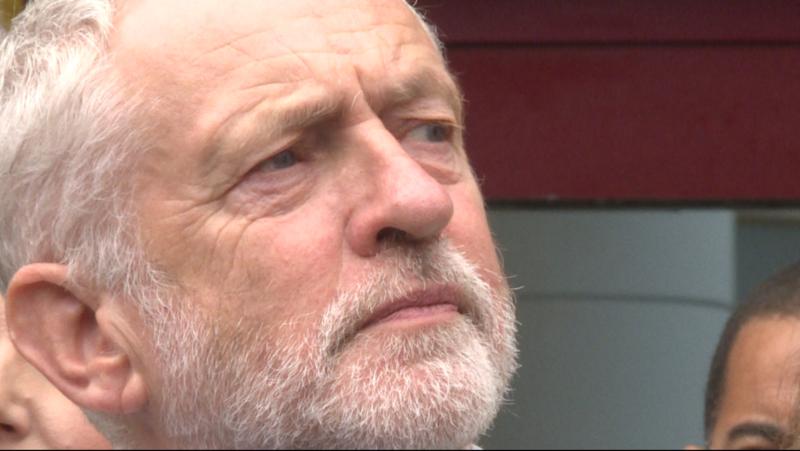
Mr Bradley got around 75% of the vote with Mr Corbyn second on 20% with Stephen Kinnock a distant third.

Ben Bradley won in 2017 when Jeremy Corbyn didn’t stand but this is the first time he has beaten a full field of contestants.

The campaigners say that with just over 1,000 votes cast voting was significantly down on recent years, without question because the candidates had another vote next week that they were focused on.

Labour leader Jeremy Corbyn has won the Award 8 times in total in 2001, 2007, 2011, 2012 (shared), 2014, 2015 and 2016. He was declared not eligible in 2017 to give newer Parliamentary beards a chance but won again in 2018

The Award is not about the politics of the beard wearer but about how well they have deployed their beard in public during the year, particularly in Parliament.

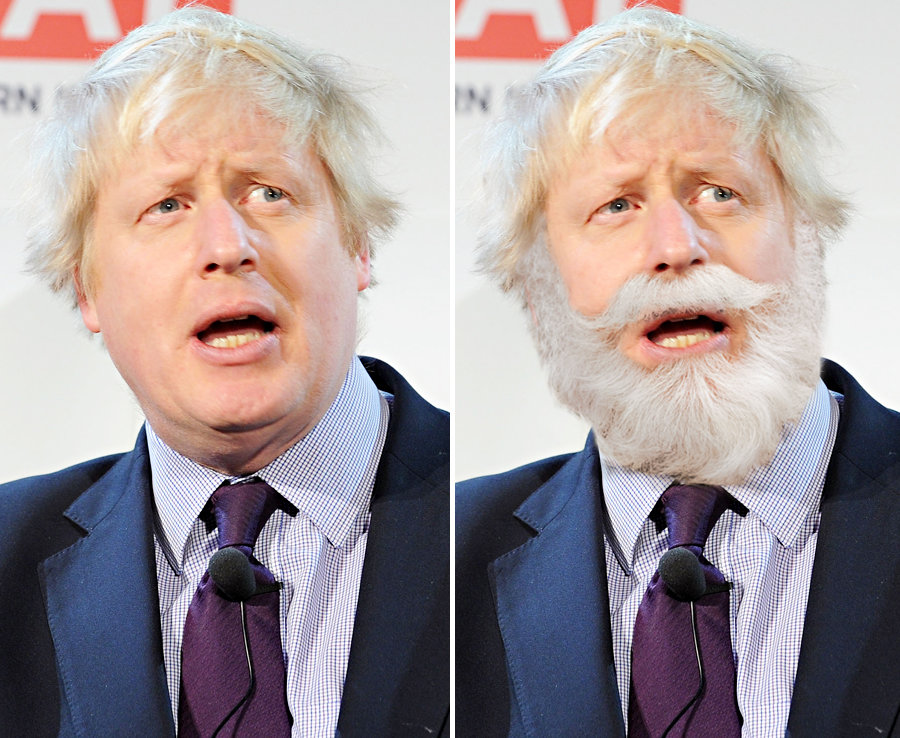
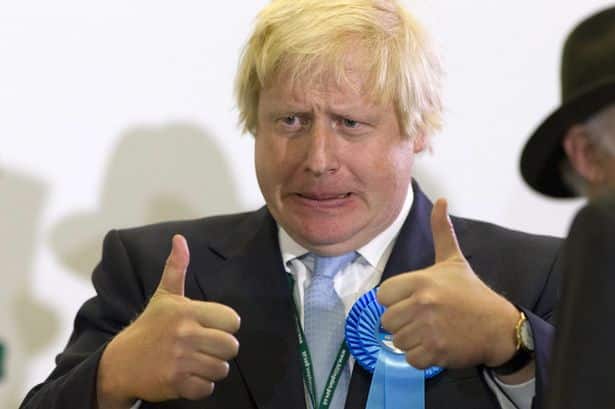
BLF Organiser Keith Flett said, Ben Bradley’s victory is a challenge for perpetually clean-shaven Boris Johnson. Tory beards are popular with voters. Will he now grow one?

Parliamentary Beard of the Year 2019 shortlist

Chris Elmore (Labour)

Lord Tony Greaves (LIbDem)

Lord Hylton (Crossbencher)

Jim McMahon (Labour)

Nadhim Zahawi (Tory)

Ben Bradley (Tory)

Barry Gardiner (Labour)

Stephen Kinnock (Labour)

Alex Cunningham (Labour)

Stephen Crabb (Tory)

Jeremy Corbyn (Labour)

Andy McDonald (Labour)

Crispin Blunt (Tory)

Andrew Gwynne (Labour)

Lloyd Russell-Moyle (Labour)


Recent winners

2011 Jeremy Corbyn

2012 Jeremy Corbyn/John Randall

2013 Julian Huppert

2014 Jeremy Corbyn

2015 Jeremy Corbyn

2016 Jeremy Corbyn

2017 Ben Bradley

2018 Jeremy Corbyn


Articles

Tory Ben Bradley regains Parliamentary Beard of the Year title as Jeremy Corbyn eyes bigger prize

In Uncategorized on December 6, 2019 by kmflett

Beard Liberation Front

Media Release

6th December

Contact: Keith Flett 07803 167266

Tory regains Parliamentary Beard of the Year title as Corbyn eyes bigger prize

The Beard Liberation Front the informal network of beard wearers has said that Ben Bradley, the Tory candidate for Mansfield on December 12th, has won the 2019 Parliamentary Beard of the Year poll.

Mr Bradley got around 75% of the vote with Mr Corbyn second on 20% with Stephen Kinnock a distant third.

Ben Bradley won in 2017 when Jeremy Corbyn didn’t stand but this is the first time he has beaten a full field of contestants.

The campaigners say that with just over 1,000 votes cast voting was significantly down on recent years, without question because the candidates had another vote next week that they were focused on.

Labour leader Jeremy Corbyn has won the Award 8 times in total in 2001, 2007, 2011, 2012 (shared), 2014, 2015 and 2016. He was declared not eligible in 2017 to give newer Parliamentary beards a chance but won again in 2018

The Award is not about the politics of the beard wearer but about how well they have deployed their beard in public during the year, particularly in Parliament.

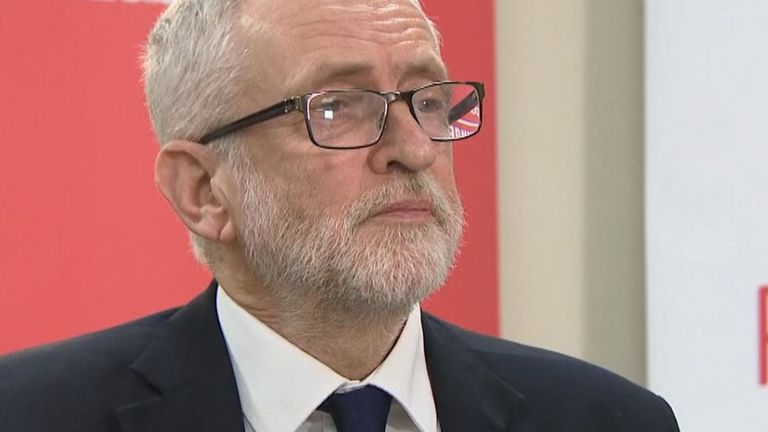
BLF Organiser Keith Flett said, we congratulate Ben Bradley. He had a narrow majority in Mansfield in 2017 so this may be his best poll victory this month. Jeremy Corbyn clearly has his eyes on a bigger prize, becoming the first Prime Minister with a beard since 1902

Parliamentary Beard of the Year 2019 shortlist

Chris Elmore (Labour)

Lord Tony Greaves (LIbDem)

Lord Hylton (Crossbencher)

Jim McMahon (Labour)

Nadhim Zahawi (Tory)

Ben Bradley (Tory)

Barry Gardiner (Labour)

Stephen Kinnock (Labour)

Alex Cunningham (Labour)

Stephen Crabb (Tory)

Jeremy Corbyn (Labour)

Andy McDonald (Labour)

Crispin Blunt (Tory)

Andrew Gwynne (Labour)

Lloyd Russell-Moyle (Labour)


Recent winners

2011 Jeremy Corbyn

2012 Jeremy Corbyn/John Randall

2013 Julian Huppert

2014 Jeremy Corbyn

2015 Jeremy Corbyn

2016 Jeremy Corbyn

2017 Ben Bradley

2018 Jeremy Corbyn


Articles

Harold Macmillan on Opinion Polls 3rd December 1959

In Uncategorized on December 5, 2019 by kmflett

The political opinion poll first made itself felt in a British General Election in 1959 when the Tories led by Harold Macmillan beat Labour (leading to much soul searching amongst some in the Labour Party)

Macmillan however was no fan of opinion polls and his words appear prescient 60 years on

‘One of the latest so-called sciences is one called psephology — flourishing in one of those new Colleges — the study of how the people voted last time, how they will vote next time; all apparently capable of mathematical calculation, irrespective of the electoral campaign or the issues at stake .

‘This sort of political Calvinism (of which Dr. Gallup is the founder) is only redeemed by the recent discovery that their predetermined anticipations are generally proved wrong. The electors do show, from time to time, a regrettable outbreak of political Free Will .’

— Mr. Harold Macmillan, Oxford Union, December 3rd, 1959

Articles

Boris Johnson’s Contemporaries at Oxford 1983-87. Not a conspiracy but a culture

In Uncategorized on December 5, 2019 by kmflett


Boris Johnson was at Oxford from 1983-87 and notoriously part of the elite Bullingdon Club.

However Sonia Purnell’s biography Just Boris notes a more interesting detail. Namely some of the people who Johnson was a contemporary of at Oxford. He may or may not have known some of them at the time or later but they all came out of a 1980s Oxford University culture.

There is nothing hugely remarkable about that except that the culture was not about getting people ready to drive a bus or work in routine public service. It was about giving people the confidence to feel they could run things. As will be seen from the list some were better at it than others:

David Cameron

William Hague

‘Radek’ Sikorski (Polish politician)

Michael Gove

Nick Boles (former MP)

Jeremy Hunt

Roland Rudd (People’s Vote)

Nick Robinson (BBC)

Gary Gibbon (Channel 4)

David Miliband

Ed Balls

Yvette Cooper

Ian Katz (ex-Guardian & Newsnight now Channel 4)


Articles

The New Statesman & Elections: The Song Remains the Same

In Uncategorized on December 5, 2019 by kmflett

The New Statesman & Elections: The Song Remains the Same

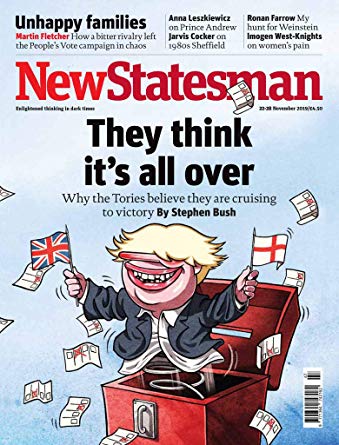
There has been a certain media hoo-ha about the fact that the current issue of the New Statesman has an Editorial that while calling for an anti-Tory vote doesn’t back Labour.

A lot more could be said but let’s confine ourselves to specifics.

Much of the commentary came from people like the Daily Mail’s Andrew Pierce, or Tory early morning tweeter Matt Hancock. Perhaps they glance at the NS from time to time but I’m fairly certain they are not subscribers (as I am and have been since time immemorial).

Of course the tradition is that many read the NS for the back half, the arts and culture, but obviously I also read the front. I don’t always agree with it, but the Spectator it is not.

In 2017 the New Statesman Election Editorial read in part:

Labour’s historic mission is to redress the power of capital and defend the labour interest for the common good. The mission of the Conservatives is to be the party of the moneyed interest and to defend the market state.

Britain does not have a presidential system. When we cast our vote at an election we do so for an individual candidate in a particular constituency. Many admirable Labour candidates are struggling to hold on to their seats – including, at random, Jon Cruddas in Dagenham, Holly Lynch in Halifax, Jess Phillips in Birmingham Yardley, Alison McGovern in Wirral South, Peter Kyle in Hove and Wes Streeting in Ilford North – because of the invidious position they have been put in by the party’s leadership.

So when you cast your vote on 8 June remember that you are voting not for a party leader but for an individual candidate. That distinction matters.

In 2019 the New Statesman Editorial reads in part

We are not without hope of meaningful change & urge all our readers to vote, tactically if necessary, to deprive Mr Johnson’s hard Brexit Conservatives of a majority. There are many fine Parliamentarians from all parties- Luciana Berger, Joanna Cherry, Jess Philips, Rosie Duffield, Jim McMahon, Dan Jarvis, Sarah Wollaston, Rachel Reeves to name only a few- who fortitude and resilience are admirable…. Readers should judge their local candidate on his or her merits and commitment to social reforms, to green public investment, to civic values and to progressive politics.

The song actually remains much the same and I’m still voting Labour btw. Who cares what NS Editorials say, aside it would appear from Tories? It is actually a very one-sided take on a controversial issue with apparently no grasp that there are other views and perspectives on the matter.

Articles

Really Useful Knowledge about British Brexit Capitalism

In Uncategorized on December 5, 2019 by kmflett

Really Useful Knowledge about British Brexit capitalism

David Edgerton has written a very interesting and useful examination of the recent history of British capitalism:

https://reviews.history.ac.uk/review/2307

He has also written on the subject for the Guardian and most recently in the New Statesman (link below).

I was pleased to chair a recent seminar at Kings that he gave under the auspices of the London Socialist Historians Group, where we discussed in particular the issue of total history. That is an understanding not just of labour history but how that is part of the history of capitalism and the interaction between capital and labour that is a key dynamic in history.

I copy below the final two paragraphs of the NS piece.

In it he argues correctly I think that the idea that the British bourgeoisie were divorced from direct political representation is wrong and that many industrialists of the pre-1945 era were also Tory or Liberal politicians. He goes on to argue that by the 1960s there was a kind of national capitalism with giant concerns such as ICI dominating industry.

In the present day much of UK industry is owned elsewhere in the world and while that is also a pattern in other countries Edgerton argues it is far more pronounced in the UK.

If we take for example Labour’s commitment to nationalise the core telecoms network currently in private hands, in France and Germany it remains very much in the hands of the State.

The first paragraph below I entirely agree with. The second is more problematic. It has something of the ring of the Alternative Economic Strategy of the 1970s promoted by Tony Benn amongst others.

There are several points that can be made. The first in defence of Edgerton is that while in the 1970s the AES may have looked a bit like the politics of Little Britain given the disconnect there is in British society between wealth and those who create it bringing the focus of wealth creation nearer home may an important political move.

However the issue about how to control a capitalism that is global still wont be solved by autarky, not of course that Edgerton is suggesting that it would be. Perhaps the point is to shift the emphasis of British industry back more into the European mainstream and way from the extreme position created by Thatcherism and now promoted by Johnson and Co. Its not socialism but the process of making the shift could raise many important matters in that direction.

Progressive reform has always depended on understanding present realities in order to determine exactly what needs changing about the economy and how it can be changed. If nothing else, Brexit has been a long overdue education in the realities of Britain’s economy.

While both liberals and Marxists argue that the nationality of capitalism does not matter, there is a need to rethink the case for a national capitalism in this age of economic inequality, political fracture and geopolitical uncertainty. If nothing else, by embedding the economy more deeply into the nation and the daily lives of its citizens, and by directing itself towards national purposes and having a greater stake in developing national skills and innovations, a national capitalism would underline and reinforce that lost idea of the common good.

https://www.newstatesman.com/politics/uk/2019/11/how-britain-was-sold


Articles

Swinson, Corbyn & Squirrel stories, fake & real

In Uncategorized on December 4, 2019 by kmflett

An abiding backdrop to the 2019 Election campaign has been the entirely false story that LibDem leader Jo Swinson took pot shots at squirrels.

The story &  Swinson’s take on it is here:

https://blogs.spectator.co.uk/2019/11/jo-swinson-denies-firing-stones-at-squirrels/

One might say that such stories only gain circulation because they seem to be believable but I’ll leave that to the prejudices or otherwise of the reader.

At the same time a tweet from Labour Leader Jeremy Corbyn to myself in 2011 on squirrels has resurfaced (He was just a backbencher then & I was much as I am now a hirsute socialist).

The tweet refers to myself and my partner Megan feeding some tame-ish squirrels in York.

Corbyn is wrong btw about the beards, Squirrels dont have beards although again one senses the comment was light hearted

Replying to @kmflett

@kmflett grey or red squirrels in York and what length of beards?

Articles

Tory v Labour as Parliamentary Beard of the Year vote closes at midday on Thursday

In Uncategorized on December 4, 2019 by kmflett

Beard Liberation Front

Media Release

4th December

Contact: Keith Flett 07803 167266

Tory v Labour as Parliamentary Beard of the Year vote closes midday on Thursday

The Beard Liberation Front the informal network of beard wearers has said voting is set to close for the Parliamentary Beard of the Year Award at midday on Thursday

Labour leader Jeremy Corbyn has won the Award 8 times in total in 2001, 2007, 2011, 2012 (shared), 2014, 2015 and 2016. He was declared not eligible in 2017 to give newer Parliamentary beards a chance but won again in 2018

The Award is not about the politics of the beard wearer but about how well they have deployed their beard in public during the year, particularly in Parliament.

BLF Organiser Keith Flett said, The 2017 winner Tory candidate for Mansfield Ben Bradley has taken a clear lead in the voting but the last 24 hours of the poll frequently sees a large turnout for voters.

The vote is open now and closes at midday on 5th December with the winner announced ahead of the General Election on 6th December

Parliamentary Beard of the Year 2019 shortlist

Chris Elmore (Labour)

Lord Tony Greaves (LIbDem)

Lord Hylton (Crossbencher)

Jim McMahon (Labour)

Nadhim Zahawi (Tory)

Ben Bradley (Tory)

Barry Gardiner (Labour)

Stephen Kinnock (Labour)

Alex Cunningham (Labour)

Stephen Crabb (Tory)

Jeremy Corbyn (Labour)

Andy McDonald (Labour)

Crispin Blunt (Tory)

Andrew Gwynne (Labour)

Lloyd Russell-Moyle (Labour)


Recent winners

2011 Jeremy Corbyn

2012 Jeremy Corbyn/John Randall

2013 Julian Huppert

2014 Jeremy Corbyn

2015 Jeremy Corbyn

2016 Jeremy Corbyn

2017 Ben Bradley

2018 Jeremy Corbyn


Articles

What do beer drinkers want from a Labour Government?

In Uncategorized on December 4, 2019 by kmflett

Labour Manifesto begins task of addressing a radical overhaul of brewing, pubs and beer for the many not the few

Labour has produced a radical Manifesto and it contains some important passages that will positively impact those who drink beer, those who use pubs and people that work in the industry.

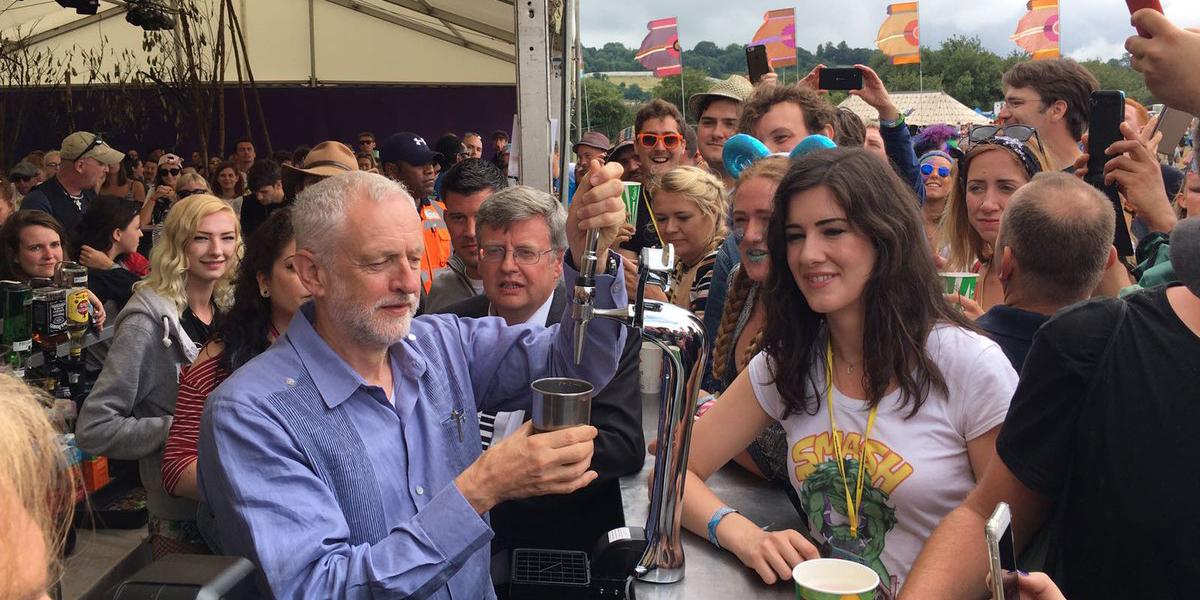
Jeremy Corbyn is not a drinker but he is well aware of some of the concerns around pub ownership and beer.

I well remember being in a pub with him not long before he was elected leader. He was there because the pub was in his constituency and it was threatened with closure. We had a chat about the kind of craft beers I was drinking and what they were like. A lifelong hallmark of Corbyn has been  a curiosity about what ordinary people do and what they get up to.

The process of writing the Labour 2019 Election Manifesto and what it contains of course went far wider than what Jeremy Corbyn thinks.

Perhaps the first point to make is that it does matter. In the last 30 years Parliament has passed legislation that has had a significant impact on beer and pubs.

In 1989 the Beer Orders were passed. They addressed the dominance in the beer and pub industry of what were there then the ‘Big Six’ brewers, Whitbread, Courage etc. None of the Six still exist.

They were ordered to sell pubs so that their maximum holding was 2,000. That led to the rise of pub companies such as Punch.

There was also a requirement for brewery tied houses to be able to sell a ‘guest’ real ale from another brewer.

The Beer Orders were repealed in 2003.

In the meantime Gordon Brown in 2002 when he was Chancellor introduced the Small Brewers Progressive Duty Relief. In summary it allowed smaller brewers to pay less tax and therefore stand a better chance of competing and surviving. It sparked the huge growth of breweries we’ve seen in recent years.

So what should we look for in the Labour Manifesto?

Ownership

This goes wider than brewing but in the year we have seen Fullers sell to Asahi and Greene King to a Hong Kong Property Company there must be a requirement to refer such sales to Government to review their implications for jobs and pubs. Both brewers were part of the Beerage, that section of the industry that traditionally helps fund the Tory Party. Don’t expect Johnson to act though.

Pub Companies

Pub Companies not breweries are now the major presence in pub ownership. Sometimes they employ managers but quite often they lease pubs to landlords as tenants. It is an uneven match and while the pub landlord isn’t always a natural ally of the left Labour needs to be on their side.

It goes much further than that reflecting the stranglehold such companies at least attempt to secure. Heineken, a global operation, runs a UK pub chain Star which has several thousand pubs. But it is also involved in providing and servicing cellar equipment in a lot more and without that no beer gets served.

A new version of the 1989 Beer Orders is now needed to address PubCos, while making sure that what is done doesn’t lead to fewer pubs.

Sales of Pubs

Most readers of this will be familiar with the reality of perfectly viable pubs being sold off for even more profitable housing. In England Asset of Community Value legislation allows a stay on sales while community bids to buy the pub are organised. Even so planning law needs to be strengthened so that when a change of use application for a pub is made it is automatically rejected unless it can be demonstrated that it is the only viable way forward. The Manifesto makes it clear that the Pub is the Hub and that all pubs will listed as ACVs to allow the community the first chance to buy them if they come up for sale.

Workplace Organisation in Breweries

Beer drinkers and perhaps particularly craft beer drinkers are often unpleasantly surprised when they learn of working conditions in the brewing and pub trades.

Big breweries are on the whole unionised by Unite and that extends in many cases to the larger regionals. Craft breweries are not unionised, although some do pay the living wage as does at least one pub chain- Brewdog. Another well-known pub chain, Wetherspoons, certainly does not and the Bakers Union (BAFWU) has been campaigning here.

Until quite recently craft breweries rarely employed enough people to make workplace organisation a priority. Now some do and unionisation campaigns are underway.

These of course meet exactly the same obstacles, around employment law, that exist elsewhere in industry. Legislation to strengthen workplace rights is a central part of the Manifesto

Climate Emergency and the Green New Deal

Big Beer is global and beer drunk in the UK is not always brewed in the UK. That doesn’t mean that the occasional appearance of, for example, US craft beers that are not generally available here needs to be stopped. However shipping or air freighting large amounts of beer around the world is not environmentally friendly. There should be tax incentives to promote locally produced beer which is sold locally as a practical way of starting to address that. The Manifesto is very much on this page promising to use public procurement to strengthen local jobs and supply changes.

Attempting to control the global movement of capital can come later.

The Pub Environment

This is primarily about what those who like beer and pubs would want to see in a Labour Manifesto. But the labour movement, take the Labour leader himself, has not been and is not all about those who like a drink. Some don’t drink for cultural, religious, personal or medical reasons. Pubs should be welcoming to all as community hubs. That means that low/no alcohol beers (which thankfully in 2019 can be very drinkable)and non-alcoholic drinks should be readily available in pubs and this should be a licensing requirement.

Minimum Pricing

This already exists in Scotland and will shortly be implemented in Wales. It is not primarily aimed at beer drinkers but rather those who imbibe high strength ‘white’ ciders and cheap spirits. Even so it should be UK wide not just to promote sensible drinking to prevent price undercutters too

And once all that is done we’ll be able to raise a glass to the many who will benefit as opposed to the few who won’t.

In the meantime the 2019 Manifesto shows that there is a willingness from Labour to listen to and act on the voices of those who want a beer industry and pubs that are not dominated by the interests of big business

This post appears on the Cultures Matter website

Articles

Jacob Rees Mogg, Somerset coal mines & miners leader A J Cook

In Uncategorized on December 3, 2019 by kmflett

Paulton, Somerset

On Monday Jacob Rees Mogg posted a video of himself by the ancient Stanton Drew stones in his constituency.

Rees Mogg ‘historian’ resurfaces with video of ancient monument & reference to the Wurzels

What is perhaps less well known is that Rees Mogg’s constituency also contains what was part of the Somerset coalfield.

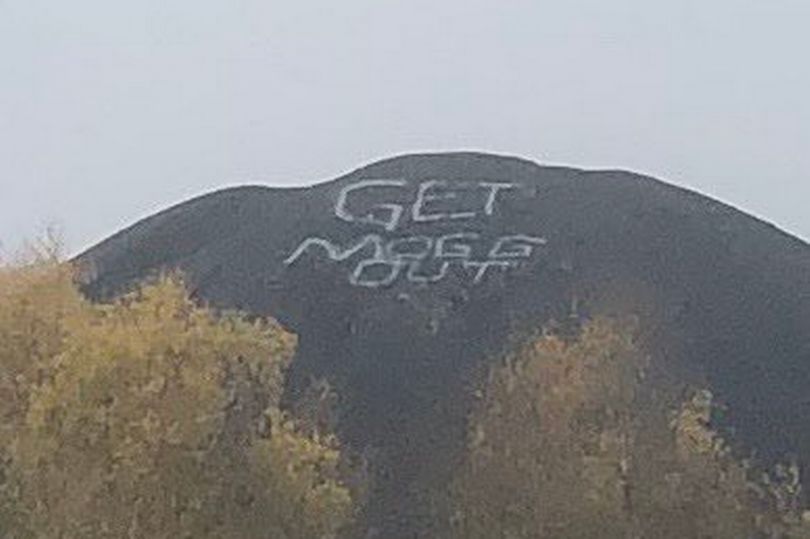
The local news website has found an anti-Rees Mogg slogan written on a surviving coal slag heap at Paulton:

https://www.somersetlive.co.uk/news/somerset-news/jacob-rees-mogg-giant-message-3604909?utm_source=twitter.com&utm_medium=social&utm_campaign=sharebar

Given the history between the Tory Party and the miners it can perhaps be understood why Rees Mogg chooses to ignore the coal mining heritage of his constituency.

It is worth recalling however that the leader of the miners in the 1926 General Strike A J Cook was a native of Somerset, Worth recalling unless you’re Jacob Rees Mogg anyway.