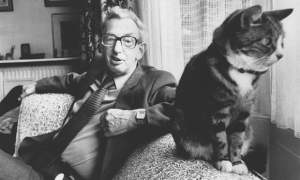
More details of the cat which decided to live with Eric and Marlene Hobsbawm, Ticlia has emerged in Marlene’s newly published biography Meet in Buenos Aires:
She just waltzed into our lives one day and none of us wanted to part with her. We put a notice on a lamp post outside, but nobody claimed her. We decided on the name of Ticlio, after the highest pass in Peru, though when I had taken her to the vet it turned out that she was a female and her permanent name became Ticlia. She was a most handsome tabby cat with four snow-white patches on her nose, chin, neck and paws. She had a good character and was not difficult- although she hated laughter, which was a hoot, and was easily annoyed by recorder playing. She knew Eric was the important one because he made the least fuss over her. Ticlia was loved by us all- she never got lost and was with us for fifteen years.
It is not revealed however whether she joined the Communist Party or read the Morning Star
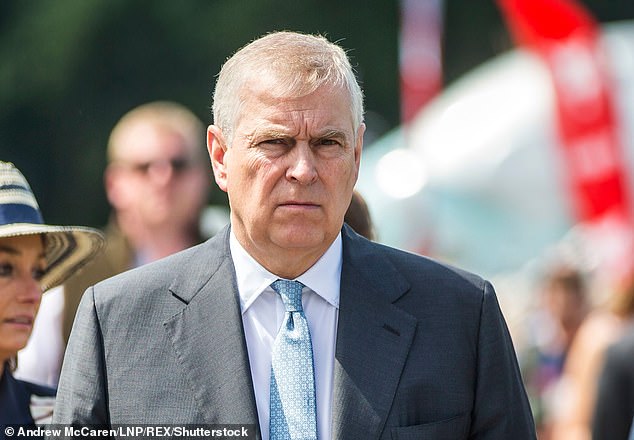
The current discussion about what Prince Andrew may or may not have done in his friendship with a convicted sex offender should remind us that the Royal Family have not always been popular.
A tradition of republicanism in Britain, whether defined on the left or the right, is difficult to pin down and mostly very much a minority trend. However sentiments of anti-monarchism have often been popular and sometimes part of the political mainstream.
We need only think back to the death of Princess Diana in 1997 to see all of these trends very much in the modern political mix.
Yet historically Britain- or more strictly given the date, England- can claim to have been first in the anti-monarchy stakes. It was after in Whitehall on 30th January 1649 that King Charles 1st had his head cut off and a Commonwealth under Cromwell was created. It lasted only to the restoration in 1660 and the work of modernisation had several more turning points from the Glorious Revolution of 1688 to something which almost was a revolution, the 1832 Great Reform Act.
It is difficult to sustain an argument that a genuine anti-monarchist tradition can be directly traced back to 1649, although if one looks at the efforts to ignore or play down the history of Cromwell and the New Model Army in many places in England- particularly churches and castles-it is obvious that the ruling class have never quite forgotten the significance of that day. Its equivalent in France is a national holiday. Not here.
Anti-monarchism was certainly alive in the early nineteenth century with the Queen Caroline affair and the wider traditions of republicanism was given a huge boost by the revolutions of 1848 across Europe.
It was this that sparked the left Chartist leader George Julian Harney to start his Red Republican journal.
The historian Antony Taylor makes the point that while it is often difficult historically to find a coherent and unified republican tradition the anti-monarchist movement is better defined and more popular.
In the anti-monarchist mind it was not the principle of a monarchy as such that was the problem but the behaviour of individual monarchs, how much they cost, and the whole aristocratic edifice of wealth and privilege that went with them.
In other words it was less an overt programme for political change and more a class movement, seeing the monarchy as a symbol of an unequal and divided society.
The popular critique of monarchy was an extension to the hatred of a society based on patronage and favour, the very real practice of Old Corruption.
As a mobilising political programme this had real strength long after the 1832 Reform Act and arguably up to the reform of the House of Lords in 1911 at the least. A focus on opposition to the aristocracy, including in practice the monarchy, united Fabian socialists and popular Liberals.
Reynolds’s the popular mass circulation radical working-class paper of the second half of the nineteenth century- it sold 350,000 copies a week in the 1870s- had anti-monarchism and stories relating to scandals about the Royals as a cornerstone of both its Editorial policy and its success in attracting a huge readership.
Papers more directly associated with the Labour tradition as the century drew to a close were more audacious and more politically direct still. The Clarion published, and gloried, in lists of aristocrats injured in hunting accidents.
Certainly historically anti-monarchism has been a significant feature of the British political landscape and Prince Andrew may, rightly, spark a revival
While Labour leader Jeremy Corbyn is known to have a cat El Gato, the truth about Boris Johnson and cats has yet to be an Election issue.
In perhaps the definitive book about Johnson, Sonia Purnell’s Just Boris, she notes that when he moved to Islington in 2004 with his wife Marina Wheeler he refused to have a cat.
She writes ‘Boris believes that cats in particular, are a ‘sure index of unsatisfied human cravings’.
Exactly what that means we might speculate but it clearly means that Johnson is an Ailurophobic.
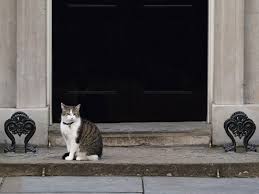
Can such a man be fit to share 10 Downing St with Larry the cat?
I think it would still be quite a struggle to live in London on that (but I inhabit a very different employment strata) but it does at least address the issue of low pay.
When Johnson was Mayor of London he was in favour of paying the LIving Wage, although obviously he did absolutely nothing about making sure it happened.
A particular focus as I enjoy drinking craft beer are the large number of craft beer breweries in London.
People are sometimes rather taken aback when they learn of the hours, pay and working conditions in some of these breweries, which promote an image of themselves as modern and progressive while being distinctly Dickensian when it comes to their workers.
But numbers do pay the living wage and that deserves to be publicised and promoted.
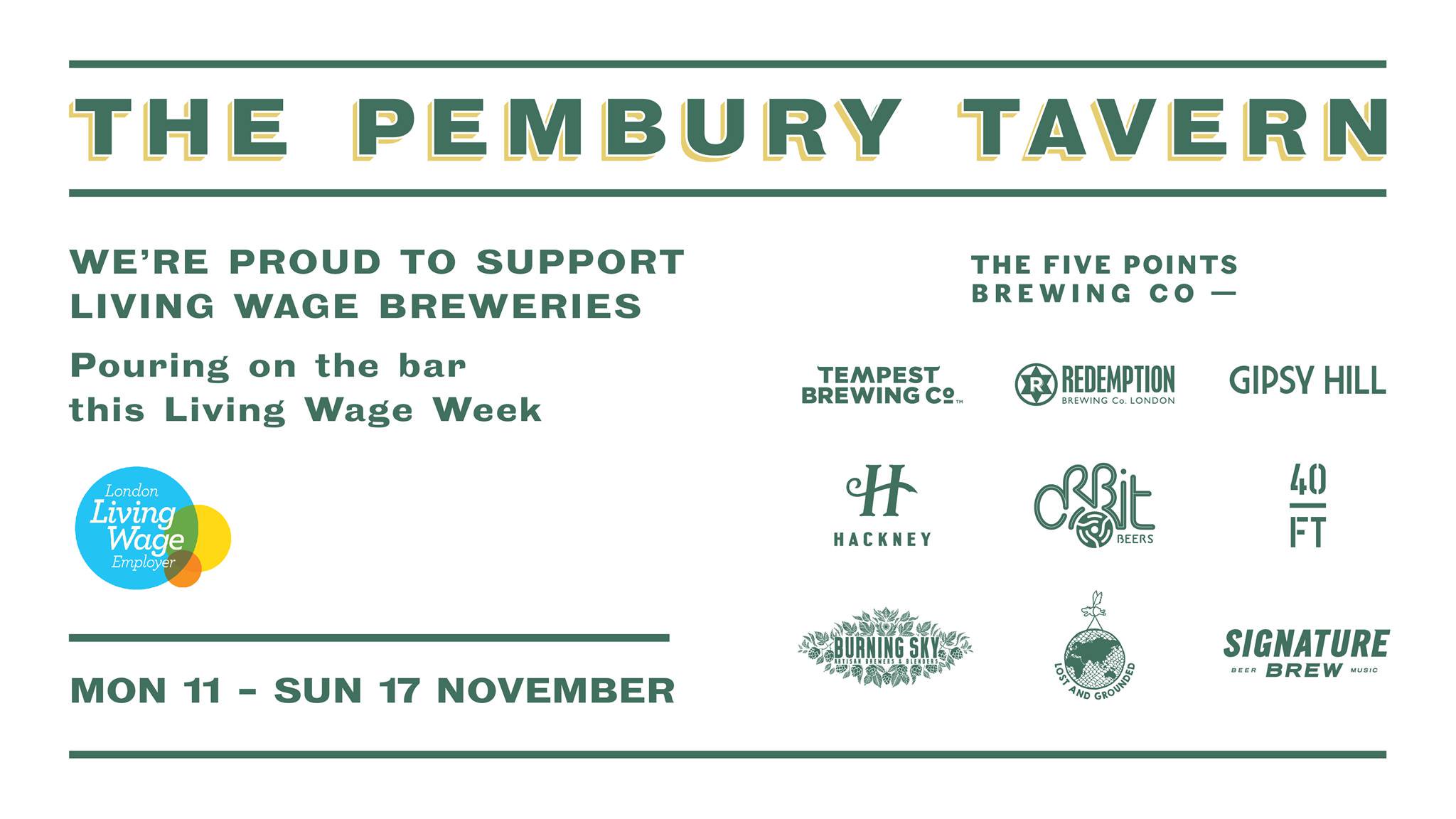
Earlier this week I dropped by the Pembury Tavern in Hackney which is owned by the Five Points brewery over the road. Both are Living Wage employers and the pub has had a week of promoting the beers of other breweries who do the same.
There is something decent about enjoying a beer from a brewery where you know those who have produced it are also decently paid.
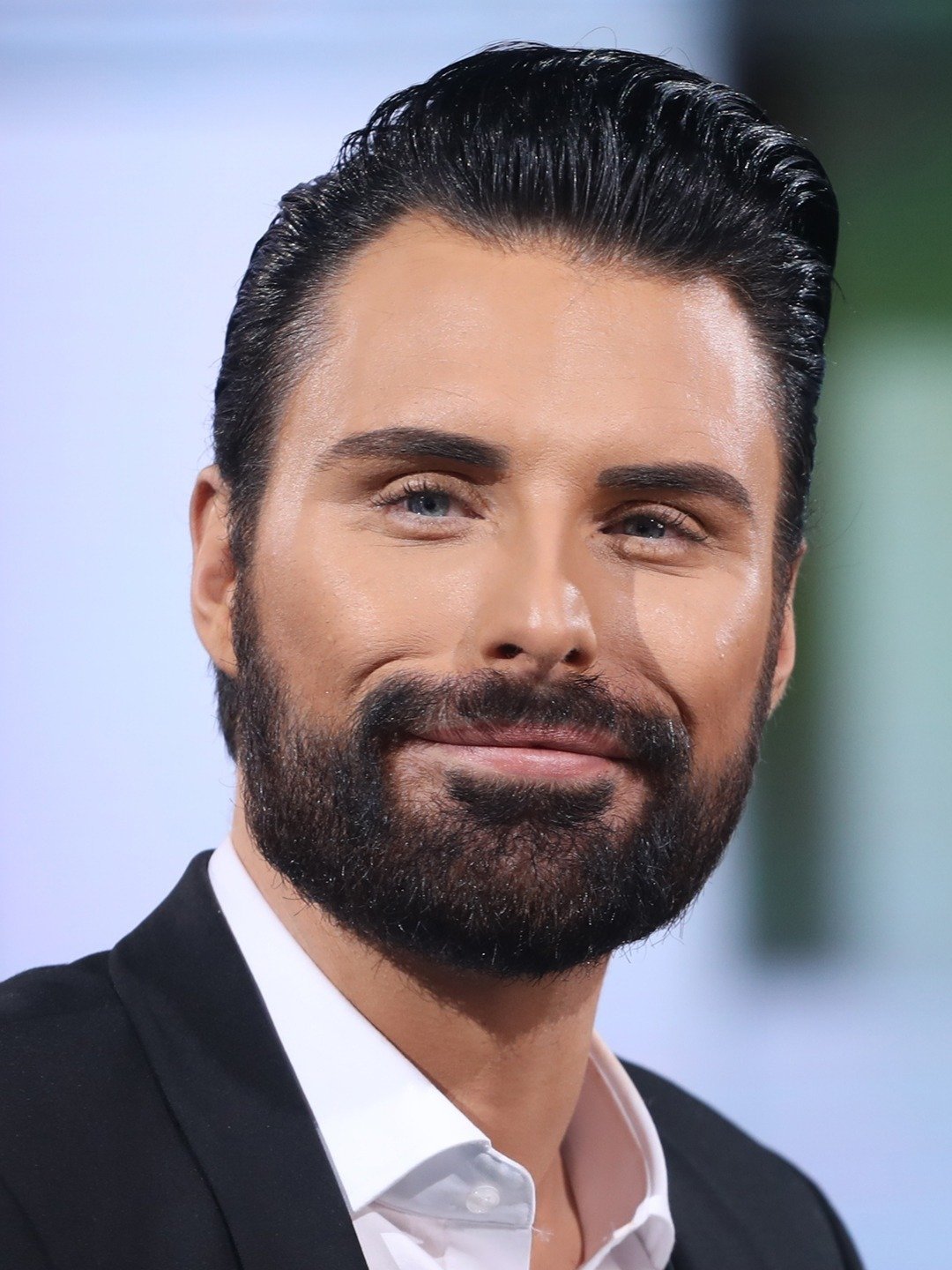
Can Strictly’s Rylan Clark-Neal shave Jeremy Corbyn for lead position on Beard of the Year poll
The Beard Liberation Front, the informal network of beard wearers, has said that the process of determining the Beard of the Year 2019 will take the next step on Friday 22nd November when the shortlist for the coveted Award is published
The on-line poll to determine the twelve finalists is now open and will close on November 21st
The final poll opens on November 22nd with the winner announced on December 28th.
This year for the first time the position taken in the vote for the shortlist will determine the order in which names appear on the final vote.
At the moment co-host of Strictly’s It Takes Two, Rylan Clark Neal is shaving Jeremy Corbyn for the place at the top of the Beard of the Year 2019 poll.
The criteria for Beard of the Year is as follows:
The Award is NOT about people who grow beards in their bedrooms and post pictures of them on the internet
The Award IS about people with consistent beards in the public eye who promote a positive image of the hirsute
TV doctor Xand Van Tulleken and cosmologist Peter Coles currently at Maynooth University in Ireland shared the Award.
BLF Organiser Keith Flett said, before the Election on 12th December Jeremy Corbyn has another vote to win. Can he take top place on the Beard of the Year poll?
Beard Liberation Front calls for Labour Manifesto to commit to a Beard Friendly Britain
The Beard Liberation Front, the informal network of beard wearers, has called on the Labour Party to commit in its 2019 Election Manifesto to promoting a Beard Friendly Britain
The BLF is not standing candidates at the Election but is urging parties to pick up on its theme of a more beard friendly and tolerant country.
The campaigners say that with Labour looking to elect the first Prime Minister with a beard since 1902, it makes sense for the Manifesto to also commit the Party to making Britain a more Beard Friendly country.
Examples of measures that Labour could commit to in its Manifesto include a Beard Equality Act which would outlaw discrimination against the hirsute. Such legislation already exists in some US States so it is not as outlandish as Tory pogonophobes will no doubt claim
BLF Organiser Keith Flett said, this is a once in a generation chance for a major political party to promote a more diverse and tolerant country by including in its Manifesto policies for a Beard Friendly Britain.
The Beard Liberation Front 2019 Election Manifesto will be issued early next week, following a policy review this weekend
According to Boris Johnson who is not a known expert on the history of the Bolshevik Party or Communism, Labour’s plans for Broadband amount to Broadband Communism.
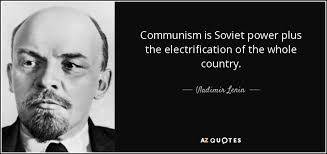
If Johnson did know what he was talking about he might have mentioned the statement by Lenin made on November 1 1920 that ‘Communism is Soviet power plus the electrification of the whole country’.
Lenin’s point of course was that if the Russian economy was to work it needed to have electricity across the whole, very large, country.
Labour almost one hundred years on are highlighting the importance of a decent broadband service for the British economy not as Johnson seems to think as a workers state (unfortunately in my view) but as a capitalist economy that can thrive and provide jobs and services that people need.
Not particularly exciting or romantic but quite important
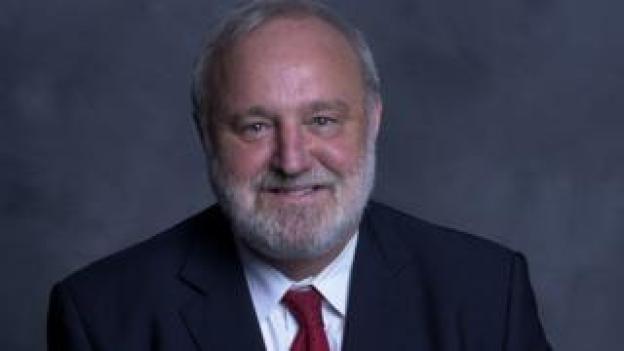
The late Frank Dobson was Labour’s candidate in the London Mayoral Election in 2000. He lost to Ken Livingstone who ran as an independent on that occasion.
There were reports, never fully verified, that Labour spin doctors, particularly the late Philip Gould, thought Dobson would do better if he shaved. He refused:
The Observer (12th March 2000) carried a pogonophobic Editorial ‘Chin and bare it’ backing the call for Dobson to shave.
It read in part:
Millbank spin doctors are right. Of course Frank Dobson should shave off his beard. The white whiskers even in their latest Versailles trimmed manifestation are an electoral disaster. Women hate beards and always have done… Hairy faces make babies cry…Our only hesitation in pressing for a close shave any further is a strange foreboding that the beard might be concealing something far worse.
Perhaps the Editorial too was tongue in cheek. Then again, perhaps not.
Beard Liberation Front confirms it will campaign for the first PM with a beard since 1902
The last PM with a beard
The Beard Liberation Front, the informal network of beard wearers, has confirmed that it won’t stand against Iain Duncan Smith in Chingford on the 12th December after supporters felt that there was a danger of splitting the vote and allowing IDS to retain the seat.
The campaigners say they noted the decision of the Green Party to stand down in favour of Labour candidate Faiza Shaheen and felt in this instance a BLF candidate would be a distraction.
The BLF has decided against standing any candidates in the 12th December General Election and will reveal other ways of promoting a Beard Friendly Britain with its Manifesto launch on Saturday
Part of this will be a list of Beard Friendly candidates who it will actively promote.
The campaigners say that they are concerned at the level of pogonophobia in Westminster politics and that far too many MPs are still clean-shaven men in suits and that they are determined to make this an Election issue.
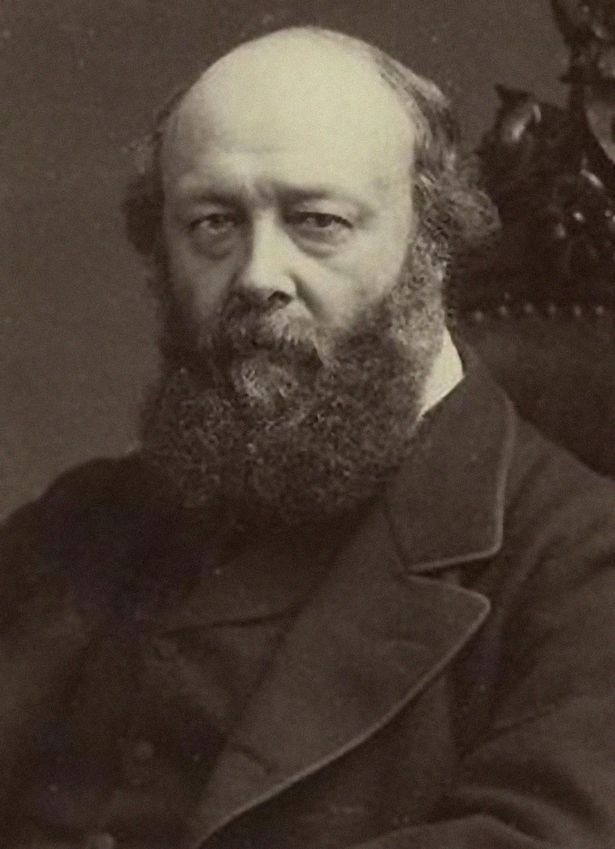
BLF Organiser Keith Flett said, while we are not Party political there is clearly a chance in this Election that Britain could end up with its first bearded Prime Minister since Lord Salisbury in 1902. We wouldn’t want to do anything that might take away from that.
The Beard Liberation Front is an informal network of beard wearers and welcomes supporters, both women and men, who agree with our core principles.
It is not party political and does not usually stand candidates in Elections. However it is political in a broader sense, as it seeks a less discriminatory and more beard friendly Britain.
Founded in 1995 it campaigns against prejudice and celebrates positive images of the hirsute with an annual Beard of the Year award at the end of December. Beard Week, which focuses on a range of beard related issues, takes place every year in late June.
It has produced an updated version of its Election Manifesto on which it will seek the views of candidates and will publicise those who sign up to its Beard Friendly Charter.
The Beard Friendly Charter (Summary)
No to Beardism and pogonophobic prejudice against the hirsute
More hirsute MPs
More hirsute public employees and monitoring of hirsuteness levels in the senior Civil Service
Promotion of positive public images of the hirsute
No dress codes at work, beyond a requirement for smart appearance for public facing roles
England men’s football captain Harry Kane joins Beard of the Year 2019 shortlist poll
The Beard Liberation Front, the informal network of beard wearers, has said that the process of determining the Beard of the Year 2019 has begun with the vote open for the shortlist for the annual Award.
The on-line poll to determine the twelve finalists is now open and will close on November 21st
The final poll then opens on November 22nd with the winner announced on December 28th
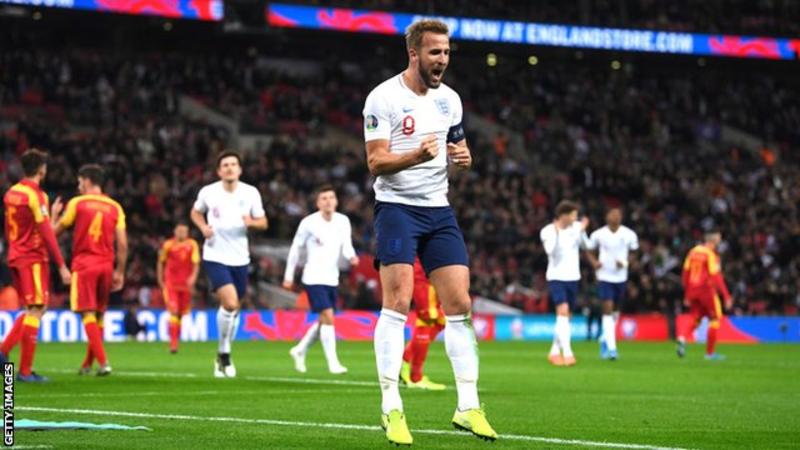
After his hat-trick at Wembley on Thursday evening England men’s football Harry Kane has joined the poll
The placing of names on the shortlist is determined by votes in the preliminary round and the higher up the list someone appears the better their chances tend to be.
The criteria for Beard of the Year is as follows:
The Award is NOT about people who grow beards in their bedrooms and post pictures of them on the internet
The Award IS about people with consistent beards in the public eye who promote a positive image of the hirsute
TV doctor Xand Van Tulleken and cosmologist Peter Coles currently at Maynooth University in Ireland shared the Award.
BLF Organiser Keith Flett said, Of course football is a very partisan sport but there can be no question that if an England men’s football captain with a beard scores a hat-trick at Wembley he is promoting a positive image of the hirsute.