Articles

Wetherspoons at 40: over & out

In Uncategorized on September 11, 2019 by kmflett

Wetherspoons at 40: over and out

If you drink in Wetherspoons you’ll probably know that it’s the 40th anniversary of the opening of the first bar in Muswell Hill in 1979.

That was actually a Marlers bar and there is a complicated early history.

However before long Tim Martin, who at the point lived in the area, was extending his early Wetherspoons empire across the North London Borough of Haringey.

One or two of the original pubs remain, primarily the Tollgate in Turnpike Lane.

Back then I was a regular frequenter of Spoons pubs. Why? Because there wasn’t much else.

Martin ushered in pubs that served food all day, had no music and served real ale, both major brands and guests from smaller brewers.

Was it possible to find this combination anywhere else? No

Spoons sold beers like Greene King Abbot which at 5% was considered strong 40 years ago. Was this available elsewhere in London pubs? No

As time went on I visited Wetherspoons less and I think its fair to say that in London the only one I might stop by is the huge Crosse Keys in the City when there is a beer festival on.

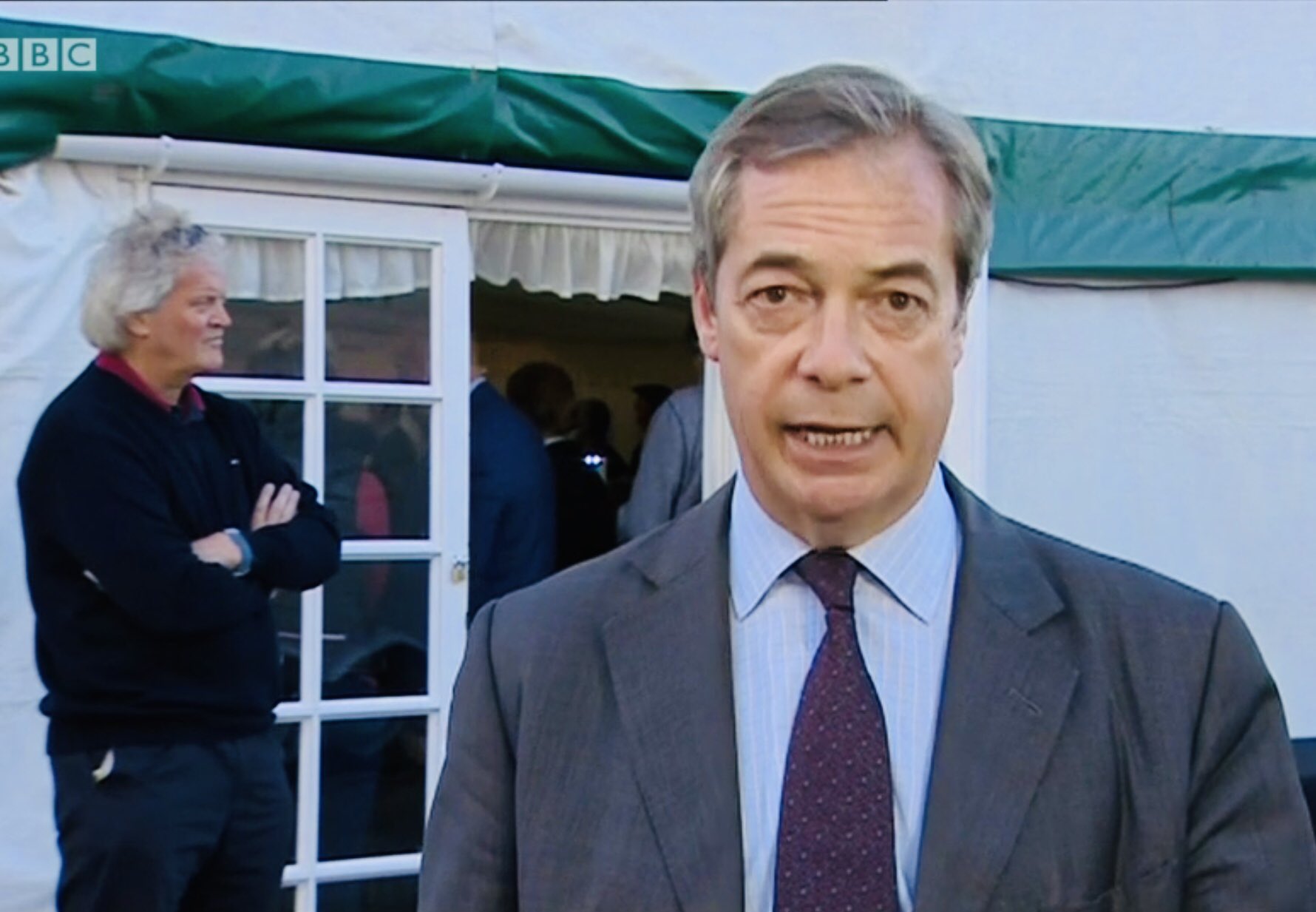
I could say I’m boycotting Spoons because of the way they treat their workers and because of Tim Martin’s love affair with Nigel Farage. Just today Martin has been spotted hanging around outside a Brexit Party event in Sedgefield.

Certainly neither of those encourages me to visit. However many other places I might go instead (not all) wont be that different in at least some respects, just rather better at keeping it quiet.

The reality is that Martin remains very much with the model he had 40 years and continues to successfully roll that out across the UK it would seem.

However times change and while decades ago I would look forward to a pint of Abbot nowadays I wouldn’t be drinking it, or a pint either. Martin hasn’t really moved that much with the times, and no doubt either doesn’t want to or feels he doesn’t need to.

There is a further point. Prices for cask ale in Wetherspoons are considerably cheaper than elsewhere and Martin in a Brexit related stunt has recently announced a price cut.

The price of beer however is not determined by the EU but primarily by how much tax the UK Chancellor decides to put on it. Martin’s move is humbug which is rarely if ever good business.

Of course if you are one of the far too many on a limited income and enjoy a beer it is in the short  term good news.

In the medium term however while large producers such as Coors and ABI can absorb tighter margins with Spoons on volume sales, small scale cask producers cant.

Taking back control is not I think about bankrupting small breweries or about turning a pub model that once aimed to be inclusive into a front for the Brexit Party.

Articles

Campaigners say TUC is now fully Beard Friendly as winners of Beard of 151st Congress revealed

In Uncategorized on September 11, 2019 by kmflett

Beard Liberation Front

Media Release

11th September

Contact Keith Flett 07803 167266

Campaigners say TUC is now fully Beard Friendly as winners of Beard of 151st Congress revealed

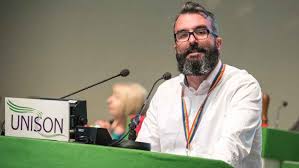
UNISON’s James Anthony

The Beard Liberation Front, the informal network of beard wearers, has said that after detailed research by its team, it is pleased to announce the TUC Congress, this year in Brighton, is now fully Beard Friendly.

The campaigners say that the image of the annual Congress as a load of clean-shaven men in suits has been swept away not only with a much-improved gender balance but also by an increase in hirsute delegates.

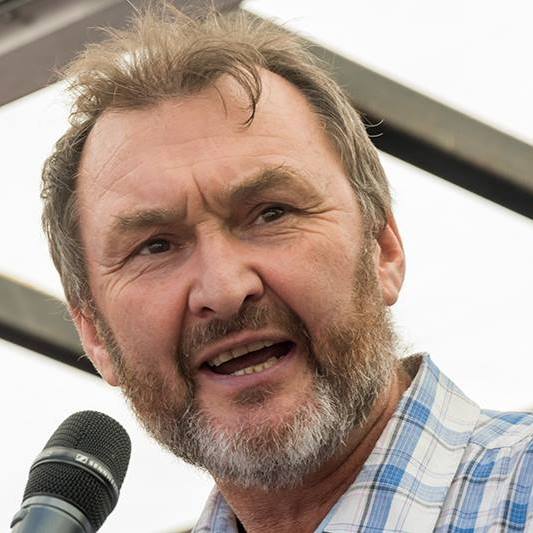
Announcing the winners of the Beard of Congress 2019, the BLF named James Anthony of UNISON for the most gravitas adding beard. He was runner up for the accolade in 2018.

Also placed were Martin Furlong from the College of Podiatry for hirsute resilience after his beard made numerous appearances at the rostrum and Prospect’s Ben Caile who was judged to have an excellent modern beard style of the type likely to impress young trade unionists

BLF organiser Keith Flett said, we congratulate James Anthony on shaving the significant opposition but most of all we are pleased that the TUC Congress can at last be regarded as fully Beard Friendly

Articles

Not All Our Yesterdays: Remembering 9.11 18 years on

In Uncategorized on September 10, 2019 by kmflett

Not All Our Yesterdays: Remembering 9.11, 18 years on

It is the 18th anniversary of the attacks on the Twin Towers in New York, 11th September 2001.

Some will have lost friends and relatives in the attack, for the most part ordinary people quite unconnected to the US policies which provided the pretext for the attack.

Many others will be able to remember with more than usual clarity where they were on that day. I was at the TUC in Brighton. This was well before the days of instant access to the web via a smart phone.

It became clear in the hall that something had happened. That year’s TUC Chair Bill Morris made an announcement that a plane had hit the twin towers. At that stage the extent of devastation was unknown.

The Prime Minister, Tony Blair, was due to address the gathering immediately after lunch. He appeared briefly said a speech would be inappropriate and hurried off to London. Business was suspended.

Delegates were stunned. Indeed so dazed was I that I recall shaking hands with the then General Secretary of my Union, not a normal event by any means in those now fairly far off days.

Blair of course had a very distinct reaction to those events. Afghanistan was in the frame for the start of what became the ‘war on terror’.

Historically speaking it is far too soon to draw a balance sheet of the impact and significant of Bush & Blair’s wars though the many thousands who have died on all sides and their relations may feel that judgement has already to some extent been made.

Socialists are sometimes accused of being found wanting by events. This was not one of those occasions.

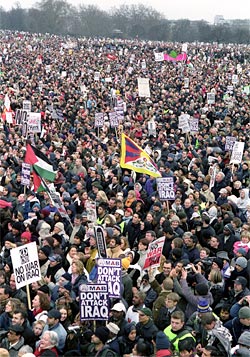
Within 10 days on 21st September 2001 the original forces that became the Stop the War Coalition had called a meeting to protest about an impending attack on Afghanistan. The meeting was packed to overflowing in the garden outside.

That led on 13th October 2001 to what was in effect the first Stop the War demonstration and that carried through to the biggest demonstration in British history, against war with Iraq on 15th February 2003.

There are other points too.

Marxists look for material explanations for events so there is a continuing need to counter the views of those who believe the events of 9.11 were the result of a conspiracy by someone or another.

More importantly the activities of Bin Laden were a counsel of despair, the thought that ordinary people would not act so terrorism was needed.

18 years on the dreadful events of 11th September 2001 are not yet for the history books but they deserve to be remembered. Both those that died and were injured on the day and the many more that suffered the same fate because of wars launched on the back of that day. Then there is the constant need to organise to try and make sure it doesn’t happen again.

Articles

Bolton fired by Trump: it wasnt the warmongering it was the moustache

In Uncategorized on September 10, 2019 by kmflett

Beard Liberation Front

Media Release 11th September

Contact Keith Flett 07803 167266

Bolton fired by Trump: it wasn’t the warmongering it was the moustache

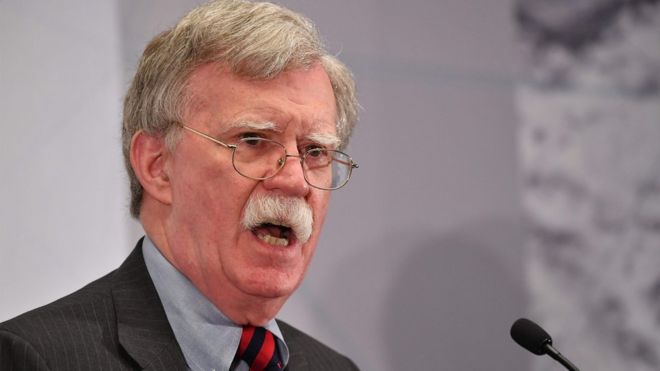
The Beard Liberation Front, the informal network of beard wearers, has said that Donald Trump’s interesting relationship with facial hair has taken another turn after veteran Republican John Bolton was sacked as National Security Advisor.

The Washington Post has previously quoted Trump advisors to the effect that the President doesn’t like either moustaches or beards.

The campaigners say that it is perhaps not entirely surprising that Trump, who has a vast array of prejudices, is a pogonophobe. While the BLF holds no brief for the neo-con, warmongering views of Bolton it doesn’t think anyone should be selected for a job or otherwise on the basis of their facial hair, except obviously Santa Claus.

BLF organiser Keith Flett said, no sensible person could be worried that warmonger Bolton has been sacked without even starting a war. Even so it was his warmongering not his moustache that should have been the reason

Articles

‘Sir’ Geoffrey Boycott, Old Corruption & the Honours System

In Uncategorized on September 9, 2019 by kmflett

‘Sir’ Geoffrey Boycott, Old Corruption & the Honours system

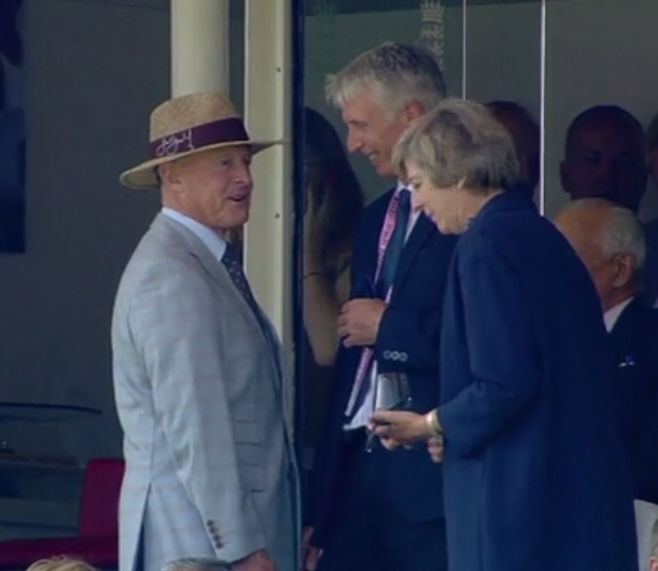
It has been reported that Geoffrey Boycott the former England cricketer and now commentator has been awarded a Knighthood in Theresa May’s resignation Honours List.

Of course Boycott was a formidable cricketer and May is a cricket fan but his Knighthood is, one suspects, to do as much with his views on Brexit. May sometimes quoted Boycott in speeches outside 10 Downing St.

There was a reason why Boycott was not honoured before and it can be found in his Wikipedia entry under ‘relationships, court case’

https://en.wikipedia.org/wiki/Geoffrey_Boycott#Relationships,_court_case

I don’t think Boycott has ever admitted any guilt here and said on Radio 4’s Today  programme that he didnt give ‘toss’ about his domestic violence conviction.

Of course since then he has fought cancer and survived to continue his commentary career.

The two are not equivalents in any sense but factors in understanding the life of a complex character as so many of us are.

The key point here however is not Boycott at best a deeply flawed individual but the honours system itself. It is an outdated way of recognising public worth and should be abolished. No doubt other ways of marking contributions to public life can be found.

It suggests rather, perhaps to great no surprise, that Theresa May’s Tory Party (which no longer exists) was characterised by the Old Corruption described by William Cobbett where people advanced because of who they were and who they knew rather than on merit.

Geoffrey Boycott’s career has merit with downsides but ultimately it was who he knew that mattered.

Articles

Competition Bristles for Beard of the 151st TUC in Brighton

In Uncategorized on September 9, 2019 by kmflett

Beard Liberation Front

Media Release

9th September

Contact Keith Flett 07803 167266

Competition Bristles for Beard of the 151st Brighton TUC

UNISON’s James Anthony

The Beard Liberation Front, the informal network of beard wearers, has said that the search for the Beard of the 151st TUC in Brighton is well underway with competition bristling on Monday.

The campaigners say that amongst the most impressive beards to address Congress on its second day were James Anthony from UNISON and Martin Russell from the RMT

In 2018 the National Education Union’s Kevin Courtney won by a close shave to be declared Beard of the 150th TUC Congress held in Manchester. UNISON’s James Anthony and the RMT’s Glenroy Watson tied for second place.

The campaigners say that historically the appearance of senior union leaders has been a kind of clean-shaven monochrome. While that has thankfully changed with more women in senior positions and Frances O’Grady as General Secretary, it remains the case that too many senior union officials are clean-shaven men in suits.

An advisory panel of trade union beard enthusiasts will flag impactful beards through the 4 days of the Congress

BLF organiser Keith Flett said, there is still a shortage of beards on the top table in Brighton but speakers from the floor are showing an enhanced level of hirsuteness.

The winner will be announced at 10am on Wednesday

Articles

Is the short form of cricket impacting on the quality of Test captaincy?

In Uncategorized on September 9, 2019 by kmflett

Is the short form of cricket impacting on the quality of Test captaincy?

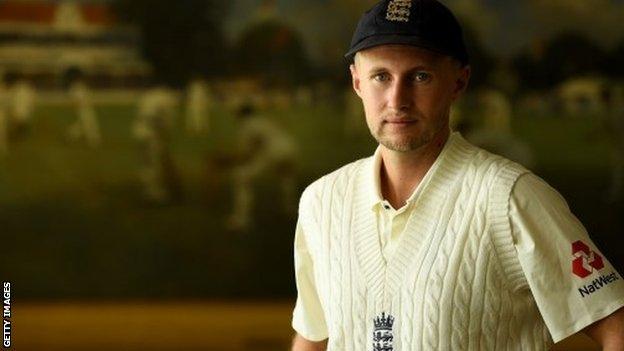
While one hesitates to suggest that Geoffrey Boycott is possibly right he makes an interesting point in his Telegraph column today about the England Test captaincy of Joe Root:

As much as we all love Joe it seems he does not have a feel for the nuances of the game.  There have been crucial moments in all the matches and England have very rarely grasped them. Australia have always been mentally stronger and won the key moments.

Boycott admits that there is not an obvious replacement for Root but argues that often Test captaincy is only learnt in practice citing Michael Vaughan and Ray Illingworth (both Yorkshiremen obviously) as successful Test captains that had little previous experience of captaincy.

There may be a further point that Boycott doesn’t mention. Root is not the England short form captain but he does play a lot of short form white ball cricket and by definition not so much longer form red ball cricket.

Captaincy decisions in limited overs games are about things that make an immediate difference in a short time not something that plays out over several days as a battle of wills or mental strength with the opposing side. Even without being captain that must be part of Joe Root’s thinking in short form games.

Short form cricket is not a game of nuance but long form often is and here it must be said Boycott has a point.

Articles

E P Thompson on Europe, from 1975

In Uncategorized on September 9, 2019 by kmflett

E P Thompson on Europe from 1975
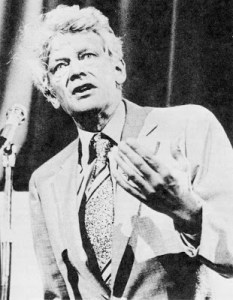
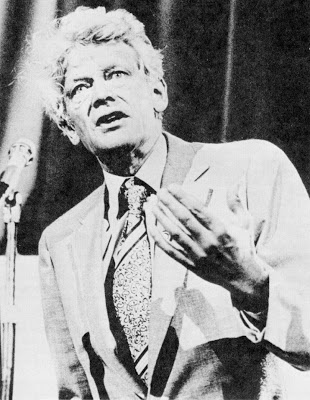
On 27th April 1975 the late socialist historian E P Thompson wrote an article in the pre-Murdoch Sunday Times on the forthcoming Referendum on confirming Britain’s membership of the then EEC (now the extended EU). The Referendum was held in June 1975 and won decisively by what would now be called ‘remain’.

Thompson joined other figures on the left including Tony Benn in supporting ‘leave’.

Almost 45 years on the world has changed (though not in its fundamentals) and we cant know how Thompson would have viewed the 2016 Referendum on Europe

Below is most of the article that Thompson wrote (one or two sentences are edited out by the transcriber for some unknown reason). He makes a passionate defence of genuine European socialist internationalism and of British radical traditions that might lead towards it.

The entire article is contained in a collection of Thompson’s writings, Writing by Candelight which unfortunately is out of print

It needs in 2019 to be read as a piece of its time which can perhaps inform current debates but not replace them


Going into Europe

The first person who enthused to me, some years ago, about ‘going into Europe’ went on to enthuse about green peppers. This gave a clue as to what the great British middle class thinks ‘Europe’ is about.

It is about the belly. A market is about consumption. The Common Market is conceived of as a distended stomach: a large organ with various traps, digestive chambers and fiscal acids, assimilating a rich diet of consumer goods. It has no mind, no direction, no other identity: it is imagined as either digesting or as in a replete, post-prandial states easily confused with benevolence of idealism.

The images vegetate in the British middle-class subconscious. This Market has no head, eyes, or moral sense. If you ask where it is going, or why, no-one knows; they give an anticipatory post-prandial burp (‘it will make us viable’) and talk about bureaucratic procedures in Brussels. It has no historical itinerary. It lies in a chair, hands on its tummy, digesting a pasta of Fiats, a washing-up machine meunière and (burp!) that excellent concorde thermidor which may not have been as fresh as it should have been.

This Eurostomach is the logical extension of the existing eating-out habits of Oxford and North London. Particular arrangements convenient to West European capitalism blur into a haze of remembered vacations, beaches, bougainvillaea, business jaunts, and vintage wines. At the referendum the sky will darken with charter flights from the Dordogne, each passenger’s mouth puckered into a oui.

At a poor second, the middle class thinks the Market is about Culture. Bob of the Likely Lads has long been taking Thelma earnestly to Fellini and Godard. The academic and television Bobs and Thelmas, after their long and abject mid-Atlantic enchantment, have entered a no less abject enchantment with ‘Europe’. But it is the same image. Culture is what we consume; it is bestowed, without participation, engagement, dialogue – a common cultural stomach.

For ‘going into Europe’ is also a Magic. It is the Necessary Miracle. Utterly without self-confidence, hemmed in at every side by the defensive organizations of a humane working class (the ‘English disease’), the British bourgeoisie prepares, as its last hope of survival, to surrender its identity to the larger rapacity of the European bourgeoisie. It may not survive itself: but at least it will make sure that Money does.

What is sick about this is that, in national as in personal matters, only an individual with a firm identity can make effective relationships. This ‘going into Europe’ will not turn out to be the thrilling mutual exchange supposed. It is more like nine middle-aged couples with failing marriages meeting in a darkened bedroom in a Brussels hotel for a Group Grope. The gruppensex will rejuvenate no one. But in the recriminations of the bitchy afterglower we can expect a resurgence of bourgeois nationalist rancour of sensational intensity.

The offence of the ‘going into Europe’ humbug is fourfold. First, we are there already. Second, Europe is not that set of nations but also includes Warsaw, Belgrade, Prague. Third, the Market defines the diversity of European cultures as its crassest level as a group of fat, rich nations feeding each other goodies. Fourth, it defines this introversial white bourgeois nationalism as ‘internationalism’.

It will not, of course, work. But the spoof about internationalism remains offensive. And dangerous. For when an altruistic glint gets into the bourgeois eye one can be sure that someone is about the catch it. Once replete, the eurostomach will want to euronate. The present idea is to do it on the British working class. ‘Going into Europe’ will mean ‘rationalization’, ‘winds of competition’, getting rid of ‘restrictive practices’ (i.e. humane safeguards and self-protection), ‘facing up to things’. We can be sure that the things faced up to will be very different through the open shutter of the Dordogne and a bedroom window in Bolton.

These arrangements of capitalist convenience have nothing whatsoever to do with internationalism, political or cultural. What they will do is distance decision-making from its subject and mystify what remains a democratic process. They provide no opportunities for common fraternal action or intellectual exchange which could not be conducted better without them. And have been, for some hundreds of years. Surely Hugh Thomas knows that his “White Anglo-Saxon Protestants have been happily absorbing ‘a few doses of latinity’ periodically for centuries, without any license from a Treaty of Rome?

Some sillies in the labour movements suppose the Market will facilitate socialist and trade union activity. It will do the opposite. It will put the bourgeoisie twenty years ahead at one throw. Luigi and Kurt and George and Gaston, with their secretaries, their linguistic skills, their massed telephones, their expense-account weekends, their inter-locking euro-directorships, their manipulation of the rules and of the Brussels spouters, will always be smiling at the table, with the agenda cooked, the day before the workers get there. And British labour will cast away its one incomparable historical asset (a united movement) in anxious negotiations with its fragmented and ideologically embittered counterparts.

Meanwhile the Dutch elm disease (Europe’s most viable export to England in the past decade) is nothing to the beetles being bred by the bureaucrats in Brussels to blight what remains of our active democratic traditions. True, there are plenty of people high in the British state who would like to do the same. But that’s the point. The enemies, as well as the friends, of democratic process are everywhere and anywhere: internationalism falls along the line of that horizontal fracture, not within a set of vertical alliances.

There is a more momentous point. As British capitalism dies above and about us, one can glimpse, as an outside chance, the possibility that we could effect here a peaceful transition – for the first time in the world – to a democratic socialist society.

It would be an odd, illogical socialism, quite unacceptable to any grand theorist. That is perhaps why most British Marxists have long ceased to attend to British actualities and, at a time of unparalleled socialist opportunity, play to each other their amateur revolutionary theatricals.

But the opportunity is there, within the logic of our past itinerary.  The lines of British culture still run vigorously to that point of change where our traditions and organizations cease to be defensive and become affirmative forces: the country becomes our own. To make that leap, from a market to a society, requires that our people maintain, for a little longer, their own sense of identity, and understanding of the democratic procedures available to them. It requires also the holding open of every international option: for trade with the developing world, for dialogue with the Communist world, for informal intellectual exchange.

It is fear of this transition – of Money toppled from power – which makes our good bourgeois contort his face into an unlikely expression of internationalism. And, equally, the effecting of this transition is the most substantial contribution to internationalism which our people could make.

That is what we could offer to the European dialogue. And to a Europe which includes Oslo and Belgrade. Long, very long after that, a true idea of ‘Europe’ might return: as a cautious federation of socialist states.  It will develop slowly, tetchily, with jealous regard for individual identities. And so it should.

Articles

Search for the Beard of the 151st TUC in Brighton underway

In Uncategorized on September 8, 2019 by kmflett

Beard Liberation Front

Media Release

8th September

Contact Keith Flett 07803 167266

Search for Beard of the 151st TUC in Brighton underway

The Beard Liberation Front, the informal network of beard wearers, has said that the search for the Beard of the 151st TUC, starting on 8th September in Brighton is underway.

In 2018 after after competition bristled the National Education Union’s Kevin Courtney won by a close shave to be declared Beard of the 150th TUC Congress held in Manchester. UNISON’s James Anthony and the RMT’s Glenroy Watson tied for second place.

The campaigners say that historically the appearance of senior union leaders has been a kind of clean-shaven monochrome. While that has thankfully changed with more women in senior positions and Frances O’Grady as General Secretary, it remains the case that too many senior union officials are clean-shaven men in suits.

An advisory panel of trade union beard enthusiasts will flag impactful beards through the 4 days of the Congress

BLF organiser Keith Flett said we expect the 151st TUC to be much more diverse than the first held in 1868. What the impact of Brexit on beards at Congress is remains to be seen

Articles

Remembering the past: the Northern Star in Leeds

In Uncategorized on September 8, 2019 by kmflett

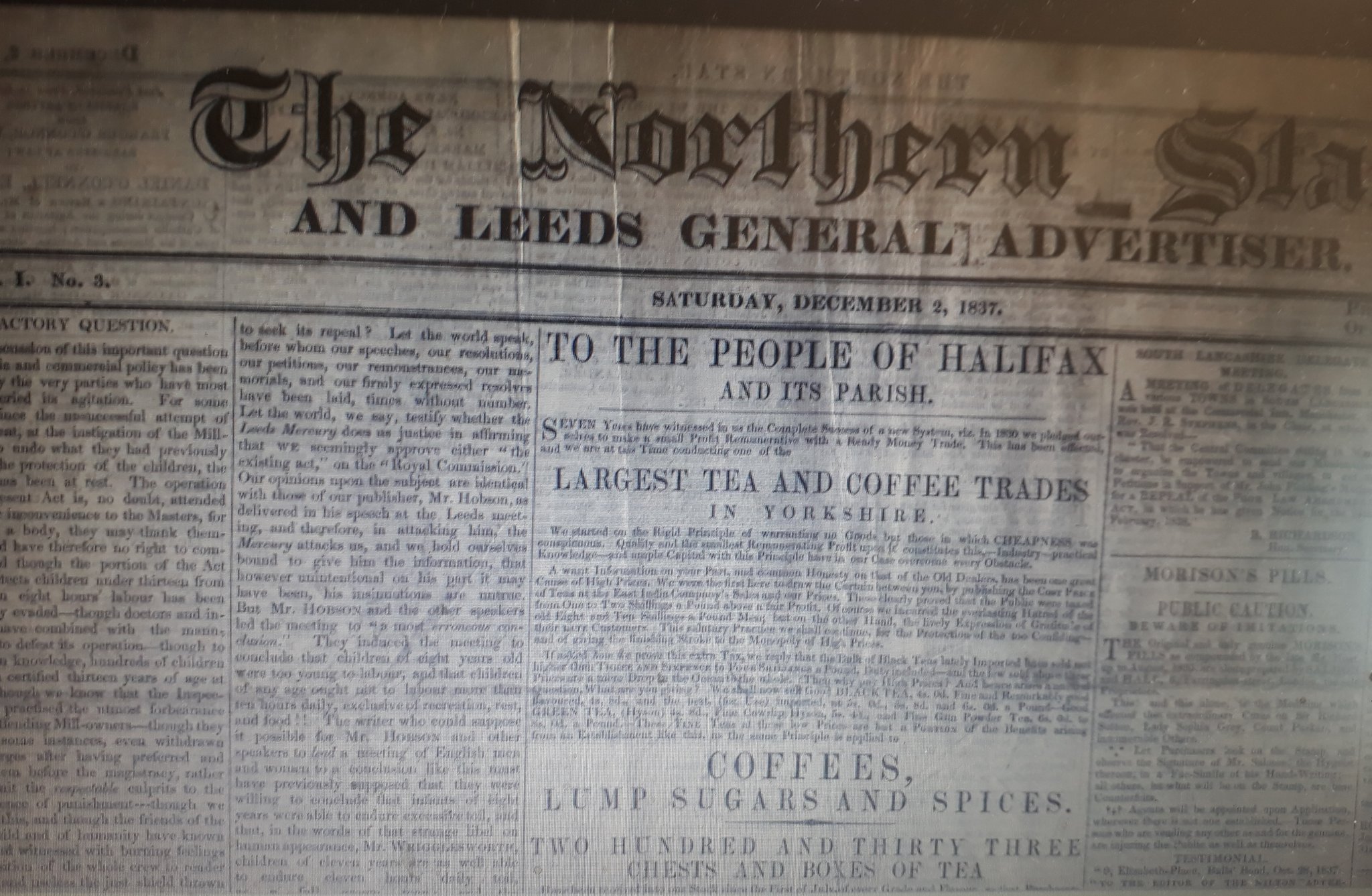
The Chartist paper the Northern Star was one of the great working-class papers of the nineteenth century.

It was first published in Leeds as the Northern Star and Leeds General Advertiser on 18th November 1837 and lasted until 1852.

A brief but useful history of the development of the paper is here:

https://ncse.ac.uk/headnotes/nss.html

I visit Leeds several times a year and was there earlier this week. I was again struck by the number of plaques on buildings identifying their origin and original occupation. Leeds Civic Trust has done great work here.

When we move from buildings to people and movements however I found less in the way of plaques. There is one on the building the Band of Hope Temperance movement was founded just on the far bank of the Aire near Leeds station. What there is not, as far I can see, is anything to mark the existence of the Northern Star in the City.

The offices of the printer Joshua Hobson were based off Briggate in central Leeds. I can find a reference to a plan to erect a plaque, but no actual plaque.

Its not an unfamiliar for those of us waiting for the erection of a plaque to the black London Chartist William Cuffay in the  Strand.

It is reported that a statue of Margaret Thatcher is to be unveiled shortly but when it comes to marking those who challenged the existing order it seems to take quite a bit longer for anything to be done.