The Murdoch Times rubbishes the paper’s own creditable history on Peterloo
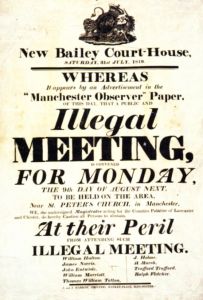
An Editorial in the Murdoch Times (3rd August) underlines exactly why 200 years on Peterloo, which took place on Monday 19th August 1819 in Manchester, remains controversial.
The Times reporter on the day, Tyas, as the Editorial notes, produced one of the best accounts of the Massacre.
200 years on the paper complains that the BBC is marking an event that was central to the development of Parliamentary Democracy in Britain and in doing so takes an entirely unwarranted pop at one of the most significant books on British history since 1945, E P Thompson’s Making of the English Working Class.
Apparently remembering Peterloo is ‘Marxist’ something that comes one strongly suspects from an Editorial writer who also thinks Parliamentary Suffrage is a bit Marxist as it sometimes delivers Labour Governments
Given that I expect many readers of this don’t feel they wish to give any money to something owned by Murdoch the Editorial is reproduced below.
__________________________________________________________________________________
The Times view on the BBC’s commemoration of the Peterloo Massacre: Horrible Histories
This was a shameful act but the broadcaster’s treatment of it is modern left-wing mythology
“Those who cannot remember the past,” wrote the philosopher George Santayana, “are condemned to repeat it.” He might have added that those who embellish it are unlikely to offer a reliable guide to the future. The BBC invites this charge with protracted coverage this month of the 200th anniversary of the “Peterloo Massacre”, a tragic event of minor historical significance that happens to accord with a Marxist version of Britain’s past. This is not solemn remembrance but modern myth.
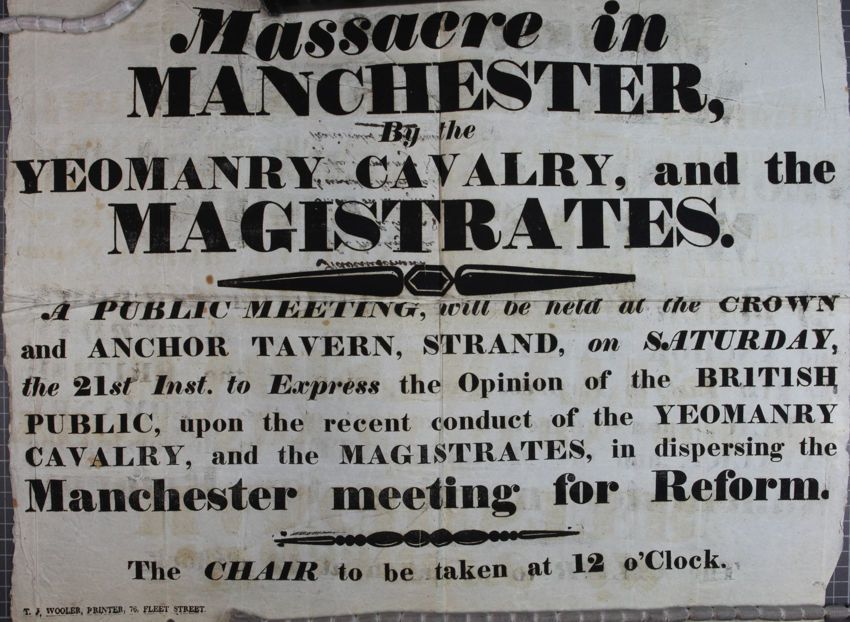
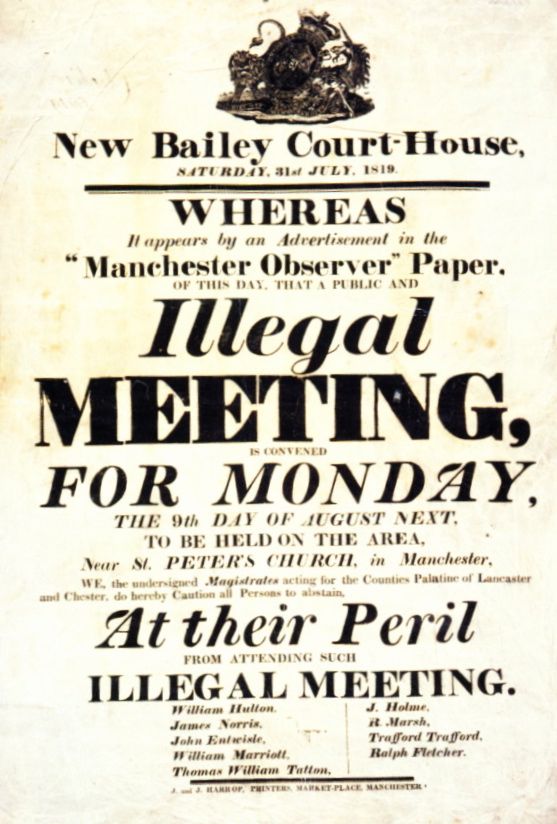
Some 60,000 people gathered at St Peter’s Field in Manchester on August 16, 1819, to call for parliamentary reform. Cavalry acting on the order of local magistrates moved against the crowds to, as they saw it, maintain order for fear of sedition. On the standard account, their charge with sabres left in its wake 11 dead and 400 wounded. Recent historians have estimated that, along with those who died later of their wounds, the fatalities in fact numbered 17 and the casualties more than 650. In ironic allusion to the military triumph at Waterloo four years earlier, “Peterloo” was the name given by the radical press to this horror.
The BBC is broadcasting no fewer than ten radio programmes on the massacre. These include a special Sunday Worship, a choir from West Yorkshire who “sing in solidarity with the victims of the Peterloo Massacre”, and a documentary by Katharine Viner, editor of The Guardian, titled The Massacre that Changed Britain.
The massacre was committed by a Manchester yeomanry woefully ill-prepared for policing a demonstration. This was a time before any police force had been established. Having been ordered to arrest a radical orator, Henry Hunt, they forced their way forward with the flats of their swords to disperse the crowds.
It was a shameful act. Contrary to the BBC’s demonology, however, it had no wider historical significance and did not “change Britain” beyond feeding a tendentious account by left-wing historians of Britain’s traditions of radical protest. The progenitor of this was the Marxist academic EP Thompson, whose book The Making of the English Working Class (1963) threw together wholly disconnected movements, from millenarian Protestant sects to Luddite croppers, and claimed they had been ignored by mainstream historians. Politicians such as Tony Benn and Jeremy Corbyn have since, with a ropey grasp of history, added further anachronisms to the mix, such as the Levellers and the Tolpuddle Martyrs.
The problem with these accounts is that the victims at Peterloo weren’t overlooked then and haven’t been ignored since. The reason that the BBC, along with historians and pundits, have accurate information on this atrocity is that The Times carried a 10,000-word first-hand account of it by our correspondent John Tyas, who was arrested along with Hunt. It’s because of Tyas that we know of the “hideous work” of the cavalry. Our accompanying leading article of August 19, 1819 bluntly asserted that no action of the crowd had been contrary to the law or in breach of the peace.
Successive reform acts and representation of the people acts eventually established universal suffrage for both sexes by 1928. It was accomplished without recourse to the revolution that governments had feared since 1789. For all the failings and sins in Britain’s past, an account that views an isolated outrage as a prism through which to interpret current politics is bad history.