Articles

More details on Beaverworld

In Uncategorized on February 1, 2019 by kmflett


The (very detailed) details of Beavertown’s new brewery in Ponders End have been available for a while on the Enfield Council site:

Beavertown get planning permission for Beaverworld

They have now posted more detail on the Beaverworld project itself:

https://www.beavertownbrewery.co.uk/6559-2/

You could of course just say, well this is all big business funded by Heineken, However unless you are a socialist (as of course I am) and think business should be run differently to the present arrangement (and that is obviously not about to happen unfortunately) I’m not sure that a model that says small business good, bigger and big business bad is really to the point.

That is something to discuss over a beer (and if so minded do something about of course).

In the meantime the plans for Beaverworld look impressive both for the Ponders End site and for the existing Tottenham Hale facility which will be retained to allow for an expansion of the impressive Tempus project and the existing taproom. Transport wise, as I think Camden, whose new brewery is near Beaverworld, know transport and visitor wise Tottenham Hale is much easier to get to than Ponders End.

During my varied managerial career before I descended into trade union officialdom (in the same area) I was a building project manager for a good period. While Beaverworld is projected to open in March 2020 I’d note that even with the best project manager building projects rarely come in on time or turn out quite as planned.

Still at least Beaverworld is getting built.

Articles

Snow & Ice Guidelines issued to beard wearers

In Uncategorized on February 1, 2019 by kmflett

Beard Liberation Front

February 1st

Contact Keith Flett      07803 167266

Snow & Ice Guidelines issued to beard wearers

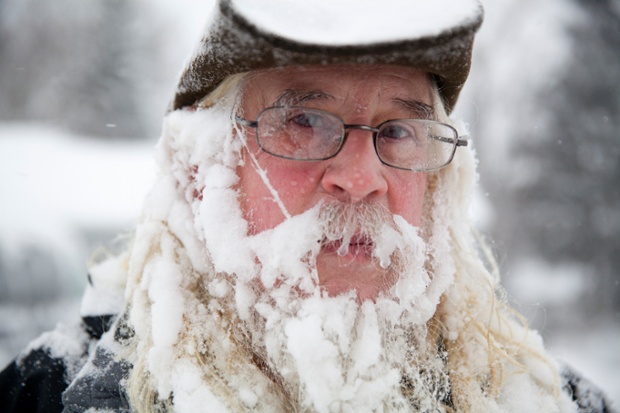
The Beard Liberation Front, the informal network of beard wearers, has issued updated guidelines to beard wearers after many areas of the UK saw snowy and icy weather over the past few days

The BLF says that while beards have been protecting against cold weather since 1854 it is also important to protect the beard itself against snow and ice penetration.

While one way to do this may simply be to remain indoors and away from all possible contact with snow this is not possible in a prolonged period of severe weather.

When venturing out in the ice and snow, the following guidelines for beard wearers are advised-

Snow and Ice Guidelines for Beard Wearers

1] Protect the entire beard with a scarf or roll neck jumper. If the snow is a heavy a snood may be advisable

2] Sweep any drifting snow from the beard on a regular basis. Do not allow snow to accumulate in the beard

3] Comb the beard through regularly to remove any residual snow

4] If the beard becomes chilled or frozen due to snowy or icy weather it is essential to thaw it out slowly.

5] Brief immersion in a glass of imperial stout may help the thawing process but this is optional

6] Dry the beard slowly in a warm room and check for any damaged hairs and follicles

BLF Organiser Keith Flett said snow or ice in the beard can cause serious damage to hairs and follicles and the hirsute are urged to make sure they are protected before venturing out in snowy weather. If snow does accumulate in the beard it is important to follow the BLF guidelines to prevent serious damage. If the beard suffers from icing, gradual thawing following the guidelines is equally important to avoid damage.

Articles

UKIP petition The Queen: time to revive the 1661 Tumultuous Petitioning Act

In Uncategorized on January 31, 2019 by kmflett

UKIP petition The Queen: time to revive the 1661 Tumultuous Petitioning Act

Self-styled leader of the far right to fascist party UKIP Gerald Batten has ‘petitioned’ the Queen on the EU and Brexit. Batten claims he has the right to petition HM under the 1689 Bill of Rights. As you’d expect of the ‘leader’ of UKIP Batten doesn’t know much about UK history.

The right to petition the monarch is an ancient one dating back to at least the thirteenth century.

Around the period of the English Civil War and the subsequent Commonwealth 1649-1661 Parliament was often petitioned over questions of land ownership frequently accompanied by noisy protests.

On the restoration in 1661 the Tumultuous Petitioning Act was passed. This provided for 3 months in prison if a petition was presented by more than 10 people. UKIP’s membership is tiny but is certainly in three figures and it can be noisy particularly after leaving Wetherspoons.

The Tumultuous Petitioning Act was abolished in 1986 and its provisions are generally covered by the Public Order Act. Perhaps however its time to revive it.


Articles

Gestetner: how leaflets appeared before word processing & photocopiers

In Uncategorized on January 31, 2019 by kmflett

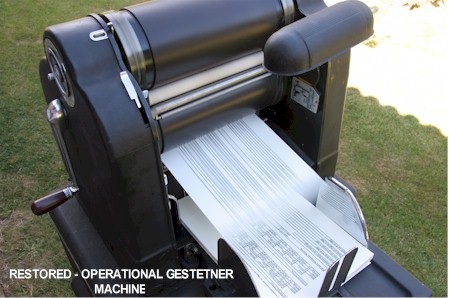
Gestetner: how leaflets appeared before word processing & photocopiers

Photo: Richard Hardingham

The Gestetner factory at Tottenham Hale is now a shopping centre but for generations of activists up until the 1980s the Gestetner was a key machine and using it an essential skill for activists.

There is a free exhibition at Bruce Castle Museum in Tottenham until 24th February. It has several Gestetner machines (for those who don’t know what they were), a good bit of memorabilia about the factory and lots of examples of material produced by Gestetners.

Details are here:

https://www.haringey.gov.uk/libraries-sport-and-leisure/culture-and-entertainment/visiting-haringey/bruce-castle-museum/whats/exhibitions

On Friday 1st February there is an oral history walk around the Gestetner site in Tottenham Hale. Meet at Bruce Castle at 1pm

For the unaware in order to produce leaflets and larger bulletins before word processors and photo-copiers you had to type (manually on a typewriter, correction fluid to hand) or write them on a ‘skin’. This skin was then placed on the Gestetner (a duplicating machine) and assuming there was sufficient ink on the drum by turning the handle (later some were automated) you could churn out copies.

Time consuming and inky it was, even more so if the skin broke and you had to start all over again.

The Gestetner factory opened in 1903 and closed in the 1980s provided employment for many skilled workers. It went partly because technology was moving on and partly because of Mrs Thatcher’s tour of industrial destruction which hit the Lea Valley particularly hard.

Articles

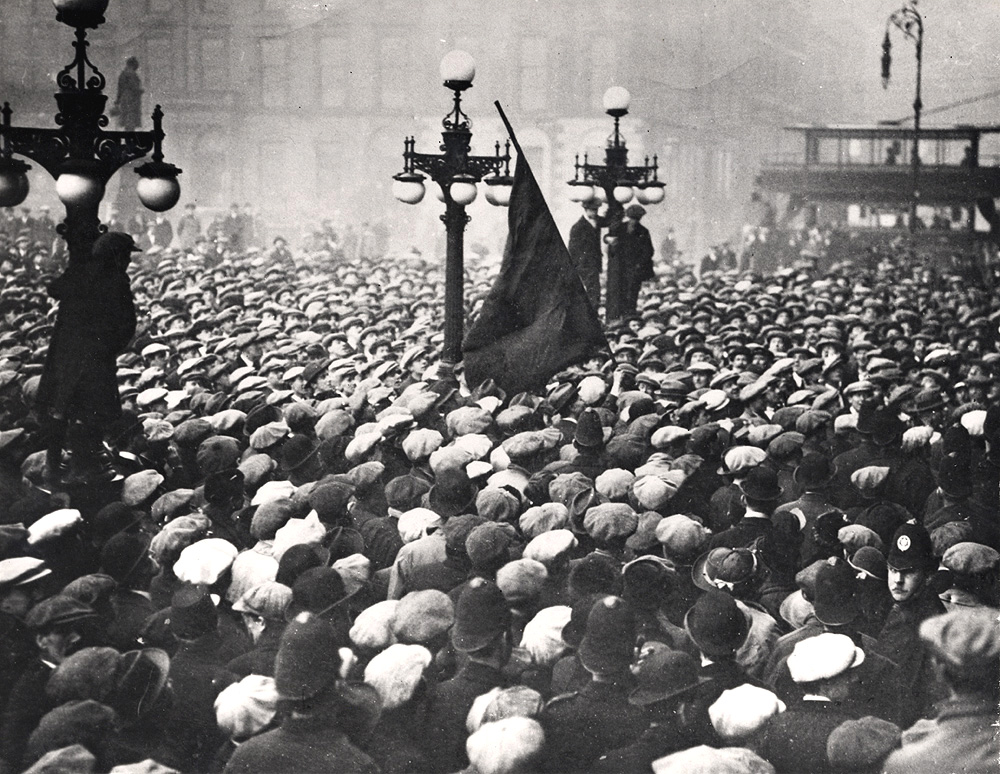
Glasgow George Square 31st January 1919: striking for the 40 hour week. The importance of historical memory

In Uncategorized on January 31, 2019 by kmflett

Glasgow George Square January 31st 1919: striking for the 40 hour week. The importance of historical memory


It is the hundredth anniversary of one of the more important moments in British working-class. Hopefully some are familiar with key dates like Peterloo, or the Newport Rising, the 1926 General Strike (which 1919 was a precursor to) and in more recent times the miners strikes of 1972, 1974 and 1984/5.

Yet what took place on the last day of January in Glasgow 100 years ago is perhaps less well remembered at the moment. This wasn’t always the case. When I started out in the labour movement in the 1970s, it was a well-known date and some of those who had been there, for example Harry McShane (who I had the privilege to meet and hear speak) were still alive.

The events of the day and what they meant are very well described by John Foster here:

https://morningstaronline.co.uk/article/f/strike-changed-nature-labour-politics

In summary the Clyde Workers Committee, the Scottish TUC and others had called a strike for the 40 -hour week. It was an important industrial and political demand. With the First World War at end soldiers were returning home and looking for work. One of the most effective ways to create jobs was to limit the working work. Further the soldiers had been promised a better world when the war ended.

The demonstration in George Square Glasgow on 31st January 1919 became known as Bloody Friday because it was attacked by the police and the army was on stand-by. The Government feared that a movement was building that could lead to something similar to the 1917 Russian Revolution in Russia.

Foster makes the important point that not only did the 40-hour strike continue after 31st January but it spread to Belfast, northern industrial towns like Barrow and to London and the south where the railways ground to a halt. The Government which had been intending to renege on its promises of reforms in education and housing instead went ahead with them.

Foster makes the point that serious attempts were made by the authorities to break the Glasgow strike. However the strike was organised not just in the workplaces but in the communities too and picket lines were defended by mass turn-outs of workers and local people.

They were inspiring times because it showed how workers could organise, fight and win some positive change. The battle against austerity could do with much of the same approach.

Articles

My Hairy Valentine, sexiest beard vote sees Idris Elba lead Jeremy Corbyn

In Uncategorized on January 30, 2019 by kmflett

Beard Liberation Front

Press Release 30th January

Contact Keith Flett 07803 167266

My Hairy Valentine, sexiest beard vote sees Idris Elba lead Jeremy Corbyn

The Beard Liberation Front, the informal network of beard wearers, has said that the annual hunt for the sexiest Valentine’s beard is once again underway and in early voting Idris Elba leads the 2018 winner Jeremy Corbyn.

The winner of the annual My Hairy Valentine Award is announced on Valentine’s Day 14th February

The BLF says that contrary to pogonophobic mythology many beards are soft, sexy and deeply mysterious.

Jeremy Corbyn was voted My Hairy Valentine in 2018 while in 2017 Idris Elba shaved the opposition

The BLF says that whether a beard is sexy or not is in the eye of the beholder but the Award is focused on beards in the public eye, whether celebrities, politicians, musicians or sports stars.

The list covers a diverse range of people and beards, with a considerable churn from the 2018 list. However none so far has been able to challenge the impact of the 2017 and 2018 winners

BLF Organiser Keith Flett said, we are in no doubt that beards are sexy. The question is: who has the sexiest beard?

What is the criteria for the sexiest Valentine’s Day Beard?

Beauty is in the eye of the beholder & likewise what people find sexy can vary widely

1] A beard from Clint Eastwood stubble to full Brian Blessed organic

2] A stylish deployment of the beard, at least sometimes in the public eye

3] An attractive disposition in relation to the beard (the fulfillment of this criteria is up to the voter)

4] An appealing beard in terms of length, colour, style. Again its a matter for the voter

Articles

It was 56 years ago this week: the Beatles Saville Row rooftop concert

In Uncategorized on January 30, 2019 by kmflett

It was 56 years ago this week: The Beatles Saville Row rooftop concert
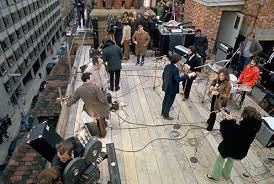
On January 30th 1969 The Beatles played their last ever live gig on the top of the HQ of Apple Records in Saville Row in the heart of London ’s West End .

The gig can be found as the last section of the film Let It Be and is also just a Google away on YouTube.

https://www.bing.com/videos/riverview/relatedvideo?q=beatles+roof+top+concert&mid=86710C37FA87F8A3BA5386710C37FA87F8A3BA53&mcid=18C17683A1F84EBCA2451AECD439A003&FORM=VIRE

It is well worth a look and not only for the best beard that Paul McCartney ever sported.

Cut in to performances of rock’n’roll songs that ended up on their final LP, are interviews with the London crowd of that cold and windy January day 56 years ago. It captures a moment of modern Britain in the making.

There are people with the hair and dress that social historians associate with the post-1967 ‘flower power’ period but mostly the men in suits interviewed, both young and old, look as if they might have stepped from the 1950s. Several men smoking pipes are seen and middle aged men complaining to the police who have the demeanour of Nigel Farage (now) although its the wrong end of Central London.

There are very few faces of ethnic minorities and in that area of London that has changed a bit but not so much, an important qualification to those who rightly celebrate the multi-cultural city that London has become since.

All the bystanders interviewed praise the Beatles, but it may be assumed that some of those who thought it was just a noise disturbing their business were responsible for calling the police.

The Met Police duly showed up and closed down the concert. Who the youthful coppers were who did the deed is not recorded although one, Dave Allen, has spoken about it.

The world has moved on a bit since then.

In 1969 rock stars were still viewed largely with suspicion by the Establishment as being involved in drugs and radical politics. Maybe some still are but most well-known musicians are now part of the established order and if the same thing took place today the police would have limited their activities to filming the event on their mobiles. 56 years ago the concert warranted not a column inch in the Guardian, Times or Telegraph. Today it would be front page news.

The backdrop to the Rooftop concert can be found in Ian McDonald’s excellent book on every Beatles song Revolution in the Head. Very shortly afterwards three of the Beatles thought that it would be a good idea to invite Alan Klein to manage them. McCartney did not and the future of the group departed for the High Court.

So the concert is a snapshot of the end of the sixties and ‘swinging London ’ as well as the end of the Beatles.

What does all this tell us historically?

Certainly something about memory. You would need to be over 60 to recall the event from the time, so most of the population, if they are aware of it, will be so because of its presence on the web.

The music played, standard rock, sounds as contemporary now as it doubtless did then, or in the 1950s where many of the influences on it date from. That is perhaps why the concert retains its relevance. It is not just an historical artefact. The You Tube clip has had over three quarters of a million hits so far.

A wider point is about how fast some things in society change and how some do not, a process of combined and uneven development in the field of social history. The presence of the internet as an accessible store of film and increased life expectancy mean that events do not always pass into history quite as quickly as they often once did.


Articles

Historians call for 30th January to be a national holiday

In Uncategorized on January 29, 2019 by kmflett

London Socialist Historians Group

Media Release

Contact Dr Keith Flett 07803 167266

Historians call for 30th January to be a national holiday

The London Socialist Historians Group, which organises the socialist history seminar at the Institute of Historical Research in central London, has called for January 30th to be made a national holiday

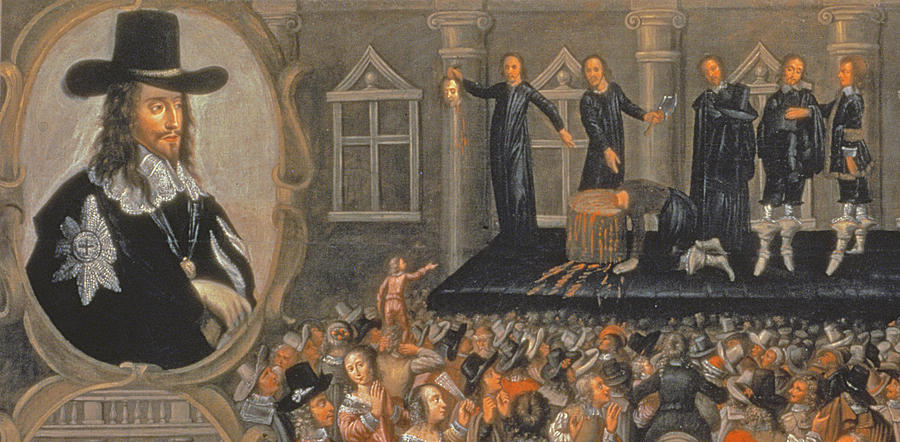
It marks the 370th anniversary of the Regicide that saw King Charles executed in Whitehall for treason.

This ushered in the Commonwealth and the idea that Parliament not the Divine Right of Kings and Queens should decide what happens. In other words the despatch of King Charles was the beginning of a modern Parliamentary Democracy (in fact a Constitutional Monarchy)

The historians say that the event rather cuts against the idea that nothing particularly exciting or dramatic ever happens in British history.

Oliver Cromwell who headed the post-1649 Government died in 1658 and was succeeded by his son Richard.

However in 1660 the monarchy was restored and King Charles 11 dated the start of his reign from 30th January 1649 in the first attempt to write the Commonwealth period out of history. That is probably a key reason why the day is not a national holiday (as it certainly would be in France for example).

LSHG Convenor Dr Keith Flett said, you don’t need to be a republican to grasp that the moment when Parliamentary Democracy laid down its first roots is worth marking and a day off at the end of the bleak month of January would surely be no bad thing.

He continued, of course history is complex and while England and Wales can rightfully celebrate the events of 30th January 1649 as a democratic advance, in Ireland where Cromwell’s armies waged a bloody war things look rather different.


Articles

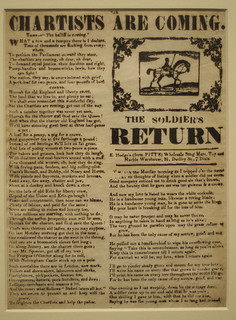
The Chartists are coming & so is snow in London

In Uncategorized on January 29, 2019 by kmflett

The Chartists are coming & so is snow in London

Hurrah for old England and liberty sweet,

The land that we live in and plenty to eat;

We shall ever remember this wonderful day,

The Chartists are coming, get out of the way.

The Chartists are Coming, Ballad, 1848

According to the weather forecast there may be some snow in London this week. The forecasts are made by professional weather forecasters, often trade union members of the professionals union Prospect, and so whatever Michael Gove may think, they both deserve to be taken seriously and are highly likely to be accurate, or at least as accurate as is possible when forecasting snow.

That said you dont need a weatherman to tell you that in recent times it has snowed infrequently in the Capital. A northern colleague said to me recently that despite it being the middle of winter if it does actually snow in London it will be headline news.

The inability of perhaps particularly London to cope with even modest amounts of snow is legendary.

The expectation of snow in London is one of the great things of London life nevertheless. People peer anxiously out of windows for signs of snow and search for reports of approaching snow (these days much easier to find with social media). In the mid-nineteenth century London, 170 years ago, when it snowed a lot more than now, it was the Chartists who got people looking out of windows, checking for any sign of impending trouble.

Suffice to say that in the revolutionary year of 1848 the Chartists did indeed come, on April 10th 1848, but actually they were rumoured to be coming far more often than they actually arrived.

Snow and the Chartists two of the great imponderables of London life. Actually quite a lot of Londoners liked and like both of them.


Articles

Campaigners hail Dominic Heale, first ever BBC TV newsreader to feature in a Beard Award

In Uncategorized on January 28, 2019 by kmflett

Beard Liberation Front

28th January

Contact Keith Flett 07803 167266

Campaigners hail Dominic Heale, first ever BBC TV newsreader to feature in a Beard Award

The Beard Liberation Front, the informal network of beard wearers, has said that it sees the runner-up position taken by East Midlands BBC TV newsreader Dominic Heale in the coveted Beard of Winter Award as a sign of positively changing times for the hirsute in public life.

In 25 years of Beard Liberation Front Awards Dominic Heale is the first ever BBC TV newsreader to feature in a poll and his second place suggests he could be set to make a considerable hirsute impact in future.

The campaigners say that until recently it is thought that the BBC frowned upon news readers with beards. When Jeremy Paxman wore a beard during the latter months of 2013 while presenting Newsnight he claimed that the BBC was ‘pogonophobic’

BLF Organiser Keith Flett said, the fact that Dominic Heale was not only on the poll but did so well underlines that official acceptance of beards in public life is growing. We hope to see more beard wearers reading the BBC news in future, along, of course with more female and ethnic minority news presenters. Diversity is important here.

The Award was won by Times Literary Supplement  Editor Stig Abell

Beard of Winter shortlist

Iain Dale, broadcaster

Stig Abell, Editor TLS

Jurgen Klopp, football manager

Idris Elba, actor

‘Nuno’, football manager

Magid Majid, Mayor of Sheffield

Michael Rosen, author and broadcaster

Billy Connolly, entertainer

Virat Kohli, cricketer

George Alagiah, TV news  reader

Steve Bell, cartoonist

Dominic Heale, TV news reader