Articles

Shortlist unveiled for real ‘organic’ Santa of the Year 2018

In Uncategorized on December 11, 2018 by kmflett

CAMPAIGN FOR REAL SANTAS

Organised by the Beard Liberation Front

press release  11th December

Contact Keith Flett                                                  07803 167266

___________________________________________________

SHORTLIST UNVEILED FOR REAL ‘ORGANIC’ SANTA OF THE YEAR 2018
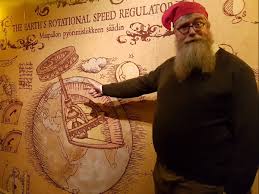
The Campaign for Real Santas, which campaigns for Santas to have genuine organic or knitted beards, has named its shortlist of people who could be the ideal organic Santa of 2018.

The nominations for Real Santa of 2018 are:-

Philip Ardagh, author

Brian Blessed, Actor

Jeremy Corbyn, Politician

Ricky Tomlinson, actor and activist

Joe Grundy (William Empson) the Archers

Eric Cantona, actor & sportsman

Carwyn Jones. Immediate past Welsh First Minister

The Campaign for Real Santas believes that only Santas with genuine, organic or knitted beards should be deputies for Santa, world famous for his organic beard, in the run up to Xmas

Campaigners have urged parents and children to vigorously tug the beards of Santas they encounter as a definitive test as to whether they are in the presence of a real Santa or not. If the Santa is not real and the beard is made of cotton wool it will come away when tugged by the child

CFRS organiser Keith Flett said, we don’t know for sure that any of the people on the shortlist do help Santa at this time of year but we do think they are potentially excellent role models for real Santas as opposed to the absurd false bearded types.

An On-Line poll for the Organic Santa 2018 is now open & will close at midnight on Monday 17th December

Notes

HOW TO SPOT A GENUINE SANTA

Tug the beard of the Santa. If it comes away, then the Santa is FAKE

Tug the beard of the Santa again. If the Santa swears then they are genuine. If they simply repeat a ‘ho ho ho’ mantra they are FAKE

The Campaign For Real Santas says that genuine Santas must have just the right mix of bonhomie and gruffness and a real organic beard.

Organic Santa of 2017 is announced on 18th December
Articles

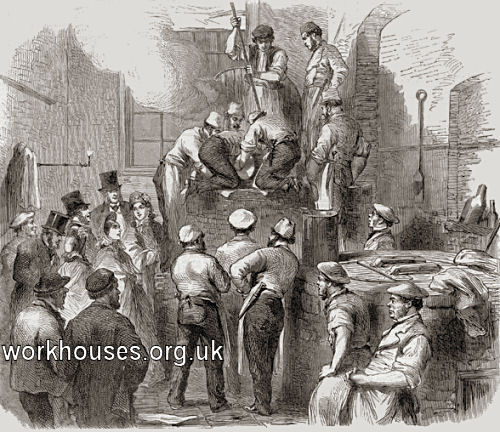
Charles Dickens Victorian Christmas in London: Then & Now

In Uncategorized on December 11, 2018 by kmflett

Charles Dickens Victorian Christmas in London: Then & Now

It is a commonplace that the present Government has it in mind to take the country back to the 1950s, pre the 1956 Suez debacle that signalled the start of the public slide for British imperial power obviously. How successful they have been can be debated, but there is also a sense that, pace Mrs Thatcher’s Victorian Values, another agenda is to return to the highpoint of early to mid- Victorian capitalism in the 1850s and 1860s.

It is difficult to get away from the reality of what has been created since 2010 in the name of a more flexible labour market, of the kind that was first trialled in the 1830s.

It is not just food banks, for which numbers of people actually in work have to rely at some point.

The more difficult parallels are the casualization of labour and the winter night shelters. It is hard to think of two things that better characterise Victorian London in the winter months.

In the Victorian summer many worked in agriculture (limited numbers now do). When the weather turned colder, and Raph Samuel’s masterful essay Comers and Goers documents this very carefully, many turned to the City and London, the Great Wen, in particular.

They came first of all to look for warm places to sleep. These were often railway arches or the nooks and crannies of large buildings that can still be found in central London but the night shelters were opened during November depending on the weather. Secondly they came to try and find casual work. If they could not there were soup kitchens to stave off starvation for most.

Winter night shelters are still very much a feature of London in winter 2014 though the numbers using them will certainly be many fewer than in Victorian times.

In fact the Christmas period was the best of the winter season for those seeking casual employment even 150 years ago. It was after the festivities had ended in January and February that things started to get really tough.

London in December by the 1860s had started to become a significant place of Christmas activity and commerce and the more so as the Victorian era wore on.

As those with money spent it and enjoyed themselves, those without money could at least earn a little by helping the process along.

As Samuel notes the development of Christmas as a ‘spending season’ provided for street sales of novelties and holly and mistletoe. He argues that London in December was a ‘paradise of odd jobs’ whether helping scene shift in pantomimes or haul seasonal post.

However in a sense Dickens’ Scrooge and his clerk who was expected to work at Christmas were atypical of the period. The job had long hours, low pay and poor conditions but it was a regular job.

By contrast much mid-Victorian labour was irregular or casual- certainly if it lacked any skilled element- and the parallel with our own times is growing stronger by the year.

As Samuel noted ‘Christmas was the winter harvest for the wandering tribes. When it was over things changed for the worse. January and February were bad months for the working man’.

Of course the idea of the 1945 welfare state was to remove this uncertain hand to mouth existence dependent on the weather and on finding some kind of job tramping from place to place.

And now, it is back.

Articles

Labour MP Lloyd Russell-Moyle joins Beard of the Year shortlist

In Uncategorized on December 11, 2018 by kmflett

Beard Liberation Front

Media Release 11th December

Contact Keith Flett 07803 16726

Lloyd Russell-Moyle joins the Beard of the Year shortlist

The Beard Liberation Front the informal network of beard wearers, has said that Brighton Kemptown MP Lloyd Russell-Moyle has joined the Beard of the Year 2018 shortlist.

While his beard gained a high profile in the Commons on 10th December when he seized the mace the campaigners say that he has been added to the shortlist after he became the first MP to announce that he was HIV in the House.

The BLF say that the shortlist comprises those whose beard has had a positive impact in the public eye during the year rather than the style or the length of the beard or the views of the beard wearer.

BLF Organiser Keith Flett said, we expect hairs to be split before the vote closes at midnight on Christmas Eve.

For the first time this year the result will be determined by a combination of the public vote and an Electoral College of leading beard wearers and pogonophiles. The public vote will count for 60% while the Electoral College will take into account the wider positive public image and impact of poll leaders.

The BLF says that there were concerns about the impact of Bots in the 2017 poll and the Electoral College ensures a more level playing field.

Beard of the Year 2018

Jeremy Corbyn, politician

Peter Coles, scientist

Xand van Tulleken, TV doctor

Prince Harry, Royal personage

Moeen Ali, cricketer

Harry Kane, footballer

Lenny Henry, actor

Philip Ardagh, author

Al Wall, brewer, Cloudwater

Idris Elba, actor

Philip Glanville, Mayor of Hackney

Daniel Vane, brewer, Hale Brewing

Lloyd Russell-Moyle, Labour MP

Owen Tudor, Deputy General Secretary, International Trade Union ConfederationL

Articles

December 9th central London: Yaxley Lennon & Batten undone by a broad & sizeable anti-racist protest

In Uncategorized on December 9, 2018 by kmflett

December 9th Central London: Yaxley Lennon & Batten undone by a broad & sizeable anti-racist protest

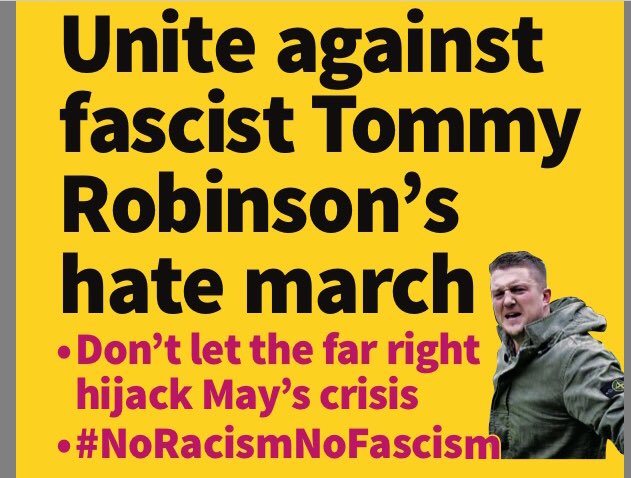
On Sunday December 9th Stephen Yaxley Lennon of EDL and jail fame, teamed up with Gerald Batten  self-styled leader of UKIP for a march in central London on Brexit (they want a no deal exit. Or at least Batten does. Yaxley Lennon admitted he knows nothing of the matter).

Their march judging by pictures and reports attracted 4,000-5,000 people. A considerable number were hardcore and long-term Nazis. Others were racist UKIP supporters. I ran into a few on a bus. Suffice to say they were considerably older than me (which made them very old)

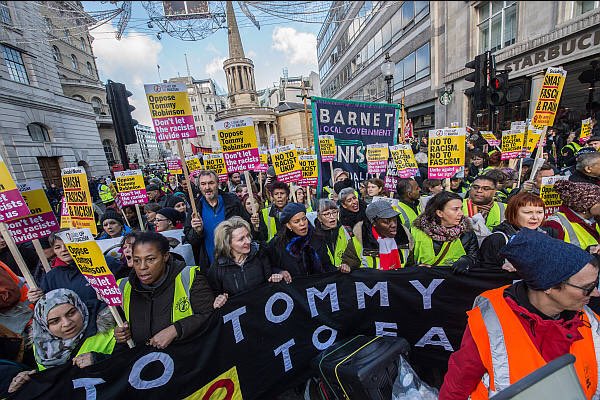
On a more positive note Stand Up to Racism, Momentum, Another Europe, feminists and anti-fascists had agreed a united demonstration to oppose Yaxley Lennon and Batten. Estimating the size as quite often on such occasions was troublesome.

The march assembled at 11am (when many people are still listening to the Archers Omnibus on Radio 4) and moved off a little before midday (which Spoons aside is still before pub, and indeed on a Sunday, shop opening hours in many cases in central London).

Numbers at the start were decent but not as big as the anti-racist demo on 20th November. Unsurprisingly the march gathered support as it went and it was certainly at least twice as large as the racist and fascist demo.

The important points were that it was a united march covering both hard line remainers (waving EU flags) reluctant remainers for the time being (such as myself) and leavers. The breadth was key. There were several hundred veterans of the anti-fascist protests of the 1970s (including my partner Megan and myself) but most were much, much younger. There were local Labour Party banners aplenty, anti-racist flags and some trade union banners (though before midday on a Sunday is perhaps not the best time for the organised labour movement).

These things are important because they suggest a real grassroots movement that can counter the rise of the ‘populist’ racist and fascist right is in the process of being organised and built.

Below are a couple of protests on demonstrations that provide some historical context to the matter

https://kmflett.wordpress.com/2018/11/19/the-size-of-the-crowd-how-marching-has-made-a-difference/

https://kmflett.wordpress.com/2018/12/08/how-broad-is-your-demonstration/


Articles

The Ambridge Socialist: Home Farm- all over by the New Year

In Uncategorized on December 9, 2018 by kmflett

The Ambridge Socialist

65 Years of the class struggle in Ambridge

December 9th

Home Farm: all over by the New Year

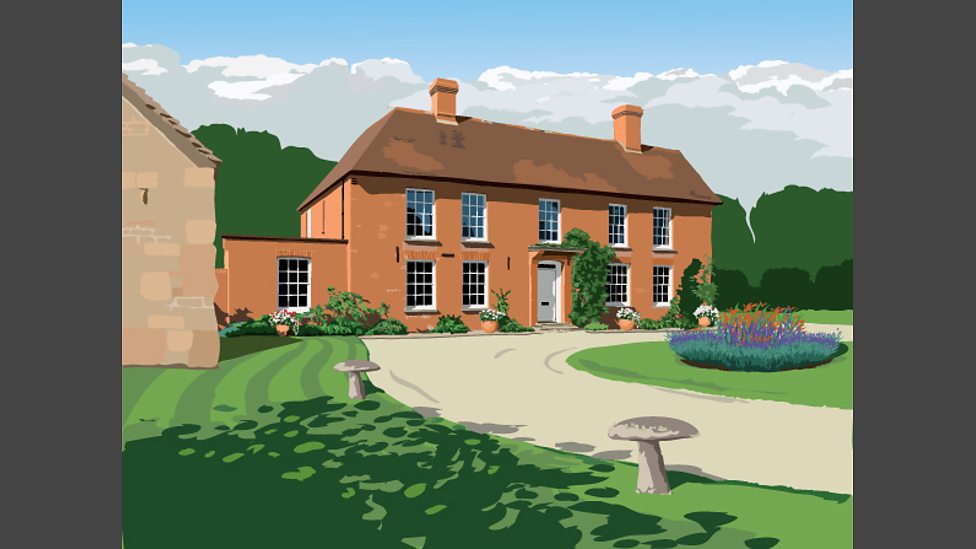
The mysterious buyer for Home Farm wants the sale done by the New Year. It will be the end of an era for Ambridge. The buyer may of course be a front for Wetherspoons, UKIP or, most likely, Justin Elliott. It does however beg the question of where Jennifer and Brian will spend the first weeks of 2019:

On a tent on the village green

In David Archer’s barn

In the Bull

Lower Loxley (avoiding the roof)

Helen goes to France, will she offer solidarity?

Helen is off to France and now is the chance for her to demonstrate (literally) how much she has learnt from Pat. We expect to hear news of solidarity with the yellow jackets in Ambridge before  Xmas

In Other News

Call me Russ is lonely and will get lonelier still as Lily is not returning to January

Glen is the new manager at Lower Loxley (poor chap)

Elizabeth & Lily plan a pre-Xmas visit to Freddie’s cell

A new crisis as hit the Panto (thankfully). The barn roof is leaking

Articles

The Ambridge Socialist: A People’s Vote on Brexit- how would Ambridge decide?

In Uncategorized on December 8, 2018 by kmflett

The Ambridge Socialist

9th December

A People’s Vote on Brexit: how would Ambridge decide?

The Ambridge Socialist wants a General Election even though it is very likely that once again South Borsetshire would vote for the Tory candidate, Bufton Tufton Jnr.

However there is a ‘meaningful’ vote on Brexit in the Commons this week and Labour has made it clear that if ultimately they cant get a General Election they may back a People’s Vote or 2nd Referendum on the EU. The two are not meant to be the same thing but have been meddled together by those who want the option not just to get the best Brexit deal but not to leave the EU at all.

We know little about how Ambridge voted in June 2016. Below is a (very short) list of those who we know expressed a view and our guess at how a few others might have voted:

Leave

Adam Macy

Brian Aldridge

Susan Carter?

Joe Grundy?

Remain

David Archer

Roy Tucker?

Justin Elliott?

Professor Jim Lloyd?

Pat Archer?

The big issue now however is if there is a People’s Vote on the EU how will Ambridge vote this time? Leaver Adam struggled with seasonal labour for fruit picking this year, while post Lexi, Roy Tucker may have a different view

Articles

How broad is your demonstration?

In Uncategorized on December 8, 2018 by kmflett

How broad is your demonstration?

This is the second of three posts on the nature of demonstrations. The first covered size and the third will cover repertoires of protest. Hopefully the demonstration against fascist Yaxley Lennon and his new special friend Batten on Sunday 9th December (Portland Place  11am) will combine size with breadth

The size of the recent People’s Vote demonstration was disputed but it was certainly several hundreds of thousands strong. There were however very few trade union or political party banners to be seen. A social media joke suggested it could be compared to a giant queue at a Waitrose supermarket.

That was both inaccurate and unkind but like all effective jokes it had just enough of reality about it to hit home. Probably the march did raise the profile of a ‘People’s Vote’ on Brexit but I doubt few took anything from that beyond it was a large gathering of people who had originally voted remain.

A few weeks later on November 17th an anti-racist unity march took place in central London backed by Stand Up to Racism, Love Music Hate Racism and with the support of the TUC. It was nowhere near as big as the People’s Vote march. Estimates varied from 30,000-40,000. However there is a case for thinking that due to the composition of those marching the impact may be rather greater and deeper.

I was on the protests against the National Front in the 1970s and the BNP in the 1980s and after and I recognised numbers of fellow activists on the march who had also been there. Part of the point of the day was to bring together veterans of that period, which had seen unity to push back fascists, to underline that whatever differences there were 40 years on, the need to come together to stop racists and fascists was not one.

But if the march was simply a gathering of people in their 60s and 70s it would of course have made a point but would have been unlikely to have much further impact.

Here the composition of the march rather than the size, decent though it was, was the key thing.

The march was notable for a swathe of trade union banners (and giant balloons from the likes of UNITE, CWU and the UCU) local Labour Party banners and so on. I noted also several union General Secretaries on the march, as opposed to just turning up to speak at the end.

That was what one might call the ‘official’ end of the demonstration. But then were also large numbers of young people, black and white, women and men, some identifying as Muslim or Jewish.

A decent crowd danced there way along on the march behind the Love Music Hate Racism float, which the police had to be pressured into allowing, and the whole thing was periodically covered in red smoke from a section of the crowd who let off flares.

It would be difficult to find a more representative cross section of British society and that underlines the point that its not just how many people turn up for a protest, but what their composition is and what they represent.

If we follow the work of the Marxist historian George Rude who did considerable research into the history of crowds, the composition of a demonstration is a key issue.

From those who attended the anti-racist unity march on 17th November we might expect for example some organisational structure in workplaces and localities from trade unions and Labour Party branches, together with some financial input. We might also expect another important part of building a successful movement, activist input from many of the younger people attending attracted by both the politics and culture of the day.

Once we look at the size of protests in this perspective we can understand why historically and in the present day its not just how large they are but who is on them and what they then do that matters.

Articles

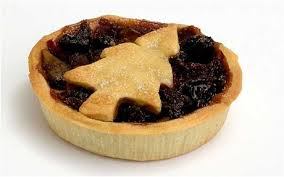
A guide to the beard friendly mince pie

In Uncategorized on December 8, 2018 by kmflett

Beard Liberation Front

Press Release 8th December. Contact Keith Flett 07803 167266

A guide to the beard friendly mince pie

December is the season for mince pie eating, but it can provide particular challenges for the hirsute.

The Beard Liberation Front has identified two key issues:

Icing sugar in the beard: this can have the effect of turning it prematurely white and can be difficult to remove. It may also lead to white beard syndrome and people shouting ‘Oi Santa’ at you.

Pastry flakes and crumbs in the beard: If this occurs it is guaranteed that any pogonophobe within 100 metres will shout ‘oi mate you’ve got the remains of your breakfast/lunch etc in your beard’.

There are several ways of avoiding the issues above:

1] Wear a special mince pie beard snood

2] Focus on eating only beard friendly mince pies. In particular pies where the ratio of filling to pastry lies with the former are likely to be more beard friendly.

3] If time and culinary skills allow you can of course make your own beard friendly mince pies

The Beard Liberation Front continues to research the beard friendly mince pie. The latest results are below:

Supermarket mince pies: Tesco, Sainsburys, Lidl, Morrisons, M&S etc. Check for the amount of frosting/icing sugar etc. Most have lids with frosting.

Heston: these are available in Waitrose. They do not have a top or flaky pastry but have increasingly become devoid of any relationship to an actual mince pie.

Walkers Glenfiddich mince pies: possibly the most beard friendly this year. High ratio of filling to pastry shell.

Designer mince pies: as Christmas Day nears these become more widely available. They are often smaller than the traditional mince pie and the emphasis tends to be more on the filling than the pastry which can help beard friendliness.

BLF Organiser Keith Flett said, there are some reasonably beard friendly mince pies out there but the hirsute need to choose carefully. For the unwary eater icing sugar and pastry flakes in the beard can be a serious concern

Articles

Jeremy Corbyn wins Parliamentary Beard of the Year title for record 8th time

In Uncategorized on December 7, 2018 by kmflett

Beard Liberation Front

Media Release

7th December

Contact: Keith Flett 07803 167266

Jeremy Corbyn wins Parliamentary Beard of the Year title for record 8th time

The Beard Liberation Front the informal network of beard wearers has said that Labour leader Jeremy Corbyn has won the 2018 Parliamentary Beard of the Year vote, polling over 1500 votes compared to second placed Ben Bradley with 900 votes.

After being excluded in 2017 to allow new MPs a chance Corbyn returned to the poll this year and shaved last year’s winner Tory MP for Mansfield Ben Bradley by a significant margin.

Corbyn won 62.79% of vote compared to Bradley’s 28.89% in what became a two-beard race. Bradley raced to an early lead but Corbyn’s supporters mobilised to give him a decisive victory

Jeremy Corbyn has now won the record Award 8 times in 2001, 2007, 2011, 2012 (shared), 2014, 2015, 2016 and 2018.

The Award is not about the politics of the beard wearer but about how well they have deployed their beard in public during the year, particularly in Parliament.

BLF Organiser Keith Flett said, Ben Bradley was a formidable opponent but when it came to it Jeremy Corbyn’s hirsute resilience has seen him win the day for a record 8th time

Parliamentary Beard of the Year 2018 shortlist

Chris Elmore (Labour)

Lord Tony Greaves (LIbDem)

Paul Flynn (Labour)

Lord Hylton (Crossbencher)

Lord Toby Harris (Labour)

Jim McMahon (Labour)

Nadhim Zahawi (Tory)

Ben Bradley (Tory)

Barry Gardiner (Labour)

Fabian Hamilton (Labour)

Alex Cunningham (Labour)

Stephen Crabb (Tory)

Jeremy Corbyn (Labour)

Andy McDonald (Labour)

Crispin Blunt (Tory)


Recent winners

2011 Jeremy Corbyn

2012 Jeremy Corbyn/John Randall

2013 Julian Huppert

2014 Jeremy Corbyn

2015 Jeremy Corbyn

2016 Jeremy Corbyn

2017 Ben Bradley

Articles

Jeremy Corbyn shaves Tory MP Ben Bradley to regain Parliamentary Beard of the Year title

In Uncategorized on December 7, 2018 by kmflett

Beard Liberation Front

Media Release

7th December

Contact: Keith Flett 07803 167266

Jeremy Corbyn shaves Tory MP Ben Bradley to regain Parliamentary Beard of the Year title

Image result for jeremy corbyn+picture

The Beard Liberation Front the informal network of beard wearers has said that Labour leader Jeremy Corbyn has won the 2018 Parliamentary Beard of the Year vote.

After being excluded in 2017 to allow new MPs a chance he has returned to the poll this year and shaved last year’s winner Tory MP for Mansfield Ben Bradley by a significant margin.

Corbyn won 62.79% of vote compared to Bradley’s 28.89% in what became a two-beard race. Bradley raced to an early lead but Corbyn’s supporters mobilised to give him a decisive victory

Jeremy Corbyn has won the Award 7 times before in 2001, 2007, 2011, 2012 (shared), 2014, 2015 and 2016.

The Award is not about the politics of the beard wearer but about how well they have deployed their beard in public during the year, particularly in Parliament.

BLF Organiser Keith Flett said, Ben Bradley did well but ultimately Jeremy Corbyn’s beard demonstrated that it has Parliamentary staying power.

Parliamentary Beard of the Year 2018 shortlist

Chris Elmore (Labour)

Lord Tony Greaves (LIbDem)

Paul Flynn (Labour)

Lord Hylton (Crossbencher)

Lord Toby Harris (Labour)

Jim McMahon (Labour)

Nadhim Zahawi (Tory)

Ben Bradley (Tory)

Barry Gardiner (Labour)

Fabian Hamilton (Labour)

Alex Cunningham (Labour)

Stephen Crabb (Tory)

Jeremy Corbyn (Labour)

Andy McDonald (Labour)

Crispin Blunt (Tory)


Recent winners

2011 Jeremy Corbyn

2012 Jeremy Corbyn/John Randall

2013 Julian Huppert

2014 Jeremy Corbyn

2015 Jeremy Corbyn

2016 Jeremy Corbyn

2017 Ben Bradley