Articles

BBC cricket correspondent Jonathan Agnew’s ‘beard’ was ‘fake news’ but had public backing

In Uncategorized on August 2, 2018 by kmflett

Beard Liberation Front

2nd August

Contact Keith Flett 07803 167266

BBC Cricket correspondent Jonathan Agnew’s ‘beard’ was ‘fake news’ but had public backing

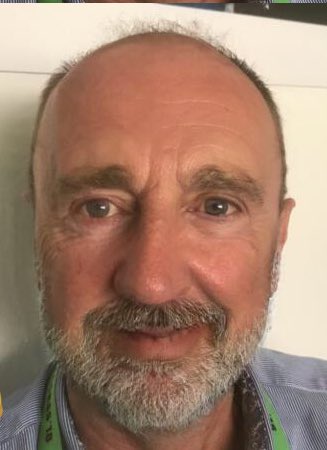
The Beard Liberation Front, the informal network of beard wearers, after a further review meeting, has said that an apparently newly grown beard of BBC cricket correspondent Jonathan Agnew was fake news.

Agnew posted on twitter on Thursday that the beard was for ‘one-day’ only and the campaigners say that the picture of it that appeared was almost certainly artificially enhanced.

Agnew is a long-time facial hair refusenik.

The BLF says that nevertheless the picture of Jonathan Agnew with a beard had considerable public support with numbers tweeting that it enhanced the veteran broadcaster’s gravitas. Comments that the apparent beard made up for the lack of hair on the top of Agnew’s head were dismissed as folliclist by the BLF.

BLF Organiser Keith Flett, we are always ready to welcome new beard wearers but we are also always careful to make sure they are actually existing & not just photoshopped on social media. That said the reaction to what Jonathan Agnew might look like with a beard- some said another Eric Cantona-underlines that he should give it very serious consideration.


Articles

Beard Liberation Front statement on Jonathan Agnew’s ‘beard’

In Uncategorized on August 1, 2018 by kmflett

Beard Liberation Front

1st August

Contact Keith Flett 07803 167266

Campaigners await further evidence on BBC Cricket correspondent Jonathan Agnew’s ‘beard’

The Beard Liberation Front, the informal network of beard wearers, after a review meeting in North London, has said it will await further evidence before determining whether not to give a qualified welcome to what may or may not be a newly grown beard of BBC cricket correspondent Jonathan Agnew.

Agnew is a long-time facial hair refusenik and the reasons for his sudden volte face, if this is what it is, are as yet unknown as he has made no public statement.

The campaigners say that on the evidence of a photograph posted on social media apparently from the First Test against India at Edgbaston, Agnew’s beard would be regarded as adequate.

The BLF says it will keep the matter under review and would only regard Agnew as a probationary supporter if further evidence appears

BLF Organiser Keith Flett, we are usually ready to welcome new beard wearers but we are always careful to make sure they are actually existing & not just photoshopped on social media. That said we continue to maintain that Mr Agnew would significantly increase his already considerable gravitas by wearing a beard.


.

Articles

Campaigners mark Yorkshire Day with a reminder of a rare picture of a hirsute Geoffrey Boycott

In Uncategorized on August 1, 2018 by kmflett

Beard Liberation Front

1st August

Campaigners mark Yorkshire Day with a reminder of rare picture of hirsute Geoffrey Boycott

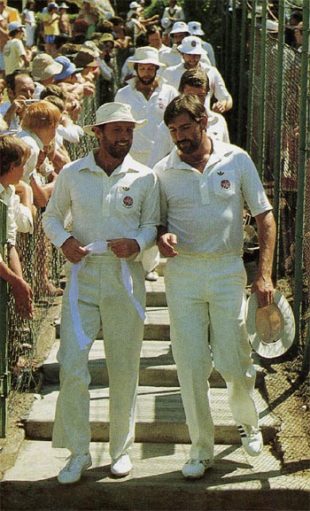
The Beard Liberation Front, the informal network of beard wearers, has marked Yorkshire Day,1st August, with a reminder of a rare of picture of Geoffrey Boycott, thought by some to be one of the greatest living Yorkshiremen, wearing a beard.

Boycott, who has many critics, is often to be found making pogonophobic comments on Test Match Special, but the picture underlines that he was not entirely adverse to beards in his playing days.

Boycott has claimed that on Test Match Special that the reason he appeared with a beard was because he had been feeling unwell had therefore neglected to shave

BLF Organiser Keith Flett said, we think Geoffrey could be much improved with a WG Grace style beard not least because that might muffle his words


Articles

On the occasion of England’s 1000th Test, the All-Time England Hirsute Test X1

In Uncategorized on August 1, 2018 by kmflett

Beard Liberation Front

1st August

Contact Keith Flett 07803 167266

The All Time England Hirsute Test X1

The Beard Liberation Front, the informal network of beard wearers, has announced its all-time England Hirsute Test X1.

The campaigners say that the selection provided several challenges:

1] A tendency for fast bowlers to be clean shaven, possibly in a mistaken application of areo-dynamic/ball delivery theory

2] The reality that from the 1930s to the 1960s England Test Teams had an informal ‘no beards’ rule

The All Time England Hirsute Test X1

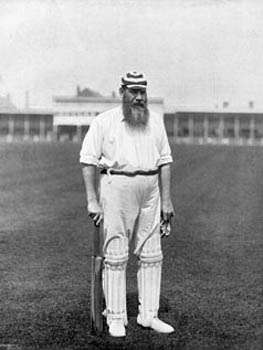
W G Grace

Graham Gooch (scored record 333 in 1990 with a beard)

Mike Brearley (Captain)

Mike Gatting (Deputy-Captain)

Jonny Bairstow (wicket)

Ian Botham

Moeen Ali

Liam Plunkett

Dick Barlow (1882-1886 fast bowler)

Monty Panesar

Mike Hendrick

Honorary Scorer: Bill Frindall


Articles

The ‘Silly Season’ now & then

In Uncategorized on July 31, 2018 by kmflett

Parliament is in recess in August which traditionally meant there was little political news. One wishes some Labour MPs would go on an extended holiday (and probably will do as the month goes on). Meanwhile for those of us still working:

In 2018 in the age of social media and 24 hour news the thought of being on holiday in the summer and not contactable is apparently unthinkable. Even in the recent past this was not the case. One need only check the paucity of Tony Benn’s Diary entries for August in the late 1970s when he was a Government Minister to grasp the point.

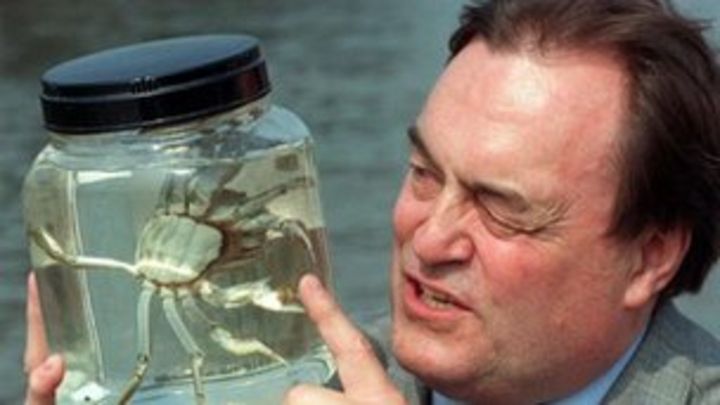
So Denis Healey holidaying in a remote part of Scotland in 1976 would have needed to be in touch with London only exceptionally rather than being expected to tweet his every thought and movement. Indeed as recently as 1997 the most memorable thing that happened during the summer Parliamentary recess was that John Prescott compared Peter Mandelson to a crab he had found on the beach. These days it would probably have merited his expulsion from the Labour Party, then it was just part of the ‘silly season’.

Articles

Dad’s Army & the Communist Party

In Uncategorized on July 31, 2018 by kmflett

Dad’s Army and the Communist Party

Wikipedia

It is the 50th anniversary of the first showing of Dad’s Army on the BBC on 31st July 1968. For those unfamiliar it was about the Home Guard, a volunteer civil defence force. Specifically it featured a local unit operating in Sussex and might be seen as a finely drawn comedy on British social class distinctions.

It may seem an odd question to ask whether any of the ‘Dad’s Army’ were members of the Communist Party of Great Britain but it is in fact not as odd as all that.

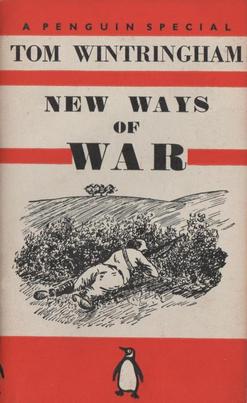
The immediate forerunner to the Home Guard was the Local Defence Volunteers which were set up by Tom Wintringham in July 1940. Wintringham had been the commander of the British Battalion of the International Brigade in the Spanish Civil War and until the late 1930s a member of the Communist Party.

He was a strong opponent of the politics of the Nazi-Soviet pact that had led the CPGB to stop its members from joining the Home Guard (how successfully is less clear). Wintringham’s point was that those in Britain, not already in the Army, who had the most experience of fighting a guerrilla campaign against an enemy were those who had been in Spain.

Wintringham was edged out as the Government took control of Home Guard units.

The Government, much as later, was not enthusiastic about signing up Communists and by some accounts also left-wing Labour Party members, Jews and Irish, all of whom it seemed to regard as in some way being less reliable than might be desired.

Even so after Germany invaded Russia in June 1941 and Russia became an ally things started to change. By June 1942 the Home Office had instructed Chief Constables to ‘modify’ the practice of excluding Communists and by early 1943 it determined that Communists could join the Home Guard in the same way they could join the regular army.

This still begs the question of whether any members of the BBC’s Dad’s Army were CPGB members. The socialist historian Daryl Leeworthy has suggested Sergeant Wilson as a possible contender..

Articles

Thatcher intervened in 1980s blacklisting of left-wing civil servants

In Uncategorized on July 31, 2018 by kmflett

London Socialist Historians Group

Media Release

30th July

Contact Keith Flett 07803 167266

Thatcher intervened in 1980s blacklisting of left-wing civil servants

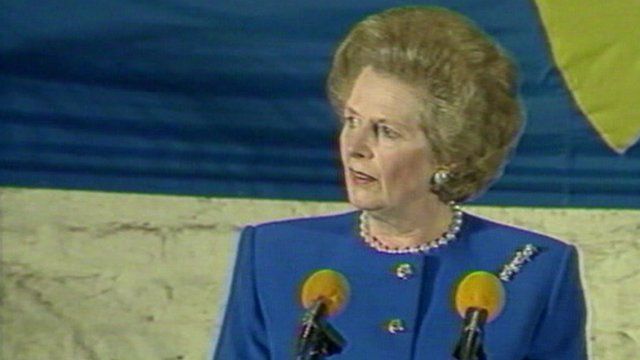
The London Socialist Historians Group, which organises the socialist history seminar at the Institute of Historical Research, has said that in Government papers released last week (Reference CAB 301-485) it is revealed that Mrs Thatcher intervened directly in attempts to blacklist left-wing civil servants.

In a memo from the Cabinet Secretary Sir Robert Armstrong wrote:

‘She (Margaret Thatcher) has remarked that she thinks Civil Service managers should be ready to apply disciplinary sanctions to subversive troublemakers, where their conduct justifies it.

The note continues:

‘The Prime Minister was somewhat disquieted to learn from paragraph 7 of my minute that there were even a very few subversives in the Civil Service above the rank of Higher Executive Officer* I should be glad if you could let me know if there is any more information that we can give the Prime Minister about the number and distribution of subversive troublemakers at these levels

*HEO is a second line manager in the Civil Service

Shadow Cabinet Officer Minister Jon Trickett raised last week whether the practice of blacklisting civil servants was still taking place.

LSHG Convenor Dr Keith Flett said, British Governments have been collecting information on radicals and the left since at least the days of ‘Oliver the Spy’ in the years before Peterloo in 1819. However since then Britain has become a Parliamentary democracy and the fact that a recent Prime Minister showed a direct interest in collecting information on alleged subversives in the Civil Service underlines the importance of getting an answer to Jon Trickett’s query about whether the practice continues.

Articles

Bill Rodgers warning for those MPs who might leave Labour

In Uncategorized on July 30, 2018 by kmflett

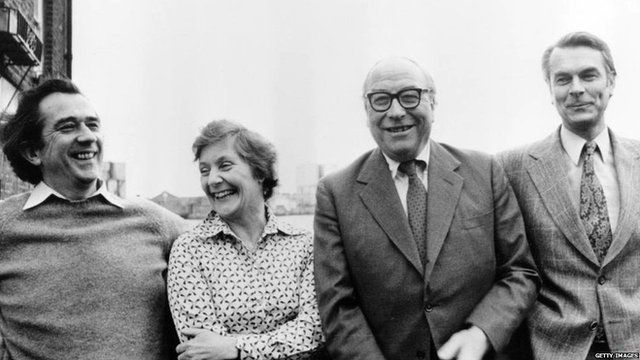
Bill Rodgers became a Labour MP in 1962, went on to be a Labour Minister and was one of the ‘Gang of Four’ senior Labour figures who led the 1981 SDP split. He lost his Stockton seat in the 1983 General Election and went on to become Liberal  Democrat leader in the Lords.

Rodgers who was associated with the Campaign for Democratic Socialism in the early 1960s was a key figure on the Labour right and a vociferous opponent of CND. He was nevertheless (or depending on your perspective because of that) a formidable political figure.

On the 35th anniversary of the Limehouse Declaration which led to the SDP he told the New Statesman this about leaving Labour and what it meant:

“It’s very difficult, it’s very painful, to leave,” he continues. “I could have stayed for ever as MP for Stockton-on-Tees. My people didn’t understand. They said ‘Bill, your seat’s safe, I’m supporting you, why do you have to leave?’ It’s incredibly painful.”

Articles

Did Spurs build their new stadium in Tottenham because of the 2011 riot?

In Uncategorized on July 30, 2018 by kmflett

Did Spurs build new stadium in Tottenham because of the August 2011 riot?


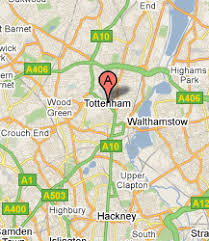
Spurs fans and/or Tottenham residents may think there were a number of reasons why Spurs decided to build their new stadium (currently still under construction but to see its first Premiership game on 15th September 2018) adjacent to their old one on Tottenham High Rd. There were things like planning agreements, fitting in with a Council plan to ‘regenerate’ the area (now partially stopped) and the funding that came from this wider initiative. Plus West Ham wanted the Olympic Stadium.

However according to Spurs Executive Director Donna Cullen the decision was made in a phone call to Daniel Levy after the August 2011 Tottenham riot.

It is an interesting perspective on riots. The stadium, and it remains controversial locally, will bring much need business and income to the area which remains one of the poorest in London. The fact that it was a riot that apparently caused it to be built suggests that, while people lost homes and livelihoods over the 2011 riot (and there was genuine anger over police racism too), that such things do have a purpose.

The historian Eric Hobsbawm used the term ‘collective bargaining by riot’ to describe agricultural labourers who broke machines to protect their jobs in the early nineteenth century, while EP Thompson looked at the food riots that sometimes occurred when what was thought to be a fair price and quality for basic food stuffs like bread (a moral economy) was broken.

Thompson emphasised that actual riots were quite rare, more often it was the threat that was successful in achieving what a protesting crowd wanted.

In the case of Tottenham, at least according, to Spurs, it was an actual riot that got the new stadium built although I’m not sure that is quite what the crowd on that August Saturday night seven years ago had in mind. Certainly I don’t recall seeing any placards or hearing any chants to that effect.

https://www.football.london/tottenham-hotspur-fc/news/new-tottenham-stadium-name-cost-14966989

Thanks to @Yazd1

Articles

LibDems did NOT lead the fight against the Haringey HDV

In Uncategorized on July 29, 2018 by kmflett

LibDems did NOT lead the fight against the Haringey HDV
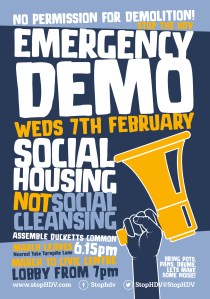
Anyone who has had experience of Liberal Democrat party activists will know that most are neither particularly liberal or democratic. A well-worn LibDem tactic is to claim that they were responsible for campaigns and events that in fact a range of others were responsible for.

The recent Guardian letter (below) from Haringey LIbDem Councillor Dawn Barnes on the now ceased Haringey Development Vehicle (a plan from a previous Labour Council to allow multinational privateer Lendlease to knock and down and rebuild a substantial part of North Tottenham) is a case in point.

Certainly the Liberal Democrats were involved in the campaign, which involved many demonstrations and meetings, but only as a marginal presence. They were more important in the Council chamber where they formed the opposition to Labour and one or two Liberal Democrat Councillors were particularly effective in pursuing the previous Council leadership. Many Labour Councillors were also opposed to the HDV but were constrained by Party discipline from active opposition. They organised and campaigned to change the Labour candidates who came before the Haringey electorate in May and did so successfully. The new Labour Council Cabinet withdrew from the HDV.

However such matters while they may be formally resolved in the Council Chamber are influenced by the campaign outside.

So let’s hear it for those Ms Barnes managed to forget to mention in her letter:

The No to the HDV campaign

Haringey Labour MPs David Lammy and Catherine West

Haringey’s major trade unions including Unite, GMB and UNISON (and Haringey TUC)

Haringey Defend Council Housing

Labour Party activists

The Green Party (member Gordon Peters fronted up a legal challenge to the HDV)

The Socialist Workers Party

Innumerable tenants and community groups

Guardian letter (no responses published to date)

Like virtually everyone else in the London borough of Haringey, the local Liberal Democrats were relieved to have formal confirmation at last week’s cabinet meeting that our Labour-controlled council will not proceed with the Haringey Development Vehicle and instead set up a council-owned housing company to develop homes.

As early as July 2017, Liberal Democrat councillors were warning that the HDV did not deliver enough genuinely affordable housing and involved too much financial risk. In early 2018, we called for the scheme to be scrapped and proposed a 100% council-owned housing company as an alternative, based on a similar model implemented in Lib Dem-run Sutton. In January, after Liberal Democrats had called for an extraordinary full council meeting, the national Labour party asked its local leadership in Haringey to pause the scheme.


We can’t help feeling that had Labour listened earlier to the warning voices from the Lib Dem council group, the wider community, or even their own ranks, they would have spared Haringey taxpayers £2.5m of costs which could have been spent more wisely by a council dealing with huge cuts to local services.

However, we need to look to the future. Few people will mourn the HDV, and the outsized financial risks and involvement of a controversial conglomerate that came with it. However, we can’t let its failure become an excuse for timidity when it comes to housebuilding. We have a serious housing supply crisis in Haringey. The Labour leader and his group need to move quickly to make sure that the wholly council-owned housing company can start delivering large numbers of homes, and soon.

Cllr Dawn Barnes

Councillor for Crouch End ward, and Haringey Liberal Democrat spokesperson on housing