Articles

Sagan’s Green Jersey in the Tour de France destroys pogonophobic cycling myth

In Uncategorized on July 29, 2018 by kmflett

Beard Liberation Front

PRESS RELEASE

30th July

Contact Keith Flett 07803 167266

Sagan’s Green Jersey in Tour de France destroys pogonophobic cycling myth

The Beard Liberation Front, the informal network of beard wearers which campaigns against beardism, irrational prejudice against the hirsute, has said that the success of Slovak rider Peter Sagan in securing a sixth green jersey at the 2018 Tour de France- for the most consistent cycling performance- destroys the pogonophobic myth that cyclists who shave their legs and beards will do better in competition

BLF organiser Keith Flett said, the pogonophobes have been exposed. It is facial hair that gives a cyclist areo-dynamic advantage not shaving it

Sagan Pogonophobia

https://cyclingtips.com/2016/03/peter-sagan-kicking-in-some-holy-houses-by-not-shaving-his-legs-does-the-peloton-care/


Articles

21st July 1968: the forgotten London demonstration against the Vietnam War

In Uncategorized on July 29, 2018 by kmflett

July 21st 1968: the forgotten London demonstration against the Vietnam War

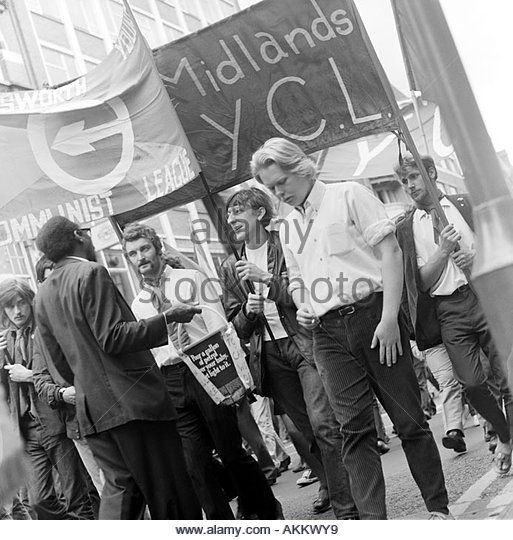
This picture is from the 17th March 1968 demonstration but interesting because it shows a YCL presence

A recurring theme of the socialist history seminars held at the Institute of Historical Research, University of London, in recent times has been around archives and issues about what is happening to documents and memories of those on the left from the 1960s on who are now retiring and in some cases sadly are no longer with us.

There is a particular problem with the rise of the interweb. As a research historian I still delve in physical archives but like most I will usually google a subject first to see what might be available on-line. There is an assumption that material will be on-line and if it relates to the recent past that is likely to be the case (even if unreliably so).

Previously pre-interweb days, papers (hard copies of) would in at least some cases be kept, collected and eventually deposited in a library somewhere. Of course austerity has meant hard times for libraries and loading something on-line is much easier than cataloguing material and storing it away, although on-line doesn’t always last forever and can get taken down.

The core of the issue however is the crossover between the days of the physical archive and on-line. The assumption is that material from the 1960s must be on-line now, but often it isn’t. In fact it is in danger of being lost.

I mention this in the context of the 21st July 1968 demonstration against the Vietnam War in London because it is case in point. There were two large and well-known London protests on Vietnam that year in March and October. The July demonstration was not as large (although still a fair size) and it was not organised by the Vietnam Solidarity Campaign (VSC) but initially by the CPGB and then it appears a Maoist grouping.

There are reports in the daily press of the demonstration and one brief reference on-line but I have been able to find little else.

Articles

The Ambridge Socialist: blacklisting of fruit-pickers in Ambridge

In Uncategorized on July 29, 2018 by kmflett

The Ambridge Socialist

65 Years of the class struggle in Ambridge

July 29th

Aldridge wants blacklist of fruit pickers

Brexiteer Adam is facing another crisis as a group of fruit pickers has declared they’ve earned what they planned to and are leaving to return ‘home’. Adam has been forced to offer them a pay rise (not the Living Wage obviously). Brian has demanded that Adam draw up a blacklist of the fruit picking militants so that they are not employed again.

Pip: it’s a baby! New addition to the ruling dynasty of Ambridge

Pip has given birth to a baby. The baby is an Archer and therefore automatically a member of the ruling class of Ambridge.

Robin Fairbrother comes to Ambridge..

Expect enhanced mentions of coffee

Sign the Ambridge Socialist petition on Affordable Homes in Ambridge here

https://www.change.org/p/kit-malthouse-parliament-uk-affordable-homes-in-ambridge?recruiter=45817997&utm_source=share_petition&utm_medium=twitter&utm_campaign=share_petition.nuTOQr9FSliiD9vHkB7fug.1&utm_term=triggered

In Other News

Rex is not going to Newmarket. Perhaps Alistair could go instead

Rex and Toby have had a cup of tea with Jill.

Articles

Emergency wind bulletin for the hirsute: take action now

In Uncategorized on July 28, 2018 by kmflett

Emergency wind bulletin for the hirsute

Contact Keith Flett           07803 167266

28th July

BEARD WEARERS WARNED: WIND CAN DAMAGE YOUR BEARD

The Beard Liberation Front, the informal network of beard wearers, has said that as high winds are set to sweep across the UK on Sunday beard wearers are strongly advised to take special care of their beards.

The campaigners say that while danger to life and limb is the central issue when extreme weather hits, a secondary concern for organic beard wearers is that exposing the beard to high and blustery winds may blow the beard out of shape and can cause permanent hair and follicle damage in some cases.

It is less likely that designer and some hipster beards will suffer significant wind damage

The BLF advises the following precautions:

Keep the beard slightly damp at all times by immersing it in a glass of hazy IPA or imperial stout. This will give solidity to the beard hairs and prevent them being blown around.

Use a scarf to protect the beard at all times

Secure the beard with elastic bands, strapping the hairs to the chin

If the beard is blown out of shape use a hair dryer to re-form the hairs in the correct position and then stay indoors for a several hours to allow the hairs and follicles to recover

BLF organiser Keith Flett said, the answer is most definitely not blowin’ in the wind today. We advise the hirsute to take care out there


The Beard Liberation Front announces the Beard Friendly Pub of the Year on 14th January

Articles

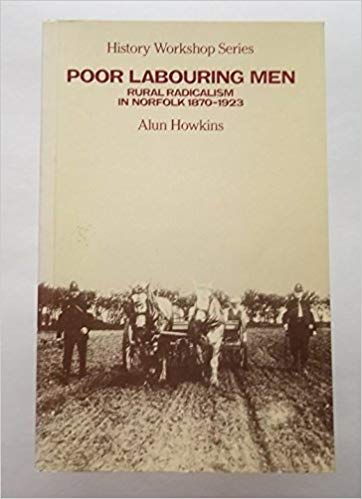
Alun Howkins 1947-2018: author of some of the ‘missing chapters of the Making of the English Working Class

In Uncategorized on July 28, 2018 by kmflett

Alun Howkins 1947-2018: Author of some of the missing chapters of the Making of the English Working Class

I was sorry to learn of the death of the socialist historian, author and broadcaster Alun Howkins on 12th July.

An official obituary is here:

http://www.sussex.ac.uk/broadcast/read/45473

I knew Howkins only in passing but that over a very lengthy period. I heard him speak at History Workshop conferences and indeed sing at various HW gatherings. He had a distinctive voice clearly indicating his background as someone who had come to academia via Ruskin College and indeed the events of 1968 and History Workshop itself.

Howkins posted an interesting paragraph on the History Workshop site on the 50th anniversary of the publication of the hardback of E P Thompson’s Making of the English Working Class in 2013:

I read the ‘Making’ in 1968 in Harlow in Essex where I was working before going to Ruskin. Thompson’s name meant very little (if anything) but it was the 1000th Pelican. Like many self educated men and women in those (better?) days that imprint – along with Penguin guaranteed a serious book and I was about to go to college to study Politics and Economics. I read it like a novel ( albeit a difficult one) and loved it…but even then I felt, as I still do, it did scant justice to my own ‘past’ the rural areas – a failing Thompson accepts in the Pelican edition. I took the book (same copy) to Yugoslavia in 1970 and gave it to a young railway worker as thanks for a lift and room in his crowded caravan on a workers holiday camp in Rovinj. Who knows what he and his socialist family made of it.​

It seems to me that one way of understanding Howkins’ work is as an attempt to write some of the missing chapters of the Making of the English Working Class and it must be said he did so brilliantly.

Howkins memories of Thompson are at this audio link (the first 7 minutes or so)

https://sounds.bl.uk/Oral-history/Oral-historians/021M-C1149X0010XX-0017V0

Howkins again underlines that he didn’t feel the Making dealt adequately with rural workers, but also notes his friendly relations with Thompson, the impact he made on him as a speaker and his relationship with History Workshop. In particular he notes that Thompson did research and speak on rural issues such as enclosure, but this research came after the Making was published. Hence Howkins finds more of specific interest in the later collection, Customs in Common.

It is to be hoped that Howkins work inspires a new generation of historians, since his efforts notwithstanding, there are always more things to research and to understand, as indeed Howkins commentary on EP Thompson’s research methods and his revisions of work he had done underlines.

There are important commentaries on Alun Howkins at the SHS site by Katrina Navickas & Helen Rogers:

Alun Howkins (1947-2018)


Articles

Campaigners say ‘poo in beards’ story is fake news

In Uncategorized on July 28, 2018 by kmflett

Beard Liberation Front

PRESS RELEASE

28th July

Contact Keith Flett 07803 167266

Campaigners say ‘poo in beards’ story is fake news

The Beard Liberation Front, the informal network of beard wearers which campaigns against beardism, irrational prejudice against the hirsute, has said that a story currently circulating on-line that men’s beards have traces of faeces is fake news.

A similar story surfaced in 2015 and is fully debunked here:

https://www.theguardian.com/fashion/2015/may/04/no-need-for-men-to-get-flush-faced-about-faeces-in-beards

The campaigners say that on this occasion the story has come from a company that markets beard grooming products. While it quotes research apparently done at Manchester Metropolitan University there is no link to the research findings or evidence that the research has been published

BLF organiser Keith Flett said, the ‘poo in beards’ story is driven by two things. Firstly a commercial interest and secondly pogonophobia. We always recommend that beards are washed and split ends dealt with on a daily basis but the line that people with beards have got something unpleasant in them is one of the oldest pogonophobic tropes there is.


Articles

Jeremy Corbyn speaks out again in Haringey on the importance of opposing racism & fascism

In Uncategorized on July 27, 2018 by kmflett

Corbyn speaks out again in Haringey on the importance of opposing racism and fascism
At an event to mark the re-launch of the Marcus Garvey public library on 27th July Jeremy Corbyn MP was one of a number of speakers including Tottenham MP David Lammy and the widow of the late Bernie Grant MP, Sharon Grant.

The event was primarily about how the Friends of the Library had managed to save it from a mindset of austerity and cuts and now launch what is hopefully a bright future for it.

My late father was Chief Librarian at the old Tottenham library a few minutes walk from Marcus Garvey (now flats). I was interested to learn from David Lammy that he had spent time studying in that Library as a young man.

The origins of the Marcus Garvey library were touched on, and here Jeremy Corbyn recalled his time as a Labour Councillor, chair of the planning committee, working with another young Councillor Bernie Grant to get the Marcus Garvey project underway.

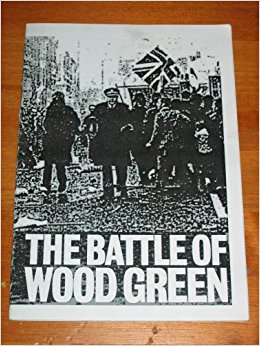
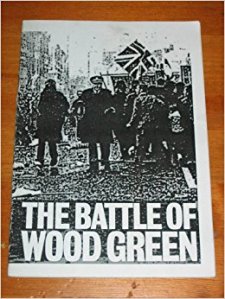
Corbyn underlined how important it was to have a library named Marcus Garvey in Tottenham and the significance also of recalling the fight against racism and fascism in the area that underwrites this. In doing so he pointed specifically to the 1977 Battle of Wood Green, the details of which are below

It’s a summary of events that actually took place and which I personally was at:

On 23rd April 1977 the National Front decided to march from Ducketts Common by Turnpike Lane tube in North London down a busy London High Road packed with Saturday afternoon shoppers. There were several thousand fascists but they were outnumbered by opponents, including many people out shopping, appalled that fascists were marching on the anniversary of Hitler’s birthday.

The National Front were an avowedly anti-Semitic party.

It would be bad enough now but this was a mere three decades after the end of the Second World War and numbers who had been actively involved in fighting Hitler were no doubt around on that Spring day.

In reality only a small part of the NF march made it to a concluding rally as it was broken by protesters.

40 years on 23rd April 2017* that day was marked with a festival to celebrate diversity and oppose racism on the very same Ducketts Common. The fascists never returned in any numbers to the Borough, but the fight against racism always needs to be maintained in each generation.

One of the keynote speakers on 23rd April was Labour leader Jeremy Corbyn. It was of course the kind of event that one might expect he would attend, but it is little bit more specific than that.

In 1977, before he became the long serving MP for Islington North, Corbyn was a trade union official and Labour Councillor in Haringey for the area adjacent to Ducketts Common. He is still remembered for the hard work he did then.

Part of that was to act as the co-ordinator for all of the local Haringey Councillors, including Tories on 23rd April.

The Councillors had called for the National Front march to be banned, recognising the provocation it was designed to be. The police had declined. On the day all of the Councillors assembled on Ducketts Common, before the fascists marched, holding a giant banner making clear they stood firm against racism.

But there was another group of people, anti-fascists, trade-unionists, socialists, who were determined that the National Front would not march. The main aim was simply to stop them by force of numbers but some physical engagement with the fascists was envisaged.

Using his influence Jeremy Corbyn was able to act as the spokesperson for both groups of people, presenting in effect a unified protest against the NF. Indeed the following week he was quoted in the local Hornsey Journal paper in just this role.

That day was one of the occasions that led to the formation of the Anti-Nazi League and the first huge Carnival in conjunction with Rock Against Racism at Victoria Park in May 1978.

Corbyn’s role in some of the events that led to the birth of the anti-racist and anti-fascist movement that did much to stop the National Front from becoming, as it threated to in the late 1970s, a major political force, should not be forgotten.

Given that it is not unknown for labour movement leaders to develop hazy memories of how they came to be leaders in the first place, it’s also good that the current Labour leader has not forgotten those days either and indeed on the evidence of Friday night is happy to continue to refer to them.


Articles

Campaigners mark Mick Jagger’s 80th birthday by celebrating his hirsute period.

In Uncategorized on July 27, 2018 by kmflett

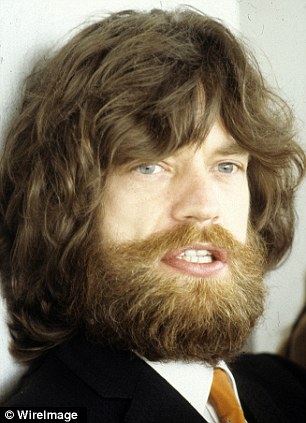
The Beard Liberation Front, the informal network of beard wearers, has marked Mick Jagger’s 80th birthday by celebrating his comparatively obscure hirsute period when he wore a full organic beard. Unlike the Beatles who wore beards in the late 1960s, Jagger’s hirsute period came ten years later around 1979-80.

Jagger who is mostly seen clean shaven could have easily won Beard of the Year if he had kept the beard.

Articles

Campaigners say heatwave must put an end to Victorian attitudes on shorts & sandals at work

In Uncategorized on July 27, 2018 by kmflett

Beard Liberation Front

27th July

Contact Keith Flett 07803 167266

Campaigners say heatwave must put an end to Victorian attitudes on shorts & sandals at work

The Beard Liberation Front, the informal network of beard wearers, says that while the annual Beards, Shorts and Sandals season is reaching a peak in the current hot weather, some employers still maintain a Victorian attitude to wearing shorts at work.

The campaigners say that while those who work in outdoor locations have some right to wear shorts:

https://www.tuc.org.uk/blogs/working-outdoors-heat-know-your-rights

office locations can be more problematic.

The campaigners say that while wearing a beard in an office is less of an issue than it was 5 years ago, shorts and sandals are still frowned upon by stuffy employers in some areas.

The BLF is calling on the Government to make it clear that in hot summer weather shorts and sandals can be appropriate wear in the office and to lead by example by getting Government Ministers to wear shorts and sandals during the Parliamentary recess

BLF Organiser Keith Flett said, we’re not talking beach shorts here. Many offices do not have the air conditioning to cope with very hot weather and shorts and sandals are an ideal way to allow people to feel more comfortable in the office and better able to focus on work.

Articles

EP Thompson on blacklisting & the Secret State

In Uncategorized on July 27, 2018 by kmflett

EP Thompson on blacklisting & the Secret State

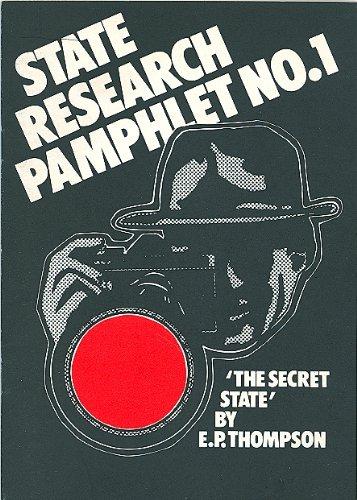
The extract below from EP Thompson’s essay The Secret State (1978) is a reminder why Shadow Cabinet Office Minister Jon Trickett is firmly in the best democratic traditions of the labour movement in demanding to know if the 1980s practice of investigating the political views of civil servants still continues.

Thompson notes that the nineteenth century British working-class disliked the intrusion of authority from above and the role of a centralised police force. The twentieth century saw Labour embrace a Statist politics but the libertarian origins of the labour movement live on:

The insurgent British working-class movement took over for its own the old Whiggish bloody-mindedness of the citizen in the face of the pretentions of power. Even when labouring under the manifest class discrimination of the Combination Acts, the secretary of an illegal trade union branch of framework knitters in Mansfield in 1812 was able to protest against a clause in a Bill proposed by the workers’ representatives themselves, which authorized the search for shoddy goods in the houses of manufacturers : ‘if iver that bullwark is broke down of every english mans hous being his Castil then that strong barrer is for iver broke that so many of our ancesters have bled for and in vain.’ The workers had appropriated the democratic precedents and practices of past generations for their own; the ancestors were not ’theirs’ but ’ours’.

And this was how matters continued for at least one hundred years. The Chartist, Radical Liberal, Irish Nationalist and formative Labour movements were distinguished by their sensitivity to libertarian issues, and their suspicion of the polity of statism. When the police forces were enlarged and rationalized (or, as some would have it today, ’modernized’) in the mid-nineteenth century, this was a victory for bourgeois utilitarian bureaucratic policy in the face of intense resistance extending from old Tory localism through Radical Liberalism to outright Chartist opposition— for Chartists and trade unionists very well understood what kind of imperatives dictated government policies. As a consequence of this opposition, the presence of the police in British public life remained unusually subdued. They must be seen as ‘servants’ of… either the gentry or ’the public’, and they must in no circumstances exhibit a brash public presence. And, as a more concrete evidence of the old libertarian tradition, which endures to this day, the British police (at least in Britain) must go about the streets unarmed.