Articles

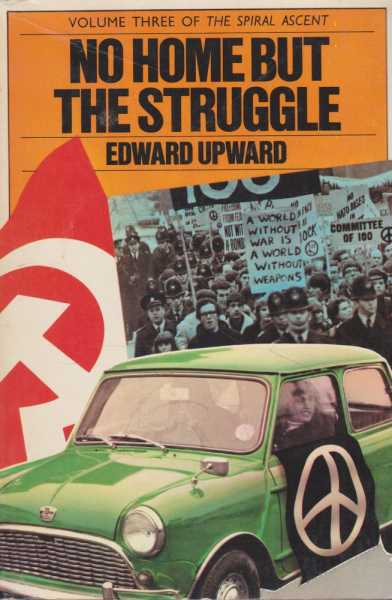
Workplace trade unionism: no home but the struggle

In Uncategorized on June 3, 2018 by kmflett

Workplace trade unionism: no home but the struggle
I’m off to the Biennial conference of Prospect in Birmingham this weekend. It’s the first also to include delegates from BECTU who joined Prospect last year.

I’ve been attending union conferences for 40 years (and hence probably won’t be attending too many more as not only does one need eventually to retire but also while people whose ideas of the labour movement were formed in the 1970s have their uses newer and younger activists need also to look to the future).

The proceedings of the conference will be varied from Brexit, to the environment and of course jobs and if interested you’ll be able to find details on social media (@prospectunion)

My interest here is in the context of the latest figures for strike action and union membership.

In terms of strikes the figures however cut were amongst the lowest since 1893 when records began and the density of union membership at around 23% is also a little lower. Yet overall trade union memebership is steady and in the private sector where I’m a union activist (yes we do exist) it is up.

Were it the 1970s I’d say strike statistics don’t reflect unofficial walk-outs and strikes. I’ve participated in and organised a good few of those over the years but they are rare currently. The law around industrial action is restrictive and the emphasis has shifted to getting a high ballot turn-out and using that to get a deal with an employer. The late Bob Crow was a master at this.

Union membership needs to be higher and the action at TGI Fridays, Picturehouse cinemas and McDonalds show that unions are quite capable of organising in less traditional areas of workplace strength. Likewise the low level of strikes reflects a lack of confidence in taking action, the impact of the Government’s austerity agenda in part.

This could change very quickly. You need only look at the 1889 London dock strike- previously unorganised workers with a strike wave across the Capital to underwrite matters- to understand that periods of apparent quiet can suddenly explode.

Its important though to grasp a wider context as my fletter in the Guardianm(2;6) briefly notes.

In my four decades as a union activist things have changed a good deal (and not all for the worse). Numbers of workplace issues I deal with are around bullying, which has always existed but was not much pursued as an issue unfortunately 20 or 30 years ago. Issues of equality are now much more prominent in the workplace even if far from always actually addressed in practice. Pensions, hardly ever an issue in the 1970s and 1980s are now a major concern for many.

The reality is though that if you are not a trade union member your ability to do much about any of the above is very limited indeed. And if you are then there is the perpetual work of making sure the union effectively represents people- that only comes from an active membership not a benign General Secretary! It will also help if you are a socialist, supporting Jeremy Corbyn in the Labour Party or applying pressure from without. What people do makes a difference.

 

Articles

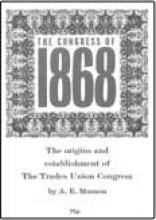
EP Thompson & the origins of the TUC. Warrening capitalism from end to end

In Uncategorized on June 2, 2018 by kmflett

E P Thompson & the origins of the TUC. Warrening capitalism from end to end

E P Thompson argued in the Peculiarities of the English that the TUC, along with a range of other labour movement structures still familiar to us today was born out of the defeat of Chartism in the 1850s.He suggested that having failed to overthrow capitalism the working class instead proceeded to warren it from end to end with defensive structures.

So successful were they that 150 years on we still have the same framework. The issue with it as Thompson outlines below is that every defensive advance brings with it a greater stake, even if an oppositional one, within existing market capitalist society.

Some might say that the Pink Floyd song Wish You Were Here sums the matter up well.

Whatever one may think however Thompson’s analysis remains fundamental to understanding how the TUC arose in 1868 and in what context

This ‘caesura’ is exactly the period when the classic institutions of the Labour movement were built up, trade unions, trades councils TUC, co-ops and the rest-which have endured to this day. It was part of the logic of this new direction that each advance within the framework of capitalism simultaneously involved the working class far more deeply in the status quo. As they improved their position within the workshop, so they became more reluctant to engage in quixotic outbreaks which might jeopardize gains accumulated at such cost. Each assertion of working-class influence within the bourgeois-democratic state machinery simultaneously involved them as partners (even if antagonistic partners) in the running of the machine. Even the indices of working class strength – the financial reserves of trade unions and co-ops- were secure only within the custodianship of capitalist stability

Articles

Guardian Editorial on 100 years of the TUC, June 1968

In Uncategorized on June 2, 2018 by kmflett

At the start of June 1968 the Guardian published a supplement to mark the 100th anniversary of the first meeting of the TUC in Manchester on 2nd June 1868 including an interview with then General Secretary George Woodcock.

There was also an Editorial the first paragraph of which is below.

The whole thing can be found in the Guardian archive which is available, on-line and searchable, at the British Library for those who have access.

Guardian Editorial 1st June 1968

The TUC after a hundred years

As the ‘Guardian’ has been saying off and on since the first Trades Union Congress in Manchester 100 years ago the TUC is among our more worthwhile national institutions. If Britain is more humane than the United States and more free than the Soviet Union the TUC deserves a share of the credit. Low’s horse which so often ambled across our pages, caught both its faults and merits. Slow-moving but progressive, stubborn but loyal, and above all with a great store of common sense. Currently it is fashionable to deride the unions as antediluvian or irrelevant. Mr Enoch Powell and some of the wage freezers of Whitehall join hands across a huge ideological gulf to do so. But when such people are only footnotes in political history the TUC’s role in society will remain important.

Articles

Tony Benn on the Jeremy Thorpe affair

In Uncategorized on June 2, 2018 by kmflett

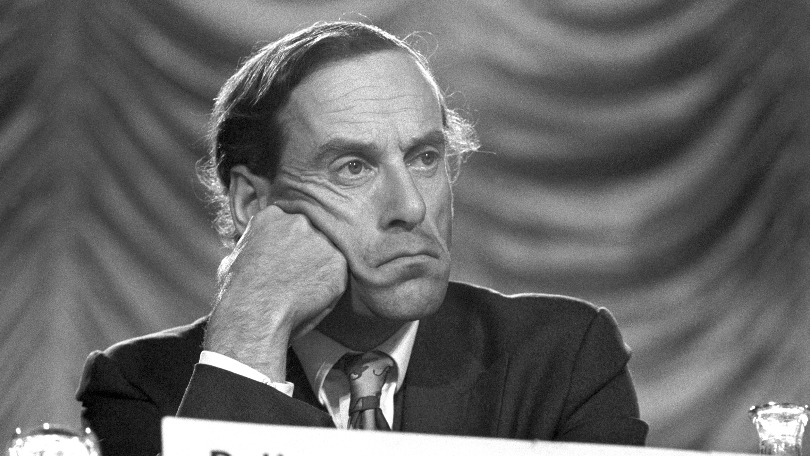
The Jeremy Thorpe affair will be a mystery to many. It is something (one hopes) from another age. When gay sexuality was something to be covered up and feared rather than celebrated. Its possible to google a number of homophobic Private Eye front pages on the matter.

Beyond that as the latest developments in the matter underline there is a great deal of murk, reflected in more recent investigations into Savile and beyond

http://www.bbc.co.uk/news/uk-44336859

Tony Benn reflected an interesting view in his Diary when Thorpe was arrested in August 1978

Jeremy Thorpe was arrested today, along with three others, and taken to Minehead police station, where they were charged with conspiracy to murder Norman Scott. They were released on bail of £5,000 each put up by Eric Lubbock.

All the rumours that Thorpe is implicated have turned out to be correct. It is the most tragic story. Here is a well-connected, brilliant, amusing man who won North Devon from the Tories in 1959 became leader of the Liberal Party when he was in this thirties.. and who in February 1974 carried the Party to its greatest electoral achievement since the war.. the man is completely broken……

The question now will be how much did Harold Wilson try to cover it up to protect Thorpe for political purposes.

(Diary 4th August 1978)

Articles

Geoffrey Boycott is right on beards & cheese

In Uncategorized on June 1, 2018 by kmflett

Beard Liberation Front

1st June

contact Keith Flett 07803 167266

Geoffrey Boycott is right on beards and cheese

WIldes cheese of Tottenham

Fresh from this confession on Test Match Special during the First Test at Lords that he once had a beard Geoffrey Boycott has again been opining on beards on the first day of the Second Test at Leeds.

Boycott discussing Wensleydale cheese opined that consumption of it could improve beard quality and growth.

Whether he knew it not Boycott was right. Cheese is an essential component of a beard friendly diet.

It contains vitamins B2 and B12 which keeps beard follicles in good condition and promote growth. In addition many goat cheeses contain vitamin B9 (folic acid) which also stimulates beard growth.

BLF Organiser Keith Flett said, it may seem surprising that Geoffrey Boycott was right about something but when it comes to beards and cheese he was spot on.

More details

https://www.dairyreporter.com/Article/2016/03/15/Assolatte-says-feed-your-beard-with-dairy


Articles

The TUC first met on 2nd June 1868, only the Guardian reported it

In Uncategorized on June 1, 2018 by kmflett

The Trades Union Congress first met on 2nd June 1868 but only The Guardian reported it

The TUC met for the first time at the Mechanics Institute in central Manchester, after a call was issued ny the Manchester and Salford Trades Council, on June 2nd 1868.

While both the Times and the Telegraph (founded 1855) were in daily publication in 1868 only one paper, the Manchester Guardian, reported the proceedings day by day.

It might be thought that this was simply because the paper was Manchester based and that no doubt was a part of it but it was more complex than that.

1868 was well before the rise of independent labour politics on a significant scale (ILP founded 1893) and many trade unionists were supporters of the Liberal Party. Indeed the leader of late Chartism Ernest Jones who worked with Marx and Engels was associated with the ‘left’ of Manchester Liberalism before his death in 1869.

The Manchester Guardian of course was also a Liberal Party supporter and that came with a particular view of trade unionism- not that of strikes and pickets- but of a way of representing working men (this was 1868) as an important interest group in society.

Whether the Guardian will remember this 150 years on is questionable. In 1968 to mark the 100th anniversary they published a special supplement with an interview with the then TUC General Secretary George Woodcock who inevitably was talking about changing times for trade unionism and the need to modernise.

John Torode noted (2nd June 1968) that ‘new methods of bargaining are throwing new burdens on union officials. It is no longer enough to be able to thump the conference table, bluff and shout and eventually walk away with the money’. Those were the days…

Articles

Distancing England cricket team from First Test Beard Strategy won’t work

In Uncategorized on June 1, 2018 by kmflett

Image result for w g grace+picture

Beard Liberation Front

Media Release 1st June

Contact Keith Flett   07803 167266

Distancing the England team from the First Test’s Beard Strategy won’t work say campaigners

The Beard Liberation Front, the informal network of beard wearers, has said that England’s plan to bring one and potentially two clean shaven players to replace two hirsute team members for the Second Test at Leeds on Friday is disappointing and shows a lack of faith in the beard strategy deployed in the First Test at Lords which England lost by nine wickets.

Stoneman has been dropped as an opening batsman and replaced by clean shaven Keaton Jennings. It is also possible that Ben Stokes will be unfit and Sam Curran, also beardless (although admittedly at 19 he may be too young for a significant beard), has been lined up as a potential replacement.

At Lords England created a modern record by fielding a team with nine hirsute players.

The BLF says it is a strategic mistake to retreat from the beard strategy. The reality is that Pakistan had more match experience of utilising facial hair to influence air flows with bat and ball but England wont defeat that by being clean shaven

BLF Organiser Keith Flett said, England’s retreat on facial hair is disappointing, if thankfully limited. They need to work on their beard strategy not abandon it.

Articles

John Prescott at 80: author of Not Wanted on Voyage (1966)

In Uncategorized on May 31, 2018 by kmflett

Striking seafarers 17th May 1966 (Socialist Worker)

Happy 80th Birthday to John Prescott

He may have been Blair’s deputy but he, unlike many from that era, has remained a staunch ally of Jeremy Corbyn.

Perhaps he recalls his joint authorship of the pamphlet ‘not wanted on voyage’ about the 1966 seamen’s strike (Prescott was a ship’s steward).

Then Labour Prime Minister Harold Wilson argued it was produced by a tightly knit group of politically motivated men (he meant the Communist Party) but actually he was criticising an activist who went on to be a leading Labour Party figure.

After the dispute Prescott went to Ruskin College where he was tutored by the late socialist historian Raphael Samuel and to his credit he has never forgotten that period or the influence of Raph on his ideas

Articles

England cricket: where has it all gone wrong? Is it the product?

In Uncategorized on May 31, 2018 by kmflett

England cricket: where has it all gone wrong? Is it the product?

Following England’s defeat in the First Test at Lords to an impressive Pakistan side Rob Smyth has asked in the Guardian where it has all gone wrong for English cricket

https://www.theguardian.com/sport/blog/2018/may/30/where-has-it-gone-wrong-for-england-pakistan-test?CMP=twt_gu

Perhaps England cricket is simply not branded right and a new product is needed? This anyway appears to be thinking of England cricket supremo Colin Graves.

Speaking to the Times earlier this month he said:

We are not getting them to watch our existing products so we know there is a gap in the marketplace and we know that when we get the that product right it will attract a new audience

Just like at Costcutter really..

Articles

Afua Hirsch is right: Britain has the wrong heroes. Time to honour William Cuffay

In Uncategorized on May 30, 2018 by kmflett

Afua Hirsch has returned to the issue of the kind of heroes that British history has:

https://www.theguardian.com/commentisfree/2018/may/29/britain-glorify-violent-past-defensive-empire-drug

She writes in the Guardian:

But we can’t detoxify Britishness and build it into a more robust, less fragile identity, until we do this work. We need to assess the true legacy of empire and the impact of its loss. We need to unpick the idea of glorious Britannia that defeated Napoleon and Hitler to find out what wrongs are still lingering in our midst.

One way of doing that on the 170th anniversary of the Chartist demonstration for the vote on Kennington Common which he organised would be to honour the black Chartist leader WIlliam Cuffay in central London with a statue or a plaque. Below is a summary of my remarks on Cuffay made 5 years ago now, In the intervening period nothing further has happened to mark Cuffay’s role in the origins of Parliamentary democracy

Summary of comments made at Bookmarks 19th April 2013 as part of meeting on Red Saunders Hidden from History project.

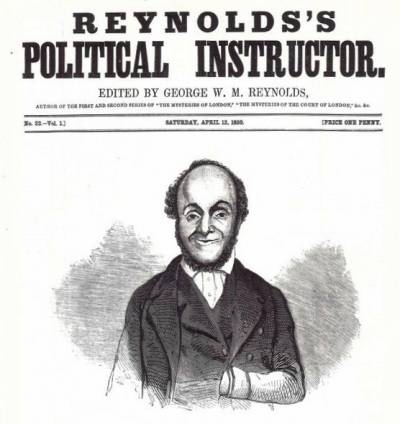
William Cuffay: leader of London Chartism

William Cuffay was born in Gillingham in the Medway Towns in 1788, the son of a local woman and a former slave from St Kitts who had made his way to Britain by working on a Royal Navy ship. Many of those aboard Navy vessels in the late eighteenth century were black.

Little is known about Cuffay’s time in Medway- though research is being done.

We do know however that by 1819 Cuffay was in London and had learnt the trade of a tailor.

No doubt Cuffay would have been exposed to the radical working class politics of London in the 1820s and he was certainly involved in the strike called by the Grand National Consolidated Trade Union in 1834.

Cuffay went on to become, by the end of the 1830s, a leader of a group of London Chartist tailors.

In 1840 Cuffay was 52- very old for a Chartist activist at that time- and he became a central and trusted figure in London Chartism.

The best way to understand him is as the key ‘backroom’ organiser of Chartism in the Capital- raising money for jailed Chartists and being appointed to oversee the funds of the Chartist Land Bank.

By 1842 Cuffay had been elected from London to the national Chartist Executive. These positions were fiercely contested, so Cuffay will have had a considerable constituency of support.

Details of Cuffay’s work in this period can be tracked in the Chartist paper, the Northern Star, which is now available in digital format free on-line.

Martin Hoyles new book on Cuffay has also revealed that during this period Cuffay was performing as a singer on the London stage.

Although research is still in progress it now seems clear that Cuffay was the organiser of the great Chartist demonstration on Monday 10th April 1848.

Chartists gathered at various points across London and marched south to rally at Kennington Common. The idea was then to proceed back across Blackfriars Bridge to present a giant petition for the vote to Parliament.

It was a strategic mistake- it’s unclear what part Cuffay played in deciding the venue for the rally. Police and soldiers blocked the way back over the River Thames and the national leader of Chartism Feargus O’Connor agreed with the police that the Chartists would not try to march.

Cuffay was understandably very annoyed at this decision and is reported as arguing that the march should go ahead.

We now know that there was hand to hand fighting between Chartists and troops on the south side of Blackfriars Bridge but a heavy April shower caused the attempt to be abandoned.

Later in the year, in August 1848, Cuffay was arrested for his part in an alleged revolutionary conspiracy at Seven Dials, Covent Garden. Arms were found in Cuffay’s house. His precise role in the events is unclear but it is very likely that as the London Chartist leader he was at the very least aware of what was planned.

Tried at the Old Bailey, Cuffay was sentenced to 21 years transportation to Australia.

Arriving in Hobart Tasmania, now over 60, Cuffay could have been forgiven for retiring from political activity. He did not. Instead he was active in a range of radical causes in the earliest years of the Australian labour movement. He was pardoned after 3 years but remained in Australia, dying in 1870.

Modern interest in Cuffay can be traced back to a chapter in Staying Power by the late Peter Fryer which recovered much of the history of black people in Britain.

Cuffay left no diary, autobiography or papers, but research to uncover details of his life and activity is continuing. There has been considerable effort in Australia and in Britain there are plans to erect a blue plaque for Cuffay in the Strand during the course of 2013.

The Times in 1848 referred to Cuffay and the Chartists as ‘the black man and his party’ and we can now see that this was not hyperbole but a recognition that the London organisation of the world’s first working class movement was led by the son of an ex-slave from St Kitts.

Cuffay came from the imperial diaspora to challenge imperialism at its heart in London to find himself exiled to another part of the British Empire in Australia as a reward for his efforts

Cuffay website

http://cuffay.blogspot.co.uk/