Articles

Beards in crisis as world shortage of beeswax for beard preparations reported

In Uncategorized on May 30, 2018 by kmflett

Beard Liberation Front

30th May

Media Release contact Keith Flett 07803 167266

Beards in crisis as world shortage of beeswax for beard preparations reported

The Beard Liberation Front, the informal network of beard wearers, has said that a worldwide shortage of beeswax is leading to a crisis for those who use beard balm to keep their beards in shape.

A report indicates that the only bee species in the world currently free of the varroa mite parasite is in Australia. Elsewhere if pesticides have to be used to destroy the mite it can mean that the wax produced is not suitable for beard preparations.

The report indicates that prices for beeswax has soared potentially leading to much more costly beard balm

BLF Organiser Keith Flett said, undoubtedly some will see this as a crisis. However beard wearing is a broad church. Some may prefer to keep their beards organic and free of balms while others, myself included, keep their beards in shape by marinating them in imperial stout.

Report

http://www.abc.net.au/news/rural/2018-05-30/beeswax-demand-surge-has-beards-in-a-frizz/9810998

Articles

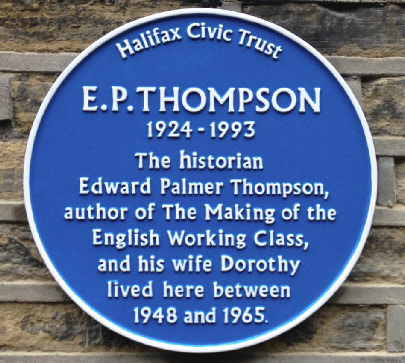
Corbynomics, E.P Thompson & the moral economy

In Uncategorized on May 30, 2018 by kmflett

Corbynomics, E P Thompson & the moral economy

A Guardian Editorial on 28th May argued that much of what is called Corbynomics  is based on the work of the late Austrian economist Karl Polyani.

Polyani’s best known work is the Great Transformation (1944) and his reputation has been revived in recent years by several books by Gareth Dale. Most recently Tim Rogan has published a study comparing Polyani, R H Tawney and E P Thompson (The Moral Economists).

Before he died in 1964 Polyani noted that his politics were close to those in the journal The Reasoner published from 1957-59. It was run by two historians, John Saville and EP Thompson, after they quit the Communist Party in the wake of the crisis of 1956. Thompson became and remains 25 years after his death the foremost theorist of a moral economy.

The concept of the moral economy is now widely used well beyond that of EP Thompson’s original research into eighteenth century class struggles. Thompson absolved himself of responsibility for attempts to apply the concept to other times but did so himself from time to time

If as the Guardian’s Editorial indicated the Tories are moving away from austerity economics perhaps it’s time for those Labour MPs for whom it is an article of faith to acquaint themselves with Thompson’s work.

Articles

Spurs meet Beavertown..

In Uncategorized on May 30, 2018 by kmflett

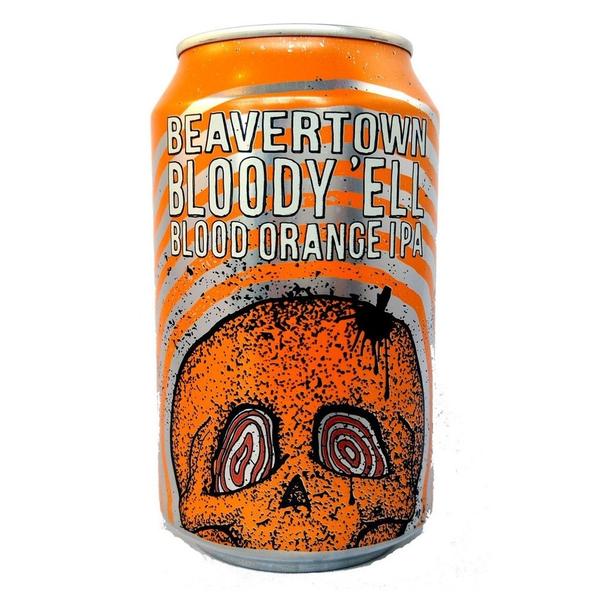
Spurs have announced that the microbrewery on site at the new stadium (no its not finished and the many red lights of the cranes are still shining through my bedroom window) will be Beavertown at Tottenham Hale. My thanks to @gdpreston for this news. He after all suffers by actually attending Spurs matches whereas I just watch via TV or social media (when I can stand it).

Apropos nothing in particular Spurs announced recently that Heineken are the official  beer partners at the stadium:

http://www.tottenhamhotspur.com/news/partners/heineken-named-as-official-beer-partner-for-tottenham-hotspur-iconic-new-stadium-180518/

As the Spurs video says (you can find this on the THFC twitter account if interested) its two Tottenham businesses working together (Im not sure all that many people who live and work in Tottenham think Spurs is actually a local business but anyway..)

My view on Big Beer is here:

What is the issue with Big Beer?

My view on Spurs as a lifelong fan remains that the football is often great but the ultimate results usually less so. Let’s hope the Beavertown link does something to address that situation…

And to be clear in case it’s thought I’m muttering into my beard here, having a Beavertown microbrewery on High Rd West N17 (Spurs stadium) is unequivocally good news.

The Morning Advertiser story is here:

https://www.morningadvertiser.co.uk/Article/2018/05/30/Beavertown-to-open-microbrewery-at-new-Tottenham-Hotspur-stadium

Update

Unsurprisingly there has been considerable media interest (even the Daily Mail has noticed). Spurs posted a picture of the first tanks arriving for the Beavertown micro-brewery indicating that the project has been a while in the planning and beer writer WIll Hawkes has noted that Redemption whose brewery is very near the ground had also been approached but decided it wouldnt work for them.

I suspect Spurs fans will be more concerned just now that despite signing a new contract last week there are now stories linking Poch with Real Madrid. Mine’s a Heavy Lord (14.5% Beavertown imperial stout for the unaware)

Update #2

On 4th June Veil Brewing announced they were withdrawing from the Beavertown Extravaganza in September. No reason was given so speculation once again stalked the interweb. Beavertown is not a PLC so has no particular reason to alert anyone of what it may or may not be doing. If Heineken UK is involved- and we don’t know that-it will have a duty to update on events.


Articles

What is the issue with Big Beer?

In Uncategorized on May 30, 2018 by kmflett

What is the issue with Big Beer?

As companies broadly termed Big Beer grow more active in the craft brewing scene in the UK, I note those who query what is so bad about Big Beer.

In a sense one answer might be nothing. After all, are small capitalists better than big ones? Not always.

In the UK AB InBev has acquired Camden Town brewery, Heineken has taken a 49% stake in Brixton Brewery (and also wholly owns Lagunitas which is fairly widely available in the UK). Carlsberg has brought the name of London Fields brewery. Meantime which was owned by SAB Miller before it was taken over by AB InBev is now owned by Asahi (who own brands like Peroni).

The current debate has been sparked by a story that Heineken (or perhaps someone else) plans to take a stake in Beavertown brewery. I have no further info on that, although the story appeared on the Friday before a Bank Holiday and was based on analyst info. Analysts are not my favourite people. Their job is to run stories about companies in the sector they cover which dictate market sentiment about a company and hence share price. Their stories are often mostly their own opinion or ‘take’ on an issue and while often having some factual basis also often contain significant errors.

Anyway according to social media since AB took over Camden their beers have improved. Since I presume they are brewed at the ABI funded state of the art brewery at Ponders End this is perhaps not surprising. Mostly its Camden’s core range that you see, and they’re not really styles I go for (either before or after takeover). They do occasionally produce interesting and excellent small batch one-offs. Indeed I note they are launching an IPL collab this week.

Elsewhere Roger Protz argued also on social media that since AB took control of Brooklyn brewery in the US Goose Island IPA, also widely available here, is far from the beer it was.

Not all Big Beer is as bad as some, but there are some fundamentals that remain important.

Big Beer has nothing as such against producing great beer (although it has no idea what that is and no interest in finding out). However what Big Beer is interested in is keeping costs of all kinds down, in order to maximise profit and in particular to maximise shareholder value.  Public Companies have a legal duty to do that.

There is also the issue about how Big Beer runs-much the same actually as any large company. When a craft brewery is taken over or a significant stake in it acquired, usually a range of assurances are made about the beer being produced, freedom to brew whatever without Big Beer’s accountants getting in the way etc.

These assurances are genuine but they are only as good as long as the representative of Big Beer that made them stays around. Once whoever that is moves on (and that happens a lot) the new person in charge will have no idea what has previously happened and won’t feel particularly beholden to any previous assurances.

So what starts off being OK and working for both sides often starts to go bad quite quickly as the imperative of the bottom line asserts itself.

In short business is business and sentiment (analysts aside) doesn’t count for much.

My point to craft brewers considering external investment (for perfectly understandable reasons) as a trade union officer who has spent decades dealing with big companies (not in brewing, I just drink the beer) is: take care out there.


Articles

The Hornsey College of Art occupation, May 1968. When students demanded an end to exams

In Uncategorized on May 29, 2018 by kmflett

The British 1968: Hornsey College of Art Occupation 28th May
There is a school of right-wing history that sees Britain as exceptional. For example according to this view unlike other countries there was never a revolution that saw an industrial ruling class replace an old landed elite. There obviously has not been a 1917 style revolution here but that is far from the only model available. In fact we had the ‘Glorious’ Revolution of 1688.

So it was with 1968. All over Europe uprisings and revolts took place but apparently in Britain all was quiet.

This is far from the truth. The anti-Vietnam War demonstration at the US Embassy in Grosvenor Square set the template for such protests elsewhere. In the first weeks of May attention was focused on events in Paris and elsewhere in France.

The British 1968 started definitively later in May as students at the Hornsey College of Art in Crouch End North London occupied the main college building. There was a clear echo of French events because the students were focused on the conditions of their education.

The building itself has an interesting history, and some may know it better as the TUC’s National Education Centre. It is now a primary school.

The origins of the students grievances lay before 1968. The Labour Government was in the process of creating Polytechnics and the plan was to subsume the college into the new Middlesex Polytechnic. Already the college had elements of its activities scattered across north-east London.

The students felt that this would detract from their art education. They also complained that the facilities at the Hornsey building were poor, including recreation areas and toilets. In addition the college did not properly recognise a students union. Finally the students felt that the education they were getting was of a piecemeal fashion not adequately giving them the skills they required.

A student teach-in on May 28th 1968 led to a full occupation of the college by the students including control of the canteen which as health inspectors later agreed was run more safely than before. The occupation continued until 4th July 1968.

The college was run by Haringey Council which earlier in May 1968 had passed to Tory control for the first and probably last time. The Councillors were unsympathetic to Labour’s Polytechnic plans, and therefore had some joint ground with the students. But Tory Councillors could hardly be seen to backing student power.

As a result the Council did very little about the occupation for some weeks, while the Principal of the college was also absent.

There was extensive media coverage, although perhaps unsurprisingly given the context, there was more in the Daily Telegraph than the Guardian.

The students focused specifically on the issue of art education and mostly resisted attempts to more widely politicise the fight at Hornsey.

A Telegraph article on 2nd June 1968 was headed ‘Hornsey students issue reform manifesto. Clear off anarchists told’.

It was reported that the manifesto ‘demands the end of examinations based on academic studies. The imposition of a final examination in art history forced the subject into a rigid pattern’

Eventually the Principal conceded many of the students demand and an inquiry was set up under the auspices of the Institute of Education. The college re-opened in September 1968.

It might be argued, particularly at 50 plus years distance, that the limited nature of the students demands- refusing wider politicisation- hardly suggests that Britain was following the wider pattern of 1968 across Europe. Yet the reality was that the students were largely successful, in that perhaps they were exceptional.

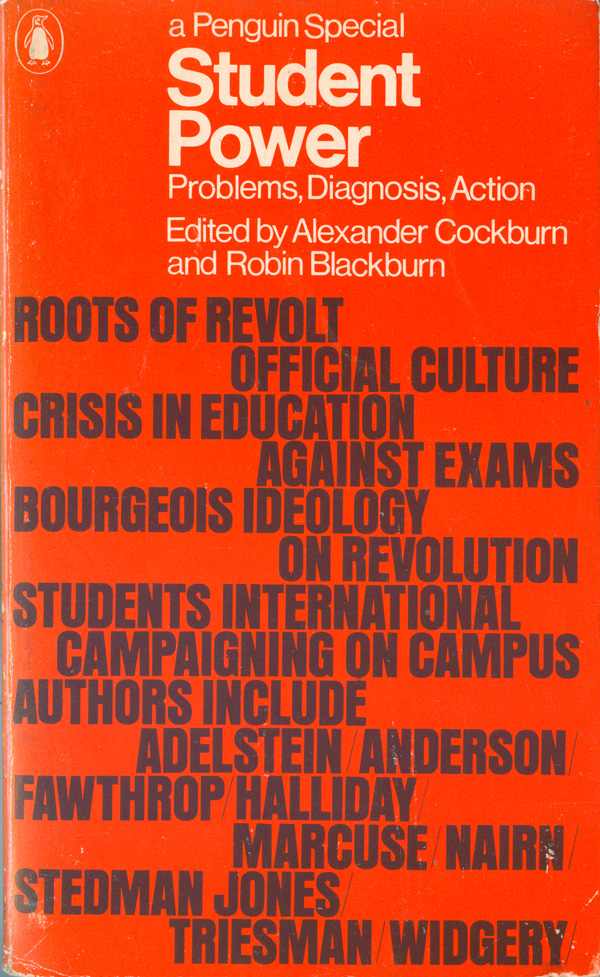
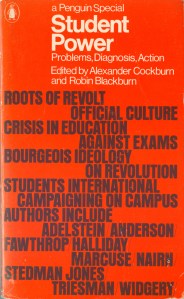
The wider issue raised, one perhaps almost forgotten 50 years on, is what this meant for ‘student power’. There was a Penguin Special of the same name (in association with New Left Review) and the theory was that students protesting at the increasing impact of the military-industrial complex (as it was then called) on their studies (see EP Thompson’s Warwick University Ltd) found it easier to revolt than workers. However that revolt, as in France in May 1968, could spark workers into fighting too.

One wonders in the age of tuition fees, cuts and austerity if the same might still hold.

Articles

The Trades Union Congress at 150 but which was the only paper to report the first meeting?

In Uncategorized on May 28, 2018 by kmflett

The TUC met for the first time at the Mechanics Institute in Manchester, after a call from the Manchester and Salford Trades Council on June 2nd 1868.

But which was the only paper then published  to report the proceedings not only of the opening day but of subsequent days?

Articles

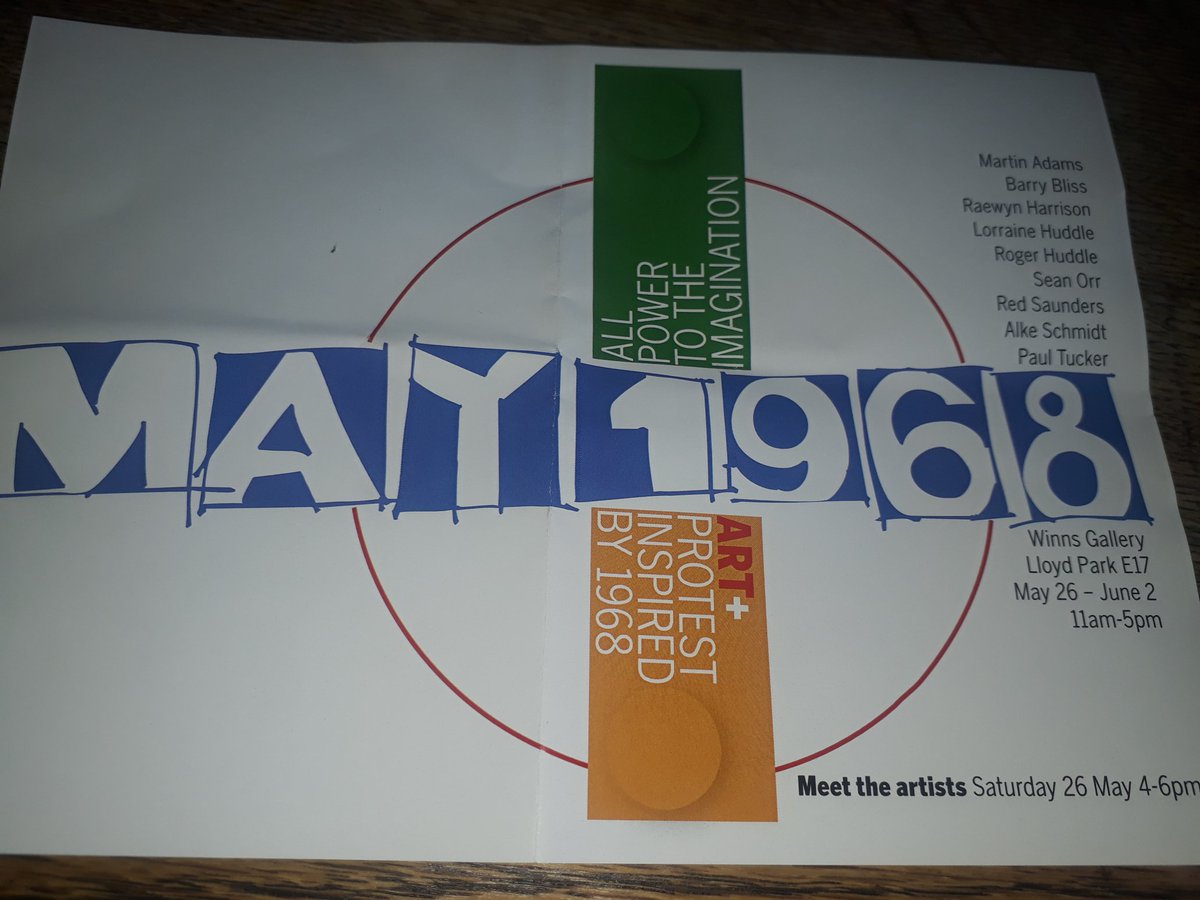
May 1968: exhibition on giving power to the imagination. Free, until June 2nd

In Uncategorized on May 28, 2018 by kmflett

May 1968: exhibition on giving power to the imagination

On the 50th anniversary of 1968 the possibilities of social change seem limited. Farage and May and much of the media are obsessing about Brexit, at root the best way for the ruling class- those who have money and power- to make sure they hang on to it at the expense of those that don’t.

Then comes the Irish vote to ‘repeal the Eighth’ and make legal abortion possible in the 26 Counties- not by a 52-48 margin but by 2-1. There was an echo of the ideas and movements that started in 1968 in that.

A week long free exhibition in Walthamstow which runs until June 2nd highlights not just some of the artefacts of 1968- original posters from the French May for example- but also links it to the struggle now. There is a focus on opposition to gentrification- a big issue in north-east London. Rich and poor have lived side by side in London since Victorian times but this is about gated communities for the rich only.

The exhibition is at the Winns Gallery in the grounds of Lloyd Park, Walthamstow. You can walk or take a short bus ride (123 bus) from Blackhorse Rd station on the Victoria Line. The gallery is towards the back of the park with the excellent William Morris Gallery at the front- also always worth a visit.

Go and have a look, particularly if you are too young yourself to remember 1968. It is 50 years ago but with us still

Articles

Cheese & Red Onion beats marmite for British Sandwich Week Beard Friendly Vote

In Uncategorized on May 28, 2018 by kmflett

Beard Liberation Front

Press release contact Keith Flett 07803 167266 27th May

Cheese & Onion beats marmite for British Sandwich Week Beard Friendly Vote

The Beard Liberation Front, the informal network of beard wearers, has said that cheese and red onion has beaten cheese and marmite in the poll for the British Sandwich Week most beard friendly sandwich.

Cheese and Red Onion got 30% of votes compared to Cheese and Marmite at 23% with Fish Fingers and aioli third

The BLF has issued a call in British Sandwich Week [20-26 May] for sandwiches to become more friendly

Each year during National Beard Week in June the campaigners search for a sandwich that does not have excessive mayo or salad which tends up in the beard rather than the mouth.

With the rise of designer sandwiches the bread around the sandwich filling, whether a traditional slice, flat bread or ciabatta, often fails to contain the contents which can then spill out into the beard even with the most careful eating.

BLF Organiser Keith Flett, the trend to towards sandwiches without salad and mayo that gets stuck in the beard is continuing.

British Sandwich Week vote for the most Beard Friendly Sandwich

Fish finger, aoili

Avocado on Rye

Cheese & Red Onion

Ham & Mustard

Crab, Chilli

Peanut Butter

Beetroot & Feta

Cheese & Haggis

Marmite & Cheese

Articles

Questions as Ambridge Single Wicket winner Alistair Lloyd is overlooked for England team at Leeds

In Uncategorized on May 28, 2018 by kmflett

The Ambridge Socialist

28th May

Questions as Ambridge Single Wicket winner Alistair Lloyd overlooked for England team at Leeds

Questions are being asked this morning after the winner of the Ambridge Single Wicket competition on Sunday, vet Alistair Lloyd, was overlooked for selection for the England cricket team to play Pakistan in Leeds later this week.

Lloyd, a former captain of the Ambridge side, won the competition with a six.

On Monday it was announced that the England team to face Pakistan at Headingley would see one change with open Mark Stoneman replaced by Lancashire’s Keaton Jennings.

The Ambridge Socialist however has queried why a player with such proven experience and a track record of success like Alistair Lloyd was overlooked.

Ambridge Socialist Editor Keith Flett said, could it be that England National Selector Ed Smith does not listen to the Archers?!

Articles

Hornsey College of Art occupation at 50 (28th May 1968): whither student power?

In Uncategorized on May 27, 2018 by kmflett

Hornsey College of Art occupation at 50 (28th May 1968): whither Student Power?

Daily Express

It is 50 years since the teach-in that started the occupation of the Hornsey College of Art on Crouch Hill (subsequently the TUC’s National Education College & now a primary school).

Below are some thoughts from the time on Hornsey and student power

E P Thompson ‘there is nothing more real about the shop floor than the library. Both are points of production. Both can become unreal in different ways.. 1974

Tom Nairn Hornsey New Left Review 1.50. July/August 1968

Hornsey Art College in North London has been the scene of the most successful student-power movement yet in Britain. The terms of this success are well-known, thanks to the great publicity the take-over attracted. At the time of writing, the students had occupied the College for six weeks—and the occupation was both complete (i.e. involved every aspect of the institution, not only the teaching areas) and continuous (i.e. 24 hours a day, with a permanently open canteen and a considerable number of students sleeping-in). The movement is running an important exhibition-cum-teach-in at the gallery of the Institute of Contemporary Arts, and has called a National Conference of Art Colleges to extend the revolution and change the whole system of art education from below.

Potentialities of Student Power

The achievements of the Hornsey coup are remarkable, by any standards. Seen from inside, the changes brought about—in people, and attitudes, rather than simply in administration—were astonishing. It is only yesterday that art students were paragons of self-satisfied apathy, farther removed (even) than most other British students from any sort of political consciousness.

Yet, the Hornsey movement has been very widely criticized, within the student political Left. Militants have tended to dismiss it as ‘unpolitical’, or ‘corporative’, concerned only with the problems of art education and indifferent to wider issues. The Hornsey students confined themselves to stirring up other Art Colleges, and trying to establish a permanent control of power inside their own institution, instead of provoking a general crisis of British capitalism (or, at least, of the British Higher Education system). Why such narrow-mindedness? Does this not show indeed (in the words of R. Kuper) [1] how ‘. . . Student struggles more than any other form of struggle are less able to bring meaningful advances, unless we really believe in the nonsensical view of islands of libertarian communities in a sea of corporate organizations’.

David Fernbach New Left Review 1.53 Jan/Feb 1969 Strategy & Struggle

Student consciousness in Britain as elsewhere has had both a trade-unionist aspect (from academic reform to student power) and a political one. The political aspect has so far been unambiguously the dominant. Purely trade-unionist demands have rarely been the occasion of fierce struggle—this has usually arisen as the consequence of exposure of the political connections of the university (germ warfare, spies on campus, racialism, Vietnam, etc.) This is undoubtedly because of the confinement of the student movement so far largely to the higher echelons of the binary system and even to the social science departments there. Even with struggles more trade-unionist in appearance and outside of the universities, Hornsey, the prime example, took place in an ‘elite’ Art College and had strong political/cultural undertones re the role of art in society. The student movement has not yet mobilized the far more oppressed mass of students in the science and technology departments, in the technical universities, polytechnics, teacher training colleges, colleges of education more oppressed both by the exam system (crushing work loads), sexually (highly monogamous), and with far less prospect of a more privileged work position, even though the advance signals of their mobilization are now being reported.