Articles

The Ambridge Socialist: is the Archers turning left?

In Uncategorized on April 8, 2018 by kmflett

The Ambridge Socialist

65 Years of the class struggle in Borsetshire

April 8th

Is the Archers turning left?

This week has seen the appearance of Olwen (Alison Steadman) someone who Pat apparently knew in her CND period. Olwen is currently homeless (living in her car). She explained to Pat that she had been made redundant from her last employer after fighting for equal pay, and had then been thrown out of accommodation by her then partner. She also reflected that thanks to the increase in State pension age for women she could not afford to retire. One wonders if the Archers is turning left? Much will depend on whether or not Brian Aldridge ever gets to stand trial for Hooliganism we think.

Is Rees-Mogg set for the Archers?

Far-right Tory politician Jacob Rees-Mogg is apparently set to do half-hour radio phone-ins on LBC thereby allowing Farage time to pop out for a fag and a pint. The issue is, now that Rees-Mogg has found out that radio has been invented, will he suddenly pop up in the Archers?

Bad News for Ambridge

Shula is only 59

Alastair is leaving, but only for a room at Jim’s

Brian is going nowhere

In other news

Justin has been missing after giving several interviews to the Daily Telegraph, returning only for Friday’s BL Board meeting


Articles

Why did the Chartists make the mistake of meeting in South London on 10th April 1848?

In Uncategorized on April 7, 2018 by kmflett

Why did the Chartists make the mistake of meeting in South London on 10th April 1848?

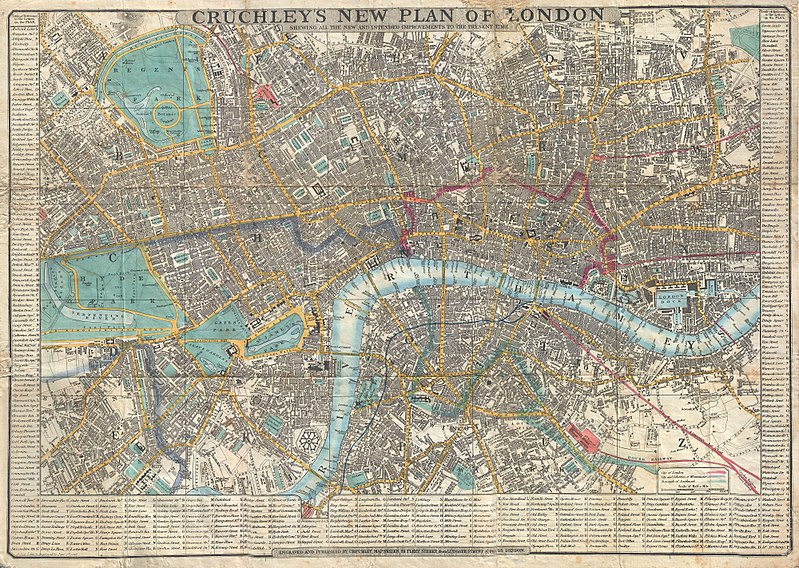
Map of central London 1848 (Wiki)

Why did the Chartists make the strategic error of meeting on Kennington Common, south of the Thames, on Monday 10th April 1848.

Their official aim after a rally was to march to Parliament over Blackfriars Bridge to present a monster petition for the vote. Never mind right-wing historiography that many of the signatures were fake. It had around 2 million genuine ones which even today with a much greater population would be huge.

The Government lived, just about, with the meeting but would not countenance the demonstration. The Chartist leadership went along with this preferring to take the petition by carriage. Numbers of rank and file Chartists did not and on the afternoon of 10th April there was fighting on the south of Blackfriars Bridge, with the army involved.

So why Kennington Common? Surely anyone with sense knows that meeting in Sarf London will end badly? It’s true that the 1990 anti-poll tax demonstration made it across the Thames to Trafalgar Square but unlike in 1848 the Government did not try to stop it. With such things as tubes, bikes and so on trying to keep a very large protest confined in Sarf is problematic in the modern era.

In any case the reasons why the Chartists met at Kennington Common, although not discussed by historians who don’t have experience of organising demos, is clear enough.

The number expected at Kennington were very large for 1848. How big the protest was remains the subject of dispute (I’ll post separately on that). But the reality was that Kennington Common was probably the only sizeable enough space in central-ish London available that was near enough to Parliament to march there. The Royal Parks were of course nearer but these were not available to the Chartists. Rather they were used by the Government to organise its policing operation.

So whatever we think of Sarf London we shouldn’t criticise the Chartists for meeting on Kennington Common. They had no realistic alternative.

Articles

Indian Premier League cricket leads the way in beard power

In Uncategorized on April 7, 2018 by kmflett

Beard Liberation Front

7th April

contact Keith Flett 07803 167266

Indian Premier League cricket leads the way in beard power

Virat Kohli: beard power

With the 2018 IPL series due to start this weekend the Beard Liberation Front, the informal network of beard wearers, has said that it will set the template for the impact and influence of beard power on and off the pitch for cricket in the coming year.

Players such as Virat Kohli and M S Dhoni have long standing beards and more and more players are adopting the style.

The campaigners say that the beard can subtly influence air currents when both batting and bowling but it also has an impact image wise. A full beard may distract an opponent momentarily and mean that a ball is missed leading to dismissal.

BLF Organiser Keith Flett said, we are not sure if any Australians are still playing in the IPL but just in case we should underline that rubbing the ball in the beard is at best very doubtful practice

Economic Times article on growing IPL Beard Power

https://economictimes.indiatimes.com/magazines/panache/the-growing-beard-trend-in-ipl-spot-these-stand-out-styles/articleshow/63637227.cms

Articles

What Jeremy Corbyn told the Hornsey Journal after the Battle of Wood Green on 23rd April 1977

In Uncategorized on April 6, 2018 by kmflett

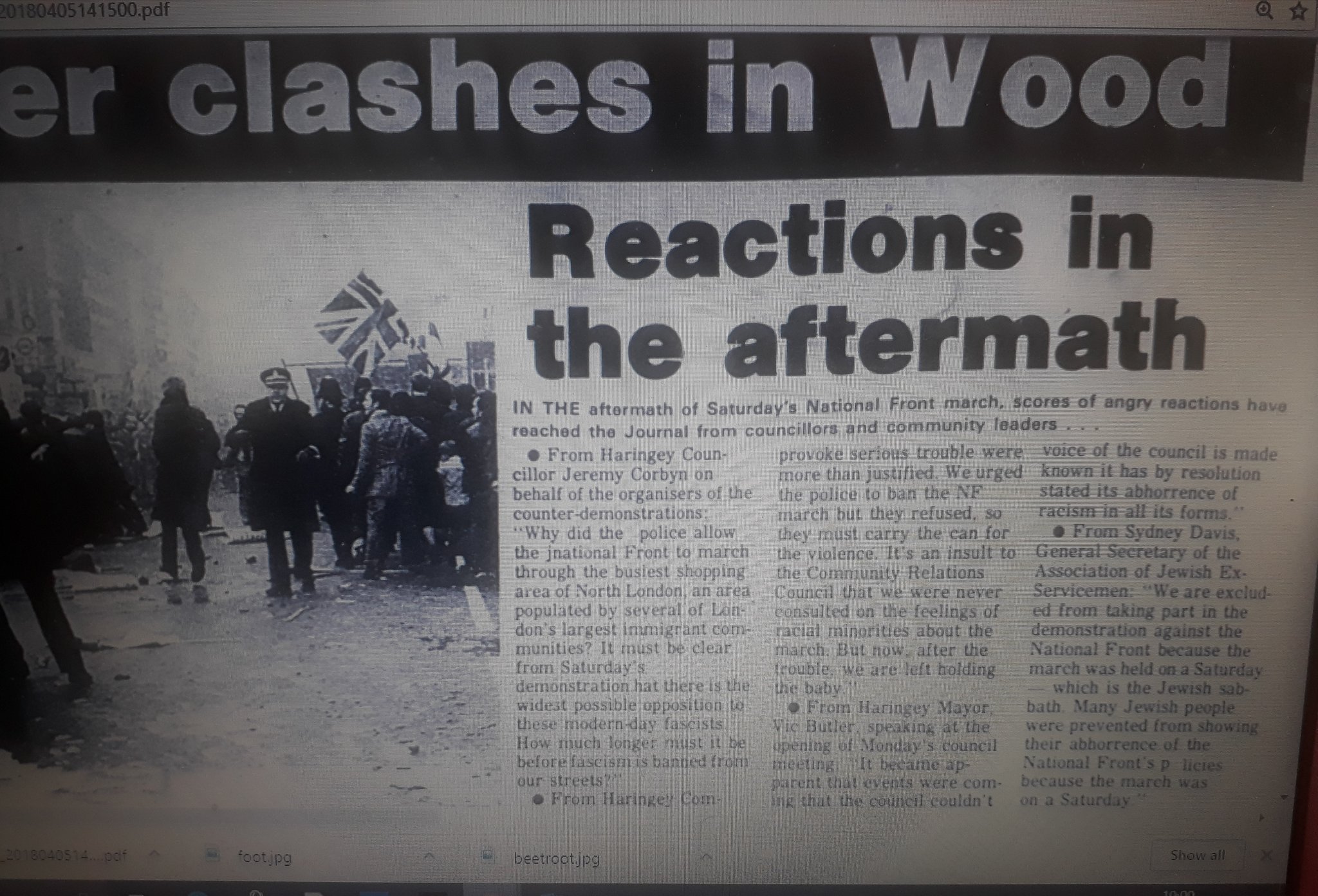
This extract from the Hornsey Journal 29th April 1977 is of interest for several reasons.

Firstly it is an important piece of documentary evidence of the detail of one of the first attempts to stop the development of a post-Moseley fascist movement in Britain. The attempts have had their successes but fascism remains an issue 40 years on

Secondly it is of interest because it captures the role of the then Haringey Councillor Jeremy Corbyn in making sure that there was united opposition to the National Front when they tried to march down Wood Green High Rd on the Saturday afternoon of 23rd April 1977.

Thirdly it reflects a world we have lost. The Hornsey Journal which had a team of journalists, well organised in the NUJ, took a clear stand against the National Front. It was the paid for paper circulating in the area, available in newsagents and on newsstands. It has not published for some years. While the Ham and High Broadway still covers the area one wonders how such a demonstration would be  reported today, if it was at all.

The paragraphs relating to Jeremy Corbyn read:

From Haringey Councillor Jeremy Corbyn on behalf of the organisers of the counter-demonstrations ‘Why did the police allow the National Front to march through the busiest shopping area of North London, an area populated by several of London’s largest immigrant communities? It must be clear from Saturday’s demonstration that there is the widest possible opposition to these modern day fascists. How much longer must it be before fascism is banned from our streets?’

Articles

Socialist Historians defend David Rosenberg after Daily Mail smear story

In Uncategorized on April 5, 2018 by kmflett

London Socialist Historians Group

5th April

Media Release

Contact: Dr Keith Flett 07803 167266 Twitter @LSHGOfficial. Website: http://londonsocialisthistorians.blogspot.co.uk/

Socialist Historians defend David Rosenberg after Daily Mail smear story

The London Socialist Historians Group, a collective of research historians who organise the socialist history seminar at the Institute of Historical Research, has defended radical historian David Rosenberg after the Daily Mail ran a smear story about him on 5th April.

The story was typical of the Mail genre. It did not include any evidence that Mr Rosenberg was associated with supposed and alleged anti-Semitic views. Rather it was concerned that he had sat next to Jeremy Corbyn at a recent event and was not an enthusiast for the current Israeli Government.

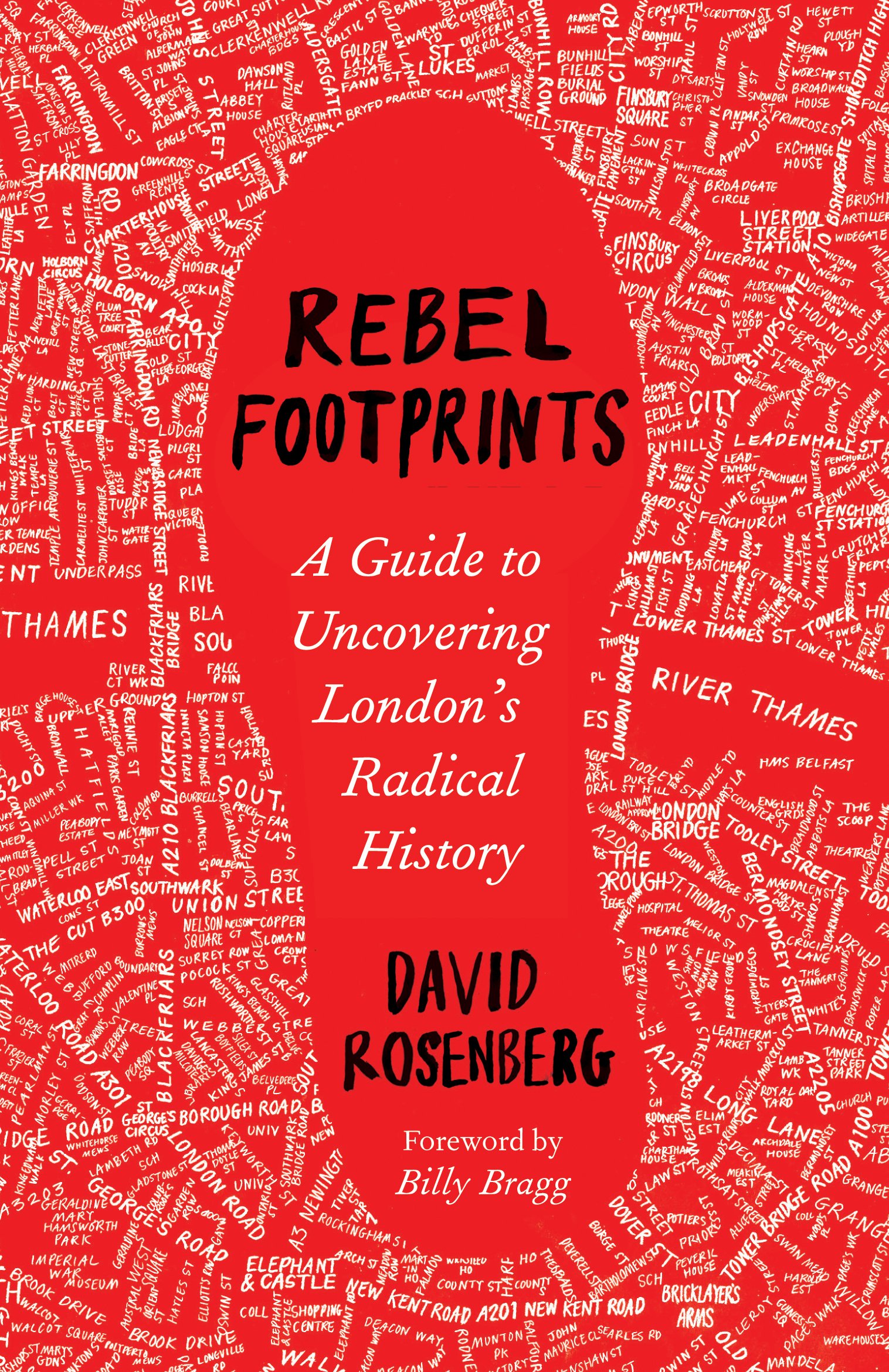
The historians say that Mr Rosenberg is a well-known Jewish socialist historian with an impressive record of recovering the working-class history of the radical East End of London. Some of this is detailed in his book Rebel Footprints (Pluto 2015).

LSHG Convenor Keith Flett said, the Mail story is beneath contempt, although that is hardly news, For a paper with a track record of anti-Semitism in the 1930s to attempt to smear a distinguished Jewish socialist historian such as David Rosenberg is the journalism of the gutter. We hope Mr Rosenberg will speak at a future socialist history seminar on the radical East End of London. It is a history that still speaks to us today.

Review of  Rebel Footprints in the Guardian

https://www.theguardian.com/books/2015/mar/10/rebel-footprints-guide-to-uncovering-londons-radical-history-david-rosenberg-review

Guardian article by David Rosenberg on Cable Street

https://www.theguardian.com/artanddesign/2016/sep/21/battle-cable-street-mural-fascists-east-end


Articles

London Socialist Historians Summer Term seminars 2018: from Rock Against Racism, Victoria Park 30th April 1978 to the Chartist Challenge in 1848

In Uncategorized on April 5, 2018 by kmflett

London Socialist Historians Summer Term seminars 2018 & supporting UCU strike action

2ND April

Contact: Dr Keith Flett 07803 167266 Twitter @LSHGOfficial. Website: http://londonsocialisthistorians.blogspot.co.uk/

Summer Term Seminar Programme & Supporting UCU action on pensions

Photo: Municipal Dreams

Apologies for the late publication of the summer term 2018 socialist history seminar programme at the Institute of Historical Research.

However we have been in some difficulty. The routine difficulties which we encounter every year are that two of our seminar dates in May are Bank Holidays and with the summer term so heavily focused on exams and marking (industrial action notwithstanding) organising seminars in June, while technically unproblematic, can often see low turn-outs

This year however we have the additional issue of continuing UCU industrial action on pensions. Our position is clear. As socialist historians we support the UCU action and we will not run a seminar on any day of strike action. We cancelled one on 1848 in early March for that reason.

At the moment it remains unclear what the strike dates will be in the summer term, if the dispute remains unresolved, as it currently is.

We are going ahead with a research workshop on Saturday May 19th which focuses on Treason, internationalist renegades & traitors:

https://kmflett.wordpress.com/2018/03/18/london-socialist-historians-event-19th-may-treason-renegades-traitors/

We also plan to go ahead, the above notwithstanding for three other seminars:

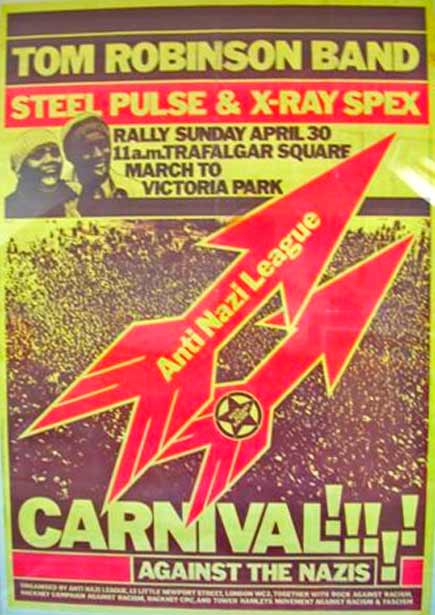
Monday 23rd April 5.30pm Room 304. 40 years on from the Rock Against Racism Carnival in Victoria Park. Roger Huddle and others

Monday 14th May (time and venue to be confirmed) Mitch Abidor, Paris, May 1968. See update here for time & location:

London Socialist Historians on Paris May 1968

Monday 18th June The Chartist Challenge in 1848. Could it have won? Keith Flett

We also have seminars pencilled in with agreed speakers on the 60th anniversary of CND, the school history curriculum and the history of Womens Voice for the Autumn Term 2018.


Articles

Yet More Beer Travels in the North: From Hop City to Magic Rock Easter 2018

In Uncategorized on April 5, 2018 by kmflett

More beer travels in the North: From Hop City to Magic Rock Easter 2018
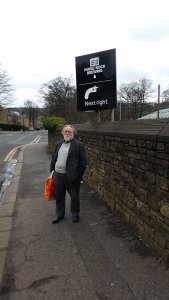
photo @megfdavies

Just as Raph Samuel in his survey of Victorian seasonal labour, Comers and Goers, noted that workers who sought warmth and indoor employment (where possible) in London in the winter, come March were on the road out of the Capital and looking to outdoor seasonal employment, so come Easter I head North.

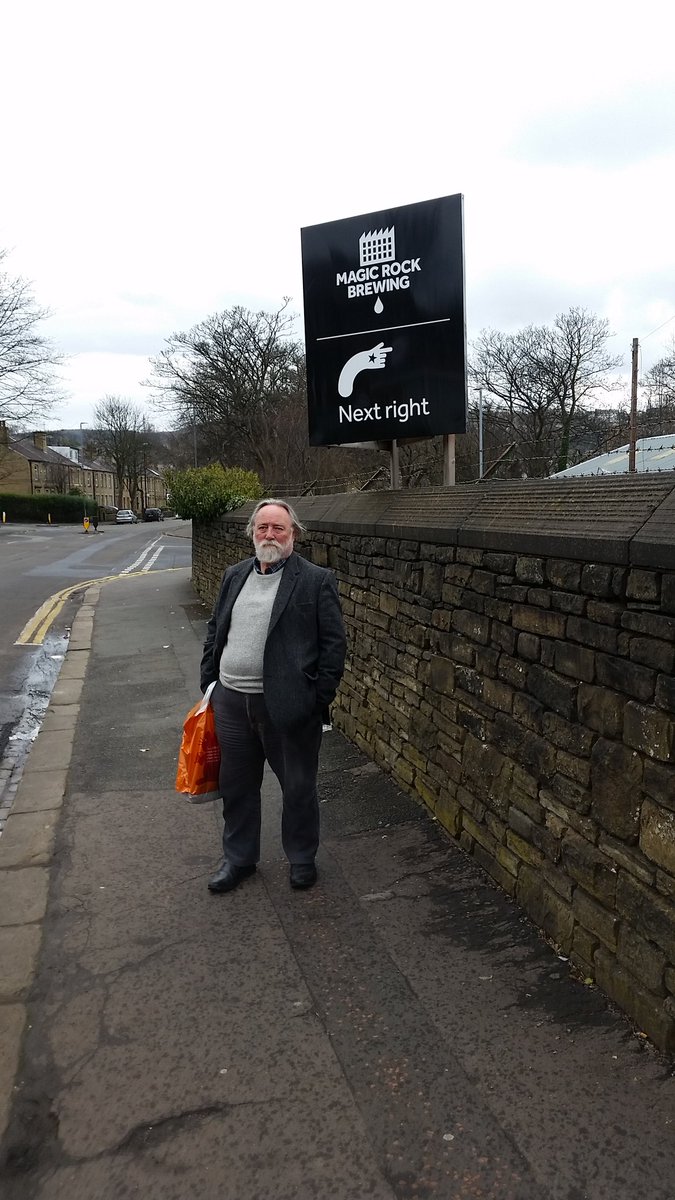
As usual I was with my intrepid companion Megan Davies. On this occasion we visited Leeds and Huddersfield. That meant two sessions at Hop City held at Northern Monk in central Leeds (Thursday evening and Saturday afternoon), and, in Leeds, visits to Bundobust, Little Leeds Beer, Friends of Ham and the Turks Head. In Huddersfield we managed The Grove and the Magic Rock Tap before the snow came down and we headed pronto back South.

Anyway that made for quite a beery few days though in that time I drank only one full pint (Northern Monk New World IPA cask at the Grove £3.80). Hop City was prudently thirds only and otherwise I stuck to thirds, halves and occasionally where sold in that measure two-thirds.

What of the beer I suspect some may ask.

Compared to 5 years ago I drank a lot more craft keg, and its availability is much widespread. I certainly didn’t avoid cask though, and what I had was well kept and reasonably priced for strength. Trying the Hop City collab beer on cask (third 8.4%) was probably a highlight on that side.

As you’d expect I tried several of the latest Verdants, Deyas etc and I suspect that most readers of this have a fair idea where they sit in the beer firmament. At Hop City I also picked up on Foam and Bissell Brothers and tried the Omnipollo Peach Slush which was good but not beard friendly. Wylam’s 10% Midnight Train to Byker was certainly the best named beer of the weekend, and it was also importantly a good beer.

James Beeson has written about the event in the Morning Advertiser. It’s certainly not for everyone but if you are interested in seeing what the state of the art in IPA is, it’s an essential visit. The balance of beers was also better this year- not everything was super strong..

At Magic Rock their new DIPA Mind Control was particularly good and I also tried a can of De Mole an imperial stout with a mild chilli hit. Their tap room remains for me a model of its kind. Accessible, decent toilets, plenty of seating and of course a good range of beer

Prices for the beers in the places we visited were pretty much the same as you would pay in London, although the Grove remains a bastion of decent pricing particularly on cask.

The conclusion from all that might well be that combined and uneven development is continuing. Is the craft beer scene confined a few places in London and Manchester and so on? On this evidence increasingly not at all

My 2017 view of a similar journey

https://kmflett.wordpress.com/2017/04/18/more-beer-travels-in-the-north/

Articles

Beetroot, Jeremy Corbyn & Capitalism: Marx’s view

In Uncategorized on April 4, 2018 by kmflett

A good deal has been made of a report by the hard right blog Guido Fawkes, now summarised in the  Daily Mail by Andrew Pierce, about Jeremy Corbyn’s attendance at a Seder event in North London earlier this week.

One part which seems particularly to have seized the interest of social media relates to beetroots. At one point in the evening, it is alleged that a beetroot that Mr Corbyn had brought from his East Finchley allotment (some reports have also mentioned horseradish) was held aloft and the words ‘f*ck capitalism’ were said to some apparent amusement.

What Mr Corbyn’s detractors clearly dont know is that it was Karl Marx himself who connected beetroot and capitalism. Writing in the Neue Reinische Zeitung in December 1848 on the state of affairs in Germany in that revolutionary year Marx noted that:

The aristocracy itself was largely bourgeoisified. Instead of dealing in loyalty, love and faith, it now dealt primarily in beetroot, liquor and wool

Elsewhere on social media this week it has been suggested that beetroot and marmite sandwiches are worth trying. I’m not sure whether Jeremy Corbyn has any plans in that direction although he is a noted adherent of marmite.

Articles

1848, the Treason Felony Act, Black Chartists & Irish Rebels

In Uncategorized on April 4, 2018 by kmflett

1848, the Treason Felony Act, Black Chartists and Irish Rebels

As we approach the 170th anniversary of the effective beginning of the British 1848, the Chartist protest on Kennington Common on Monday 10th April 1848, it is worth also paying attention to the efforts that the Government made to frustrate protest.

John Saville in his authoritative book on 1848 (CUP) believes these were decisive.

The actual machinery of Government in 1848 was very small indeed (I will post further on this) but the forces it could command were considerable as were the laws it had to deal with threats to order.

For example the current Treason Felony Act dates from 1848 when it brought together several earlier Acts and replaced the death sentence for treason with a felony- in practice at the time transportation to Australia.

The State had reason to do this. Juries were reluctant to convict where the death sentence was involved and in the revolutionary year of 1848 the State wanted convictions to frustrate any attempts at revolution. Hence the first two people to be convicted under the newly amended Act were the Irish Republican Chartist John Mitchel and the leader of London Chartism William Cuffay.

An account of Cuffay’s Trial is here:

http://cuffay.blogspot.co.uk/2011/01/reply-at-trial.html

Articles

Minority Religious views: EP Thompson on William Blake, Beast & Whore

In Uncategorized on April 3, 2018 by kmflett

Minority Religious views: EP Thompson on William Blake, Beast & Whore

The current media controversy about Jeremy Corbyn attending a Passover related event organised by a minority Jewish group (related to the Bundist tradition I believe) in his Constituency, which has arisen  because someone from the far-right website Guido Fawkes secretly recorded it, might remind some that over the years (there are exceptions) Britain has come to officially tolerate religious dissent and minority views. One appreciates that Guido Fawkes tolerates little except racism however.

It is worth reflecting that some of the most well-known figures in British history held minority and indeed what many would regard as extreme religious views. William Blake was certainly one.

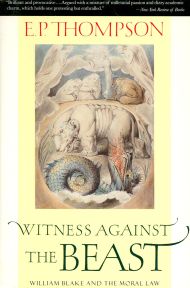
The late historian EP Thompson wrote extensively about Blake and the religious traditions he stood in. There is a review of his Witness Against the Beast from a Blake related website which gives a flavour in overview of what he was looking at:

http://bq.blakearchive.org/28.2.paley

In another age these minority traditions were perhaps better understood. The paperback edition of Thompson’s Making of the English Working Class was published as the 1000th Pelican book in September 1968. To mark the occasion the Guardian published a special supplement to which Thompson himself contributed a piece headlined ‘Beast and Whore’. In Blakeian terms the reference was to Church and State but wonders if such a piece could appear now without attracting the attentions of Guido..

Below is a letter I wrote 25 years ago to the London Review of Books defending Thompson’s treatment of Blake. Sadly he died later the same year.

______________________________________________________________________________

It is thirty years since Edward Thompson first published The Making of the English Working Class, and while the phrase he uses to criticise what Post-Modernism has tried to do to William Blake, ‘the somewhat attenuated discourse of analytic academicism’, is perhaps not quite on a level with ‘the enormous condescension of posterity’, we may give thanks that Thompson’s brain is razor sharp still and that, unlike some of his contemporaries, he has never been bought off by academic life or cheap fame in the press. Where, however, are the Edward Thompsons for the Nineties and beyond?


Keith Flett

London N17

LRB 25th February 1993