Articles

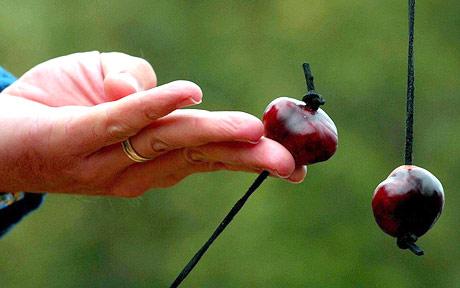
Campaign for Real Conkers ‘rules’ on how to rate successful conkers

In Uncategorized on October 11, 2017 by kmflett

Campaign for Real Conkers ‘rules’ on how to rate successful conkers

12th October

Contact Keith Flett 07803 167266

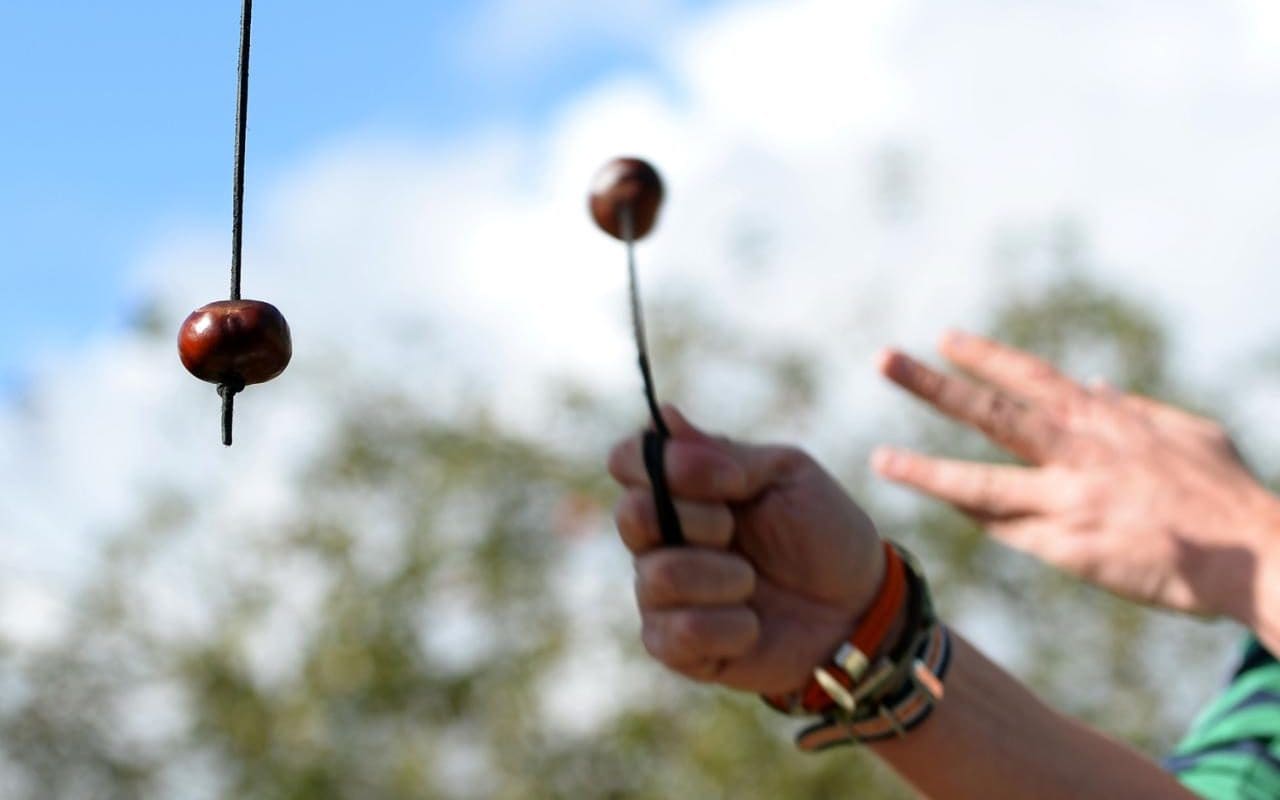
The Campaign for Real Conkers has said that in line with its modern approach to conker player it does not privilege the idea of conker games which are won or lost by a certain conker.

Rather it uses the Corbyn method to judge how successful a specific conker is.

The Corbyn method uses a formula based on the number of contests in which the conker has survived against the length of time it has survived in weeks. That is to say it is about age and impact a combination of which gives a conker gravitas.

So for example if a conker has survived 10 contests in 2 weeks it has a rating of 5 (that is 10 divided by 2).

However the Campaign says that it accepts that conkers is a traditionally based game with regional customs on the matter and it has tested opinion in a poll on whether the Corbyn method or an alternative is the most appropriate way of assessing how successful a conker is.

A second poll option simply takes the number of successful contests, broadly the number of games the conker has survived, 50% of the Corbyn method.

The third option is more traditional as it combines the number of successful contests aggregated with the number of previously successful contests the losing conker has had. So for example if a new conker beats a conker that had earlier won 50 contests it would become a 51-er.

In the well supported on-line poll this option won more than 50% of the vote, so if conkers are to be ranked, this would be the preferred method of most players.

Campaign for Real Conkers organiser Keith Flett said, we are an ‘anything goes’ campaign when it comes to conker playing so we’re not particularly advocating rating of conkers. However conkers is also a game with great traditions and these need to be acknowledged and where appropriate respected.

Articles

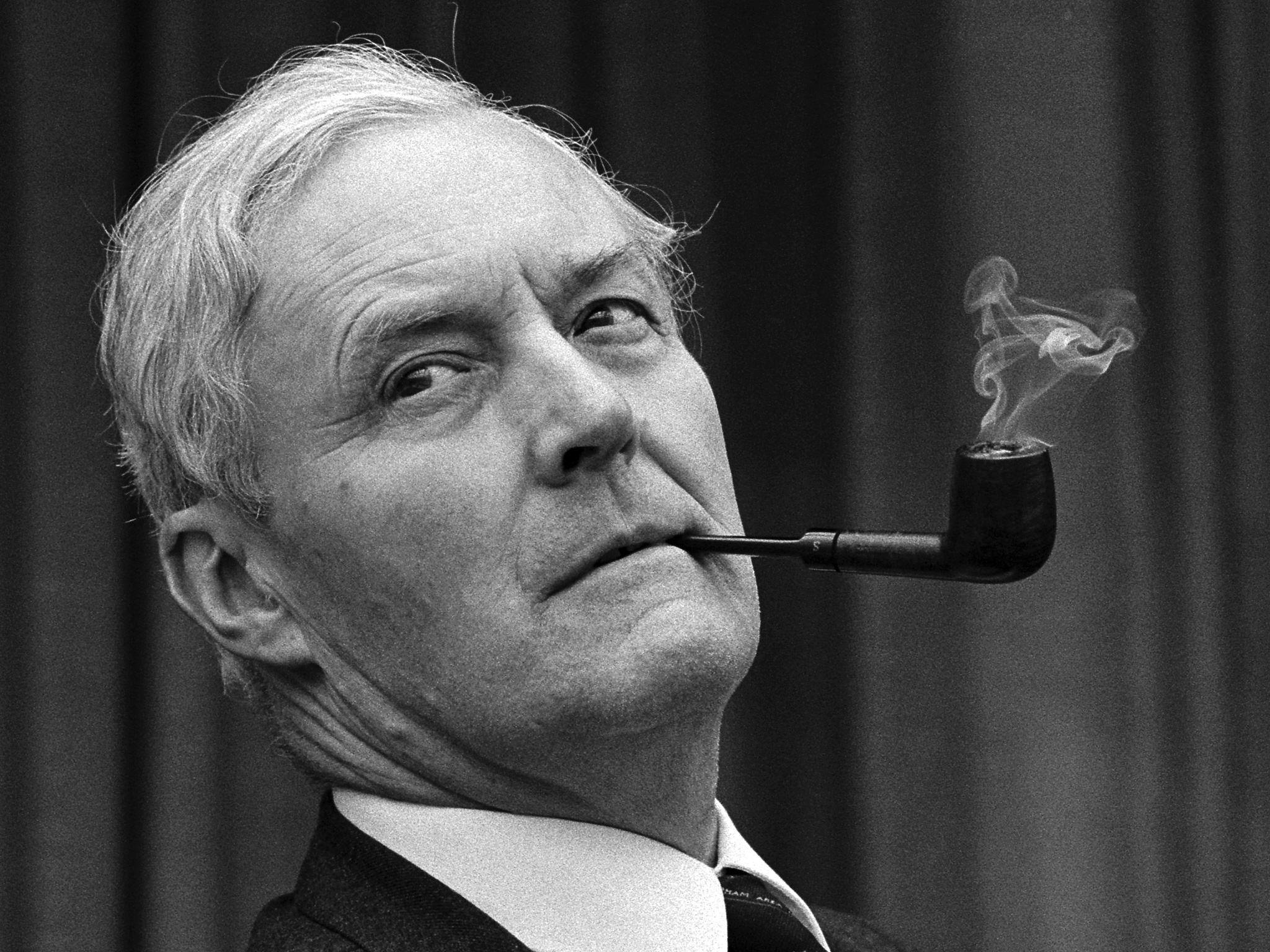
The unlikely tail of Tony Benn & Radio One, opened 30th September 1967

In Uncategorized on October 11, 2017 by kmflett


Tony Benn & the creation of Radio One

Radio One is 57 years old at the end of September.

At midnight on August 14th 1967 the Marine Offences Act made broadcasting from a boat off the UK mainland illegal. That meant the end for most of the ‘pirate’ radio stations that had broadcast, primarily off the Essex Coast since 1964, although Radio Caroline continued and was joined for a period by Radio North Sea which was run out of Holland.

Many of the DJs on the pirate ships went on to work for BBC Radio One which was set up as the official alternative including of course John Peel.

The Wilson Labour Government had pushed through the measure- the Minister ultimately responsible being Tony Benn- because of concerns about how the pirate ships operated and also because of issues with interference with communications channels.

Benn was Minister for Technology in August 1967 but had spent much of the time since 1964 as Postal Minister. He hardly had a reputation as a pop music fan but his actions  led directly to the  creation of Radio One.

In his diary he lays out a future for radio which the Act started to put in place. He noted a dislike of commercial stations and the people who ran them but wanted both to promote both popular music on the BBC and set up a series of local radio stations also run by the BBC.

Benn reports in his diary that the BBC showed no interest in devoting more air time to pop music as this would be ‘pandering to popular tastes’.

Dominic  Sandbrook’s suggestion in his book White Heat, a social history of the 1960s, that the BBC was behind the 1967 Act appears mistaken. It was the Post Office and to some extent the Musicians Union, concerned that they and their members gained no direct benefit from records played on the pirates.

The reality is though without the pirate ships pop music culture would not have made the impact it did on 1960s Britain.

There was something of a radical element of shaking up the stifling conservatism of post-1945 British popular culture but the stations were commercial affairs. They were the forerunners of the independent radio stations that operate throughout the UK today and many of the leading DJs were hardly radical themselves. Indeed one, Roger Gale, became a Tory MP. He is currently the member for Herne Bay & Sandwich, having previously joined Radio Caroline as a DJ in 1964.

Benn was well aware that his actions in outlawing the pirate stations would also open the door for legal commercial radio, which he disliked, but with the benefit of hindsight we can see that there was a bigger problem.

The BBC had no model for what a public service popular music radio station would be like. It simply imported DJs and their musical interests from the pirates.

These were very different worlds. Popular music had existed on the old BBC Light Programme in the form of Saturday Club run by the late Brian Matthews. But in the 1960s Matthews was hardly a big name celebrity.

Yet the pirate DJs certainly were. One thinks of Simon Dee, Tony Blackburn, Johnnie Walker and of course Jimmy Saville.

Radio One avoided dwelling on the Saville affair in its 50th celebrations in 2017 but it underlines how difficult it was to transpose the unregulated pirate radio model to a national public broadcaster.

Radio One was a focus for the charts, the music industry and business. Minority music tastes, surely a focus for public service radio, got less of a look-in

Articles

Past & Present Newsnight presenters face off for Beard of Autumn Award

In Uncategorized on October 10, 2017 by kmflett

Beard Liberation Front press release

Contact Keith Flett 07803 167266

10th October

Past & Present Newsnight presenters face off for Beard of Autumn Award

The Beard Liberation Front, the informal network of beard wearers, has said that past and present presenters of the BBC’s Newsnight programme are facing off for the coveted Beard of Autumn Award.

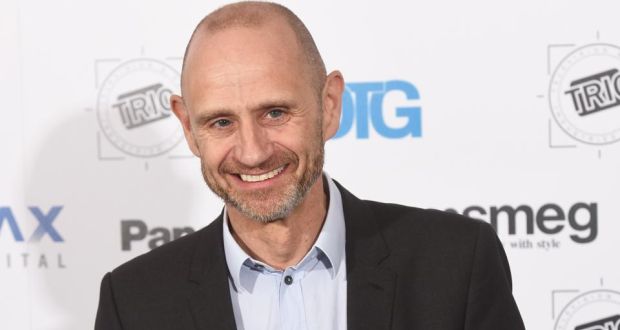
Former presenter Jeremy Paxman is joined by current presenters Evan Davis and James O’Brien

The Beard of Autumn poll opened on-line on 6th October. It is the last of four quarterly seasonal contests which lead to the Beard of the Year in December.

The poll closes at midday on Thursday 19th October with the winner announced on 20th October

BLF Organiser Keith Flett said, the world has moved on since there was such a furore over Jeremy Paxman appearing with a beard on Newsnight but it remains to be seen if any of the three presenters have enough beard power to win the Award

Shortlist

Moeen Ali, cricketer

Evan Davis, Newsnight presenter

Dave Grohl, musician

Prince Harry, Royal personage

Harry Kane, footballer

Joe Ledley, footballer

James O’Brien, broadcaster

Jeremy Paxman, author

Roger Protz, beer writer

Nick Robinson, broadcaster

Michael Rosen, author & broadcaster


Articles

David Widgery 27 April 1947- 26 October 1992

In Uncategorized on October 10, 2017 by kmflett

David Widgery, socialist, GP, writer, activist died far too young 25 years ago this month.

The thought still provokes a tear because Widgery could have done so much more had he lived.

Widgery was a generation before me on the left, so while I knew him, and in the pre e-mail age, we wrote occasional letters, I didnt know him that well.

For me he underlined that after 1968 the left did not have to be about grey men in suits passing motions. It could be about music, culture, sex, drugs and indeed fun, even if working-class politics was rightly still at the core of it all.

Its good to see that David Renton has co-edited a volume of Widgery’s writings for the 25th anniversary of his death:

https://www.vagabondvoices.co.uk/blog/david-widgery-and-the-unfinished-1960s

Below is a link to his 1979 piece on post-electronic Leninism.

https://www.marxists.org/archive/widgery/1979/03/lenin.htm

Get the book, get active and enjoy..


Articles

1867: 150 years since the publication of Capital Volume 1

In Uncategorized on October 10, 2017 by kmflett

1867: 150 years since the publication of Capital Volume 1

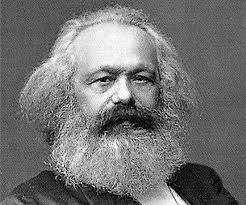
It is 150 years since the publication of Marx’s Capital Volume 1, the only part to appear in his lifetime.

It did not of course appear in English but initially in German and then French so its initial impact on the British labour movement in 1867 was apparently insignificant. Against that we might balance the reality that the impact of its author and his ideas in this period on the same audience was far from negligible.

Capital is of course a book about how capitalism works, or does not actually work. It also contains and indeed the theory is underwritten by a good deal of history, much of it relating to examples from contemporary British working-class activity that Marx reviewed in the British Museum and through his links in particular with the London labour movement.

Most of the discussion on Capital’s 150th anniversary has focused on the economic structure of the book and how valid it remains. The historical framework however remains important.

There is little existing work (that I’m aware of- the literature on Capital is vast and worldwide) that looks at the interplay between Marx’s daily life in the late 1850s and early 1860s, the political situation and the structure of Capital.

Roman Rodolsky’s The Making of Marx’s Capital ponders in detail the structure of Volume 1 and why it was changed but offers little specifically on how the changes related to wider economic and political contexts beyond, importantly, suggesting changes in Marx’s thinking.

More to the area and contexts I’m looking at is Marcello Musto’s chapter on Marx’s life at the time of the Grundrisse in 1857-8. Of course the Grundrisse was the precursor of Capital so Musto’s analysis still has relevance for it although a period of 10 years elapsed between the two.

Musto identifies several factors that influenced Marx’s writing. Illness which certainly persisted in the 1860s often interrupted Marx’s writing as did, perhaps to a lesser extent, the need to make sure that he had enough money to actually live on while writing. Marx wrote regular journalism in the late 1850s and that certainly informed how he both saw and analysed the world.

In a letter to Engels on 15th March 1862 Marx noted that while he was still writing articles for the New York Tribune he didn’t expect this to continue. He had however been unable to work on a Critique of Political Economy as ‘work is often checked, i.e. suspended, for weeks on end by domestic disturbances. Little Jenny is still by no means as well as she should be’

Certainly Marx lived from the mid-1850s to 1864 at the same address 9 Grafton Terrace, Kentish Town then on the periphery of central London..

Not long after this period Marx stopped writing Capital altogether for a period to write Herr Vogt, exposing a long-time opponent. Whether this was a good idea has been debated but it underlines the importance Marx gave to contemporary political matters.

While few if any in the British working-class movement were aware of the detail of Capital in the 1860s, Wages, Prices and Profits which was given as a speech to the First International in 1865, offered an important insight into Marx’s thinking and in particular the points he felt were important to get across to key trade unionists and socialists. It was of course primarily an answer to the arguments of Owenite socialist Weston.

We might argue that it was Marx’s political practice, informed by the research that went into Capital Volume 1, that had the key impact on the British labour movement. But that in itself  raises many questions not least what exactly that impact was.

A version of this post is in the Autumn 2017 issue of the London Socialist Historians newsletter

http://londonsocialisthistorians.blogspot.co.uk/2017/10/lshg-newsletter-62-autumn-2017-now.html

Articles

Once again on cask beer: should cask be more like keg?

In Uncategorized on October 10, 2017 by kmflett

Once again on cask beer: should cask be more like keg?

As I’ve said before I was brought up drinking cask beer and I haven’t stopped.  I do however drink a good less cask and more craft keg beer now than in the past.

I make the point in the brief gap between the appearance of the annual Cask Report and the start of Wetherspoons autumn beer festival on 11th October.

The Cask Report indicates a decline in cask but not a dramatic one. Indeed the indication seems to be that where the cask is well chosen, sensibly priced and in good condition, sales are booming.

I rarely drink pints of beer these days. I may sip a third or half of something rather stronger than would often be available in cask.

Thinking back to the cask beers I’ve had in the past month or so I recall Marble Dobber, Fullers/Moor ESB, Harveys Best. There are a few others but these stood out.

Often when I go into a bar that sells cask and keg, the cask is lower strength and not always that interesting. The keg is often higher strength (remember I’m drinking in small amounts here not necking pints) and frequently more interesting.

Yet there is plenty of interesting cask beer around of all strengths. A problem is I think that, perhaps related to pricing issues, the cask market can often seem awash with bland beers.

The list for the Wetherspoons fest underlines the point. There are a few top-notch cask beers listed, Adnams Tally Ho for example (not a pint drinking beer) and numbers where you know that if you taste it, it will be have some vague sense of malt and hops but mostly be quite non-descript. Often the most interesting thing about the beer is the name and the pump clip.

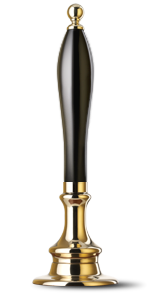
So I’d say, heretical thought it may be, one key point if cask wants to survive is it needs to be more like keg. Make the beer less bland and more interesting even if it means a rather higher price. If people drink better but a bit less that won’t be a bad thing at all

Articles

The threat of Big Beer

In Uncategorized on October 9, 2017 by kmflett

The threat of Big Beer

The Guardian (9th October) carries an article about SIBA and Big Beer

https://www.theguardian.com/business/2017/oct/09/bitter-rivalry-conflict-brews-as-craft-beer-makers-take-on-big-firms

While I’d agree that SIBA does need to clarify what its relationship with Big Beer is and indeed CAMRA needs to be careful about sponsorship, the enemy of those who like good independent beer is neither SIBA or CAMRA but the Big Beer companies themselves.

In the 2018 Good Beer Guide the outgoing Editor Roger Protz sends a clear message about the threat of Big Beer to cask and craft beer alike. The slightly edited press release is below.

Protz’s point seems to be that we are at a point similar to that in the 1960s when a few multinational brewing concerns were able to change the face of UK beer and not for the better.

As he notes it’s not just the question of buying up brewers, or promoting ‘craft’ brands as if they were genuinely independent. There is also the question of Big Beer buying up the raw materials that go to make your pint, half pint or third in the first place.

It means, as I’ve noted elsewhere that we need not just drinking but thinking too when it comes to the perpetual struggle to keep and develop good beer.


———————————————————————————————————————————

CAMRA Press Release

Big Beer is the biggest threat to consumer choice


…The latest Guide warns that consumers are being deliberately misled with many drinkers unaware that familiar brand names on pump clips are now owned by what Americans call Big Beer and may no longer be made to original recipes.

AB Inbev, along with other Big Beer global brewers, are strategically targeting the independent brewing sector following the steady decline of mass market lager brands. The scene was set last year when the third largest corporate takeover in history saw AB InBev buy its rival SAB Miller for £71 billion, effectively taking control of 30 percent of the world’s beer production and sales.

That same year the giant bought the Camden Town Brewery for £80 million and unveiled a brand-new plant for Camden in Enfield, with greatly increased capacity. AB InBev’s aim is simple – to turn Camden Town into the biggest brewery in London.

Big Beer is not only trying to dominate the independent brewing sector, but is also fooling consumers into thinking they are still drinking “independent” or “craft” beer. Thanks to clever marketing tactics and few labelling restrictions, global brewers are still able to market these beers as locally produced even when they are no longer made by the original brewer.

Roger Protz, Editor of the Good Beer Guide says: “While many consumers will not be aware that their favourite local beer has changed from looking at the bottle, the taste will invariably differ. Brewing changes under new ownership – whether this is due to long-term contracts with suppliers leading to grain or hop substitutions or because production methods are changed to maximise profits at the expense of taste.”

The Society of Independent Brewers (SIBA) has recently set up an accreditation scheme to help inform consumers about what they are drinking. Mike Benner, SIBA Chief Executive says: “The global brewers are seeking to capitalise on the growing consumer interest for flavoursome, independent craft beer, by buying out previously independent breweries or launching their own beers marketed as ‘craft’. However it is vitally important that beer drinkers are not misled, and are able to easily differentiate between beers produced by the Global brewers and those that are crafted by truly independent British breweries, in order to choose how and where they spend their money. SIBA’s ‘Assured Independent British Craft Brewer’ campaign was launched to do exactly this, with a specially designed logo for bottles, cans or pump clips making it crystal clear the beer was brewed by a genuine British independent craft brewery.”

The Good Beer Guide warns that Big Beer is squeezing small and medium-sized brewers from the market. Not only can they sell beer at cut-throat prices thanks to low production costs and have access to eye-watering advertising and marketing budgets, but they are also attempting to monopolise the supply of raw materials to make beer.

Global brewers can afford to buy up global malt and hops supplies at 40 per cent lower cost than even big and medium-size brewers, and have recently been condemned for seeking patents on materials such as barley and hops. Despite the fact that beer and brewing have been in the public domain for thousands of years during which time raw materials have been freely available to all brewers, Carlsberg and Heineken were recently granted patents that cover two varieties of barley, along with a third patent that will allow the two varieties to be used together.

Roger Protz adds: “First Big Beer buys up a swathe of independent breweries. Now it’s attempting to control the natural ingredients used to make beer. The power of these global behemoths is frightening and has to be vigorously resisted.

He concludes: “CAMRA was first founded to challenge the handful of national brewers that had phased out good cask beer in order to promote fizzy keg beer, the quality of which would be laughed to scorn today.

“I believe we are seeing a real threat to a return to those days – on a global scale. Big Beer is on the march, and we risk losing our wealth of choice to merely the illusion of it. Not only are consumers being misled, but these global brewers are changing the very character of the beers they buy and driving genuine independents out of business….

 

Articles

Nick Robinson first Today presenter to feature on Beard of Autumn shortlist poll

In Uncategorized on October 8, 2017 by kmflett

Beard Liberation Front press release

Contact Keith Flett 07803 167266

8th October

Nick Robinson first Today presenter to feature on Beard of Autumn shortlist poll

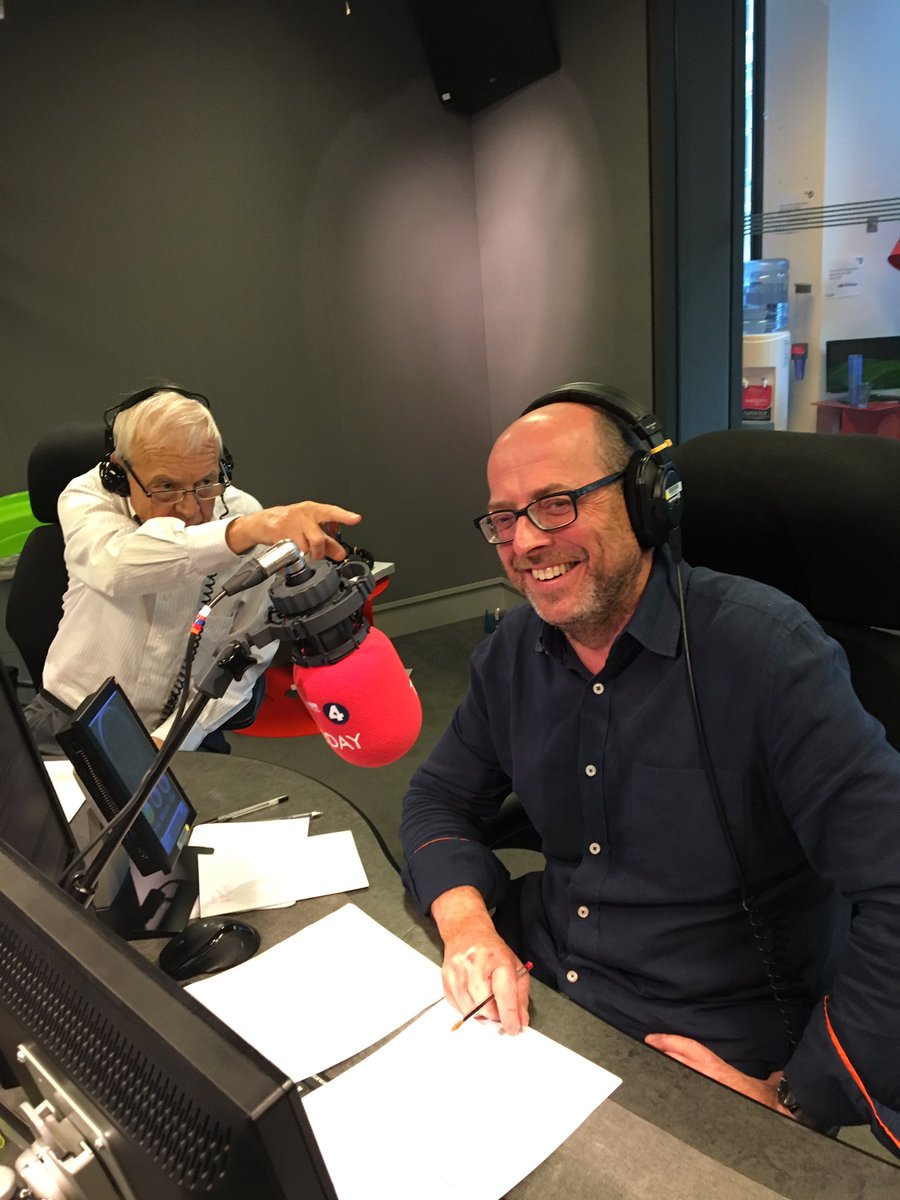
The Beard Liberation Front, the informal network of beard wearers, has said that Today presenter Nick Robinson is the first from the BBC flagship programme to feature on the Beard of Autumn shortlist.

He joins current England football captain Harry Kane, Prince Harry together with Moeen Ali and Jeremy Paxman amongst others.

The Beard of Autumn poll opened on-line on 6th October with the winner announced on 20th October. It is the last of four quarterly seasonal contests which lead to the Beard of the Year in December

BLF Organiser Keith Flett said, it’s always difficult for radio beards to make a visual impact but of course with social media its rather easier now. Nick Robinson often arouses strong views but here we are focused purely on how positive the impact of his beard has been

Shortlist

Moeen Ali, cricketer

Evan Davies, Newsnight presenter

Dave Grohl, musician

Prince Harry, Royal personage

Harry Kane, footballer

Joe Ledley, footballer

James O’Brien, broadcaster

Jeremy Paxman, author

Roger Protz, beer writer

Nick Robinson, broadcaster


Articles

Campaign for Real Conkers: conker rankings

In Uncategorized on October 8, 2017 by kmflett

8th October

Campaign for Real Conkers: conker rankings

The Campaign for Real Conkers has said that in line with its modern approach to conker player it does not privilege the idea of conker games which are won or lost by a certain conker.

Rather it uses the Corbyn method to judge how successful a specific conker is.

The Corbyn method uses a formula based on the number of contests in which the conker has survived against the length of time it has survived in weeks. That is to say it is about age and impact a combination of which gives a conker gravitas.

So for example if a conker has survived 10 contests in 2 weeks it has a rating of 5 (that is 10 divided by 2).

However the Campaign says that it accepts that conkers is a traditionally based game with regional customs on the matter and it is testing opinion on whether the Corbyn method or an alternative is the most appropriate way of assessing how successful a conker is.

The second poll option simply takes the number of successful contests, broadly the number of games the conker has survived, 50% of the Corbyn method

The third option is more traditional as it combines the number of successful contests aggregated with the number of previously successful contests the losing conker has had. So for example if a new conker beats a conker that had earlier won 50 contests it would become a 51-er

There is a write-in option for other methods of judging conkers

Articles

Tony Benn on how Clement Attlee 3 Jan1883- 8 Oct 1967 is remembered

In Uncategorized on October 8, 2017 by kmflett

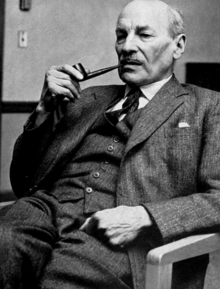
Clement Attlee, Labour Prime Minister from 1945-1951 died 50 years ago today on 8th October 1967

Tony Benn noted in his diary his thoughts on attending the memorial service for Attlee at Westminster Abbey on 7th November 1967:

‘The whole Establishment was on show. Middle-class Labour leaders are recaptured by the Establishment when they die, and there is no reference to their political work. Attlee is ‘forgiven’ for being a socialist and the past is forgotten’.

One wonders how Tony Benn himself will fair in 50 years time..