Ex-Tory MP & Reform Mayor of Lincolnshire Andrea Jenkyns told Tory Chief Whip in Jan 2024 she ‘couldn’t be held accountable for for what comes out of her mouth’
Until July 2024 Andrea Jenkyns was a (semi-detached) Tory MP. She lost her seat, subsequently defected to Reform and is now the elected Mayor of Lincolnshire.
In his memoir Ungovernable (2025) Rishi Sunak’s Chief Whip 2022-24 Simon (now Lord) Hart has a number of rather critical mentions of Jenkyn in the book.
On 21st March 2023 Hart is reprimanding Tory MPs who had not supported the Government line:
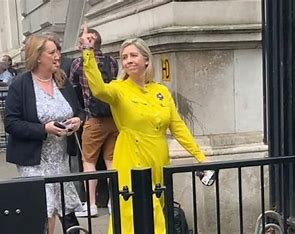
Andrea Jenkyns, What can I say? It was she who was photographed giving the finger to reporters outside No-10 during her fourty-four day Ministerial career under Liz Truss and who has been bad-mouthing the rest of us on Twitter ever since
9th June 2023
Hart receives a note from Andrea Jenkyns explaining ‘my tendency to say what I think every five minutes
On 24th January 2024 Hart was meeting Tory rebels on the 3rd reading of the Rwanda Bill, in one to one interviews
Andrea Jenkins arrived with her dog and her six year old son and then attempted to say that because she has ADHD she ‘couldn’t be held accountable for what comes out of her mouth’
Sunday May 5th 2024
The local election post mortem rumbles on. People (like Andrea Jenkyns again) just can’t help but provide a running commentary when the classier option is to stand back. We ignore her as usual
The only question is how long it will be before Jenkyns starts doing the same to Farage
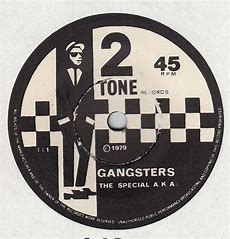
The Specials AKA Gangsters released this week in May 1979. The first Two-Tone hit
In times like these a 2025 version of Two-Tone would be a very useful development.
This week in 1979 saw the release of the Specials first single Gangsters which eventually became a Top 10 hit. It was played on release by John Peel on his Radio One show.
I was then living and studying for a PGCE (post graduate teaching qualification) in Worcester. I duly qualified as a sociology teacher. It was a road not taken because the Thatcher Government which had come of Office in May 1979 as well did not have an education policy that viewed sociology teachers as a good thing.
There was a small Anti-Nazi League/Rock Against Racism group in Worcester and while we had heard of the Specials, they had played a gig in the area, and thought they were anti-racist information was limited. In those pre-internet, pre-mobile etc days, things came by word of mouth and whatever the NME published.
Gangsters remains a great record and in 2025 one guaranteed to annoy Donald Trump
With a late Easter we have a limited summer term programme and both seminars are on Zoom. As ever seminars are free to attend but booking at the link to the Institute of Historical Research website is essential
Monday May 19th 5.30pm Laura Hadland, Beer Festival Evolution, a history: shaping the British beer landscape
The two seminar subjects appear unlinked, but quite the reverse.
While the Communist Party founded 105 years ago in 1920 had a strong temperance element to it, a founding member was Raymond Postgate. Some decades later, in 1951 Postgate was the founding Editor of the Good Food Guide designed promote decent eating out experiences for a general audience.
Laura Hadland’s book on the history of Beer Festivals reflects a similar movement in beer. A desire to promote good beer over mass produced alternatives
contact LSHG Organiser Dr Keith Flett @keithbeard.bsky.social
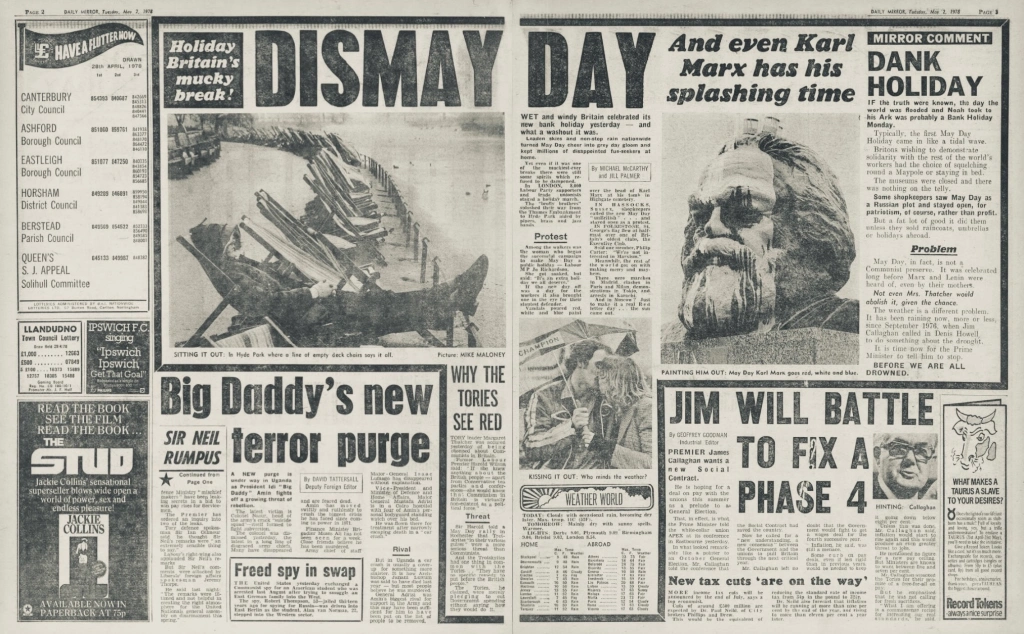
May Day Public Holidays: 1978-2026. From Michael Foot to Keir Starmer
The May Day Bank Holiday on 4th May looks set fair weatherwise, quite unusual for UK Bank Holidays!
The current structure of public holidays goes back to the Bank Holidays Act of 1871 which recognised the principle of a very small amount of paid time off for the new industrial workforce, and of course bank employees.
The framework has been tweaked since then to add New Year’s Day and differs in Scotland and Northern Ireland.
Another recent addition is the May Day Bank Holiday. 2025 is the 47th anniversary of its introduction in 1978 by the Callaghan Labour Government. The Minister responsible was Michael Foot.
The Tories didn’t much like it then and many still don’t. Calls for its abolition and replacement by Trafalgar Day later in the year, or very probably a Thatcher Day, are heard from time to time.
The TUC’s view remains that Britain has the fewest public holidays in Europe.
May Day has been a traditional day of celebration, both of spring and of Labour and it is marked in one or other and sometimes both contexts around the world.
The introduction of the official holiday in 1978 did not come without some issues.
Firstly a labour movement tradition has been not to work on May Day, or at least the afternoon of May Day so people could actually walk out of work, even if this meant taking unofficial strike action.
The traditional London May Day March is still held on the day itself (except in 2026 to mark the 100th anniversary of the General Strike), and prior to 1978 strike action in some years was quite widespread.
The appearance of the official holiday can be seen as a way of trying to stop such- to those in authority- unfortunate occurrences.
At the same time the complaint of many in the labour movement was that the bank holiday was only on May Day itself if it coincided with a Monday. Otherwise it was on the next available Monday.
It is interesting to look back on views of that May Day 48 years ago
Fortunately we can do this via a House of Lords debate on the holiday that took place on May 9th 1978.
The debate was led off by Viscount Davidson who asked the question whether the Government thought having a May Day bank-holiday was ‘wise’ and whether they planned to continue with it.
The Tory Peer claimed that the idea of having a public holiday on May Day was a matter of ‘political ideology’.
Lord Wallace for Labour pointed out that the Christian church had for centuries celebrated May 1st as the day of St Joseph the Worker so the decision to have a UK public holiday was clearly a ‘very respectable’ one.
He went on to point out that the only bad thing about the 1978 May Day holiday had been that it rained but even the then Lib-Lab Pact could not control the elements. In response Lord Alport demanded that if the Government planned to persist with a May Day holiday they must act to ensure that the weather was better.
It might thought the Thatcher Government after 1979 would have abolished the May Day holiday. Checking the Thatcher Archive however one finds that on Monday May 4th 1981 Mrs T enjoyed lunch with Denis, Mark and Carol, happy as others to have a day off.
In 2026 so far Keir Starmer seems to have forgotten May Day altogether.
This post appeared in the Morning Star 1st May 2025
Contact BLF Organiser Keith Flett @keithbeard.bksy,social
How did Stone Age men trim or shave their beards?
Michael Rosen whose beard is a frequent winner of votes for the beard that makes the most positive public impact has raised a beard related issue:
Fletty, intermittent fasting is inspired by prehistoric feeding patterns and there are health benefits, it’s claimed. But what about beards? Prehistoric humans didn’t have shavers. Huge health benefits, surely. Research needed.
The Beard Liberation Front’s Research Department has had a look at the issue.
There is no definitive evidence of how Stone Age men and women trimmed, shaved or styled their hair.
They did not have metal working skills so no razors were possible.
However this did not rule out a range of other strategies:
A sharpened flint
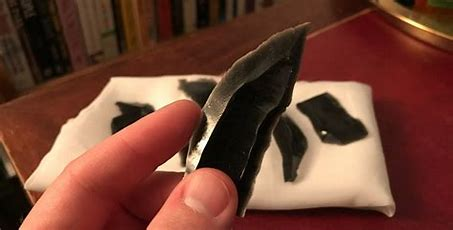
Obsidian, a volcanic glass has a very sharp edge, although it can cause cuts
Clams shells & sharks teeth. Both can be seen in Stone Age drawings but would have been very sharp
Tweezers. Ultimately hairs could be pulled out with a tweezer type device
BLF Organiser Keith Flett said, our research department has thrown up some interesting possibilities but they do seem to raise the point that just keeping the beard might have been the most sensible thing to do
Reform plans a Musk ‘break things’ strategy in local Councils they control
The unelected and unaccountable ‘chair’ of Nigel Farage’s political business vehicle Reform, Zia Yusuf has been on Laura Kuenssberg’s Sunday morning show and is quoted in the Guardian and Sunday Times.
Presumably Yusuf is appearing because Farage is still getting over his hangover. Yusuf, like Farage, has only the slightest relationship to reality.
The vast majority of local council spending is in areas such as education and social care. 15 years of austerity has led to most being in debt with services much reduced.
The words below Yusuf has simply lifted from Musk’s DOGE, which has created mayhem (deliberately) cost lots of money and achieved nothing at all in the way of efficiency. Musk doesn’t focus on potholes though.
The teams and taskforces Yusuf refers to don’t come free. For those who voted Reform and now find themselves with a Reform Council the phrase ‘be careful what you wish for’ may eventually come to mind
He said Reform would send “teams” into councils, adding: “We’ll be opening up application shortly. We want the brightest and the best. “If you’ve got experience in audit, if you’ve got experience in fixing potholes, if you’re a software engineer.
“We’re going to bring taskforces in. We’re now going to have access to the contract, access to the numbers, access to payroll, and we’re going to make these changes.”
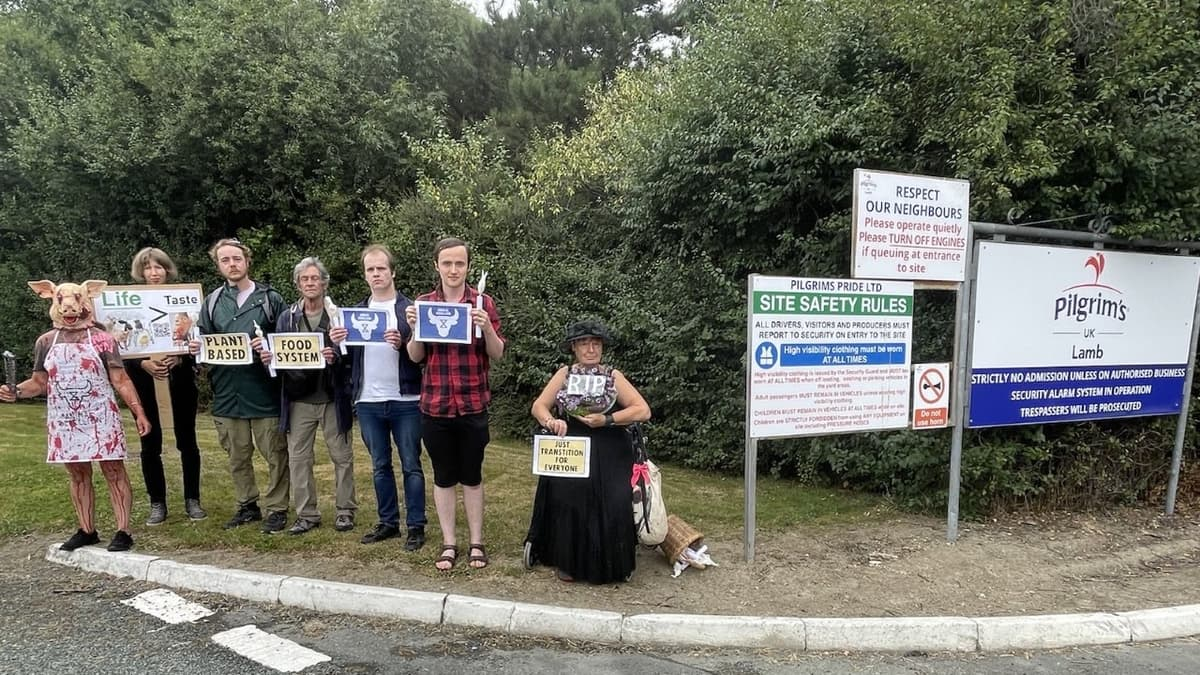
The protest at Casey Meats has occupied much space on the Archers chatboards this week. The Ambridge Socialist remains of the view that it was poorly written and presented. We got no understanding of who the protesters were, why they were targeting Casey meats, or why they used violent methods, particularly when none were employed against them.
The vast majority of animal rights protests are peaceful and sometimes justified by poor conditions in abattoirs. There are much wider issues about farming methods, food production and so on which were at best hinted at in passing.
Intertwined with this was the story of Rochelle, Joy and Rex. According to the story Rochelle is a vulnerable person who has been involved with the protesters for a good while in some kind of cult. There are examples of radical and protest cults which are mostly well known because they are uncommon. Again it was all unsatisfactory.
Hopefully the Archers can move on from this storyline, one of the least edifying of recent times
Cricket
The cricket is also a bit of a mess. The changing rooms have had to be cleaned up and an ancient bat found in the process. The teas have had to be improved and Natasha recruited for this purpose. Sunday’s match is against the team who are run by the racist Lawrence who was previously exposed by Lynda
Tom, Natasha, Helen and the children
This storyline is more promising. Some of the most annoying small business people in Ambridge are all living in the same house. Expect angst…
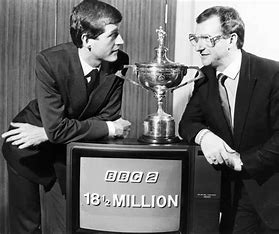
The BBC has placed the final frame of the 1985 World Snooker final on the IPlayer. Dennis Taylor beat Steve Davis 18-17 and the final frame went down to the last ball over 75 minutes.
As with the 2025 Championship it was played at the Crucible in Sheffield and came at a time when the key figure in snooker, Barry Hearn, was trying to professionalise the image of the sport.
The final was televised then as now on BBC2 and it holds the record for a post midnight viewing public at 18.5m. Reportedly it cost the BBC £20m to cover the championships 40 years ago, one of the most viewed sporting occasions of the year- primarily because it goes on for a fortnight and sessions take place in the evening when people can watch.
Of course there was no IPlayer or social media in 1985 so you either watched it live or missed it.
It is certainly social history now although the actual snooker is much the same. It took place at the end of April 1985 just weeks after the end of the 1984/5 miners strike and Sheffield was a key NUM location.
Back then commentary was sparse- viewers were left to draw their own conclusions- and there was absolutely no shouting. Camerawork and lighting have improved a lot over the years.
Both Taylor and Davis are commentating for the BBC this year. Davis in 1985 was known as ‘interesting’ because he wasn’t. Things have changed. A few years back sitting in Mother Kellys a craft beer bar in Bethnal Green (named because it’s on Paradise Row, the actual doorstep is a few doors down) I noticed someone who looked like Steve Davis. It was in fact Steve Davis who nowadays is a craft beer enthusiast. He can also be found playing DJ sets in craft beers in NE London & indeed around the UK..
After May 1st Elections in England: The Big Question. Has Laura Kuenssberg defected from the Tories to Reform
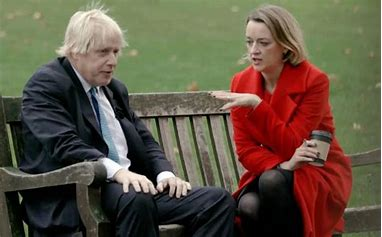
The BBC’s Election programme covering local Elections in England ran from 23.10 on May 1st and was presented by Laura Kuenssberg. Fortunately veteran psephologist Sir John Curtice who knows of what he speaks was also on hand.
The big question of the night however was whether Kuenssberg is ready to defect from the Tories to Reform
At the opening of the programmed Kuenssberg said ‘but the biggest question is can Reform UK turn their incredible hypothetical success we see in opinion polls into real power’?
We’ll find out over the weekend if Kuenssberg has defected to Reform and her Sunday morning BBC programme will give a clue.
Farage is not on the show, presumably still recovering from his hangover but the hugely arrogant unelected ‘Chair’ of Reform Zia Yusuf is.
Kuenssberg previews the programme on the BBC website. She writes:
If the idea of Farage in No 10 seemed outlandish in January, the backing of millions of voters this week shows it’s not a wild notion.
Jean-Luc Melenchon had lunch with the Financial Times (3rd May). He is the leader of the French left, perhaps broadly equivalent to Jeremy Corbyn (resolutely without a beard). The politics are important and there is an English translation of his recent book available, Now the People! Revolution in the C21st.
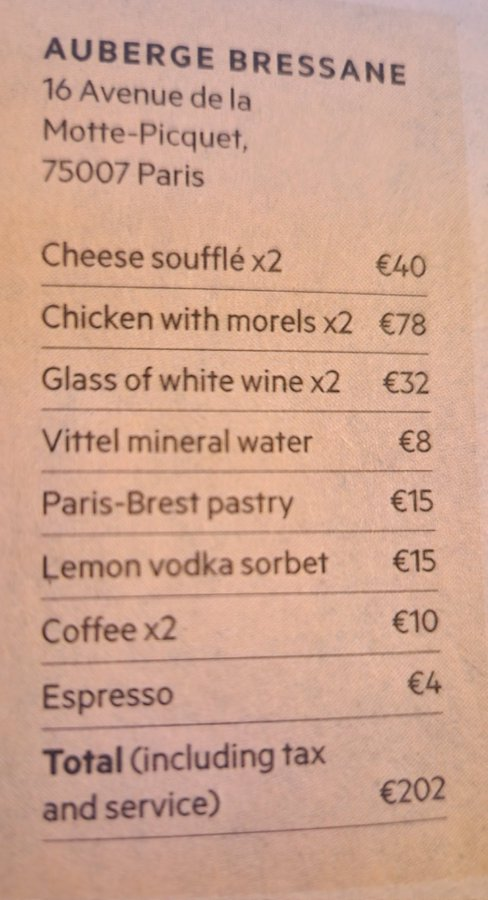
However what was on the menu was of interest. Raymond Postgate who was a founder member of the Communist Party in 1920 and the founder of the Good Food Guide in 1951. There was a link between good food and progressive working class politics.
Melenchon hails from the Jura region of France and the restaurant serves food specialities from the area.
Not on the list above is the plate of charcuterie which Melenchon started with. In respect of desert it was the FT journalist who had the lemon vodka sorbet. Melenchon’s Paris-Brest is a praline cream and almond pastry.