

Close Encounters: Questions for the black leader of London Chartism in 1848, William Cuffay
The below is part of an end of 2024 series of ‘close encounters’ published by the Society for the Study of Labour History. Historians pose questions for an historical figure, in my case William Cuffay.
The entire series is well worth a New Year read:
https://sslh.org.uk/tag/classencounters/
In the eighth of our series on meetings with figures from labour history, Keith Flett encounters the Black London Chartist leader William Cuffay.
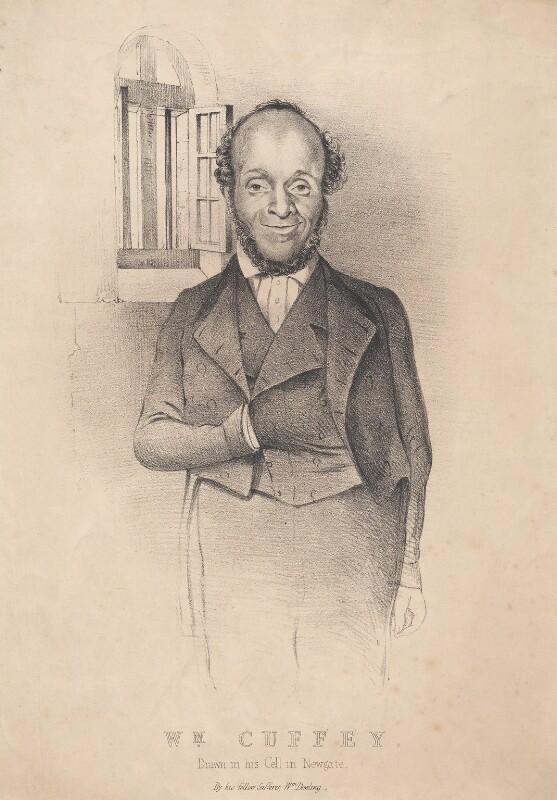
William Cuffay (1788-1870) was born in Medway to a local woman and a descendant of slaves who had come to the area as a sailor. He worked as a tailor in London and became active in the Chartist movement to the extent that he was one of the auditors for the Chartist National Land Scheme in the 1840s.
At this time he lived in central London on the Strand and aside from his political activity was also a performer on the stage.
By 1848 he was a leader of Chartism in London and was an organiser of the Chartist protest held on Kennington Common on 10 April 1848. He was one of those who argued for a militant stance to be taken to achieve the vote. In August 1848 he was one of those arrested for involvement in a planned Chartist rising in central London. He was sentenced to transportation to Tasmania where he arrived in late 1849. He remained active in the trade union and labour movement there until his death in 1870.
While the Chartist Northern Star carried reports of Cuffay’s speeches and there are some records from his period in Australia, no diary or memoirs are known to exist aside from one letter written from Wakefield gaol in 1849.
Some questions for William Cuffay…
The press of the time portrayed you in what would now be called a racist way. Was this taken up by the Chartists? Were you aware of other black Chartists in London or elsewhere?
Given that you disagreed with Feargus O’Connor’s strategy to win the vote in 1848 do you think there was another way to achieve it then? If so what kind of society would you have envisaged it would have brought about?
When you arrived in Tasmania you remained active politically. How did that compare to your Chartist activity in London?
We don’t have any diaries or memoir aside from one written letter in 1849. Did you document your life in anyway or have any idea what might have happened to any papers you did have?
As a leader of London Chartism in 1848 how did you find that experience? How easy or conversely difficult was it to organise an event like Kennington Common on 10 April 1848? In 2024 there are many tools available to organise such things but in 1848 you had only posters, leaflets and word of mouth. Would you say that this worked well?
What would be your advice to someone trying to change the world for the better today, given your Chartist experiences?
Keith Flett is a Convenor of the London Socialist Historians Group
The Times ‘Ephology’ polls & Elon Musk
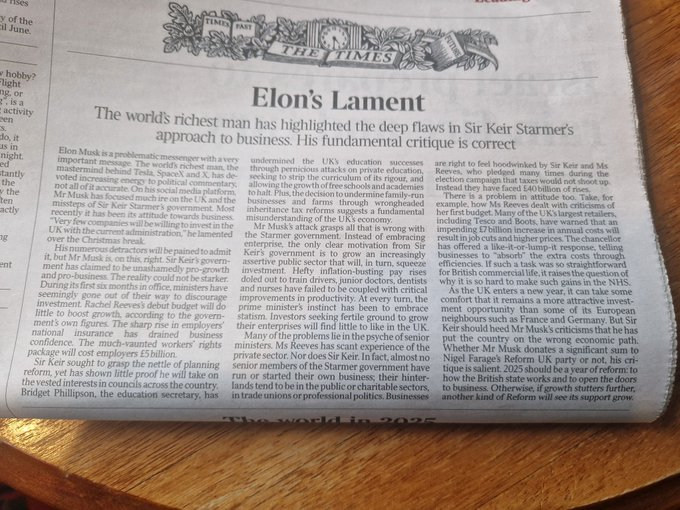
The Times has welcomed in 2025 with an Editorial praising Elon Musk who it claims knows exactly how to sort out the UK economy while Keir Starmer doesn’t. Leaving aside the possibility that Rupert Murdoch is after a sub from the self styled world’s richest man, it is possible to understand that neither option is correct but the Musk one disastrously not so.
To back this up the paper has commissioned YouGov to do some polling on Labour’s performance in the first five months of it being in Office. Apparently 56% of whoever it was YouGov asked think the Government has been ‘unsuccessful’. The question of what was thought of Elon Musk does not appear to have been asked.
It is an exercise not in assessing opinion but rather trying to shape it. E P Thompson as long ago as 1959 called it Ephology
A psephologist is a man employed by the mass media to research into what people think the mass media has told them to think. An ephologist is a man employed by the ‘Observer’ or BBC to interpret the results of psephology and who makes an ephing good thing out of it
New Reasoner, Autumn 1959
Marx’s suggestion for New Year (1861). ‘drink only lemonade..do nothing’
At New Year Marx was feeling unwell (as he often was) and wrote to Engels (8th January 1861) with his cure:
no smoking, CASTOR OIL, drink only lemonade, eat little, no spirits whatever, do nothing, stay at home
Reasons for the left to be cheerful in 2025
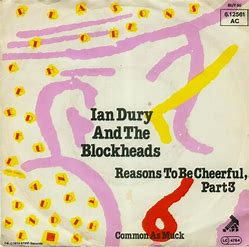
In many ways 2024 has been a grim year. I suspect anyone reading this is mostly aware of what they were.
Some of them such as the genocide in Gaza, the killing fields in Ukraine and Russia and the rise of a far right across Europe including the UK will feature large in 2025.
We could explore the Gramsci pessimism/optimism dichotomy but perhaps just to note the focus on what can really be done.
2024 did provide some pointers.
Firstly there were 22 central London demonstrations in support of the Palestinians. Most involved hundreds of thousands and there were innumerable other protests and actions around the UK. These were organised not by the main parties in Westminster but by the left broadly conceived. At the centre the Palestinian Solidarity Campaign, Stop the War, CND, Muslim organisations and trade unions.
This is still a movement in progress. There is, as there often is, particularly when a Labour Government is in Office falling short of expectations, much discussion about new organisations on the left. The Palestinian protests have already had an electoral impact on July 4th, combined with an anti-austerity politics. Again work in progress
Secondly the ejection of the Tories from Office after 14 years. The replacement Government is struggling with a very modest agenda in a situation that requires a robust one (think nationalisation of water companies). The broader picture is one of political turmoil on the right and centrist left. The movement around Palestine has the potential to make an impact.
Thirdly the presence of an active and organised anti-racist movement. There will be much work to do in 2025 but the grassroots reaction to the August ‘Farage Riots’ shows the potential
Marx sends New Year Greetings to Engels (27th Dec 1861) ‘if it’s anything like the last one…’
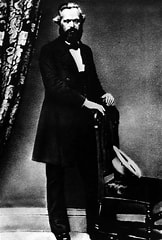
In the meantime , may I wish you in advance every happiness
for the New Year. If it’s any thing like the old one , I, for my part ,
would sooner consign it to the devil.
Salut.
Y o u r KM
Marx was in debt & involved in a Court case
New Year’s Eve 1864. Chartist leader Bronterre O’Brien buried, Abney Park Cemetery, Stoke Newington.
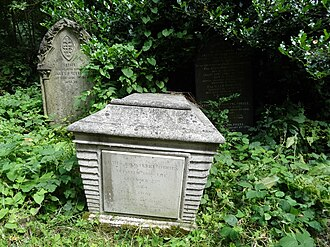
Bronterre O’Brien (1804?-1864) died at his Islington home on 23rd December 1864 after a long illness. He was buried at Abney Park Cemetery, Stoke Newington on New Year’s Eve 1864. His gravestone remains and occasional gatherings are held to mark his impact on British radical politics. The last oration was given by Diane Abbott in 2023 and I delivered one myself some years back now.
O’Brien was Editor of the Poor Man’s Guardian in the 1830s and wrote for the Chartist Northern Star in the 1840s. He was not a co-thinker of Chartist leader Feargus O’Connor and often struck different positions to mainstream Chartism.
Looking back 160 years it is however perhaps his legacy in the formation of the Labour and socialist politics that currently exists that is of most note. He was arguably the only one of the Chartist leaders to inspire an active group of co-thinkers to carry on his work. Many were present at his funeral. We know that they persisted because in his book Early Socialist Days, W S Sanders writing about the Battersea branch of the SDF in the 1880s noted the presence of a group of old Chartists who were followers of O’Brien. The SDF was one of the organisations that met to form the Labour Representation Committee in 1900 and hence the Labour Party.
https://en.wikipedia.org/wiki/James_Bronterre_O%27Brien
Bronterre O’Brien’s funeral, The Beehive 7th January 1865
2024: An interesting year for cheese
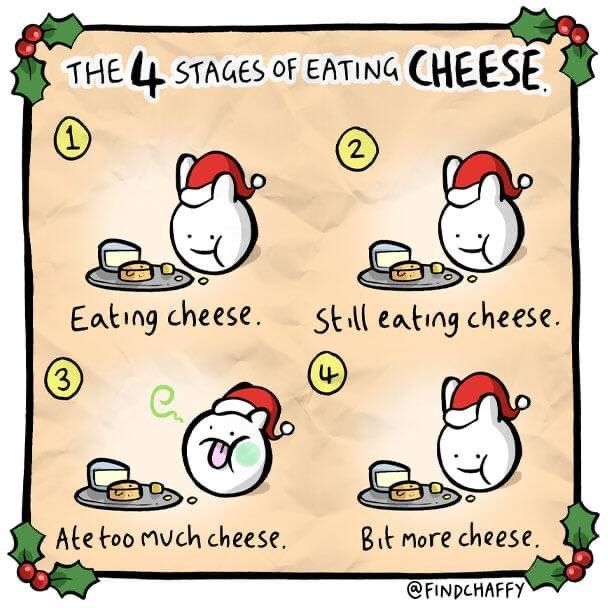
2024 has perhaps been the year that reminded some that artisan cheese has always been both a high quality and high cost thing. The Neal’s Yard cheese heist, where a large amount was stolen by persons still unknown underlined the point.
There is a history to it as well. While the radical Tory reformer William Cobbett often wrote of enjoying bread and cheese on his travels around the English countryside in the 1820s, an alternative reality was that two cheesemongers rode with the Yeomanry at Peterloo on August 16th 1819
Campaigners cancel New Year Tradition of First Bearding due to inclement weather
Beard Liberation Front
31st December
Contact BLF Organiser Keith Flett @keithbeard.bsky.social
CAMPAIGNERS CANCEL NEW YEAR TRADITION OF FIRST BEARDING DUE TO INCLEMENT WEATHER
The Beard Liberation Front, the informal network of beard wearers, has said that it has cancelled the annual revival of the ancient New Year tradition of First Bearding this year, due to a forecast of significantly inclement weather
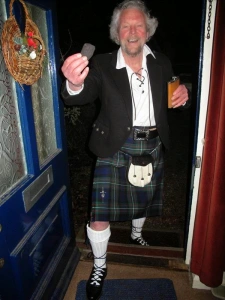
Traditionally at midnight on New Year’s morning the first person with a beard across the doorstep of a house, or on this occasion only a false beard, must be given a glass of imperial stout or equivalent to marinade their beard in. In return the beard wearer will bring good fortune for the coming year.
First Bearding can be when a stranger with a beard comes to the house, as in first footing, or when someone with a beard already inside steps outside to return again.
The campaign group which opposes irrational prejudice against the hirsute says that the tradition of First Bearding is thought to have been as popular as first footing but declined with the more clean-shaven culture after 1945
BLF Organiser Keith Flett said, with a weather forecast of it being wet and windy for many at midnight there is just too much danger to First Bearders follicles to proceed this year. We plan to revive the tradition again at the end of 2025 with hopefully rather more beard friendly weather.
GUIDELINES ON FIRST BEARDING
On or immediately after the stroke of midnight on December 31/January 1 await a knock on the door
If the person has a beard welcome them in as a First Bearder. Check first however that it is not Liz Truss wearing a fake beard.
Be sure to answer the door promptly as otherwise the First Bearder may sustain weather damage to the beard.
If they attempt to give you a lump of coal, ignore this. It is not part of the modern tradition of First Bearding
Give them a glass of imperial stout or equivalent to marinade their beard in & wish them a Happy Hirsute New Year
Notes
National No Shaving Day is 1st January 2025
Suella Braverman ‘most right-wing MP’ on the ‘wall between Italy & Turkey’
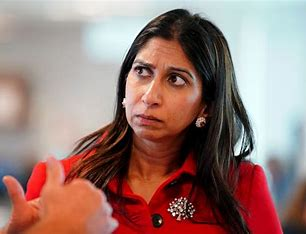
Research finds Suella Braverman to be the most right-wing MP
Research by Prof Chris Hanretty at Royal Holloway has found Suella Braverman to be the most right-wing MP in Parliament.
Braverman has been hosting a morning show on LBC for New Year and has claimed that there is a wall built between Italy and Turkey and that she has been to see it. While this does underline her most right wing MP label it also suggests that she was not paying attention in Geography lessons at school..
It might be thought that there was a fair bit of competition but while Shadow Foreign Secretary Priti Patel was found to be very right-wing, Braverman was further right still and close to Reform UK Ltd MP Rupert Lowe. Why the other Reform UK Ltd MPs were not equally on the far right is not clear. Perhaps they were in the pub when the survey took place.
More seriously Hanretty’s research asked a large sample of local councillors to rate the most left and right-wing MP in their area against a set of economic criteria based on the positions of Keir Starmer and then Tory leader Rishi Sunak
Of course social criteria might have produced a different result. Despite the whipping system in the Commons MPs views can still vary quite a bit.
Hanretty found that Starmer was to the right of most Labour MPs (but still to the left of nearly all Tories) but notes, correctly in my view, that other Labour Prime Ministers from Harold Wilson to Tony Blair were similarly placed.
As for Ms Braverman who declined to run for the Tory leadership and sits on what there is of a Tory backbench (most of the 121 Tory MPs have shadow Parliamentary jobs) she will probably take her most right-wing MP label as a badge of honour. There have been rumours of a defection to Reform UK Ltd after her partner switched from the Tories. However on this evidence she may be too far to the right for the Faragists.

View more by category: Uncategorized (14,125). .

