5th September marked the 50th anniversary of the first broadcast of Porridge. The lead character Norman Stanley Fletcher an ‘habitual criminal’ was to be found at HMP Slade in Cumbria. Fletcher was played by Ronnie Barker and the scripts were written by Dick Clement and Ian Le Frenais.
The series ran until 1977
Fletcher resided, when not in jail, in Muswell Hill North London. He would have to have been a rather more effective criminal than he appeared to be to afford a house there in 2024. However if we assume his residence in the 1970s dated from the 1950s or 1960s, house prices were rather less. The area was known for housing BBC employees (the Alexandra Palace link) and members of the Communist Party (not the same thing btw) as the Russian Embassy/Trade Mission was nearby in Highgate. I also lived there myself.
Fletcher was a Spurs fan which was either a factual error by Clement and Le Frenais or a joke. Muswell Hill is on the Arsenal side of Haringey.
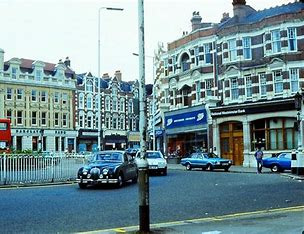
Once released from Slade Fletcher ran a pub. He was in the right place for the first Wetherspoons which opened in Colney Hatch Lane N10 (as Marlers) in 1979. I never saw him behind the bar there though
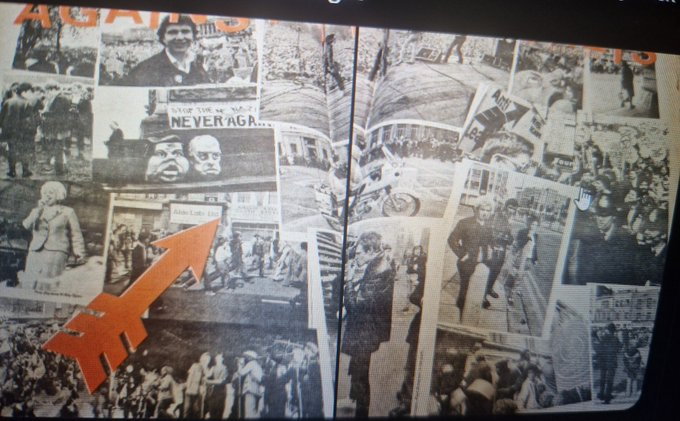
The issue of the New Musical Express published after the Victoria Park Carnival Against the Nazis (6th May 1978) carried a double page spread of photos of the day. The NME’s circulation at the time was 300,000. It was the start of a mass movement from Rock Against Racism to the Anti-Nazi League that isolated the National Front and encouraged and built a very different Britain, based on uniting and fighting racism. It needs to be done again. It can be done, with Love Music Hate Racism and Stand Up to Racism, again
Boris Johnson is out of Parliamentary politics and his memoir of the period from 2019 is due in October.
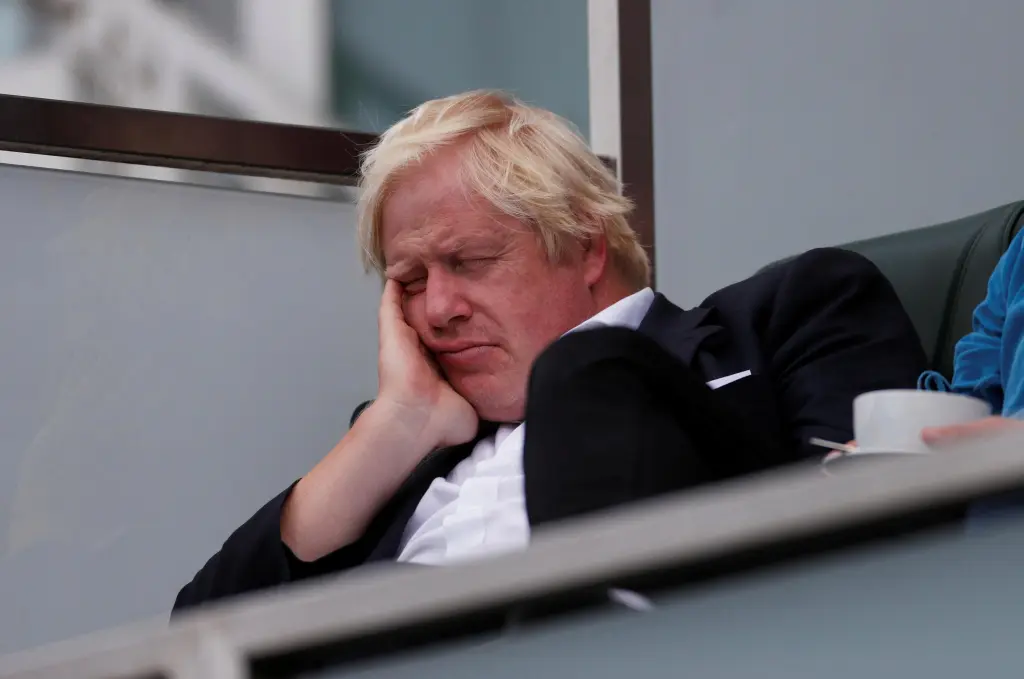
The Friday of the Oval Test marks the 6th anniversary when Johnson, ever unpopular, was booed by the crowd. Test Match cricket crowds are not noted for socialist leanings (myself and a few others aside) so that provides a benchmark as to exactly how unpopular.
Booing of figures of authority is a great British tradition
One name for this is Rough Music, a community custom, where transgressors against a generally held moral code were singled out for ridicule. It was by no means a universally progressive tradition, as E P Thompson study into it (Customs in Common) made clear.
A tradition of effigies and sometimes the burning of them fed into the wider area of charivari or rough music a wider form of protest, involving discordant music and general uproar.
According to the social historian Robert Storch in reaction to the 1872 Licensing Act it was almost decided in Exeter to burn an effigy of the Home Secretary but instead there was a chorus of groans. From the 1870s Storch notes shopworkers burnt effigies of employers who refused to join in with early closing times
As late as 1887 an inmate of Chelsea Workhouse was charged with making an effigy of the master as a protest about poor food. The judge in the Police Court, aquitting the inmate, told the master ‘public characters like you don’t mind a little ridicule. It’s the penalty of greatness.
Perhaps Boris Johnson, great or not, will grasp the point. But probably not.
How dynamic pricing was dealt with in the 1700s. A story of forestallers, regraters & the crowd
The application of dynamic pricing for the recent sale of Oasis tickets has to an investigation by the Competition and Markets Commission. In a market economy, the market rules. Labour has traditionally favoured a social market economy where intervention determined a fair price and prevented excess profit. This was laid aside during the New Labour period but the Starmer/Reeves Government has signalled a more interventionist approach
Before the early nineteenth century a different system often applied. The staple food of many was bread meaning that the price and quality of a loaf was an essential part of daily life. If quality dipped or the price went too high protest was the likely outcome.
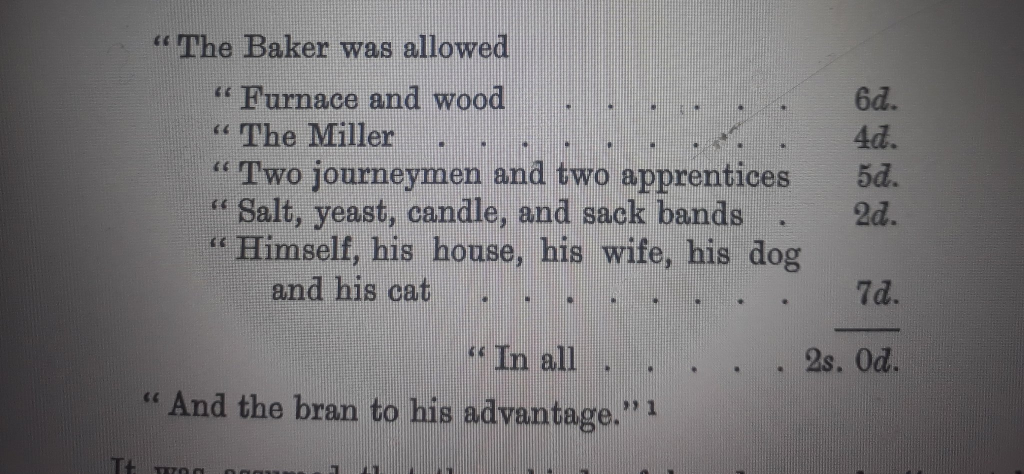
This was often regulated by an Assize of Bread which sat to determine what a fair price for bread of a certain quality should be and how much the miller and the baker should get in return for producing it. This was what the socialist historian E P Thompson termed a moral economy.
It could not control the price paid for wheat in the first place but it could control profiteering by the miller and the baker. They were allowed a fair profit to cover their business and personal expenses.
Needless to say far from all millers and bakers were happy with the system and attempted to circumvent it by reducing the quality of bread produced or combining to control the market. The moral economy was not a complete solution but it was a focus for popular pressure.
When the system broke down and supplies of grain for wheat were held back to push up the price- forestalling- or the price was artificially raised-regrating, the crowd might intervene to demand a more reasonable price. On occasion supplies of grain might be seized by the crowd
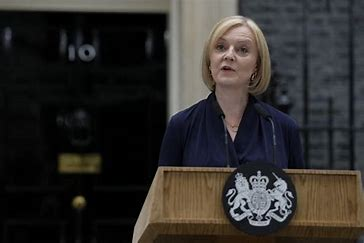
On 5th September 2022 Truss won the Tory leadership on 47% of membership vote. She was elected as Tory leader and hence appointed as PM (on Tuesday 6th) beating Rishi Sunak by 57% to 43% of the 141,000 votes cast. The turn-out was 82% (it was largely an e-ballot) meaning the Tory membership was then 172,000. Its now thought to be under 150,000.
The 80,000 votes Truss got did not pass the 50% threshold of those entitled to vote which currently applies to trade union ballots. Truss got 47% of the vote on this basis and were it a union ballot it would have been declared invalid as the TUC noted.
As much to the point she had no mandate from the electorate for her policies. Six weeks later she was out of office and in short order replaced by Sunak the man she had beaten just a short period before.
Two years we can only look back in anger except of course for the five remaining Tory leadership candidates who have had nothing at all to say about it, despite four of them serving as Ministers under Truss.
The lettuce which outstayed Truss’s 49 days remains as a powerful image. So much so that when political pranksters Led By Donkeys unveiled an image of a lettuce as Truss was speaking in Beccles recently she stormed off stage exclaiming ‘that’s not funny’
Pictures of Angela Rayner dancing in Ibiza have caused excitement and inevitably condescension in the right-wing media. An exception is The Times (Editorial 6th Sept) which approves, noting that unlike most politicians Rayner can actually dance.
I’m far from an expert but she certainly appeared to be a better dancer than Michael Gove.
Rayner has claimed that dancing is a working class activity but this is an historically complex matter.
Ballroom Dancing, when the Tory Party was a mass organisation, (as opposed to the current 150,000 members) was often associated with the political right, fund raising balls and so on.
Indeed Raph Samuel in The Lost World of British Communism, quoting Hugo Dewar, notes that by the 1940s the Communist Party at best frowned on dancing. It also disliked jazz (which didn’t stop Eric Hobsbawm writing the Jazz Scene using the pseudonym Francis Newton) and beards, although not of course at least until 1956 moustaches.
My knees are not really up to dancing nowadays but I recall for younger days discos at union conferences (in which I participated reluctantly) and on occasion attending clubs in North London that specialised in Motown records and dancing.
We might conclude that Rayner’s Ibiza dancing was in a working class tradition but not one specifically related to left politics. That might more or less fit the Starmer Government.
Tom Baldwin’s biography of Starmer notes that while he was doing his first degree at Leeds University he learnt the ‘shuffles, spins and flips of northern soul dancing’…
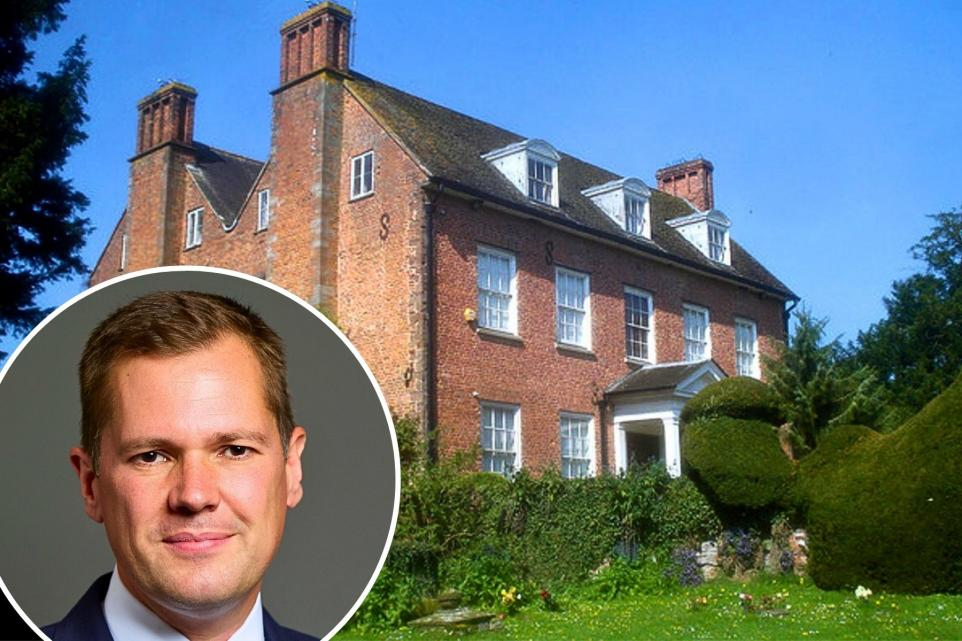
SInce 2009 the current front runner in the (undeclared) Tory leadership race Robert Jenrick has owned an historic mansion in Eye, Herefordshire about 3 miles from Leominster. The house is Grade 1 listed.
The house dates from 1680 and was built from the profits of the imperial adventures in North America of its original owner Ferdinando Gorges. This is the kind of British history that Tories like Jenrick are keen on celebrating
Strangely however in his speech to the Tory Conference on 7th October where he listed things about Britain ‘worth fighting for’ while he found time to plug Jeremy Clarkson’s Hawkstone Lager, there was no mention of imperial history and his own personal mansion
The best farmers, food, and drink in the world: from Aberdeen Angus beef to Hawkstone Lager.
A love of pubs, a love of animals.
The common law, jury trials, a Royal Family so admired that they make the most powerful man in the world go weak at the knees, a military that has defeated every force on the planet.
The roar of the crowd at Twickenham when the Red Roses beat the Canadians, or Chris Woakes, arm in a sling, goes out to bat at the Oval.
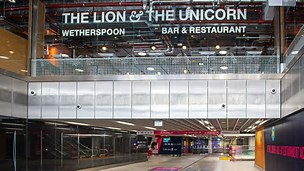
Wetherspoons has opened what is described as its largest ever pub, the Lion and Unicorn at Waterloo Station. The name references the 1951 Festival of Britain held nearby on the South Bank.
Its immediately next to Brewdog’s flagship bar which has been mired in controversy over treatment of workers, failure to recognise a union and general bad management.
Wetherspoons also doesnt recognise unions. Its staff retention figures however suggest that there may be worse bars to work at (such as Brewdog) but there is still much room for improvement.
However on the drinking side of things (we are talking pubs after all) there is an interesting comparison to be made. Wetherspoons sells Brewdog’s Punk IPA in its bars. Its central London outlets are not cheap and a pint of Punk at the Lion and Unicorn is £6.63. However at the Brewdog a pint of Punk is £7.20.
By the way if you are in the area and want decent, well priced cask and craft beer just over the road from the main entrance to Waterloo station is the independent Waterloo Tap. No big brands or big beer here just well kept pints
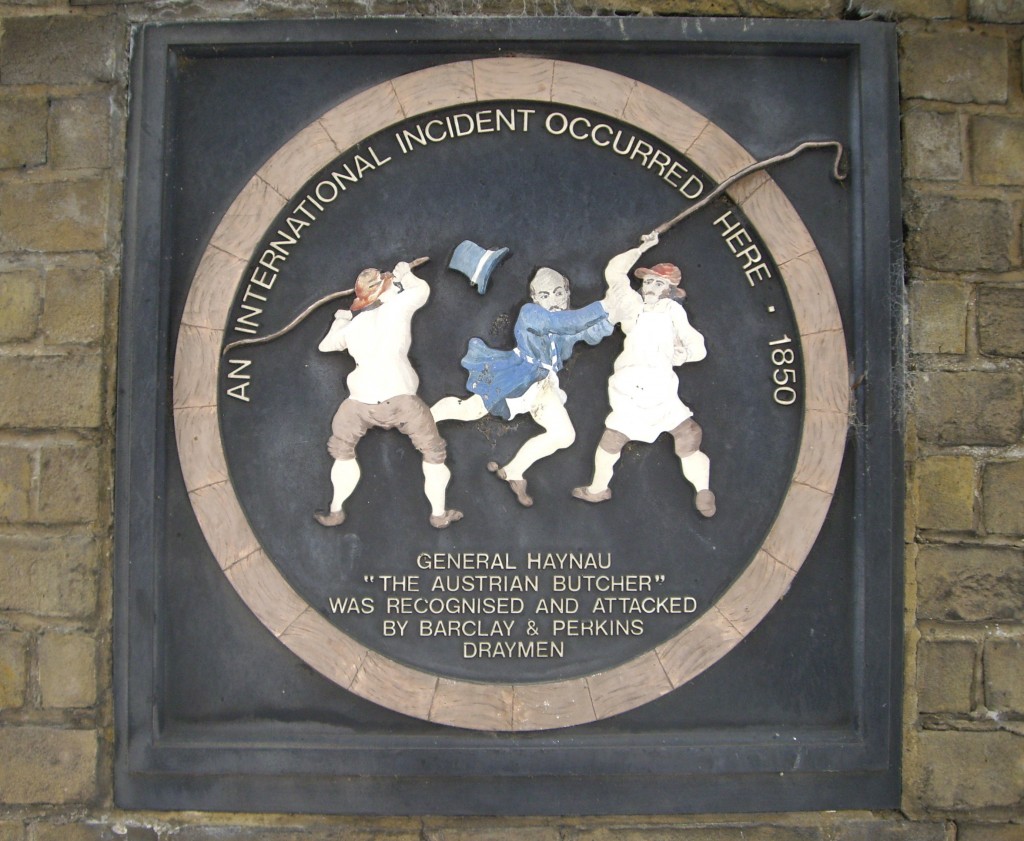
Justin Von Haynau was known as a brutal soldier and one of those responsible for violently repressing the European revolutions in 1848
His reputation for brutality spread throughout western Europe. In Brussels, Haynau narrowly escaped violence. In London in September 1850, he was attacked by some draymen from the Barclay & Perkins brewery on the South Bank of the Thames who threw mud and dung at him and chased him down the Borough High Street, shouting “Down with the Austrian butcher!”.
Below is a detail report of what happened to Haynau when he visited London. Robust protest against unwelcome foreign tyrants is a great British tradition, even if its not one you are likely to read much about in the mainstream media currently. Reynolds News, which had Chartist politics was the best selling newspaper of the later nineteenth century in Britain a sort of cross between the Morning Star and the S*n…
The Miscreant Haynau in London
Well and nobly have the high-spirited fellows employed at Barclay and Perkins’s brewery displayed their disgust and horror for a ruffian who has dared pollute our shores by his presence, and thrust his scoundrel person amongst us. The following description is given of his reception at the large brewery, where he was introduced as Rothschild’s friend:-
On Wednesday morning, shortly before twelve o’clock, three foreigners, one of whom was very old and wore long moustachios, presented themselves at the brewery of Messrs. Barclay and Company, for the purpose of inspecting the establishment. According to the regular practice of visitors, they were requested to sign their names in a book in the office, after which they crossed the yard with one of the clerks. On inspecting the visitors’ book the clerks discovered that one of the parties was no other than Marshal Haynau, the late commander of the Austrian forces during the attack upon the unfortunate Hungarians. It became known all over the brewery in less than two minutes, and before the general and his companions had crossed the yard, nearly all the labourers and draymen ran out with brooms and dirt, shouting out, “Down with the Austrian butcher!” and other epithets of rather an alarming nature to the marshal. A number of the men gathered round the marshal as he was viewing the large vat, and continued their hostile manifestations. The marshal being made acquainted by one of the persons who accompanied him, of the feeling prevailing against him, immediately prepared to retire. But this was not so easily done. The attack was commenced by dropping a truss of Straw upon his head as he passed through one of the lower rooms; after which grain and missiles of every kind that came to hand were freely bestowed upon him. The men next struck his hat over his eyes, and hustled him from all directions. His clothes were torn off his back. One of the men seized him by the beard, and tried to cut it off. The marshal’s companions were treated with equal violence, They, however, defended themselves manfully, and succeeded in reaching the outside of the building. Here there were assembled about 500 persons, consisting of the brewer’s men, coal-heavers, &c, the presence of the obnoxious visitor having become known in the vicinity. No sooner had the Marshal made his appearance outside the gates than he was surrounded, pelted, struck with every available missile, and even dragged along by his moustache, which afforded ample facilities to his assailants, from its excessive length, it reaching nearly down to his shoulders. Still battling with his assailants, he ran in a frantic manner along Bankside until he came to the George public-house, when, finding the doors open, he rushed in and proceeded up-stairs into one of the bed-rooms, to the utter astonishment of Mrs. Benfield, the landlady, who soon discovered his name and the reason of his entering the house. The furious mob rushed in after him, threatening to do for the “Austrian Butcher;” but, fortunately for him, the house is very old-fashioned, and contains a vast number of doors, which were all forced open, except the room in which the marshal was concealed. The mob had increased at that time to several hundreds, and from their excited state Mrs Benfield became alarmed about her own property as well as the marshal’s life. She accordingly despatched a messenger to the Southwark police-station for the assistance of the police, and in a short time Inspector Squires arrived at the George with a number of police, and with great difficulty dispersed the mob and got the marshal out of the house. A police galley was at the wharf at the time, into which he was taken, and rowed towards Somerset House, amidst the shouts and execrations of the mob. Messrs. Barclay have suspended all hands, in order to discover the principals in the attack. It appears that the two attendants of the marshal were an aide-de-camp and an interpreter. He had presented a letter of introduction from Baron Rothschild. who had therein described him as “his friend Marshal Haynau.”
ADDITIONAL PARTICULARS.
Our own reporter, who visited Bankside on Thursday, ascertained that the general had a narrow escape from death, as his captors exhibited a strong inclination to extend towards him the same full measure of vengeance which he had so often exercised towards the unfortunate patriots of Hungary. In flying from his pursuers, he, as stated above, entered the George, where, after seeking vainly for some outlet by which to escape, he found his way into a small pantry, in which was a door. This door the general opened with the energy of desperation, and was half-way through it, when he found there was no hope of escape that way – the conqueror of Hungary had taken refuge in a dust-bin. As he stood looking around him, half in the pantry and half in the dust-bin, his pursuers overtook him; and, as he stood in a stooping posture, had a good opportunity of thrashing him with their various weapons, one of which, a bean-stalk, about an inch and a quarter in thickness, was used with such hearty good will, that it was broken upon his back. He was then seized by half-a-dozen of his assailants, some of whom had hold of his coat, while others less tender of his person, grasped his long moustachios, and dragged him back along the passage towards the street: but watching his opportunity, he managed, with the help of two labouring men, who were ignorant of his name, to break away from his captors, and rush up-stairs. His newly-found champions closing the door at the bottom of the staircase, and mounting guard outside. The general and his two foreign friends who had accompanied him, tried to escape by a window in one of the bed-chambers, but not succeeding, were compelled to remain in “durance vile,” until the arrival of a strong detachment of police enabled them to leave the house with safety. The general’s outer man had been so damaged in the fray, that he was glad to accept the loan of a coat, and that from a pitying bystander. The two men who had so gallantly defended the “Saviour of the Austrian Empire” against his assailants, were magnificently remunerated; the one receiving 4s. 6d , and the other 2s. 10d. for his services. The landlord of the George, upon inquiry at Morley’s Hotel, Trafalgar Square, on Thursday morning, was told that the general “had gone back.” Several dismissals have, we are told, taken place in Barclay’s brewery, but the obnoxious name of Haynau, together with those of his two companions, have been carefully obliterated from the visiting book.