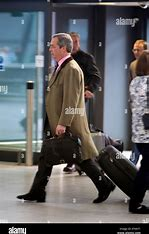
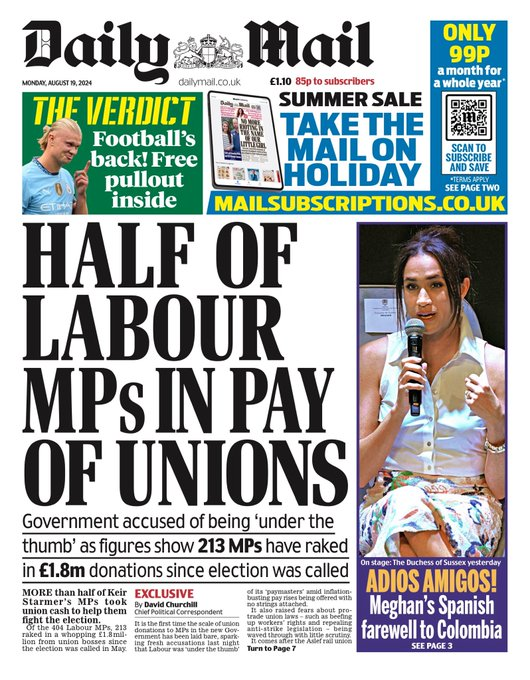
Nigel Farage is off to the US again, flying out to speak at a Keep Arizona Free Summit event on Saturday. Presumably he will once again be representing Clacton on the World Stage. Speaking to the Mirror Farage didnt seem too clear exactly how much he would be paid, somewhere in the region of £12K it seems. Hardly Boris Johnson type speaking fees.
Farage is one of three speakers at the event which runs from 9am-11.30am on Saturday morning and he is billed as Mr Brexit.
He also told the Mirror that he will be in Clacton on Wednesday 21st and Thursday 22nd August before flying out.
It will be his third visit since winning the seat on 4th July. He visited on July 8th and then again briefly on August 12th after a fire at Jaywick in the Constituency the previous week
Engels was an enthusiastic visitor to English seaside resorts. A fan of the sea and sea air for health giving properties provided that a supply of Pilesener (his spelling) was availanle
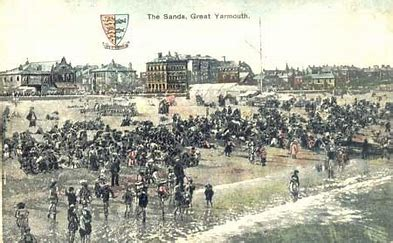
ENGELS T O E M I L ENGELS J u n . IN E N G E L S K I R C H E N Great Yarmouth, 20 August 1882 10 Columbia Terrace
Dear Emil, We have been here for the past 10 days, Schorlemmer, Pumps, BABY and I, and the fact that I haven’t got round to replying to you until today can be blamed on the sweet indolence of a seaside resort…
….Well, that’s enough for today. The table is about to be laid. Other- wise things are going very well here; the fine weather, Pilsener beer, sea air and sea-bathing have quite driven away the gastric catarrh I had on the Monday of your departure. Pumps and Schorlemmer send you their best wishes.
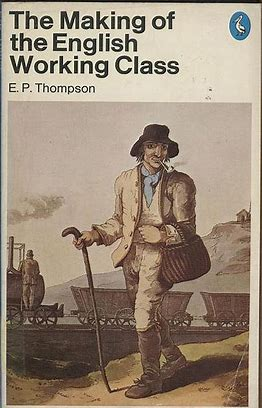
E P Thompson noted in the 1980 Preface to a new edition of the Making of the English Working Class that he signed a contract with Gollancz in August 1959 for a book ‘Working Class Politics 1790-1921’. In August 1963 he completed the introduction to the finished book, almost a thousand pages long, which took the history up to 1832.
There is however something about August in the early making of the English Working Class. Peterloo took place in central Manchester on Monday 16th August 1819. Twenty years later the Chartist Grand National Holiday commenced on Monday 12th August 1839. In 1848 the last armed uprising on English soil, Chartist and Irish Confederate inspired was on 16th August, although it was a Wednesday.
We think of August now as a holiday period, with school holidays and an August Bank Holiday which became law in 1871. The right to a paid holiday in the UK did not come until the 1938 Act which of course was the result of trade union campigning.
However in the first half of the nineteenth century in areas with mills and manufacturing there was Wakes Weeks. Workplaces were closed for a week and workers took an (unpaid) holiday. They varied in their timing between June and September but certainly included August.
This may explain the timing of Peterloo and the Grand National Holiday, although in addition the practice of Saint Monday in artisanal trades saw Monday as an extension of the weekend. E P Thompson however was more than likely just starting and finishing the Making in his paid summer holidays
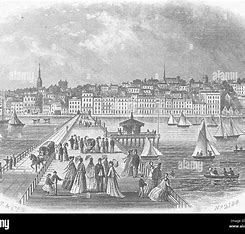
Marx & Engels at the seaside. Engels visits Ryde, Isle of Wight
Marx and Engels were frequent visitors to a range of English seaside resorts, primarily in Kent and Sussex. The East Coast was also a consideration.
Marx favoured Margate and Ramsgate and in later life Ventnor.
Engels ranged more widely. He is liking for Eastbourne is well known but he spent time at a number of south coast locations including Brighton, Worthing and Littlehampton. Correspondence reveals him often searching for a source of Pilsner beer to enjoy. Being Manchester based until he retired, he was also not unfamiliar with east coast towns. Bridlington and the beer on the pier was a favourite but he also stayed at Great Yarmouth.
It was quite rare for Marx to join Engels. However Engels wrote to Marx on 22nd July 1870 with a range of possible options for a short break:
Where do you plan to go to the SEASIDE? South of the Humber there is nothing on the east coast. To the north there is Scarborough — dear and crowded, and Bridlington Quay. If you decide on the latter, we could meet there.
Their correspondence does not reveal what decision they came to. After all if they were at a resort together they would not have been writing to each other and unfortunately social media didn’t exist.
Marx did apologise to a correspondent whose letter he had received on 21st July 1870, for a delay in replying as he had been on a trip in the country. By 26th July he was back in London.
Marx did go away in August 1870. He originally planned to go to Brighton, conveniently near, but discovered the weather was too hot and an emigre he did not wish to meet was also there. Instead he went to Ramsgate. He stayed for several weeks while trying to recover from sciatica, discussing with Engels if hot sea baths would help. Engels was unsure and unfortunately his reliable GP Gumpert was ‘in Wales’ on holiday and unavailable.
What happened at these mainly summer months visits to the seaside is also interesting.
In September 1857 Engels stayed in Ryde, Isle of Wight for some weeks while also visiting Portsmouth.
Engels often had multiple reasons for seaside stays. Sometimes, Ryde being an example, he was recovering from a health issue. In 1857 he combined this with a regular correspondence with Marx and work on articles. He was also interested in the geology of the Island and finally, underlining his name of the General, he made time to inspect the forces in Portsmouth.
Engels wrote to Marx on 8th September 1857:
I finally arrived today at my new lodgings in the middle of a frightful downpour and tomorrow shall at once get down to the army again. Yesterday in Portsmouth I noted what was worth seeing on the military side, so all that now remains is the navy, which at this moment looks distinctly sparse. My health continues good and if the weather improves I hope I shall soon be completely cured. It takes half an hour to get here from Portsmouth and it’s a very aristocratic little spot.
Engels was not impressed with what he had observed in Portsmouth noting: The chaps lack drill. Still very poor at the double. Shoot as though half-asleep.
By contrast Engels was impressed with the Isle of Wight writing to Marx on 17th September 1857 The climate here is really marvellous and the vegetation, except for things needing very hot sunshine, is so southern one might almost be in Naples
Engels stayed in Ryde until the last week of September writing to Marx that he was then off not to Manchester but Jersey via Brighton
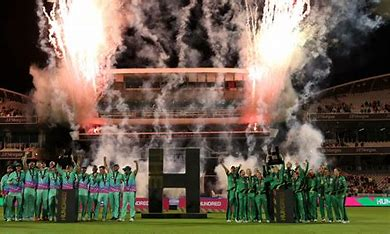
The Hundred 2024 has finished and the County Championship and Tests resume this week.
I glanced at it rather than watch, but the women’s game remains of good quality while the men’s is patchy. This isnt really about the cricket though but the wider issues The Hundred throws up.
Ticket sales in 2024 were a bit down but then there has been a lot of other sport this summer so far. 10 of the 34 games were played at Lords and the Oval but these accounted for 46% of ticket sales. A game at either venue is an occasion (but then surely so is Edgbaston or Old Trafford). It might be reflected that London audiences have more money available.
The Women’s game, particularly now salaries have increased, attracts top players from around the globe and is a success in a sport where equality and diversity lag. It needs to be said more often.
Audiences for the Hundred are also younger and more mixed and if you attend a Test at, say, Lords (as I did in July) you may reflect that this is not how cricket audiences always look.
Finally there is the issue of the franchising process. It officially starts in September. Given the ECB’s record in just about everything one hopes the Department of Media and Culture and Sport is keeping a close eye to make sure that what transpires is actually in the wider interests of English and Welsh cricket
On Wednesday 16th August an armed rising was planned for Seven Dials in central London. It was well supported, perhaps around 5,000 people, but it did not actually take place. Word went round that the authorities knew of it and the crowd dispersed.
The authorities did indeed know of it because police spies- Thomas Powell being the most well known- were key instigators of it.
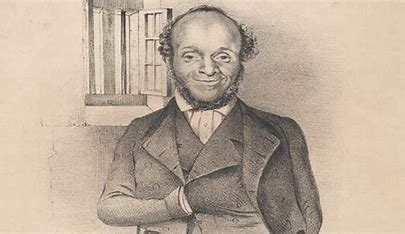
Among those arrested was the black leader of London Chartism William Cuffay. Cuffay was more militant than the national Chartist leadership. He had been unhappy that the plan to march on Parliament on 10th April 1848 from Kennington Common was abandoned. He was also certainly present at least some of the planning meetings for the 16th August.
Whether Cuffay aimed to lead the rising or prevent it remains, on the evidence we have, unclear.
David Goodway notes in his book London Chartism that there was a conspiratorial tradition in London radical politics of which Seven Dials was the last notable event.
The extract from the Chartist Northern Star needs to be understood in this context. 1848 was a year of revolutions across Europe and the British Government remained concerned that it could happen in London and elsewhere too (there was a similar rising at the same time in Ashton). It had passed repressive Treason and Security laws earlier in 1848 aimed at criminalising Irish radicals and to some extent Chartists.
The national Chartist leadership were clearly concerned that the Government might act to ban Chartism. The well known national Chartist leader Ernest Jones had already been arrested and imprisoned after a speech in East London in June 1848.
Northern Star 26th August 1848
THE « CONSPIRACY.” Our town edition of last Saturday contained a report of the examination of the persons arrested in London on the preceding Wednesday. That report supplied to our country readers this week, is accompanied by notices of subsequent arrests and examinations. Two or three of the persons arrested, or said to be implicated, are known to have professed Chartist principles, and on this foundation the Press gang have been howling for a week past, over what they have called the ” Discovery of a Chartist Conspiracy.” ” Conspiracy ” there may have been, but not a Chartist conspiracy. The only known Chartist against whom that charge is brought is Cuffay. Now, taking the evidence against Cuffay for granted—which, in fact, considering the suspicious source it comes from , we are not inclined to do—it is rather too bad that one man’s folly should be made the pretext for invoking vengeance against the entire Chartist party. The prosecuting counsel, Mr Clarkson, admitted a distinction between the veritable Chartists and the misguided men who, as he said, “took upon themselves the character of Chartists,” and ‘ affected to be Chartists”—a distinction which the Press would have imitated, had its conductors any regard for truth…
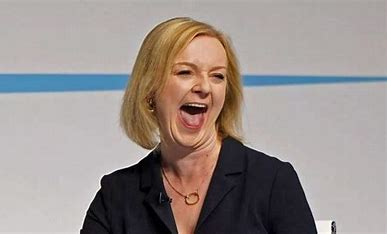
Liz Truss appeared at the Edinburgh Fringe Festival earlier in August. The occasion was a discussion about her recent life and times. The audience weren’t too impressed and some heckled and booed.
Yet at the Scotsman (3rd August) pointed out this is quite normal for a stand-up comic (although Truss was in fact sitting down). When asked to apologise for her 49 day Premiership she described the comment as inane.
She did however venture that her policies of higher mortgage costs for many and tax cuts for the rich would have led to a better Tory Election result on July 4th than Rishi Sunak managed.
Its not perhaps a laugh out loud line but the Scotsman suggests it could be contender in the annual competition to find the best joke of the Edinburgh Fringe. Indeed as Trevor Griffiths argued in his play The Comedians some of the best comedy is precisely not laugh out loud material but that which provokes thought.
Unfortunately Truss’s Election line did not however make the Top 15 Edinburgh Festival jokes list.
Top 15 jokes of the 2024 Fringe (BBC)
1. I was going to sail around the globe in the world’s smallest ship but I bottled it. – Mark Simmons
2. I’ve been taking salsa lessons for months, but I just don’t feel like I’m progressing. It’s just one step forward… two steps back. – Alec Snook
3. Ate horse at a restaurant once – wasn’t great. Starter was all right but the mane was dreadful. – Alex Kitson
4. I sailed through my driving test. That’s why I failed it. – Arthur Smith
5. I love the Olympics. My friend and I invented a new type of relay baton: well, he came up with the idea, I ran with it.- Mark Simmons
6. My dad used to say to me “Pints, gallons, litres” – which, I think, speaks volumes – Olaf Falafel
7. British etiquette is confusing. Why is it highbrow to look at boobs in an art gallery but lowbrow when I get them out in Spoons? – Chelsea Birkby
8. I wanted to know which came first the chicken or the egg so I bought a chicken and then I bought an egg and I think I’ve cracked it. – Masai Graham
9. My partner told me that she’d never seen the film Gaslight. I told her that she definitely had – Zoë Coombs Marr
10. The conspiracy theory about the moon being made of cheese was started by the hallouminati. – Olaf Falafel
11. I’m an extremely emotionally needy non-binary person: my pronouns are ‘there there’. – Sarah Keyworth
12. I’ve got a girlfriend who never stops whining. I wish I’d never bought her that vineyard – Roger Swift
13. Gay people are very bad at maths. We don’t naturally multiply. – Lou Wall
14. Keir Starmer looks like an AI-generated image of a substitute teacher – Sophie Duker
15. Growing up rich is a hereditary condition. It affects 1% of people – Olga Koch
The Labour Representation Committee was formed at a conference held in Farringdon St, central London, on 26 & 27th February 1900. Its aim was to secure Parliamentary representation for the interests of working people, that is ‘labour’. It was not to obtain a majority Labour Government. Such a matter was un-thought of at the time.
The building still stands (much modernised)and the Memorial Hall is marked by a plaque. I covered the offices it now accommodates as a union officer for many years.
In 1906 29 MPs were elected under the LRC banner and the Parliamentary Labour Party was formed. The vote for who should lead it was tied on the first round and on a subsequent vote Independent Labour Party member Keir Hardie just edged ahead.
Naturally there was a good deal of interest in who the 29 Labour members were.
Many were from Lancashire- where the Liberal vote had been weak but anti-Tory feeling still strong. There were also trade union officials and leaders with a minority being ILP socialists like Keir Hardie, Ramsay MacDonald and Philip Snowden,
There were no women- female suffrage did not yet exist. The split between moustaches and beards in the ranks of the LRC MPs was more or less even with Philip Snowden clean shaven.
W T Stead Editor of the Reviews of Reviews sent a questionnaire to the 29 MPs asking them about their reading habits and favourite books.
Stead and more particularly the only significant commentary on Stead’s piece by Bealey and Pelling (1958) are quite condescending about the responses received, unjustifiably so.
Hardly any of the 29 had read Marx and only a few any work by a well-known socialist such as Robert Blatchford.
Will Thorne, a Marxist and an SDF member had read Marx while Charles Duncan an ILP member had read Blatchford’s Merrie England and George Barnes was familiar with the work of William Morris. Some had read Fabian Tracts
Leading ILP member Philip Snowden meanwhile said he had been influenced by an American critic of socialism, Richard T Ely.
I’m not sure that it is really a huge surprise that few of the 29 LRC MPs of 1906 could be called committed and well-read Marxists.
What is perhaps more interesting is the depth of their, at least professed, reading across more general works. Some had consulted the Bible which is hardly a surprise as nearly all the 29 MPs were Methodists. It’s fair to say that from its pages they had taken some kind of radical thoughts.
Others had read Henry George- who wrote on land nationalisation- and numbers were familiar with Charles Dickens and Thomas Carlyle.
Overall those 29 MPs- the first to represent the Labour Party in Parliament were a well-read bunch. They were mostly not well up on the Marxist critique of capitalism but they had certainly read widely on what might be called the ‘human condition’, about poverty and the struggle to survive in a profit led society.
Most were union officers who most on the left nowadays would regard as being uncomfortably close to the interests of the employer.
However, as with Taff Vale, the employer wasn’t always interested in having a close or any relationship with unions. Those MPs did at least have a reasonably good grasp, through experience and reading, of the conditions those who voted for them experienced, even if they didn’t always do much about it.
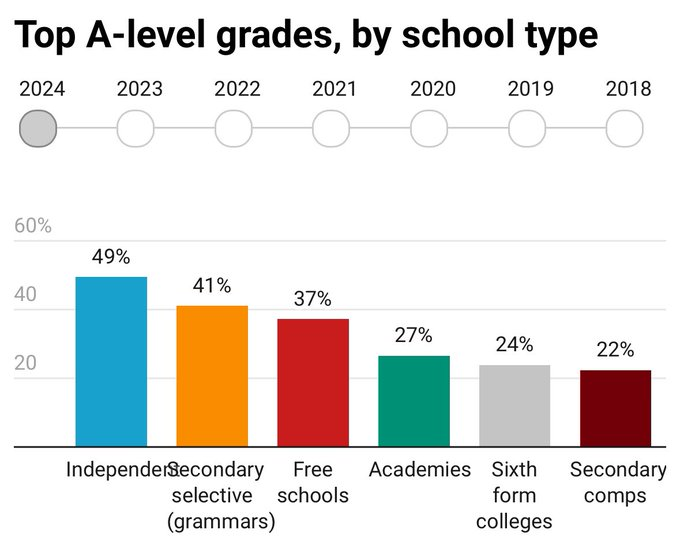
The data is from the Spectator (18th August 2024) who I expect see it as a good thing. It shows the percentage of 2024 A Level passes at the top A/A* star grades
Others might note that the unfortunately usual skewing towards fee paying and Grammar schools, reflects a challenge for those who want to see a more equal society and (not the same thing) those who want to see one where there is more equality of opportunity.
A challenge for the new Education Secretary. Perhaps