Articles

The Army & Beards. Shapps gives way. Beard Liberation Front Guardian analysis

In Uncategorized on March 29, 2024 by kmflett

The Army & Beards. Shapps gives way. Beard Liberation Front Guardian analysis
The article below appeared in the Guardian in December 2023.

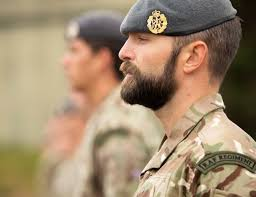
It was in response to the news that the Army was considering relaxing some entry requirements to address a recruitment crisis, in particular the long running ban on beards for most ranks.

The current Defence Secretary Grant Shapps made what is quite a typical Government response. While beards have not been directly mentioned he has attacked what he terms ‘wokery’ in the military and underlined that ‘standards’ should not be relaxed. By that he means, at least in part, beards.

However Shapps has now bowed to what some may think was the inevitable and on 29th March it was announced that soldiers will be allowed to wear beards, although not of the ZZ Top variety. Modest progress in history

News that the British Army is considering a change to its very long running ban on soldiers wearing beards for most ranks is to be welcomed. The Navy and more recently the RAF do allow beards, although no doubt with the proviso that they are neat and orderly. We are not talking ZZ Top here.

As the organiser of the Beard Liberation which since 1995 has advocated for the right of people to be able to dress and appear as they want I welcome this.

The change is reportedly due to the fact that the Army is having trouble recruiting people, and thinks allowing beards might help with the numbers of male soldiers. As its advertising used to emphasise, as well as the ‘poor bloody infantry’, professional soldiers themselves, the Army also has large numbers of people with specific skills in its ranks Take for example Signals, which equates to telecoms and tech. This is a highly hirsute occupation in civilian life, and it can be seen that an employer with a beard ban might not appeal.

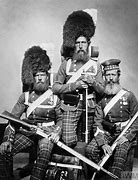
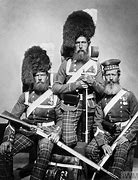
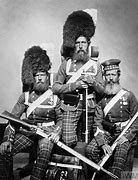
Of course the British Army historically has not been entirely bereft of beards. The Crimean War in the 1850s comes to mind, where soldiers grew bushy beards to keep the cold and frost out. Various other nineteenth century British imperial adventures saw the involvement of hirsute soldiers. Even today a range of ‘special forces’ – for example those that were deployed in Afghanistan – are allowed to have beards.

Hopefully the change to allow all soldiers to wear beards will mean that it will no longer be just a ‘special case’ but something that is routinely accepted. Should the move go ahead we can expect controversy and most likely a full blown Culture War. Somewhere out there are people who have devoted a lifetime to studying and opining on how soldiers in the British Army should dress and appear. We can be sure they will be on talk shows on GB News telling us, while looking somewhat red faced.

Its not so long ago for example that there was a debate in the right-wing media about whether Prince Harry could or should turn up at various Royal occasions wearing his beard. Many column inches were taken up discussing whether it was in line with protocol or not. In the event Harry turned up with beard intact and the world moved on. Clearly the Royal Family is in a position to make its own rules.

Even so there will be objections. Whether a Tory Minister or even Rishi Sunak decides to launch a Culture War on the subject we’ll see. They seem to be highly random events. It is certain however that columnists will denounce the Army as Woke. Age old prejudices will certainly be on display. Beards are seen as dirty, and unkempt and, referencing The Twits, containing left over bits of lunch. They are also a sign that the beard wearer is hiding something and quite probably that they have dubious morals. None of this of course from the perspective of Culture Warriors is what the British Army should be about. While Army beards will no doubt be neat and tidy they will still have variations in style, suggesting that soldiers may be thinking for themselves about their appearance and image rather than conforming to an imperial stereotype where they all look the same.

Yet beyond the archaeic dislike and even hatred of beards the world has changed. As a trade union officer in the City of London I still have a desk – which I visit in the era of flexible working less often than I did. However while 25 years ago I would have been surrounded by clean shaven men in suits, now beards are everywhere. Not just the rank and file but senior managers too.

In 2023 there is an understanding at least amongst those emplyers that are living in the twnty-first century that its not how someone’s appears that matters. Rather it is their skills and how effectively they perform them that is key. I’d like to think the beard helps here but that is probably fanciful to be honest.

Of course, there may also be a downside. The British Army gets deployed in all manner of military and imperial activities which may at least to some appear to be highly controversial. British soldiers with beards being pictured in the media where a hotly disputed encounter has taken place could risk bringing the hirsute into disrepute. It is a consideration, but one that can be countered by the reality that the order for the Army to engage will have come ultimately from some almost inevitably clean shaven politician.

Let’s hope then that the Army proceeds with a very long overdue policy change on appearance and beards, and that it is ready for the opposition from beard haters and clean shaven arm chair Generals that it will almost certainly face.

https://www.theguardian.com/commentisfree/2023/dec/05/british-army-allow-beards-culture-war-woke
Articles

Campaigners welcome long overdue lifting of Army beard ban

In Uncategorized on March 29, 2024 by kmflett

Beard Liberation Front

29th March

Media Release

Contact BLF Organiser Keith Flett 07803 167266

Campaigners welcome long overdue lifting of Army beard ban

The Beard Liberation Front, the informal network of beard wearers, has welcomed the long overdue lifting of the ban on beards in the British Army, announced on Friday.

The Navy and more recently the RAF do allow beards, although with the proviso that they are neat and orderly rather than ZZ Top style

The Beard Liberation has since 1995 advocated for the right of people to be able to dress and appear as they want obviously in this case within the framework of a uniformed service.

The British Army historically has not been entirely bereft of beards. The Crimean War in the 1850s where soldiers grew bushy beards to keep the cold and frost out is often noted. Various other nineteenth century British imperial adventures saw the involvement of hirsute soldiers. Even today a range of ‘special forces’ – for example those that were deployed in Afghanistan – are allowed to have beards.

BLF Organiser Keith Flett said, this is a decision which we welcome in principle. It does not of course mean that we are signing up to everything the British Army may get up to while its soldiers are wearing well-manicured beards.

Articles

Sam Bankman Fried could only operate in an economy that has lost all sense of the moral

In Uncategorized on March 28, 2024 by kmflett

Sam Bankman Fried could only operate in an economy that has lost all sense of the moral

Financial swindler Sam Bankman Fried has been sentenced to 25 years in jail. Many lost out in a big way thanks to his activities and it remains unclear how much money they will be able to recover.

Aditya Chakrabortty has written an, as usual, to the point piece on what SBF actually means for politics and economics in 2024:

https://www.theguardian.com/commentisfree/2024/mar/28/sam-bankman-fried-jail-ftx-money

He correctly points out that a Starmer Government might well end up entangled with similar characters to SBF when it looks for those who will fund green and housing projects.

SBF could only really operate in an economy that has lost all sense of the moral. That applies to the US and the UK. In the UK we need only look at the activities of Arriva on the West Coast Main line, British Gas and Thames Water to grasp the point.

The idea of a moral economy is a well worn one. It existed in part in the eighteenth century and the socialist historian E P Thompson researched and wrote about it. It was not a socialist economy but one where the wealthy understood that they had certain obligations to the poor. This meant  that the basic necessities of life should be both affordable and available. The poor for their part also understood the deal. When it broke down protest and even riot took place, while the rich for the most part grasped that if it did break down their rule could be at risk.

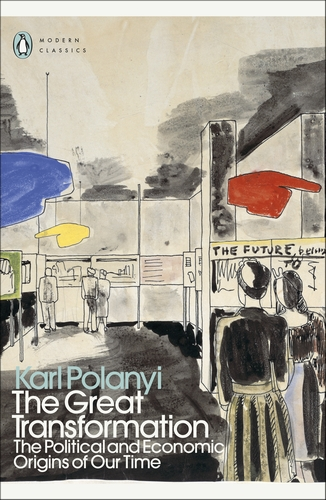
Thompson however did not invent the term moral economy. If anyone did it might have been Karl Polanyi, an Austrian who fled the Nazis and lived in the UK and then the US. In 1944 he published a book the Great Transformation. Later this year it will appear as a Penguin Modern Classic, 80 years on.

Its not certain that Thompson was familiar with the work of Polanyi but it is likely. While his work is often claimed to be social democratic in its perspective, in reality he was probably closer to the post-1956 New Left.

In her recent speech to suit wearers in the City of London Rachel Reeves mentioned Polanyi and the idea of a moral economy. Perhaps she had just been raiding Wiki again. However Blair in 1997 said that Company Law needed to be reformed so that the legal obligation was not just to shareholders and the bottom line but also to wider society. It never happened

If future SBF’s are to be stopped Rachel Reeves will need to make sure it does happen however modestly

Articles

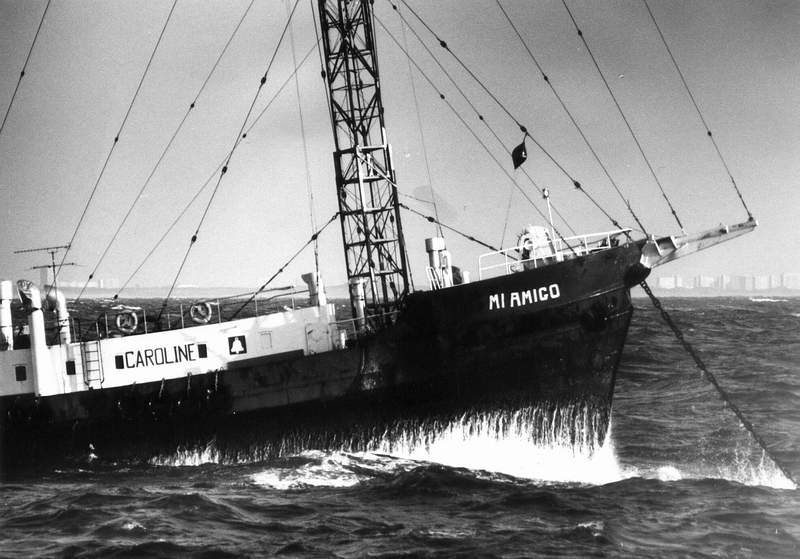
61 years since the start of Radio Caroline & Tony Benn’s part in its downfall(1960s Labour wary of pop music..)

In Uncategorized on March 28, 2024 by kmflett

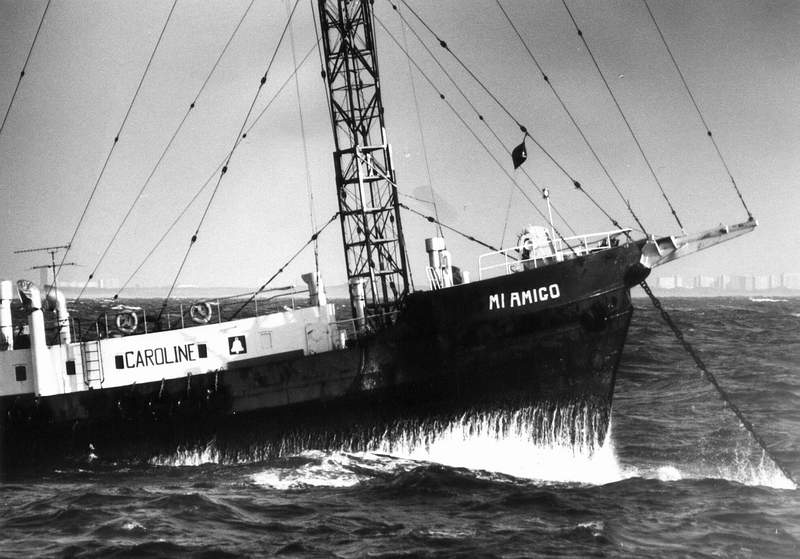
61 years since the start of Radio Caroline & Tony Benn’s part in its downfall.

Radio Caroline first broadcast test transmissions 61 years ago on 27th March 1964. In its original form it lasted until August 1967 when the Marine Offences Act made broadcasting from a boat off the UK mainland illegal. That meant the end for most of the ‘pirate’ stations that had broadcast, primarily off the Essex Coast, although Radio Caroline continued and was joined for a period by Radio North Sea which was run out of Holland.

Many of the DJs on the pirate ships went on to work for BBC Radio One which was set up as the official alternative including of course John Peel.

The Wilson Labour Government had pushed through the measure- the Minister ultimately responsible being Tony Benn- because of concerns about how the pirate ships operated and also because of issues with interference with communications channels.

Benn was Minister for Technology in August 1967 but had spent much of the time since 1964 as Posts Minister. In his Diary he lays out a future for radio which the Act started to put in place. He noted a dislike of commercial stations and the people who ran them but wanted to promote both popular music on the BBC and set up a series of local radio stations.

Benn reports that the BBC showed no interest in devoting more air time to pop music as this would be pandering to popular tastes. Dominic  Sandbrook’s suggestion in his book White Heat, a social history of the 1960s, that the BBC was behind the 1967 Act appears mistaken. It was the Post Office and to some extent the Musicians Union, concerned that they and their members gained no direct benefit from records played on the pirates.

The reality is though without the pirate ships pop music culture would not have made the impact it did on 1960s Britain.

There was something of a radical element of shaking up the stifling conservatism of post-1945 British popular culture but the stations were commercial affairs. They were the forerunners of the independent radio stations that operate throughout the UK today and many of the leading DJs were hardly radical themselves. Indeed one, Roger Gale, became a Tory MP having previously joined Radio Caroline as a DJ in 1964.

https://en.wikipedia.org/wiki/Radio_Caroline

Articles

Once again on the dialectics of Wordle

In Uncategorized on March 28, 2024 by kmflett

This is NOT a current Wordle solution!

Once Again on the Dialectics of Wordle

Wordle the daily word puzzle that moved from attracting a few thousand people in the late Autumn of 2021 to millions now, has even been the subject of an exchange between the Head of M16 and GCHQ. Clearly the ruling class takes the matter seriously and Boris is a five letter word although not one that would work in Wordle (or anywhere else it seems)

Personally I continue to employ a dialectical approach. Starting with the thesis-the five letters I think might usefully and quickly lead to a solution, I then review the antithesis- finding out how many of those are actually correct- and finally the synthesis, a process of ruling in and ruling out letters, hopefully in as few lines as possible.

Which particular perspective on the dialectic to take is more complex. I prefer the Fred Casey method (he demonstrated in the 1920s the dialectic via the example of the boiling kettle) or that of TA Jackson who wrote what is in my view the best book on Dialectics. But one can of course deploy the method of Dietzgen, Engels or Hegel and perhaps others as well.

Turning theory into practice is daily work which must take place in practice.

Wordle was sold to the New York Times whose Editorial policy is as dodgy as the Times in London but Wordle, so far, stands alone

Articles

Beard of Spring 2024 Vote. Competition bristles in Final Beard Off

In Uncategorized on March 28, 2024 by kmflett

Beard Liberation Front

28th March

Contact Keith Flett @kmflett

Beard of Spring 2024 Vote. Competition bristles in the Final Beard Off

The Beard Liberation Front, the informal network of beard wearers, has said that voting for the coveted Beard of Spring Award is reaching a conclusion prior to the Easter weekend.

Beard of Spring is the second of four seasonal awards that lead to the Beard of the Year in December.

The campaigners say that while the second seasonal award of the year traditionally focuses on new beard growth, the focus in 2024 is as much on those whose beards have appeared in a positive public light during the quarter. There are rather too many well known public beard wearers who do not show the hirsute in a positive light at the moment.

BLF Organiser Keith Flett said, the Beard of Spring poll sets the beard-benchmark for the period ahead when beards can be flaunted in public as the weather hopefully improves.

Close Shave Round One March 26th Sir Lenny Henry & Gareth Southgate shaved Owen Jones & Scottie Scheffler to be the first in the Beard Off Final

Close Shave Round Two March 27th Michael Rosen & David Jesudason shaved Vaughan Gething & Andy Murray to complete the Beard Off Final list

Final Beard Off March 28/29th

Winner announced on Easter Saturday

Shortlist

Sir Lenny Henry, former Red Nose

Vaughan Gething, Welsh Labour leader

Michael Rosen, resilient beard wearer

Owen Jones, journalist & activist

Scottie Scheffler, golfer

Andy Murray, tennis player

Gareth Southgate, football manager

David Jesudason, Author & journalist

Articles

Marx & Engels, Alan Titchmarsh & the Trousers Question

In Uncategorized on March 27, 2024 by kmflett

Marx & Engels, Alan Titchmarsh & the Trousers Question

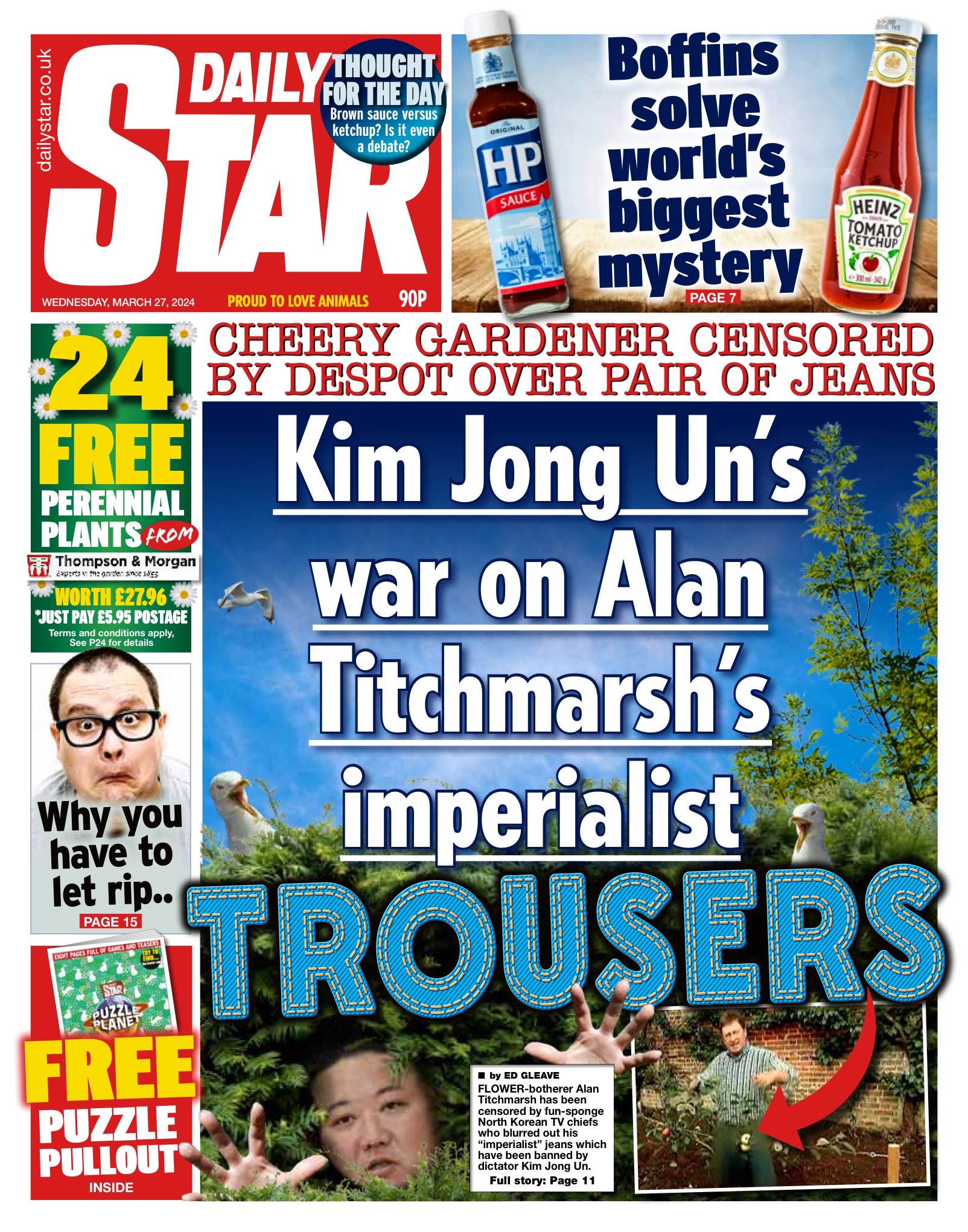
For rather obscure reasons North Korean TV is showing Alan Titchmarsh gardening programmes first aired on the BBC a good while ago. What their appeal to the North Korean masses might be is also obscure but whatever it is, it won’t be Titchmarsh’s trousers which have been pixelated.

While its difficult to imagine that Titchmarsh has ever worn anything as plebeian as a pair of jeans, North Korea is very touchy about anything that might even look like them. They are a symbol of Western bourgeois decadence.

The relationship between North Korea and Marxism seems to me non-existent since any materialist understanding of the matter jeans are hard waring items suitable for proletarian labour.

However I have had a look at what Marx and Engels thought on the Trousers Question.

Engels in the Condition of the Working in England in 1844 noted that trousers of fustian or ‘other heavy cotton goods’ were worn underlining that ‘Fustian has become the proverbial costume of the working-men’.

Marx looked at the Trousers Question theoretically. Writing on the invariably controversial issues of productive and unproductive labour in the Economic Manuscripts. He argued that the ‘jobbing tailor(who works for me at my home) is not a productive labourer, although the labour provides me with the product, the trousers. If this seems odd Marx is looking at how much value and indeed surplus value was created by artisan trouser production as he described.

Perhaps on reflection North Korean TV has a point and trousers are a complex issue best avoided

Articles

The Wire. Actor who played Frank Sobotka’s son Ziggy, dead

In Uncategorized on March 27, 2024 by kmflett

The Wire, The Baltimore Bridge & Frank Sobotka

It is 17 years- March 9 2008- since the last episode of The Wire aired on US television and 16 years since it started airing on the BBC

The programme, set in the US city of Baltimore, ran to some sixty shows over five series.

Created by David Simon is it perhaps best known in the UK-where it aired on BBC2 from 2009- for introducing the actor Dominic West to public attention as the police officer McNulty but there are a string of other memorable performances often by black actors such as Idris Elba who have also since gone on to become very well known.

The programme is a snapshot of everyday life in a predominantly working class US city.

The title refers to the ability of the police to tap in to and record the conversations of the criminally inclined- often drug dealers-and to secure their conviction.

The five series cover a range of subjects. The first looks at police and drug dealers. The second at the port of Baltimore and workers organisation. The third returns to drugs but looks also at politicians and the legal process. The fourth looks at education and the fifth at the media.

The second series on the waterfront contains probably the only sustained TV treatment- and a sympathetic  one-of trade union organisation ,the fictional International Brotherhood of Stevedores. It also includes what must be the only scenes ever shown on mainstream TV of routine life in a branch trade union office. The union branch secretary Frank Sobotka has to bend rules to keep his union going in a declining industry and ends up murdered. His son Ziggy Sobotka was played by James Ransone who has sadly died at 46

https://www.theguardian.com/us-news/2025/dec/21/james-ransone-the-wire-actor-dead?CMP=share_btn_url

Ziggy Sobotka was a counterweight to his father Frank, the hard pressed and ultimately corrupt union official

https://en.wikipedia.org/wiki/Ziggy_Sobotka

David Simon had been a reporter on the Baltimore Sun and he was at pains to underline that all the themes of The Wire- drugs, gangs, political corruption- were based on stories that had actually happened.

The tragic collapse of the Baltimore Bridge in 2024 after it was hit by a ship was a reminder of a scene from the Wire where Sobotka meeting his son notes that the bridge and his union would last forever. However as Marx noted, all that is solid melts into air

Articles

Campaigners say Gullis is bringing the hirsute into disrepute

In Uncategorized on March 26, 2024 by kmflett

Beard Liberation Front

26th March

The Beard Liberation Front, the informal network of beard wearers, has said that the appointment of hard right loudmouth Jonathan Gullis as a Deputy Chair of the Tory Party will bring the hirsute into disrepute.

Gullis has perhaps the highest profile of any beard wearer in the Commons but has been repeatedly barred from a range of BLF polls due to boorish behaviour and bigoted comments.

BLF Organiser Keith Flett said, Jonathan Gullis represents the worse possible image of beard wearers. We can at least answer the traditional jibe about what he is hiding behind his beard by noting ‘absolutely nothing’

Articles

Socialist History Seminars Spring 24. Recordings of Dr Who & the Communists, Chartist Women & Anti-Colonialism & the Early Modern British Empire

In Uncategorized on March 26, 2024 by kmflett

All seminars organised by the socialist history seminar at the Institute of Historical Research and supported by the London Socialist Historians Group:

http://londonsocialisthistorians.blogspot.com/

David Veevers ‘Anti-colonialism as the analytical lens of the Early Modern British Empire’.

https://us02web.zoom.us/rec/share/vfit49AfwEkXlVH0-UgSp2gTco-iphXQ0b4Xc2vz7BXA385ypt9lHniBsl80MmS1.9Pj9T4WNZ2keUzcn

Judy Cox ‘Hen Chartists’ and ‘Vulgar Viragos’: Rethinking the role of women in the Chartist Movement 

https://us02web.zoom.us/rec/share/ru9-y12FOglTiZmDDkBxPiePjY5DQSKQBQ0AJI_TDin6hODHn1mZm01BB8MQ3fPX.wbvZ_AcIdp7gW2V-

Michael Herbert Doctor Who and the Communist: the work and politics of Malcolm Hulke TV scriptwriter

https://us02web.zoom.us/rec/share/3l94gbnHxlFflVLDg5fY7ZI9n6MMgHfXIKMuV9mleRWzjWavU9oDVSfsrXpu9Cir.lAmTg8dvuC1D95dH

The following seminar was in person only:

Transnational Perspectives on French Anarchism(1880-1918), Biography, Networks and Print Culture Constance Bantman

The seminar programme for the Summer Term 2024 will be available after Easter with seminars running in May and June