Articles

Galloway wins at Rochdale: the return of the radical ‘Gentleman Leader’

In Uncategorized on March 1, 2024 by kmflett

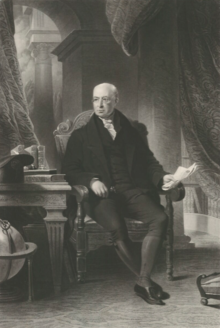
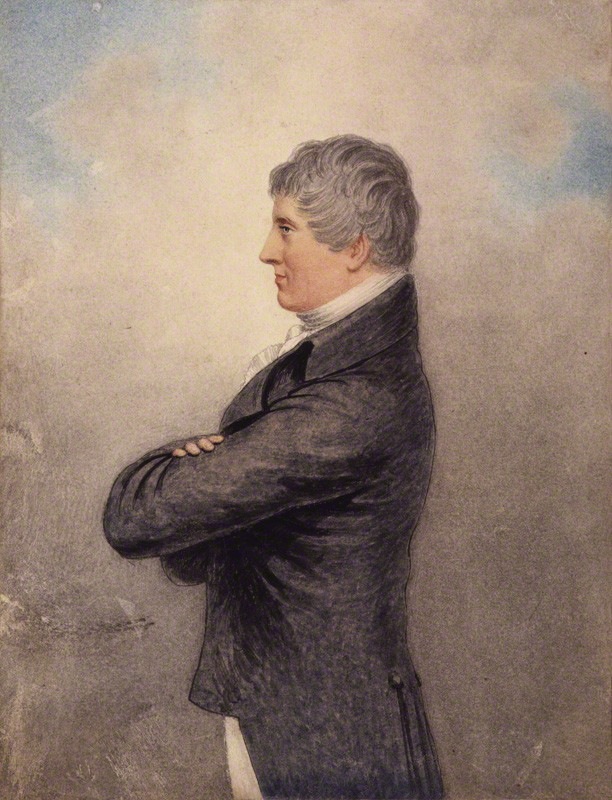
Henry Hunt

Galloway wins at Rochdale, the return of the radical ‘Gentleman Leader’

George Galloway’s victory at Rochdale is impressive, whether you like the politics or not. He circulated a 10 point programme during the campaign. The first point mentioned Gaza, the other nine focused on improving public services in a mildly social democratic way, although references to ‘high quality’ did suggest that a management consultant might have had hand in writing it.

In 2024 Galloway is mildly on the left on economic issues (as he always has been) and very much on the right on social issues.

He is and has been a consistent anti-imperialist and this is primarily what the Rochdale victory is about. It underlines that while Westminster can manage no more than waffle on Gaza it is out of touch with those many thousands who have marched and protested about Israel’s actions. It is a powerful signal and a democratic one from the grassroots.

In this context Galloway can be understood as a radical- that is someone who can take positions on the left and the right but is perhaps, certainly historically, identified with one main issue.

In the nineteenth century, leaders such as Henry Hunt and Feargus O’Connor had to have some independent means to be able to tour the country addressing meetings and organising protest.

Hunt, who was the only speaker at Peterloo in 1819 was elected for Preston (1830-33) while O’Connor, the Chartist leader sat as the Nottingham MP (1847-52)

They were known as Gentleman Leaders and they were larger-than-life characters.

Edward Thompson addressed the issue of the strengths and weaknesses of such leadership in the Making of the English Working Class and, no doubt influenced by the events of 1956, noted that there was also a working-class tradition that preferred to avoid having such leaders in the first place.

Some of the activities of Henry Hunt, who was a great leader, can put Thompson’s words in perspective. Hunt was also a businessman, marketing shoe blacking and aromatic herbal tea. He reportedly found some difficulty in dividing his political work from his business affairs.

The Social Democratic Federation (SDF) was the last major redoubt of the Gentleman Leader and it had lots of them, all with facial hair. There was Hyndman, Belfort Bax, Henry Champion and JL Joynes. Suffice to say, they had strengths and also considerable weaknesses.

Once we move into the 20th century, the picture changes. The labour movement developed. While leaders still needed to be a little larger than life, they did not always require independent means.

One example, John S Clarke, was the subject of a biography by the late socialist historian Ray Challinor.

As Challinor pointed out, Clarke was a lion tamer, poet and MP and found no problem in combining these unlikely occupations.

Clarke, born in Jarrow, was a member of the SDF. He joined the Socialist Labour Party because of its focus on industrial work.

He edited the paper of the Clyde Workers Committee, did not join the infant Communist Party of Great Britain and was briefly Labour MP in 1929 for Glasgow Maryhill, where he narrowly avoided death on the maiden voyage of the R101 airship.

In between times, Clarke ran a zoo and wrote popular poems, including The Man In Peterhead about John Maclean.

He was a delegate with Willie Gallagher to the second congress of the Comintern. While there, he found time to pop round to the Kremlin and cure Lenin’s dog of an ailment.

In return, Lenin gave him a signed photograph, something that we associate with current ways of celebrity behaviour.

Challinor argued, with some justification, that the very circumstances that allowed someone to stand out against the tide of ideas in capitalist society and become a radical or socialist leader might also make them do other things which appeared odd or eccentric in the context of that society.

Of course nowadays a figure like Galloway is more likely to be called a populist. Idiosyncratic and iconoclastic, the key message such figures carry- whether on the vote in the nineteenth century or imperialism now can still be a powerful one
Articles

Sunak, the mob & democracy

In Uncategorized on February 29, 2024 by kmflett

Rishi Sunak says democracy is in danger from the mob. He may be right, not the right-wing conflation of the term with a peaceful democratic crowd but rather its meaning as a protection racket. It seems to have been going on in its current form since 2010.

Articles

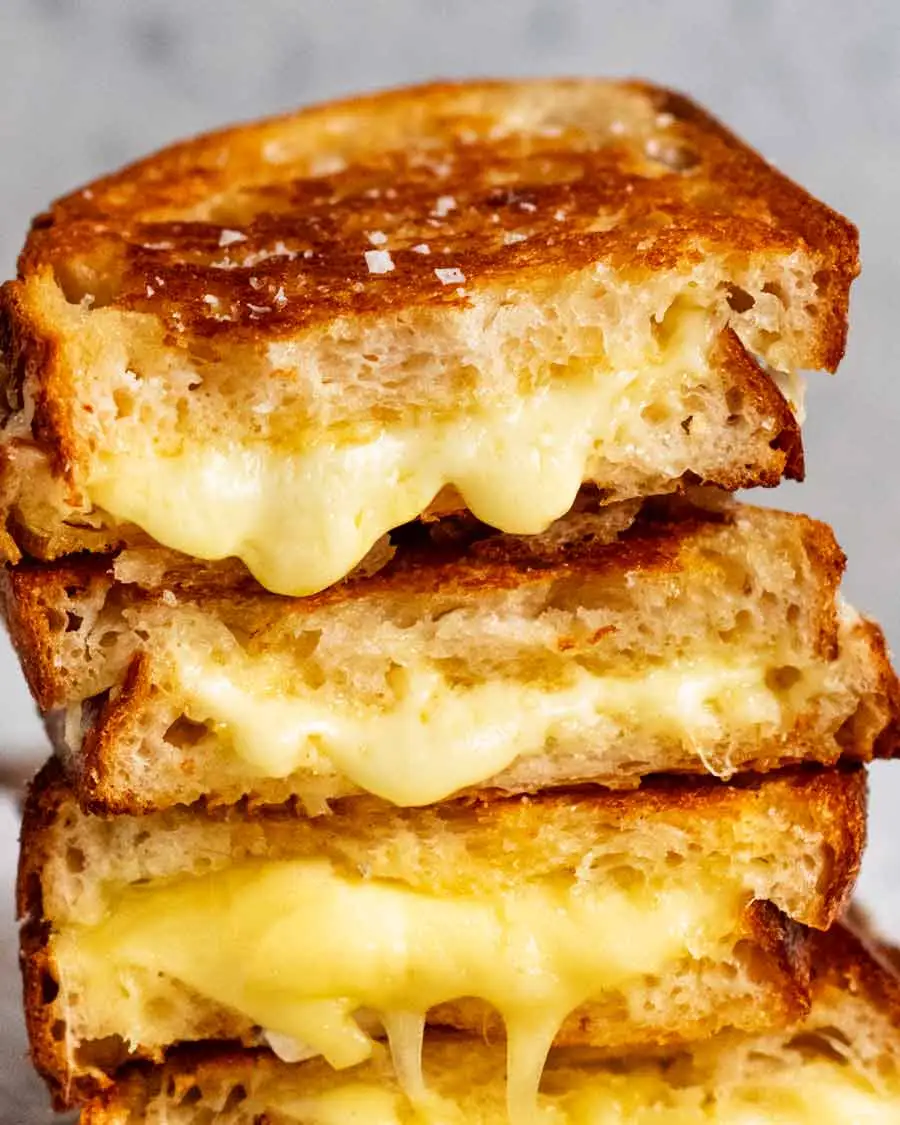
Churchill loses Cheese Toasties v Croque Monsieur Culture Wars

In Uncategorized on February 29, 2024 by kmflett

The Times has long had an obsession with French cuisine, traditionally considered superior to English cuisine by the ruling class. In the Murdoch era the paper runs several stories each week underlining that French eating habits are changing to those more familiar in England if not the UK. France is one of the biggest consumers of Big Macs

A Culture War has started over whether the Croque Monsieur or the Cheese Toastie is best.

The Salon du Fromage et des Produits Laitiers has organised the first international cheese competition.

There were 5 contestants including cheese people from the UK, US, Belgium and France

The winner was a Belgian take on a cheeseburger consisting of a bun, fourme d’Ambert blue cheese, chicory and a poached egg

Since this is neither a croque monsieur or a cheese toastie clearly the culture war will continue.

Churchill preferred a croque monsieur but a social media poll on this account showed that cheese toasties are preferred to croque monsieurs. Obviously this may reflect an anglophone bias or a decline in class preference for French cuisine in ruling class circles..

In fact the debate moved on, certainly in the letters columns of the Times to what kind of cheese toastie is best.The use of mustard was noted, as well perhaps some tomato sauce on the side. My favourite remains a haggis cheese toastie but I doubt that culinary delicacy has yet been noted by Times readers

Articles

Michael Sheen shaved for St David’s Day Beard of Wales by Plaid Senedd member

In Uncategorized on February 29, 2024 by kmflett

Beard Liberation Front

Media Release

1st March

Contact Keith Flett 07803 167266

Michael Sheen shaved for St David’s Day Beard of Wales by Plaid Senedd member

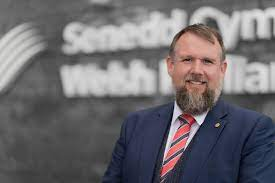
The annual vote which aims to determine the St David’s Day Beard of Wales, the Welsh beard that offers the most positive national image, has concluded with the final Beard Off seeing Plaid Senedd member Peredur Owen Griffiths shave the holder Michael Sheen for the annual honour.

In an on-line poll he won 54% of the vote to Michael Sheen’s 38%

The Beard Liberation Front says that images of St David suggest that the Welsh Saint himself may have had an organic beard

Welsh rugby prop Adam Jones won the Award in 2013, voted for by BLF supporters, just shaving former Archbishop of Canterbury Rowan Williams. Another rugby player Leigh Halfpenny won in 2014. In 2015 the Award went to Thee Faction musician Chris Fox in 2016 footballer Joe Ledley and in 2017 to Charcutier Illtud Llyr Dunsford, with Chris Fox winning again in 2018. In 2019 journalist Grant Tucker shaved the opposition to claim the accolade. Michael Sheen has won the last four votes and the campaigners say that a fifth win would have seen him gain the honorary title of National Beard of Wales

It is the twelfth time the Award has been given following the traditional UK Beard of the Year at the end December each year and the BLF says it is a mark of Wales as a modern nation on St David’s Day that beards are now playing an increasingly significant role in national life.

BLF Organiser Keith Flett said, beards are blossoming in Wales, and competition bristled. We congratulate Peredur Owen Griffiths on having the beard power to win against Michael Sheen!

There wre two Close Shave Rounds on 25th and 26th February.

The top two from each round went to the Beard Off vote held on 27th and 28th February

In the first Close Shave round Assembly members Peredur Owen Griffiths and Hefin David shaved the opposition. In the second Close Shave round Michael Sheen and James Dean Bradfield were the follicular favourites.

The winner will be declared on March 1st

Shortlist

Hefin David, politician

Martin Shipton, journalist

Peredur Owen Griffiths, politician

Tom Jones, musician

James Dean Bradfield, musician

Michael Sheen, actor

Mark Williams, Snooker Player

Jack Sargeant, politician

Articles

Rochdale: a long history of Westminster condecension. The case of Magistrate Hay

In Uncategorized on February 29, 2024 by kmflett

The Rochdale By-Election takes place on 29th February to find a new MP after Labou’s Tony Lloyd sadly died recently.

Since a General Election is due whoever wins will quite probably only hold the seat for a few months. By-Elections are traditionally contests that focus on protests and issues of the moment because the election of a Government is not at stake. Voters can send a message of some kind to Westminster

Judging by London based media only certain kinds of messages are acceptable- certainly not anything on Gaza even if that issue is actually currently dominating Westminster politics.

Rochdale has a long history of being dumped on by Westminster politics. After Peterloo in 1819 magistrates were busy sending not the Yeomanry but protesters for the vote to jail. With Government support one of the most zealous, Magistrate Hay, was rewarded with the living of Rochdale a sinecure which paid £2000 a very large sum in those days. The living, in effect the clerical authority in a particular area, was a sinecure involving no activity from the recipient

https://en.wikipedia.org/wiki/William_Robert_Hay

Articles

If protests didn’t work they wouldn’t try to ban them

In Uncategorized on February 29, 2024 by kmflett

If protests didn’t work they wouldn’t try to ban them

The Times which frequently runs Editorials on protests (in the UK a bad thing, elsewhere often to be applauded) has determined (29th Feb) that banning demonstrations on Palestine would be wrong. It suggests instead that protesters just stop having them.

The right to demonstrate was hard won in practice. It took a massacre at Peterloo in Manchester on 16th August 1819, where soldiers on horse-back, cut down and killed and injured protesters for the vote, to remind that State that allowing political demonstrations was perhaps, mostly, preferable to such confrontations.

It is a right that has needed to be exercised in practice down the decades and centuries, and there have of course been times when demonstrations were banned, or attacked by the police.

Since the 1960s protest marches have become a significant way of focusing on issues which official Westminster politics ignores.

CND set the benchmark from the late 1950s often bringing hundreds of thousands on to the streets in an effort to ban nuclear weapons. They did so again on cruise missiles in the 1980s. It reinforced and promoted a tradition that democratic politics was about people themselves being active, as much or sometimes more than, voting for an MP every few years.

27th October marked the 55th anniversary of the anti-Vietnam War march that went to Hyde Park with a small breakaway to the US Embassy in Grosvenor Square, central London*. 1968 was a year of revolt and the State took precautions against revolution.

Protesters may have had this in mind in some cases, but the immediate aim was to stop war. That demonstration of 100,000 was historically large but much larger protests followed. The march against the Iraq War on 15th February 2003, which saw well over a million on the streets remains the largest so far in UK history.

That march ushered in an era when the message that politics was as much for the streets as it was the Commons reached a much wider layer of people. The right, with the Countryside Alliance, and the centre, with pro-EU marches also put hundreds of thousands marching through London.

These were usually one off marches, not within a democratic structure and certainly not feeding into longer running campaigns like CND and Stop the War. The distinction is important. It’s not just the march but the on-going grassroots, community and workplace organisation that is key.

In the last period a Conservative Government has sought increasingly to crack down on the right to protest. The last Home Secretary Suella Braverman gave a strong impression of wanting to ban all protest. Labour leader Keir Starmer, despite a human rights lawyer background, often seems not far behind. He has clearly read at least the opening passages of Ralph Miliband’s 1961 book Parliamentary Socialism which notes that Labour is the most dogmatic of parties- about Parliament not socialism.

Numbers on the streets can frustrate the banners. Current protests in support of Palestine have seen hundreds of thousands participate. Starmer has attempted to ban Labour from having anything to do with them. As Aditya Chakrabortty has argued in the Guardian the freezing out of legitimate issues from official politics simply encourages people to protest more.

There are two wider points. Firstly marching is not the only way to get change. There is indeed what the US sociologist Charles Tilly called a repertoire of contention, of possible strategies, from riots to meetings, petitions and lobbies. All have their place depending on context.

Secondly that the era of mass politics will continue, as politics is defined by the media and politicians as something that is done from above, the motivation to effect change from below grows with it. Its surely what motivated those who made their way to Manchester on that August Monday in 1819, and history suggests that it can work

Ian Birchall writes

The main 100,000 demo went to Hyde Park, not to Grosvenor Square, where it was feared there would be a police ambush and mass arrests. A small Maoist breakaway went to Grosvenor Square; the press, anxious to foment divisions, gave it a lot of attention. (I think Mick Jagger was also there).

An earlier version of this post appeared in the Morning Star

Articles

Ryde, Isle of Wight July 1874. Marx encounters the mob

In Uncategorized on February 28, 2024 by kmflett

Ryde, Isle of Wight July 1874. Marx encounters the mob

Tory politicians forever constructing culture wars have been ranting about mobs over the last few weeks, not least Sunak himself, the wealthiest MP in Parliament. He has echoed the thoughts of his erstwhile friend Lee Anderson.

By mob is usually meant a peaceful protest crowd who are expressing sentiments that politicians do not wish to hear.

There are however plenty of examples of mobs in British history

On 15th July 1874 Marx was in lodgings in Ryde, Isle of Wight. He wrote as he did regularly to Engels who was in Ramsgate. This was rather a reversal of locations since Marx was often in Ramsgate and Engels frequently in Ryde.

Marx noted that one of his daughters Laura had been to stay and he had accompanied her to the Portsmouth ferry when she had to leave:

When we went down to the pier to see her off we witnessed the arrival from Brighton of a temperance gang back from an excursion. Half of them were drunk. As an old Englishman next to me remarked ‘it was the worst lot he had ever met with in his life’ and neither have I ever encountered such a mob of stunted, loutish and smutty-minded idiots all at once…For foreigners this sample of Freeborn Britons would have been an amazing sight

Articles

28th February 1974 General Election. Tories asked ‘who governs Britain?’ & lost

In Uncategorized on February 28, 2024 by kmflett

28th February 1974 General Election. Tories asked ‘who governs Britain?’ & lost

The February 1974 General Election: periods of upheaval in post-1945 Britain

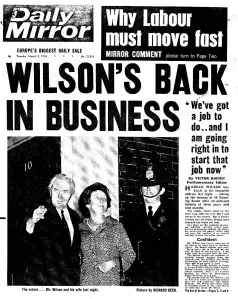
It is 50 years since the General Election of 28th February 1974 which was narrowly won by Labour and started a process that led to the first Referendum on the then EEC (now EU) in 1975.

Tory Prime Minister Edward Heath called the Election on 7th February 1974 and on 10th February the miners who had been involved in an overtime ban began an all-out strike. Heath had imposed a three-day working week from 1st January 1974 which meant that all non-essential commercial premises were limited to three consecutive days of electricity in any week. At the same time TV which had had to shut down at 10.30pm every night was allowed to broadcast for longer throughout the Election campaign. Inflation figures announced on 15th February revealed a 20% increase in prices over the previous year.

Heath’s focus in calling the Election was to confront the trade unions and labour movement directly with the slogan ‘Who Governs Britain?’. The Tories attack on the Labour Manifesto may sound familiar.

The Tories in 1974 claimed that ‘Labour today faces the nation committed to a Left-Wing programme more extreme than ever before in its history’. It will be difficult to make the same claim with Starmer’s Labour but reality is at an angle to such campaigns.

The outcome of the Election on 28th February revealed a polarised nation split down the middle. No doubt today centrists would be arguing that faced with a Tory Government that had introduced a three-day week and shut down TV early Labour should win a massive majority. In reality Labour got 301 seats to the Tories 297. Liberal leader Thorpe was unable to reach agreement on propping up Heath, unlike Clegg several decades later, and Harold Wilson headed a minority Labour Government.

The answer to Heath’s question as to who governed Britain, the Tories or the trade unions, had produced an interesting response. The miners got a 35% pay rise but 10 years later in 1984/5 the Tories took their revenge.

Lee Anderson’s racist rants contained a reference to the unions and the 1970s and while that won’t be the focus of the hard and far right Election campaign, if you replace ‘unions’ with ‘Islam’ you can see where this might be going.

The good news from 50 years ago is that it didn’t work

Articles

Historians say Home Secretary’s demand that Gaza protests stop has echoes of Peterloo

In Uncategorized on February 27, 2024 by kmflett

London Socialist Historians Group

Media Release

28th February

Contact Dr Keith Flett @kmflett

Historians say Home Secretary’s demand that Gaza protests stop has echoes of Peterloo

The London Socialist Historians Group, which organises the socialist history seminar at the Institute of Historical Research, has said that a call by Home Secretary James Cleverley in the Times (28th February) for Gaza protests to stop has authoritarian overtones which echo the period after Peterloo in 1819.

The Peterloo Massacre on 16th August 1819 in Manchester saw troops on horseback attack a peaceful crowd protesting for the vote. Tens were killed and hundreds injured.

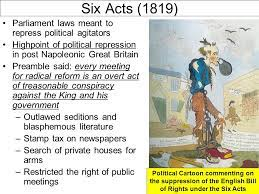
In the wake of Peterloo came the Six Acts which restricted the right of public meetings and protests.

The historians say that the Government of the day simply could not understand what was one of the first modern mass protests and could only think of dispersing it and then trying to ban any repetition

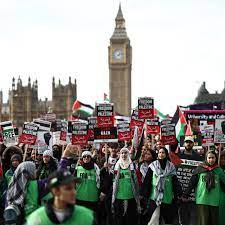
Gaza protests have taken place across the UK since October 2023 but the London ones have been especially large with many hundreds of thousands attending. They have been peaceful with few arrests given the size.

James Cleverley says the point has been made but he has clearly not heard it, as the focus has been on an immediate ceasefire in Gaza which the UK has persistently failed to vote for at the UN

London Socialist Historians Convenor Dr Keith Flett said, in a democratic society it is not up to the Home Secretary to call a halt to peaceful protests because, just as 200 years ago at Peterloo, he simply cant understand them.

Flett continued, the Six Acts in 1819 did not of course stop protest but led to a period before the 1832 Reform Act when many historians think Britain came close to revolution

Articles

What the 1924 Labour Government did in its first month (February 1924)

In Uncategorized on February 27, 2024 by kmflett

There has been media speculation about what a Starmer Government might do in the first 100 days of Government. Not much seems to be the official Labour answer but at the moment the pledge to repeal the Tory attack on the right to strike remains.

We can look back 100 years to the first Labour Goverment elected in January 1924 that lasted nine months. Its record in that brief period tends to be clouded by what happened during and after the next period of Labour Government in 1929.

In reality February 1924 saw MacDonald’s Government make some mildy progressive changes- along with, for example, some reactionary positions on trade union action ahead of the 1926 General Strike

1st February Government recognises the Soviet Union

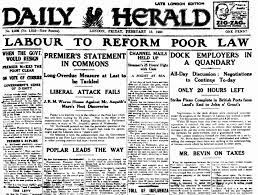
12th February Government rescinds the Poplar Order, which had led to Labour Councillors being jailed for paying above the approved poor rate in East London

21st February MacDonald as Foreign Secretary cancels plans for a Singapore naval base

Starmer will do well to do anything as a radical-modest though it was