Democracy in action. The King’s Champion has died. His son has inherited the role
The Coronation Claims Office exists to validate or otherwise those who claimed they had some historic role to play in King Charles 111’s Coronation.
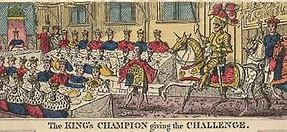
The role of King’s Champion at the Coronation in May was carried out by Francis John Fane Marmion Dymoke.
He was the Mayor of Scrivelsby in Lincolnshire a title given to one of his predecessors in 1066 but the Times has reported his death at 63.
The Dymoke family inherited the role of King’s Champion and a Dymoke first performed it at Richard 11’s Coronation on 16th July 1377. The office holder is supposed to ride into the Coronation Banquet on horseback in full armour and thrown down a gauntlet to challenge anyone present who thinks the monarch at the Coronation is not the rightful heir to speak up.
There has not been a Coronation Banquet since 1821 so these days the King’s Champion just carries a flag.
In short the role has been redundant for over two hundred years and in an apparently slimmed down Coronation process one wonders what the purpose of Dymoke being there actually was. Even so it is reported that Henry Dymoke, Francis Dymoke’s son has inherited the role.
The Business University. From Warwick 1970 to QMUL 2023
Aditya Chakrabortty has written an important piece for the Guardian about the hard line tactics of management at QMUL, Mile End during the recent dispute with the UCU
As with most University bosses nowadays the VC takes home a salary of hundreds of thousands of pounds but was happy to leave lecturers in penury for much of 2023.
It reflects that latest stage of the Business University- a degree factory, where profit rather than learning is the bottom line.
I exist only on the margins of academia as the long time convenor of the socialist history seminar at the Institute of Historical Research, University of London School of Advanced Study. Despite the fact that the Government goes on constantly about history, there isn’t much profit to be made out of studying it. The IHR in this context does a great job as the centre of UK research history.
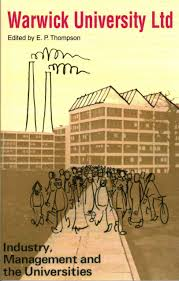
As a socialist historian the QMUL story reminds of a long back history. It goes back to Warwick University in the late 1960s. At that point the late socialist historian E P Thompson held a senior post there (not as a Professor- he hated them). When students discovered the links between the University and the local motor industry- which was really running the place- he collaborated with students to publish Warwick University Ltd. It was an expose of the Business University at its beginning and its only gone downhill, learning, research and study wise, since.
As 2024 will be a General Election year it leaves the question of whether a future Labour Government might promote the labour’s movement’s long association with the quest for learning and knowledge. After all Keir Starmer has recently been making much of his time at Leeds University.
I think perhaps the organised strength of the UCU provides a better hope for the future.
The Beard Liberation Front, the informal network of beard wearers, has said voting in the final Beard Off round for the Beard of the Year 2023 is now open.
The winners of each of the three Close Shave rounds go to the Beard Off Final, together with the highest placed runner up.
Eric Cantona won the first round, Jamie Driscoll the second and Michael Rosen the third. Humza Yousaf was the highest placed second place.
The long running contest, in recent times determined by on-line polls- looks for the individual who has promoted the most positive image of beards during the year.
To qualify for inclusion a beard must have been worn for the majority of the calendar year but it is not essential that a beard is worn during the vote.
The voting closes just before Christmas with the outcome announced between Christmas and New Year
50 members of the extended Royal Family sat down to a pre-Xmas lunch at Windsor Castle on Wednesday. Sandringham bred turkey,trimmings, crackers, wine (Times 21st December).
The pre-Xmas lunch is designed to accommodate a larger number of Royal hangers on than can fit at the Xmas Day lunch at Sandringham which even so has been moved from the dining room to the ballroom to allow for larger numbers.
King Charlie has been reported as wanting to reduce the number of Royals but it is Xmas.
The traditional event has been held at Buckingham Palace but the King is not a fan so it has been moved to Windsor, another of his residences.
The turkey is served with mashed and roast potatoes, chesnut or sage and onion stuffing,cranberry sauce and bread sauce with brussel sprouts, roast parsnips and carrots according to a former Royal chef.
Hardly fine dining but then again there is a cost of living crisis..
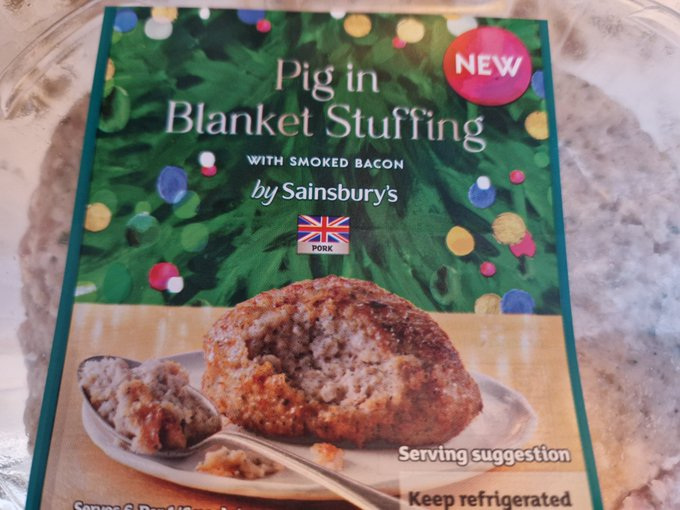
Pigs in Blankets, sausage wrapped in bacon, proliferate as Christmas food, either to go with the turkey or as a party food. There are many variants including vegan for those wishing to avoid meat and foot long versions for those who seek pigs in blankets as a phallic symbol.
In December 2022 The Observer (18th December) published an article noting much of the above and suggested that pigs in blankets in their current supermarket format owe their origin to Delia Smith’s 1990 Christmas recipes book.
Several people on twitter suggested that they had eaten home produced pigs in blankets long before this.
Terence Ranger and Eric Hobsbawm argued that all traditions are in fact invented but clearly in this case Delia Smith reinvented the tradition for commercial purposes which is not quite the same thing.
I can report the latest on Pigs in Blankets Culture Wars. The Sainsbury’s truffle pigs were tasty in my view, and Aldi’s chorizo pigs are always good. I’m not sure about their Ultimate No Pigs in Blankets.
The Sunday Times (24th December) having discovered that Aldi is selling pigs in blankets icecream has declared a Culture War. Pigs in Blankets according to an Editorial must ONLY be eaten on Christmas Day
After Peter Bone’s recall is it time for Annual Parliaments
The successful petition to recall Tory MP for Wellinborough Peter Bone after he was suspended from Parliament for more than days has forced a Parliamentary By-Election. It raises the question again of how it is that elected representatives can be held accountable for what they get up to.
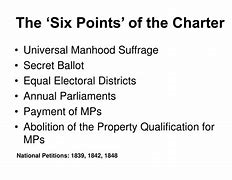
The original template can be in the 1838 People’s Charter, in many ways one of the foundation stones of British democratic practice.
The Six Points were:
1. A vote for every man twenty one years of age, of sound mind, and not undergoing punishment for crime. 2. The ballot —To protect the elector in the exercise of his vote. 3. No property qualification for members of Parliament—thus enabling the constituencies to return the man of their choice, be he rich or poor. 4. Payment of members, thus enabling an honest tradesman, working man, or other person, to serve a constituency, when taken from his business to attend to the interests of the country. 5. Equal constituencies securing the same amount of representation for the same number of electors,–instead of allowing small constituencies to swamp the votes of larger ones. 6. Annual Parliaments, thus presenting the most effectual check to bribery and intimidation, since though a constituency might be bought once in seven years (even with the ballot), no purse could buy a constituency (under a system of universal suffrage) in each ensuing twelve month; and since members, when elected for a year only, would not be able to defy and betray their constituents as now.
The Six Points are of course hardly perfect and that is not just with the benefit of historical hindsight.
Hindsight suggests that the exclusion of votes for women was inexcusable but in the context of 1838 it was a strategic not an in principle matter. The Chartists felt that getting adult male suffrage would be tough enough and an important first step to further extensions of the vote. It depends how you want to read British history but there is a good argument that they had a point.
However the criticism at the time was that the demands of the Six Points were too moderate, and indeed came largely from the more militant sections of the movement, which in the late 1830s [though not later] were to be found in London.
The Grand National Holiday [general strike] of August 1839 and the Newport Rising, a narrowly failed attempt at armed revolution in November 1839, suggest strongly that other strategies were available for winning the vote than the People’s Charter.
However the basic democratic demands of the Charter, around the franchise and secret ballot did find a strong political echo.
So strong in fact that all the Six Points became law during the Victorian period with the exception of the demand for Annual Parliaments.
The call for more regularly elected MPs long survived the demise of Chartism around 1860. The Social Democratic Federation was pursuing demands for Parliaments to be elected every two or three years in the 1880s and they continued to be part of the political landscape of radicalism and labour until around World War One.
What caused the demand to disappear is less certain. One might speculate that the proclamation of the Labour Party constitution in 1918 represented some kind of settlement in terms of what ideas were now ‘in’ and which were not, but the point suggests further research.
Even so I still think annually elected Parliaments are well worth considering.
Most other institutions from large Companies to trade unions held elections on an annual basis for most positions. It is recognised as an important part of democratic accountability
The argument against of course is based around the cost of holding annual elections and the upheaval of doing so meaning that politics would focus very much on the short term.
However costs can be controlled, if need by law, and it is not particularly clear that annual elections for Parliament would really make it any more short term in its perspectives and policy making than it already is in most cases.
Given the debates of the later Victorian period perhaps a Parliament elected once every two or three years would be something to look at initially. An alternative would be to have multi-member Parliamentary seats and elect a proportion of MPs every year.
Perhaps it might not work well, but are there many claiming that the existing system of Parliamentary democracy is doing the most effective job possible?
Yet More Really Useful Knowledge on the cost of living & inflation
In the nineteenth century radicals looked to disseminate really useful knowledge to counter officially promoted useful knowledge. The latter often focused on orthodox market economics to create an impression that poverty and wealth were parts of a natural order unrelated to what people did or did not do.
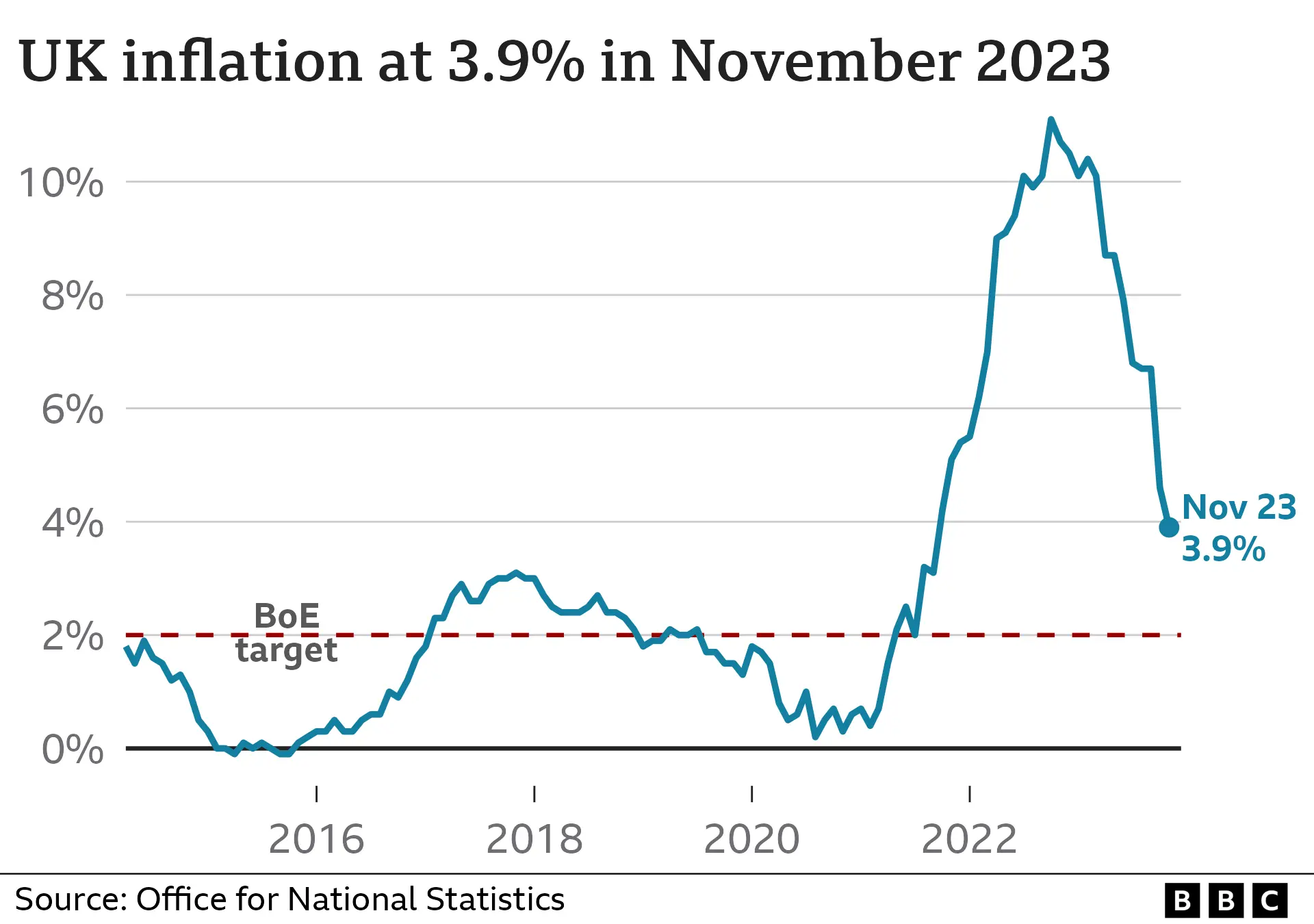
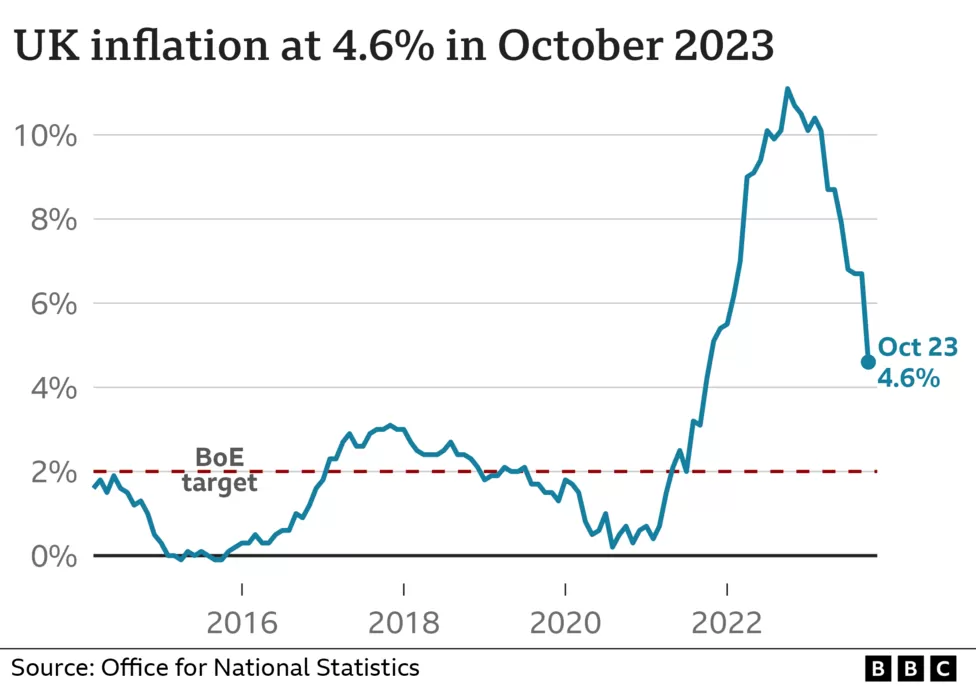
The battle for really useful knowledge continues. The headline inflation figure announced today is 3.9%. This is partly due to a statistical comparison, as the figure is compared year on year and partly because at the moment energy costs have fallen. Rishi Sunak was quick to claim credit for the drop in inflation, although he has previously said it was caused by factors outside of the control of the Government.
The reality is rather different to the spin. As the TUC has pointed out today’s figure means that prices are still going up, just not as quickly. Food price inflation is at 9.2% and there seems little sign of it falling quickly. Meanwhile many will wonder if the current reduction in energy costs will actually translate to lower bills this winter, given Government support available in 2022 is no longer there.
In all the media coverage of inflation there is little reference currently to the role that wage rises have had. It’s quite difficult to spin a story that accounts for increased wages and falling inflation. In reality wages remain below the level they were at before the financial crash of 2008/9.
It may be however that we are entering a standard of living debate of the kind E P Thompson addressed in the Making of the English Working Class, published 60 years ago in 1963. Looking at working class living standards in the 1830s and 1840s he noted that while many remained in poverty, unable to afford more than basic foodstuffs, for some workers wages did rise. The key issue was (and remains) whether people felt they were better off because they were a bit less worse off. Mostly in the period Thompson was looking at he argued they did not feel that the economy was working for them. Almost two hundred years on similar considerations may apply
Really Useful Knowledge suggests the need to organise to get more wage rises
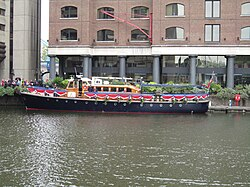
The Havengore barge was built for the Port of London Authority in 1956. It has long since been decommissioned and converted to a passenger carrying vessel. Its current owner has determined that the cost of renovating and running it is now beyond his reach and has been trying to sell it.
Cue pieces in the Times, Telegraph and Mail and comments from right-wing historians like Niall Ferguson
The barge has had another use. It was used to carry Winston Churchill’s coffin down the Thames in 1965 and has been used for various Royal occasion boat trips down the Thames since. It was sold into private hands in 1995 when it was presumably not regarded as something that needed to be saved for the nation, since it was at that point a 40 year old barge.
In 2023 with the hard right inventing traditions on a regular basis apparently the Havengore barge must be kept in Britain and put on public display…
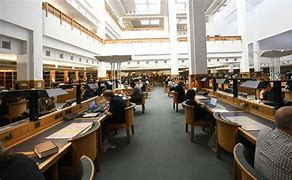
The Financial Times (6th January) has reported that it will cost the British Library £6-7m to recover from the cyberattack in late October, around 40% of its reserves. The process will take around a year which is very concerning for the wide range of researchers, academic, private and business, that rely on it.
Is the Tory Department of Media, Culture and Sport concerned about the impact on an important part of British life? Of course not. Is Labour by contrast pressing for action? Of course not,but a campaign is at last growing on this-see below
I’ve had a readers ticket at the British Library since 1984 and still use it regularly.
Back in 1984 it was in the historic Round Reading Room in the British Museum, where both Marx and Lenin had studied in rather earlier days.
In those days catalogues were in bound paper volumes and one applied on a paper slip. In those days too you might find that your request came back with the box marked ‘destroyed by bombing during the war’ ticked.
The location was convenient because the British Museum has a back as well as a front entrance. Go out the back, cross the road and you are at Senate House the HQ of the University of London which also houses the Institute of Historical Research.
I am a research historian (amongst a few other things) and have convened the socialist history seminar at the IHR since 1995.
The British Library is important for my own research (nineteenth century labour history) but also keeping an eye on new research for seminar purposes.
In more recent times the BL has moved to its own site on Euston Rd. Things are now done electronically including the catalogue and ordering via the website and of course some material is digitised (though often only freely available at the BL itself).
As some will be aware in late October the Library’s systems were hacked and access to many Library services knocked out. The attack might well be seen as one on freely available knowledge but generally its ransomware criminals after money.
As usual with such events recovery is taking and will take ages. Wi-fi has been restored and the Library has promised a reference only electronic catalogue will be available in mid-January. That will still mean ordering books, probably on a paper slip just like the good old days, and on site.
Fortunately the Library does have a complete run of the print edition of the New Musical Express on open access for readers. My project on the NME Fletters is on-going.
It’s frustrating for many who rely on the BL for research,where it may have the only copy of some texts. Such attacks do take a long time to sort out, and it should give pause for thought for those who think everything should just be digitised.
What is interesting is the lack of discussion about the lack of availability of the BL for many purposes. A reflection perhaps of the poverty of British culture in the 2020s, certainly at political levels.
Pressure is at last growing for the Government which bangs on culture war style about British culture and history to step in, fund and expedite a recovery of the Library. The Evening Standard piece here provides good summary:
The Politics of Old Corruption. Sunak needs not a helicopter but a bike.
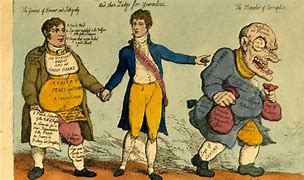
The current Government can be characterised in a number of ways but one is that of ‘Old Corruption’. The term was used by William Cobbett and others to describe Parliaments and politics before the 1832 Reform Act. Here people held positions because of who they knew not because they were competent. Here also were numerous political sinecures. People benefiting from a political office in which they did little or no work.
Baroness Mone who has admitted that she will benefit from a Government contract to provide PPE during the pandemic. Her position in the House of Lords and the contract was clearly based on who she knew.
When it comes to sinecures Sunak is surely a key exponent. He is the richest MP and claims to work as Prime Minister. In reality he seems to enjoy regular helicopter rides when a train or car journey would be just as good and much cheaper.
In fact Sunak’s helicopter rides cost the public millions. When the Civil Service suggested that the money could be better spent elsewhere (Mirror/Times reports) and cancelled the helicopter contract, Sunak ordered it to be reinstated. The politics not of democracy but Old Corruption