Articles

Does marching make a difference: an historical perspective

In Uncategorized on November 24, 2023 by kmflett

Does marching make a difference: an historical perspective

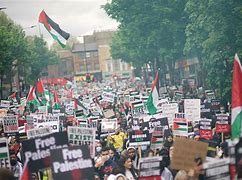
On Saturday 25th November a further march for Palestine, calling for ceasefire will take place. There will also be other marches-in Cardiff for example.

There is at best what might be described as a temporary ceasefire in Gaza after which the usual far right to fascist Israel Government spokespersons have promised more months of death destruction.

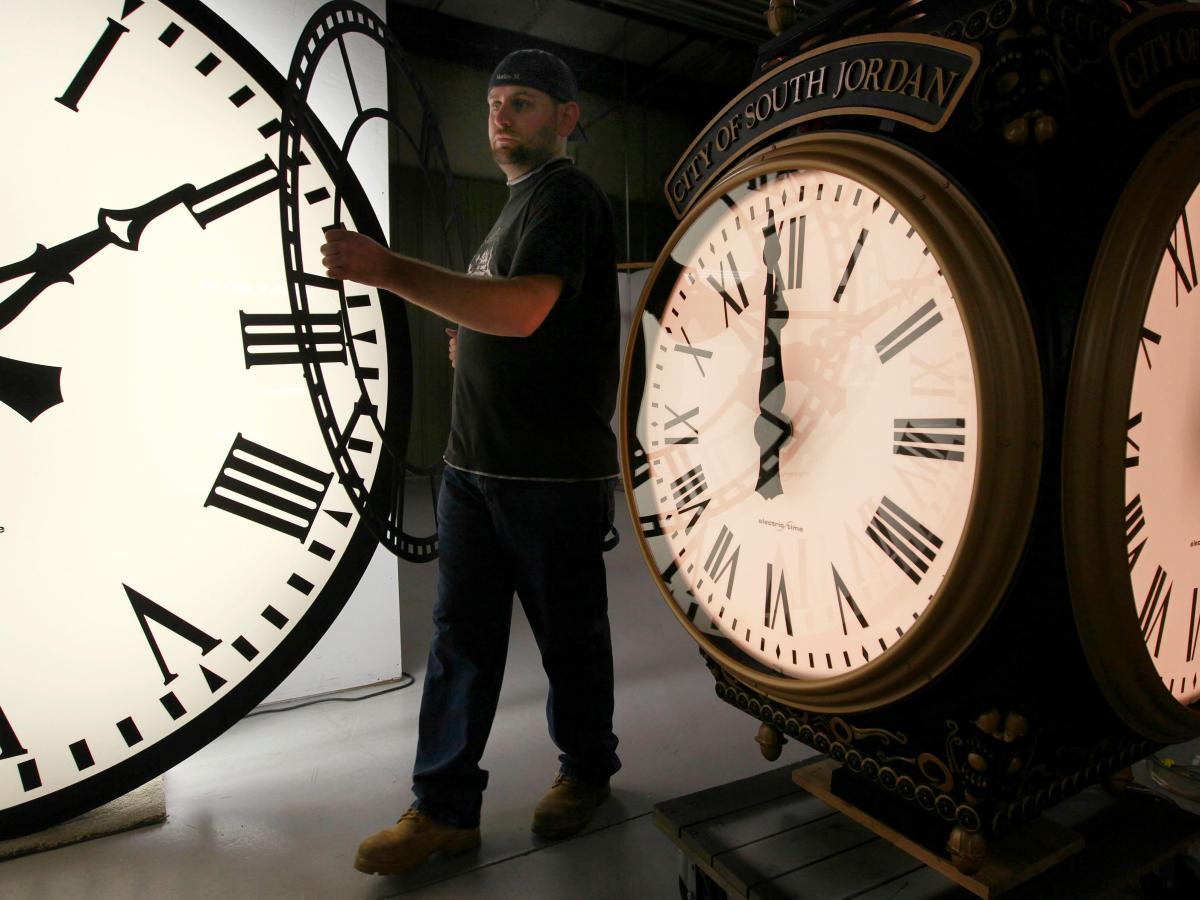
Some media commentary refers to a two clock strategy here. One clock is the Israeli Government’s one determining how long they can pursue a military campaign. Such a campaign costs money which they increasingly don’t have. The other clock is how far their allies in the US, EU and UK are prepared to put up with daily atrocities in Gaza.

Here marching makes a difference. Of course the White House and Downing St don’t care as such how many march. It’s the political impact and potential instability that grows from protest that is the concern, as well obviously, the global economic impact.

In short protest is a key part of getting Israel’s war to stop.

It’s appropriate to relate back to the 60,000 or so who gathered in central Manchester for the vote on 16th August 1819 because, while the immediate impact was negative- there was a massacre of protesters- over the following decades change did occur and the Government did not attempt another Peterloo.

I’ve been on many marches down the years from those opposing racism and cuts, to the Iraq War, the poll tax, abortion rights etc.

Some achieved little, others made quite an impact. Each one needs to be looked at individually to draw any general lessons. Certainly the composition of a march, the timing, and the strategy pursued to get change are key elements.

There are two wider points. Firstly marching is not the only way to get change. There is indeed what the US sociologist Charles Tilly called a repertoire of contention, of possible strategies, from riots to meetings, petitions and lobbies. All have their place depending on context.

Finally however on the 55th anniversary of the 27th October 1968 anti-Vietnam war demonstration its worth reflecting that most of the largest marches in UK history have taken place in the last 50 years.

It represents a change from people relying on others to make the point for them to wanting to make it themselves. Of course it’s not always effective but it reflects a society where people want to make their voice heard and expect it to count. The age of political deference has gone.

Articles

Stockton North MP to join Parliamentary Beard of the Year shortlist as Cleverley excluded

In Uncategorized on November 23, 2023 by kmflett

Beard Liberation Front

23rd November

contact BLF Organiser Keith Flett 07803 167266

The Beard Liberation Front, the informal network of beard wearers, has said that Stockton North MP Alex Cunningham will be on the shortlist for the Parliamentary Beard of the Year when it is announced at the weekend.

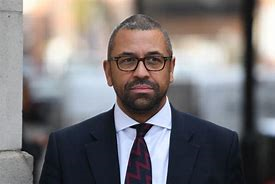
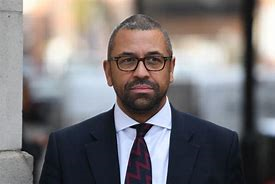
Mr Cunningham and his Stockton North Constituency have been the subject of abuse from Home Secretary James Cleverley. Mr Cleverley exclusion from the shortlist was confirmed on Thursday following a vote of BLF supporters.

BLF Organiser Keith Flett said, this does look like beard on beard action but it is an unfortunate reality that wearing a beard does not exclude some from being prejudiced and Mr Cleverley is clearly one such individual.

Articles

Emmanuel Le Roy Ladurie (1929-2023) Micro-Historian from below

In Uncategorized on November 23, 2023 by kmflett

Emmanuel Le Roy Ladurie (1929-2023)  Micro-Historian from below

The French historian Emmanuel Le Roy Ladurie has died aged 94.

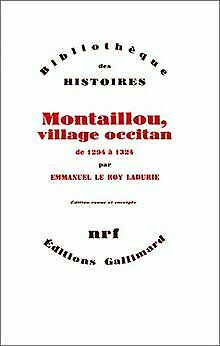
Associated with the Annales school of historians his best known work is Montaillou a study of fourteenth century life in the Languedoc village of the same name.

Ladurie was one of those who led the way in histories focusing in detail on the lives of ordinary people, understanding their customs, ideas and living arrangements.

My interest in his work lies in the crossover with History From Below and its focus on how people organised and resisted authority. His work is sometimes cross referenced with E P Thompson’s Moral Economy of the Crowd in the Eighteenth Century and the work of the late Natalie Zemon Davis who died earlier this year on Rough Music, L’Chavari Anglais. Thompson submitted his own research on the subject to Annales.

There is an exchange of correspondence between Zemon Davis and Thompson on the subject where Le Roy Ladurie is referenced (the correspondence is reprinted and discussed in Past and Present 2017).

Like Thompson, Le Roy Ladurie left the Communist Party (PCF) in 1956 but unlike Thompson gravitated to a political position in the liberal centre over time. His stature as an historian can be gleaned from his Wiki entry with the usual caveat that it may not be entirely accurate either factually or in its assessments

https://en.wikipedia.org/wiki/Emmanuel_Le_Roy_Ladurie

Articles

James Cleverley exclusion from Parliamentary Beard of the Year list confirmed after offensive remark

In Uncategorized on November 23, 2023 by kmflett

Beard Liberation Front

23rd November

contact BLF Organiser Keith Flett 07803 167266

James Cleverley exclusion from Parliamentary Beard of the Year list confirmed after offensive remark

The Beard Liberation Front, the informal network of beard wearers, is drawing up the list of contenders for the annual Parliamentary Beard of the Year shortlist.

The list goes to a web based public vote with a winner announced in mid-December.

One issue that BLF assessors have reviewed is whether or not the current Home Secretary James Cleverley merits inclusion.

The criteria is NOT about the politics of the beard wearer, but whether there beard has promoted a positive image of the hirsute in Westminster and elsewhere.

The BLF is democratic and accountable so the issue of James Cleverley’s beard was put to one hundred supporters in an on-line poll. 61.8% said he should not be included with just 15.7% saying he should. 22.5% abstained.

Following Cleverley’s remark about Stockton on Tees as a ‘sh*thole’ the campaigners have now confirmed Cleverley’s exclusion for 2023. Cleverley has agreed called an MP a sh*t

BLF Organiser Keith Flett said, James Cleverley is arguably the most prominent beard wearer in Westminster politics. The issue we consulted on is whether on balance his beard presents a positive image and should therefore be included on the Parliamentary Beard of the Year shortlist. The answer from the sample of our supporters is a decisive ‘no’. His alleged remark about Stockton underlines the view of BLF supporters. We wish Mr Cleverley’s beard well.

Articles

Before the interweb & mobiles how did Tony Benn get news of Kennedy’s assassination, 22 Nov 1963?

In Uncategorized on November 22, 2023 by kmflett

Before the Interweb & Mobiles how did Tony Benn get news of Kennedy’s assassination?

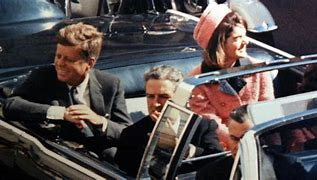
President Kennedy was assassinated in Dallas 62 years on 22nd November 1963. If such an event happened today it would be all over screens everywhere.

In 1963 there were TV screens from the BBC and ITV but you had to be sat in front of a set when a programme was on to see it. There was no IPlayer or Watch Again facility.

Tony Benn recorded how he heard the news in his diary for 22/23 November 1963

On the evening of Friday 22nd November Benn was just leaving the house for a meeting in Acton when his son Hilary received a phone call (landline) from a friend who relayed the news about the shooting. Benn switched the TV on to see a newsflash about it and then listened to the 7.30pm news on his car radio on the way to the meeting.

He returned home to watch further TV coverage and noted that George Brown a senior Shadow Minister in 1963 was drunk when interviewed. He then recorded that the Benn family had watched a film transmitted by Telstar during the night on the shooting.

It’s a world of which we can have little conception. Mass media had developed far enough for Benn to get news on TV and via the telephone- two items many did not have in 1963 and via radio which most would have had access to.

Telstar (infact Relay) was the first global communications satellite, launched in 1962, allowing TV coverage to be beamed around the world. Even in 1963 new technology was at work

Articles

King Charles latest banquet: the menu

In Uncategorized on November 22, 2023 by kmflett

There is a cost of living crisis but King Charles continues to his duty by attending State Banquets. This is third in recent months the other two being in France and Kenya(where the menus were similar-ruling class food being much the same the world over).

Usually The Times publishes a menu but it hasnt on this occasion so we will have to make to do with theBBC report which is below

BBC Report

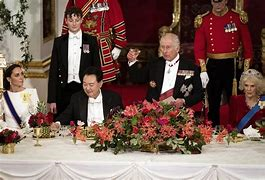
There was a full turn-out at the state banquet in the Buckingham Palace ballroom, with the South Korean guests greeted by the King, Queen, Prince and Princess of Wales and Prime Minister Rishi Sunak.

South Korea’s most famous son, Son Heung-min, the Spurs footballer, wasn’t there, but K-pop girl band Blackpink were among the guests.

Lord Cameron, returning to front-line politics as foreign secretary, was sitting a couple of places from Princess Anne.

Labour leader Sir Keir Starmer and Lib Dem leader Sir Ed Davey were among the guests, facing elaborate table settings with six different wine glasses and a line-up of silver-gilt cutlery.

The menu, written in French, included poached eggs, pheasant and a mango ice cream bombe.

Wines included a 1989 Château Mouton-Rothschild and Camel Valley from Cornwall.

These are opulent occasions, with diplomacy fuelled by fine dining, using a 19th-Century dinner service with more than 4,000 pieces.

Articles

Cholera, 1840s, Covid, 2020s, from Engels to Sunak: the return of ‘social murder’?

In Uncategorized on November 22, 2023 by kmflett

Cholera to Covid,from Engels to Sunak: the return of ‘social murder’?

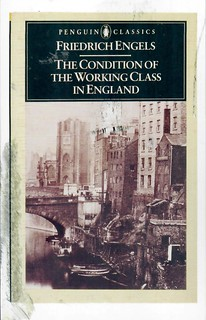
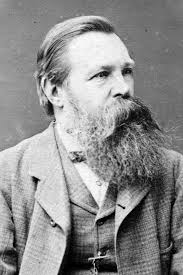
Friedrich Engels book on the Condition of the Working Classes in England in 1844 is a well- known classic of social history. His investigations helped to inform the important understandings of Marx and himself about how capitalism does and does not work.

One concept that he mentions in the book has recently begun to receive attention again. People that he spoke to and the Chartist press argued that working and housing conditions of the proletariat in mid-nineteenth century England had such a significant impact on the health and life expectancy of many that the Government was guilty of ‘social murder’. It was aware of the conditions and the short lifespans of many but did little about it.

Engels wrote:

Society in England hourly and daily commits what the working men’s organs call social murder, that it has placed the workers under conditions under which they can neither retain health nor live that long that it undermines the vital force of these workers, little by little, and so hurries them to the grave before their time…society knows how injurious such conditions are to the health and life of the workers, and yet does nothing to improve these conditions.

One of Engels aims in writing the book was to demonstrate that this was indeed the case. He wrote that he broadly accused the ruling class of social murder and that it should either address the issue or hand over the running of society to the ‘labouring classes’

The Office of National Statistics has reported that a newly born boy in 1841 was expected to live to 40.2 years while in 2011 this was 79. The figures for a girl were slightly higher. Of course these figures looked across all classes. The average lifespan of a male worker in Manchester in 1850 was 38.3 years.

However life expectancy has been dropping slightly. The pandemic has had an important impact but in fact, while the expectation has been that how long people would live would continue to gradually increase, it hasn’t.

The change can be traced back to the period after the 2008 financial crash and in Britain in particular to the election of a Government committed to a policy of austerity. Despite the ‘levelling up’ agenda of Johnson and Sunak we remain in that framework.

The impact of consistent cuts to NHS spending, and public services, together with a push towards privatised jobs with poor conditions, led to precisely the kind of consequences that Engels saw in the 1840s, although obviously on a smaller scale.

The pandemic magnified all this and also provided a sharper focus on politicians who could do something about this but choose not to.

The Covid Inquiry over the last few weeks has heard about particular politicians who chose not to do things in 2020. Boris Johnson really did say, it was reported, in the Autumn of 2020, ‘let the bodies pile high’. Rishi Sunak meanwhile, determined to keep the economy open, is reported as being sanguine about people dying as a result.

Engels 1844 accusation of a Government committing social murder still seems relevant.

Articles

E P Thompson, Time Work Discipline & Stop Watches in limited overs cricket

In Uncategorized on November 21, 2023 by kmflett

E P Thompson, Time Work Discipline & Stop Watches in limited overs cricket

The ICC which at least claims to govern world cricket has determined that in order to address limited overs cricket matches dragging on (which many do) for 4 months to April 2024 in Men’s limited over matches a stop watch rule will be used. If there are delays of more than 60 seconds between overs on more than three occasions in an innings the fielding side will incur a five run penalty.

It is a brave decision.

Time wasting (as well as unavoidable delays for a range of reasons) is to be found not just in cricket but a range of sports- football being a prime example. It can destroy the spectacle of a game but the bottom line issue is more likely to be that games that go on a bit annoy TV franchisers

Behind this lies an industrial obsession with time and the market capitalist idea that time is money.

The stop watch experiment brings workplace productivity checks to cricket

EP Thompson’s Time, Work Discipline which appeared in Past and Present in 1967, and remains a foundation text.

To give a brief flavour, he writes of ‘Smilesian snippets about humble men who by rising early and diligence, made good’. He continues that as workers secured reductions in working hours moralists became concerned that ‘manual workers after concluding their work were left with several hours in the day to be spent nearly as they please’.

Time is money even on the limited overs cricket fields and what exactly are the players doing with all that time they are supposedly and sometimes deliberately wasting..

https://www.bbc.co.uk/sport/cricket/67470011

Articles

Letters & Poems in the Chartist Northern Star. The latter but not the former.

In Uncategorized on November 21, 2023 by kmflett

letters & poems in the Northern Star: why the latter & not the former?

Jeremy Corbyn and Len McCluskey have edited a book of poetry and the former Labour leader has posted on X that everyone has poetry in them to write. No doubt and some of mine can be found on this blog (quality indeterminate)

in what was the world’s first large circulation working class newspaper, the Chartist Northern Star, both correspondents and successive Editors preferred the form of poetry to letters.

The Star published poetry in every weekly issue, but letters were much less common. Mostly correspondents were noted with a very brief response rather than publication.

Mike Sanders published in the Victorian Periodicals Review 39/1 a comprehensive survey of poetry pubished in the Norther Star between 1838 and 1852. The early period from 1838-41 in particular saw a large amount of poetry submitted as the new Chartist movement found its voice. The Editor Hill sometimes felt overwhelmed and on one occasion printed that he would select the best of the poems submitted and burn the rest.

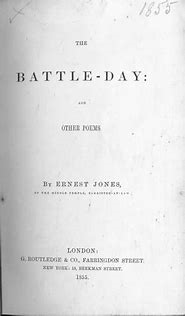
Even so poetry continued to feature in the Star under the Editorships of George Julian Harney and Ernest Jones- both keen on poetry (Jones wrote it)and quite prominently so. Sanders argues that the Star made efforts to improve the quality.

The Year of Revolutions, 1848, is interesting in that numbers of the poems submitted could also used as lyrics, put to music, and sung on demonstrations.

The issue I’m researching- via particularly looking through the digital version of the Northern Star (free on-line) is why the preference for poems above letters and when did it change.

The Star always carried letters, sometimes quite lengthy ones but they didn’t have the catchet of poems. Perhaps they were seen as individual expressions rather than words that captured the mood of a moment. Perhaps letter writers were seen as more middle-class- having the time and supposed intellect to express a view..

Thoughts gratefully received and, where appropriate, credited.

Articles

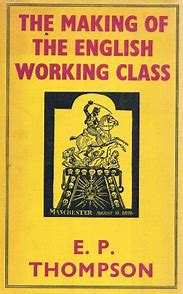
Recording of Logie Barrow & Keith Flett on E P Thompson’s Making of the English Working Class at 60

In Uncategorized on November 21, 2023 by kmflett

London Socialist Historians Group

21st November

Below is a link to the recording of a session of the socialist history seminar at the Institute of Historical Research held on Monday 20th November 2023.

Logie Barrow and Keith Flett discussed E P Thompson’s Making of the English Working Class on the 60th anniversary of its publication. This is followed by a discussion. The recording lasts just over an hour.

The seminar marked 10 years since an event at the IHR on the 50th anniversary of the publication of the Making and a volume of papers is in hand with CSP

Comments are welcome!

https://us02web.zoom.us/rec/share/6-0bImJgrwkIxogj5tnxRdPktNj1rSuJabzqL8Fnwk8oXgBaCBlP7prj_CR37kfj.v33unncAuLJ3j9D-