Oct 27th 1968 on Vietnam to Oct 28th 2023 on Gaza. The Times spots ‘outside agitators’
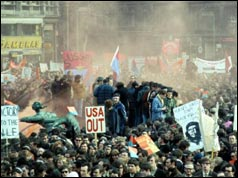
On 27th October 1968 100,000 demonstrators marched to Hyde Park to protest the war in Vietnam. It was organised by the Vietnam Solidarity Campaign. Tariq Ali one of the organisers was clear that the route deliberately avoided going to the US Embassy, then in Grosvenor Square. The aim of the march was not to have a punch up with the police, but a public display of large numbers protesting peacefully against war.
This did not stop the Times claiming that the march was really about violent revolt
‘A small army of militant extremists plan to seize control of certain highly sensitive installations and buildings in central London next month while 6,000 Met policemen are busy controlling an estimated crowd of 100,000 anti-Vietnam war demonstrators’
Times 5th September 1968
It was not of course, although a group of Maoist protesters did engage with police in Grosvenor Square, separate to the main march.
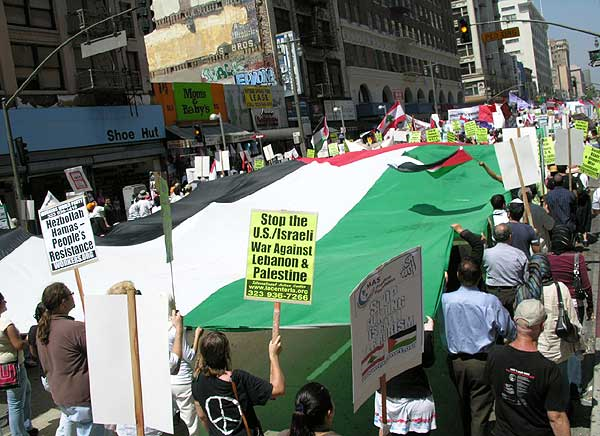
On 28th October 2023 a march involving far more than 100,000 people protested against military destruction in Gaza by the Israeli Army, with thousands of civilians dead and injured. The march was organised by the Palestine Solidarity Campaign and others and the aim was a mass peaceful show of solidarity with Gaza.
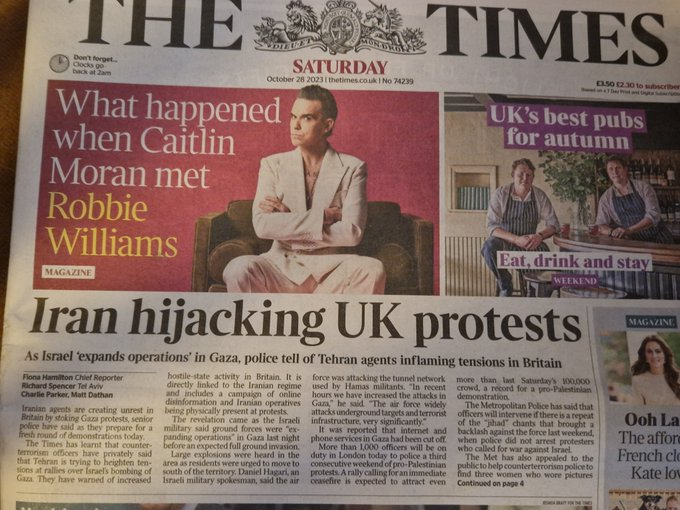
This did not of course stop The Times on 28th October running a front page headline ‘Iran hijacking UK protests’ The article underneath
‘Iranian agents are creating unrest in Britain by stoking Gaza protests’
There was no evidence presented about who such agents might be or how they operated. But if one read on, on page 4, the report noted that the influence of such agents was at the fringe and hence nothing at all to do with the protest on 28th October
Socialist History Seminar report. William Webb Ellis & Culture Wars in rugby
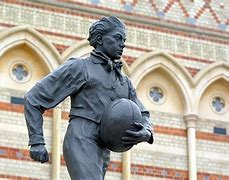
On 23rd October at the Institute of Historical Research Prof. Tony Collins spoke on William webb Ellis and the class struggles. He is the author of Who Framed William Webb Ellis.
The seminar was not recorded but the bullet points below are based on my notes while chairing the seminar. Any inaccuracies (likely as I was multi-tasking) are my responsibility along
William Webb Ellis. b1806. Rugby school. Vicar d1872.
Unaware he’d be a rugby symbol. He played no rules football, handling & kicking the ball
Rugby school version popular due to class status of the school.
Thomas Arnold, Head Teacher published in 1857 Tom Brown’s Schooldays
1870s Rugby was a mass spectator sport. North of England, SouthWales.
1874 Factory Act. Half-holiday Saturday to watch game
Rugby became part of working class life-Eric Hobsbawm noted between 1880-90.
Featherstone miners 1893, where several were shot. Inquest in same pub as Featherstone Rovers were formed 1902
Rugby Football Union feared working- class crowds & players..
In 1886 the RFU turned amateur
Northern clubs were seen as professional with payments (compensation).
1893 RFU voted down compensation payments. Oxford & London focus to RFU.
Class divide 1895 Huddersfield split to Rugby League
William Webb Ellis officially named as inventor of Rugby football after inquiry. No actual evidence was presented.
Clarion Rugby correspondent an SDF member & Salford rugby
RFU Professionalism rules banned League 1895 for life. ‘Are you now or have you ever been’ League test used for Huddersfield RFU club
Twickenham Maginot line of class system JG Ballad.
England Rugby team privately educated
League publications run by CP & ILP
Similar pattern in Australia & New Zealand Culture & class division
Vichy France banned League 1941
RFU Tory Party at play but some cross class presence in for example Bath, Bristol
Oswald Mosley called Rugby the perfect fascist game
South Africa. Vorster said a black man will never wear Springbok Jersey
2023 class split on deprivation-Red Wall has League Clubs. The Rugby World Cup upholds the made up tradition of Webb Ellis. League sees itself as democratic egalitarian
The results in the Mid-Beds and Tamworth elections underline that we have reached last orders time for the Tory Government but that is not all there is to politics. 55 years ago on 27th October 1968 100,000 people marched in London calling for an end to the Vietnam War. This weekend similar numbers will be marching again calling for a ceasefire in the Israel-Gaza war. The demand for peace from the streets was not reflected in official politics in 1968 anymore than it is now, but it remains an essential part of our democracy.
Given events it may have been missed but Rachel Reeves latest volume on women economists is in the news. On the face of it this is a good thing. The world of finance and economics is dominated by white middle class men in suits, who often don’t take too kindly to a professional female presence. It is changing but not yet enough.
The issue with Ms Reeves book is not the principle but the practice. The FT casting an eye over it has found sections which are slightly rewritten bits of Wikipedia, speeches of others etc none of which are properly credited.
Reeves has noted that the book does have a large number of references and these are simply errors which will be corrected.
We all of course make errors, one of the reasons why books have Editors. Reeves is not an academic but a politician which in this case is just as well because plagiarism is worse in academia even than gross moral turpitude.
Its not really clear if Reeves wrote all or some of the book or if ghost writers were used, but certainly researchers were employed. This is not uncommon, particularly for large projects. David Olusoga for example no doubt relies on researchers for some material but is always, rightly, very careful to be shown in archives looking at some of the records he is talking about.
E P Thompson relied on a retired head teacher E E Dodds to look up some records for him in the National Archives and was careful to credit the research (and pay Dodds at an appropriate rate).
Archives particularly in the e-world and age of austerity are under threat but without them history can disappear.
As a research historian I regularly delve in archives and check sources. What appears under my name is always written, for better and sometimes worse, by myself. Other things appear which I have written but not under my name- trade union bulletins for example- but here I am expressing not my views but those of the union.
Of course politicians regularly use speech writers. Much of what appeared from Blair was written by Alistair Campbell and others. Starmer too has speech writers who should be congratulated for managing to make his speeches as dull as if he had written them himself. To be fair Starmer is still not as dull as Gordon Brown was.
The lesson for Rachel Reeves is that while its not expected that politicians speeches are all their own work, the same does not apply to books, particularly those claiming to have any kind of academic provenance. In this case it might have been better for others to write the book chapters and Reeves to provide an overarching introduction, written entirely by herself.
More than half of Britons know so little about Black British history that they cannot name a single historical figure, a survey has revealed.
The researchers found that the UK knows “shockingly little” about Black British history. While 75% of British adults surveyed acknowledged that they did not know “very much” or “anything at all” about the subject, more than half (53%) could not recall any Black British historical figures and only 7% could name more than four.
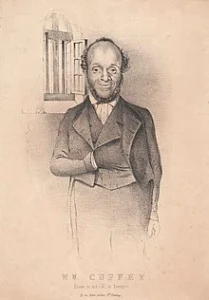
William Cuffay was born in Gillingham in the Medway Towns in 1788, the son of a local woman and a former slave from St Kitts who had made his way to Britain by working on a Royal Navy ship. Many of those aboard Navy vessels in the late eighteenth century were black.
We know that by 1819 Cuffay was in London and had learnt the trade of a tailor.
No doubt Cuffay would have been exposed to the radical working-class politics of London in the 1820s and he was certainly involved in the strike called by the Grand National Consolidated Trade Union in 1834.
Cuffay went on to become, by the end of the 1830s, a leader of a group of London Chartist tailors.
In 1840 Cuffay was 52- very old for a Chartist activist at that time- and he became a central and trusted figure in London Chartism.
The best way to understand him is as the key ‘backroom’ organiser of Chartism in the Capital- raising money for jailed Chartists and being appointed to oversee the funds of the Chartist Land Bank.
By 1842 Cuffay had been elected from London to the national Chartist Executive. These positions were fiercely contested, so Cuffay will have had a considerable constituency of support.
Details of Cuffay’s work in this period can be tracked in the Chartist paper, the Northern Star, which is now available in digital format free on-line.
Martin Hoyles book on Cuffay has also revealed that during this period Cuffay was performing as a singer on the London stage.
Cuffay was the organiser of the great Chartist demonstration on Monday 10th April 1848.
Chartists gathered at various points across London and marched south to rally at Kennington Common. The idea was then to proceed back across Blackfriars Bridge to present a giant petition for the vote to Parliament.
It was a strategic mistake- it’s unclear what part Cuffay played in deciding the venue for the rally. Police and soldiers blocked the way back over the River Thames and the national leader of Chartism Feargus O’Connor agreed with the police that the Chartists would not try to march.
Cuffay was understandably very annoyed at this decision and is reported as arguing that the march should go ahead.
We now know that there was hand to hand fighting between Chartists and troops on the south side of Blackfriars Bridge but a heavy April shower caused the attempt to be abandoned.
Later in the year, in August 1848, Cuffay was arrested for his part in an alleged revolutionary conspiracy at Seven Dials, Covent Garden. Arms were found in Cuffay’s house. His precise role in the events is unclear but it is very likely that as the London Chartist leader he was at the very least aware of what was planned.
Tried at the Old Bailey, Cuffay was sentenced to 21 years transportation to Australia.
Arriving in Hobart Tasmania, now over 60, Cuffay could have been forgiven for retiring from political activity. He did not. Instead he was active in a range of radical causes in the earliest years of the Australian labour movement. He was pardoned after 3 years but remained in Australia, dying in 1870.
Modern interest in Cuffay can be traced back to a chapter in Staying Power by the late Peter Fryer which recovered much of the history of black people in Britain.
Cuffay left no diary, autobiography or papers, but research to uncover details of his life and activity is continuing. There has been considerable effort in Australia and in Britain there were plans to erect a blue plaque for Cuffay in the Strand, so far frustrated.
The Times in 1848 referred to Cuffay and the Chartists as ‘the black man and his party’ and we can now see that this was not hyperbole but a recognition that the London organisation of the world’s first working class movement was led by the son of an ex-slave from St Kitts.
Indeed while there was an element of racism about media reports of Cuffay, there was also I suspect an understanding that he was a good deal more militant than the largely middle-class Chartist leadership.
He was in favour of confrontation with the Government to win the vote. He made clear in a speech to the Chartist delegate Assembly gathered in London after April 10th that he didn’t think memorials to the Queen or complaints to the press about how it reported Chartism were worthwhile. Rather political action was needed.
In the issue of the Northern Star (26th October 1848) that covered Cuffay’s trial Fergus O’Connor paid a front-page tribute to Cuffay as a thoroughly honest and decent man who had been trusted with highly responsible roles in the Chartist movement.
O’Connor however implied that Cuffay was no political strategist and thinker and had allowed himself to be drawn into a network of Government spies determined to urge on confrontation so as to be able to arrest them for illegal acts.
Cuffay was no spy and he did have a different strategy to that of O’Connor. Was he naively draw in by agents provocateurs? We cant be sure, but we do know he was a vastly experienced activist who one would think would have been aware of such pitfalls.
Cuffay came from the imperial diaspora to challenge imperialism at its heart in London to find himself exiled to another part of the British Empire in Australia as a reward for his efforts
‘Starmer’s strategists know they have a problem’ Patrick Maguire, Times, 20th October
The problem has got worse since then.
Starmer, elected as an MP in 2015 with no significant previous political experience, often makes play of the point that he is not a politician. Given the experience of Johnson and Truss it has had some sense as a strategy but there are limits.
The same is true of the way Starmer has run ‘his’ Labour Party, turning it from a notional broad church into a much narrower one. This of course has limited wider impact on an electorate understandbly very keen to get rid of the Tories. There are limits. Starmer often seems to run Labour as his personal fiefdom, a conduit for his personal views. While most leaders do some of that leading a political party also means promoting policies that don’t entirely coincide with the leader’s views.
The limits are being tested with the current Israel action in Gaza, where thousands have died including many children. Starmer has refused to back a call for a ceasefire, has appeared to be waiting for a lead from the US and has clearly alienated sections of grassroots Labour support and a range of the broad Muslim community. London Mayor Sadiq Khan has now added his voice
They are apalled at what is happening in Gaza (not for the first time) and disenchanted with a Labour leader who is not leading but waiting for word from Joe Biden.
There are historic comparisons. Harold Wilson who was most definitely a politician (often a devious one) refused to openly back the US in Vietnam (he quietly allowed the US to use UK military bases in the far east) and to some annoyance in the US organised peace talks.
Tony Blair did back the US in Iraq in 2003. Starmer then a lawyer, did not. Blair lost a lot of support as a result and when in 2006 he backed the US over Israel’s invasion of Lebanon last orders were called on his Premiership. He had won the 2005 Election but signalled his intention to hand over to Gordon Brown in autumn 2006.
For those of use who want a ceasefire in Gaza and the ejection of the Tories from Office turning up the size and volume of protests inside and outside of Westminster is now essential.
From Phil Ochs Love Me I’m A Liberal to ‘Humanitarian’ Phil Ochs Love Me I’m A Liberal was recorded in 1966 and aimed at those who were once radical or claimed be yet ended up on the side of authority. The context was the US involvement in the Vietnam War. In 2023 ‘humanitarian’ in respect of Gaza has much the same meaning. It sounds like someone is doing the right thing but in practice they are not doing the one thing that can make a difference- calling for a ceasefire. In short they are on the side of authority that allows the killing of civilians, many children to go on. Love Me, I’m A Liberal, song lyrics Song: Love Me, I’m A Liberal Lyrics: Phil Ochs (1) (2)
Music: Phil Ochs (1) (2) Year: 1966 (or before) Genre: Folk Country: USA
I cried when they shot Medgar Evers(3); Tears ran down my spine. I cried when they shot Mr. Kennedy(4), As though I’d lost a father of mine. But Malcolm X(5) got what was coming, He got what he asked for this time. So love me, love me, love me, I’m a liberal. I go to civil rights rallies. And I put down the old D.A.R.(6) I love Harry(7) and Sidney(8) and Sammy(9), I hope every colored boy becomes a star. But don’t talk about revolution, That’s going a little bit too far. So love me, love me, love me, I’m a liberal. I cheered when Humphrey(10) was chosen; My faith in the system restored. And I’m glad the commies were thrown out, of the A.F.L. C.I.O.(11) board. I love Puerto Ricans and Negros, as long as they don’t move next door. So love me, love me, love me, I’m a liberal. This song was originally posted on protestsonglyrics.net The people of old Mississippi, Should all hang their heads in shame. Now I can’t understand how their minds work. What’s the matter don’t they watch Les Crain(12)? But if you ask me to bus my children, I hope the cops take down your name. So love me, love me, love me, I’m a liberal. Yes, I read New Republic(13) and Nation(14), I’ve learned to take every view. You know, I’ve memorized Lerner(15) and Golden(16), I feel like I’m almost a Jew. But when it comes to times like Korea(17), There’s no one more red, white and blue. So love me, love me, love me, I’m a liberal. This song was originally posted on protestsonglyrics.net I vote for the Democratic Party, They want the U.N. to be strong. I go to all the Pete Seeger(18) concerts; He sure gets me singing those songs. And I’ll send all the money you ask for, But don’t ask me to come on along. So love me, love me, love me, I’m a liberal. Once I was young and impulsive; I wore every conceivable pin. Even went to the socialist meetings; Learned all the old union hymns. But I’ve grown older and wiser, And that’s why I’m turning you in. So love me, love me, love me, I’m a liberal.
Notes: 1 – Included in the 1966 album, Phil Ochs in Concert. 2 – Phil Ochs (1940 – 1976) biography. 3 – The assination of Medgar Evers, in Wikipedia. 4 – The assination of President Kennedy , in Wikipedia. 5 – The assination of Malcolm X, in Wikipedia. 6 – D.A.R., the Daughters of the American Revolution, in Wikipedia. 7 – Harry Belafonte, in Wikipedia. 8 – Sidney Poitier, in Wikipedia. 9 – Sammy Davis Jr., in Wikipedia. 10 – Hubert Humphrey, in Wikipedia. 11 – American Federation of Labor and Congress of Industrial Organizations AFL-CIO and the expulsion of communists. 12 – Les Crane, (often incorrectly spelt at Crain instead of Craine). 13 – The New Republic magazine, in Wikipedia. 14 – The Nation magazine, in Wikipedia. 15 – Probably, Leo Lerner, in Wikipedia. If you have citations to suggest somebody else, please let us know. 16 – Probably Harry Golden. If you have citations to suggest somebody else, please let us know. 17 – The Korean War, in Wikipedia. 18 – Pete Seeger, in Wikipedia.
The Beard Liberation Front, the informal network of beard wearers, is celebrating World Pasta Day on 25th October but in doing so noted that eating some types of pasta may require a snood to be worn to protect the follicles
Examples of pasta that is beard friendly include
Macaroni & other shaped pastas
Most Noodles including Udon
Orzo
Examples of pasta dishes that are unlikely to be beard friendly
Tagliatelle
Spaghettj
The Beard Liberation Front says that getting tagliatelle or spaghetti entangled in the follicles can lead to beard damage and encourage pogonophobia.
BLF Organiser Keith Flett said, when it comes to pasta we say, enjoy, but take care out there.
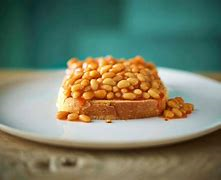
The Beard Liberation Front, the informal network of beard wearers, has said that Heinz’s recently published guide to how successfully produce beans on toast is not beard friendly.
The BLF Research Department has tweaked the guide specifically to make it beard friendly:
1 Toast slices of white bread and set aside
2 Heat baked beans. The BLF notes that bringing them to the boil or not is optional, but prolonged boiling must be avoided.
3 Once the beans are hot, drain off a small amount of the sauce taking care to still leave the beans coated in sauce
4 Butter the toast
5 Spoon the beans on to the toast and eat
This method avoids sauce getting into the beard, damaging the follicles,and giving credence to those who thinks the Twits represents reality
22 years on Robin Cook’s resignation against war with Iraq
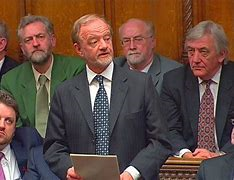
The late Robin Cook resigned as Leader of the Commons on 18th March 2003 underlining his opposition to the war in Iraq. Without agreeing to his entire perspective he was clearly right that the war would lead to many deaths and consequences that we are still living with. One wonders if any senior Labour Minister in 2025 will yet resign over the failure to act on Gaza including a ban on all UK weapons sales to Israel…
The following is the full text of his speech:
This is the first time for 20 years that I have addressed the House from the Back Benches. I must confess that I had forgotten how much better the view is from here. None of those 20 years were more enjoyable or more rewarding than the past two, in which I have had the immense privilege of serving this House as Leader of the House, which were made all the more enjoyable, Mr. Speaker, by the opportunity of working closely with you.
It was frequently the necessity for me as Leader of the House to talk my way out of accusations that a statement had been preceded by a press interview. On this occasion I can say with complete confidence that no press interview has been given before this statement. I have chosen to address the House first on why I cannot support a war without international agreement or domestic support.
The present Prime Minister is the most successful leader of the Labour party in my lifetime. I hope that he will continue to be the leader of our party, and I hope that he will continue to be successful. I have no sympathy with, and I will give no comfort to, those who want to use this crisis to displace him.
I applaud the heroic efforts that the Prime Minister has made in trying to secure a second resolution. I do not think that anybody could have done better than the Foreign Secretary in working to get support for a second resolution within the Security Council. But the very intensity of those attempts underlines how important it was to succeed. Now that those attempts have failed, we cannot pretend that getting a second resolution was of no importance.
France has been at the receiving end of bucketloads of commentary in recent days. It is not France alone that wants more time for inspections. Germany wants more time for inspections; Russia wants more time for inspections; indeed, at no time have we signed up even the minimum necessary to carry a second resolution. We delude ourselves if we think that the degree of international hostility is all the result of President Chirac. The reality is that Britain is being asked to embark on a war without agreement in any of the international bodies of which we are a leading partner — not NATO, not the European Union and, now, not the Security Council.
To end up in such diplomatic weakness is a serious reverse. Only a year ago, we and the United States were part of a coalition against terrorism that was wider and more diverse than I would ever have imagined possible. History will be astonished at the diplomatic miscalculations that led so quickly to the disintegration of that powerful coalition. The US can afford to go it alone, but Britain is not a superpower. Our interests are best protected not by unilateral action but by multilateral agreement and a world order governed by rules. Yet tonight the international partnerships most important to us are weakened: the European Union is divided; the Security Council is in stalemate. Those are heavy casualties of a war in which a shot has yet to be fired.
I have heard some parallels between military action in these circumstances and the military action that we took in Kosovo. There was no doubt about the multilateral support that we had for the action that we took in Kosovo. It was supported by NATO; it was supported by the European Union; it was supported by every single one of the seven neighbors in the region. France and Germany were our active allies. It is precisely because we have none of that support in this case that it was all the more important to get agreement in the Security Council as the last hope of demonstrating international agreement.
The legal basis for our action in Kosovo was the need to respond to an urgent and compelling humanitarian crisis. Our difficulty in getting support this time is that neither the international community nor the British public is persuaded that there is an urgent and compelling reason for this military action in Iraq.
The threshold for war should always be high. None of us can predict the death toll of civilians from the forthcoming bombardment of Iraq, but the US warning of a bombing campaign that will “shock and awe” makes it likely that casualties will be numbered at least in the thousands. I am confident that British servicemen and women will acquit themselves with professionalism and with courage. I hope that they all come back. I hope that Saddam, even now, will quit Baghdad and avert war, but it is false to argue that only those who support war support our troops. It is entirely legitimate to support our troops while seeking an alternative to the conflict that will put those troops at risk.
Nor is it fair to accuse those of us who want longer for inspections of not having an alternative strategy. For four years as Foreign Secretary I was partly responsible for the western strategy of containment. Over the past decade that strategy destroyed more weapons than in the Gulf war, dismantled Iraq’s nuclear weapons programme and halted Saddam’s medium and long-range missiles programmes. Iraq’s military strength is now less than half its size than at the time of the last Gulf war.
Ironically, it is only because Iraq’s military forces are so weak that we can even contemplate its invasion. Some advocates of conflict claim that Saddam’s forces are so weak, so demoralized and so badly equipped that the war will be over in a few days. We cannot base our military strategy on the assumption that Saddam is weak and at the same time justify pre-emptive action on the claim that he is a threat.
Iraq probably has no weapons of mass destruction in the commonly understood sense of the term—namely a credible device capable of being delivered against a strategic city target. It probably still has biological toxins and battlefield chemical munitions, but it has had them since the 1980s when US companies sold Saddam anthrax agents and the then British Government approved chemical and munitions factories. Why is it now so urgent that we should take military action to disarm a military capacity that has been there for 20 years, and which we helped to create? Why is it necessary to resort to war this week, while Saddam’s ambition to complete his weapons programme is blocked by the presence of UN inspectors?
Only a couple of weeks ago, Hans Blix told the Security Council that the key remaining disarmament tasks could be completed within months. I have heard it said that Iraq has had not months but 12 years in which to complete disarmament, and that our patience is exhausted. Yet it is more than 30 years since resolution 242 called on Israel to withdraw from the occupied territories. We do not express the same impatience with the persistent refusal of Israel to comply. I welcome the strong personal commitment that the Prime Minister has given to middle east peace, but Britain’s positive role in the middle east does not redress the strong sense of injustice throughout the Muslim world at what it sees as one rule for the allies of the US and another rule for the rest.
Nor is our credibility helped by the appearance that our partners in Washington are less interested in disarmament than they are in regime change in Iraq. That explains why any evidence that inspections may be showing progress is greeted in Washington not with satisfaction but with consternation: it reduces the case for war.
What has come to trouble me most over past weeks is the suspicion that if the hanging chads in Florida had gone the other way and Al Gore had been elected, we would not now be about to commit British troops.
The longer that I have served in this place, the greater the respect I have for the good sense and collective wisdom of the British people. On Iraq, I believe that the prevailing mood of the British people is sound. They do not doubt that Saddam is a brutal dictator, but they are not persuaded that he is a clear and present danger to Britain. They want inspections to be given a chance, and they suspect that they are being pushed too quickly into conflict by a US Administration with an agenda of its own. Above all, they are uneasy at Britain going out on a limb on a military adventure without a broader international coalition and against the hostility of many of our traditional allies.
From the start of the present crisis, I have insisted, as Leader of the House, on the right of this place to vote on whether Britain should go to war. It has been a favorite theme of commentators that this House no longer occupies a central role in British politics. Nothing could better demonstrate that they are wrong than for this House to stop the commitment of troops in a war that has neither international agreement nor domestic support. I intend to join those tomorrow night who will vote against military action now. It is for that reason, and for that reason alone, and with a heavy heart, that I resign from the Government. [Applause.]