The Harvest Supper is a traditional autumn event which features songs and beer. Usually it’s an occasion where farm workers praise the boss and become mildly inebriated.
A traditional Harvest Supper song for example:
Here’s a health to our Master,
The Lord of the Feast,
God bless his endeavours
And send him increase
May all his crop prosper
So we reap them next year
Here’s the master’s good health boys
Come drink off your beer
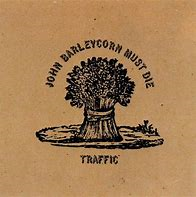
No doubt David Archer knows the words off by heart. The Ambridge Socialist suggests John Barleycorn Must Die as a rather more accurate depiction or rural life
Lark Rise to Candleford and Ambridge
The Archers does Candleford on Sunday (Radio 4) but don’t let the Archers put you off. The book is a classic describing rural life in Oxfordshire in the 1880s although written many decades later. Its best understood as semi-fictionalised. It was not cider country but there is a lot of passages about home brewing and brewsters. Rough Music also features as a reminder of traditional country values.
A line reads: ‘who posted the box containing a dead mouse to Mrs Meddlesome’. Answer: George Grundy
The Economist has a special issue on hand writing recently. It cost ££ so in summary the point is that many people now take notes on electronic devices rather than write by hand.
I plead guilty. The only things that I write down are shopping lists (when I remember) and notes from virtual meetings which just supplement the electronically available slides.
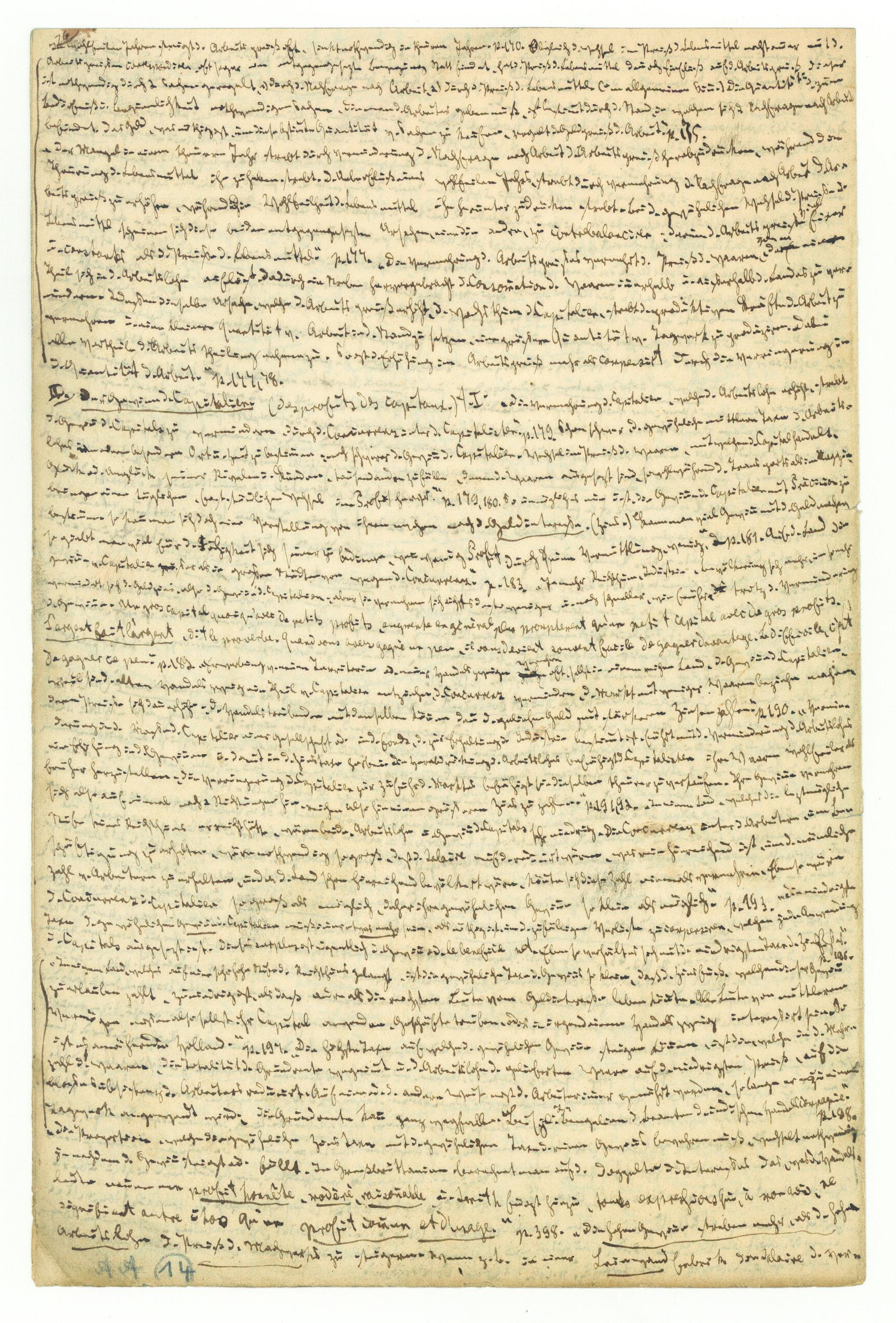
Before laptops and tablets etc I did hand write fletters the problem being that my handwriting is far from legible. Along with the beard its one of the few things I have in common with Karl Marx
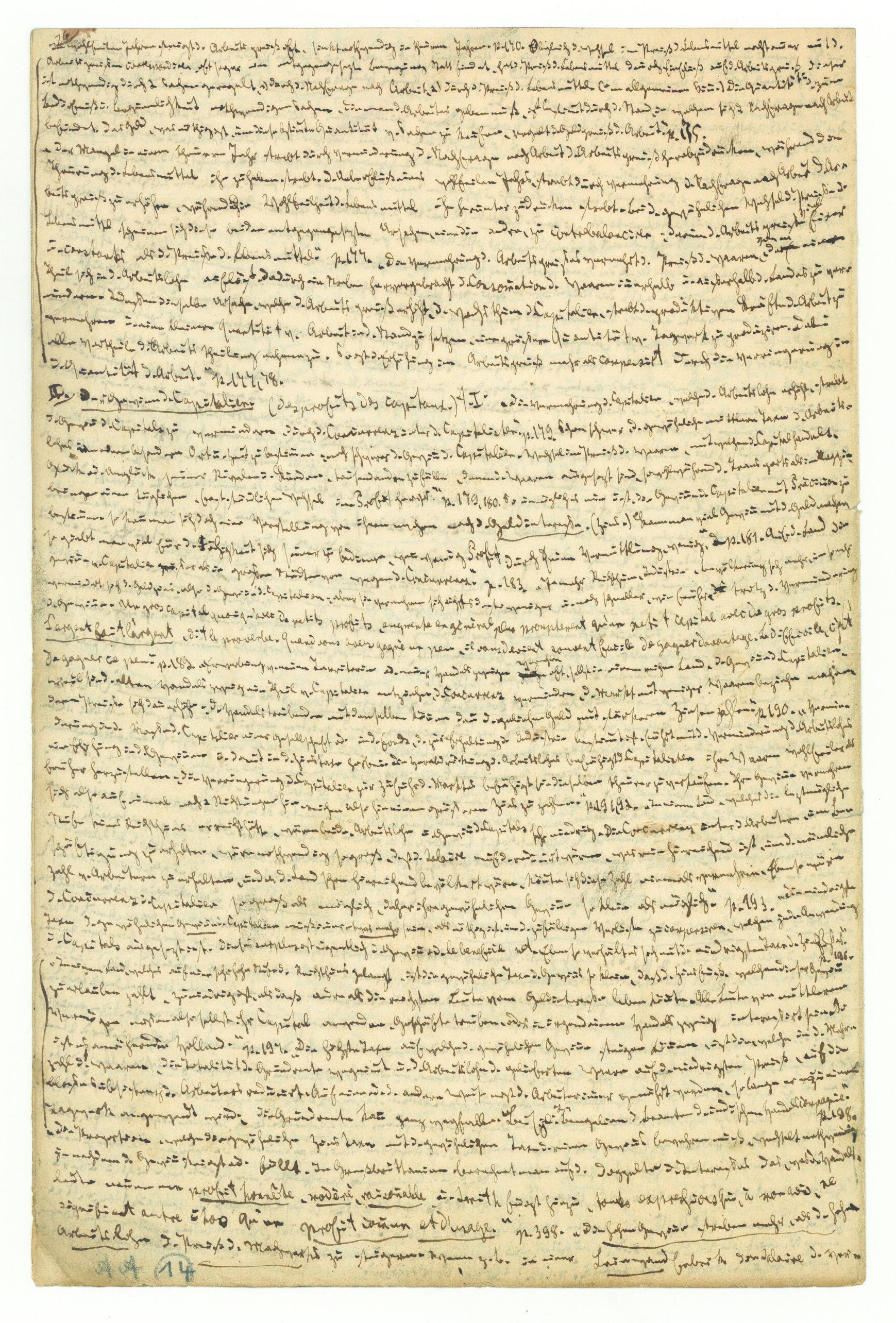
In 1862 Karl Marx, short of money as usual, applied for a job as a railway clerk.
His command of the English language was not an issue but his writing was.
He wrote in very small, and even for the period, hard to decipher script.
He was turned down for the job because of his handwriting- not something likely to be an issue in the electronic age of 2023.
It later caused Engels problems when seeking to go through and publish some of Marx’s manuscripts after his death.
For research historians now, with reading hand written letters and documents increasingly less common in the present day, reading archive material written in pen is I suspect becoming increasingly difficult. In fact it’s surprising the Tories haven’t started a culture war on it
*picture courtesy of socialist historian Marcello Musto
Suella Braverman in a rant to 30 people in Washington towards the end of September claimed that multiculturalism has failed. There is nothing like reality to puncture the bombast of Tory politicians
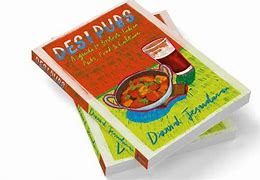
CAMRA has recently published a new book on Desi Pubs, which explains what the term means and lists some of the best examples around the country.
There have been some excellent books recently about the wider culture of beer and community. One example is Pete Brown’s Clubland, which looks at the history and evolution of working men’s clubs.
Jesudason’s book is one of the most important to appear on beer and culture in recent times. It looks at how ethnic minorities, faced with racism, have developed a distinctive pub model that appeals in 2023 to a genuinely multicultural audience.
At one level the book might be seen as an intervention in a political debate, perhaps even a culture war. Earlier in 2023 there was a furore about a pub in Grays Essex that displayed a collection of golliwogs. Eventually the police investigated complaints of racism, despite the reported disapproval of the Home Secretary,Suella Braverman.
Big Beer acted where the authorities hesitated and the likes of Heineken and ABInBev refused to supply the pub. It shut.
The pub had been listed in the Good Beer Guide and won local CAMRA Award
CAMRA itself has exemplary policies on racism and discrimination and ones that it actively pursues. The pub has been deleted from the Good Beer Guide.
Even so the impression was that were some people who put a good pint of beer above the ugly realities of racism at the bar. Desi Pubs is an answer to that and a highly political one.
Jesudason is clear that the definition of a Desi pub is fairly loose. It refers to the creation of a pub run by someone of Indian origin based not on what might be found in India now, but what it might have been when their parents and grandparents were living there.
The key feature of the Desi pubs is the provision of high end Indian food such as might be found in an expensive restaurant, in a pub environment, with beer and at pub prices.
Their origins can be traced back to the West Midlands in the 1960s. A colour bar operated in many pubs and people of colour were either refused service or made to feel distinctly unwelcome.
Hence the setting up of Desi pubs where those of Indian origin could go and socialise safely and enjoyably was a political act and was seen and promoted as such. The book has an interview with Avatar Singh Jouhl, a leader of the Indian Workers Association, who sadly died in 2022. He details the history of racism and the fight against it of which Desi pubs were a part.
The book however makes clear that things are changing. In a visit to one Desi Pub in New Southgate, North London, Jesudason finds a Desi pub where the clientele is split between Arsenal and Spurs fans.
The windows are blacked out but inside there is a thriving community pub where middle and working class backgrounds, and different ethnic origins, happily get along. In short as happens in many good pubs.
There is a history here however. Historically the view was that pubs sold beer and restaurants sold food. The idea that the two should mix and that the clientele should also be mixed did not go down well with some authorities in the 1960s and 70s. Hence some Desi Pubs started out as private members clubs.
Jesudason does not shy away from the reality that both institutional and direct racism still exists and this can be reflected in some who find their way into Desi Pubs. His point is that this is in a process of change and one for the better.
Neither does the book avoid some of the issues that might come to the readers mind. The Campaign for Real Ale is after all about good beer so do Desi Pubs sell it? Here the picture is mixed. Indian food is often matched with lager but Jesudason argues that a cask pale ale is at least as good a match. He points to the fact that some Desi Pubs, for example the Gladstone at Borough in London, sells both cask and craft beer.
He also looks at the question of whether women are welcome in Desi Pubs. Again historically it might have been the case of men at the bar but the Gladstone for example has a woman landlady.
The wider point is that CAMRA is not just about good beer but also the pub as the hub of local communities. Desi Pubs are certainly much more like that than many chain owned pubs which served the products of Big Beer companies.
The majority of the book provides a guide and reviews to some of the best Desi Pubs around the country. It is a reasonable bet that many will be unaware of the mix of great Indian food and decent beer that they sell. A thriving pub culture that has been hidden very largely from history and the current day.
There are other developments beyond the Desi Pub as well, important though the focus is on them
Jesudason is focused on a difficult and unacceptable past and an improving and better present.
The reality remains however that craft beer in particular remains hideously white. There are now a few Indian and Black owned breweries and their beer does make its way into some Desi Pubs. However many craft beer pubs and events have very far from the mixed crowd to be found in the pubs Jesudason describes.
An alternative but also popular development is the small chain of Bundobust restaurants and bars which are to be found in Leeds, Manchester, Liverpool and Birmingham. There is also a craft brewery and bar in Manchester. The food is vegetarian Indian and the beer top notch. It is not the Desi Pub model but it equally moves beyond traditional markets for both the beer and food.
There are also a number of craft beer bottle shops owned and run by families of Asian origin, which display a keen interest in the latest trends.
In short the times they are a changin’ and David Jesudason’s book is a very important contribution to the chronicling of that process.
An earlier version of this post appeared on the Cultures Matter site. David Jesudason’s Desi Pubs is available from CAMRA Books
The Beard Liberation Front, the informal network of beard wearers, has welcomed a YouGov survey that shows the majority of men now have facial hair.
34% of men now have a beard with 13% wearing stubble with 54% overall having facial hair. In 2016 the comparable figure was 42%
The YouGov survey also suggests the prejudice against facial hair is declining.
The campaigners have welcomed the news but note that whether or not to wear a beard should be a matter of personal choice and in some areas of British society beard wearing is still frowned upon at best.
BLF Organiser Keith Flett said, the fact that only 46% of men are now clean shaven underlines the impact the Beard Liberation Front has said since it was formed almost 30 years ago
Class, Ethnicity & Gender in Cricket: what is to be done?
The ECB which runs cricket in England and Wales published its response to the recent ICEC report on Monday.
The report had looked in detail at some of the issues that cricket has from Governance to its over reliance on public school educated (whether by sponsorship or otherwise) cricketers,
In so far as The Hundred has been successful it has been the women’s game that is responsible with high quality, engaging cricket drawing ever larger crowds. However the ECB still won’t fully commit to equal pay across the women’s domestic game by 2030. It claims that the funding for this-by which it means broadcast rights- is not yet there.
It has admitted that promoting cricket in State schools is something that will require more than just the ECB, the Government will need to be involved too. Rishi Sunak is a cricket fan but is probably not too focused on State school cricket.
Yet if the biggest interest and talent for future cricket is to be drawn in- often from Asian and Black communities this work needs to be done, now. Otherwise the talent pool will continue to be ex-public schoolboys. There are some great cricketers but look around the world to see other cricket playing countries casting the net much wider.
The ECB have washed their hands of Eton v Harrow at Lords (until at least 2027) saying it’s a matter for the Home of Cricket.
Even with these important qualifications there are lots of fine words and intentions in the ECB response. What will happen? There is mention of an annual report.
As a trade union officer in the private sector I’m used to the fine words of large employers (often sincerely meant)and they do sit well in the annual report. What a union does here is to check regularly that things are actually happening at the grassroots and that change is happening. And if it isn’t its called out until it does.
I’d like to think the PCA might do that but I’m very far from sure. I certainly would not rely on the ECB to do it.
Anyway if you want to read something that looks at the crisis in English cricket far better than I ever will be able to do, read Duncan Stone’s Different Class (Repeater Books)
The Beard Liberation Front, the informal network of beard wearers, has said that the Good Beer Guide 2024 published today features the top four pubs and taps who were voted as the most Beard Friendly of the Year in 2023
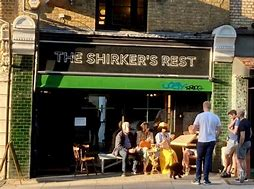
The London winner and runner up, the Shirker’s Rest and the Cock Tavern E8 are listed in the London section. Outside of London the Evening Star in Brighton features as does Tom’s Tap and Brew in Crewe, covered in the breweries section of the Guide.
The BLF says that good beer and good beards go together so it is no accident that the top beard friendly pubs abd taps feature in the latest Good Beer Guide
BLF Organiser Keith Flett said, it remains the case the most beard friendly pubs and taps also sell great beer
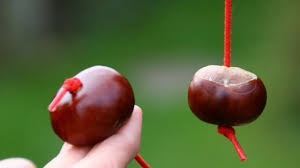
The Campaign for Real Conkers, that opposes bans on conker playing and unnecessary rules and regulations in games has said that while Storm Agnes currently hitting many areas of the UK is not good news for many it also provides an excellent opportunity to collect conkers
The 2023 conker season opened as usual post August Bank Holiday Monday and will run until mid-October.
The high winds associated with Agnes will bring down large numbers of ripe conkers, ready to be collected, and used in conker games
The campaigners they are maintaining their usual ‘anything goes’ approach to conker games, to encourage people to play without arbitrary rules.
Campaign Organiser Keith Flett said, Storm Agnes is a windfall for conker players
Guide on how to play real conkers safely in 2023
1] Select your conker. Do this yourself. DO NOT use a conker provided by someone else who may give you a poor specimen.
2] There is no specific kind of conker that makes a good game winner. Large conkers may more easily splinter for example. Some prefer conkers with flat and sharp edges
3] You may use the conker ‘as is’ known as ‘organic’. Alternatively you may seek to harden it by baking it, soaking it in vinegar etc. There is no guarantee that an artificially enhanced conker will perform any better than an organic one.
4] Drill a small hole through the conker. A nail will often achieve this. Again you must do this yourself
5] Thread the conker through the hole you have drilled. A strong chord, perhaps a shoelace is best
6] You are now ready to play.
7] Make sure that the chord is long enough to allow you to stand at least 1 metre plus away from your opponent. This would generally be the case as space is required for the conker swing.
8] Players take alternate turns to try and hit and destroy their opponent’s conker
9] Those with poor aim may hit the knuckles of their opponent more often than the conker so you may wish to wear gloves.
10] The winner is the player who determines their opponents conker unusable in further rounds, usually by causing it to splinter into two or more pieces
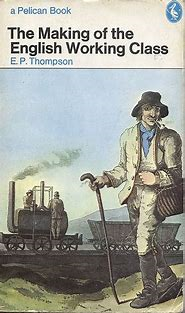
The origins of the cover of the 1968 edition of E P Thompson’s Making of the English Working Class
The 1963 hardback edition of E P Thompson’s Making of the English Working Class (Gollancz) featured on the cover, appropriately, an engraving related to Peterloo.
In a sense the events of 1819 were at the core of the book. Thompson saw them as setting the template for how both the nature of the working class movement and the State’s response to it developed.
The 1968 paperback edition which was the 1000th Pelican featured a detail from a print by R D Havell which had in the background a locomotive built by John Blenkinsop.The print itself is from a plate in George Walker’s 1814 book, Costumes of Yorkshire
George Forster of Leeds Library posted on the book and the specific image in 2012:
The most famous of Walker’s plates is no 3, “The Collier”, because it shows a man working at Middleton Colliery in south Leeds with John Blenkinsop’s recently invented steam engine in the background – the earliest known illustration of a steam locomotive on rails. The text reads:
“One of these workmen is here represented as returning from his labours in his usual costume. This dress is of white cloth bound with red, may probably be ridiculed as quite inconsistent with his sable occupation; but when the necessity of frequent washing is considered, surely none could have been adopted more conducive to cleanliness and health. The West Riding of Yorkshire, it is well known, abounds in coal, the consumption of which is prodigiously increased by the general use of steam engines. In the back ground of the annexed Plate is a delineation of the steam engine lately invented by Mr. Blenkinsop, agent at the colliery of Charles Brandling, esquire, near Leeds, which conveys above twenty waggons loaded with coals from the pits to Leeds. By two of these machines constantly employed by the labour of at least fourteen horses is saved.” [p 7]
The point of course was that steam power and industry came together with the making of a working class. However as John Baxter has commented the figure of a miner was hardly centrally relevant to Thompson’s book:
The 1968 image(a contemporary print from book of Yorkshire costume) does signify advancing industrial change and a proto proletarian..in the form of the Yorkshire miner…however well this links to his heavy utilisation of West Riding activism..Thompson hardly mentioned the miners..something he acknowledged.Yes your alternative would have been appropriate.From research on the West Riding now completed and some in progress we see miners only on the margins of popular radicalism c 1792-1832.They do however get a better look in in work completed by Joe Stanley and myself.
The book remains in print and the cover has changed several times since. The 2013 edition of the paperback does have a cover featuring a Peterloo scene.
I’m still checking on whether Thompson had any input to the choice of the 1968 cover. Pelican had a distinctive cover design template but The Making seems a little outside of the mainstream in this respect
Cask Ale Week backed by Cask Marque runs until 1st October.
The promotion of cask beer is to be welcomed and Cask Ale Week has some impact in doing so.
It is however far from unproblematic. In fact a Culture War has started over Cask Ale Week 2023.
This focused on publicity on the hard to far right social media site GBNews. Generally appearing on the outlet is not good news or publicity and a quick glance at media headlines on 27th September (not about beer) will underline why.
As Jessica Mason (@drinksmavern) has reported Cask Marque have said they were approached by GBNews. Indeed. I’m approached by them for various reasons from time to time and the response is always NO. They are seeking ‘normal’ content to balance out the range of far rightists, conspiracy theorists and general whackos that are their stock in trade.
We can accept certainly that if the Pub is the Hub we may find people who watch GBNews drinking cask ale in it. Provided they are not actually an organised fascist or displaying racist behaviour I can live with that.
However if the aim is to promote cask beer to a wider and younger audience this is precisely the wrong place to be.
There is a wider issue which is that Cask Ale Week tends to be associated with Bigger and Big Beer rather than the many smaller independent producers of cask who could certainly do with publicity and promotion at the moment.
Cask Ale Week for example is running a promotion with Greene King on Insta. It’s a matter of balance. Both GK and Marstons Carlsberg produce large amounts of cask beer and both at the moment seem to have a view that there might be better profits elsewhere. If they withdraw from cask it will become significantly less available and the gap won’t be filled by smaller independents.
This is the reality of a market capitalist society and on the plus side both Greene King and Marstons are unionised employers.
It does however suggest that in future Cask Ale Week needs to think carefully not just about promoting cask beer to a wider audience but also about promoting a wider range of modern cask beer beyond the Big Beer producers.