Engels search for Pilsener in Worthing, August 1884
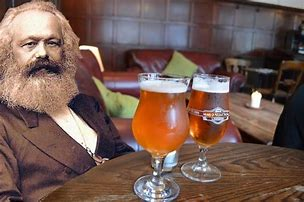
Both Marx and Engels were Pilsener drinkers but Engels in particular sought the beer out wherever he was staying.
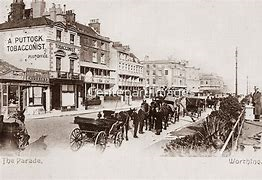
In August 1884 he stayed with other members of his extended family at 48 Marine Parade Worthing, having had to switch lodgings because the previous landlady had banned him from smoking (cigars)
He wrote to Laura Lafargue on 6th August 1884 that there was ‘No Lager Beer as yet, but Percy is hunting some up in Brighton’.
On 11th August 1884 he wrote to Paul Lafargue ‘our stock of Pilsener is almost exhausted and take two days from Brighton to be replenished. We are really out in the wilds here’
A year earlier in August 1883 staying in what was his favourite seaside location in later years,Eastbourne, supplies of Pilsener had not proved a problem. He wrote to Laura Lafargue on 19th August 1883 ‘Pilsener beer is flourishing and even better than in London’
Engels intimates that in order to do serious work having Pilsener to hand was essential. One wonders if he was familiar with the folk song John Barleycorn
Breal, the private equity group have acquired the Midlands brewery Purity. The deal went through on 22nd December although according to the Birmingham Mail Breal have been looking at the acquistion for most of 2023
It follows their most recent previous acquistion of Sarf London’s Brew by Numbers brewery.
I had a (rare) glass of Brew by Numbers pale at the Peterborough Beerfest in August and it was highly quaffable. More commonly the beer can be found in keg and can.
Breal own four breweries and taps- Black Sheep, Brick, Brew By Numbers and now Purity.
They are a venture capital group,and appear to have related operations elsewhere in the world. They have no obvious experience in brewing and bars. Previous deals have included steel and textiles.
A reading of Marx’s Capital can explain this. Capitalism renews itself by a cycle of boom and bust. The bust phase allows the recomposition of capital to promote future growth.
Breal then are getting in at the bottom of the market, (in craft beer in this case) but see growth and return on their capital to come.
Will things stay the same at the four breweries? No. Workers are protected at day one by a transfer of undertakings (TUPE) but after this ETO (economic, technical,organisational)applies to allow changes.
In short good news that the breweries remain and will likely flourish. Those impacted would do well to a join a union if they havent already.
Thanks also to Tania Nexus for noting on social media that Breal have just brought Vinoteca, a London based wine bar chain, out of administration saving 150 jobs.
Aside from Pilsener Engels was a wine drinker, maintaining a stock at a Dublin wine merchant and advising Marx on the best wines to drink
As beer writer James Beeson has noted on social media Neil Gostelow has advised Breal on the brewery acquisitions (Times 26th August 2023). Gostelow previously worked for KPMG and in that period dealt with the administration of several beer and pub groups including, as Beeson notes, Hopstuff. He joined Breal as an investment advisor in 2022. He does not have a beard.
His view as reported by the Times is that strong craft beer brands have a good future. No doubt he has noted that the economy in respect of brewing and beer is probably at or near the bottom of the market. Getting in now promises later profit. Breal as a private equity group have the capital to think beyond the short term whether or not they have read Capital Volume One
GCSE results: the shadow of the 1944 Education Act still lurks
GCSE results in England, Wales and Northern Ireland were released on 24th August and the conundrum about who achieves what grade and why continues.
Results in Wales and Northern Ireland were between the level of 2022 and 2019. In England the Tories promoted an ideologically driven to the ‘standard’ fixed in 2019.
Those students who passed, having studied during the very difficult pandemic period deserve congratulations.
22% of students got a grade 7,the top mark, down around 4% on 2022 in England. Results at public schools were of course better…There are also regional variations in England and issues of sex and class are also relevant.
The perhaps obvious point here is that Ofqual in England have determined an artificial quota for those who achieve the top grade. Why is it not the case that anyone student who meets the criteria for achieving the top grade receives it.
This seems to go further than just sense of fairness checking between individual examiners to make sure broadly similar grades are given for broadly similar papers. It suggests rather a worldview where only a certain number can achieve. In the 1944 Education Act it was stated that 25% would go on to University and 75% would not.
The world has changed since then, University education has expanded and there is a much increased demand for those with qualifications. Now of course it might be argued that qualifications shouldn’t matter, capability and aptitude should. In a saner world one would hope so. In the meantime its surely worth asking what the pass/fail mentality of 1944 is doing still lurking in 2023.
Ofqual has a Chief Regulator but who regulates the Regulator
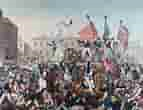
On Monday 16th August 1819 in central Manchester around 60,000 people gathered to protest for the vote which few if any of them had. Most of the men, or their descendants wouldn’t get the vote until 1918 and many of the women until 1928.
he Yeomanry, local businessmen on horseback, rode into the protesters, on the order of Tory Magistrate William Hulton and cut them down with sabres. Tens were killed and thousands injured.
The reason for the attack remains unclear. It may be that the Government had ordered it. It might be that the Magistrates acted on their own- they were certainly supported by the Government afterwards.The demonstration posed a new threat to the ruling order as the start of the age of mass democracy. The authorities were unsure how to deal with such a gathering with a shoestring if brutal police force- and feared violence.
Violence came from the authorities.
An issue is whether such an event could happen again.
The socialist historian E P Thompson argued that such was the reaction to Peterloo that the authorities determined not to violently attack peaceful democratic protest again.
Industrial disputes were another matter.
In fact during the Chartist period there were some attacks with deaths and injuries on protests, but nothing on the scale of Peterloo.
More recently however in Derry in 1972 at a protest for democracy, known as Bloody Sunday, the army did shoot and kill and injure protesters. Again the claim was the violence was planned.
50 years on with an increasingly authoritarian State could Peterloo happen again
Most protest in 2023 in Britain whether on climate or against racism or for better conditions at work relies on mass peaceful mobilisation. Civil disobedience is also a strategy used for example by Just Stop Oil but again peacefully.
Where violence does occur at protests it is often provoked by police tactics.
However if the State perceives a protest threatens the interests of capital the use of the army certainly can’t be ruled out. The 1984/5 miner’s strike gave a glimpse of that. It was an industrial dispute but also a political.
That said if demonstrations are large enough the capacity of the State to stop them in any way can be limited- see the 2003 protest against the Iraq War.
There is a wider perspective
Peterloo was about the demand to have the right to vote and participate in the Parliamentary process. One focus was on the price of bread, kept artificially high by the Corn Laws. They were repealed by Parliament in 1846/7 but successive Chartist demands for the vote through Parliamentary petitions got nowhere.
It was only in May 1867 when the Reform League gathered illegally in Hyde Park but the Government determined numbers were too great and too much was at stake to send the army- who were on stand by- in that progress on voting rights was made.
In 2023 a focus on Parliament remains. Despite many shortcomings and misgivings most want the Tories out and Labour in. Yet Keir Starmer is no keener on protest that Rishi Sunak and Suella Braverman.
Some argue that numerous recent changes to the law mean that protest has effectively been criminalised. Certainly as economic and political crisis hits Governments wants to dissuade protesters and not just in Britain.
The reality remains however that if the numbers mobilised are large enough the State does have to pay attention if not always give way. The lesson of Peterloo remains. Armed force creates as much of a crisis for the State as it does for our side
The High Pay Centre’s annual survey of pay of CEOs of FTSE Top 100 companies has found an average increase of £500,000 that is 16.1%. Meanwhile most working people face wage rises which are than inflation. That underlines declining take home pay since 2008.
Apparently there is only a thin talent pool at the top of industry and salaries are better elsewhere in the world. Whatever talent that is required to be a CEO- and I’ve met a few over the years-its workers who make the profits.
The TUC have rightly called out this us and them world as has Gary Smith leader of the GMB, a union closely aligned to Labour. From Starmer, however, no comment. Labour is engaged on smoked salmon and scrambled egg relation with business (whatever happened to beer and sandwiches?). When it comes to union pay demands there is however tut tutting at best.
It’s not new, New Labour was similar in its approach
Meanwhile the High Pay Centre has addressed Andrew Bailey’s claim that wage rises cause inflation. They do when it comes to CEOs because they are the people hiking prices to keep profits and their bonuses high
The below is an extract from a draft review of Rob Sewell’s Chartist Revolution(2020)
The late Marxist historian John Saville was of the view that if the Chartists had prevailed, for example in 1848, the outcome would not have been a socialist one but a form of plebeian democracy.
That might still have been world changing but the size of the industrial working class and its organisation was not yet at a stage where more was likely to have been achieved.
A comparison can be made with the successful 1917 revolution in Russia. Here organised workers were centrally involved but Russia remained in many areas a peasant society. The Bolsheviks knew that if the revolution was to sustain itself then a move towards socialism in Germany, a more advanced country industrially, was essential. It almost happened but in the end came defeat. That meant that socialism in Russia was isolated leading to the Stalinist socialism in one country period from the mid-1920s.
If we can understand that Chartism had the potential for revolution in a context where the outcome was likely to be less than a full scale overthrow of capital, there is also the question of understanding what Chartism did achieve and what this meant for the class battles to come.
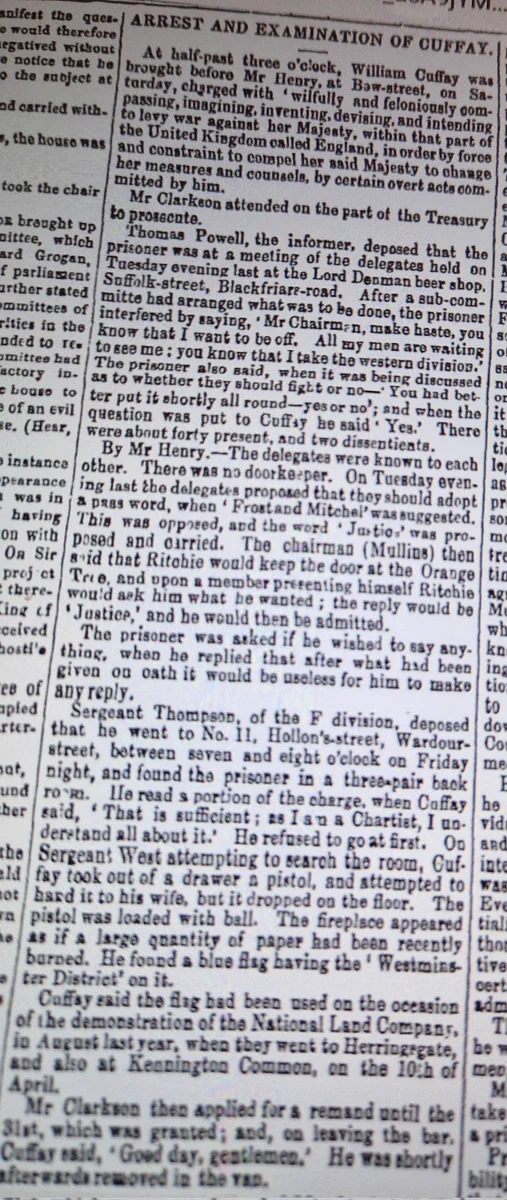
In the early evening of Friday 18th August 1848 the black leader of London Chartism William Cuffay was arrested at an address off Wardour St in London’s West End. He was alleged to have played a role in an attempted armed Chartist rising in nearby Seven Dials on 16th August.
Newspaper reports suggest that aside from a Chartist banner, a gun was also found at Cuffay’s residence.
He was eventually found guilty and transported to Tasmania where he continued to be an active radical and labour organiser until his death in 1870.
Cuffay left no diary or written record that we know of although he was certainly literate. He was on the left of London Chartism and after the failure of Chartist rallies on 10th April and 12th June he may well have played some part in committees, secret or otherwise that planned the August rising.
Whether his role as leader was to promote it or urge constraint we don’t know. The key source of information we have comes from the Government Spycop and provocateur Powell, one of several Spycops involved.
It seems likely that Cuffay was aware of Spycop infiltration if not by whom. Judging by his responses at the first Court hearing he expected arrest and accepted it as the leader, whatever specific role he may have played.
Given that the Seven Dials attempted rising was at least in part provoked by Government Spycops it seems likely that the Government intended to arrest and prosecute Cuffay and get him out of the way
Ralph Miliband on the prospects for a Labour Election victory(1963)
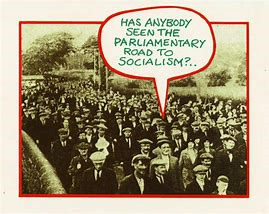
Ralph Miliband the father of David and Ed was the author of an incisive critique of the first 60 years of the Labour Party, Parliamentary Socialism, published in 1960.
In 1963 he wrote piece on the prospects for a Labour Election victory- Labour won by four seats at the 1964 Election.
Miliband’s is one of a number of long unavailable pieces by writers on the left including Eric Hobsbawm and Raymond Williams, which are published in the current issue of New Left Review.
As an Editorial introduction notes Keir Starmer does not have the leadership skills of a Wilson or a Blair (and NLR in 1963 was optimistic about how left-wing Wilson was) but Miliband’s analysis seems strikingly familiar in 2023.
Part of the introductory paragraph reads:
If the electoral consultation were held today they would be massacred, if in the autumn or next spring, the prediction has it, they would be soundly beaten and Labour, after more than twelve years in opposition, would find itself in Government again, with a substantial Parliamentary majority. Not that this signifies a mass conversion to Labour, still less to socialism. In effect, the indications are that Labour has gained rather little new and positive support, rather the Conservatives have lost a great deal of ground in the past year or so- enough, that is, to signal the passage from defeat to victory.
Miliband goes on to note:
In 1951.. it was increasingly difficult to see any significant differences from the Conservative opposition whether in domestic or foreign policy…Most of its energy was devoted to fighting not the Conservatives but those within its own ranks arguing for a different political line…The lesson Labour’s leaders drew from repeated defeat was not that they had not been bold enough, but they had been too much so..
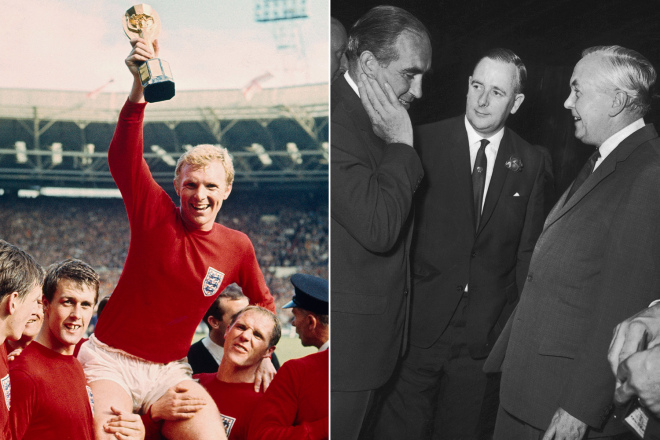
England lost to Spain in the Football World Cup final on Sunday and in doing so allowed Harold Wilson’s 1966 record to remain safe. Namely that England only win football finals under a Labour Government
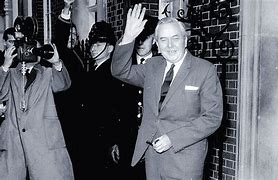
The only time England have won the World Cup was in 1966 just months after Harold Wilson had led Labour to a 97 seat majority in the March Election of that year, Wilson noted:
Have you noticed how we only win the World Cup under a Labour government”
He may well have got the line from comedian Mike Yarwood
Wilson was also privately, and correctly, concerned about the impact England’s failure in the 1970 World Cup would have on Labour’s chances in the June General Election of that year. Labour lost.
The Lionesses performance in the World Cup was oustanding but their defeat does allow Keir Starmer to bring forward a positive policy. With a Labour Government in Office history shows England can win a football World Cup. The Tories record remains one of complete defeat.