The Tory Trustees of Lower Loxley have decided to delay Freddie Pargetter’s inheritance. The Ambridge Socialist would of course abolish such concepts, with Lower Loxley handed over to the people of Borsetshire. However in the meantime Pargetter who is keen to decolonise Lower Loxley is clearly being victimised in an Ambridge Culture War
Home Farm disc drill
With Stella on holiday Brian has been reviewing the books and has been concerned to find significant costs for a new seed drill. This was in fact given the nod by Adam, as Stella reminded him when she returned. Modernisation of Home Farm might include replacing Brian with AI but instead Stella has been sacked for gross misconduct while Adam said nothing.
The Professor has lost his spectacles
It is better than losing his marbles but if the Prof requires reading glasses surely Flying Tiger in Borchester can sort the problem. They were apparently left on the counter of a late night burger van after Jazzer’s big night out. Apparently Chuck the owner of the van has given the glasses to another claimant. Susan….
T20 ends in tie
The Ambridge T20 ended in a tie. There should have been a super-over but there wasn’t.. The scorer (see Professor) had muddled up the scores due to his glasses issue. We have former Radio One DJ Sybil Ruscoe to thank for the cricket feature and hopefully more will appear during the summer.
Grundy Ferrets are back
One of the key features of proletarian Ambridge, Ferrets, have at length made an appearance at the late Mayfest at Lower Loxley. We need more reports
Ambridge Class Warrior of the Week
Ardil
Adam
Brian
The Ambridge Socialist poll. Who is the Ambridge Class Warrior of the Week?
Can Starmer’s Narrow Church bring Labour an Election victory
Labour has excluded the current North Tyneside Mayor Jamie Driscoll from a list of candidates for a new Mayoral Election in the North-East. Driscoll appears to be an effective and popular Mayor and someone who is upfront about Labour’s links with the unions.
Of course no reasons are given as to why people don’t make candidate lists, although you can read plenty of thoughts on social media.
It appears to be another example of factionalism in the Labour Party where the controlling group are more interested in settling scores with those they don’t like then they are in winning elections. This latter point btw is meant to be what Labour as a Parliamentary Socialist Party is all about. Hence in this example excluding a popular incumbent Mayor from standing as a Labour candidate does rather undermine that
In reality Starmer who often talks of ‘My Labour Party’ is constructing not a broad church party but a narrow one. The question being whether in a first past the post electoral system that can actually win an election.
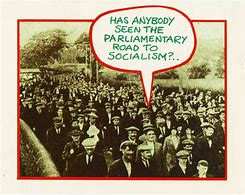
The late Ralph Miliband wrote one of the best books about the history of the Labour Party, Parliamentary Socialism,1961, albeit of course it doesn’t cover the last 60 years.
Miliband, the father of David and Ed, opens the book by making the statement that as a democratic socialist party Labour had always been amongst the most dogmatic. Not about socialism but about the use of Parliamentary as opposed to extra-Parliamentary forms of struggle.
His view at that time was that Labour under Hugh Gaitskell was not a vehicle for socialist advance and the leadership of the rather more ‘left-wing’ Harold Wilson did nothing to change his mind.
He did however keep the matter under review and sometimes returned to the subject, for example in the Socialist Register 1983:
Here he saw the rise of the Bennite left from the early 1980s as a sign that maybe Labour could be claimed for socialism. Significantly perhaps it appeared in the year that a, then young, Jeremy Corbyn first became an MP.
Tom Watson before he stepped down as an MP described an effort to abolish his then Deputy Leader position as going against the idea of Labour as a ‘broad church’. Harold Wilson was probably right that Labour owes more to Methodism than Marx but as Miliband noted the ‘broad’ part of the description is harder to justify historically.
Miliband wrote
Pious references to the Labour Party being a ‘broad church’ which has always incorporated many different strands of thought fail to take account of a crucial fact, namely that the ‘broad church’ of Labour only functioned effectively in the past because one side – the Right and Centre – determined the nature of the services that were to be held, and excluded or threatened with exclusion any clergy too deviant in its dissent.
The Guardian by contrast argued in an Editorial on 22nd September 2019
The Labour party is nothing if not a broad church, encompassing different traditions working with – not against – each other. In a post-industrial world everything is some kind of coalition. If not, the party is simply a religion of true believers in a multi-faith polity. Over decades, Labour activists, interests and voters have broadly agreed on a common purpose – to elect Labour governments that can redress the imbalance of economic, social and political power in Britain. That broad-church approach has served Labour well and has served Britain well too
Starmer is someone with limited political experience and while things can always change also someone who shows little political flair.
The point is that in practice for the vast majority of its existence Labour has been a narrow church. Those running the Party understanding that this is not an election winning strategy were able to promote on most occasions as a broad churc
A distant relation of the C15th ruler of Romania,Vlad the Impaler, the inspiration for Bram Stoker’s Dracula has been spotted in Romania
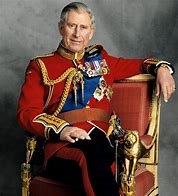
Charles ‘Windsor’ 74’s great grandmother Queen Mary, wife of George V was descended from the German Wurttenbergs who were linked to the Impaler. George V was first cousin of Queen Marie of Romania.
King Charles whoowns property in Transylvania is spending a week there examining the wild flowers while Camilla has stayed in England
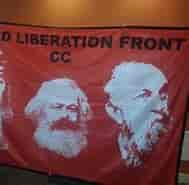
The Beard Liberation Front, the informal network of beard wearers, has said that with the first Test of the summer concluding at Lords with an England victory, it is clear that Bazball is also Beardball.
The robust style of cricket introduced by England coach Brendan McCullum has beards at its centre.
Both McCullum and England captain Ben Stokes have beards as did many of the England side who faced Ireland at Lords.
The campaigners say that it is not only the visual impact of the England player’s beards, which may distract opponents, but also the interaction between facial hair and bat and ball. This can be crucial and is one of the least understood aspects of Bazball.
BLF Organiser Keith Flett said, Bazball is synonymous with Beard Power. The days of clean shaven cricket are coming to an end. BazBeardBall will be key in the forthcoming Ashes series
The Times & rail strikes: time to read the Making of the English Working Class
According to a Times Editorial (2nd June) current rail disputes from members of ASLEF and the RMT are led by ‘militant Marxists’ who have organised ‘Luddite campaigns’ to prevent job cuts and improvements to productivity. In case you were wondering that is code for cutting back on safety and shutting ticket offices.
The Times Editorial writers live firmly in the industrial world of the 1970s (which had a lot to be said for it) while the rail unions are very much in 2023. The current strikes have to be agreed by ballot, with some of the most restrictive conditions in Europe. Further they only work because union members not only vote for them but actively support them.
The problem lies with the Government and its abject failure to properly fund a public transport system.
Whether the union leaders in question are or are not Marxists is not centrally relevant, since they are above all union leaders within the industrial framework which promotes and ends workplace struggles. They are certainly not Luddites. They are not seeking to destroy the railways but rather to keep them going.
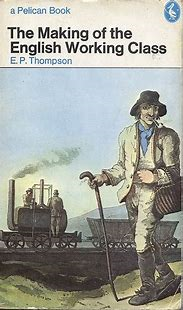
The Times would do well to read E P Thompson’s Making of the English Working Class which looks at how a world of collective action developed after Luddism.
Thompson himself would have enjoyed the Editorial, he was amused by the perpetual reaction to be found in them.(see, Sir, Writing by Candlelight)
Some readers at least of this post will be well aware that Bud Light, which is marketed as a beer, has lost market share in the US after it ran a promotion campaign featuring a transgender personalityon TikTok.
Leaving the quality of the beer aside Big Beer in the UK doing the same would be welcome and it is Pride Month.
Budweiser is of course owned by ABInBev which is quoted on the UK Stock Exchange but is a global beer company.
A US Culture War saw Bud Light sales drop for 6 consecutive weeks from April 1st although what culture warriors were doing looking at TikTok is questionable.
The competition has benefited particularly Mexican beer Modelo Especial.
However ABInBev won’t be too put out. Ultimately it owns that brand too.
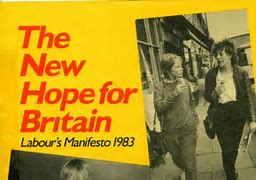
Labour’s 9th June 1983 Manifesto: 40 years before its time?
It is 40 years since Mrs Thatcher defeated Michael Foot’s Labour in the 1983 General Election.
According to a Radio 4 Archive Hour programme on the subject in 2013, the Labour Election campaign was shambolic and Foot, while appealing to some of Labour’s core vote, failed to connect to a wider audience.
Foot won 8.4 million votes achieving 27.6% of the poll which was certainly on the low side. Labour often tops 10 or 11 million votes in General Elections and on occasion higher. It is worth reflecting however that in 2010 Labour got 8.6 million votes and 29% of the poll.
The electoral point in 1983 was the break-away of the Social Democratic Party to the right of Labour which split the left of centre vote and allowed Mrs Thatcher to achieve a decisive victory and Parliamentary majority. It might be argued that the Falklands War helped although it could also be noted that the Labour leadership under Foot had supported the war.
It is argued that Foot, by 1983, a veteran Labour activist was not the man to lead Labour at a General Election.
Foot was a man of the left- a nuclear disarmer and an MP for a radical South Wales seat. Yet he was of the post-1945 left, not the new left that had appeared from the 1960s onwards. His victory in the Labour leadership election after the 1979 Labour defeat to Thatcher represented the culmination of decades of political work in the Party. But that was the past and Elections tend to be about the future.
It is an awkward reflection on modern politics that it is doubtful someone as old as Foot would lead a party into an Election now. It is a question of image, spin and discrimination that existed in the 1980s has grown worse since and needs to be tackled.
The reasons for Labour’s failure in 1983 have however been pinned on the Manifesto dubbed ‘the longest suicide note in history’. It is certainly long- manifestoes tend to be even now- but the notoriety relates to its political position.
It was a manifesto of the left, or one kind of left anyway. Its focus on managing the British economy and tackling high unemployment hardly seems that controversial now. Rather it was the attacks on it by Mrs Thatcher and those that had split to the SDP that framed it in this way.
Thatcher, who used to bang on about absurd comparisons between individual household borrowing and the national debt attacked the manifesto because it openly said that money would need to be borrowed to stimulate economic recovery. New Labour got around this charge of economic mismanagement in 1997 by saying it would stick to Tory economic limits, and much good did it eventually do them or the country’s economy.
The SDP meanwhile were upset by things such as the call for Britain to leave the Common Market. One doubts Nigel Farage has read the 1983 Labour Manifesto but it reminds that the demand to depart the EU has been as strong in parts of the left as it certainly is on the right.
Other bits of the Manifesto now seem to be amazingly good sense. For example it says the banks will need to be regulated to make sure they lend and invest. It also proposes to set up a Foreign Investment Unit to keep an eye on what multinational companies operating in the UK were up to.
Michael Foot may have been thought too old to lead the country by some, but these ideas were it seems 40 years before their time…
These boots are made for walking. Braverman to ban ‘slow walking’ protests again
Just Stop Oil protesters carried out slow walking protests in various parts of London for the last 5 weeks.
Police already have the powers under Section 12 of the Public Order Act to move protesters off the road which the Met report they do with a delay of at most 20 minutes from the start of the protest.
Suella Braverman, who is on a mission to ban any kind of protest that comes to her attention decided to ban slow walking by adding a clause on to the current Public Order Bill. Unfortunately for her but fortunately for democracy this was defeated in the Lords.
The Times now reports (1st June) that Braverman plans to widen the banning criteria to include serious disruption to the community, a wider test, and to lower the bar for illegality to anything that causes more than minor disruption (undefined)
There will of course, Braverman style, be no need for democratic scrutiny or debate to planned tweaks to the 1986 Public Order Act but the serious disruption change will need to be voted on in Parliament before they head off for their summer holidays
Reality and Braverman belong in different solar systems but this is law as Culture War.
Firstly much of London already has, quite rightly, 20mph speed limit and getting anywhere that speed is imaginative on many roads. It’s doubtful that slow walking protests in roads really makes that much difference.
In the meantime while I don’t walk as quickly as I did I still get annoyed by people who meander on pavements, usually looking at their phone. Can’t Braverman pass a law to ban that?
National Beard Week 2023: Positive Images of the Hirsute
Beard Liberation Front
2nd June
Contact Keith Flett 07803 167266
National Beard Week 2023: Positive Images of the hirsute
National Beard Week, organised by the Beard Liberation Front, an informal network of beard wearers, will run from June 19th to June 24th.
It is a long standing annual event designed to highlight positive images of hirsuteness and to call out beard haters- pogonophobes.
Results are achieved by a mixture of social media polls and, for more specialised areas such as Beard Friendly Employer, careful checks by BLF researchers.
BLF Organiser Keith Flett said, beards are making progress and National Beard Week 2023 will aim to see more made
National Beard Week 2023
Monday 19th June: Hirsute Personality of the Year: the beard wearer who has made the positive public impact during the year.
Tuesday 20th June: Beard Friendly Sandwich of the Year: the sandwich that goes in the mouth not the beard.
Wednesday 21st June: Hirsute Broadcaster of the Year: the broadcaster whose beard has had the most public impact.
Thursday 22nd June: Pogonophobe of the Year: the most notorious beard hater of the year.
Friday 23rd June: Beard Friendly Employer of the Year: the field grows wider each year 2020.
Saturday 24th June: Beard of Summer 2023: the third of the four quarterly seasonal Awards.
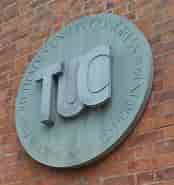
The Trades Union Congress first met on 2nd June 1868 but only The Guardian reported it
The TUC met for the first time at the Mechanics Institute in central Manchester, after a call was issued by the Manchester and Salford Trades Council, on June 2nd 1868.
While both the Times and the Telegraph (founded 1855) were in daily publication in 1868 only one paper, the Manchester Guardian, reported the proceedings day by day.
It might be thought that this was simply because the paper was Manchester based and that no doubt was a part of it but it was more complex than that.
1868 was well before the rise of independent labour politics on a significant scale (ILP founded 1893) and many trade unionists were supporters of the Liberal Party. Indeed the leader of late Chartism Ernest Jones who worked with Marx and Engels was associated with the ‘left’ of Manchester Liberalism before his death in 1869.
The Manchester Guardian of course was also a Liberal Party supporter and that came with a particular view of trade unionism- not that of strikes and pickets- but of a way of representing working men (this was 1868) as an important interest group in society.
Whether the Guardian will remember this 156 years on is questionable. In 1968 to mark the 100th anniversary they published a special supplement with an interview with the then TUC General Secretary George Woodcock who inevitably was talking about changing times for trade unionism and the need to modernise.
John Torode noted (2nd June 1968) that ‘new methods of bargaining are throwing new burdens on union officials. It is no longer enough to be able to thump the conference table, bluff and shout and eventually walk away with the money’. Those were the days…