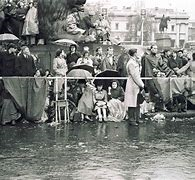
On the day of Queen Elizabeth 11 Coronation, 2nd June 1953,it rained. Peter Hennessy in his social history of the 1950s, Having It So Good, notes that it was seen as the epitome of Britishness
The weather forecast for King Charles 111 Coronation on 6th May looks equally poor.
King Charlie’s Coronation on Saturday will involve a number of historic chairs which have of course been refurbished in a sustainable way, albeit of course at some cost.
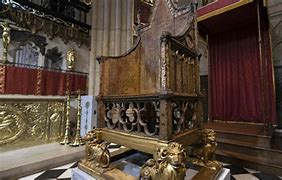
The King will be coronated on St Edward’s Chair which is 700 years old although it has been refurbished so many times probably not much of the original is left
Before this Charles and Camilla will sit in the Chairs of Estate which are historic in the sense that they date back to the last Coronation in 1953. For the enthroning and homage they will sit in Throne Chairs which date back as far as the 1937 Coronation.
The Chairs will also include updated Royal cyphers embroidered by the Royal School of Needlework.
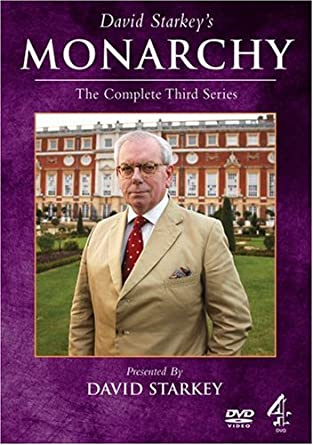
David Starkey claims Britain is a ‘Royal Republic’
Royal Republic are a Swedish rock band but in a 60 second clip for hard right social media site GB News David Starkey has described Britain as a ‘Royal Republic’
Starkey is a historian of Tudor Britain but opines across any vaguely historical matter for GB News. On the clip he is described as a ‘royal historian’ and he has opined previously at length on the monarchy
He notes that at his Coronation King Charles will take certain oaths and the penalty for breaking them can be severe, Starkey claimed, drawing a parallel with Charles 1st who was executed in Whitehall on 30th January 1649.
Starkey claimed this is because Britain is a Royal Republic, an unusual formulation, presumably a reference to the fact that the country has been a Constitutional Monarchy since 1660. It seems unlikely that Starkey is familiar with the music of the Swedish rock band.
In further intervention Starkey noted Princess Anne’s view that King Charles’ plans for a slimmed down monarchy are problematic. Starkey notes, correctly, that there are very few working Royals. Princess Anne is one and three more are in their 80s. Another in his early 60s, understood to frequent pizza restaurants is not currently eligible, although Starkey didnt mention this.
Perhaps the answer is to retire the monarchy, so no question of working or public funding is needed…
And in yet a further intervention Starkey has opined that the settlement after the Glorious Revolution in 1688 meant that the King is simply a figurehead and the real power lies in Parliament or as puts it in 2023 King Rishi. Leaving aside the politics of the moment this seems like a view unfamiliar with the Guardian’s regular exposes of Royal meddling in Parliamentary affairs.
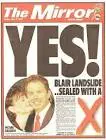
As an historian I’m not keen on memory which I think is often unreliable, so my memories of May 1st and 2nd 1997 are unreliable.
Not surprisingly there have been numbers of memoirs of those days on social media to go with those already published in print.
I’ve put together the below, which is not reliable in the specifics any more than any memory is to underline that even those on the left who were no fans of Blair before 1997 were very happy to see the end of the Tories. There was also a sense of hope.
The archival world is currently in something of a turmoil moving away from the old print copies in libraries to digital back pages on-line (some chargeable some not). Even so I spent time in the British Library checking my back pages. I can’t find a fletter criticising the new Labour Government until one in the Guardian at the 100 day mark.
On Thursday May 1st after voting Labour in Tottenham (the late Bernie Grant) I was on the May Day march organised as it still is by the London May Day Organising Committee. It was (I think) one of those years when it focused on NE London. I recall Clissold Park in Stoke Newington.
Later beer was involved, where I can’t really recall, but given the pubs in those days in North London it was probably the Tollgate- a Wetherspoons in Turnpike Lane now closed,. Later still, there was a results party in Tottenham.
The result we were waiting for was Portillo in Enfield Southgate, a nearby constituency familiar to at least some of us. I had been out in that area in the previous few days and remember thinking- are these houses with two cars out at the front really going to vote Labour?
The answer was yes. The party was marked (in my memory) by someone- now a senior union official- shouting at regular intervals that we wanted Portillo out.
The morning brought a hangover but there was a picket line to attend- bakers at Arnoutti in North Tottenham were out on strike. I attended and returned to bed.
Later it was off to Reading for the CAMRA beer festival. The sun was still shining and it was a pleasant later Friday afternoon. The festival was a much less extensive event (and much cheaper to get in) than it is now.
In those pre-interwebs, pre mobile phone days, I was listening to Labour Cabinet appointments on a transistor radio. The world seem a slightly better place.
The Tories were out at last and clearly not coming back for a good while. Perhaps a change for the better was possible.
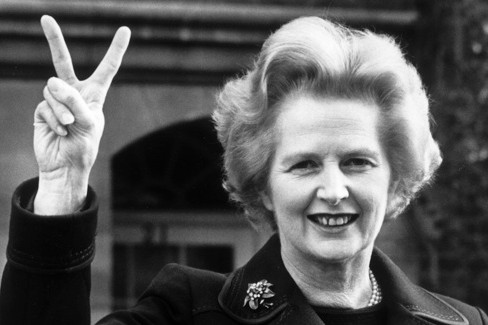
May Day is, worldwide, a labour and socialist festival. It has been marked in Britain since the first London May Day demonstrations in the 1890s. As Eric Hobsbawm and Terence Ranger argued traditions are invented. In the UK at the moment there is an official May Day public holiday held on the first Monday after the actual date, which often sees marches and rallies. We have Michael Foot and the 1974-79 Labour Government to thank for that, although Mrs Thatcher recorded in her papers that she also enjoyed a day off, despite disapproving of its stated purpose.
There is also the tradition which goes back to those original London May Days of workers taking strike action on May Day itself and marching in solidarity. A further tradition, and a much older one, is that of what might be called the ‘Merrie England’ May Day. That is dancing around Maypoles, celebrations of Spring and the lengthening and warmer days to come.
The two different May Day traditions rarely seem to meet in Britain with traditional labour movement events not particularly connected with wider celebrations. Eric Hobsbawm made the point that across Europe this was far from the case.
However there are other traditions as well. William Morris in the early 1890s and particularly the socialist artist Walter Crane, advanced a vision of May Day as one that heralded Spring, in the sense of the birth of a new world of equality and socialist values.
The Chartists also marked May Day, long before it became a labour movement occasion. They did so both with politics and celebration but arguably with a sense of a different and better world closer to William Morris than the early London May Days.
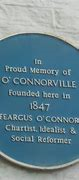
On May Day, so the 6th May 1849 edition of the Chartist newspaper the Northern Star reported, numbers of Chartists gathered at O’Connorville to mark its second anniversary.
O’Connorville was at Heronsgate in north-west London, a brisk walk from Chorleywood tube or a turning off the M25. It was part of the Chartist Land Scheme. This looked not to overthrow or even reform industrial capitalism but to opt out if it and return to the land and to farm small holdings on a series of Chartist settlements around England.
Chartists were chosen by ballot in a scheme that was popular enough for the Government to avoid over several years from agreeing it was legal. Most of those involved would have been only second generation industrial workers with a memory of rural life.
On that 1849 May Day at O’Connorville celebrations included a dinner, concert and a ball. The school room which was at the centre of the community was decorated with evergreens and large picture of the MP for Nottingham, the Chartist leader Feargus O’Connor.
It was reported that at 2pm 50 persons sat down to a ‘sumptuous dinner of ‘Old English fare’. Toasts at the dinner included one to ‘The People..may they soon be the source of all power’. Singing and dancing went on past midnight. The report concluded with the hope that the Land Scheme will lead to an ‘enlightened body of British Yeoman’, a reference to the Yeomanry who cut down protesters at Peterloo.
The same celebration was repeated in 1850, thereby qualifying as a tradition!
40 years before the start of the London May Day the tying together of politics and celebration focused on a desire to opt out of market capitalism. In 2026 it’s an idea that may have a renewed currency.
The Socialist Second International proclaimed the first May Day in 1889 and ever since then marches proclaiming socialism and internationalism have taken place around the world on May 1st.
The origins of May Day in Britain go back much further as a traditional festival marking the coming of Spring.
The first workers movement anywhere in the world, the Chartists while marking the traditional coming of Spring also on occasion prefigured the May Days of 1889 and after.
The Chartist Land Company had set up a series of land settlements- in effect small holdings in England- with people allocated to them by ballot. The idea was to opt out of industrial capitalism and return to the land. The Government refused to make the scheme legal and it had to be wound up.
One of the key Chartist Land Settlements was at O’Connorville on the outskirts of Rickmansworth. The Chartist dwellings still stand although these days they are luxury housing.
On 11th May 1850 the Chartist Northern Star paper published an account of the May Day celebrations that had taken place at O’Connorville on May 1st 1850
The O’Connorville band, improved in instrumentation and numbers made the day ‘echo with the sounds of joy’. In the afternoon the school room was filled with allottees, their wives and children ‘all beaming with ruddy health’. ‘Substantial justice’ was done to a tea of ‘old English fare’ after which there were speakers.
The first resolution praised the People’s Charter ‘may its speedy enactment emancipate the wealth producers’. Another resolution sent solidarity to ‘Louis Blanc, Kossuth, Mazzini and the democrats of all nations’
There followed merry dancing, songs and recitations that went on to the early hours.
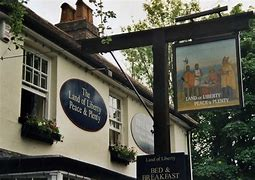
There was a pub adjacent to the settlement, the Land of Liberty, Peace and Plenty, but alcohol was frowned upon
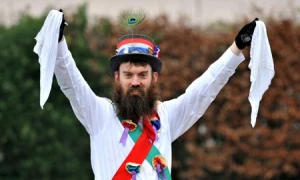
The Beard Liberation Front, the informal network of beard wearers, has said that the ancient May Day tradition of Beard Waggling is being revived once again on Monday May 1st as, with the weather set reasonably fair in many areas, the hirsute will celebrate the coming of Spring by waggling their beards
The beard waggle, a traditional British May Day custom, involves shaking the beard vigorously from side to side and in doing so stimulating air currents that can cause objects to levitate slightly.
BLF Organiser Keith Flett, the Beard Waggle is one of the great May Day traditions but it went into decline with the rise of the safety razor. Now with a new culture of beards, the waggle is firmly back and is gaining in popularity each year. This year the message of the Waggle will be Tories Out as we aim to levitate the Tories out of Downing St with the force of air currents
Beard Liberation Front guide on how to train for May Day beard waggling
1] Ensure the beard is supple. This may be done by moistening is slightly with water or, if preferred, craft beer.
2] Choose a suitable location to waggle, preferably in the sun rather than the shade
3] Move the beard vigorously from side to side and then up and down while otherwise standing still. Repeat several times
4] While waggling the traditional chant is, Hail the Beard, Hail Spring
5] Alternatively beard wagglers may simply intone Tories Out, Tories Out
What Margaret Thatcher did on May Day Bank Holidays
The May Day Bank Holiday was introduced by a Labour Government in 1978 to fall on the first Monday after May 1st if it did not itself fall on a Monday.
In May 3rd 1979 the Thatcher Tory Government was elected.
In recent years there have been numerous calls from the right, one presumes mainly from Thatcherites, for the May Day Holiday to be scrapped and for it to be replaced with a Trafalgar Day or even a Thatcher Day in the Autumn.
Fortunately the Thatcher Foundation Archive provides details of what Mrs Thatcher herself did on May Day Bank Holidays:
Monday May 5th 1980 Chequers
1030 Hair
1515 Mr. and Mrs. Wolfson and children arrived for tea
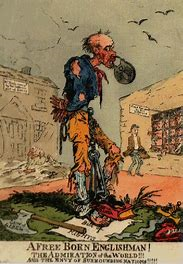
Allegiance to King Charles & the Freeborn Englishman
As part of the Coronation ceremony people will be invited to swear an oath of loyalty to King Charles 111.
It has of course been defended by a clean shaven man in a suit- some Tory Minister or another and supported by hard right Labour MP Shabana Mahmood. Others have been more critical at best.
Historically the act of swearing an allegiance to the King is at more or less at complete odds with the figure of the Freeborn Englishman.
The Freeborn Englishman was certainly patriotic but this meant an allegiance to a constitutional monarch who acted through Parliament and basic liberties and rights. When Governments fell short of this the right to riot was asserted, based on the Glorious Revolution of 1688.
As E P Thompson noted in the Making of the English Working Class, the Freeborn Englishman in practice claimed few rights except the right to be left alone and not bothered by or intruded on by the State. The proposed oath breaks that
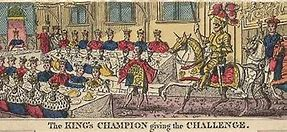
Another Coronation ‘tradition’ The King’s Champion
The Coronation Claims Office exists to validate or otherwise claiming that they have some historic role to play in King Charles 111’s Coronation.
The role of King’s Champion will be carried out by Francis John Fane Marmion Dymoke.
He is the Mayor of Scrivelsby in Lincolnshire a title given to one of his predecessors in 1066.
The Dymoke family inherited the role of King’s Champion and a Dymoke first performed it at Richard 11’s Coronation on 16th July 1377. The office holder is supposed to ride into the Coronation Banquet on horseback in full armour and thrown down a gauntlet to challenge anyone present who thinks the monarch at the Coronation is not the rightful heir to speak up.
There has not been a Coronation Banquet since 1821 so these days the King’s Champion just carries a flag.
In short the role has been redundant for over two hundred years and in an apparently slimmed down Coronation one wonders what the purpose of Dymoke being there actually is