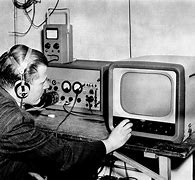
The 1953 Coronation on TV. Concerns people would watch it in the pub
The last Coronation was on 2nd June 1953. It rained.
It was the first Coronation to be televised and its often noted that it led to a boom in TV ownership.
That is only partly correct.
The Queen was thought to be nervous of cameras and the Archbishop of Canterbury was concerned that the Coronation as a religious ceremony would be watched not only by people In their homes but in pubs.
Churchill, then PM, was very much in favour of people watching it in pubs and the Queen came round to the idea of a televised ceremony.
The BBC broadcast the Coronation from 10am to 11.30pm with commentary by Richard Dimbleby. There were an estimated 2.5 million TV sets and 20 million watched it-40% of the population. 12 million listened on the radio.
In the following 12 months sales of TV sets surged by 50% but the beginning of the take off had been not with the Coronation but the funeral of the King in 1952.
In 2023 the BBC and others will broadcast the Coronation. How many will actually watch on TV as opposed to tablets and phones is another matter. Some local authorities are wasting public money by showing it on big screens.
Meanwhile the current Archbishop of Canterbury is still promoting it as a religious ceremony so the bit when King Charlie is anointed with oil will take place behind a screen and not be seen on TV. Churchill would not have been impressed.
Campaigners slam attempt to ban beards for Scottish police officers
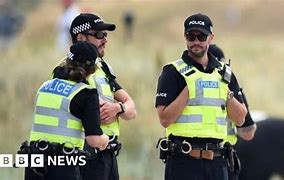
The Beard Liberation Front, the informal network of beard wearers, has slammed an attempt by Scottish police to enforce a beard ban for frontline officers by the end of May.
The claim is that beards mean that protective masks which may, on occasion, be required for frontline work won’t work with facial hair.
The BLF says the protective mask-beard ban issue surfaces from time to time in various areas and is always caused by someone in authority who hates beards.
With the exception of surgical masks it is perfectly possible to wear a mask with a beard provided it is kept well-trimmed.
BLF Organiser Keith Flett said, Scots police need to think again. This attempt at a beard ban is motivated not by safety but by prejudice.
Part of our history: the tradition of Red Republicanism
Given current events its worth recalling that there is a tradition of Red Republicanism in Britain.
George Julian Harney (1819-1897) was born in Deptford and active in every phase of the Chartist movement from 1838 to its demise around 1860.
By the late 1840s he was a leading figure in the Chartist movement and Editor of the Northern Star the biggest selling newspaper of the period. Disagreements with the paper’s owner Feargus O’Connor led to his departure and by June 1850 he had launched the weekly Red Republican paper.
Harney was a left Chartist and internationalist, friendly with and on occasion influenced by Marx and Engels. The Chartist colour had been green but after 1848 it changed to a socialist red.
Harney was clear in an Editorial in the first issue of the Red Republican on 22nd June 1850 that it was about more than getting rid of a monarch, in this case Queen Victoria. Simply replacing a monarchy with a republic as France had done was not enough. There was a need to get rid of all exploiters.
Harney realised and was proven correct that the paper’s name would lead to it being burked (boycotted) by the news trade and changed its name to Friend of the People in December 1850. Before that happened however the paper published the first English translation of the Communist Manifesto by the female Chartist activist and co-thinker of Marx and Engels Helen Macfarlane. Why isn’t all this on the school history curriculum?
Protest at Monarchy, a British tradition. The 1897 Jubilee
The Met Police have tweeted that they will have a ‘low tolerance’ of protest at Saturday’s Coronation reflecting their well known concerns about upholding democratic traditions of protest
Antony Taylor [Historical Research Vol 68/167] has looked at the background to late Victorian anti-monarchism and republicanism and noted above all the role of Reynolds’s Newspaper in setting the tone which he describes as ‘disrespectful and insulting, it gloated over royal tragedies’. Yet Reynolds’s a Sunday newspaper sold 300,000 copies a week.
St Pauls Cathedral, the church of Empire, was the scene for Queen Victoria’s Jubilee ceremony on 22nd June 1897. Earlier in the day Victoria had been at the central Telegraph Office in St Martins Le Grand to send a message worldwide to her subjects. It was the equivalent to sending an e-mail or arguably posting on Twitter.
Victoria had not always been a popular monarch. After the death of her partner Albert the Queen had become reclusive and as often seems to be the case the activities of some of the Royal children were an embarrassment. By the early 1870s a strong Republican tradition had developed with the formation of working class republican clubs. The leadership of this movement was not entirely from the left but was to be found with radicals like Charles Bradlaugh and elements of the Gladstonian Liberal Party. They were certainly not consistent opponents of monarchy or imperial power but it symbolised a class divide in society and Victoria was its figurehead.
What of opposition in 1897 itself?
Reynolds’s News, as noted a best-selling Sunday Paper, which dated back to the Chartist period had a strong record of support for Republicanism and Opposition to the monarchy. It’s issues record some of the opposition there was in 1897.
It reprinted an anarchist leaflet that refers to Queen Victoria as a ‘fat old lady’ and end by arguing that despots should go to hell. Entertaining though it is, its publication in Reynolds’s probably reflected its maximum impact.
Elsewhere the paper reported events. A bonfire built to celebrate the Jubilee on the highest point of the Cotswolds was set alight before the appointed day, and the authorities sought to arrest the miscreant who had done it. Meanwhile in Bristol, the Mayor had invited local trade unions and friendly societies to join a Jubilee procession. They all refused on the grounds that the Jubilee was not something that felt they were included in.
Reynolds’s returned to the fray with its post-Jubilee edition on 27th June 1897.
It reported the sermon of a Durham vicar TJ Dent from Haslington who concluded that the Bible showed that the existence of the monarchy- a ‘worn out fraud’ it was called was delaying the Kingdom of Heaven.
An Editorial on the events noted ‘the Jubilee celebrations with their curious mixture of real enthusiasm with sickening flunkeyism’. It concluded that ‘at last the ghastly farce is over. The Jubilee show has passed’ and argued that ‘Radicalism and servility do not go well hand in hand’. It finally suggested that ‘the final great lesson of the Jubilee is that the people now have to fight wealth’
The detail of the Jubilee day however is perhaps as interesting as the protests. It was a fine sunny day as the Royal procession made its way from Buckingham Palace to St Pauls and afterwards to the poorer areas of Borough via London Bridge.
There were crowds in some places and police horses and troops were used to control numbers. Some who had camped out overnight for a view of the Royal Party complained that they had been pushed into side streets by the police as crowds grew.
However the areas where crowds gathered were quite limited and in most places there were few bystanders. Reynolds’s speculated that many may have preferred to avoid the occasion or leave London for the day, even though in this long before TV age the only way to actually see the event was to attend in person. Another possibility that has a strong contemporary echo is that police closed off roads surrounding the Royal procession so that only those who had arrived very early could get a glimpse.
The fall out, reported in Reynolds’s of 4 July 1897 made the point. A businessman successfully applied to Southwark Council for a return of fees he had paid to erect a stand for spectators in Westminster Bridge Rd. There had it seems been very few takers. In an even odder report several traders applied to a judge for permission to cut up 500 pairs of stilts they had been given to sell for firewood. The owner had disappeared, the police had banned the use of stilts to watch the Royal procession and very few people were interested anyway.
Yet the main opposition was not at the centre of Empire but at the periphery. There were anti-Jubilee protests in Dublin organised by socialists including James Connolly which led to rioting. The Irish nationalist MP Redmond proposed an amendment to the Loyal Address to the Queen outlining the destruction her reign had caused in Ireland back to the Potato Famine and before.
There were also significant protests in India. The Editorial of Reynolds’s on 4 July 1897 had reflected that ‘there is more food for reflection in the condition of India than in the inanities of Jubilee No.2’. It reported a flypost in Poonah that stated ‘none but demons would celebrate a Jubilee when the famine, earthquake and plague prevailed’. Several British soliders were shot and injured during the Jubilee period.
Commenting on the Diamond Jubilee Honours List in Reynolds’s of 4 July 1897 Gracchus noted that ‘militarism is acclaimed as the chief glory of the Queen’s reign’
The opposition to the Jubilee across the Empire is something that is rather missing from UK focused accounts and that does need to be addressed. At the same time the underlying argument of this paper is that opposition to the monarchy ebbs and flows as does support for Republican alternatives. There is an element of calculation about how far pro-monarchy celebrations can be pushed out and it was clearly judged that an event marking the imperial power of the Empire in 1897 would find a public echo. That it did, but we should not take from that universal support or lack of protest.
The Coronation: Starkey’s ‘not fully grounded in our culture’ comment taken down. A Culture War too far
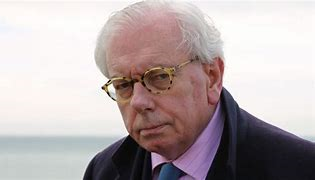
Rishi Sunak, the wealthiest MP in Parliament, who went to Winchester School and Oxford University before becoming leader of the Tory Party and Prime Minister, is according to a remark made by David Starkey on GB News on Thursday morning ‘not fully grounded in our culture’
Starkey’s comments in response to a statement by Mail journalist Andrew Pierce, seemed to relate to the limited number of MPs who will be at the Coronation and King Charles insistence that he will be defender of all the faiths even though constitutionally he is head of the Church of England.
He may have been making a reference to the settlement between Parliament and the Monarchy after the Glorious Revolution of 1688 but one wonders how many current Tory MPs know anything about it. Singling out Sunak is dog whistle politics.
Starkey, who has been appearing on GB News in recent days as a ‘royal historian’ has a long record of making racist remarks which he sometimes apologises for.
In this case GB News, noted for its promotion of hard or far right views, have most unusually for them, taken the clip down from its social media.
Rishi Sunak will make a reading from the Bible at the Coronation
It would be that one area off limits for Culture Wars is the Coronation
The Treason Felony Act (1848) aimed at critics of the Monarch remains law in 2023
Reports suggest that the Met Police will have a ‘low tolerance’ of people making modest protests at the Coronation of King Charles III. The police and knowledge of the law are not two subjects that usually find a close relation but the current Suella Braverman has been passing laws that make even thinking about a protest potentially illegal.
However a rather more draconian law than Braverman has yet dreamed up was passed in 1848 which dealt with criticising the monarch remains in part on the statute book however
2023 is the 175th anniversary of the effective beginning of the British 1848, the Chartist protest on Kennington Common on Monday 10th April 1848, and it’s worth paying attention to the efforts that the Government made to frustrate protest.
John Saville in his authoritative book on 1848 (CUP) believes these were decisive.
The actual machinery of Government in 1848 was very small indeed but the forces it could command were considerable as were the laws it had to deal with threats to order.
The Treason Felony Act dates from 1848 when it brought together several earlier Acts and replaced the death sentence for treason with a felony- in practice at the time transportation to Australia.
The Act was discussed in the House of Commons on the evening of 10th April 1848 and passed within 24 hours despite concerns that a clause on ‘open and advised’ speaking could lead to a treason sentence for political dissent.
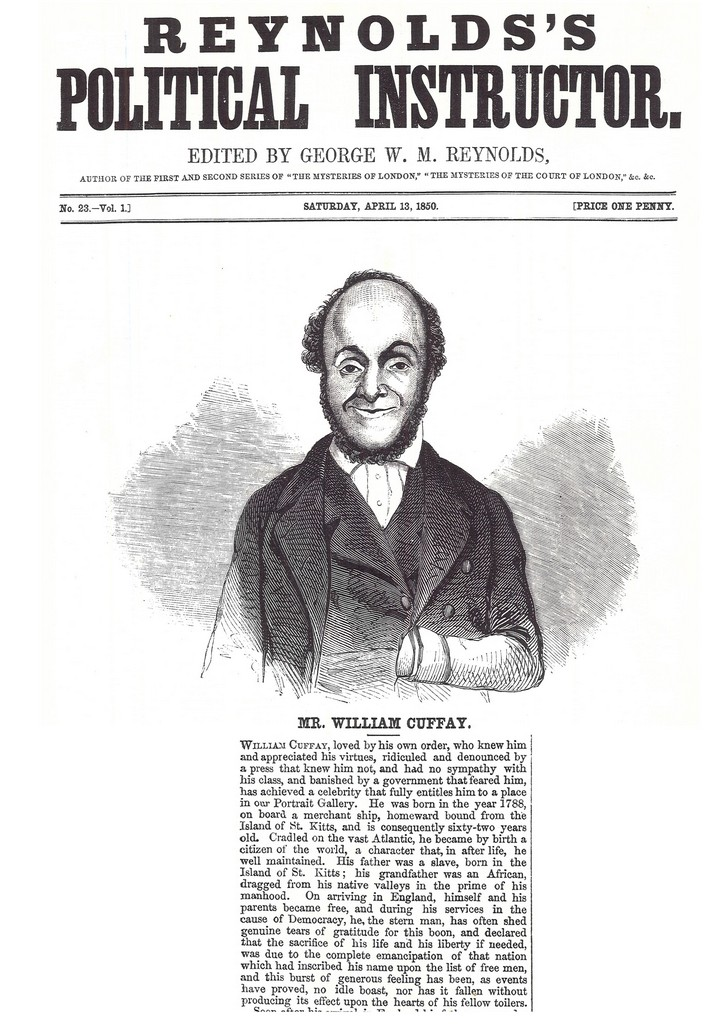
The State had reason to do this. Juries were reluctant to convict where the death sentence was involved and in the revolutionary year of 1848 the State wanted convictions to frustrate any attempts at revolution. Hence the first two people to be convicted under the newly amended Act were the Irish Republican Chartist John Mitchel and the black leader of London Chartism William Cuffay.
The British State, the oldest in the world, was concerned to crack down on political opponents and to avoid creating martyrs. Beyond the boundaries of the UK, British imperial policy was not so nuanced.
The Treason Felony Act originally allowed for transportation to Australia (Cuffay was despatched to Tasmania) but this was changed in 1868 to imprisonment
Section 3 of the Act remains in force and was challenged by the Guardian in 2001 on the grounds that it made even arguing in writing that the monarchy should be abolished an offence. A judge agreed and noted that the wording would not sustain a challenge under the Human Rights Act. The Government claimed to have abolished Section 3 in 2013 but in fact it remains law
3. Offences herein mentioned declared to be felonies
If any person whatsoever shall, within the United Kingdom or without, compass, imagine, invent, devise, or intend to deprive or depose our Most Gracious Lady the Queen, from the style, honour, or royal name of the imperial crown of the United Kingdom, or of any other of her Majesty’s dominions and countries, or to levy war against her Majesty, within any part of the United Kingdom, in order by force or constraint to compel her to change her measures or counsels, or in order to put any force or constraint upon or in order to intimidate or overawe both Houses or either House of Parliament, or to move or stir any foreigner or stranger with force to invade the United Kingdom or any other of her Majesty’s dominions or countries under the obeisance of her Majesty, and such compassings, imaginations, inventions, devices, or intentions, or any of them, shall express, utter, or declare, by publishing any printing or writing … or by any overt act or deed, every person so offending shall be guilty of felony, and being convicted thereof shall be liable … to be transported beyond the seas for the term of his or her natural life.
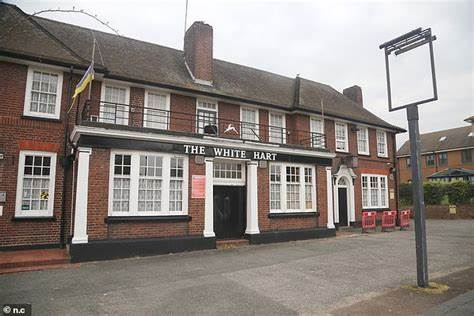
The White Hart in Essex has closed, hopefully temporarily, after global big beer companies Carlsberg and Heineken refused to supply it.
The issue was racist imagery and related issues which had caused the police to investigate.
The Home Secretary Suella Braverman reportedly did not think the investigation was worthy of police time.
Perhaps as a leading member of the party of business Ms Braverman will now understand why global big beer does not want to be associated with racism. They will of course point to all kinds of ethical policies and rightly so, but the bottom line is that they know that in 2023 its bad for business.
Why a Tory Home Secretary doesn’t understand that racism is never acceptable is shall we say interesting. She probably takes the view, expressed by far right US politician DeSantis that this is just an example of ‘woke’ business. Then again he is not a businessman
Their anthems & ours. David Starkey defends God Save the King as ‘dignified’ Times poll suggests it should be replaced
With the appointment of Charles as King the reappearance of God Save the King as the national anthem is a given.
There is a lot of history here. In the late eighteenth century there was an anthem war between Loyalists to the Crown and Jacobins who supported the French Revolution. This took place according to E P Thompson in the Making of the English Working Class in provincial theatres- places of entertainment and politics.
Loyalists sang God Save the King and radicals the more traditional anthem, the Roast Beef of Old England. Non meat eaters can relax here. The radicals were not eating beef. Thanks to what we call a cost of living crisis they couldn’t afford it. The basic diet was bread. The point was that there was a time when the poor could afford to eat beef.
The version sung two hundred years ago contained explicitly political lines which were aimed at the French and the Scots
“Scatter his enemies, And make them fall, Confound their politics, Frustrate their knavish tricks.”
Thompson reports an incident at a Sheffield Theatre in 1812. South Devon Officers ‘Church and King Bullies’ insisted on the singing of God Save the King. Thompson notes ‘the mobility in the gallery insisted on it not being sung’
Opining on GBNews (where else) ‘Royal historian’ David Starkey has opined that the words to God Save the King unlike other national anthems, although he may not have got as far as the second verse.
The Times (3rd May) meanwhile has published a poll suggesting that God Save the King needs to go with Sweet Caroline and Wonderwall listed as possible replacements.
Round one of an informal poll saw the Red Flag just beat Jerusalem which is rather England focused.
Round two based on suggestions from Round one is now open
A poll (Times 3rd May) has found a majority want to ditch God Save the King as the national anthem. What should replace it? Round Two (The Red Flag won Round One)
Sunday League cricket at 55 (first games Sunday 27th April 1969)
John Arlott in the Guardian on Middlesex v Yorkshire Sunday 27th April 1969
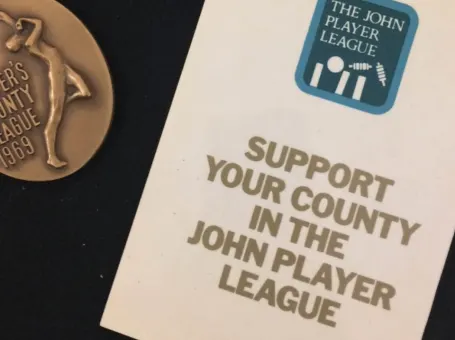
The John Player League a 40 over a side game played from 2pm on Sundays started 55 years ago (and ran until 1987 in that form). A game was shown live on BBC TV every Sunday
The background to it is interesting and was reported by the Guardian in 2018:
John Arlott reported for the Guardian (he was the paper’s cricket correspondent) on Monday 28th April and was, perhaps surprisingly, positive
Middlesex beat Yorkshire by 43 runs at Lord’s yesterday in a splendid advertisement for the over limit cricket of the Sunday League..The match gave all that can be reasonably asked of the players in this competition of high hopes..The end product for the spectator is everyday cricket in a distilled form; not perhaps so profound as the County game but intensive and highly keyed… Those who expected to see a contrived finish with a result achieved only in the last possible over are likely often to be disappointed. If however they are content with a hard match played to a finish within a single afternoon this is their ideal.. The only disappointing aspect of a sunny day was a meagre crowd-only 2400 paid. This cricket is sufficiently fine entertainment to more than pay its way
In the match Geoffrey Boycott was run out for 3, not by a colleague trying to up the scoring rate but by Middlesex’s Price. Middlesex won with a score of 137 in 40 overs. The era of limited overs maximums was still some way off.
From a 2024 perspective its noteworthy that 80 overs were bowled in 5 hours (between old Sunday pub closing and opening times) while the IPL struggles to get through 40 overs in 4 hours. Its also remarkable to think that a sporting event could be sponsored by a cigarette company
Exclusive poll finds King Charles would do better with a beard
The Beard Liberation Front, the informal network of beard wearers, has revealed the results of an exclusive poll of beard experts on King Charles and facial hair
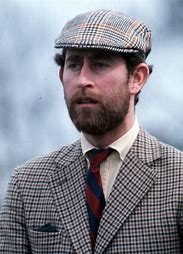
The King wore a beard in his younger days but in recent decades has been clean shaven.
41% of the beard experts agreed that the monarchy would prosper in future if King Charles wore a gravitas adding beard although 57% were indifferent on the matter.
BLF Organiser Keith Flett said, our poll of beard experts found that for those interested in the monarchy a clear majority backed King Charles wearing a beard. It would be in keeping with his strongly held views on all matters organic and natural