Articles

Histories of the present. Strikes: negotiating with the Tories or trying to get the Tories out? Or both?

In Uncategorized on April 4, 2023 by kmflett

March strikes: Histories of the Present

When the Radio 4 News at 7pm on 15th March could report first on Hunt’s Spring Statement, and then secondly note that it had almost been overshadowed by strikes on the day, its clear something significant is moving, at least potentially.

The strikes involved a range of unions- Prospect and the PCS in Government employers across the UK,  NEU teachers in England, ASLEF and RMT, London Underground, BMA Junior Doctors in England, UCU University workers across the UK.

There was an impressive central London march and rally. I attended one called by the Wales TUC in central Cardiff. At the Cardiff rally there were of course veterans of many previous fights but there were also numbers of younger trade unionists. Indeed such was the scale of the action that many on strike would have been doing so for the first time.

The strikes had the focus of pay, jobs and conditions and the statistics tell the story. TUC research officer Alex Collinson tweeted that if wages had gone up at the same rate as before 2008 they’d be £233 a week higher. Hunt’s Budget ushers a period of sustained drops in living standards larger than anything seen since the 1950s.

These were mostly one day or limited duration strikes part of a pattern of a significant rise in action since last summer. It’s the biggest strike wave for perhaps 30 years. Historical comparisons of what official figures term ‘days lost’ through strikes are a basic way of grasping the class struggle but reveal little about its dynamics.

A memory of the battles, victories and defeats of past decades, going back to the 1970s, is often sadly lacking. Industrial relations academics who chronicled and analysed this have long since been subsumed into University Business Studies departments which gives a very different perspective on things. Outside of papers like the Morning Star, media labour correspondents, who could report on strikes with an accurate knowledge of the forces involved and the likely outcomes, based in part on historical precedent, have gone. Instead we find reporters who have only the faintest idea what a trade union is, let alone why and how trade unionists take strike action.

There remain issues about how far victories can be achieved by our side. Here trade union activists and leaders are important.

In the strikes and victories of the 1970s a body of theory was generated, for example by James Hinton and Richard Hyman, about the nature and role of trade union structures. That work I suspect is very largely unknown to activists in the current day. Its history of the present that could usefully be recalled and reviewed.

Union leaders have an interest in successful strikes. They attract more members and income and build the union’s strength- important matters. The interest in widening and generalising action at the political level is at best uneven though. Are we talking to the Tories or trying to get the Tories out? It’s not an issue confined to the UK. Similar questions arise in France with action on pensions. Is the aim of recent militant demonstrations to get Macron to withdraw the plan to increase the pension age or is it to get rid of the Government altogether, or perhaps both?

The point is historically that these are not new questions, and previous struggles can provide important lessons for the present. At the same time each new battle is differently configured and needs to be understood and pursued according to the balance of class forces at work.

Work and history in progress…
Articles

Our Island Story confounded again. Henry V111 was often clean shaven

In Uncategorized on April 4, 2023 by kmflett

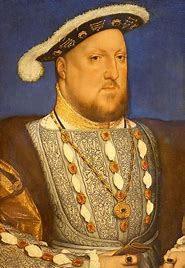
Our Island Story confounded again as it becomes clear Henry V111 was often clean shaven

Beard Liberation Front Research Note. April 2023

Following a social media comment by Beard of the Year Michael Rosen, I checked the historical reality of Henry V111’s beard.

Popular British history invariably shows Henry as a rotund figure with a designer beard.

However he was not always hirsute.

On learning that the new King of France, Francis 1 had a beard, Henry determined that before he hosted him at Greenwich in 1517 he too would grow a beard, being at that point clean shaven.

Some commentaries suggest that his then wife Catherine of Aragon did not like the beard and got Henry V111 to shave it off. However Henry himself clearly liked his hirsute appearance, hence the images we have show him with a full beard

Articles

What makes a Full English Breakfast? Breakfast stout anyone?

In Uncategorized on April 3, 2023 by kmflett

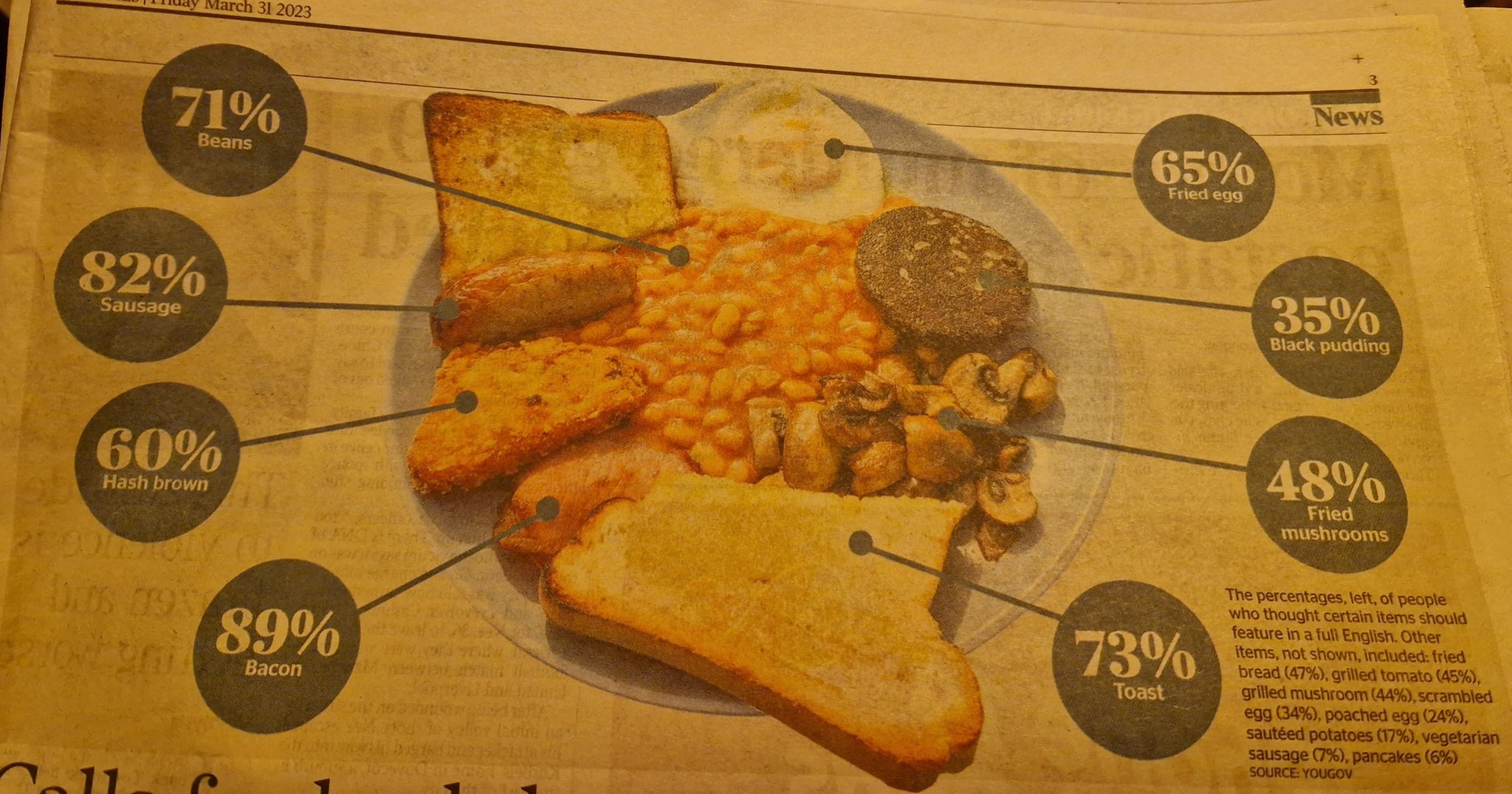
The Times (where else?) has been carrying a protracted discussion about what makes a Full English Breakfast.

Hash Browns- unless properly made- are frowned upon it seems but there is little agreement on the contents beyond eggs and bacon.

Unless staying in a hotel- where its provided- I’m not a great fan, preferring a banana and a coffee during the week. I do often cook a Full English, or variant thereof, on a Sunday and the one ingredient I almost have is good quality black pudding.

That said I’m persauded by the correspondent (3rd April) who suggests that the tradition involves a glass of ale. A breakfast stout will do nicely

Articles

I visited a Wetherspoons real ale festival…

In Uncategorized on April 3, 2023 by kmflett

I visited a Wetherspoons real ale festival

Sunday 2nd April was the last day of Wetherspoons Spring real ale festival. It featured, notionally,30 beers, although only in the largest Spoons would you find most of those over the 10 days or so of the festival.

Before craft beer these Spoons fests were often one of the few ways you could get to sample a range of beers that you were very unlikely to see in your local pubs. The world of course has changed but Spoons hasn’t. It cant really run craft keg fests because most of its keg taps are tied (see the current Spoons v ABI Court case).

Even so as a CAMRA member since 1975 I have no issue at all with drinking cask

Of course I do have an issue with Spoons. It should recognise a union. Its figurehead Tim Martin who I knew from his early Haringey days is at best an eccentric and idiosyncratic figure. That said Spoons is no worse, and arguably slightly better, than a number of other PubCos. Brewdog it is not.

Anyway being in Cardiff on Sunday I stopped by the Ernest Willows in City Rd (for those unfamiliar with Cardiff that’s on the edge of the city centre). It was moderately busy but there were ample seats. The toilets btw are impressive in themselves and award winning.

I stopped by because you can check on the Spoons app which pub has which beers on at any particular time. I noted Adnams Extra and Cambridge Flowerchild IPA (US brewery, brewed at Hook Norton).

Service was prompt and both pints were in good condition. The IPA while it had an impressive hop bill tasted more like an ESB (fine with me). The price? £2.35 a pint. Partly this is festival economies of scale across Spoons 800+ pub estate. Partly it’s just silly and not really helping cask producing breweries.

That said if I was someone on a limited income (I’m not-if you haven’t already, joining a union may help here) who fancied a decent pint would I be complaining about that?

Articles

Campaigners say Graham Potter sacked at Chelsea because he had a beard

In Uncategorized on April 2, 2023 by kmflett

Beard Liberation Front

2nd April

Contact BLF Organiser Keith Flett 07803 167266

Campaigners say the beard may have had a part in Graham Potter’s Chelsea sacking

The Beard Liberation Front, the informal network of beard wearers, has said that Graham Potter’s beard may have played a role in his sacking as Chelsea manager on Sunday.

Potter has one of the most well known Premiership beards and when at Brighton his beard power influenced the team’s success.

However he appeared to  fit in less well at Chelsea with its notoriously clean shaven culture.

BLF Organiser Keith Flett said, we send solidarity to Graham Potter. We suspect Chelsea’s latest owners didn’t trust him because he had a beard.

Articles

Palm Sunday- a tradition tweaked

In Uncategorized on April 2, 2023 by kmflett

Palm Sunday- a tradition tweaked

2nd April is Palm Sunday, the 5th Sunday of Lent, and the start of Holy Week in the Christian Calendar. It marks the beginning of a week of ceremonies ending on Easter Sunday.

Historically the key thing for most was that it marked the beginning of the end of the privations of Lent when the poor at least were supposed to stick to a restricted diet. Lent ends on Maundy Thursday or Easter Sunday depending on which version of the tradition is followed.

Palm Sunday was marked in English and Welsh Churches from Medieval Times. It could involve readings from the Gospels and the singing of the Passion. Mostly however it focused on the consecration of newly cut ‘palms’ Yew or Willow in this case.

This marked for many a sign that Spring, and a rather easier life after the passing of winter was firmly on the way.

From 1490 a ‘prophet’ also did a reading in some Churches. Ronald Hutton in Stations of the Sun records St Peter Cheap(off Cheapside in the City of London, destroyed in the Great Fire of 1666) hired a false beard for their prophet to give them greater gravitas.

By contrast E P Thompson in the Making of the English Working Class notes that Easter Week was the occasion for pace egging. One part of this tradition were Mystery Plays where St George saw off all comers while the fool, Toss Pot, laughed.

However actual eggs were also involved, often wrapped in onion skin and groups went from place to place pace egging.  Beer was also involved as it was on Palm Sunday when those involved in Church services invariably consumed cakes and ale. Lent did not apply on Sundays.

Articles

April 1649: Diggers on St George’s Hill; April 2026: The rich on St George’s Hill

In Uncategorized on April 2, 2023 by kmflett

April 1649: Diggers on St George’s Hill; April 2026: The rich on St George’s Hill

It was reported in 2022 that Russians and those from former Soviet states own more than a quarter of the 430 luxurious homes in St George’s Hill, a heavily guarded 964-acre estate near Weybridge, Surrey, where mansions have changed hands for more than £20m each.

https://en.wikipedia.org/wiki/Diggers#St_George’s_Hill,_Weybridge,_Surrey

In April 1649 a group of radicals, named the Diggers, including Gerrard Winstanley(1609-1676), occupied land on St George’s Hill in Surrey and planted vegetables with a view to subsisting on the land. Local landowners took legal action and hired thugs to physically attack the Diggers and by 1650 the exercise in communal life had been abandoned

A story in the Guardian (28th Feb 2022) focused on Russian oligarchs but in fact the majority of the very wealthy inhabitants of St Georges Hill and its exclusive gated area are from elsewhere.

Winstanley who believed property should be held in common would no doubt have had some fiery words to say on the matter. However given that even in 1649 he was harassed by wealthy landowners it’s a reminder that the world remains divided and the solution to it the same as well

https://www.theguardian.com/world/2022/feb/28/tensions-rise-at-the-3bn-surrey-estate-russian-oligarchs-call-home

Articles

The Spectre of Mandelson haunts Starmer’s Labour

In Uncategorized on April 2, 2023 by kmflett

Peter Mandelson was, a very effective, spin doctor for New Labour before the 1997 Election. Between 1997 and 2010 he held a number of Government positions, albeit he had to resign twice due to ‘events’.

He is now Lord Mandelson and amongst other interests runs a corporate advisory service, Global Counsel.In a speech reported in The Times on 31st March Mandelson said about a future Starmer Government:

‘one thing I’m sure of is that the main driver of boldness will be reform, not huge expenditure of money’

In an interview with the Sunday Times on 2nd April Starmer said on public services reform:

More money doesnt always equate to better outcomes

What is being talked about by Mandelson and Starmer is private sector involvement in public services, or PFI as it was called in the New Labour years.

PFI was not in the view of many, particularly those who delivered public services, a successful model/ The solutions of 1997 such as they were are not for 2023/4

Articles

The Ambridge Socialist. Vehicle Charging Station. No Home But The Struggle

In Uncategorized on April 2, 2023 by kmflett

The Ambridge Socialist

2nd April

Vehicle Charging Station: No Home But the Struggle

The Ambridge Socialist supporters poll underlined that the proposed new Vehicle Charging Station on the outskirts of Ambridge is a real Culture Wars issue.

The poll ended 60-40 in support of the Ambridge Socialist’s stance to back the protesters led by Prof. Jim Lloyd. Those who voted against argued that we should support electric cars over petrol ones. We do, but we also have a class analysis of matters. Behind the charging station is Damara Capital, fronted by Justin Elliott in the village. They care nothing for the environment- except perhaps a paragraph or two in their annual report about sustainability. There plan is to make profit out of Borsetshire. For the inhabitants they care not. Research by Daveed and the Prof has led to Justin’s imminent exposure..

Natasha & Tom compromise their principles

Natasha and Tom are going ahead with a photoshoot for the twins organised by a Company which is far less than environmentally friendly. They argue the money will provide for the twins future. Helen by contrast has suggested there will be no future if climate change is not stopped. Helen is right

Brian for Celeb Masterchef

Brian is learning how to cook and Alice has persuaded him to do Sunday lunch for the family. Celeb Masterchef beckons. Either that or Gregg Wallace will pop up in The Bull

In Other News

George’s  18th birthday. Zzzzzzzzz

Lower Loxley Tour Guides zzzzzz

Articles

Craft beer on the rise in France. A matter of class?

In Uncategorized on April 1, 2023 by kmflett

Craft Beer on the rise in France. A matter of class?

France is of course known as a wine producing and wine drinking country. It’s a reasonable bet that at many official and Establishment focused dining events in Britain it will be French wine not British beer that accompanies the food.

This should at one level be unremarkable, but it is also a matter of class. France does have a brewing and beer drinking tradition, just one that the British bourgeoisie prefers to ignore.

However The Times (1st April) reports that the number of breweries in France has risen from 500 in 2013 to 2500 in 2022. Sales of beer in supermarkets stand at 27% compared to 28.9% for wine.

The wine producing region of Bordeaux is reducing production with the French Government paying a subsidy 30 million Euros to pull up 10,000 hectares of wine.

The Times has a certain obsession with reports that the French are abandoning traditional patterns of eating and drinking and has recently noted changes in baguette compensation and a growth in burger sales.

Somewhere behind all this are social class considerations. After all before certain events caused a delay King Charles was planning to visit a favourite Bordeaux organic vineyard. The same King Charles has written the introduction to the current, 50th edition, of the Campaign For Real Ale’s Good Beer Guide.