Articles

NOT calling last orders on Fletters(beyond April 1st)

In Uncategorized on April 1, 2023 by kmflett

NOT  calling last orders on Fletters

The below of course was posted on April 1st so I can confirm that I’m NOT calling time on writing letters, yet. Even so, the points made here remain relevant as former Guardian letters editor Nigel Wilmott tweeted me.

While the Guardian, Times, Telegraph, Morning Star and Mirror do continue to carry on with lively letters pages, elsewhere the decline is noticeable- where hard copy publications continue. The New Statesman for example, which had a robust letters space, now often carries only four or five. People comment on-line or on social media.

My socialist letter writing mission has been taken up by others, notably Sasha Simic who is doing a great job

Nevertheless the reality that much comment is now on-line and that poses significant issues for future generations who want to discover what people were thinking and saying before them. Very far from all letters written either personally or for publication survive for posterity, but many do. The collected letters of Marx and Engels (which are far from comprehensive- there are gaps) is a fascinating resource for historians. If they were corresponding in 2023 would the e-mails have been kept?

By contrast while some electronic comment is archived there is no guarantee that it will be available in future decades as technology moves on…

_________________________________________________________________________________

According to my (not particularly accurate) Wiki entry I’m a ‘prolific letter writer to the British press’.

That bit at least is true. I write less these days but I haven’t stopped, despite occasional suggestions that I have.

I started in the mid-1980s writing to the Guardian (which I still do, there was a Fletter on socialism and beards published this week)with the express aim of trying to provide some historical perspectives to a media that seemed even then to be obsessed with out of context for the moment reports.

The letters don’t and never have covered just that though. Beer, beards, cricket, cheese and of course socialist politics all feature.

Now however I’ve decided after nearly 40 years or so to call it a day.

While I still see the value of the edited (in effect moderated) letters page compared to social media and below the line commentary, the sad reality is that the audience for letters to the editor has diminished over the years. So too have the publications that one can write to, as many either go on-line only or close altogether.

What’s Brewing, the monthly paper of the Campaign for Real Ale, published its last print edition a while ago. I used to write letters regularly, but no more. Beer discussion has moved almost entirely on-line some time since.

I comment on Twitter and Facebook and run a blog. All excite considerable comment on occasion. I’m afraid published Fletters mostly pass by more or less un-noticed by comparison. Those that ask me, for example, if I’ve stopped writing to the Guardian I suspect mostly don’t read the print edition anymore (nor do I) where the letters are prominent in the comment section. The letters appear in the various Guardian digital versions (which I subscribe to) but you have to search them out.

If you do actually want to read what I’m saying a good point of entry is on twitter @kmflett. If you don’t you won’t come across me inadvertently as you’re flicking through a paper or magazine anymore


Articles

Last Orders on Fletters

In Uncategorized on March 31, 2023 by kmflett

According to my (not particularly accurate) Wiki entry I’m a ‘prolific letter writer to the British press’.

That bit at least is true. I write less these days but I haven’t stopped, despite occasional suggestions that I have.

I started in the mid-1980s writing to the Guardian (which I still do, there was a Fletter on socialism and beards published this week)with the express aim of trying to provide some historical perspectives to a media that seemed even then to be obsessed with out of context for the moment reports.

The letters don’t and never have covered just that though. Beer, beards, cricket, cheese and of course socialist politics all feature.

Now however I’ve decided after nearly 40 years or so to call it a day.

While I still see the value of the edited (in effect moderated) letters page compared to social media and below the line commentary, the sad reality is that the audience for letters to the editor has diminished over the years. So too have the publications that one can write to, as many either go on-line only or close altogether.

What’s Brewing, the monthly paper of the Campaign for Real Ale, published its last print edition a while ago. I used to write letters regularly, but no more. Beer discussion has moved almost entirely on-line some time since.

I comment on Twitter and Facebook and run a blog. All excite considerable comment on occasion. I’m afraid published Fletters mostly pass by more or less un-noticed by comparison. Those that ask me, for example, if I’ve stopped writing to the Guardian I suspect mostly don’t read the print edition anymore (nor do I) where the letters are prominent in the comment section. The letters appear in the various Guardian digital versions (which I subscribe to) but you have to search them out.

If you do actually want to read what I’m saying a good point of entry is on twitter @kmflett. If you don’t you won’t come across me inadvertently as you’re flicking through a paper or magazine anymore

Articles

The Royal Coronation Bed. More invented traditions

In Uncategorized on March 31, 2023 by kmflett

The Royal Coronation Bed: More invented traditions

According to a tradition that might stretch back to 1066 King Charles and Queen Camilla will sleep in a Coronation Bed in the Speakers House on the night before the Coronation in May. Like many Royal traditions there are issues.

Queen Elizabeth did not sleep in the bed before her Coronation in 1953 and in the 1960s it was sold for a £100 to a private couple who used it to sleep in. After the V&A searched for its location they agreed to sell it back in the 1980s.

The bed is 12ft tall with a walnut frame and while it may be traditional it probably isn’t too comfortable.

Articles

English cricket: from Bazball to racism

In Uncategorized on March 31, 2023 by kmflett

English cricket. From Bazball to racism

For those who stayed up into the early hours of a recent Tuesday or caught up with it later the result of the second Test between New Zealand and England was gripping stuff. Indeed New Zealand’s victory by one run was only the second such instance in Test history. Coming after they had followed on (batted again)made it even more significant.

Under new coach Brendan McCullum England play a form of cricket known as Bazball. Essentially it is aggressive and robust play with a focus on winning. So far it has been successful-this was only the second defeat. It also makes for watchable cricket since something is always happening. I should note that I am far from averse to cricket where nothing much appears to be happening but can accept that this isn’t likely to interest those currently not fans.

That is one side of English cricket. Another has been on display as the issue of racism at Yorkshire cricket finally reached a hearing called by the game’s authority the ECB.

Yorkshire have admitted charges of racism after complaints raised by former player Azeem Rafiq, but nearly all those called to account refused to participate with the exception of former England captain Michael Vaughan. He has now been found not guilty of using racist language on the balance of probabilities

Rafiq’s complaints have raised wider issues about racism in English cricket, aired at two meetings of the Commons Sport Select Committee. There is no question there is an issue. There is also the matter about whether,  aside from agreeing that point, the ECB is really doing anything about it.

According to media reports Yorkshire cricket is in financial difficulties due to payments made to staff sacked after the Azeem Rafiq complaints where appropriate processes were not followed. Its also reported that Colin Graves who presided over Yorkshire cricket from 2012-15 and then moved to the ECB may return to preside over the club.

If Bazball suggests a hopeful way forward for English cricket there are still a lot of issues to be addressed

The extent of the problem can be seen in this Telegraph headline:

‘The ECB dragged its Ashes winning captain through a public hearing based on a disputed phrase said in a team huddle at the fag end of his career in 2009; so long ago the last Labour government was still in power’

The report underneath is reasonable enough but the whole drift is that issues of racism don’t need to be investigated. MichaelVaughan’s statement suggests they do and he is a Telegraph columnist.

The Times Editorial (1st April) while arguing there are no winners concludes:

The biggest loser may be cricket itself. Players of South Asian background make up 30 per cent of grassroots teams but only 4 per cent of professionals. The danger is that a new generation of talented players will have been alienated rather than reassured by what they have seen.

Quite so. George Dobell, who has done much to bring a focus on issues at Yorkshire, in the Cricketer, argues that the outcome of the hearing will send the message to cricket across the country that things have to change.

They have but how will that change occur. Who or what is going to challenge onstitutional discrimination and racism in the game, and how? How will entrenched individual biases be rooted out. It should be, it must be,work in progress. Will it be?

Articles

Gary Lineker heads Beard of Spring shortlist

In Uncategorized on March 31, 2023 by kmflett

Beard Liberation Front

31st March

Gary Lineker heads Beard of Spring shortlist

The Beard Liberation Front, the informal network of beard wearers, has said that the Beard of Spring 2023 shortlist has now been finalised with the winner revealed after an on-line vote on Easter Saturday.

Beard of Spring is the second of four seasonal awards that go towards the annual Beard of the Year vote in December.

The campaigners say that Foreign Secretary James Cleverley and backbench Tory MP Jonathan Gullis will not feature as they have failed to meet the criteria.

In the first Close Shave round Michael Sheen (55%) and Gary Lineker (31%) went through to the Beard Off Final

The criteria are:

A beard worn during the season in the public eye

Presenting a positive image of the hirsute

BLF Organiser Keith Flett said, we’re expecting hairs to bristle in the vote for this coveted seasonal accolade

Beard of Spring shortlist

Gary Lineker: defender of refugees

Steve Bell: Coronation chronicler

Harry Kane: top England goal scorer

Michael Sheen, refused to cross UCU picket line

Mikel Arteta, Manager of top Premiership football club

Olivier Giroud: top hair/beard combo

Jon Trickett MP, Engels lecture

Jeremy Corbyn MP, being himself

Articles

King Charles quotes Monty Python to the German Parliament- the Oliver Cromwell song

In Uncategorized on March 30, 2023 by kmflett

King Charles in a speech to the German Parliament today quoted Monty Python as an example of British humour which referenced Germany. He did not elaborate but perhaps the obvious sketch is the one where a certain Hilter and associates stand unsuccessfully in a Parliamentary Election.

King Charles probably did not have in mind the Oliver Cromwell song. Written by John Cleese and performed on I’m Sorry I Havent a Clue in 1969, it appeared on Monty Python vinyl in 1980 where it is ‘sung’ by Cleese and Eric Idle.

The lyrics are at least tolerably historically accurate

https://en.wikipedia.org/wiki/Oliver_Cromwell_(song)

Articles

British Imperial History, Black Chartists & Prison Hulks

In Uncategorized on March 30, 2023 by kmflett

British Imperial History, Black Chartists & Prison Hulks

The Daily Mail amongst other hard right media outlets has recently headlined that the Government plans to move asylum seekers from hotels to military bases and possibly a very large ‘barge’.

The main reason why asylum seekers are in hotels is because the Government has slowed down the process of application to a crawl. Most who apply are genuine and accepted- eventually.

Asylum seekers cannot be detained as prisoners are but in practice they have nowhere else to go as they can’t legally work.

The tradition of keeping people on barges or hulks as they were known dates back to at least 1776. The use of decommissioned ships was authorised by Parliament for two years in the wake of the US War of Independence.

As often with temporary measures the hulks were not that temporary and lasted for 80 years or so.

Conditions on them were appalling and prisons were built. One was at Millbank on the site of what is now that Tate Gallery. It was operational from 1818.

It was to Millbank that the black leader of London Chartism William Cuffay and others were despatched after a trial at the Old Bailey for their alleged part in a Chartist rising at Seven Dials in central London in August 1848.

Its not known if Cuffay was ever kept on a hulk. He and other Chartist prisoners were at some point despatched to Wakefield Gaol from where he wrote a letter in July 1849 prior to being transported to Tasmania.

However two other black men associated with Chartism David Anthony Duffy and Benjamin Prophett who had been held at Millbank for their supposed part in a riot after a Chartist meeting at Camberwell Green in March 1848, were transferred to the prison hulk York in December 1848.

The York had been built at Rotherhithe in 1807 and was decommissioned at Portsmouth in 1817. It became a prison hulk in 1820 and could hold 500 prisoners, again in appalling conditions. There was a riot on the York in 1848 but before the two above named Chartists moved there.

It is reminder that the British Imperial State has a long history of disciplining and punishing those who are seen not to fit. All part of Britain’s Island Story.

Articles

Guardian Fletter on international socialism, imperial Britain,Tom Nairn & beards

In Uncategorized on March 30, 2023 by kmflett

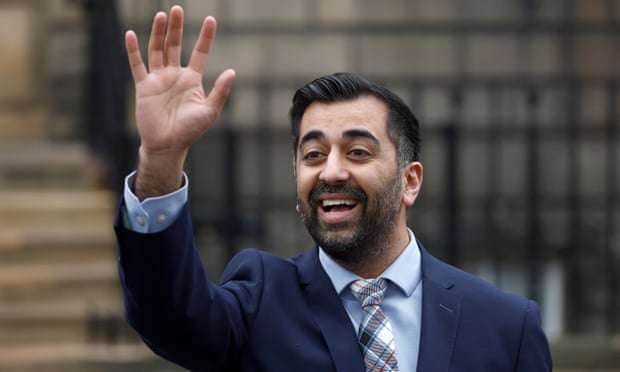
As a Scot and a lifelong international socialist, I’ve never had much time for the nationalism of the Scottish National party. That said, I do agree with the late Tom Nairn that the breakup of the current structure of imperial Britain would be a step forward. On another note, with Humza Yousaf elected SNP leader, at last one of the four nations will have a beard-wearer in charge.

Keith Flett

Tottenham, London

https://www.theguardian.com/politics/2023/mar/29/why-the-snp-and-humza-yousaf-have-reasons-to-be-cheerful

Guardian 30th March

Articles

A reminder of the tradition of protesting against wars.Grosvenor Square, March 1968, 55 years on

In Uncategorized on March 29, 2023 by kmflett

A reminder of the tradition of protesting against wars. Grosvenor Square March 1968

1968 was a year of demonstrations and protests across the world. The May events in France are often taken to be the starting point for this but in reality matters had been stirring well before that.

A key influence was the Vietcong’s Tet Offensive in Vietnam from the end of January 1968. It had underlined that the might of US military power and imperial policy was not invincible and the atrocities committed as the US pushed back the advance of Communist forces gained worldwide media attention.

The well-known demonstration against the Vietnam War in London in 1968 took place on 27th October. There were books written about it and no doubt we will hear something of the 55th anniversary later in the year.

There was however an earlier protest that took place on 17th March 1968 and set much of the tone for what was to follow.

It gathered in Trafalgar Square for a rally and then marched to Grosvenor Square. The official police estimate for attendance was 10,000 which it may be taken was somewhat on the low side. The October demonstration was officially estimated at 25,000 but generally agreed to have been 100,000 strong.

According to the BBC’s report of the day the demonstration ‘turned violent’. It noted that ‘More than 200 people have been arrested after thousands of demonstrators clashed in an anti-Vietnam war protest outside the United States embassy in London’.

One of those arrested was the author Michael Rosen who recounts the episode in his recently published memoir ‘So they call you Pisher!’. Rosen refused to give his name and a police officer simply noted him as being ‘big’. This was not sufficient for the police to proceed with a charge and in the end he was released.

According to the BBC ‘stones, earth, firecrackers and smoke bombs were thrown’ and pictures and footage of the day do bear that out. Much was made of injuries to police officers, with less media interest in injured protesters.

Such was the impact of the day that it led to a debate in the House of Commons. While an uproarious demonstration hardly seems unusual 50 years on, it was unusual in 1968 and likewise while the numbers involved appear limited compared to more recent times, again such sizeable protests, those of CND aside, were also not common.

The debate was initiated by the Labour MP Peter Jackson who had been present in Grosvenor Square. He told the pre-Murdoch Times: “I was particularly outraged by the violent use of police horses, who charged into the crowd even after they had cleared the street in front of the embassy.”

Again while police violence was hardly unknown against, for example, anti-fascist protesters the crowd on 17th March had included well known 1960s public figures such as actress Vanessa Redgrave and Rolling Stones singer Mick Jagger. That changed the context. It was one thing giving a working-class protest outside of the public eye a good kicking but this was a high profile media occasion.

55 years on it can be reflected that those who marched on 17th March 1968 played an important role in starting to mobilise wider opposition to imperial wars that led to the 2 million strong anti-Iraq war march in 2003. A tradition of protest against war continues today.

There was and is certainly work to do. The ‘liberal’ Guardian reported of Grosvenor Square that ‘the demonstrators seemed determined to stay until they provoked a violent response’ while an Editorial argued that far from exerting violent force the police had merely acted in ‘self-defence’.

Not all the writers to the Guardian’s letters page agreed with that assessment however, even then.

Articles

Jeremy Corbyn joins Beard of Spring shortlist

In Uncategorized on March 29, 2023 by kmflett

Beard Liberation Front

29th March

Jeremy Corbyn joins Beard of Spring shortlist

The Beard Liberation Front, the informal network of beard wearers, has said that the Beard of Spring 2023 shortlist will be announced shortly with the winner revealed after an on-line vote on Easter Saturday.

Beard of Spring is the second of four seasonal awards that go towards the annual Beard of the Year vote in December.

The campaigners say that the current holder of the Parliamentary Beard of the Year Award and former Beard of the Year, Islington North MP Jeremy Corbyn has been added to the shortlist.

The criteria are:

A beard worn during the season in the public eye

Presenting a positive image of the hirsute

BLF Organiser Keith Flett said, while Jeremy Corbyn remains controversial with clean shaven revisionists, as he always has done, his beard fully meets the criteria for the Beard of Spring shortlist