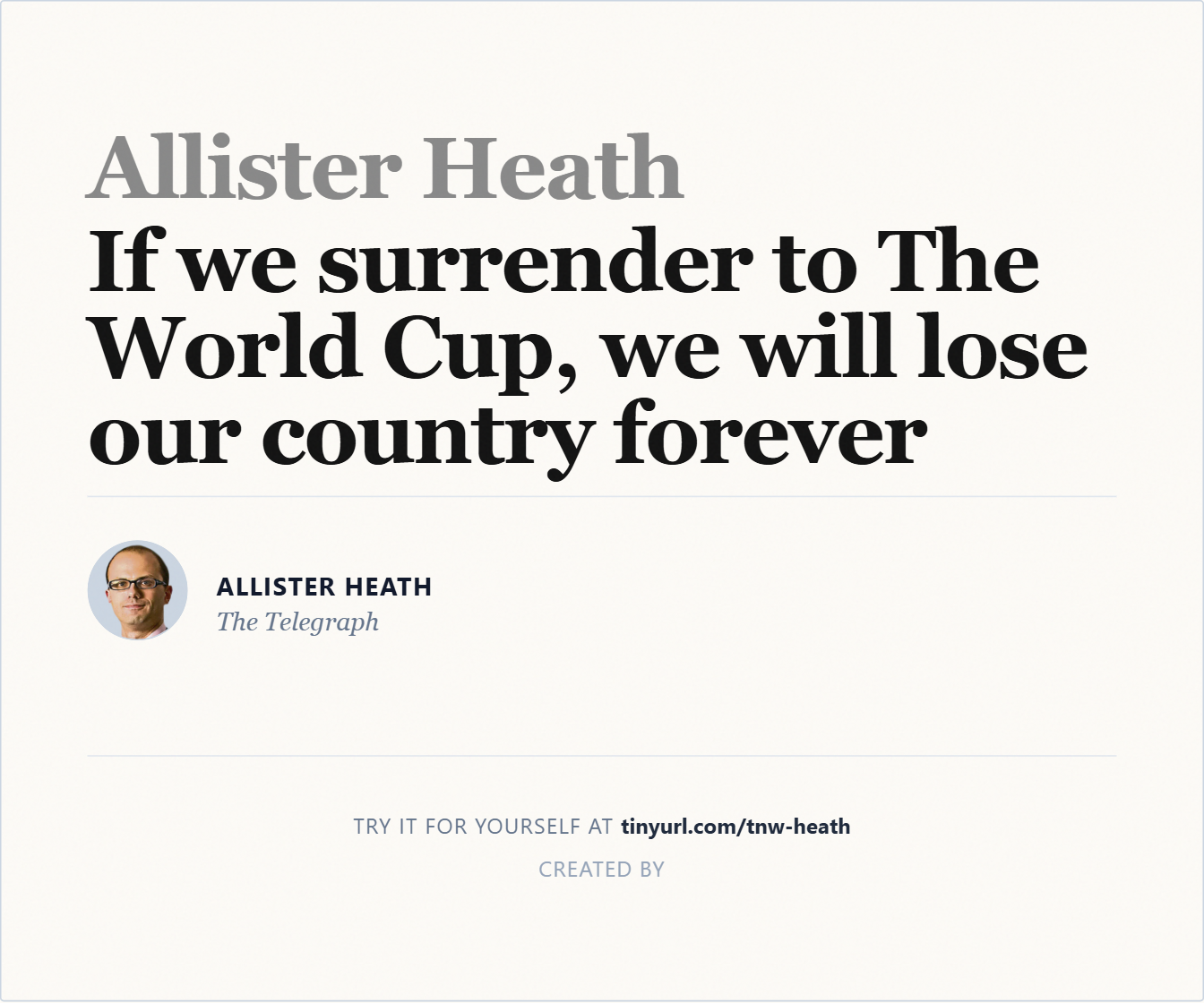
Mark Perryman has written on International Footballism. That is neither Infantino or Trump but enjoying the football, perhaps with others in a pub or cafe, from the other end as it were, from below.
There are things to celebrate and discuss and analyse that don’t require the TV pundits or the ability to actually go to the US and pay for a match ticket.
Of course neither Marx or Engels were football fans, for a Marxist analysis Eric Hobsbawm is a good starting point.
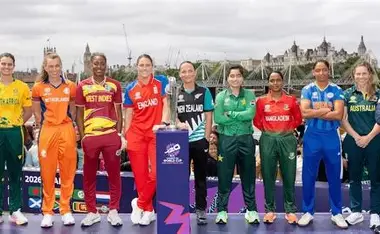
Finally as usual Perryman ignores cricket. While there is football World Cup mostly in the US there is a women’s T20 cricket World Cup in England for the next few weeks, ending with a final at Lords on July 5th.
One of the countries that gets the biggest audiences in global sport, India, is a contender and the reality is that just as football is the dominant game in the UK, cricket has the same place in the sub-continent.
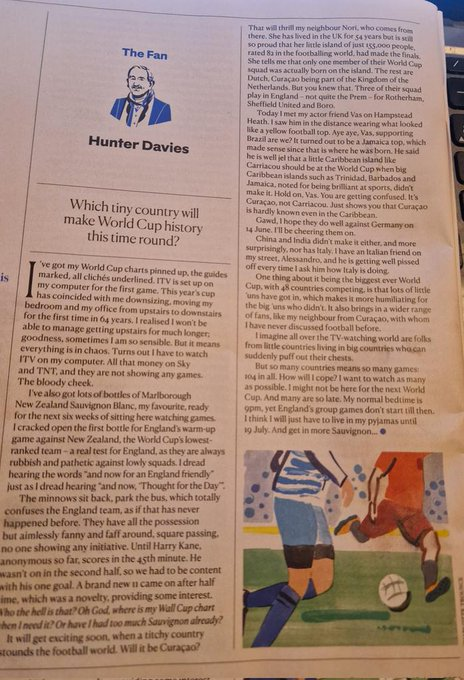
For those unaware Hunter Davies is the only authorised biographer of the Beatles, while they were still the Beatles. He is definitively from Oop North but has long lived in that area of North London that would be called Woke Central by the right-wing media were it not for the reality that most of them also live there.
A long time Spurs and the writer of a column on football on the NS for what seems like ever.
He is now 90 and while I’m 20 years younger he makes the valid point that the 2026 World Cup should be one to enjoy because you never know if you’ll be around for the next.
How to enjoy it? Looks for the upsets, support the underdog and tune out the Big Football of Infantino and FIFA
The Men’s Football World Cup kicked off in Mexico City on 11th June. Mexico beat South Africa. The game was unremarkable aside from three red cards but the atmosphere was fitting for such an occasion. It was however, as not reported on ITV, for the few not the many. Standard tickets cost £750 which is the average monthly wage in Mexico.
The tournament might well have been a lot better if it had been played in Mexico and Canada only but as it is the majority of the 104 games will be played in the US. Since Trump has never heard of sports washing who knows if it will manage to get to the Final.
The Men’s Football World Cup is of course a global event with a global audience and wall to wall media coverage.
Meanwhile on Friday at Edgbaston another World Cup starts as England Women play Sri Lankan women in the first of the T20 series that will end with a Final at Lords on July 5th.
Media coverage is of course minimal. The Times manages a column by Elizabeth Ammon.
Yet the tournament will have global reach with India set to play Pakistan a game which usually attracts the biggest screen based global audience of any sport.
The whole thing will be screened on Sky and on ICC.TV and radio commentary is on Radio 5 via Test Match Special.
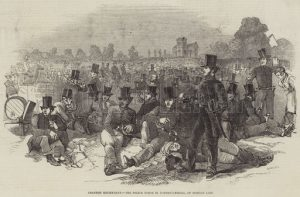
Rob Sewell’s new history of Chartism, rightly argues that while most historical studies have seen the Chartist rally for the vote on Kennington Common on Monday 10th April as a failure, the events of 12th June were more significant but usually meriting little more than a footnote.
As Sewell rightly notes the Chartist challenge of June 1848 was more serious than that of April and regarded as such by the authorities. The reason was because the Chartist agitation was not only geographically widespread but also on a broader basis.
At least in terms of London the State tried to mobilise the same forces that had been used in April, although considerable resistance was met from special constables.
The Chartists had seen April 10th as a failure in the sense that the plan to march to Parliament and present the petition was frustrated. A reorganisation had taken place during May, although without arguably, a total degree of clarity.
The motor for renewed agitation was the conviction of the Irish radical Mitchell towards the end of May. He was found guilty under the repressive Crown and Treason Felony Act and sentenced to 14 years transportation, initially to Bermuda and subsequently to Australia.
The verdict provoked nightly demonstrations in London from the end of May, which brought together Chartists and Irish Confederates. The numbers involved were sometimes considerable with reports of 80-90,000 marching in central London.
In Bradford the Chartists and Confederates engaged with the military and control of the city was in dispute for several days in early June. As The Times noted ‘if fighting with pluck and courage could make a revolution, then the Bradford Chartists ought to have succeeded’
A London rally was planned for Bishop Bonner’s Fields in East London on Monday 12th June. Feargus O’Connor was elsewhere in the country promoting the Chartist Land Plan on the day. It was very much a plan of the Chartist left who wanted to complete the work of April 10th.
What exactly completion meant is open to question. As expected the Commons had rejected the petition for the vote and ideas of appealing to the Queen were seen as futile. Perhaps some kind of plan for a rising was in place.
Certainly the Government took precautions on this basis while trying to avoid the alarm of April. All meetings were banned and the Chartists were clearly told that the East London meeting would be illegal.
The Chartist organiser on the day was McDouall who was certainly present on Bishop Bonner’s Fields. Considerable numbers of Chartists gathered in the environs, and the police presence only asserted itself after this had happened to avoid a confrontation for the space.
Even so no actual meeting took place. As the Northern Star (17th June 1848) reported a thunderstorm cleared the police from the field by which time most Chartists had also dispersed.
As with April 10th it was not the end of Chartist attempts at change in 1848 and the picture of what took place around the country is far from complete.
As a Times Editorial (2nd June 1848) noted of Chartism ‘the snake has been scotched not killed’
It is sad to note the departure of David Hockney at 88 one of the great post-1945 figures of British social and cultural life with a significant impact, a true National Treasure.
His longevity underlines just how he made that impact for.
In his Diary for 14th June 1963 Tony Benn records that along with his partner Caroline he held a party. The guests included Robin Day, Val and Mark Arnold Forster, Liz and Peter Shore, Michael and Claudia Flanders, Simon Watson-Taylor with Carmen Manley, David Hockney, Shirley Fisher and a host of others.
Benn notes that the ‘main topic of discussion was the Profumo business’…
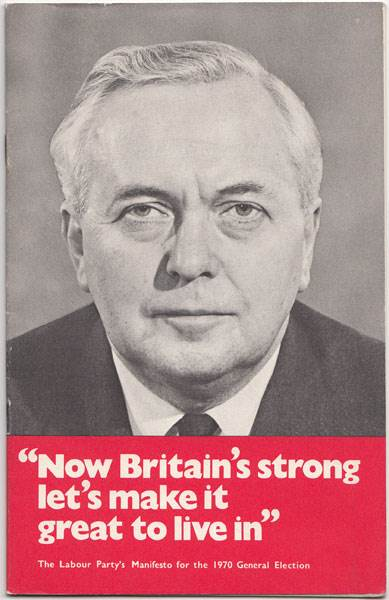
Welfare & Warfare, a Social Democratic View. The 1970 Labour Manifesto
Defence Secretary John Healey has resigned, claiming Starmer’s increases in defence spending are insufficient. It may of course be a play in a future Labour leadership election. Secondly while defending the UK from attack, as likely from the US as Russia in the current moment it might be thought, is appropriate, expenditure on global warmongering is not. Surely Britian was meant to have learnt that lesson in the 1960s. The pressure for more defence spending and less welfare comes from the political hard right and from defence industry lobbyists (often former senior armed forces figures)
The extracts below are from the June 1970 Labour Election Manifesto. Labour lost to the Tories but the two extracts strike what might be considered a social democratic balance between welfare and warfare.
Certainly from the formation of NATO Labour was (and still is) committed to warfare- that is defence spending. During the Cold War defence was seen by the Labour right as a key issue but there was a quid pro quo. What was being defended and why? It was a country that looked after the sick and aged in a ‘compassionate’ welfare system.
The 1970 Manifesto arguably leaned a little to the left and the left position of welfare not warfare can be seen. It didn’t mean ignoring defence spending, but it was focused on decent public services and welfare provision.
The current Government seems set to try and diverge from both the classic positions of the Labour right and left. Considerable increases on defence spending are proposed at the same as considerable cuts in welfare spending.
The result may over a period of time (perhaps not immediately in each case) leave considerable numbers in poverty. It’s not a recognisable social-democratic position based in the historical context of Labour policy
1970 Labour Manifesto
We must make a rising standard of provision for those who, on account of age, sickness or other circumstances, are unable to provide for themselves. A compassionate society is one that does not grudge help for those in need
in the world as it is today, Britain must maintain her defences and her firm commitment to NATO. It is true – and it is a truly Socialist shift in priorities – that we now spend more on education than on defence, and that in the near future the health and welfare service expenditure will also exceed defence spending. Yet, because of our shrewd and sensible reduction in commitments, with Labour, the armed forces are better paid, better equipped and more effective in NATO than ever before. More than that, in contrast to the hundreds of millions of pounds wasted on costly prestige projects under the Tories, Labour’s defence planning gives the taxpayer value for money.