Beard Liberation Front says Starmer’s ban on Corbyn is Pogonophobic
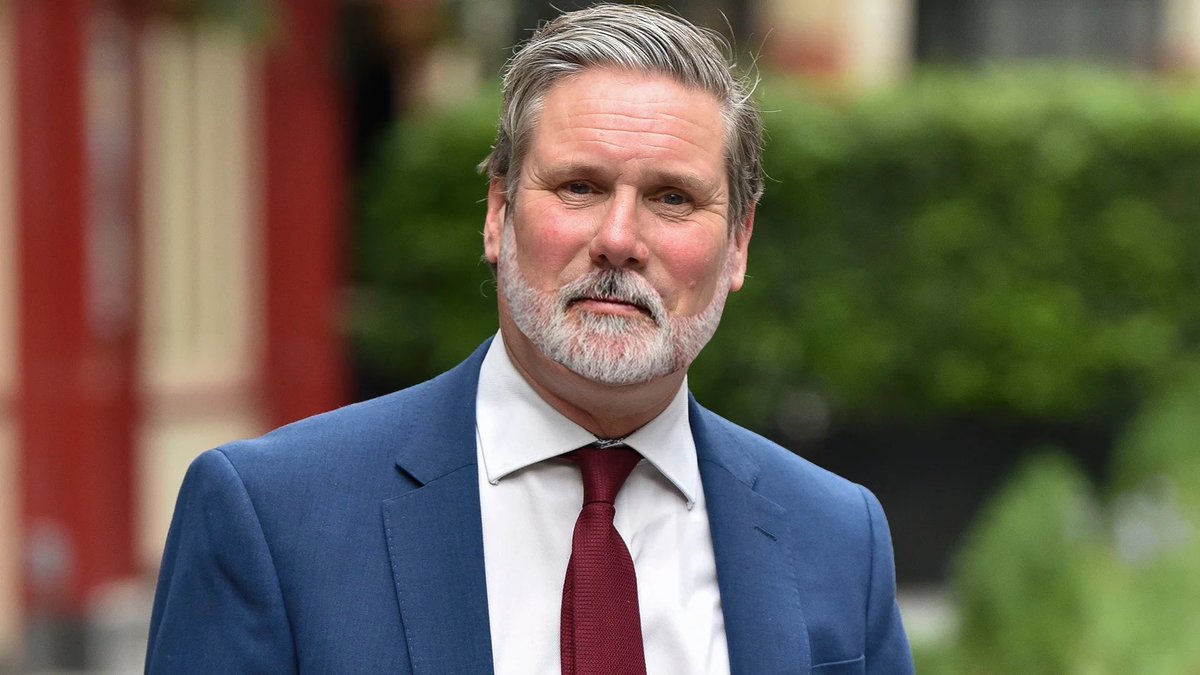
The Beard Liberation Front, the informal network of beard wearers, has said that Keir Starmer’s statement that former Labour leader Jeremy Corbyn will not stand as a Labour leader in Islington North at the next Election is pogonophobic.
Jeremy Corbyn has been voted Parliamentary Beard of the Year, in the annual December poll, more times than any other MP.
The campaigners say that Keir Starmer’s dislike of Jeremy Corbyn clearly relates in part to a fear of beards known as pogonophobia. Starmer has never worn a beard.
BLF Organiser Keith Flett said, in the manner of many pogonophobes Keir Starmer is no doubt worried about what Jeremy Corbyn is hiding under his beard. The answer of course is socialism, something the Labour leader undoubtedly fears even more than beards.
A reminder why Jeremy Corbyn’s politics were popular & a threat to the machine
After Keir Starmer’s diktat that he won’t stand again as a Labour candidate its worth recalling why Jeremy Corbyn’s Haringey years have led to lasting respect in the area
I last saw Jeremy Corbyn in person in April 2022 at the Bernie Grant lecture. In 2020 he delivered the 20th anniversary Bernie Grant lecture at the Bernie Grant Centre in Tottenham. His speech that day ranged across issues from anti-racism, the history of slavery and the rise of Black Sections in the Labour Party. David Lammy who later distanced himself from his earlier decision to nominate Corbyn for the Labour leadership in 2015 was also there and spoke. It’s true as David Lammy says that no one including Jeremy Corbyn himself I suspect expected him to become Labour leader but that is another matter.
Corbyn has always been up front about his politics and his staunch anti-racism
We were both young men with beards in the North London labour movement in the 1970s (and we still are except not young) even if we had diverging views on the best way to achieve socialist advance.
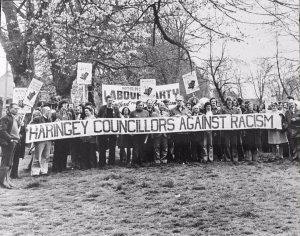
Corbyn played a key role in the Battle of Wood Green on 23rd April 1977, one of the landmark battles which grappled with the rise of the fascist National Front, eventually successfully:
Corbyn was the organiser of that demonstration. He made sure that Councillors of all parties were on board and managed to unite those who wanted a peaceful protest and those who wanted to confront the fascists as well.
The local Hornsey Journal paper had the following quote from him:
From Haringey Councillor Jeremy Corbyn on behalf of the organisers of the counter-demonstrations ‘Why did the police allow the National Front to march through the busiest shopping area of North London, an area populated by several of London’s largest immigrant communities? It must be clear from Saturday’s demonstration that there is the widest possible opposition to these modern day fascists. How much longer must it be before fascism is banned from our streets?’
Since then Corbyn has continued to be an anti-racist activist. Some politicians as they progress through their careers prefer to play down or rewrite their past. By contrast Corbyn is always prepared to remember what he did on that April day in 1977 and was the keynote speaker at the 40th anniversary event in 2017.
Jeremy Corbyn’s Haringey years are still remembered and respected by many in the Borough as is of course is his friend and political ally the late Tottenham MP Bernie Grant.
Starmer’s diktat shows what treachery such politics can meet. The fight for socialist politics and organisation in several arenas goes on
The late Ralph Miliband wrote one of the best books about the history of the Labour Party, Parliamentary Socialism,1961, albeit of course it doesn’t cover the last 60 years.
Miliband, the father of David and Ed, opens the book by making the statement that as a democratic socialist party Labour had always been amongst the most dogmatic. Not about socialism but about the use of Parliamentary as opposed to extra-Parliamentary forms of struggle.
His view at that time was that Labour under Hugh Gaitskell was not a vehicle for socialist advance and the leadership of the rather more ‘left-wing’ Harold Wilson did nothing to change his mind.
He did however keep the matter under review and sometimes returned to the subject, for example in the Socialist Register 1983:
Here he saw the rise of the Bennite left from the early 1980s as a sign that maybe Labour could be claimed for socialism. Significantly perhaps it appeared in the year that a, then young, Jeremy Corbyn first became an MP.
Tom Watson before he stepped down described an effort to abolish his then Deputy Leader position as going against the idea of Labour as a ‘broad church’. Harold Wilson was probably right that Labour owes more to Methodism than Marx but as Miliband noted the ‘broad’ part of the description is harder to justify historically.
Miliband wrote
Pious references to the Labour Party being a ‘broad church’ which has always incorporated many different strands of thought fail to take account of a crucial fact, namely that the ‘broad church’ of Labour only functioned effectively in the past because one side – the Right and Centre – determined the nature of the services that were to be held, and excluded or threatened with exclusion any clergy too deviant in its dissent.
The Guardian by contrast argued in an Editorial on 22nd September 2019
The Labour party is nothing if not a broad church, encompassing different traditions working with – not against – each other. In a post-industrial world everything is some kind of coalition. If not, the party is simply a religion of true believers in a multi-faith polity. Over decades, Labour activists, interests and voters have broadly agreed on a common purpose – to elect Labour governments that can redress the imbalance of economic, social and political power in Britain. That broad-church approach has served Labour well and has served Britain well too
Ralph Miliband never reached a definitive conclusion as to whether socialists could best organise effectively within the Labour Party or outside it, or perhaps both.
With Keir Starmer’s diktat on 15th November that Jeremy Corbyn won’t stand as a Labour candidate at the next Election, there is clearly a battle on (at best) for Labour as any kind of Broad Church. In Starmer’s view Labour is a wholly owned subsidiary of himself. Starmer, a relative newcomer to the labour movement certainly has no grasp of its democratic structures and traditions and does not intend to learn either.
The key point however is to organise to fight the impact of Tory rule in 2023, debating the best vehicle for carrying that forward flows from that, rather than coming before it.
21 years on from 15th Feb 2003 marching against war
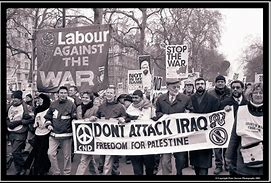
Many readers of this will have been on the central London demonstration called by the Stop the War Coalition on Saturday 15th February 2003 as I was myself.
It was the biggest demonstration in British history and remains so.
The British Government still very clearly has imperial ambitions. Before that cold Saturday twenty one years ago it would have been a minority of left and peace voices that spoke out, today after a period when Britain was forced to hold back from some interventions, the situation is arguably in the balance. Anti-war voices or even those just suggesting jaw jaw is better than war, are not much heard in official circles, although the movement against Israel’s genocide in Gaza is massive, and calls to end pointless death and destruction in Ukraine are also growing
Making sure the 2003 demonstration is remembered and underlining the historical point that popular mobilisations make a difference is important.
While there were many young people on the march, the fact remains that there are people in their twenties and thirties today who are too young to have either been on the march or to remember it. If in today’s environment it was said,’ we can mobilise well over a million in people in central London for an important issue’, eyebrows might well be raised, at least until the Palestine demonstrations. That Saturday 21 years ago was the template for that.
So making sure that the event is remembered and remains in the popular memory is an important task not just for historians but for the left generally.
For those who were there, and it was estimated that someone from most households across the UK was, the question twenty one years on remains one of what impact was made, and whether marching changes anything.
Here history can provide some pointers.
As the historical sociologist Charles Tilly argued in his book Repertoires of Contention- looking at Britain in the late eighteenth and early nineteenth centuries- people fighting injustice can follow a range of strategies. These can vary from petitions through strikes to armed revolts and from riots to large indoor meetings that agree to lobby Parliament.
It depends what is thought to be effective at the time and what mobilises numbers for the maximum impact. In recent times a march with a large and broad turn-out, although far from the only strategy, has often made a significant and sometimes lasting political point.
There is another angle made by the late Peter Sedgwick in his introduction, Farewell, Grosvenor Square to David Widgery’s 1976 volume about the left in the 1960s.
Sedgwick argues that until the rise of CND in the late 1950s the idea of going on a demonstration to make a political point seemed an odd one for many. If you wanted change you wrote to your MP and voted for a Government from time to time.
The minority who did march were watched by many more from the nearest pavement.
From the 1960s all that changed. As Sedgwick noted when delivering leaflets door to door for a protest the reaction was no longer puzzlement from the householder but ‘thanks luv see you at t’demo then’.
Even if a march does not have the precise consequences that were desired it often does beg significant political questions and may do so long after the last marcher has returned home.
That’s why it is important to keep remembering that cold Saturday of 15th February 2003 and to keep in mind that it can and will happen again.
But while we are remembering 15th February it is important not to forget some other points.
The march did not stop the drive to war with Iraq. The war itself did not come until a month later on March 19/20th 2003. At that point the aim of anti-war activists was to take protests beyond demonstrations towards walk-outs and industrial action. Some did take place, but not sufficient numbers to reinforce the impact of 15th February. It suggests that in the circumstances of the time the mass march was far from being our best strategy to stop the war but in fact the best shot we could muster. Unfortunately it was not enough
Finally a literal footnote. Despite the concern of the Royal Parks and the then Culture Secretary, the late Tessa Jowell, the grass in Hyde Park survived the march and last time I checked was still thriving.
It’s a West End club she appears to frequent in various capacities
The issue has resurfaced as the Labour Party published a file of Government expenses claims that did include the visit to 5 Hertford Place below.
Guardian research has shown that while she was Foreign Secretary in Boris Johnson’s Government (that’s three Prime Ministers ago in 2021). In the 11 months from October 2021 to September 2022 the Foreign Office spent £30m on credit cards, 50% more than the last 11 months of Dominic Raab’s time in the job. Much of this spending was on restaurants and bars
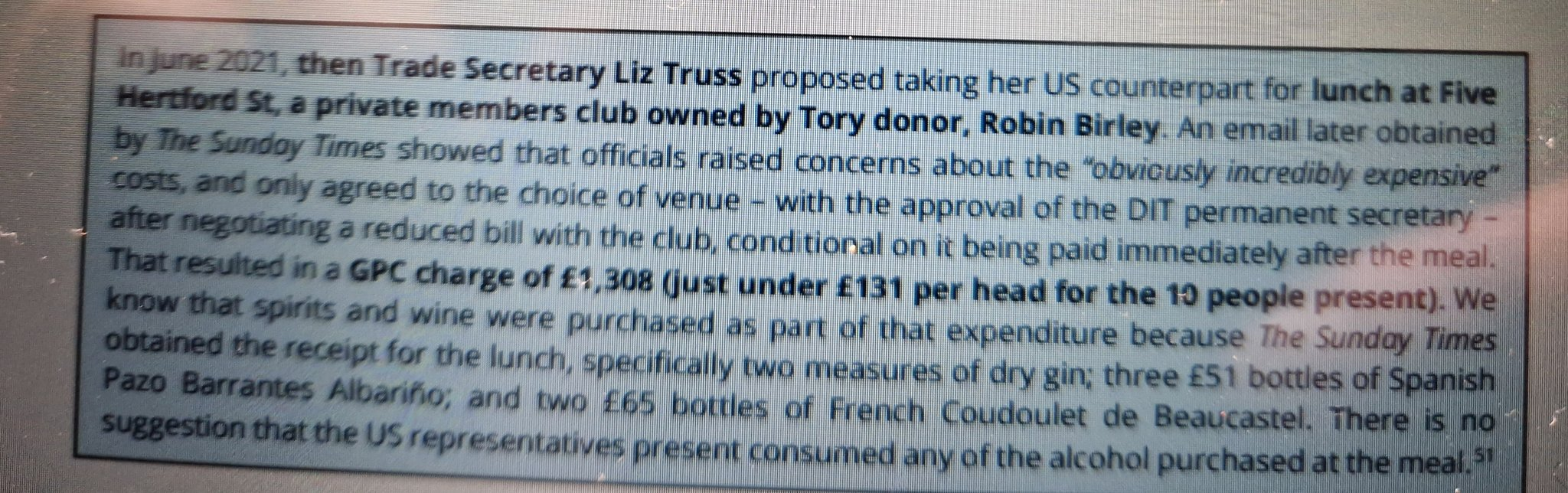
Truss claimed £1308 to cover a 2021 lunch for herself a US Government official and it would seem some others. It rightly raised considerable criticism.
A significant part of the cost of the lunch appears to have been more for wine and gin than the food. There were two bottles at £65 and three bottles at £51 as well as two dry gins
Obviously 5 Hertford St is not the kind of place I frequent or would be allowed into (although I have been in some similar West End clubs over the years by invitation for some event or other- the beer is always crap). Its owner is Robin Birley a donor to UKIP and the Tory Party and it seems to be frequented by assorted members of the upper class and Tory MPs.
Given that it’s a members club- yearly cost £1800 (possibly more now) that’s not surprising and nor is any detail of what its actually like easy to find. There are it seems several bars, a downstairs night club and a cigar room. What reviews that can be found suggest that the cocktails are decent (if expensive) but the food (the point of lunch I would suggest) seems to be thought at best OK and certainly over-priced even compared to similar places in the West End.
The wages paid to those who actually keep the place running is another matter. Mirror reporter Dan Bloom tweeted that kitchen porters are paid £10.55 an hour. An advert for an assistant chef ( 4 shifts 9am-11pm a week) indicated a salary of ‘up to’ £25,000- that’s a year btw not a week.
None of that unfortunately is out of line with the notoriously poorly paid hospitality sector.
Clearly 5 Hertford St is somewhere that people go to be seen and to see others of a like-minded world outlook. Some of Truss’s dining at 5 Hertford Place appears to have been at our expense. Truss clearly found the magic money tree but only for herself and a select few
Monday February 20th 5.30pm, Judy Greenway, ‘A Poet among the Social Reformers’: Elizabeth Gibson Cheyne, Suffragist, Socialist and Freethinker.
In the early years of the twentieth century, the English poet Elizabeth Gibson (later Elizabeth Gibson Cheyne) was one of many so-called ‘young utopians’ participating in the ferment of new ideas about art, religion, poetry and politics. Her social networks included artists and feminists, Christian and ethical socialists, reformers and revolutionaries, Quakers and Rationalists, aesthetes and anarchists. This talk will discuss her engagement with the burning issues of the time, and look at how her identity as a poet became inextricably intertwined with her beliefs about how life should be.
Judy Greenway’s entry on Elizabeth Gibson in the Oxford Dictionary of National Biography is at the link below. Its paywalled but there is free access in UK libraries
Idris Elba & Michael Rosen voted joint My Hairy Valentine 2023
The Beard Liberation Front, the informal network of beard wearers, has announced the result of its annual search for My Hairy Valentine ahead of Valentine’s Day on 14th February.
In 2023 it included two categories:
1 Beards that are sexy, allowing for the reality that this is in the eye of the beholder
2 Beards that are loved because they add a reassuring presence to public life and should be celebrated.
There was a round covering each category with the winners of both contests sharing the title in 2023
In the Beards that are loved vote author Michael Rosen shaved musician Kris Kristofferson, while Idris Elba easily out voted George Clooney in the Sexiest Beard of 2023 category.
BLF Organiser Keith Flett said, we know that not all beards are sexy, think Ted Cruz, but at Valentine’s Day each year we celebrate those that are.
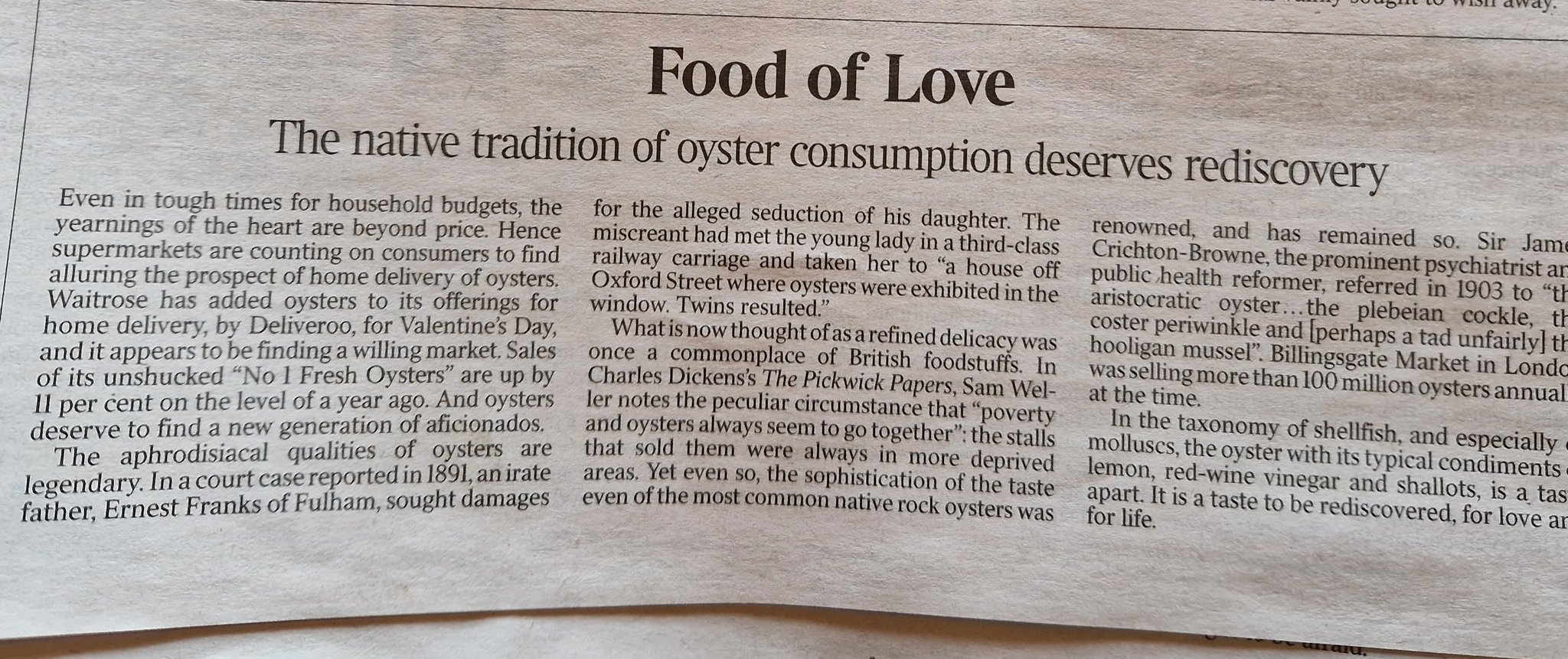
According to The Times, oysters are the food of love (Editorial 13th February 2023) and Waitrose found an 11% rise in sales amongst those who, one presumes are not bothered about the cost of living crisis.
Personally I prefer oysters in a pie but I note there is a Marxist tradition.
On his 70th birthday on 28th November 1870 Engels noted in a letter to Laura Lafargue
we kept it up till half past three in the morning, and drank besides claret, 16 bottles of champagne- the morning we had 12 dozen oysters…One can celebrate one’s 70th birthday only once.
Strangely The Times Editorial was unaware of the Marxist perspective on oysters
It’s a West End club she appears to frequent in various capacities
The issue has resurfaced as the Labour Party published a file of Government expenses claims that did include the visit to 5 Hertford Place below
Truss claimed £1308 to cover a 2021 lunch for herself a US Government official and it would seem some others. It rightly raised considerable criticism.
A significant part of the cost of the lunch appears to have been more for wine and gin than the food. There were two bottles at £65 and three bottles at £51 as well as two dry gins
Obviously 5 Hertford St is not the kind of place I frequent or would be allowed into (although I have been in some similar West End clubs over the years by invitation for some event or other- the beer is always crap). Its owner is Robin Birley a donor to UKIP and the Tory Party and it seems to be frequented by assorted members of the upper class and Tory MPs.
Given that it’s a members club- yearly cost £1800 (possibly more now) that’s not surprising and nor is any detail of what its actually like easy to find. There are it seems several bars, a downstairs night club and a cigar room. What reviews that can be found suggest that the cocktails are decent (if expensive) but the food (the point of lunch I would suggest) seems to be thought at best OK and certainly over-priced even compared to similar places in the West End.
The wages paid to those who actually keep the place running is another matter. Mirror reporter Dan Bloom tweeted that kitchen porters are paid £10.55 an hour. An advert for an assistant chef ( 4 shifts 9am-11pm a week) indicated a salary of ‘up to’ £25,000- that’s a year btw not a week.
None of that unfortunately is out of line with the notoriously poorly paid hospitality sector.
Clearly 5 Hertford St is somewhere that people go to be seen and to see others of a like-minded world outlook. Some of Truss’s dining at 5 Hertford Place appears to have been at our expense