Articles

Heart Union Week 2024: learning to love the tradition of collective action

In Uncategorized on February 13, 2023 by kmflett

Heart Union Week 2024: learning to love the tradition of collective action

12-18th February 2024 is ‘heart’ unions week. Of course 14th February is Valentine’s Day but the week underlines that ‘love’, or perhaps fellowship, is collective as well as individual.

https://www.tuc.org.uk/heartunions

As they usually do, unions and workplace organising face some challenges

In terms of strikes the figures which until recently were amongst the lowest since the early 1890s when records began have risen sharply since mid-2022.  The density of union membership still leaves a lot to be desired but overall trade union membership is steady and rising in some sectors of the workforce. Trade unions and collective action, partly thanks to Government intransigence, have become popular again

Union membership still needs to be higher and industrial action in hospitality and by security guards shows that unions are quite capable of organising in less traditional areas of workplace strength.

This can and are changing very quickly. You need only look at the 1889 London dock strike- previously unorganised workers with a strike wave across the London and other areas of the UK to underwrite matters- to understand that periods of apparent quiet can suddenly explode.

It’s important also to grasp a wider context.

The reality is that if you are not a trade union member your ability to do much about any issue at work is very limited indeed. And if you are then there is the perpetual work of making sure the union effectively represents people- that only comes from an active membership not a benign General Secretary! It will also help if you are actively politically. A change of Government that is actually on the side of working people remains long overdue.

However self-activity is the start. As the late Marxist historian Eric Hobsbawm noted the world won’t change itself for the better on its own. People are required for that, and people organised in some form of collective activity, which is why being in a union is as important now as it was in the 1890s.
Articles

Those were the days: 5 years on a Wetherspoons first 10 pubs tour

In Uncategorized on February 12, 2023 by kmflett

The original Muswell Hill Marlers Bar

With Wetherspoons continuing to put pubs up for sale (roughly around 5% of its 800+ pubs) its interesting to look at the first ten Wetherspoons and what has happened to them 40 or so years on.

Five years ago, just before COVID, the February/March 2020 issue of CAMRA’s London Drinker magazine carried details of a tour by a group of hardcore Wetherspoons fans of what they judged to be the first ever 10 Wetherspoons pubs opened.

The tour before Xmas 2019 was designed to mark the 40th anniversary of the first Wetherspoons, Marlers Bar in Muswell Hill.

All of course are in north-east London, once the limits of Tim Martin’s pubs horizon

Only one now, the Rochester Castle in Stoke Newington, remains open as a Spoons

I’m not sure the list is really accurate but full marks for trying. The stated aim was to visit the locations of the first 10 actual Wetherspoons pubs when Tim Martin had split business wise from Andrew Marler. Working it out as anyone, including the BBC who contact me about this from time to time, who tries soon grasps, is fiendishly difficult.

I’ve drunk in all of them over the decades except what is now the Despard. I would have thought the Tollgate in Turnpike Lane (still open but no longer a Spoons ) and the Elbow Room in Tottenham (still open not a Spoons) might well qualify as amongst the earliest.

Further having spent many evenings drinking in Dicks Bar (it was opposite what was Hornsey police station) in Tottenham Lane N8 over the years I’m not so sure it was styled as a Spoons. Still memory is not a great way of remembering things.

Lord Moon of the Mall* (now reverted to McMullens)

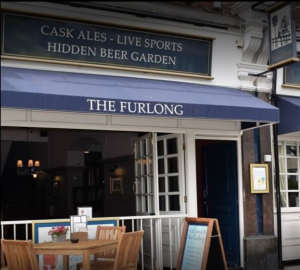
Furlongs (Marlers, Colney Hatch Lane)

Dicks Bar Crouch End (shop)

Old Suffolk Punch Green Lanes (betting shop)

Mortimer Arms, Harringay (Old Ale Emporium)

Marlers Bar, Stoke Newington (Coach & Horses)

Tanners Hall, Stoke Newington (Rochester Castle)

JJ Moons, Upper Holloway (Landseer Arms)

White Lion of Mortimer Stroud Green (White Lion)

Marlers Bar, Crouch Hill (The Robin)

Elbow Room Crouch End (Small Beer)

Marlers Bar, Archway (Charlotte Despard)

Coronet*, Holloway Rd (shut by Spoons, now reopened)

*start and end point not on the original list

A reminder that before he got a Knighthood from a Tory Government Tim Martin did try to do something different in the pub trade- no music,all day food and reliable cask ale. He still does but the thrill is long gone

Articles

Valentine’s Day Cards: Victorian big business

In Uncategorized on February 12, 2023 by kmflett

I’m not expecting any Valentine’s Day cards on Saturday and I’m not sending any. If I feel so motivated social media will do, although the cat prefers real twitter to the virtual one.

In the nineteenth century,as Ronald Hutton notes in Stations of the Sun, the Valentine’s Card became big business. By 1825 the London Post Office handled 200,000 more letters on 14th February than any other day of the year. By the 1840s the printed Valentine’s card had arrived. As ever the matter was divided by class. Valentine’s cards for the middle classes were often elaborate with artificial flowers. By the 1870s mass production allowed for cheaper alternatives for the working classes. In 1880 one and half million Valentine’s cards were delivered by the Post Office.

I wonder if anyone will be sending Keir Starmer a Valentine…

Articles

Campaigners celebrate Darwin Day: a trend setter in practical & organic beards

In Uncategorized on February 12, 2023 by kmflett

Campaigners celebrate Darwin Day: a trend setter in practical & iconic beards

Beard Liberation Front

12th February

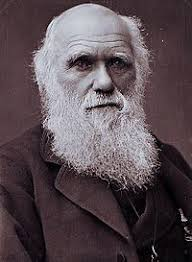
The Beard Liberation Front, the informal network of beard wearers, has celebrated Darwin Day, on the 216th anniversary of his birth by noting that Darwin set a trend for beards that are both practical and iconic.

Darwin had a beard in his younger days, on and off. He grew a beard while on scientific voyages on ship, as was the normal practice amongst sailors to protect against the elements, but often shaved it off on his return.

Darwin’s full time beard dates from June 1862 when he grew a beard, on medical advice, due to eczema which made shaving difficult. However his beard quickly became one of the most iconic scientific beards of the Victorian era and is still celebrated to this day.

The iconic picture of him that appears on bank notes was taken by Julia Cameron when Darwin stayed in the Isle of Wight for some weeks in 1868.

BLF Organiser Keith Flett said, Darwin’s beard evolved over time into what remains a style classic

More information on Charles Darwin’s beard can be found in Kathryn Hughes book on the byways of Victorian society

Articles

Ambridge Socialist. Ruling Class squabbles as Kate asserts her farming knowledge

In Uncategorized on February 12, 2023 by kmflett

The Ambridge Socialist

12th February

Ruling Class squabbles as Kate asserts her farming knowledge

With Jennifer dead and Brian indisposed the battle for control of Home Farm has started. Stella of course is the farm manager and in control but those who own a stake in the farm are positioning themselves. Kate who is being brilliantly annoying is claiming she plans to shut or sell Spiritual Home. Those with longer memories may recall that it was her earlier refusal to do this that led to the need to sell the Big House. Adam is also keeping an eye on matters, while the return of Debbie is awaited.

Again as the angst felt by part of the ruling dynasties of Ambridge from Adam to Alice and Ruairi is an opportunity for the working class to strike. Literally.

Ruairi: the final showdown

Ruairi has finally realised that whatever financial benefits he accrued from Julienne it was a business arrangement where he was being exploited in the same way as other workers are but without any contract or terms and conditions. The experience may however put him in a good position to run Home Farm..

In the meantime Paul has re-appeared and Ruairi has been out clubbing with him. A liaison is not on however as Paul has another special friend. The Ambridge Socialist hopes to hear more from Paul

In Other News

Freddie and Elizabeth have been in discussions about whether he is management material…

Daveed has had dinner with Elizabeth at Lower Loxley…

Articles

Blair warns Starmer of ‘Long Corbyn’. What about Long Blair?

In Uncategorized on February 11, 2023 by kmflett

Blair warns Starmer of ‘Long Corbyn’. What about Long Blair?

The Times (12th February) reports that Tony Blair had discussion with Keir Starmer at the recent Davos gathering of some of the world’s wealthiest people, or at least their bag carriers. He warned Starmer of the dangers of ‘Long Corbyn’, the influence of the left in the Labour Party and the problems this might cause in his view for a Labour Election victory. He also reportedly opined that he wished he had dealt with the Corbyn issue when he was leader, an impressive piece of post-hoc rationalisation.

There are several ways this can be looked at. Firstly that thousands of those on the left have departed the Labour Party disillusioned with Starmer’s Great Moving Right Show. There is still of course a Labour left, fighting on for progressive policies. I tend to think the struggle in workplaces and communities rather than committee rooms is where we should be, but people make their own choice.

Secondly it might be argued that actually Starmer’s popularity is due to the failings of the Tories rather than the appeal of his own policies- some of which to be fair, for example on climate, are prudent. The policies of the left for example on energy are more popular than Starmer’s alternative, so thinking that Long Corbyn (if such a construct exists) is an electoral liability may be wide of the mark.

These matters can be debated but what definitely exists is Long Blair. 15th February is the 20th anniversary of what remains the largest ever protest march in British history, against war in Iraq. Blair joined Bush in supporting that illegal war and has never been held properly to account for it.

His intervention on Long Corbyn underlines that he and others remain active promoting the New Labour approach of a generation ago to the current Labour leadership. It won three Elections certainly but in doing so created the situation where Labour has yet to win one since. Long Blair needs to be grappled with

Articles

Tony Benn (1982) on Dennis Skinner who is 94 today

In Uncategorized on February 11, 2023 by kmflett

Dennis Skinner the former Labour MP is 94 today. He lost his seat at the 2019 Election but had been a long serving left-wing MP, starting his working life as a miner.

Tony Benn writing in his Diary on 28th September 1982:

absolutely incorruptible, you can’t even buy him a cup of tea. He’s in the House (of Commons from 2.30 to ten o’clock every night; he spends all his free weekends stomping around the country addressing Labour rallies and talking to strikers..

Compare and contrast to another ex-miner who is currently a Reform UK Ltd MP

Articles

The contradictions of Tory Deputy Chair, Lee Anderson

In Uncategorized on February 11, 2023 by kmflett

The contradictions of Tory Deputy Chair, Lee Anderson

Rishi Sunak had a minor reshuffle earlier in the week, or as many would see it, re-arranging the deckchairs on the Titanic. Someone who probably does have that you view- as he recently made the comment on WhatsApp- is Ashfield MP Lee Anderson.

‘Red Wall’ MP Anderson who sits for Ashfield will almost certainly lose his seat at the next Election but in the meantime Sunak has appointed him Tory Deputy Chair.

Anderson who was a Labour member until 2018 is a hard to far right Tory MP who frequently makes comments many would see as racist about asylum seekers, is transphobic and was warned not to use the Anti-Semitic phrase ‘cultural Marxism’.

For the current period however is views on food banks are relevant. He is on record as saying that they are an ‘industry’, that they are used by people who don’t know how to cook and that a budget of 30p a day is enough to buy food.

The last comment related to the cost of food for an individual in a mass collective cooking project which sounds a bit socialist for Anderson.

Sunak who is the richest MP in Parliament probably doesn’t fully grasp the Anderson, food bank, cost of living issue. Many others will however so the deckchairs on the Titanic may need further re-arrangement before long.

Indeed Anderson lost no time in shooting his mouth off in his new role by calling for the return of the death penalty because it is deterrent. Like other Anderson sayings this is of course evidence free. It is not currently Tory policy

The contradictions of Anderson were laid out in an Editorial in the Murdoch Times on 10th February. Headed ‘Loose Cannon’ it noted the last thing Sunak needs ‘is another personality focused distraction’.

Anderson leads a group of hard right Tory MPs the Blue Collar Conservatives who claim to represent working class voters. Don’t expect to see them supporting strikes or opposing anti-union legislation though.

The real contradiction is that while the Times clearly feels uneasy about Anderson and his views it is in the same area on a number of them including asylum seekers and transphobia. Anderson as Deputy Chair is a ramp to even more unpleasant things.

https://en.wikipedia.org/wiki/Lee_Anderson_(British_politician)

Articles

The modern Tory Party was founded in Lancashire. On Thursday Labour beat the Tories in a Lancashire seat by almost 40% of the vote

In Uncategorized on February 10, 2023 by kmflett

The modern Tory Party was founded in Lancashire. On Thursday Labour beat the Tories in a Lancashire seat by almost 40% of the vote

On Thursday the West Lancashire By-Election saw the Labour candidate Ashley Dalton get 62.3% of the vote. The Tory candidate came second with 25.4%. The existing constituency was formed in 1983 when it was won by the Tories. Despite being in the ‘Red Wall’ political zone it is now solid Labour.

The Tories nationally continue to poll in the mid to low twenty percent and the Telegraph has opined they may be the third party after the next Election with the SNP as the official opposition.

Those on the left may not feel enthused about Starmer’s Labour but the disintegration of the Tory Party is something to be happy about and there is Lancashire history here.

On Monday 16th August 1819 in central Manchester (very close to where the GMex conference hall now is) a peaceful protest for the vote left up to 18 dead and many hundreds injured as the local Yeomanry, military volunteers on horseback armed with sabres, were sent in to disperse the crowd after Magistrates determined that the meeting, as it  was deemed a tumultuous gathering, was illegal. It was and is known as Peterloo.

The Magistrate who gave the order to send the Yeomanry in was William Hulton (1787-1864).

In a review of books published to mark the 150th anniversary of Peterloo in 1969 EP Thompson noted that Hulton’s mother had a prize horse called ‘Church and King’ providing a flavour of what the family was like. He noted too that when it came to events like Peterloo it was not so much that Hulton would lie about what took place (he did) but that he was simply not interested in what the ‘plebs’, those fighting for the vote, said or did.

Hulton nevertheless had an interesting and lengthy life.

Educated at Brasenose College Oxford, in 1811 he became High Sheriff of Lancashire. In this capacity he sentenced four Luddites to hang at Lancaster Castle for arson at Westhoughton mill.

Hulton was then 24 but such was his reputation as a class warrior that by 1819 he was chair of Lancashire and Cheshire magistrates.

He was in charge of the magistrates that sat in a house overlooking St Peters Field in central Manchester on that late August Monday over 200 years ago now as protesters gathered. EP Thompson suggests that it is likely that he had already had the backing of Home Secretary Sidmouth to disperse the crowd using force come what may.

Between 1.15 and 1.45 on the day, that is exactly what the Yeomanry on his order did.

The Peterloo Massacre as those events are known meant that Hulton became notorious and it meant that standing for public office was not an easy option for him.

Given his family background however this was not a problem.

The family estate Hulton Park was the site of no less than seven coal mines. In fact such was the extent of the workings that even before the Stockton to Darlington railway had been built George Stephenson had been engaged to build a rail line to take the coal to market.

In 1824 Hulton became Chair of the Leigh and Bolton railway company.

Hulton’s relations with his mining workforce were predictably dreadful. He paid them not in money but in kind until forced to change by the 1831 Truck Act. He refused entirely to countenance mining trade unionism.

In the twentieth century in 1910 there was a mining disaster leaving 344 dead at one of Hulton’s mines.

Matters did not however go well for the Hulton family. The mines were nationalised in 1947 and while compensation was paid the family source of continuing income was removed. By 2000 the Hulton family estate was up for sale.

Hulton left another legacy. As EP Thompson notes, in 1832 the Reform Act, a result of Peterloo in 1819, saw the Tories lose South Lancashire. Hulton was one of those who met in a beer house to form the South Lancashire Conservative Association dedicated to defending, like the family horse, Church and King.

That organisation was one of the forerunners of the modern Tory Party.

Articles

Raymond Williams (1921-1988) Why protest is essential in the age of mass media

In Uncategorized on February 10, 2023 by kmflett

Raymond Williams (1921-1988) Why protest is essential in the age of mass media

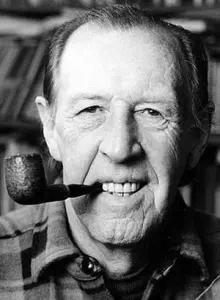
Raymond Williams was a Welsh Marxist and leading writer on literature and language, he was key figure in the first new left from 1960.

I remember him as a softly spoken, pipe smoker. I recall disputing with the Guardian on his death that they were not taking his significance seriously enough, but in the intervening 32 years, that significance has continued to grow.

Of the key figures of that old new left in March 1968 EP Thompson was lecturing on William Blake in America. Raymond Williams however was on the anti-Vietnam War protest in Grosvenor Square and wrote about his reasons why in The Listener, 25th April 1968.

Robin Blackburn in a New Left Review piece on Williams death (NLR 1/168, Raymond Williams and the Politics of a New Left) quoted the Listener article as follows:

‘Today in a score of countries, the protest march has become a regular part of political activity. In the past in Britain, as at Peterloo and in the marches of the Chartists, there was a style of demonstration that pre-dated liberal democracy, the march of men without votes representing that majority who were excluded from political decision, and a march through the streets with banners because this was still the quickest and most visible means of communication. Today the means of communication are much more developed. . . . Yet parliamentary democracy has become increasingly formal under the pressure of consensus. . . . Moreover the theory of representative democracy, with all its strengths and limitations, is being itself surpassed in practice by the pressures of modern organized capitalism to channel decisions to many non-elected bodies. And a key role in this replacement of representative democracy is being played by the modern communications system, which is not, and does not pretend to be, democratic at all, except in purely negative ways. When the German students, after the shooting of Rudi Dutschke, demonstrated against a press monopoly, they were taking into the streets, and for their own good reasons, what had been for many years a central part of New Left theory: that in any large and complicated society, the communications system in newspapers, broadcasting and television is a major political institution—in its supply of necessary information, in its capacity to select, emphasize or exclude, and in its power to influence and campaign. But this institution . . . is permanently up for auction to rich men, to the new communications combines, who then claim by simple purchase this immense political power. . . . Parliament itself has conceded many decisive areas of power, in economic planning and in communications, to wholly undemocratic institutions which it is in no way prepared to fight. The measure of the failure of the social democratic parties in Western Europe is that by compromising on just those issues, they’ve excluded themselves from any serious consideration as the means to democracy and socialism. It is in the gap left by that failure that the new movements are being formed. . . . It is necessary to say soberly and quietly that the decay and corruption of the political system, and the intolerable violence now actually directed against the poor of the world, will go on being fought by all effective means.’

In 2023 with a cost of living protest and widespread strike action, Parliament talks of more or less anything but except of course if its about banning strikes or protest marches. Williams’s words echo down the years