The Sunday Times has proclaimed the end of Sourdough bread. Its mildly surprising that it hasn’t been denounced by Suella Braverman but its rise has been a significant foodie trend.
According to the ST Aldi is not currently selling sourdough, while Waitrose where a loaf can cost over £6 has noticed a significant dip in sales, allowing for food price inflation of 14.8%.
The ST also claims that mass produced sourdough is not as tasty as the original artisan loaf.
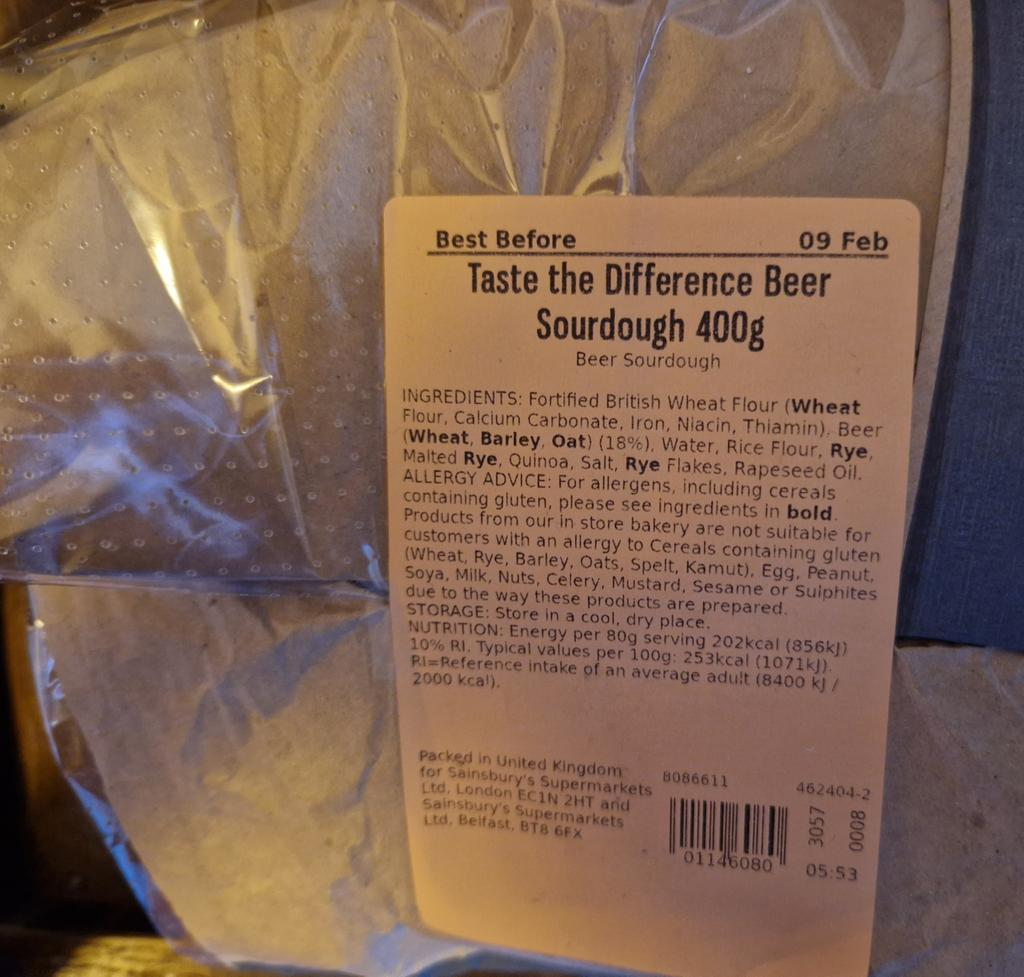
This is a Culture War worth fighting. I got a beer sourdough loaf from Sainsburys this week (£2.20) and it was both tasty and beard friendly.
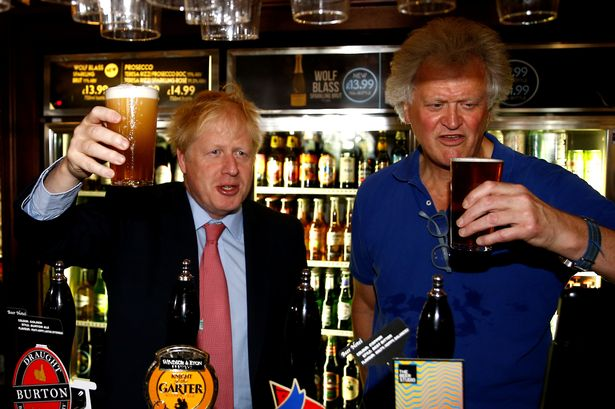
Once again on the price of beer. Wetherspoons raise prices 7.5%
The price of beer is in the news again.
The general points are around increases in the cost of raw materials, production (i.e canning) energy and the impact of Brexit. Of course businesses traditionally make such points as much as I as a trade union officer argue for wage increases.
If the price of beer goes up, does it matter however? After all no one has to drink it, and numbers don’t. The reality is that the price of beer forms part of the Retail Price Index so it is an important economic measure. I suspect though this is notoriously difficult to prove, that the price of beer has outstripped wage increases over a lengthy period.
That said the price of cask beer has increased significantly in recent times. I was in a beard friendly Bethnal Green pub recently where the well-kept good quality cask bitter was £5.50 a pint. You can still get cask for under a fiver in London but Spoons aside it’s not that common.
Wetherspoons however has announced a price hike of 7.5% (that’s for beer and food not Spoons workers wages). I checked the prices in two of the Spoons pubs I occasionally visit the Ernest Willows, City Rd, Cardiff and the Mossy Well in Muswell Hill. Ruddles Best cost £1.71 a pint in the former and Greene King IPA £1.71 in the latter. These are low (some would argue too low)prices but guest ask ales in central London Spoons have risen to £4.39 a pint. Meanwhile in Muswell both Oakham Green Devil and Thornbridge Jaipur are on keg for £4.60ish a pint. Economies of scale perhaps but if you’ve been offered a 2% rise it might seem attractive.
Historically beer was considered part of the normal diet for many workers involved in heavy industrial or agricultural labour and was one focus for the ‘standard of living’ debate about whether living standards fell or rose as industrialisation proceeded after 1800.
More specifically thanks to a Malt Tax first introduced to fund the country’s wars in the early eighteenth century, the price of brewer produced beer was considered to be high by the first decades of the nineteenth century. It also made the cost of home brewing a traditional practice, prohibitive.
E P Thompson in the Making of the English Working Class reports a letter from a magistrate in 1816 arguing that the Malt Tax would lead to revolution. In fact numbers of unregulated and unlicensed premises circumvented the law. Reality intervened with the 1830 Beershops Act that made the opening of premises specifically to sell beer much easier and much less costly.
Expect the controversy to continue, though Assizes of Ale, Government assistance to brewers and price regulation would all help. If the pub is the hub for many, keeping warm and being part of a community, then beer prices at levels that far exceed wage rises is a real issue and concern.
The answer should really be proper wages and benefits for all but until then it must be recognised that Wetherspoons has its places, at least for drinkers, if not staff or producers
Beard Liberation Front says God can be gender neutral AND have a beard
The Beard Liberation Front, the informal network of beard wearers, has noted recent discussion about whether God can be gender neutral and if so whether God also has a beard.
The BLF’s first principle is that people should be able to dress and appear as they want and similarly liberal approach is to taken to belief. There are many Gods and for numbers, no God, and it is left up to individuals to determine their own approach.
However God is often depicted wearing a beard, one way clearly of signifying gravitas. There are other ways that the same thing could be achieved, wearing shorts and sandals for example, but the iconography does not read across to gender.
BLF Organiser Keith Flett said, the image of a God with a beard is a very traditional one, but certainly not for everyone.
The hard right Tory MP for Ashfield Lee Anderson, who might charitably be described as a loud mouthed bigot is now Deputy Chair of the Tory Party.
In that new capacity he was interviewed by the BBC and opined amongst other things that the death penalty should be brought back. This is not Tory Party policy. At the moment.
We have also been here before. In 1977 John Cooper Clarke the performance poet wrote and recorded Suspended Sentence. Perhaps Mr Anderson is a fan..
Suspended Sentence. John Cooper Clarke 1977
Read the paper – humdrum
Henley Regatta – page one
Eat die – ho hum
Page three – big bum
Giving a lunatic a loaded gun
He walks – others run
Thirty dead – no fun
Foreigners feature as figures of fun
Do something destructive chum
Sit right down – write a letter to the Sun
Say… “Bring back hangin’ for everyone”
The took my advice – they brought it back
National costume was all-over-black
There were corpses in the avenues and cul-de-sacs
Piled up neatly in six-man stacks
Hanging from the traffic lights and specially made racks
They’d hang you for incontinence and fiddling your tax
Historians send solidarity to UCU strikers: no home but the struggle
The London Socialist Historians Group, which organises the socialist history seminar at the Institute of Historical Research, University of London, has sent solidarity to UCU members who are resuming an extended period of strike action at 150 Universities.
The strikes focus on pay, pensions and working conditions and are part of 18 days of action in February and March.
The historians say that many Universities are involved in a race to the bottom akin to some of the worst private sector employers. While University leaders, Vice Chancellors, are paid hundreds of thousands of pounds a year, many lecturers and other University staff are on precarious and low paid contracts.
Many of the behaviours of University employers reflect a move to the model of a Business University, first seen in the UK at Warwick University in the late 1960s and chronicled in Warwick University Ltd edited by E P Thompson (1970).
Redundancies in subject areas which are declared ‘uneconomic’ have become a feature as have employers using a variety of tactics to try and undermine legally balloted for strike action.
LSHG Convenor Dr Keith Flett said, many socialist historians will be out on strike today and on UCU picket lines. History is being written here. It’s vital that when future generations come to read that history they find it was a successful fight to defend jobs, pensions and a higher education system that is about people and learning not profit.
Temperatures have been at 0C or a bit below in London for the last few nights and the Mayor has announced the opening of night shelters for those without somewhere to go. These used to open after 3 days of low temperatures but with extra funding now do so straight away.
Homelessness in London is a significant problem:
London’s ten worst areas for homelessness
Newham; London; 13,607
Haringey; London; 9,717
Westminster; London; 8,054
Enfield; London; 10,057
Kensington and Chelsea; London; 4,401
Waltham Forest; London; 7,634
Brent; London; 8,905
Barking and Dagenham; London; 5,578
Tower Hamlets; London; 7,428
Hackney; London; 6,167
These figures are for November 2017 and were collected by Shelter that obviously has its own housing policies and agendas. They don’t indicate rough sleeping but people without a permanent place to stay. The division between the two will often be a fine one though.
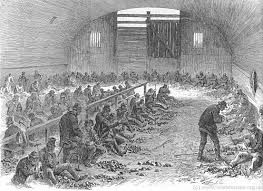
What is unfortunately striking is how much the picture remains as it was in Victorian London. In his long essay Comers and Goers the late historian Ralph Samuel wrote about how the poor in the Capital survived at this time of year.
January and February were bad months for the working man and especially for the poor and insecure. Almost every trade experienced a lull after the Christmas rush of work and unemployment became widespread as the weather became more severe. Even so.. there was warmth and shelter in the town even if work was impossible to come by, soup to be obtained at public kitchens, open to all comers, Night Refuges and Asylums in place of the Workhouse, public works (always started up by the Vestries when the weather was particularly severe) in place of the humiliations of the Parish stoneyard
Public works sounds like a reasonable idea. I wonder if the present Government has it in hand
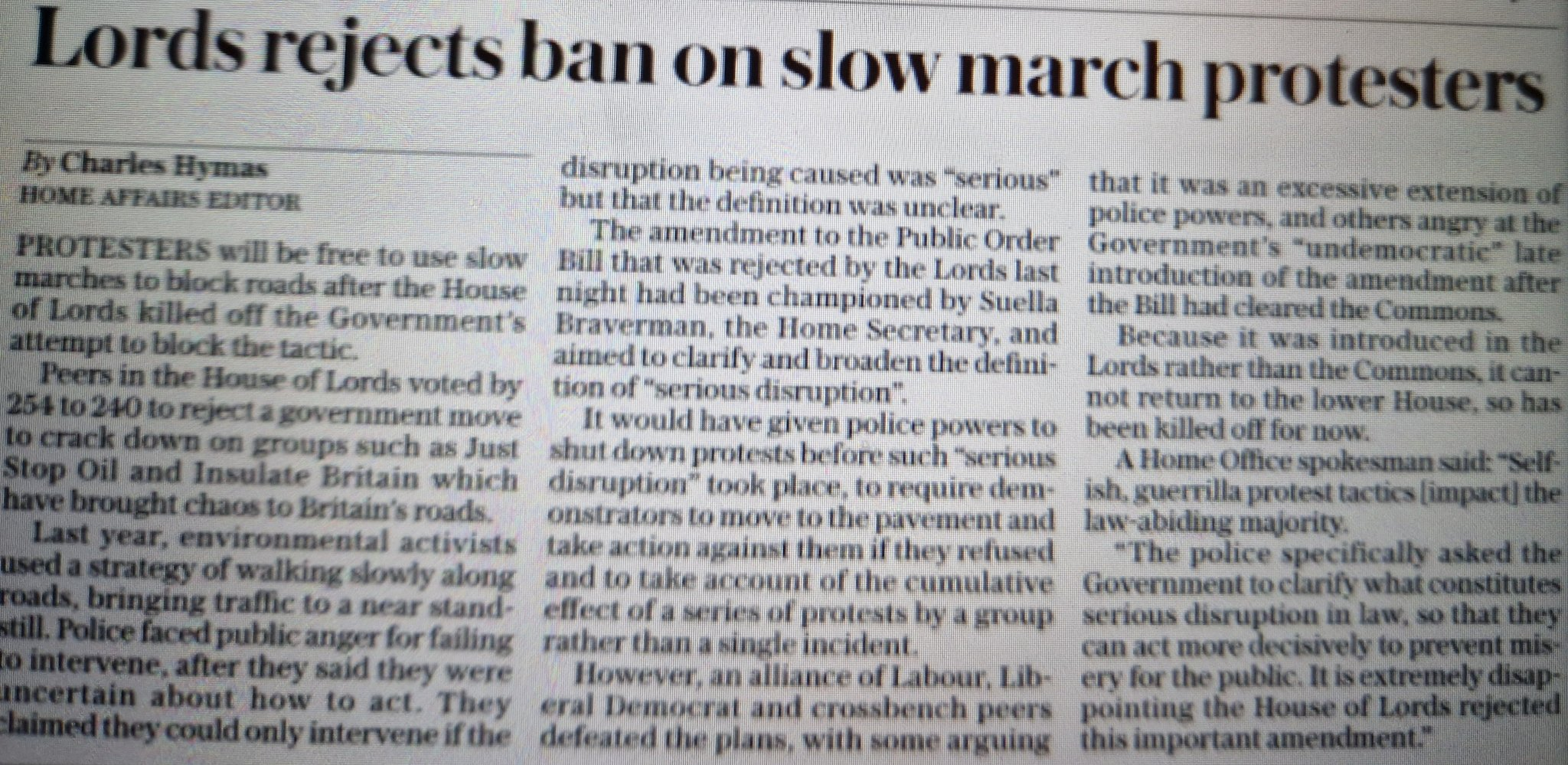
The Long March of Every Man and Woman: Suella Braverman frustrated
On 7th February the House of Lords voted by 254 to 240 to reject an amendment to the latest Public Order Bill that would have classed ‘slow walking’ protests by groups like Just Stop Oil as ‘serious disruption’ and hence something the police could intervene in and stop.
It was just the latest illiberal thought of Suella Braverman in her attempts to restrict and remove the right to protest. Braverman however is not noted for her competence. The Bill has already passed all its stages in the Commons and because the amendment was introduced in the Lords and rejected by them it cannot now be re-introduced.
The Long March of Every Man and Woman can continue, albeit there is irony that it is the unelected Lords who have protected the democratic right to protest
131 years ago this month, on the 13th January 1893, the Independent Labour Party was formed in Bradford. Keir Hardie was elected as the first Chair. There has been little to mark the anniversary, even though independent Labour politics remains a significant issue thirteen decades on.
The ILP ceased to exist as a party by the mid-1970s having broken with the Labour Party in the 1930s. Labour in its current form has little interest in remembering its own history. Even so the founding of the ILP does have important pointers for socialists today.
As E P Thompson noted in his essay on an early ILP activist Tom Maguire, the ILP began not in a London Head Office but in ‘those shadowy parts known as the provinces’. Thompson argued that ‘when the two party political system began to crack, a third party with distinctively socialist character emerged amongst the mills, brickyards and gasworks of the West Riding’
It was a socialist politics built from the bottom up and trade union organisation and struggles were central to it. Attendance at the Bradford conference was comprised very largely of socialists from Scotland and the north of England but organisation soon developed in the rest of England and Wales.
So also was the independent stance. Labour politics in the final quarter of the nineteenth century remained dominated by the Liberal Party. The ILP represented a break from that, albeit one that took a while to fully work through. There are those, and Tony Blair regularly makes the point, who see the break from a Liberal ‘progressive’ politics, and by extension the involvement of trade unions as a mistake. That is one very good reason to keep the history of the ILP firmly in mind.
Engels near the end of his life welcomed the formation of the ILP and contrasted its open nature with the politics of the Social Democratic Federation, which styled itself as a Marxist party. Socialist politics in the 1890s were relatively fluid in organisational terms and there was certainly some crossover between ILP and SDF activism.
The ILP however focused its political campaigns on reforms around things like welfare, an eight-hour day and a minimum wage. The SDF was generally dismissive of ‘palliatives’ arguing formally for the abolition of capitalism, while calling for some reforms in its programme
The ILP, the SDF and trade unions came together in London on 27th February 1900 to form the Labour Representation Committee. The focus was on getting socialist MPs elected and the main membership organisation with the capacity to do this was the ILP.
This changed in 1918 when the Webb’s Constitution saw a Labour Party with individual membership come into existence. The ILP as an adherent of the Second International had supported the First World War although numbers of its activists were anti-war. Ramsay McDonald, opposed the war and in 1918 at the Leeds Conference called for Soviets.
When the Communist Party of Great Britain was formed in 1920 a minority of the ILP left looked to join. McDonald and others Labour MPs who were ILP members had other ideas. By 1924 McDonald was leading a minority Labour Government and the Times was praising him as the future of socialism against the recently deceased Lenin.
We can see why Engels was enthusiastic about the ILP in the years before his death in 1895. It was not of course because he foresaw the likes of McDonald laying down something of template for future Labour administrations. Rather it was because at its grassroots the ILP did represent a genuine workers movement with all the different trends and arguments about how to achieve socialism that this meant
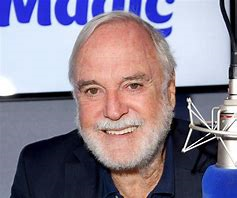
Still Fawlty: Cleese remains suspended from the Beard Liberation Front
The Beard Liberation Front, the informal network of beard wearers, has said that veteran comedian John Cleese remains suspended as a supporter, after he announced a new series of the classic TV comedy Fawlty Towers.
Cleese who was known for frequently sporting a moustache in his earlier years is now more often to be seen with a full beard.
However after he announced he would be presenting a programme on the hard-right GB News TV station, he was suspended by the BLF
The BLF does not formally engage with GB News although it has not officially listed it as pogonophobic.
BLF Organiser Keith Flett said, John Cleese could be a great positive ambassador for the hirsute but in taking a GB News role we remain concerned that he will end up bringing the hirsute into disrepute. It’s unfortunately all rather fawlty
Sunak acts on Cost of Living Crisis. Food Bank critic appointed as Tory Deputy Chair
Rishi Sunak has had a minor reshuffle today, or as many would see it, re-arranging the deckchairs on the Titanic. Someone who probably does have that you view- as he recently made the comment on WhatsApp- is Ashfield MP Lee Anderson.
‘Red Wall’ MP Anderson who sits for Ashfield will almost certainly lose his seat at the next Election but in the meantime Sunak has appointed him Tory Deputy Chair.
Anderson who was a Labour member until 2018 is a hard to far right Tory MP who frequently makes comments many would see as racist about asylum seekers, is transphobic and was warned not to use the Anti-Semitic phrase ‘cultural Marxism’.
For the current period however is views on food banks are relevant. He is on record as saying that they are an ‘industry’, that they are used by people who don’t know how to cook and that a budget of 30p a day is enough to buy food.
The last comment related to the cost of food for an individual in a mass collective cooking project which sounds a bit socialist for Anderson.
Sunak who is the richest MP in Parliament probably doesn’t fully grasp the Anderson, food bank, cost of living issue. Many others will however so the deckchairs on the Titanic may need further re-arrangement before long