The Tory Culture War on Museums has been going on for a long time. In the 1980s the late Bernie Grant MP was campaigning for the return of Benin Bronzes to the countries from which they were stolen or looted by British imperial endeavours of previous eras.
The issue of returning objects to their rightful place, not on display in the UK, has perhaps focused on the British Museum but now the Tory Culture Warriors have opened a new front.
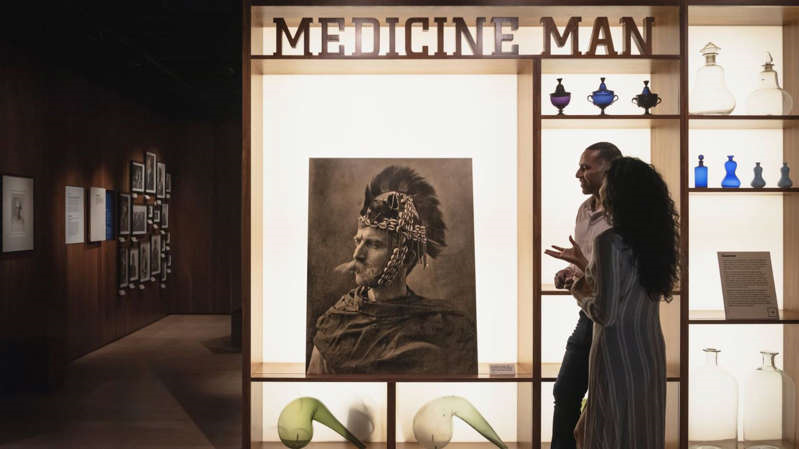
The Wellcome Museum in central London has closed a display of items collected by its founder Sir Henry Wellcome on the basis that they feature images and items which are sexist, racist and ableist. The Museum argues that in 2022 telling the story of health requires a different approach.
Predictably the Tory Culture Warriors have complained. The pages of the Times and Telegraph have condemned the changes. Far right columnist Melanie Phillips has complained in the Times (28th November) that the changes erase knowledge.
One might think from all this that the display in question had been their since time immemorial. In fact it has been there since 2007 and it might reasonably be held that museums change their displays from time to time to reflect changing interests and perspectives. Otherwise museums become themselves time bound museums
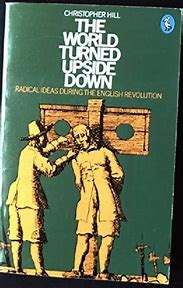
50 years of Christopher Hill’s The World Turned Upside Down
Christopher Hill’s The World Turned Upside Down was first published 50 years ago in 1972 and remains in print.
Hill was one of the Marxist historians, along with E P Thompson and John Saville who quit the Communist Party in 1956. While associated with the new left Hill did not become a leading figure and was not associated with any left tendency after his departure from the CPGB. Rather he became Master at Balliol College Oxford, a senior academic position.
He researched and wrote over many years on the English Revolution of the 1640s and 1650s and twenty years after his death remains a significant figure in this area.
The World Turned Upside Down had a particular focus. Hill looked at those groups who prosperity often regarded and regards as extremists and even lunatics. The Levellers, the Diggers, the Ranters, the Seekers. He makes the point that in the 1640s and into the 1650s there was in England a freedom to speak and publish that had not existed before and arguably has never existed again.
In particular there was considerable opposition to the rising Protestant work ethic which with the Restoration in 1660 won the battle of theory and practice and remains victorious. Hill argues that while historical details don’t change, understandings and interest in them does. Hence those who opposed the rise of capitalism at the beginning still have a lot to say to anti-capitalists 360 years on
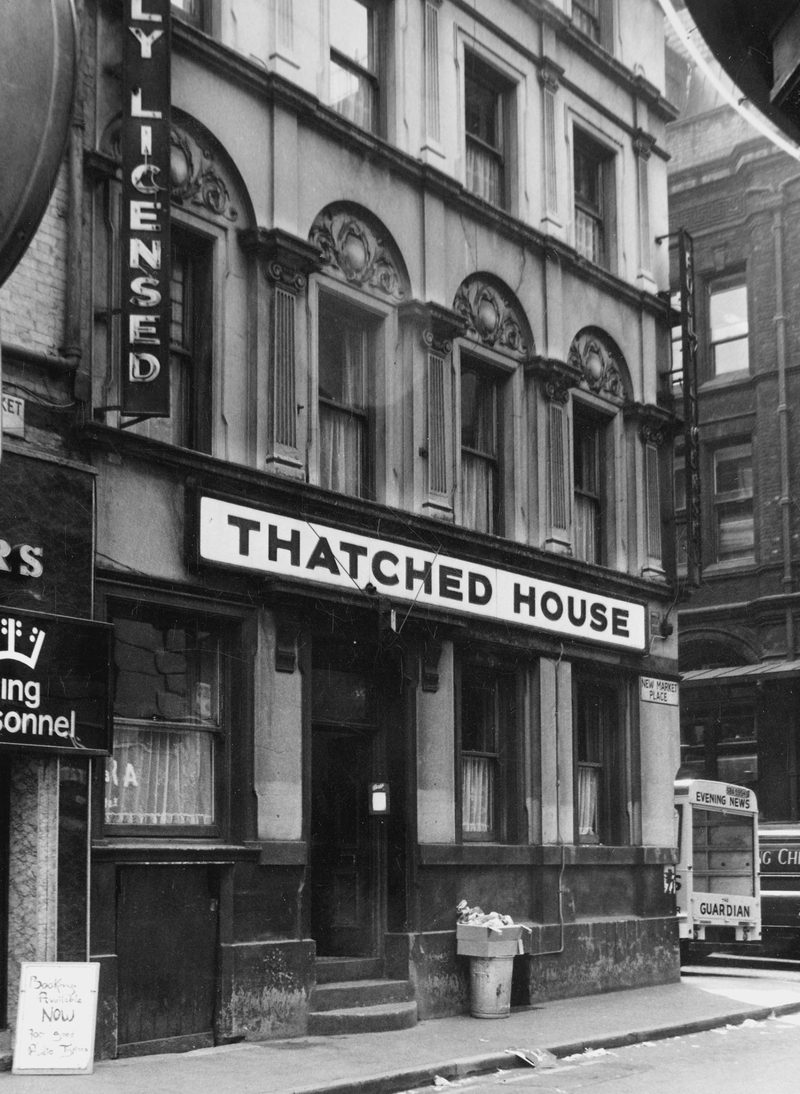
Engels favourite Manchester pub, now demolished and replaced by the Arndale Centre
Engels at 204 beard wearer, Pilsner drinker, activist, theoretician, revolutionary
28th November marks the 204th anniversary of the birth of Friedrich Engels.
Engels wrote a landmark volume on the working class in Manchester 1844, much admired by Marx, and was an active participant in revolutionary events in Bavaria and Prussia in 1848/9. He carried the nickname ‘The General’ for his military knowledge and writing. He was of course for some years a Manchester businessman in the family business but throughout an active collaborator with Marx. After Marx’s death in 1883 Engels extended the research and impact of his friends work as well as producing some work of his own.
Some of this has been controversial amongst those who stand in the Marxist tradition but in a short appreciation the key thing to underline is Engels centrality to that tradition.
The fact that he both understood and was partly responsible for Marx’s perspectives is well summed up in the extract below:
Marx and I are ourselves partly to blame for the fact that the younger people sometimes lay more stress on the economic side than is due to it. We had to emphasise the main principle vis-à-vis our adversaries, who denied it, and we had not always the time, the place or the opportunity to give their due to the other elements involved in the interaction. But when it came to presenting a section of history, that is, to making a practical application, it was a different matter and there no error was permissible. Unfortunately, however, it happens only too often that people think they have fully understood a new theory and can apply it without more ado from the moment they have assimilated its main principles, and even those not always correctly. And I cannot exempt many of the more recent “Marxists” from this reproach, for the most amazing rubbish has been produced in this quarter, too. . . .
As perhaps might be expected there are those who seek to draw attention away from the continued importance of such a perspective. The former Labour MP Tristram Hunt has written a partial but entertaining biography of Engels.
Writing in the Observer in November 2020 he did emphasise the political importance of Engels writings but underlined that above all Engels should be seen as a bon viveur. A lover of beer, wine and good food. Indeed Engels was all of that (as was Marx) though sadly his recipe for lobster salad has not survived.
While that was true Engels was above a serious revolutionary. It’s not his taste in drink and food that matters in 2024,interesting though this is, but his ideas and his politics.
Engels was a figure of profound historical and philosophical significance. Yet what I discovered, as his biographer, was that his vision of socialism could also be richly uplifting: the grisly, corrupt, anti-intellectual egalitarian Marxism of the 20th century would have horrified him. “The concept of a socialist society as a realm of equality is a one-sided French concept,” he said. Instead, Engels believed in cascading the pleasures of life – food, sex, drink, culture, travel, even fox-hunting – across all classes. Socialism should not be a never-ending Labour party meeting, but a life of enjoyment. The real challenge of living in Manchester was that he could find no “single opportunity to make use of my acknowledged gift for mixing a lobster salad”.
How Engels celebrated his 70th birthday on 28th November 1890
Engels was born in Bremen on 28th November 1820 but by 1890, when he turned 70, he was living in Regents Park Rd, having retired a while since from his job in the family firm in Manchester.
Writing to Laura Lafargue on 1st December 1890 he noted that he had received numerous birthday messages and in the evening of 28th November had celebrated with a number of comrades mainly from the German socialist movement:
‘we kept it up till half past three in the morning, and drank besides claret, 16 bottles of champagne- the morning we had 12 dozen oysters…One can celebrate one’s 70th birthday only once.
203rd anniversary of Engels birth. His cat Tidlums was the ‘terror’ of Regents Park Rd
Friedrich Engels was born on 28th November 1820 and died in North London (where else)on 5th August 1895.
After taking early retirement from the family firm in Manchester he moved to London and lived in Regents Park Rd until his death.
Writing to Karl Kautsky on 27th December 1891 Engels reported on the activities of his cat Tidlums:
Tidlums has grown into a large, majestic tomcat, the sultan of all the female cats in Regent’s Park Road and the terror of all competitors and rivals.
Unfortunately there is no other mention of Tidlums and Tristram Hunt’s biography of Engels, The Frock Coated Communist, unaccountably doesn’t mention cats.
Tidlums sounds like a rather worrying cat though not quite as bad as Rosa Luxemburg’s cat Mimi who she reported had ‘whacked Lenin with her paw’ on one occasion:
.@UCU action The Business University in the 2020s & Vice Chancellors race to the bottom
Following a decisive vote for industrial action members of the UCU in Universities are currently taking strike action on pay, pensions and working conditions. While the pay of Vice Chancellors has soared into the hundreds of thousands, many academics are on fixed term contracts and facing real time pay cuts
Unlike in the late 1960s when Universities mainly relied on State funding in the 2020s every University is a business. Members of the UCU, the union that organises in further and higher education understand the point very well.
The influence of business in UK Universities is significant and it’s not interested in rooting out incorrect thinking. If a subject is not contributing in a measurable way to the bottom line funding stops and so does the study of the subject. There is no space for thinking correct, or incorrect.
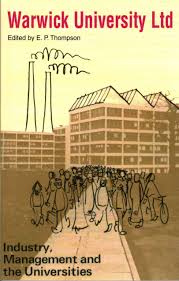
As in 1970, when E P Thompson edited , Warwick University Ltd, the original business University when it comes to the business University the main enemy is at home.
Capitalism is however nothing if not contradictory. The Government having encouraged overseas students to study in the UK, which is profitable for Universities, now seems to be debating whether this should be restricted to elite Russell Group institutions. There is some complexity in this in terms of what the agenda of capital actually is, although racism remains a core feature.
A key, if not the key way, through all this is for the organised strength of the UCU to shift the agenda away from profit and towards decent pay and conditions for academics and really useful education for students.
As if to underline the point Vice Chancellors in some Universities, notably Queen Mary in East London, are engaged in a race to the bottom in terms of employment practices. They are refusing to pay University workers not just for days of strike (as would be expected) but for days when they are working but not meeting an imposed work schedule. Even working to contract in this world is seen as industrial action, when that simply means doing the work you are paid to do.
In Medieval Times the marking of Christmas by Class started with Advent Sunday.
Advent Sunday is the fourth before Christmas and this year falls on 30th November
The period between the fourth Sunday before Christmas and Christmas Day was a period of a limited diet, the more so for the poor than the rich obviously.
People were enjoined to limit their diet during Advent. For the wealthy this meant soups, stews and fish instead of roasts or pies. The poorer, however, could find the reduction a misery. In the fifteenth century James Ryman complained of eating ‘no puddings nor sauce, but stinking fish not worth a louse’
Ronald Hutton, Stations of the Sun
If you are following an Advent diet or even if you aren’t putting food aside for your local Foodbank seems like a good tradition
The Archer Dynasty is ‘moving on’ from ‘lowlife’ Vince Casey
Vince ‘lowlife’ Casey continues to demand his money back from David & Rooth. He has now also added a further demand for £8K which is the cost of the New Zealand holiday for Beth and Ben that he (may) have paid for. Despite Jill’s claim that selling 4 acres of land at Hollowtree will undermine the future of the Archers Dynasty the sale is going ahead. David was rightly doubtful of an offer from Brian, no doubt seeking to exploit the crisis for his own ends. Fortunately another offer for just half the land has resolved the matter. For now
Meanwhile Rooth and David have been hardly speaking and Jill has moved out. Time for the Grundys and Horrobins to act
Paul, Ruairi & JW too
Ruairi has been out with Paul but he wants Ruairi to drop JW if a relationship is to be involved. Paul has potential
The Ambridge Choir & Whamageddon
Neil and Fallon have started an Ambridge choir to sing Christmas classics. Whamageddon at the Bull beckons. That is unless Joleen’s rival choir gets there first.
Jill has been stirring it up at the Bull
Stir Up Sunday is the last Sunday before Advent in the Anglican & Catholic churches. Like many traditions it is one little mentioned by traditionalists
The key modern feature of the day has been to mix the Christmas pudding ready to mature for 25th December a month off.
One place where Stir Up Sunday is sometimes marked is Ambridge & Jill Archer was certainly stirring it up at the Bull (where she is in exile). That is both the pudding & her bigoted views.
It’s just as well they’ve never heard of Lidl in Ambridge
In Other News
Paul is planning to organise an Xmas Surgery at the Vets…
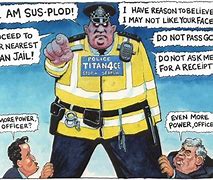
Tory Culture Wars: The Police- too Woke or too racist & misogynist?
The Times (26th November) carries an interview with the current Chief Constable of Greater Manchester James Watson. He claims to have speeded up police response times to reported crimes and increased arrests. Prudently he notes that this is what the police are supposed to do. He might have added but did not that it helps if the police investigate more crimes than they themselves commit.
Watson argues (and a Times Editorial agrees) that the police spend too much time being ‘Woke’ and virtue signalling on social media. Notably Chief Culture Warrior and Home Secretary Suella Braverman agrees.
Yet the amount of time taken to post a dance at a Pride Event on TikTok or a picture of taking the knee- in both instances the police would have been at the event anyway-is minimal.
More concern is surely needed about the numbers of police officers who are racist and misogynist. According to a recent report on the Metropolitan Police it is a very high number. In comparison Woke officers should not be an issue.