2023 Beard, Shorts & Sandals Season reaches August Bank Holiday peak
The Beard Liberation Front, the informal network of beard wearers, has said that the 2023 Beard, Shorts and Sandals Season which opened in April is set to reach a peak over the August Bank Holiday weekend.
The 2023 Season has seen a widespread adoption of beards, shorts and sandals particularly during the occasional periods of warmer weather
2023 Season guidelines
1] Shorts should ideally be three-quarter length-‘culottes’ for the 2023 season. The length of shorts is particularly important as climate change may mean that unprotected legs get sunburnt.
2] Footwear should be casual. There is a considerable range of sandal type footwear now available. Some leaves parts of the feet and toes open to public view, while some does not. The BLF is not prescriptive about the matter.
3] Socks should usually not be worn. However there is no definitive policy on this currently.
3a] If the beard, shorts and sandals are to be displayed in relatively busier urban areas it is likely to be prudent to wear closed rather than open casual footwear and ankle socks, not visible to others may be worn.
4] There is no prescription or definition on what type of beard may be worn, or how this may match with the shorts and sandals. This is left up to the individual.
BLF Organiser Keith Flett said, there is no question that the 2023 Beard, Shorts and Sandals season has seen a revolt into style. We expect much flaunting this Bank Holiday Weekend.
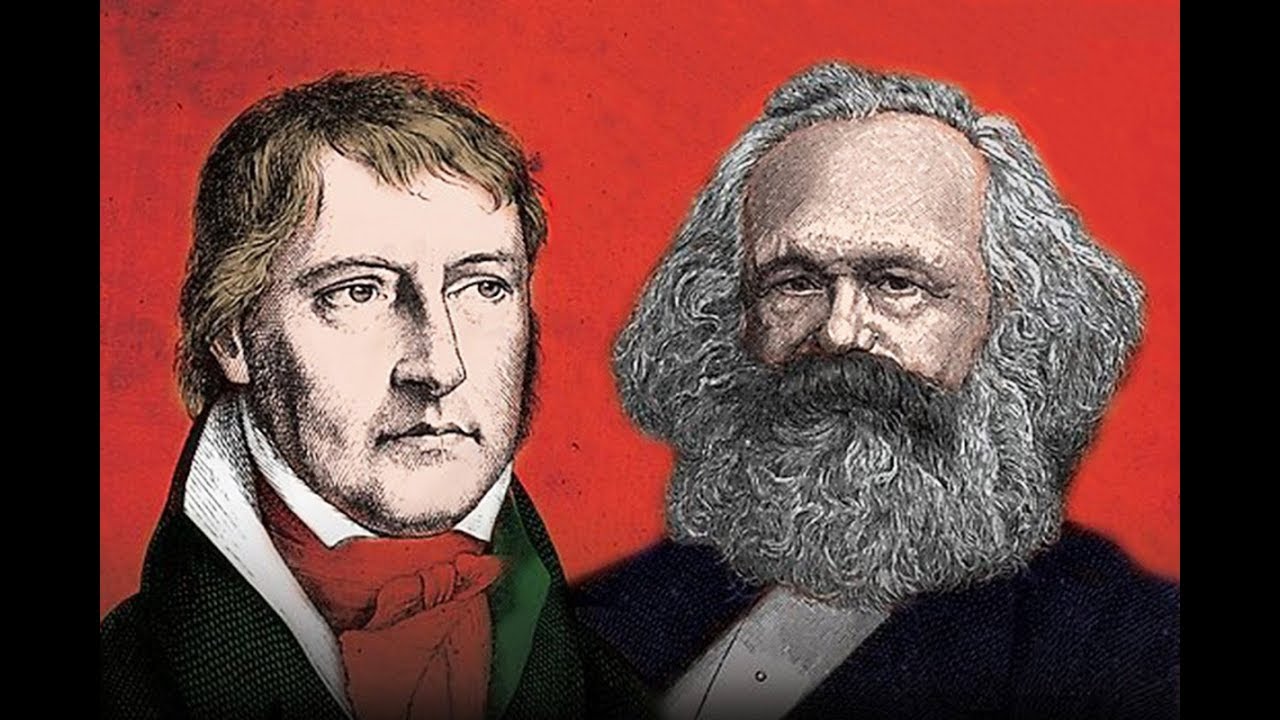
Hegel b 27th August 1770. Marx’s critique of Hegel’s view of beards
In his Critique of Hegel’s Philosophy of Right (1843) Marx made a specific reference to Hegel’s error of understanding about the role beards played in society.
For Hegel a beard was something abstract, something worn by a beard wearer. For Marx the key thing was the social interaction that the beard and beard wearer had. Hence the focus was on human relationships rather than abstract principles. The key passage is here:
The activities and agencies of the state are attached to individuals (the state is only active through individuals), but not to the individual as physical but political; they are attached to the political quality of the individual. Hence it is ridiculous to say, as Hegel does, that ‘it is in an external and contingent way that these offices are linked with particular persons’. On the contrary, they are linked with them by a vinculum substantiale, by reason of an essential quality of particular persons. These offices are the natural action of this essential quality. Hence the absurdity of Hegel’s conceiving the activities and agencies of the state in the abstract, and particular individuality in opposition to it. He forgets that particular individuality is a human individual, and that the activities and agencies of the state are human activities. He forgets that the nature of the particular person is not his beard, his blood, his abstract Physis, but rather his social quality, and that the activities of the state, etc., are nothing but the modes of existence and operation of the social qualities of men. Thus it is evident that individuals, in so far as they are the bearers of the state’s activities and powers, are to be considered according to their social and not their private quality.
The energy ‘price cap’ & the moral economy. Time to return to the practice of a ‘Fair Price’
The Regulator OfGem announced details of the October price cap on energy prices today. Of course it is not meant to cap or control exorbitant costs for electric and gas. Its essentially an indication to the market of what an unfettered price is.
The Government have shown no intention of doing anything so far. Political pressure and anger will mean that cannot last but their thought will be to use public money to subsidise energy prices. Certainly a freeze is essential as Labour has underlined. Talk by warmongering idiots like Johnson and Zahawi that prices are high because there is a war have a point. Britain is not at war with anyone but the Tories are engaged in a class war to give a free pass to profiteering energy companies.
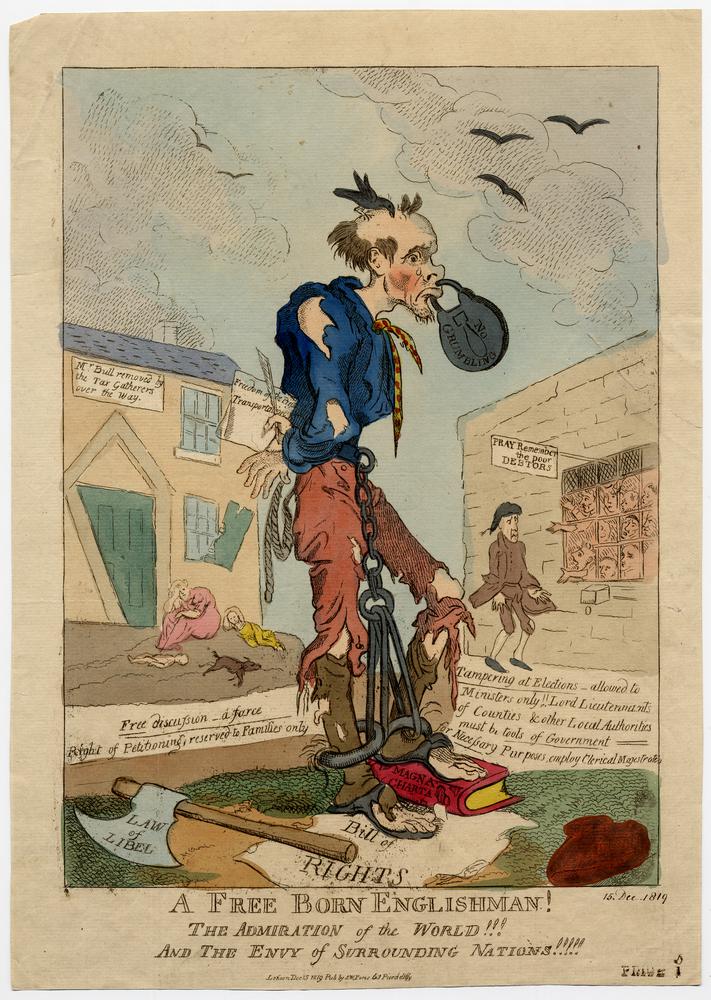
EP Thompson noted in the Making of the English Working Class that before the ideas and practice of the market economy became dominant in the first decades of the nineteenth century there were other views. The leading thinker was the socialist Robert Owen but his ideas reflected wider customs and practices.
Before the ideas of Adam Smith took hold many workers had the perspective of a fair price and a just wage. Thompson notes that for Robert Owen the ‘profit-motive was wrong and unnecessary’. This idea was also held by Cobbett, Carlile and others. The capitalist was seen as ‘parasitic’ and labour as the source of all wealth. Such ideas led eventually the birth of the Co-Operative Movement co-existing with capitalism but operating on a collective rather than an individual basis.
As the energy crisis underlines that a market economy doesn’t work for many its time to revisit these ideas and strategies
Sadly the Beard Liberation Front question on Test Mtch Special’s Ask the Umpire wasnt reached today but by popular demand its below. With an increase in gamesmanship in the men’s game reaching even The Hundred the question is based on football goalkeepers dancing around in the goal to distract a penalty taker. That is not illegal but would a cricketer waggling their beard as a bowler delivered a ball be classified as obstruction?
A batsman with a WG Grace style beard moves his facial hair from side to side as the bowler is preparing to bowl. The bowler is distracted and bowls a no ball. He appeals that the batsman is out under Law 37.1 deliberately distracting the field
According to a newspaper report the cost of a routine pint in central London is now £9. Quite possibly although its quite possible to find good cask beer for a bit under a fiver a pint in the same area and craft keg beer for £6-7. Even so that is still a lot in a cost of living crisis. CAMRA has rightly called for Government intervention to address a market that is out of line with what consumers can in many cases afford
In pre-market society where as we know supply and demand determine price..there were attempts to regulate the price of essential foodstuffs. Bread was the key focus but beer, often safer than water to drink, was also involved.
The aim of an Assize was to look at various beer types and qualities and determine how much the cost of raw material- malt and hops would be. Stronger beers of good quality would cost more to brew and attracted a higher price. Every day beers would be less strong but still of an acceptable quality, that is unadulterated.
Out of all this came the concept of a fair profit. The brewer needed to cover costs of brewing and selling. They also needed premises to brew and live in and the ability to look after their family. They did not need to amass large savings or capital sums anymore than those who drank their beer did or could.
Hence the Assize was about price and quality and ensuring fairness for both drinkers and brewers
GCSE results: the shadow of the 1944 Education Act still lurks
GCSE results in England and Wales were released on 25th August and the conundrum about who achieves what grade and why continues.
The BBC reported:
The proportion of top grades – 7/A and above – is 26.3%. Again, that is higher than 2019 (20.8%) and lower than 2021 (28.9%).
Ofqual, England’s exam watchdog, took the decision to reach this “midway point” in the “interests of fairness” to students whose education was disrupted.
The perhaps obvious point here is that Ofqual have determined an artificial quota for those who achieve the top grade. It is lower than in 2021 but higher than 2019. Why however is it not the case that anyone student who meets the criteria for achieving the top grade receives it. In 2022 its clear that some who met the criteria in 2021 would not have this year.
This seems to go further than just sense of fairness checking between individual examiners to make sure broadly similar grades are given for broadly similar papers. It suggests rather a worldview where only a certain number can achieve. In the 1944 Education Act it was stated that 25% would go on to University and 75% would not.
The world has changed since then, University education has expanded and there is a much increased demand for those with qualifications. Now of course it might be argued that qualifications shouldn’t matter, capability and aptitude should. In a saner world one would hope so. In the meantime its surely worth asking what the pass/fail mentality of 1944 is doing still lurking in 2022
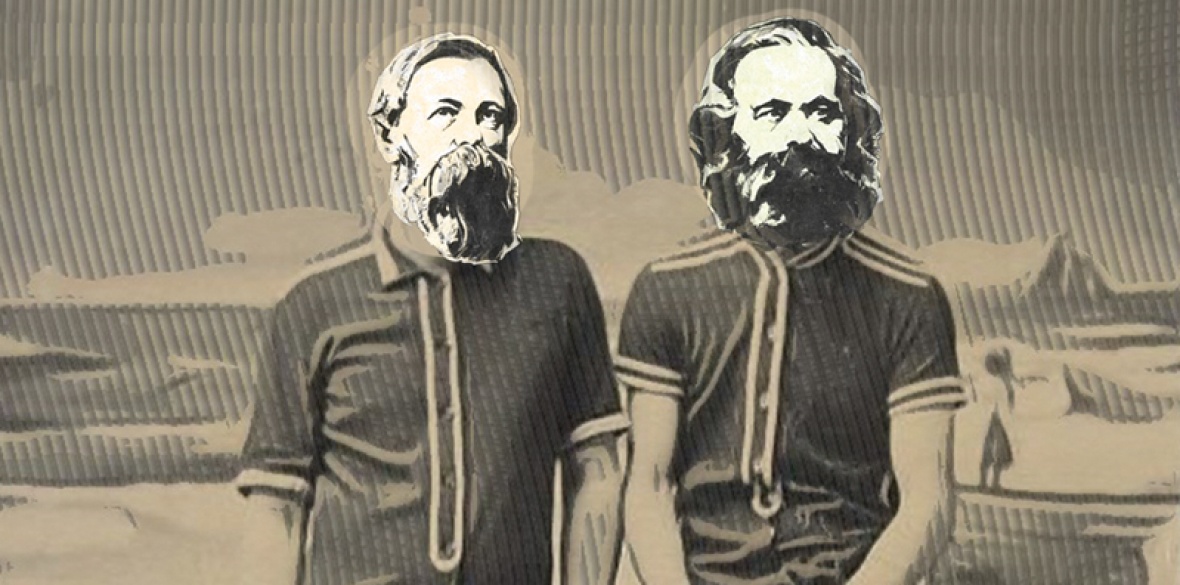
Marx and Engels at the Victorian seaside, bathing & the sewage crisis
It is what is traditionally known as High Summer. In many areas schools are on holiday and Parliament is in recess. For various reasons Staycations are on the increase and that means seaside resorts, although not for Boris Johnson or Keir Starmer
There is a solid tradition of socialism and the British seaside and we need look no further than Marx and Engels to discover it.
Official histories of the town struggle to acknowledge it, but Eastbourne was Engels favourite holiday destination.
Engels regularly went to Eastbourne in the summer and sometimes other months, particularly after he took early retirement from the family business. He stayed at 4 Cavendish Place Eastbourne near the pier. He wrote to Sorge on March 18 1893 that he had spent two weeks in the place and ‘had splendid weather’ coming back ‘very refreshed’. Engels also spent time at the seaside, Ramsgate for example, when he was pondering major theoretical works and concerns.
Engels had a fondness too for Ryde on the Isle of White. He visited in September 1857 when he went to Carisbrooke Castle and returned on several occasions in the 1890s.
Marx had other seaside venues in mind and for other reasons than simply holidays. Indeed as early as 14th July 1857 Engels was urging that Marx ‘go to the seaside’ as soon as possible because of his poor health.
In 1866 he wrote that he had been ‘banished’ by his Doctor to 5 Lansell’s Place in Margate. He complained that it was very quiet in March, vegetating before Londoners arrived for the bathing season. Even so he found the ‘air is wonderfully pure and invigorating’
On 25 August 1871 Marx was in Brighton writing that ‘my doctor found it necessary to banish me for a few months to this place, with the strict injunction to do nothing’.
On 18th May 1874 Marx wrote to Kugelmann ‘After my return from Harrogate I had an attack of carbuncles, then my headaches returned, insomnia, etc, so that I had to spend from the middle of April to 5 May at Ramsgate (seaside). Since then I have been feeling much better, but am far from being quite well’.
By September 1879 Marx had moved a little to The Plains of Waterloo in Ramsgate where on 11th of the month he noted that ‘the weather here is partly good and partly bad, the latter having a tendency to predominate’.
By this time Marx’s eldest daughter Jenny was living in Ramsgate.
Marx had visited Ramsgate previously in 1872 and 1874.
In August 1880 Marx gave an interview to a journalist from the radical New York paper The Sun, partly on Ramsgate beach. It was published in the paper on 6th September 1880.
The journalist John Swinton wrote in part:
The afternoon is waning toward the twilight of an English summer evening as Mr. Marx discourses, and he proposes a walk through the seaside town and along the shore to the beach, upon which we see many thousand people, largely children, disporting themselves. Here we find on the sands his family party — the wife, who had already welcomed me, his two daughters with their children, and his two sons-in-law, one of whom is a Professor in King’s College, London, and the other, I believe, a man of letters. It was a delightful party — about ten in all — the father of the two young wives, who were happy with their children, and the grandmother of the children, rich in the joysomeness and serenity of her wifely nature. (The Sun 6th September 1880)
Marx spent months at the end of his life in 1882 and 1883 in Ventnor on the Isle of Wight. The area has not changed so much since he lived there and the house he stayed in, 1 St Boniface Gdns, which is in central Ventnor, has a plaque to mark his stay. Just six years later Churchill was in the town and the veteran Chartist George Julian Harney also visited. People came because of the temperate climate and the beneficial impact on their health particularly in the winter months.
What did Marx and Engels do while at the seaside?
Certainly as Victorian gentlemen did, they went for walks both on the seaside and inland. Marx visited Canterbury on one occasion in 1866 when staying at Margate. He walked the 17 or so miles there and returned the following day on the train.
Marx in particular enjoyed bathing- Engels took the waters at Southport- and would have been horrified but unsurprised at the present sewage crisis covering many of his favourite beaches.
This was also the time of the growth of commercial photography and snaps of Marx at Margate and Engels in Eastbourne still exist. I’m afraid however that neither is to be found in a bathing costume and the Collected Works make absolutely no reference to paddling in the sea.
We can conclude from all this though that Marx’s favourite seaside resorts were Ramsgate and in his last years Ventnor. Margate and Brighton were popular but less so, while Eastbourne was visited when Engels was in residence.
Extracts from letters Marx wrote while at Margate in 1866 (From MIA Frankfurt site)
Margate, 18 March 1866
5 Lansell’s Place
My dear Child,
From the address you will see that I have been banished, by my medical adviser, to this seaside place, which, at this time of the year, is quite solitary. Margate lives only upon the Londoners, who regularly inundate it at the bathing season. During the other months it vegetates only. For my own part right glad I am to have got rid of all company, even that of my books. I have taken a private lodging which fronts the sea. In an inn or Hotel one might have been exposed to the danger of falling in with a stray traveller, or being pestered by local politics, vestry interests, and neighbourly gossip. As it is, ‘I care for nobody, and nobody cares for me’. But the air is wonderfully pure and reinvigorating, and you have here at the same time sea air and mountain air. I have become myself a sort of walking stick, running up and down the whole day, and keeping my mind in that state of nothingness which Buddhism considers the climax of human bliss. Of course, you have not forgotten the pretty little diction: ‘When the devil was sick, the devil a monk would be; when the devil was well, the devil a monk was he.’
Withdrawing a little from the seaside, and roaming over the adjacent agricultural districts, you are painfully reminded of ‘civilisation’, because from all sides you are startled by large boards, with governmental proclamations on them, headed: Cattle Disease. The ruling English oligarchs were never suspected to care one farthing for ‘der Menschheit ganzes Weh’ [all misery of mankind – Schiller], but as to cows and oxen, they feel deeply. At the opening of Parliament, the horned cattle gentlemen of both houses, commoners and lords, made a wild rush at government. All their talk sounded like a herd of cows lowing, translated into English. And they were not like honest king Wiswamitra, ‘der kämpfte und büsste für die Kuh Sabalah’ [who wrangled and suffered for the cow Sabalah — Heine]. On the contrary. They seized the opportunity to ‘battre monnaie’ [coin money] out of the cows’ ailings at the expense of the people. By the by, the East sends us always nice things — Religion, Etiquette, and the Plague in all forms.
Margate, 6 April 1866
5 Lansell’s Place
Dear Fred,
I have been greatly restored here, and not the smallest sign of a return of the atrocious carbuncles… I have now been here for nearly 4 weeks and have lived for my health’s sake alone. It is time to put a stop to that soon.
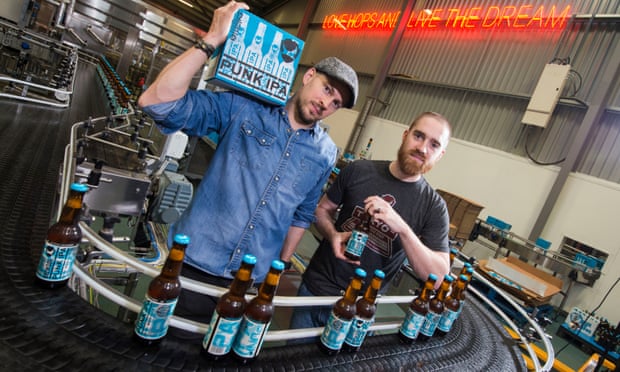
The newly opened Brewdog at Waterloo is charging £7.10 a pint for Punk IPA. Of course you can pay more for beer than this in central London but usually the beer is stronger (Punk is just over 5% now) and drunk in halves or thirds. For comparison Wetherspoons in central London sell Punk IPA for around £5.25 a pint. Meanwhile just over the road from the main entrance to Waterloo station (rather nearer the concourse than Brewdog) is the Waterloo Tap selling a good range of cask and craft keg beer at reasonable prices.
The piece below appears on the Culture Matters site:
The price of beer is in the news again. The impact of COVID, energy costs and the war in Ukraine are pushing prices up.
The general points are around increases in the cost of raw materials, production (i.e canning) energy and the impact of Brexit. Of course businesses traditionally make similar points as much as I as a trade union officer argue for wage increases.
If the price of beer goes up, does it matter however? After all no one has to drink it, and numbers don’t. The reality is that the price of beer forms part of the Retail Price Index so it is an important economic measure. I suspect though this is notoriously difficult to prove, that the price of beer has outstripped wage increases over a lengthy period. A recent ONS study showed beer prices easily outstripping wage growth to 2020 before the Covid period. One outcrop of that is the success of Wetherspoons where you can find a pint of cask beer for as little as £1.39 a pint in some places.
Historically beer was considered part of the normal diet for many workers involved in heavy industrial or agricultural labour and was one focus for the ‘standard of living’ debate about whether living standards fell or rose as industrialisation proceeded after 1800. Indeed water was not generally safe to drink until at least the mid-nineteenth century and many drank what is now called table beer instead. This was low in alcohol.
More specifically thanks to a Malt Tax first introduced to fund the country’s wars in the early eighteenth century, the price of brewer produced beer was considered to be high by the first decades of the nineteenth century. It also made the cost of home brewing a traditional practice, prohibitive.
E P Thompson in the Making of the English Working Class reports a letter from a magistrate in 1816 arguing that the Malt Tax would lead to revolution. In fact numbers of unregulated and unlicensed premises circumvented the law. Reality intervened with the 1830 Beershops Act that made the opening of premises specifically to sell beer much easier and much less costly.
Historically the price and quality of beer (the two were related) was determined by Assizes of Ale. These were more commonly used to determine the cost of bread but beer was also covered. An Act of 1604 stipulated innkeepers must sell a quart of good quality beer or ale for a penny and if they failed to do so could be fined twenty shillings for each offence. This Act was not repealed until 1828 but the use of Assizes of Ale was limited in practice to local areas where consumer pressure caused them to be held- Lincoln being one well known case.
While we can see that historically beer price and quality was regarded as important enough to regulate at least at the level of policy if less often in practice, how to apply this in 2022 suggests both challenges and innovation.
There is no consistent price for beer across the UK which in itself suggests that cost varies in reaction to local economies and wage conditions. However Big breweries and Big Pub Companies do exert considerable influence on price. Heineken which owns both breweries and pubs in the UK saw profits rise by 20.6% in the last year and it has decided to raise its beer prices by 8.9%. Its not energy company territory but the trend of contempt remains clear. Massive profits and price hikes.
No doubt other global beer companies such as ABInBev which owns, for example, Stella Artois, have similar plans. Controlling the activities of such corporate monsters and policing their ethical and environmental activities on a global scale is probably more effectively done currently done by shareholders- for example pension schemes were trade unions have trustee appointments than national Governments.
Another way to address the question, again perhaps not as unlikely as might be thought, is for the Government to nationalise in the UK a major brewery and pub company. This was done during the First World War in Carlisle. A state owned brewery was created together with a pub estate. The benefits were clear. The beer produced was of a good quality and sold at reasonable prices. The pubs were welcoming places to be in, selling food as well as drink and promoting games.
After 1945 the Labour Government planned to do the same for the new towns then being created. A State owned brewery would supply beer to State owned pubs in these new developments. This became law but was frustrated when the Tories returned to Office in 1951.
From the standpoint of 2022 the downsides to this plan are perhaps more obvious than they were 70 years ago. What was planned was in effect what Big Beer managed to create with its own push to monopoly in the 1960s. In East Anglia for example it was hard to find a pub not owned by Watneys. If you didn’t like their keg beer there was no alternative.
There are other ways of looking at the issue. Firstly by Government regulation rather than control (an updated Assize of Ale model).Secondly by local community control from below.
The Government already has a significant influence on beer prices and profits through taxation. The impact for global big beer companies is limited depending on how much tax they decide to pay in the UK but mechanisms to provide more effective control should be possible. Another way to achieve something similar is to make sure that all pubs have the right to sell a guest beer from a local brewer. This right exists in the 1980 Beer Orders but has been eroded by changes in the industry.
Local brewers should have lower costs than Big Beer in some areas but pricing is always a complex issue in a market economy. They may be able to sell more cheaply than Heineken or ABI but simply undercutting on price is not a complete solution. There are already price undercutters out there with at best doubtful business models. What is needed is an excellent product- a pint of beer- at a competitive price. That is very much Assize of Ale territory. It relies on local brewers perhaps with their own taprooms, working with local pubs and local communities to produce beer to local tastes at an affordable price but one that also provides enough profit to pay staff well and invest. In the current environment that will be no easy task but it remains an important one for the future of good beer, pubs and communities
Expect the controversy to continue, though Assizes of Ale, Government assistance to brewers and price regulation would all help.
In some ways with ten six ball overs its similar to existing T10 formats. Each variant has its tweaks though so here its 30 balls from each end (which clearly saves time) and each side has six wickets. It looked a lot simpler and easier to follow than the gimmick laden and often one sided Hundred.
I think on this basis, if this is being done, keeping it short and fairly simple has some virtue. I’ll be watching the Second England-South Africa Test on Thursday though-proper cricket. I’ll write something further on the Hundred but leaving aside the wider cricket politics(which are important) I don’t think its gone well. I await with interest TV viewing figures
Michael Rosen’s What is a Bong Tree? The search for really useful knowledge.
Michael Rosen was kind enough to send me a copy of What is a Bong Tree (articles and talks 1976-2021) and in return I promised to write something about it.
That was some months ago and illness intervened, but I’ve been dipping into it when time allowed since. It is I think a dipping into book rather like Marx’s Capital and E P Thompson’s Making of the English Working Class, although it’s not that kind of book… It’s nearly 500 pages long and while I think there are themes that run through it, each piece is a stand-alone thing rather than just read it from start to end (though you could do that without a problem).
It must be noted that amongst the collection here there is nothing about Arsenal or beards. Perhaps that is to come in a subsequent volume. It should also be said that while I’m an historian and Michael Rosen focuses on literature and language, there are again underneath that unifying themes. There also links. Of course we both have beards and support North London football teams(just different ones). His late father Harold Rosen was at the Institute of Education in Bloomsbury and while I wasn’t there at that time, I did a PhD there over a rather longer time scale than the neo-liberal controllers of higher education would now allow. We are also of course socialists, perhaps with slightly different views on some things. As anyone on the left knows this means we should be sworn enemies but as Michael is now 75 and I’m half a generation younger at 65 whatever minor differences there may have been can be viewed in an historical framework now.
Reading through the various sections of the book I was struck (in due course) by the fact that a number seemed to read as Michael Rosen speaks. In the days of Zoom etc the interested person can fairly easily catch Michael in full flow and there is always social media too. I’ve pondered this. I write a fair bit, but what appears is most definitely not how I speak. As a veteran speaker at labour movement conferences, where a record is often kept, I’m often asked for my speech after I’ve spoken by the record keeper who can then make a note. They often look rather annoyed when I tell them there is no speech. I always speak ‘off the cuff’ perhaps with a few headline notes. I don’t know whether Rosen ever reads a speech or simply writes it up afterwards and both can work well but it does mean that at least to my ear the book contains the authentic voice of the author…
One theme I think I found in the book was that of the author looking at forms of writing, or forms required by Universities and others, which hindered rather than helped a search for meaning and understanding. Rosen seeks what might be called (and was called by the Chartists) really useful knowledge. That is something that can enlighten and perhaps inspire an attempt to change. That often means politics and the author writes of the Communist Party background of his parents (left 1957) and his own journey into and around the new left.
I found the piece headed Theory, Texts and Contents: a reading and writing memoir particularly interesting here. It seems to me that Michael Rosen writes poetry in the same as I write letters (or fletters). An attempt to express and understand. There is another link here too. One of the jobs my late father (who was also a CP member)had as a senior librarian in the London Borough of Haringey was to buy all the poetry books for all the Borough’s libraries. He wrote poetry himself unfortunately in a hand writing that made my indecipherable scrawl look like a model of readability.
Another piece which I read quite a few weeks ago now that has stuck in the mind is Exhibiting ‘Guernica’ 1939-2009 which is near the beginning of the book. It’s a fascinating account of politics and place (the East End) and history. I could go on (and often do) but hopefully the point is made that there is lots to read and think about here.
No doubt some reading this will also wonder what is a Bong Tree. The answer to this is Rosenesque and best found out by acquiring and reading the book.