Vince Casey looks to exploit splits in Ambridge ruling class
Vince Casey has re-appeared this week and he always a sharp sense of the Ambridge ruling class in crisis and how he can exploit it. He offers to look over Josh’s plans for Brookfield with the implication that if he likes them he may back them and with his links with a key member of the Archer’s dynasty he may find a profitable if controversial endeavour
Grey Gables restaurant set to be franchised
A special guest is staying at Grey Gables, so special that he in the Royal Garden Suite. Adil Shah may simply be a food critic, eating in the hotel restaurant and then seeking out other eateries in Borsetshire. More likely since owner Oliver Sterling has been in discussions is that there is a plan to franchise the hotel food operation to Mr Shah. He is presumably carrying out due diligence on any deal…
Home Farm to be sold in Alice/Chris battle?
Both Alice and Christ are betting the (Home) Farm on being able to get custody of Martha. Alice already has a share in it, but if a divorce goes through Chris might be entitled to half. Either way a sale of Home Farm seems likely. No doubt Justin Elliott will be interested.
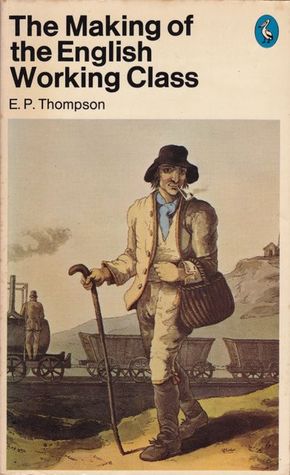
Understanding E P Thompson’s Making of the English Working Class at 60
E P Thompson’s Making of the English Working Class was first published in hardback in 1963 and 2023 will mark the 60th anniversary. A fair bit of the research for the book, carried out in the 1950s, has now been overtaken, either by updated empirical evidence or new ideas on how to approach subjects. Even so Thompson’s theoretical and methodological approaches still command interest.
I’ve been engaged for far too long in editing a volume of essays (for CSP) which were originally produced to mark the 50th anniversary in 2013, although updated since. The project is still live and hopefully the book will be out in the autumn.
Reviewing some essays on Thompson and the book the other day in the British Library, which were published shortly before his death in 1993 but like the volume I’m editing had been some years in gestation and several referred back to Thompson’s formative political period in the 1950s when he left the Communist Party.
Hence I was looking at views from the late 1980s about events in the 1950s. There was a further significant round of commentary on the 50th anniversary broadly from 2013-16 which my book is a delayed part of, but time has moved again.
There are significant issues with Thompson’s book in terms of its coverage of women, in terms of race and still with the standard of living debate. A Making of the English Working Class for 2023 would like a bit different in approach and material covered, perhaps not least in an understanding of how the English working class was not a lone actor in an imperial context
There is another point. The book is a lengthy one, what Thompson said was meant to be a history up to 1945 which which managed to get as far as the 1830s. The book remains in print and much discussed but I suspect not many now carry it around in physical form. Most, myself use an e-version and that means the text is searchable. A search uncovers things Thompson dealt with that you would probably not uncover reading the hard copy. For example there are several reference to black pudding.
To consider, Fletty: is a cat a beard that moves? Research needed.
This question was posed to me in my capacity as organiser of the Beard Liberation Front Arsenal fan and author Michael Rosen on 9th April. He is the current Beard of the Year and has two kittens with whiskers.
The BLF research department has investigated the point and drawn the conclusion, possibly but not quite.
Cat’s whiskers as Michael Rosen notes can move depending on circumstances. However so can beards and the traditional May Day Beard Waggle that aims to levitate Boris Johnson out of Office by the use of air currents will take place again in 2022.
However the cats whiskers are used to judge size they are according to scientific research ‘highly sensitive tactile hairs’ that allows the cat to navigate in the dark and to sense changes in air currents spelling possible danger.
In 2004 some ‘scientists’ showed cats pictures of men with beards and determined that cat didn’t like them. This is not to be taken too seriously.
BLF Organiser Keith Flett said, there is substance in Michael Rosen’s point that cat’s whiskers are a beard that moves. Beards can also move but a cat’s deployment of its whiskers has evolved to a greater extent than the human beard, so far.
A recent comment by Vladimir Putin that he was being cancelled in the same way that J K Rowling claims to be caused much social media comment. Of course neither individual is short of media to carry their often controversial thoughts. Putin’s main audience for the comment however was not Twitter users in Britain but a domestic one. Russia under his leadership is hostile to any display of sexuality that is not heterosexual. It is unfortunately very far from the only country to take this approach but Putin was making a comparison with what he sees as a more tolerant Western Europe.
However the reference to JK Rowling was interesting because it underlined the hypocrisy of Putin’s perspective. He contrasted Russia with a ‘decadent’ West but he and the very wealthy men and women who support him are often to be found as significant players in property, business and Tory politics in London. The current focus on Russian ‘oligarchs’ in the UK, which sometimes verges on Russophobia, reflects the point.
It also raises a troubling issue about Russia’s war on Ukraine. This is not a far-away event of which we know little. Beyond NATO’s activities in Eastern Europe, Russian, and indeed Ukrainian interests are an important part of the way capital works in Western Europe.
This was true in the period before the First World War. Engels spent many years in Victorian Manchester working at the German family firm and moved in the circle of German industrialists and bourgeois in the City. He was a member of the German Club on Oxford Rd. The links between German and British capital up to World War One were considerable.
That changed with World War One, where Britain became involved in an extended and bloody conflict with Germany. It was war for imperial advantage between rival imperialisms.
At one level the current hostilities in Ukraine are about that country seeking to protect its existence from Russian aggression. But at another level the involvement of NATO, controlled by the US suggests another conflict alarmingly similar to that which led to World War One.
US imperialism has been weakened by defeats in Afghanistan and Iraq and is now seeking to reassert its position against a Russia still weakened by the end of the USSR. Many commentators argue that the real concern of the US is the importance of China as world power and the threat this poses to what had been America hegemony.
Whether one takes that analysis or not, its difficult to escape the point that historically the intertwining of imperial rivalries makes a wider and even a world war more likely.
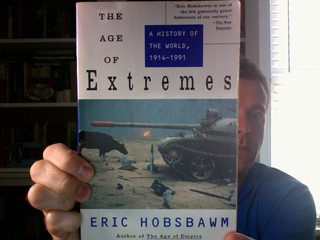
Eric Hobsbawm in his book the Age of Extremes wrote of the period between 28th July 1914 when Austria declared war on Serbia and 14th August 1945 when Japan surrendered as the Age of Catastrophe. It was he argued in effect thirty-one years of world war. He noted that the ‘short twentieth century’ from 1914 was one characterised by world war, ‘even when the gun were silent and the bombs were not exploding’.
Before 1914 there hadn’t been a major war for a century. Likewise while in 2022 there are many conflicts around the war including Yemen and Palestine, the Ukraine situation with the wider framework of Russia and the US, is the first conflict where potentially numbers of countries might be involved since 1945.
This is not an argument that current events in Ukraine will lead to a World War although there are plenty of warmongers who salivate at the idea. Rather its to suggest that historically the world is in a position where total war could occur again.
Beard of Spring 2022 poll open with competition expected to bristle
The Beard Liberation Front, the informal network of beard wearers, has said that voting is open for the coveted Beard of Spring Award.
Beard of Spring is the second of four seasonal awards that lead to the Beard of the Year in December.
The campaigners say that while the second seasonal award of the year traditionally focuses on new beard growth, the focus in 2022 is as much on those whose beards have appeared in a positive public light during the quarter.
In the first Trim Off Round comedian Alexei Sayle and cricketer Azeem Rafiq shaved opponents.
BLF Organiser Keith Flett said, the Beard of Spring poll sets the beard-benchmark for the period ahead when beards can be flaunted in public as the weather improves.
The vote is open now and will close at midday on Good Friday, with the winner announced on Easter Saturday
The Sunaks, EP Thompson and the moral economy in 2022
The late historian EP Thompson developed the concept of a moral economy. It related to eighteenth century English society and an idea of fair prices for things like bread and beer. The law at the time had some space for such concepts and there were Assizes of Bread and Ale that endeavoured to fix fair prices, although these tended to be of more consequence in times of dearth.
Thompson warned against transposing his concept of the moral economy into later centuries, as he had rooted it historically in the eighteenth century. However in an essay in his collection Customs in Common where he reviewed the moral economy he noted that the concept had now escaped into the wild as it were and he was no longer responsible for its use.
In fact Thompson himself broke his own rules and used the moral economy in the context of the 1984-5 miner’s strike and the NHS.
A modern usage would certainly be around things like fairness for ticket prices, for companies paying taxes and so on, but it should be underlined that the practice in the eighteenth century was a robust one.
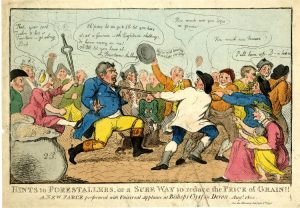
The middleman who was trying to fix the price of wheat for bread might be asked nicely, but if nothing happened, a demonstration was got up to exert pressure. That usually worked but if it didn’t the process of what Thompson referred to as ‘collective bargaining by riot’ was by no means unknown.
Ringleaders of such activities might be hanged, but mostly they weren’t, and actually the strength of the protest underlined that the moral economy was not a fluffy protest but deadly serious
Perhaps its time to apply the moral economy test to the activities of the Sunaks when it comes to taxation and Non Dom status..
25 years on from Bernie Grant campaigning on Glasgow Benin Bronzes they are being returned
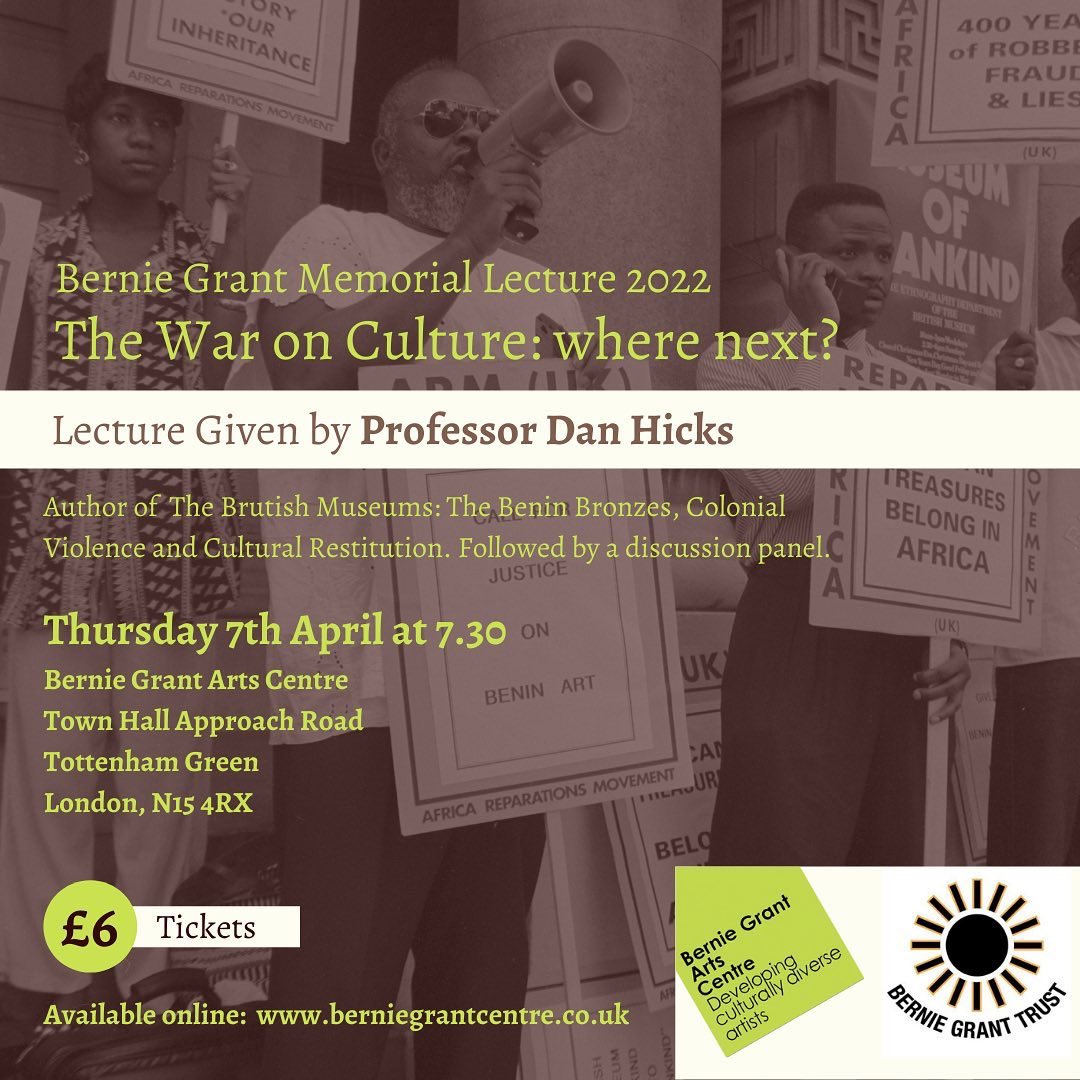
Thursday 7th April saw the annual Bernie Grant Memorial Lecture at the Bernie Grant Arts Centre in Tottenham. The keynote speaker was Prof. Dan Hicks author of the Brutish Museums, who in recent times has been a leading authority on and campaigner for the return of artefacts stolen by the British during imperial ‘adventures’ and which are in British museums.
One focus of the campaign has been the return of the Benin bronzes stolen from Africa in 1897 and in numbers on display here.
25 years ago in 1997 Bernie Grant who was campaigning on this issue long before many others went to Glasgow to ask the Kelvingrove Art Gallery why they did not return the 17 bronzes they had in their collections. They claimed then that there was no legal reason for them to do so.
The campaign has continued ever since, although Bernie Grant sadly died in 2000. It was a poignant moment on Thursday when the chair of the Bernie Grant Trust Roger Mackenzie announced that Glasgow Council had that very day agreed to return the bronzes.
It underlined that persistence in campaigning works but as someone said, ‘a lot done, a lot still to do’
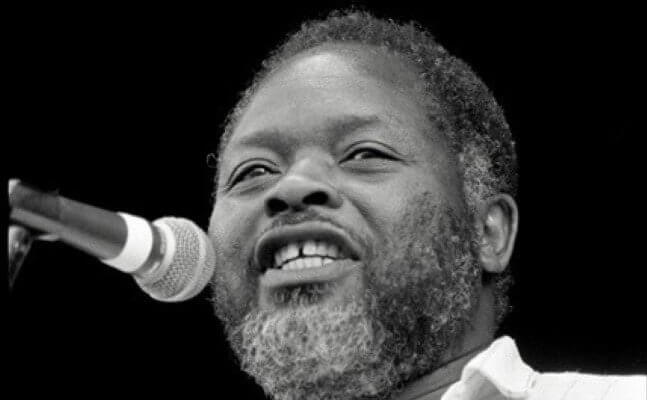
Bernie Grant d. 8th April 2000. Anti-racist, socialist, beard wearer.
I’m not in London today but if I was I’d be making the short way from my Tottenham residence to the old Tottenham Town Hall today to pay respects at the plaque marking the life of one of the great post-1945 political figures, Bernie Grant.
He died 23 years ago today after a period as leader of Haringey Council and then Labour MP for Tottenham from 1987, one of the first four black MPs to be elected in the modern era.
There is no question that Bernie made a significant impact on Haringey politics and well beyond which continues. He was the first black leader of an authority anywhere in Europe and while the example has been far too slow to be followed it was a landmark.
His fight against racism and opposition to the Thatcher Government when he was Council leader again set a template
I was Chair of Haringey Trades Union Council throughout the period that Bernie was Council leader and MP.
I recall particularly Election meetings where in those days we would invite the Labour candidate only to speak. Bernie was an inspiring and indeed an idiosyncratic speaker. Throughout the period he was pursued by the tabloid press (fortunately it was well before social media) and particularly the S*n who labelled him ‘Barmy Bernie’. We were always on the look-out for ill-intentioned types at these kind of meetings keen to twist an off-cuff the remark.
My connections do go rather wider. His brother was a trade union colleague in telecoms (as was his partner) and like myself an anyone but England cricket fan.
We have to accept I think that political figures like Bernie Grant come along only rarely in each generation. Remembering him 23 years after his death is important not least for the motivation it should give to continue the fight now.
The start of the first-class cricket season in England and Wales. Tradition meets 2022
Thursday 7th April sees the start of the first-class cricket season in England and Wales.
Unless you are enthusiast you may not have noticed (you might struggle not to notice the start of the football season even if you are not a fan).
Spectators are back(there won’t all that many) but in 2022 the games are live streamed with BBC Test Match Special ball by ball commentary. Hopefully this will spark interest.
The season is starting on time this year after the COVID hit season of 2020 and in due course the various limited overs competitions will also appear. No change in the structure of the first class game is happening in 2022 but 2023 may look different, possibly not in a good way.
Coverage and publicity for the start of the season will be limited no doubt. The current focus in cricket is the Indian Premier League, the biggest draw in world cricket
There is I must admit a wider angle now.
In times past the start of the domestic season was a chance to follow some live cricket for the first time in months, the England winter overseas tours having been completed some-time since. In 2022 you can watch and often enjoy cricket games in a range of formats day and night on Sky and BT Sport from all around the world.
The County game is the basis for cricket. Of course not enough watch it and for most clubs finance is a real issue but these have both been true for a long time. Reducing the number of Counties (a media obsession) won’t broaden its appeal. Really tackling racism in the game and significantly improving the path into the County game from the structures that exist at the grassroots might. In short fashioning a cricket fit for 2022, fit that is for those who enjoy playing and watching cricket, not for those who see it is another vehicle for profit making for their own ends.
Johnson shuts down COVID survey that shows deaths in 55+ going up. Profit before People again
The React COVID survey has been running since the first wave of COVID in March 2020. Its based at Imperial College London. While I’m not an unqualified fan of statistics to the exclusion of other factors and contexts in any situation, clearly the survey has identified the rise of new COVID variants. At the moment its finding that the Omicron2 variant is dominant.
It will find no more however as Government funding was stopped at the end of March. The latest figures (report below) are the last.
They show infections declining in most age groups from what even the Government has agreed is a high level. However in over 55s (I’m 65 ahem) they are still rising as are hospitalisations. Its concerning because this age group is the most vulnerable to COVID.
There are a number of reasons why this might be the case but nothing definitive. As this is the last survey there won’t be anything definitive either, although fortunately the weekly ONS infection survey is continuing.
Yet another example Johnson putting profit before people