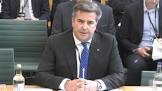
P&O Boss Hebblethwaite. The unacceptable face of capitalism, but will Johnson say it?
P&O boss Peter Hebblethwaite has admitted to MPs that he deliberately broke the law when sacking 800 workers last week. Since the Government is a firm believer in law and order one expects a stiff penalty..
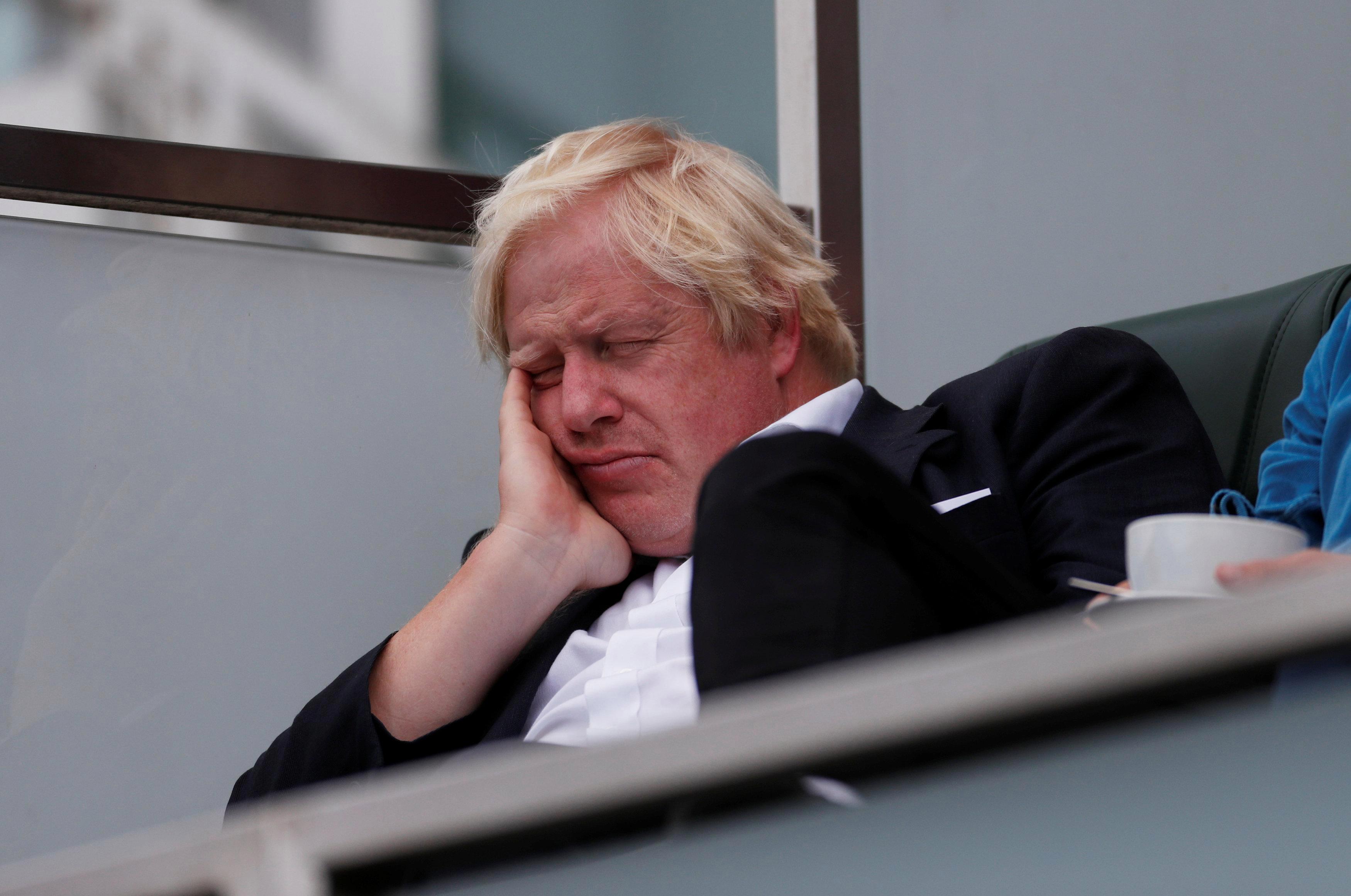
A start would be if Boris Johnson actually denounced Hebblethwaite.
The reference to the unacceptable face of capitalism relates to a remark made in May 1973 following a Court case when the then Tory Prime Minister Ted Heath referred in the Commons to the activities of London based southern African mining firm Lonhro as the ‘unpleasant and unacceptable face of capitalism’.
The phrase has entered the historical record as an example of a Conservative Prime Minister drawing a moral limit to how far free market capitalism might go.
P&O Ferries boss Peter Hebblethwaite has admitted to MPs that a decision to sack 800 workers last week without notice broke the law.
He said there was “absolutely no doubt” that under UK employment law the firm was required to consult unions before making the mass cuts.
However, he said no union would have accepted the plan and it was easier to compensate workers “in full” instead.
What’s TV (Freeview 91) has been running some episodes of Monty Python this week. Its been a while since they aired free to air.
The original run for three and half series 3×13 programmes plus one of six between 1969 and 1974. After that a series of feature films, records and live performances followed until quite recently.
As the Murdoch Sunday Times noted the Britain Python was satirising has largely gone and the programmes are best watched as social history.
I saw episode 14 (first screened September 1970) which I would almost certainly have watched at the time (aged 14). As my partner noted the sketches for 2022 tastes were overlong and contained not much which is now funny. A lengthy sketch about the number of operatives required to install a gas cooker, the well known sketch about the Piranha Brothers (i.e. the Krays) and the Ministry of Silly Walks. This is still funny but so familiar as not to be that funny 52 years on.
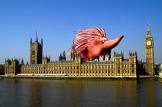
Perhaps the thing that has stood the test of time best were Terry Gilliam’s visuals. Then ahead of their time they still work. The Piranha Brothers had an enemy called Spiky Norman, that is a giant hedgehog, whose cartoon form appeared in various locations intoning the name of Dinsdale Piranha
There was also some, for the time quite daring, gay humour, focused on Graham Chapman (but only him). Homosexuality had only recently been legalised and while the various drag scenes might raise other thoughts for some(not me) in 2022 in the 1970s they were liberating. The idea that people could dress and appear as they wanted- men with facial hair wearing dresses for example- was liberating. Trust me, I was there.
The wider question is however why the humour of Monty Python is now more social history than anything while the music of 1970 is in the main anything but. Led Zeppelin, Rolling Stones, Bob Dylan… old men certainly now, but yesterday’s men I’m not so sure. Monty Python though really is now All Our Yesterdays
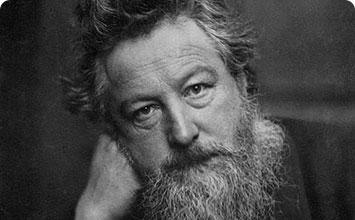
William Morris, the great socialist and beard wearer was born on 24th March 1834.
Morris and the late nineteenth century socialist movement had to fight for the democratic right to protest, just as the left does now in the face of new Tory attempts to restrict it. He recognised that the rich always aimed to restrict the right to protest which could challenge their wealth and rule:
William Morris remarked on the impatience of ’the more luxurious part of society’ to ’clear the streets of costermongers, organs, processions, and lecturers of all kinds, and make them a sort of decent prison corridors, with people just trudging to and from their work’….
It seems unlikely that Priti Patel has ever heard of William Morris but over a century ago he had certainly heard of Tory politicians like her.
Rishi Sunak & the price of a loaf. Time to bring back the bread riot & Assize of Bread
Questioned on Thursday about rising food prices and what his Spring Statement had done to address this (nothing) Chancellor Rishi Sunak opined on the price of a loaf of bread. He noted that his household had several different breads depending on what family members ate. A nice option if it can be afforded and in Sunak’s case as he is a millionaire it can be.
He noted that he thought the price of the seeded loaf he ate had gone up from £1 to £1.20. In fact such loaves cost rather more than that unless of course he sends his butler to Lidl to do the shopping.
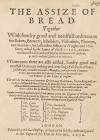
The cost and price of bread historically has been a key issue for those with rather less money than Sunak has. Indeed E P Thompson in the Making of the English Working Class notes that up to the 1840s Assizes of Bread often met locally to review the quality and price of bread and make sure there wasn’t profiteering. A control mechanism, by no means unknown, was the bread riot, where a crowd would seize grain and produce cheaper bread themselves.
Thompson wrote of a ‘moral economy, which taught the immorality of any unfair method of forcing up the price of provisions by profiteering upon the necessities of the people….not wages but the price of bread was the most sensitive indicator of popular discontent’
In March 2020 the Tories put profit before people on COVID. 2 years later they are still at it.
March 23rd is the second anniversary of the first COVID lockdown. Many view the decision to lockdown- in the absence at the point of dealing with a huge number of COVID cases-as having been taken too late. There is a strong case for arguing that the Tories put profit before people. Lockdowns have an economic impact and an impact on people too but two years ago the alternative was herd immunity.
Two years on that is no longer the case. A successful vaccination programme developed by scientists and rolled out by the NHS plus a range of COVID treatments mean that the danger of significant illness, hospitalisation and death is very much less. Lockdowns are not on the agenda.
Yet COVID is still with us. March 23rd 2022 saw 102,483 new cases reported and 194 deaths. Infection rates are rising across most of the UK.
Yet Boris Johnson is stopping free COVID tests at the end of March, and has already ended a requirement to wear masks, socially distance or self-isolate if you have COVID. This restriction free approach to COVID doesn’t apply in Scotland and Wales.
Two years today since the first lockdown & we’re still not learning from our history. Sajid Javid says rise in Covid cases is of ‘no particular concern’. Chris Whitty examining the reality suggests otherwise
In short Johnson is still putting profit before people as he did 2 years ago and as ultimately back to Victorian times pro-market Governments have always done. The cost to individuals who get sick is fortunately not as great, in the main as it was in March 2020 but nor is it pleasant for many who catch COVID now. Still Johnson, Javid and the rest have moved on.
Why my Tie is no longer red, but my beard remains resilient
For many years when at work or attending important meetings I wore a red tie. It was a symbol and it was meant to be. Probably not all took the hint but I know some did.
Yet its some time now since I’ve worn a tie at all, red or otherwise. Of course in the age of virtual meetings it has become fairly unusual to appear in formal office clothes- tho wearing clothes of some kind remains important.
But in reality I’d stopped wearing a tie for all but the most significant events and meetings well before March 2020. Working in the City of London so had many others I noted. For a significant number a beard had replaced the tie as a symbol. Moreover more senior managers in many areas, particularly where they weren’t in public facing roles, had also stopped wearing ties. I often suspected that this was in part a device to try and avoid being recognised as a person in charge of things.
The Financial Times has now published a sort of obituary for the tie. Robert Armstrong (22nd March) who says he owns 80 ties now finds them redundant in what he terms a ‘post-style’ age. He goes on to ponder what might replace the tie as a symbol to mark one person out from another. Anderson who has a beard already has the answer should he care to look in the mirror. Facial hair is the new red tie.
The Beard Liberation Front, the informal network of beard wearers, has said called on clean -shaven Tory Chancellor Rishi Sunak to take the chance to be innovative in the Spring statement and announce a luxury tax on shaving.
The campaigners say that while there has been a significant growth in beards, in reality they still represent a minority in the country compared to the clean shaven.
The BLF says that shaving is environmentally unfriendly and a Shaving Tax would do a good deal to address carbon reduction targets by reducing use of electric shavers and power used to make shaving products.
Those currently employed in the shaving industry can easily be re-deployed into the beard care area of the economy, a growing sector.
A Shaving Tax could be levied at £100 a year for all those who did not have a beard at the beginning of the financial year- April 1st. It would hit popular targets such as clean-shaven bankers in the City who would have to grow a beard or pay up.
BLF Organiser Keith Flett said, Rishi Sunak remains resolutely clean shaven but he can boost his popularity and the Exchequer’s finances considerably by implementing an innovative Shaving Tax.
William Morris, had one, a beard that is as well as a temper. So did Morris’s nemesis H M Hyndman.
By the 1920s however if facial hair was worn at all on the left it was a moustache. The beard of Keir Hardie had passed into history as he had himself
A clean shaven culture developed ( left politics being mostly male affair at this point…) which linked to a concept of working-class respectability. If you came from a background where it was a struggle to wash and get clean then there was a premium on appearing clean cut and shaven. Beards by contrast suggested perhaps the opposite.
George Orwell, himself a veteran moustache wearer wrote in The Road to Wigan Pier about:
all that dreary tribe of high-minded’ women and sandal-wearers and bearded fruit-juice drinkers who come flocking towards the smell of ‘progress’ like bluebottles to a dead cat
Raphael Samuel hints in The Lost World of British Communism that facial hair was frowned upon in the Communist Party. The idea of CPGB leader Harry Pollitt with a beard is as unthinkable as it is for senior Labour figures like Nye Bevan.
Indeed after Hardie no Labour leader had a beard until Jeremy Corbyn
At some point in the 1950s beards however made a re-entry to the left. Perhaps it was part of post-1945 youth culture and/or CND but by the late 1960s hair was big on the left.
Eric Hobsbawm who again never seems to have a beard did however opine on them once in a programme he did for the BBC Third Programme, now Radio 3.
It is covered in the 2019 biography of Hobsbawm by Richard Evans.
After the Second World War Hobsbawm was barred from a full time job at the BBC because he was a Communist. He worked as a junior academic instead.
However the BBC and the Third Programme were prepared to employ him on an ad hoc basis with proposals for programmes assessed individually.
One talk on the French satirical magazine Le Canard enchaine had a section on ‘The beard and the Third Republic’. Evans suggests this was because Hobsbawm felt listeners needed to be ‘entertained’.
The focus was on the ‘Effect of the disappearance of bearded Radical-Socialists on their most loyal tormenters’. The point being apparently that like its British broad equivalent the magazine liked making jokes about socialists with beards but found it harder to joke about their beards if they didn’t have one.
The whole episode underlines the point that before the arrival of the hirsute revolt and revival in the 1950s, beard wearers were regarded as at best a joke on the left and at worst as a political error.
Perhaps true in this respect to his CPGB past E P Thompson, himself not a beard wearer, in Warwick University Ltd (1970) made clear his disdain for ‘hairy’ students with long hair and facial hair. He saw in this a possible link to intellectual laziness and general irregularity of habit when it came to the need to oppose capital.
There is one exception I can think of, the sadly late Brian Manning. Manning was on the Editorial Board of Past and Present in the 1950s and a member of the CP Historians Group although not formally a member. A student of Christopher Hill (perpetually clean shaven) Manning researched and wrote extensively on the English Civil War. Certainly when I knew him in the 1980s and after, when he was a member of the London Socialist Historians Group (beards welcome) he was a beard wearer. He also smoked a pipe a habit he shared with Hobsbawm and perhaps more in line with CP traditions.
The Beard Liberation Front the informal network of beard wearers has warned Chancellor Rishi Sunak against any idea that a beard tax would be a way of raising revenue in Wednesday’s financial statement.
Such taxes have never worked in practice and in 2022 would cost far more to enforce and collect than they would ever raise.
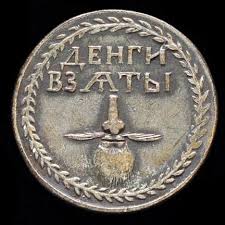
While history records several beard taxes including Peter the Great these were aimed at the rich and powerful in society. The lower orders had insufficient money historically to pay any direct taxes.
A modern beard tax would require a Beard Inspectorate to enforce tax payment and just to check on beards in Dalston and Shoreditch in East London alone would be likely to outweigh proceeds from the tax.
BLF Organiser Keith Flett said, we have long believed that a shaving tax on all items relating to shaving would raise more money and it would also be climate friendly.
Campaigners call for new Dr Who to be a beard wearer
The Beard Liberation Front, the informal network of beard wearers, has called for the next Dr Who to be a beard wearer.
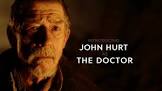
The campaigners say that hirsuteness has rarely been a feature of the Doctor over the years. Dr Who’s Nos 4 and 11 were briefly seen with beards and the late John Hurt who appeared in an earlier transformation episode in 2013 did wear a beard. He was later named joint Beard of the Year 2013 for that role.
The BLF has identified four contenders who could potentially be a hirsute Dr Who and is polling to see who would have the most public impact
BLF Organiser Dr Keith Flett said, of course we are not demanding that the next Dr Who must have a beard. We do think however that there have been far too few hirsute Doctors and its time to redress the balance. We’d be equally happy with a non-beard wearing Doctor provided it widens the diversity of image.
The Beard Liberation Front wants the next Dr Who to have a beard but who should it be?