Campaigners call for new Dr Who to be a beard wearer
The Beard Liberation Front, the informal network of beard wearers, has called for the next Dr Who to be a beard wearer.
The campaigners say that hirsuteness has rarely been a feature of the Doctor over the years. Dr Who’s Nos 4 and 11 were briefly seen with beards and the late John Hurt who appeared in an earlier transformation episode in 2013 did wear a beard. He was later named joint Beard of the Year 2013 for that role.
The BLF has identified four contenders who could potentially be a hirsute Dr Who and is polling to see who would have the most public impact
BLF Organiser Dr Keith Flett said, of course we are not demanding that the next Dr Who must have a beard. We do think however that there have been far too few hirsute Doctors and its time to redress the balance. We’d be equally happy with a non-beard wearing Doctor provided it widens the diversity of image.
The Beard Liberation Front wants the next Dr Who to have a beard but who should it be?
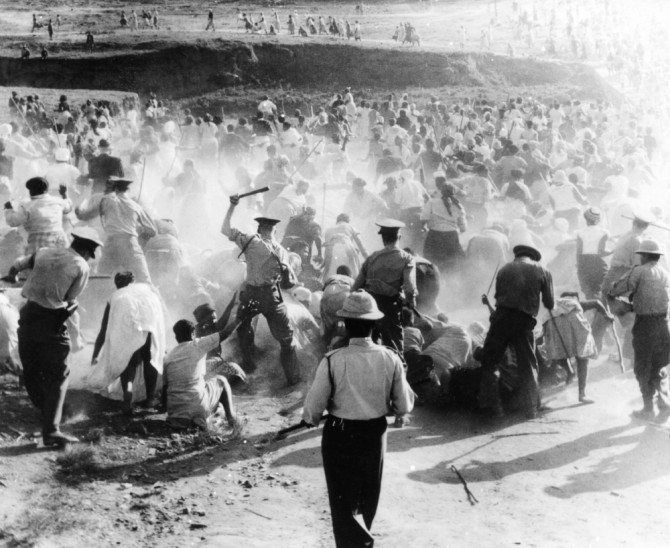
On 22nd March 1960, the day after the massacre, the Commons briefly debated the matter. One would like to think that the present Government would have a more enlightened attitude than Macmillan’s did on that late March Tuesday but it seems unlikely given events in Gaza. Moreover it seems unlikely Labour in 2025 would be asking questions either
An exchange, still relevant between Labour MP Barbara Castle and the Minister:
Mrs. Castle
Is it not a fact that some of these atrocious, oppressive acts are being carried out with the help of arms sent from this country? Is not the minimum that the Government can do to show their horror at these atrocities to stop supplying the South African Government with armoured cars and other weapons that enable them to tyrranise over African peoples?
Mr. Alport
It has been the policy of successive Governments, of both political parties to help other Commonwealth Governments to meet their armament requirements.
23rd March 2020-21st March 2022. Some still untold histories of the present
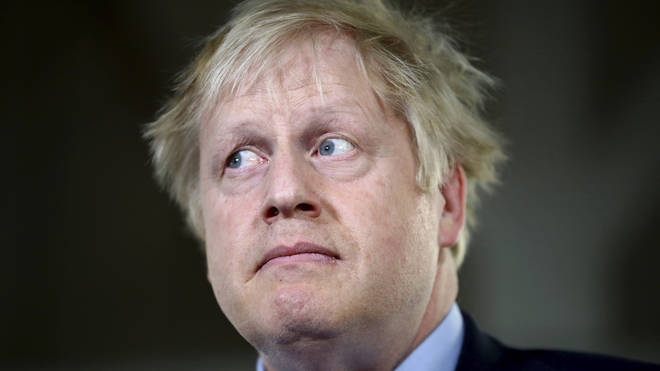
Its two years today, Monday 23rd March 2020, that Boris Johnson announced the first national lockdown.
It is far too soon to write the history of the last two years of lockdowns, illness and death, and job losses.
That doesn’t mean however that some of the constituent parts of that history cant be gathered.
There are a lot and some have been covered by the media, but not all.
The point most often made was that Johnson locked down too late two years ago and contributed to the UK having amongst the highest COVID death rates in the world in 2020.
A people’s inquiry on this and other matters has already looked at matters but an official one won’t happen now until 2023. It will probably be ponderous, go on a long time and lead to not much (think Iraq War).
There are lots of other matters that should go to making the pre-history of the last 24 months.
One key area because it will be one of the hardest to record is the world and the people that Boris Johnson doesn’t know exist. These are often ethnic minorities, but not always. They are always from the poorest less well-off parts of society.
There are the issues of poor housing conditions that led to increased COVID infections and deaths in some areas. In the first lockdown it was London Boroughs, subsequently it has moved elsewhere, as it were.
Numbers were left to work in unsafe conditions. Over 50 London bus drivers have died of COVID. Meanwhile teachers and the NEU in particular had to fight, and were vilified for doing so, for safety at work.
We can’t and never will forget the NHS and the range of those who work so hard to keep it going. Their reward? Less than inflation pay ‘rises’ in effect pay cuts.
It goes much wider than this. While there were large numbers thrown out of work-think pubs, theatre, music etc there were also many who continued to work throughout, keeping things going. That includes the telecoms managers and professionals who I represent as a trade union officer.
Finally we must not forget those who have done very well out of the last two years. The very highly paid consultants who didnt deliver track and trace. The friends of Tory Ministers who got large contracts to do things only for it to be eventually discovered that the NHS and local authorities do it better and much more cheaply.
There is a lot of history to be discovered and recorded here. It is our present but it will be future generations past and it needs to be documented and told.
Dr Keith Flett convenes the socialist history seminar at the Institute of Historical Research, University of London.
Socialist Historians back renewed UCU strike action. History teaching & research in danger
The London Socialist Historians Group, which organises the socialist history seminar at the Institute of Historical Research, University of London, has backed continued strike action by members of the University and College Union (UCU). There is strike action at 39 Universities from 21st-25th March.
The academics and professional support staff are taking strike action over further planned cuts to pensions, and continuing attacks on pay and conditions.
The historians say that a continuing supply of historical research is at risk as academics are made redundant or look for jobs elsewhere in the face of a relentless attack by employers on their pay and pensions.
LSHG Convenor Dr Keith Flett, the reality of academic life in 2022 is very different from the liberal University of 50 years ago. It is a neo-liberal workplace where academics face pressure to work harder and harder for poorer terms and conditions, including a slashing of their pension by a third or more. The impact on things like historical research is significant. The UCU are right to strike and they continue to have our full support.
The Fog of War. Arthur Ponsonby on Falsehood in Wartime
Arthur Ponsonby was a Liberal who opposed the First World War and investigated the truth, or usually otherwise, of anti-German atrocity stories promoted by its opponents in the war. In 1928 he published a book looking at wartime propaganda. The key points were later summarised and are shown below.
Newspaper reporting is rarely worth bothering with, certainly in the mainstream, where narratives are promoted with little or no space for critical and alternative views. These do appear but are exceptions to the general drift of news and opinion.
Approaching all reporting of war with a critical and analytical perspective is essential.
1.We do not want war.
2.The opposite party alone is guilty of war.
3.The enemy is inherently evil and resembles the devil.
4.We defend a noble cause, not our own interests.(Just war theory)
5.The enemy commits atrocities on purpose; our mishaps are involuntary.
6.The enemy uses forbidden weapons.
7.We suffer small losses, those of the enemy are enormous.
8.Recognized artists and intellectuals back our cause.
UN anti-racism day: the importance of protesting against racism
UN anti-racism day is on 20th March each year providing an annual focus to the fight against racism. Of course that fight takes place on a daily basis but March 20th provides one way when the many campaigns can come together, united.
Of course due to COVID there has been no physical protest since 2019, so 2022 provided a chance to see how the fight against racism is progressing perhaps particularly in the light of the rise of Black Lives Matter and yet more racist legislation and demonisation of refugees from the Tories.
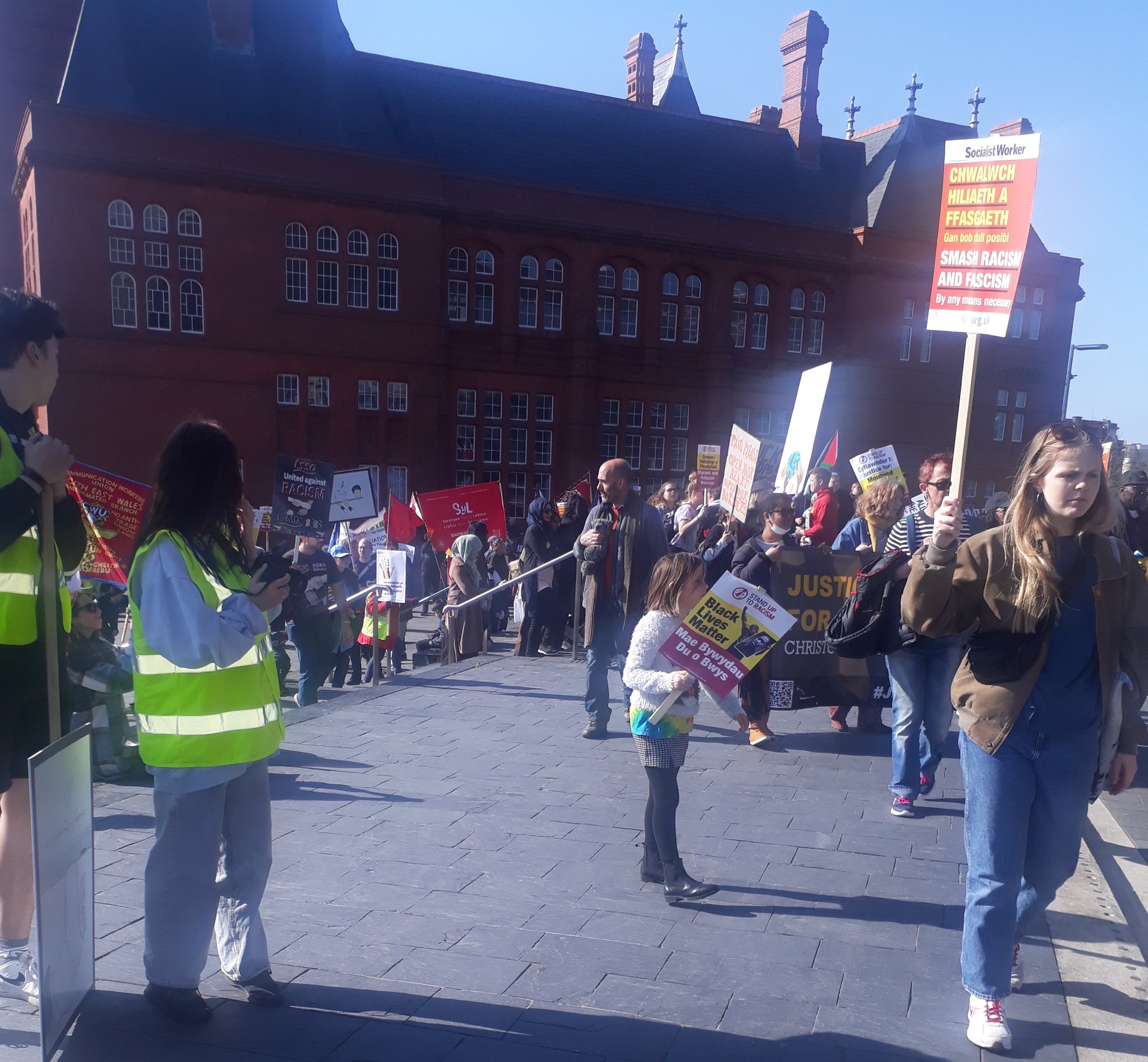
I’m usually on the London protest, which attracted 10,000 this year and by definition is the largest of three held. 2000 marched in Glasgow and 700 in Cardiff on Sunday, the capital hosting a Six Nations rugby game on Saturday.
I was on the Cardiff protest this year at the rally outside the Senedd (Welsh Parliament) in Cardiff Bay. Hosted by the General Secretary of the Wales TUC Shavanah Taj it was an impressive affair. Impressive not just in the breadth of those attending from union and left banners to young anti-racists but also in speakers from campaigns in defence or refugees or focusing on deaths in police custody. Mick Anthony the Counsel General for Wales whose own family came to Wales as refugees from Ukraine in an earlier period, underlined that all refugees are welcome.
Of course the protests gets some publicity but they also, and this is perhaps the key thing, give activists and campaigns a chance to meet, to see what they have in common and to look at how they can fight racism in future. Virtual meetings and events allow for accessibility but getting on to the streets provides a key element and sense of unity and progress.
20th March. The Spring Equinox: a new season for labour…
The official start of Spring was 1st March in the UK. The Met Office divides the year into four seasons and so the months of March, April and May are ‘Spring’. To be fair the Met Office do also point out that the start date of astronomical Spring is March 20th, the Equinox.
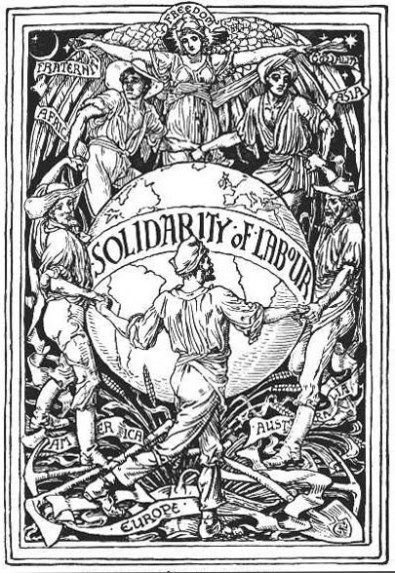
The labour movement festival of May Day which celebrates the new birth of Spring is firmly within that framework, hence all the (Walter Crane inspired) garlands and flowers that go with some of the imagery of the day.
Neither March 1st or March 20th are dates that work for the traditional British Spring however which began during February. The logic of this was that as more daylight appeared fields could be ploughed and crops sown.
Ronald Hutton writes of the date of Spring in Stations of the Sun:
During the Twentieth Century the notional beginning of spring came itself to be moved backwards to the vernal equinox, by a slow process induced by the mass media. This was part of the American system of reckoning seasons from solstices and equinoxes, which works admirably in the climate of most of the USA, but is nonsensical in the rhythm of the British year.
Raph Samuel in his survey of Victorian seasonal labour also noted that the impact of Spring:
The ebb and flow of wayfaring life in nineteenth-century England was strongly influenced by the weather. The months from March to October were the time when travelling people were to be found on the roads, and when they were joined by every class of occasional itinerant.
Of course there were years in the nineteenth century when various epidemics from cholera to smallpox and typhus raged when this didn’t apply. Whether 2022 is another of those it’s as yet too early to be entirely sure.
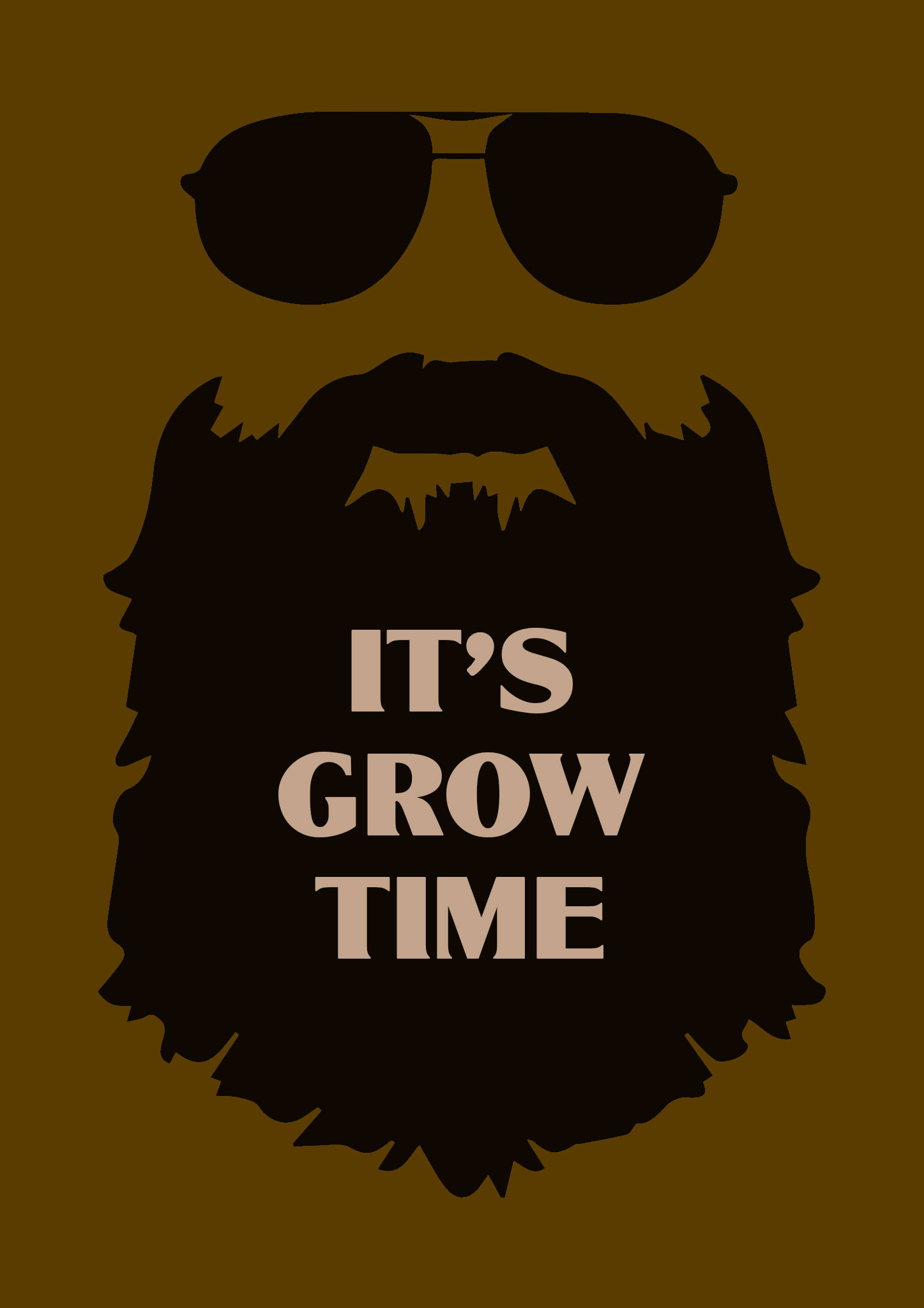
The Beard Liberation Front, the informal network of beard wearers, has said that the 2022 Beard, Shorts and Sandals Pre-Season is now open.
The campaigners say that while it is not the earliest start to the pre-season in recent years it is a month earlier than 2021 recognising the spell of dry and warmer weather across much of the UK at the moment.
2022 Pre-Season guidelines
1] Shorts should ideally be three-quarter length-‘culottes’ for the 2022 season. The length of shorts is particularly important as climate change may mean that unprotected legs get sunburnt.
2] Footwear should be casual. There is a considerable range of sandal type footwear now available. Some leaves parts of the feet and toes open to public view, while some does not. The BLF is not prescriptive about the matter.
3] Socks should usually not be worn. However in the pre-season they are optional
3a] If the beard, shorts and sandals are to be displayed in relatively busier urban areas it is likely to be prudent to wear closed rather than open casual footwear and ankle socks, not visible to others may be worn.
4] There is no prescription or definition on what type of beard may be worn, or how this may match with the shorts and sandals. This is left up to the individual.
BLF Organiser Keith Flett said, the Beard, Socks and Sandals season has been a major influence on summer fashions in recent times and we expect the 2022 season to be no different. We’re pleased to be able to announce the opening of the pre-season several weeks before Easter.
Ambridge Class War resumes: Its Aldridges v Horrabins
The class war in Ambridge which the BBC never talks about but sometimes reports on has resumed. Alice and Chris have tried mediation on the break-up of their marriage but agreement cant be reached on who should be primary carer for Martha. Alice believes that she should, her alcoholism firmly under control. Chris thinks he should because there can never be an absolute guarantee that Alice won’t hit the bottle again.
Alice has decided to take legal advice, which generally would be that the mother should have custody (women are carers, men are workers in the official legal mind). Chris has now also sought legal advice. Given the speed at which the Archers moves this could be Jarndyce v Jarndyce for the 2020s.
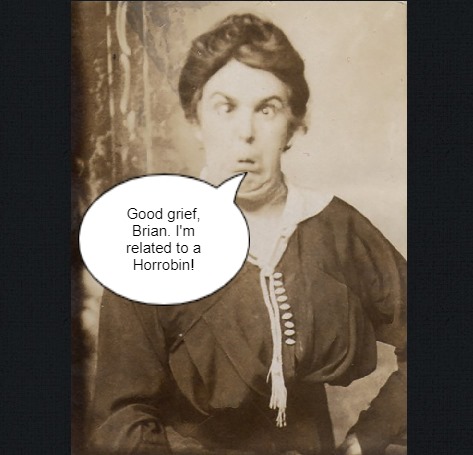
Fortunately there is the class war. Alice is an entitled member of the Ambridge ruling class. Chris by contrast is part of one of the great Ambridge working class families the Horrabins. Neither it must be said is a particularly sympathetic character but the mix of gender and class adds complexity. At root though lies the reality that if the divorce is disputed and assets are divided up, Alice has a lot and Chris not a lot. He would stand to get an interest in Home Farm and who knows what might happen then? Brian Aldridge has an idea.
Ambridge Socialist poll. It's Class War in Ambridge. Which side are you on?
Justin is clear there is no profit in pigs and redundancies at Berrow Farm must happen. It’s not yet clear whether the board of Borchester Land agree or have backed Brian’s alternative proposal (for less redundancies). If they don’t support Justin a major confrontation within the Ambridge ruling class is certain.
In other news
Phoebe has left Roy a goldfish. Roy has taken it to the vets and Jakob has suggested a bigger more expensive fish tank.
Harrison Knacker Burns has got baptised. He will now be able to make arrests with God On His Side