Boris Johnson in Blackpool gets in the sea at last
Boris Johnson has been in Blackpool to deliver the closing speech at the Tory Spring Conference in the Winter Gardens. He faced a demonstration by trade unions criticising his economic policies, such as they are, and the Tories laid back approach to the P&O sackings.
Yet beyond that the report on No.10 Partygate and police action is outstanding as are the many questions about links between Tories and very wealthy Russians, Johnson himself included.
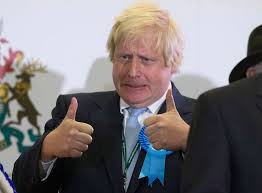
A photo suggests that before the speech Johnson decided to get in the sea. This was not a Neil Kinnock slip on the beach but rather a clearly deliberate move. It is to be encouraged. Indeed given the comparison he went on to make between Brexit and Ukraine in his conference speech he should not just have got in the sea but stayed there.
Stoke Newington police station protest. Racist policing in Hackney: a very long history
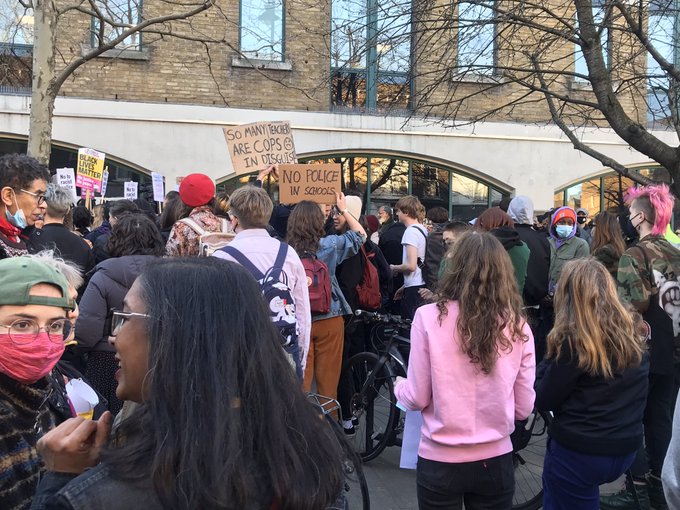
Friday afternoon saw a sizeable protest outside Stoke Newington police station demanding that police should not go into schools.
The specific spark for the protest was the strip searching of a young black student by police who was alleged entirely wrongly to have cannabis on her. It was just another appalling act of racist policing and it has a very long history in the area.
The existence of Spycops- undercover police officers who report on and infiltrate left-wing, radical and anti-racist organisations has been happening since at least the 1970s in north-east London. From time to time the role of particular individuals is exposed.
The last round of hearings in the long running (& on its current timescales never ending) Spycops Inquiry in London which covered the period of the 1970s and early 1980s posted on it’s a website a mass of documentation.
One report related to a meeting on 24th August 1983 between an unnamed officer and DCI David Short of the SDS (Special Demonstration Squad):
Security Service note for liaison file concerning meeting between DCI Short and F6 to discuss the method by which HN88 could become established in the Hackney/Stoke Newington and other SDS officer updates
The meeting discussed a replacement for Spycop HCN108 who was to be Spycop HCN88 because of what it describes as ‘continuing problems’ in Hackney and Stoke Newington.
Interest was expressed in 50 Rectory Rd N16 the HQ of the Hackney Community Relations Executive.
According to the report it had ‘let rooms to the subversively controlled Campaign Against the Police Bill’.
As concerning to the officers it noted ‘other coloured groups also meet at the same address’
It was agreed according to the report that Spycop HN88 should find somewhere to live in Stoke Newington and then see ‘whatever subversive undercurrent he could detect’. They’d see how HN88 was getting on at the end of the year.
In short a Spycop was looking to report on and perhaps infiltrate perfectly legal campaign groups and the use of the term ‘coloured’ in the report suggests a high probability of institutional racist intent.
Worth keeping in mind that all this was being paid for by public funds but the activity was certainly unaccountable to the public and it would seem it still. The culture of the Met remains rotten and racist 40 years on.
COVID & Boris Johnson March 2020: ‘a feeling of British exceptionalism in Downing St’
The quote comes from Labour MP Jon Ashworth in an interesting Guardian piece on Downing St and COVID a two years ago in March 2020. It reveals that the virus was widespread at the centre of Government in Whitehall as Boris Johnson havered over lockdown measures:
On Monday 16th2020 March Johnson suggested people avoid pubs and theatres (I’d been in a London pub on Sunday 15th March- the Cock Tavern in Hackney and didn’t go into one again until July-the same pub as it happens). On Friday 20th March 2020 he ordered them to close and on Monday 23rd March he announced the first lockdown.
Yet it was all late. COVID was already widespread in the community-certainly in London. As the Guardian article notes numbers may have had it but getting a test was virtually impossible.
However many, myself included, started to act before Johnson. I cancelled a socialist history seminar at the Institute of Historical Research on 16th March 2020 (the building was open) and also a London union officers committee meeting in central London I was due to chair the previous week. In both cases there was a sense that getting people together in small rooms was not a great idea.
It was still happening in Downing St though.
On Friday 12th March 2020 I attended the annual Bernie Grant Memorial meeting in Tottenham. It was packed with hundreds of people and I felt uneasy. I’m not aware though of a significant COVID spike related to it, thankfully. At this stage the precautions stage was at elbow bumps rather than handshakes. Social distancing and masks were a way off.
Probably the thing that really brought home how far Johnson was behind much of public sentiment was the start of the cancellation of Premiership football matches.
The game between Spurs and Manchester United on Sunday 15th March 2020 was much anticipated. It was cancelled at short notice. As often business (which is what Premiership football mostly is)was in front of Johnson.
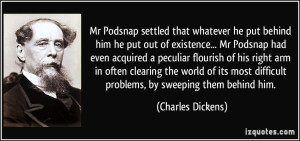
He stuck to his Podsnappery, ‘Not English’ line that COVID restrictions were for *other* countries for another week. As a result many more got ill, died and suffered long term illness than might have been the case.
There is meant to be an official inquiry into Johnson’s handling of COVID but as cases rise again its slipped back to 2023, no doubt with a view to not reporting until after the next General Election
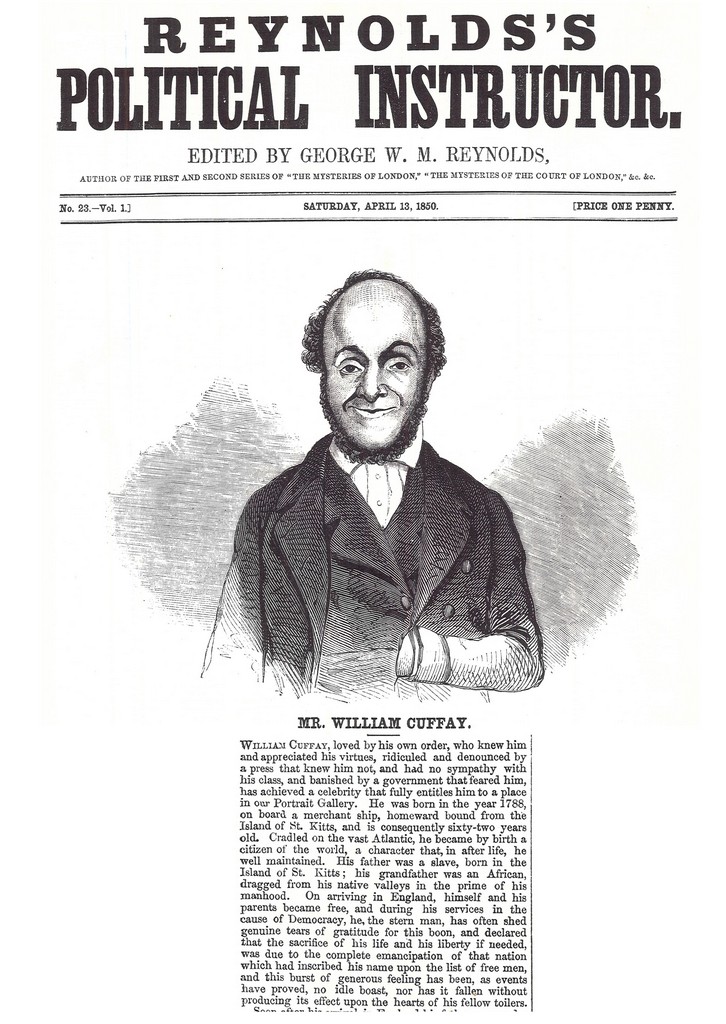
Boris Johnson promised post-Brexit would see improved workers rights. So what about P&O?
The point that Boris Johnson doesn’t tell the truth is understood by many including some journalists. From time to time in the recent past the Tories have cast themselves as the ‘workers party’ and claimed to be protecting and improving workers rights.
Indeed post-Brexit Johnson said there would be an Employment Bill designed to increase protection against unfair dismissal amongst other things. It hasn’t happened.
What has happened is the decision by P&O ferries to sack 800 workers summarily, quite possibly illegally, send hired thugs in to remove them from ships and replace them with low paid scab labour.
What is Johnson planning to do about this Brexit dividend?
CIPD report
The Prime Minister has outlined plans to consult on reducing the unfair dismissal qualifying period from two years to one year if his Brexit deal successfully passes through Parliament.
In a bid to win more votes for his deal, that Boris Johnson has promised additional protections to worker rights post-Brexit, something that has been the cause of contention throughout the Brexit process. Although Johnson has presented a deal to Parliament that would oversee the UK’s exit from the EU, many politicians have voiced concern that this could result in a deregulation of current worker rights. Speaking on the deal last week, Labour leader Jeremy Corbyn outlined that Johnson’s deal risked ‘triggering a race to the bottom on rights and protections’.
To counteract this, BuzzFeed UK reports that a new package from Downing Street has been issued. It states that, following the UK’s exit from the EU, a draft Employment Reform Bill will be produced to ensure employment practices ‘keep pace with modern ways of working and give workers access to the rights and protections they deserve’. In addition, the government will consult on improving unfair dismissal protections, which would include employees only needing to have one year’s continuous service to bring a claim. ‘Anomalies’ in employee terms and conditions during Tupe transfers would also be ‘addressed’ in this consultation, to ‘ensure they are working in the interest of workers’.
Currently, employees need to have been working for the same organisation for two years in order to bring a claim of unfair dismissal, something that can result in substantial compensation pay-outs if successful. The purpose of the law is to provide a certain level of protection for organisations. It is easier to considering dismissing an employee on short-service as they have less opportunity to bring a claim to the tribunal.
It is interesting that Johnson is promising to reassess this current qualifying period, given that the Coalition government previously increased it from one year to two in 2012. Furthermore, whilst the government has now promised to consult on this matter, this would be very dependent upon the outcome of Brexit and whether the Conservatives remain in power going forward. A consultation does not necessarily mean that there will be any development to the law.
ST PATRICK’S DAY BEARD OF IRELAND 2022. FULL RESULTS OF THE BEARD OFF
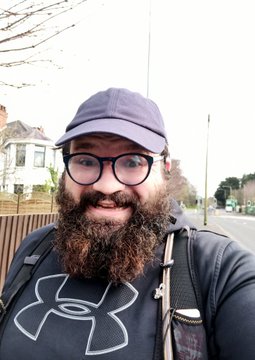
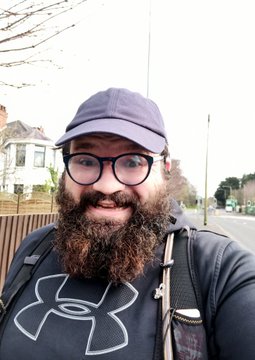
The Beard Liberation Front, the informal network of beard wearers, has said that the on-line vote for the Irish Beard of the Year 2022 has concluded with Northern Ireland Retail Consortium Director Aodhan Connolly retaining the title he first won in 2021.
Connolly shaved the opposition with academic Peter Coles and Northern Ireland Health Minister Robin Swann runners up while rugby player Jamison Gibson-Park was fourth.
Full Results
Aodhan Connolly 64%
Robin Swann 17%
Peter Coles 13%
Jamison Gibson-Park 6%
605 votes in the Beard Off round
The 2017 winner was politician Colum Eastwood who bearded broadcaster William Crawley for the annual Award.
In 2018 the DUP’s Lee Reynolds shaved writer Dominic O’Reilly for the honour with Colum Eastwood in a steady third place.
In 2019 Lee Reynolds retained the title
The 2020 winner was Maynooth academic Peter Coles
In 2021 Aodhan Connolly shaved opponents to win the coveted title for the first time
The BLF says that while traditionally a land of predominantly clean-shaven cultures, Ireland has in recent times become something of a centre for stylish and trendy beards.
Contenders for the title in 2022 included a diverse range of the hirsute- a golfer, rugby player, political and trade union activists, a broadcaster, an academic as well as a Health Minister.
The campaigners say the poll is specifically about the impact the beard of an individual has made in Irish public life and no other factor.
BLF Organiser Keith Flett said, competition for the 2022 Beard of Ireland Award bristled and Aodhan Connolly is to be congratulated on being the first person to win consecutive titles. Clearly his beard is making a positive impact in the public eye.
Aodhan Connolly has posted this message on social media:
I can now stick Beard of Ireland 2022 on my CV! Well done to all the finalists inc eternal good guys, @telescoper, @williamcrawley & great health minister @RobinSwannMoH. Thanks to Beard Liberation Front Leader @kmflett. Fletty you are a legend. & thanks to all who voted for me!
There were two preliminary Beard Off votes between 5-7th March and 9-11th March. The top two from each round went through to a Best Beard of Ireland vote between 13-15th March
Suit wearing on demonstrations. An historical note
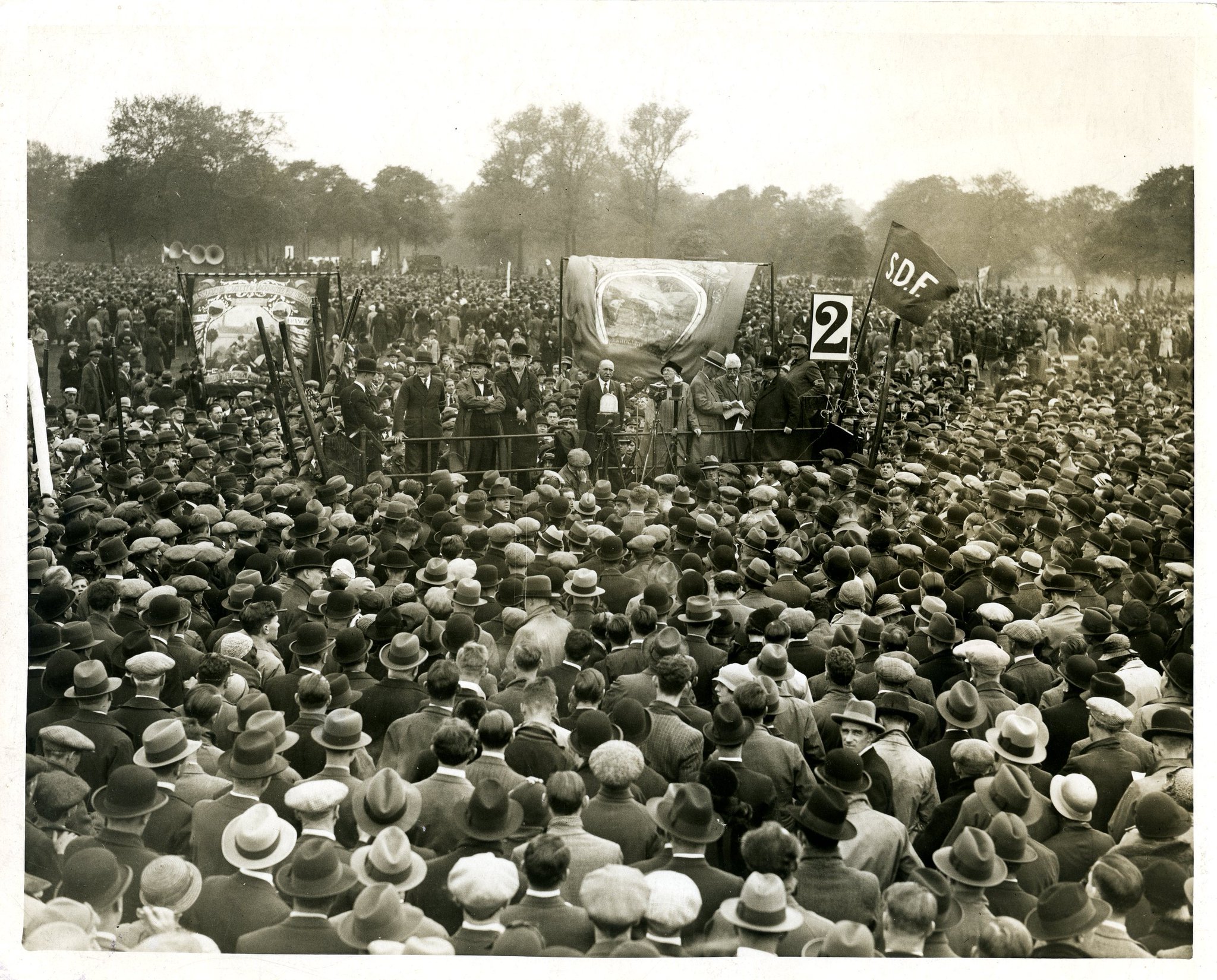
I was intrigued by a picture posted on social media by the historian Shirin Hirsch who is associated with the People’s History Museum in Manchester querying when suit wearing on demonstrations ended.
She posted a picture of a 1933 Hyde Park protest where most were wearing suits (and hats). Of course the issue was and is gendered. The protesters were mainly men. In 2022 M&S has reported a significant decline in suit sales. While fashions by definition come and go there has been a significant drop off amongst the managers and professionals I represent as a trade union officer in suit wearing in recent times. In some cases they are just trying to avoid a stereotyped image, and not that many go on demos I suspect. Conversely women wearing work suits is now quite common.
However in respect of the left as Raph Samuel argued in the Lost World of British Communism, the CPGB aimed to be a party of respectable working men and women and sober dress- which often meant for men, suits.
I suspect the rise of CND from the late 1950s and with it the new left started a decline in suit wearing. Eric Hobsbawm who stayed with the CP one often saw in a suit, E P Thompson I rarely recall wearing one. The reality is that marches from or to Aldermaston did not easily lend themselves to suit wearing.
Marxism Today as Samuel points out caricatured suit wearing, beer drinking male trade unionists and even in 2022 many senior male union officials can be found mostly wearing suits, even on demonstrations. Their members often much less so.
It’s a reflection of wider changes to a less formal culture where how you appear dress wise may matter less than what you are actually good at doing.
I started going on demonstrations in the early 1970s and I’m still at it. Have I ever worn a suit on a protest? No…
Historians say Government plan for new History Curriculum has more questions than answers
The London Socialist Historians Group, which organises the socialist history seminar at the Institute of Historical Research, University of London has said that a Government plan for a new school history curriculum announced today raises more questions than it provides answers to.
The plan is included in an Inclusive Britain report which is the Government’s response to Dr Tony Sewell’s report on racial disparity in the UK. The report was widely criticised and the Government has recognised some of this while now making its own recommendations.
The plan for a new history curriculum by 2024 is at 5.1 of the report. It says in part:
To help pupils understand the intertwined nature of British and global history, and their own place within it, the DfE will work with history curriculum experts, historians and school leaders to develop a Model History curriculum by 2024 that will stand as an exemplar for a knowledge-rich, coherent approach to the teaching of history.
The historians say the headline detail raises a number of questions:
1 While Boris Johnson often says he is in favour of telling the story of all of British history with nothing left out in practice this often seems to mean downplaying or overlooking ‘awkward’ parts of that history related to Britain’s imperial past and present.
2 A second concern is that issues arising from Britain’s colonial and imperial history are regarded as being entirely in the past with no recognition that many still have an important impact in the present day.
3 It is unclear who the history experts will be who will assist in the development of the new curriculum. The Government has a record of excluding historians whose views it does not like or disagrees with. Those drawing up the new curriculum must themselves be an inclusive body.
LSHG Convenor Dr Keith Flett said, the Government’s record on British history has tended to be all about Churchill and protecting statues of slave traders. If they are at all serious about plans for a new curriculum that will need to change significantly.
RETAIL BOSS AODHAN CONNOLLY NAMED ST PATRICK’S DAY BEARD OF IRELAND
The Beard Liberation Front, the informal network of beard wearers, has said that the on-line vote for the Irish Beard of the Year 2022 has concluded with Northern Ireland Retail Consortium Director Aodhan Connolly retaining the title he first won in 2021.
Connolly shaved the opposition with academic Peter Coles and Northern Ireland Health Minister Robin Swann runners up while rugby player Jamison Gibson-Park was fourth.
The 2017 winner was politician Colum Eastwood who bearded broadcaster William Crawley for the annual Award.
In 2018 the DUP’s Lee Reynolds shaved writer Dominic O’Reilly for the honour with Colum Eastwood in a steady third place.
In 2019 Lee Reynolds retained the title
The 2020 winner was Maynooth academic Peter Coles
In 2021 Aodhan Connolly shaved opponents to win the coveted title for the first time
The BLF says that while traditionally a land of predominantly clean-shaven cultures, Ireland has in recent times become something of a centre for stylish and trendy beards.
Contenders for the title in 2022 included a diverse range of the hirsute- a golfer, rugby player, political and trade union activists, a broadcaster, an academic as well as a Health Minister.
The campaigners say the poll is specifically about the impact the beard of an individual has made in Irish public life and no other factor.
BLF Organiser Keith Flett said, competition for the 2022 Beard of Ireland Award bristled and Aodhan Connolly is to be congratulated on being the first person to win consecutive titles. Clearly his beard is making a positive impact in the public eye.
There were two preliminary Beard Off votes between 5-7th March and 9-11th March. The top two from each round went through to a Best Beard of Ireland vote between 13-15th March
As the Campaign for Real Ale(CAMRA) reaches 51 can it still curb Big Beer 2022 style?
CAMRA is 51 years old in March 16th.
That is quite an achievement for a voluntary campaign. It implies at least renewal through several generations of activists, something which is often hard to achieve.
It now has 160,000 members and most will be active at least in the sense of promoting CAMRA’s raison d’etre, the production and drinking of good beer.
It is not a party political organisation or, in the main, a campaign that takes capital ‘P’ political decisions. After all drinkers of decent beer come with all kinds of opinions and none. It’s not about the opinions it’s about the beer.
All that said of course there are politics. That can’t be avoided for any campaign that operates in a capitalist market economy.
It’d be fair to say, that CAMRA is neither pro or anti-capitalist as such but strongly in favour of a moral economy of beer. That is a society where brewers and publicans can make a fair profit but the quality, price and supply of beer are much influenced by ordinary drinkers.
When CAMRA started the outlook for beer and pubs was poor indeed. More so arguably even than this last pandemic hit period.
There had been a long process, much accelerated from the 1950s, of brewery consolidation. That meant takeovers and closures. By the early 1970s beer in Britain was very largely controlled by what was known as the Big Six. Giant brewing concerns such as Courage, Watneys and Whitbread. Since the breweries also owned most of the pubs that meant a significant restriction of choice for the drinker at the bar.
To put it in perspective, in 2022 London has well over 100 independent breweries. 50 years ago there were just two- Fullers and Youngs.
There was also the question of the beer the Big Six were producing.
With the consolidation big brewing operations brought , cost reduction was looked for. That meant a move away from traditional cask beer to pasteurised keg beer. It was much easier to transport and keep in the pub without cellaring skills. One problem was that for many beer drinkers this cold, fizzy beer, served under gas pressure, was either tasteless or worse had a distinctly unpleasant taste. A related problem was often that as breweries owned the pubs there was little escape from keg.
The beer writer Richard Boston wrote in his 1970s Guardian column of areas of East Anglia where if you didn’t want the Watneys Red Barrel served in one pub you could always try another. The problem was that also sold Watneys.
There was a lot for CAMRA to oppose and that meant it had no choice but to confront the Big Six- known as Big Beer.
That meant a range of campaigning tactics, taking into account that it was 50 years ago, largely an organisation of younger activists. The Big Six were lampooned. Watneys became Grotnys and Whitbread Twitbread. Pubs were boycotted and those that sold traditional cask ale promoted. The first Good Beer Guide to CAMRA approved pubs appeared in 1974.
At the same time campaigning pressure was exerted on the Big Six to draw back from keg and start selling cask beer again.
Over time this campaigning pressure worked. Allied breweries were first producing a cask Burton Ale from 1976. Even Watneys finally gave in and brewed Fined Bitter real ale.
CAMRA pressure on large companies had its impact. They had to change their strategies and plans
Capital constantly revolutionises itself, or tries to, however and no battle against it within its framework is ever definitively won.
The Big Six had to return to cask beer and more pubs now sold it. But the choice remained very limited. In early Good Beer Guides, symbols were used to show the range of beer available. To stretch beyond a mild, an ordinary and best or special bitter was unusual.
Beer from the remaining independent breweries- around 100 of them- was very hard to come by outside of their own local area.
CAMRA’s focus shifted to an extent to lobbying for changes in the law, under a Tory Government. No easy matter clearly but it was achieved. The Beer Orders restricted the number of a pubs a brewery could own. That meant pubs were sold and saw the rise of pub companies. At the same time there was legal provision for a guest beer to be sold in pubs which were tied to particular breweries.
Again it was a pursuit of the moral economy strategy of CAMRA. Not ending the control of capital but tempering it in the interests of drinkers.
That was 30 years ago and capital has not stood still since.
If the first wave of Big Beer had been successfully grappled with by CAMRA, a new wave appeared that posed significant new challenges.
If you want a pint of Courage Best or Whitbread Bitter you won’t find one in 2022. The Big Six companies that once dominated British brewing are long gone. Even the classic and benchmark pale ale, Bass, is hard to come by. Its recent history summarises well where Big Beer has now gone.
The Bass brewery in Burton is owned by Molson Coors, a US/Canadian brewing giant. The actual beer however is owned by another huge brewing operation ABInBev. It is based in Belgium but has significant interests across the world in Latin America and South Africa for example. However it has contracted out the brewing of the beer to Marstons, one of the larger UK based brewers and pub companies. Or it was. In 2020 it sold a majority stake in its brewing operations to Danish brewer Carlsberg.
Grappling with UK brewers as CAMRA did successfully in the 1970s and 1980s is one thing. Trying to take on global brands is a rather different matter.
The focus shifted to some extent to supporting those larger regional to national brewers that remained UK owned- albeit often supporters of the Tory Party. This was more of an argument about what kind of capitalism rather than the specific nature of capital.
However Big Beer has marched on here as well. As well as Marstons, Fullers brewing operations were brought by Japanese brewer Asahi and Greene King is now owned by a Hong Kong businessman. Nor did it stop there. Some of the larger craft brewers whose backgrounds had rested on the idea of independence from Big Beer have ended up being swallowed by it. Heineken has a 49% stake in Beavertown while ABInBev owns Camden.
This is not a counsel of despair. CAMRA remains a large organisation with the capacity to campaign and influence. It’s clear though that on its 51st birthday the original model- even with later tweaks- of promoting a moral economy of beer, not anti-capitalist but for a constraining influence on it needs to be re-worked.
Some broad parameters and perhaps campaigning choices can be seen now.
Firstly CAMRA could do more to combat Big Beer on a global basis. Consumer organisations around beer, like CAMRA, exist in a number of European countries and the US. There are long standing links and these could be developed and mobilised further. That is to an extent easier now global communication can be effected around apps like Zoom. The trade union and peace movements, to name two example, have been co-ordinating activity across the world for a while.
Secondly CAMRA could look to build on its original campaigning focus. The revitalisation project it ran a couple of years ago, focused a good deal on that. The campaign is very good at lobbying MPs and Government and promoting legislative changes (or opposing them) but the protests of the 1970s about brewery closures or takeovers are now rare. To some extent this relates to an ageing membership- something that impacts many social movements. However with the rise of movements like Black Lives Matter and Extinction Rebellion, it’s clear that the mood to protest which was there in the early days of CAMRA is back again.
In practice both of these could be done, but a lot does depend on managing to engage and mobilise younger drinkers in a way CAMRA did so successfully 51 years ago.
Brewdog’s James Watt is continuing his campaign against a group of people he claims are deliberately running down Brewdog. A firm of private investigators has been hired consisting of ‘ex-job’ (Met) officers. One doubts on that basis that the investigations have been of the highest ethical standards.
Even so the issues Watt alleges are involved are serious (Brewdog statement below). Indeed serious enough, were there actual evidence, one might suppose, to be referred to the police and if appropriate to be considered for prosecution. That does not seem to have taken place. Reference to a private prosecution is made but there doesn’t seem to be any actual evidence of a case or of anyone being involved either.
In fact it looks rather like another attempt to scare off those employees and ex-employees who have concerns and issues about what has been described as a ‘toxic’ workplace culture at Brewdog. It is very difficult for individuals to speak out particularly if character assassination by an employer might be an issue.
In reality the actions of James Watt, in my view, are dragging Brewdog and the whole public image of wider craft beer through the mud. He clearly has not paid attention to the first law of holes and may soon be in a position to launch Brewdog bars in Australia.
More practically he needs to be made something like Brewdog President Emeritus and let someone else take over the day to day running of the brewer. Whoever that it is needs to recognise a trade union so Brewdog can properly manage workplace issues and draw a line under this increasingly sorry and bitter mess.
A BrewDog spokesperson said: “James Watt has been subjected to a two-year criminal campaign of online harassment, defamation, fraud, blackmail and malicious communications, instigated by a very small group of individuals. Investigators were hired to find the source of these false allegations, to seek to bring this to an end.
“As a result of those investigations, our lawyers are pursuing a private criminal prosecution for fraud and malicious communications in a court in London, there are related civil proceedings under way in Scotland and other matters have been reported to the police. These proceedings also relate to individuals directly involved in the leadership of the Punks With Purpose movement.
“We will no longer allow blatant lies to be told about our business or our people. Where those lies are told, we are duty bound to set the record straight and will expect retractions where required. We hope that by taking this action now, we can bring this deeply distressing campaign to an end.”
Integritas said it had “uncovered evidence of a very clear criminal campaign, organised by a small group of individuals seemingly intent on causing harm to Mr Watt and BrewDog.