‘Sir’ Tony Blair & remembering 2003. Guardian Fletter 5th January 2022
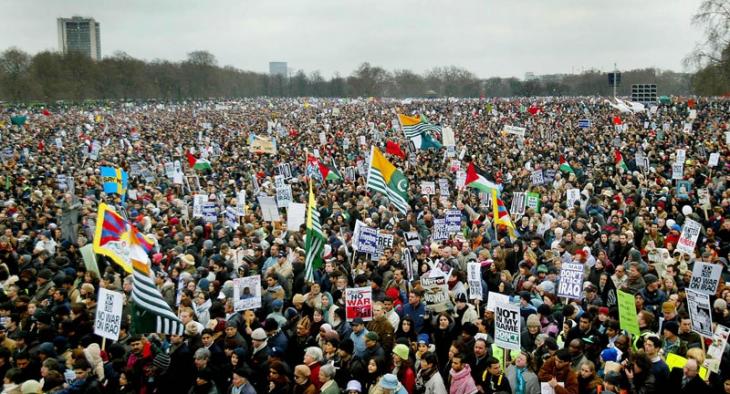
Keir Starmer, while approving a knighthood for Tony Blair, notes that Iraq remains an issue for many (UK government urged to rescind Tony Blair’s knighthood, 4 January). The problem is that elevating the former prime minister to the Order of the Garter is an official attempt to say that the Iraq war doesn’t matter any-more. The current Labour leader had it right when, as a QC and human rights lawyer, he wrote in the Guardian on 17 March 2003 that “flawed advice does not make the unlawful use of force lawful”. Many of us remember the point; it’s a pity Sir Keir seems to have forgotten it.
This Fletter appeared in the Guardian on 5th January, both in the print edition and in the various digital editions. Not that many read the print edition anymore (The Guardian is hardly alone in this) and while the letters are there in the e-editions(which is where I read them) you do need to specifically check them rather than just turn a page and glance at them.
It may well be that in the age of social media posts, blogs, podcasts, You tube posts, Tik Tok and Insta the letter is of less impact than it was. It is however the only format more or less guaranteed to be preserved for future generations of historians like myself to look at.
I’ve been writing to the Guardian since 1986 and I’m still doing it, for the time being anyway
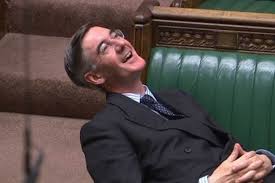
Jacob Rees Mogg on the Jury system(after the Colston 4 verdict)’the great, sublime protector of our liberties’. House of Commons 6th January
Following the acquittal of the Colston 4 on 5th January there has been an almost Trumpian outcry amongst some Tory MPs and right-wing media that while the rule of law is all very well if a jury finds in a case in a way they don’t like then it doesn’t apply.
It reflects the nursery politics of a good deal of the Tory right in 2022. Jacob Rees Mogg in my view is hardly ever right about anything but he defended the jury system 3 times in the Commons on 6th January (below).
No doubt Rees Mogg as he hints was no happier with the Colston verdict than the Daily Heil is. He is however an astute enough ruling class politician to grasp that in general the current legal system protects mainly the interests of the rich and powerful in society. If those who say they believe in the rule of law start to undermine it, who knows where that will lead- class war perhaps…
One of the great glories of this nation is the jury system. It is worth bearing in mind that Magna Carta was viewed as a reconfirmation of rights, not a creation of rights. Juries must be free to come to the decisions they choose to come to on the facts that are in front of them in relation to a specific case, and on what they hear from the prosecuting counsel, the defence counsel and the judge. We should always glory in the jury system as one of the foundation stones of our liberties in this country, whether we like individual judgments or not.
I do not think the result in Bristol does do that, because the decision does not set a precedent. It was a case decided by a jury on the facts before them. I shall therefore not be going out of here immediately afterwards and drawing a moustache on the statue of Oliver Cromwell outside, much though I am opposed to regicides in principle and think that they deserve to be removed from pedestals broadly speaking. I think we should recognise our history even when the figures in that history are not ones that we individually admire. Our island story is a complex one, and there are varieties in all people of good intentions and less pure intentions. My hon. Friend is right that we should protect monuments and that they should be removed only by a due process, but one of our greatest monuments is the jury system, which is the great, sublime protector of our liberties.
I am going to come back to the jury system in, I hope, giving some reassurance to my hon. Friend, because it is an ancient right and a great protector of freedom. That does not mean that every decision made by every jury is one that is welcomed by some people in some circumstances, but it is such an important protector of our liberties that we must take the rough with the smooth.
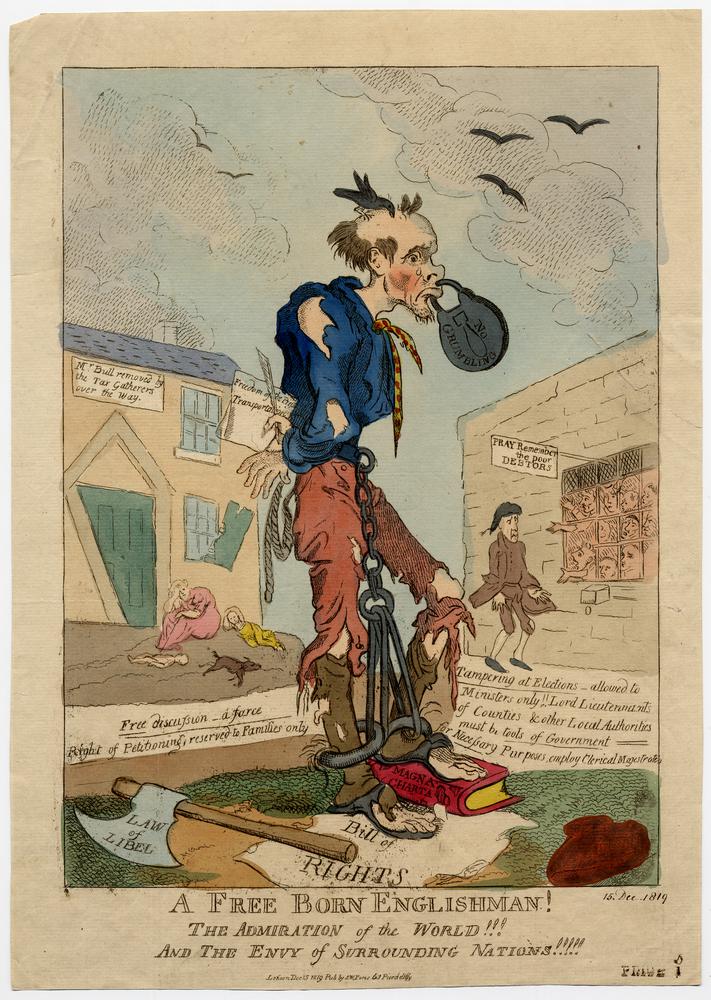
Trial by Jury, the Colston Four and EP Thompson’s Freeborn Englishman
While the left is rightly often sniffy about judges and the law the reality is that the jury system is at least potentially cornerstone of democratic practice. Most can think of jury verdicts they didn’t like but the jurors heard and reflected on evidence which critics mostly did not.
The Colston Four verdicts in Bristol on 5th January are a reminder why Governments continue to try and undermine the jury system.
Below is an extract from EP Thompson on the history of the jury system.
The jury system is, to a social historian, a very remarkable institution. Beginning as a group of knowledgeable persons (or ‘inquest’), who could report their findings to the officers of the Crown, it has survived immense changes in political life and administration – not as a fictive or vestigial sign but as an active element in the judicial process.
During its 800-year life it has shed some functions and acquired others, evincing a quite unusual flexibility – from ancient juries of presentment, the homages of courts leet and baron, and the Regarders and homage of forest courts, to the formalities of the jury box today. Even more remarkable, it is an institution, or presence, or tradition – which is it? – which is in some part secret and impervious to research. The actual deliberations of the jury may not be disclosed, and sustained accounts of them are few and imperfect.
What, indeed, is the jury? A legal expert may tell us how it is summoned, and, less exactly, what are its powers. But a social historian cannot be so certain. To be a juror is to have thrust upon one a temporary office, to which is attached an inherited weight of rules, practices and expectations; and this weight transforms an office into an imposed (and often internalised) role. This role is exercised for a day, or a week, or for three months, and then as suddenly as it was adopted, it falls away once more. Seen in this way, the jury is less an institution than a practice, or a place amidst adjacent judicial practices: a place through which generation after generation flows, inheriting the practices of their forerunners, yet inheriting these with little formal instruction, and practising the role in the light of expectations brought with them into the jury box and shared by the public outside.
Extract from EP Thompson Subduing the Jury. London Review of Books 4th December 1986
Historians say Colston Four Verdict is the revenge of history against Priti Patel
The London Socialist Historians Group which organises the socialist history seminar at the Institute of Historical Research, University of London, has said that the Not Guilty verdict in the trial of the Colston Four in Bristol on January 5th represented the revenge of history against Home Secretary Priti Patel.
Ms Patel reportedly intervened in the matter to urge prosecution of people who admitted to being amongst those responsible for toppling the statue of slaver Edward Colston in central Bristol in June 2020.
The four defendants argued that there was a moral case to remove the Colston statue, long controversial in Bristol, and after hearing the evidence the jury agreed.
Perhaps not surprisingly while the Tory Party claims to be the custodian of British justice, Tory MPs were not slow to criticise the jury decision. Former Minister and Newark MP Robert Jenrick claimed on twitter that the verdict was undermining the rule of law.
Juries have a long history of returning not guilty verdicts when they suspect political interference in a case. E P Thompson’s Making of the English Working Class details examples going back two hundred years.
LSHG Convenor Dr Keith Flett said, while the Tories go on about the ‘rule of law’ when a jury brings in a verdict they don’t like their reaction is not to accept it but to think of ways to undermine the jury system. No doubt this is on Priti Patel’s agenda. The Bristol jury have shown that they had a better grasp of what democracy is than the Home Secretary
A new haircut won’t save obsfucator Johnson. Only a New Year beard can help now
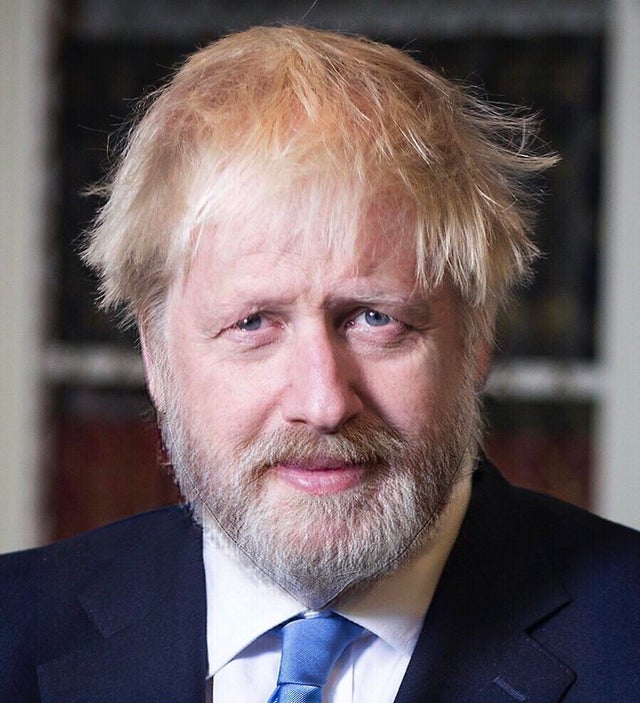
The Beard Liberation Front the informal network of beard wearers has said that Boris Johnson’s new haircut and an attempt at an image re-launch has already been deemed a failure. At Prime Minister’s Questions on 5th January Johnson’s latest obsfucations were successfully called out by Labour Deputy Leader Angela Rayner (Keir Starmer is understood to be isolating in an attempt to grow a beard himself).
The campaigners say that while they have no desire to see Johnson stay at No.10 a moment more than necessary the reality that he is likely to be replaced by another clean shaven Tory does provide context.
In the circumstances the BLF is suggesting that Johnson grow a New Year beard in honour of the last Prime Minister with a beard Lord Salisbury, a Tory who stood down 120 years ago in 1902.
BLF Organiser Keith Flett said, if Johnson’s beard is as untidy and unkempt as his hair usually is it could set a whole new trend in beards.
Starmer on Keir Hardie, localism & what Labour Governments do
Keir Starmer made a speech in Birmingham on 4th January which was billed as an attempt to build on Labour’s recent poll lead. On 5th January Starmer had to self-isolate due to testing positive for COVID again. The unkind might say this was a better contribution to the poll lead project
One social media comment suggested that the speech could have been made by any Tory PM from Macmillan on. Either the tweeter had not read the speech or their grasp of recent British political history was not great.
No Tory PM would make the remarks below (link to full speech below- as usual with Starmer it was about 40% too long). However as Steve Richards also on twitter pointed out it did have something of the ring of Sir Tony Blair about it. That is probably because several people who helped write speeches for him had a hand in this one.
One might see it as a step forward for Starmer. Before Xmas he gave an interview to The I Paper where he appeared to claim he had no idea what socialism was.
Now in 2022 he has remembered Keir Hardie, perhaps in a bid to stop people calling him Keith (I am in full support). Quoting Hardie is a nod at a Labour audience. Hardie spoke and wrote a lot but was not particularly consistent in his views. Hence words to please the left and/or the right can easily be found.
Hardie was a more or less consistent republican and opposed the First World War which made him patriotic in my view but perhaps not in Starmers.
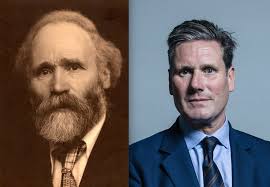
In the speech however Starmer mentions Hardie being in favour of a local garb. Given that Starmer is a North London MP that means a beard of course. However the point is really about not having too much centralised State control, empowering communities etc. Very New Labour but in other contexts it doesn’t need to be. For example local Councils could be given the resources they have lost over many years to actually provide decent services as required locally.
Starmer reminds us of the best and worst bits of the 1945 Labour Government- a useful thing to do though perhaps not what he intended but he is right that Attlee and Wilson did do things that improved the lives of working people a bit. When it comes to Sir Tony the jury is still out not least because he is still actively trying to shape his legacy.
The rest of the speech was as often quite vacuous, again very Blair. The problem is that many voters spotted the point in the New Labour period. Fine sounding principles were orated on regularly but nothing much seemed to happen- possibly because reforming capitalism little bit by little bit is just as difficult as getting rid of it altogether.
Keir Hardie once said that British socialism must “wear a local garb”.
He meant that British socialism was rooted in the everyday concerns of working people. The titans of 1945 were elected to power on the votes of the demobbed service men and women. That government took the spirit of collective sacrifice generated by the war and turned it into the National Health Service for which we are so thankful today.
It was a patriotic government, which understood the importance of national defence, which created NATO, the alliance that has preserved the peace in Europe ever since and gave this country its independent nuclear deterrent. The 1945 Labour government laid the foundations for the end of Empire and the beginning of the modern commonwealth.
Under Wilson the Open University extended higher education. The Race Relations Act of 1965 prohibited racial discrimination. Barbara Castle’s Equal Pay Act was a watershed moment in the fightfor gender equality. The Blair government introduced a national minimum wage and repaired the public services that had been neglected under the Tories.
When I reflect on previous Labour governments, I have two thoughts. The first is, what a record we have! These three chapters of change – Attlee, Wilson and Blair – made Britain a better country. We must be the people who write the fourth chapter. The people who create a new Britain in the 21st century.
Their Twelfth Night and ours. 5th January, 6th January or 1st March?
British socialist historians have paid some attention to the importance of folk customs (see EP Thompson Customs in Common)primarily as a way of understanding the roots of non-marketised ways of grasping value and importance in society and seeing if the traditions have continued to have any impact in more recent times.
Britain was the world’s first industrialised country and already by 1850 more than half the population were industrial workers rather than being reliant on the land for a living, either as peasants or agricultural labourers. Something there may explain the popularity of the Archers one suspects as a sort of reminder of a lost arcadia.
However the focus on custom and tradition has been patchy and that is certainly true of twelfth night.
I can’t am afraid offer any definitive thought on whether you should take down the Xmas decorations on 5th January or 6th January. The Church of England thinks it should be the eve of Epiphany (hence the 5th) but then leaves the decorations up to celebrate Epiphany. That is the thing about customs. They might be in common but they are often disputed.
Twelfth Night is part of a season of festival, carnival and revolt that starts on All Hallows Eve (Oct 31) and can end as late as Shrove Tuesday.
The appointment of a Lord of Misrule is connected with Twelfth Night but can occur earlier.
The title Lord of Misrule sounds radical but there is no mention of it in Christopher Hill’s The World Turned Upside Down’ about the period of Parliamentary rule after 1649. Some commentary suggests that it was really more to do with poking fun at the established order the better to keep it in place, and in some cases- for example in New Orleans- it became firmly established with a celebration of the old- reactionary- order of things.
Whether it’s the fifth or the sixth it seems clear that in folk custom the tradition of misrule that begins on October 31st does not end with Twelfth Night but continues at least until Shrove Tuesday which in 2022 is on 1st March.
England Test cricket & class. Still Gentlemen & Players
Out of the 11 England men’s players to face Australia at Sydney for the Fourth Test just 3 went to State Schools- Ben Stokes, Mark Wood and Jimmy Anderson. That is about average in recent years. A recent statistical survey suggested the figure was around 37%. By contrast the England men’s football has an average of 86%.
That is not to suggest that the England X1 are anything but good cricketers. No doubt the next few days will be spent discussing their strengths and weaknesses. The context to that must be the enormous stress and strain the players will have felt playing under all manner of restrictions since the English summer of 2020. That’s a long time now.
It does however still suggest that English cricket is very narrowly class based and is missing out on a huge range of potential talent from State education students.
A further interesting point that of the three players who went to State schools two are fast bowlers and third Ben Stokes is an all-rounder who also bowls. It looks like the Gentlemen (batsmen) v Players (bowlers) distinction which was abolished in the early 1960s still in practice exists.
Beard Friendly Pub of the Year 2022 vote postponed until April
The Beard Liberation Front, the informal network of beard wearers, has that the vote for the 2022 Beard Friendly Pub of the Year has been postponed until mid-April.
Traditionally held in the first 10 days of January the vote was delayed in 2021 until September because many pubs had been closed due to COVID measures.
The winner in 2020 was the Bumble Inn in Peterborough and in 2021 the Cock Tavern in Hackney was voted the most Beard Friendly Pub of the Year.
The vote will now on open on Easter Sunday 17th April and close on April 30th
BLF Organiser Keith Flett said, the aim of holding the vote in January has always been to encourage people to visit pubs and check how beard friendly they are in what is usually one of the quietest periods of the year. While we hope people are still visiting pubs safely we understand some may not wish to do in the current moment. The decision to postpone the vote should allow pub follicles to flourish equally a little later in 2022
Keir Starmer on Blair & Iraq (2003) ‘Flawed advice does not make the unlawful use of force lawful’
In 20222 Keir Starmer defended the appointment of Tony Blair as a Knight of the Garter on the basis that he did a lot of positive things as Prime Minister. He acknowledged that for many the Iraq War was problematic in 2003 and remains so.
Clearly the 550,000 or so who have already signed a petition calling for Blair’s Knighthood to be rescinded agree.
Starmer’s legal opinion of March 2003 is carefully written as one would expect but perhaps it can be summed up by noting that it would be very difficult to support a legal war against Iraq given the situation at the time.
Even so Blair and Bush did…
More particularly since Starmer has been much less keen on international law in recent times- think Gaza- its interesting that he has cited it as a reason for not getting fully engaged with Trump’s adventure in Iran (he is clearly engaged but not in the Blair 2003 sense). The past weighs like a nightmare on the brain of the living
Flawed advice does not make the unlawful use of force lawful.
· Keir Starmer QC is a barrister at Doughty Street Chambers specialising in internat- ional human rights law. He is a fellow of the Human Rights Centre at Essex University.