Articles

The left are internationalists not ‘north v south’ warriors

In Uncategorized on June 7, 2021 by kmflett

The left are internationalists not North v South warriors

The Tory Culture War which sees incessant media talk about a Red Wall of north of England Parliamentary seats that have been Labour since the 1950s or 60s, has a complex and interesting history.

The original motor was George Osborne’s Northern Powerhouse which did little or nothing to address issues of deprivation and poor public services. More recently a focus was on Brexit, where it was argued, with a degree of justification, that some Labour voters would not vote for a Party that backed Remain.

Jeremy Corbyn did a good deal to address this point successfully in 2017 but then came arch-remainer and former DPP Sir Keir Starmer.

Many of the ‘Red Wall’ seats were not Labour until after 1945 with many working-class voters supporting the Tories and divided on religious grounds. Labour successfully addressed these issues in the post-war generation.

In 2021 before Labour lost the Hartlepool election a Survation poll for the CWU found that there were high levels of support amongst voters for left-wing policies such as re-nationalisation of privatised services.

Alongside all this has been a current of thought that has argued that compared to the south of England, working class voters in the north are significantly worse off. This is at best a very partial truth. During the pandemic the area with the highest number of unemployed and furloughed workers was my own of Tottenham.

The north-south debate is not only a poor reflection of reality is not where the left has come from historically.

The Independent Labour Party was born in Bradford in 1893 and there was a reason for that.

Some of the key disputes of what is known as new unionism- organisation of unskilled or semi-skilled workers-were in East London, the dockers and the Matchgirls. Yet this new mood was not welcome in the London Head Offices of existing unions and indeed the TUC.

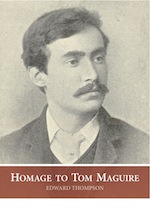
The new movement found political expression elsewhere. As E P Thompson wrote in his essay ‘Homage to Tom Maguire’ this was to be found in those ‘shadowy parts known as the Provinces’. Maguire was a Leeds tailor who helped organise the ILP.  For Thompson it’s foundation in Bradford was a positive development moving away from London-centric control of the labour movement.

When moves towards founding a Labour Party started the matter was of considerable importance and the political career of Keir Hardie underlines how it was addressed.

In 1888 Hardie became the first Secretary of a new Scottish Labour Party having had a background in trade union organisation. By 1892 Hardie had stood for and won a Parliamentary seat in West Ham as a Labour and Liberal candidate. The ILP being formed in 1893 Hardie became a member. In the 1900 Election he stood in Merthyr in South Wales and again won a Parliamentary seat.

Hardie laid down the template at the very beginning of the modern labour movement that it was not where someone came from that mattered but that their socialist politics reflected and represented working-class interests.

Further to the left John Maclean had the same approach. His politics were a complex mix of Scottish republicanism and socialism and he was appointed Soviet Consul to Scotland by Lenin in 1918.

Some years earlier Maclean had spoken to thousands of miners in the Rhondda, South Wales, during the Cambrian miners strike in 1910. The miners were syndicalists but Maclean urged on them socialist organisation.

Traditions and ideas vary but there is still a basic working-class unity. Artificial divides like north and south aren’t progress.

This post originally appeared in the Morning Star
Articles

Booing: the sound of the crowd. It can change

In Uncategorized on June 6, 2021 by kmflett

Booing: the sound of the crowd. It can change..

Twice in the last week some people attending England friendly matches at the Riverside Stadium on Teesside have booed England players taking the knee against racism. To their credit both the England players and manager Gareth Southgate have made it clear that when Euro 2020 starts on Friday they will continue.

The booing is of course from a noisy racist minority but loud enough to make their reactionary point.

Booing is a crowd tradition and historically crowds are volatile in their allegiances. On Sunday night when Marcus Rashford scored for England there was no discernible booing and a lot of cheering

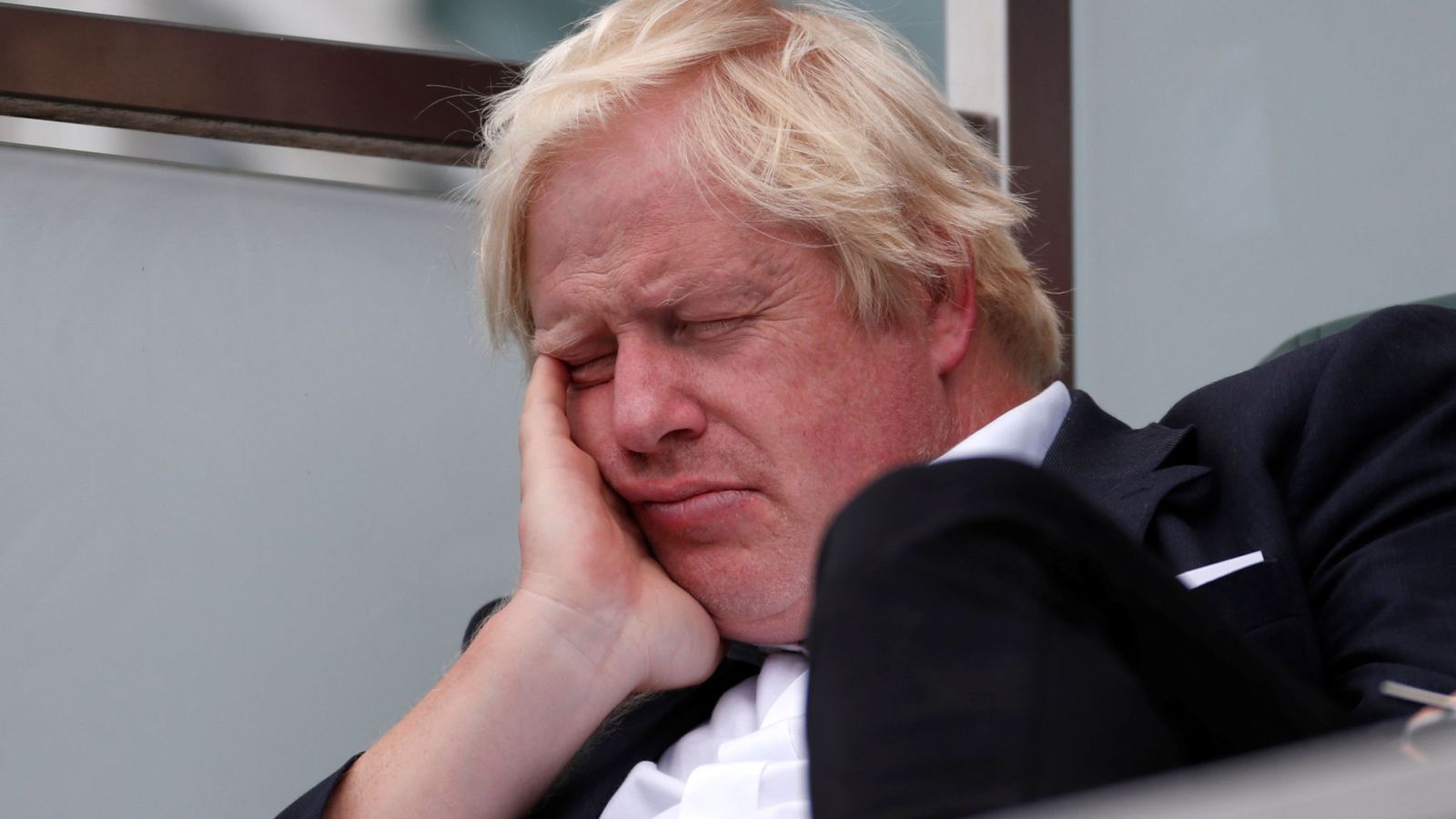
Prime Minister Boris Johnson He was booed on the Saturday of the final 2018 cricket Test between England and India after TV cameras flashed up on the big screens available to spectators a picture of him playing with his mobile phone.

In the age of texts, twitter and e-mails shouldn’t booing be as old fashioned and redundant as the heckle at a political meeting? It would seem not from recent days

Infact booing has a long and complicated part in the history of protest.

Historically, certainly dating back to the time the crowd becomes an actor on the stage of history in the mid eighteenth century, booing has been a way of showing collective protest at the rich and powerful.

But it hasn’t been just booing.

What the American historical sociologist Charles Tilly called the ‘repertoire’ of the crowd went far beyond booing.  It extended to hissing, groaning, hooting and pelting with missiles, often rotten vegetables or fruit but sometimes stones as well.

The London crowd in particular was well known from the start of the modern era for robust reactions to those it didn’t like. When John Wilkes, who went on to become Mayor of London, announced his intention to stand for Parliament at Middlesex in the late 1760s one of his opponents on appearing at a Brentford hustings found himself ‘jeered and hissed’

At the State opening of Parliament on 29th October 1795, EP Thompson notes in the Making of the English Working Class, the King was ‘hissed, hooted and his carriage pelted.. the King’s carriage window was fractured probably by a pebble’

Parson Woodforde recorded that George 111 was ‘hissed, hooted and groaned at by vast crowds’.

After the formation of the Metropolitan Police the authorities began to attempt to control unregulated street noises and two Acts of 1839 and 1841 aimed to ban all ‘uncommon noises’ from horn blowing to street cries.

The Acts were robustly enforced and their main provisions remain in force little amended today as anyone who has ever tried to organise or do anything on the street without telling the police will testify.

As E P Thompson himself noted there is no guarantee that the crowd will be progressive in intent. The Gordon Riots started with a crowd or mob attacking religious minorities but after a successful attempt to free prisoners at Newgate Prison, ended with an attempt to storm the Bank of England.

The historical point is that crowds can change their minds. Perhaps cheering Marcus Rashford rather than booing taking the knee is what needs to be socialised and encouraged

In August 1842 the 3rd Battalion Grenadier Guards were mobilised from their barracks at Charing Cross to march to Euston Station and then by train to the north-west to be used against strikers involved in the 1842 General Strike, sometimes called the Plug Plot.

Large crowds of protesters gathered as the troops marched through central London and what the historian of London Chartism David Goodway describes as ‘murmurs of groans and hisses’ began. These grew so loud that the troops fixed bayonets in an attempt to silence the crowd. They failed.

In more recent times such crowd reactions have sometimes been stage managed- as at a pantomime and sometimes at sporting events, but the point about their use at a live event or on the street is that they are essentially spontaneous and unpredictable indicators of popular feeling.

It is not something that can be created from above or controlled it just happens Hated politicians like Osborne at the 2012 Olympics and Johnson get booed.

The good news for Johnson is that so far it has only been boos. The historical accompaniments of rotten fruit and eggs and dead cats have yet to appear

Articles

The Ambridge Socialist: Ambridge Takes Pride

In Uncategorized on June 6, 2021 by kmflett

The Ambridge Socialist

6th June

Ambridge takes Pride

Its Pride Month and an issue that the Archers has covered well in recent times is sexuality. The start of Pride Month on Tuesday saw Adam and Ian having a chat with Ruairi about coming out as gay as a young man and the issues and concerns there might be in a small place like Ambridge.

Ruairi was confident in his sexuality and about being de facto bi-sexual but the whole thing was handled well.

Mia and Sexuality

A linked story was that Mia Grundy found out that her liking for Ruairi was reciprocated but not to the extent of wanting any kind of relationship. Complex emotions were at work along with teenage angst. We’re not sure Will Grundy was quite the best person to advise Mia on matters but she probably worked that out for herself.

The Aldridges: gender and class

The saga of Alice continues. She was discovered by Jenny drunk and still drinking with someone called Calvin, or possibly Kelvin, she’d met in the pub. Alice pointed out that in getting drunk and having extra-marital affairs she was a true Aldridge just like Brian. Indeed but Brian is a man and Alice is not. Gender is important here. What was accepted, just about, from Brian, is unacceptable from Alice. We presume this was the point being made. A correct one in so far as it goes, as long as it’s understood that the acceptability issue is not a value judgement being made by the Ambridge Socialist

In other news

Jazzer’s bike has broken down

The Grundy WhatApp Group

Articles

The Ambridge Socialist.Revealed, the most discussed topic on the Grundy’s WhatsApp group

In Uncategorized on June 6, 2021 by kmflett

Ambridge Socialist

6th June

What is most discussed on the Grundy’s WhatsApp group

Following the revelation on the Archers that Beechwood has a residents WhatsApp group that Lee is currently excluded from (Spiderman updates anyone?) the Ambridge Socialist ran a poll to see what the most likely topic of discussion is on the Grundy’s WhatsApp group:

Cider 45%

Veganism 29%

Class Struggle 26%

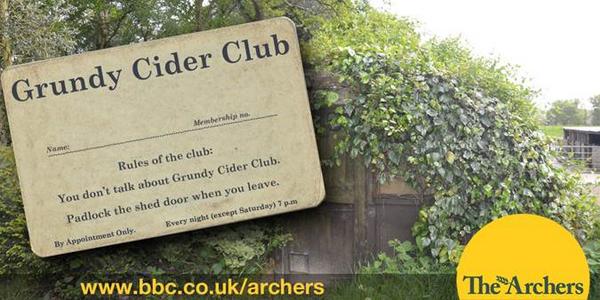
Ambridge Socialist Editor Keith Flett said, it’s clear where the Grundy’s priority lies. Grundy cider first, everything else second.

Articles

Spurs breakdown with Conte likely related to Follicular Unit Extraction issue

In Uncategorized on June 5, 2021 by kmflett

Beard Liberation Front

5th June

Contact BLF Organiser Keith Flett 07803 167266

Spurs breakdown with Conte likely related to Follicular Unit Extraction issue

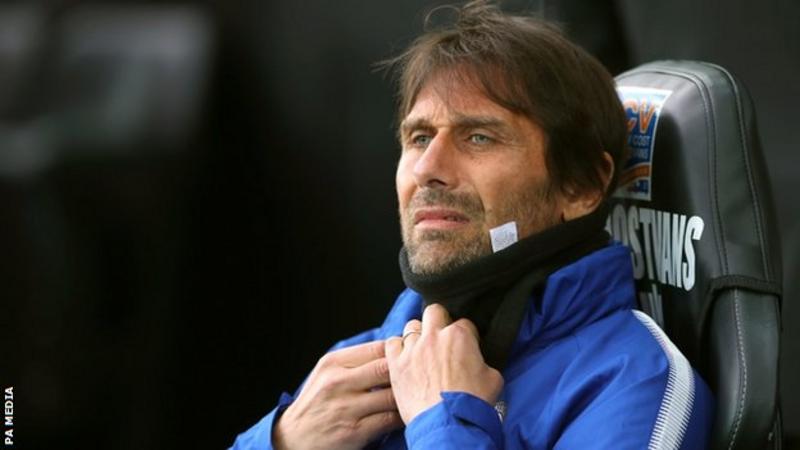
The Beard Liberation Front, the informal network of beard wearers, has said that research suggests that the breakdown of talks between Spurs and Antonio Conte to become the new manager at White Hart Lane, are likely to be related to a disagreement between Spurs boss Daniel Levy and Conte over Follicular Unit Extraction hair replacement.

The BLF says that a suggestion by Beard of the Year 2020 Michael Rosen on Twitter that the breakdown in talks was due to Conti attempting a beard is plausible but probably not correct.

Conte suffered significant hair loss while a player and reportedly has had 3 hair transplants in the last 20 years. His current hair is the result of a Canadian transplant using Follicular Unit Extraction methods.

Levy by contrast is a proud baldie and may have distrusted someone who has had so many hair transplants.

BLF Organiser Keith Flett said, it looks Levy prefers the no follicle approach to life while to Conte hair is important, we respect both positions. In the meantime we are still hoping for either Nuno or Pochettino to take charge at the Lane.

Articles

Kick over *all* the statues. Is Gary Younge right to argue for a better way of understanding history?

In Uncategorized on June 5, 2021 by kmflett

Kick over *all* the statues? Is Gary Younge right to argue for a better way of understanding history?

Gary Younge has written in the Guardian about the continuing and contested effort to take down statues, primarily in the UK of slave traders and racists.

It must be said that a good deal of the talk about this comes from the political right promoting various culture wars. Hence Culture Secretary Oliver Dowden continues to oppose the taking down of statues even where there is local support-such as the Museum of the Home in Hackney and arguing for a policy of retain and explain.

Certainly statues are retained but the explain bit doesn’t usually get too far or if it does the right complain further. However the reality is that there isn’t much of a clamour to take statues down. The left is mostly focused on putting them- figures like Sylvia Pankhurst and William Cuffay feature. Dowden says he is also in favour of putting statues up but hasn’t managed one in his time as Minister.

Taking down and putting up statues often signifies in visible form political change. Memorials could play the same role and indeed come and go themselves. The memorial to Henry Hunt after Peterloo in 1819 which was erected at Ancoats in Manchester has long since disappeared. Memorials to Engels residence in Eastbourne seem to come and go.

Eric Hobsbawm argues in Fractured Times that historically speaking across Europe, statues are put up and taken down as political times change. Gary Younge makes a good case for getting rid of all statues, while keeping memorials. However and particularly as he gave the Nye Bevan lecture at the Hay Festival this year I wonder if he plans to call for the removal of the statue of the founder of the NHS that stands at the end of Queen St in central Cardiff in the near future?

https://www.theguardian.com/artanddesign/2021/jun/01/gary-younge-why-every-single-statue-should-come-down-rhodes-colston

Update 7th June

The Guardian has published a range of views on the matter

https://www.theguardian.com/artanddesign/2021/jun/04/tear-down-every-statue-heres-what-to-do-instead

Gary Younge’s meeting at the Hay Festival on 6th June (available on Hay Player) was able to add more nuance to the argument. Perhaps the main point, which I essentially agree on, is that statues (often bad ones) of historical figures are a bad way of understanding history. Memorials looking at the wider context- perhaps in museums might work better. So, for example (mine not Gary Younge’s) a memorial to Cecil Rhodes could be placed very firmly in the context of imperialism and racism and not in the centre of Oxford.

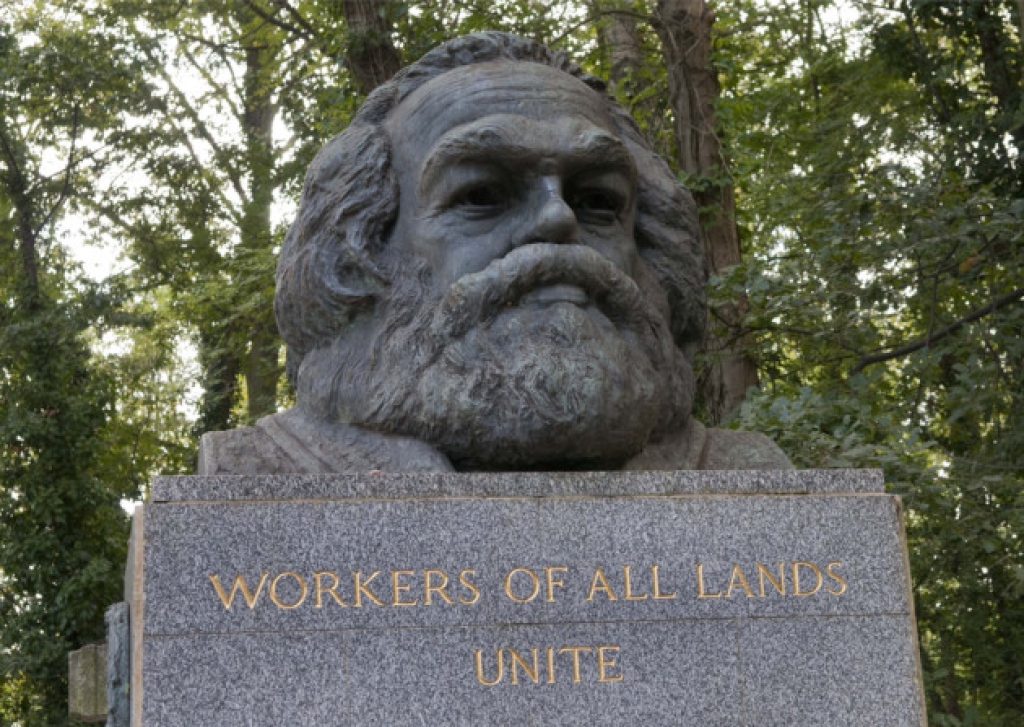
Younge suggested that statues such as that at Marx’s grave in Highgate Cemetery would have to remain. Exceptionalism can take you to awkward places. I’ve often thought that the statue which ossifies Marx is rather Stalinist in its iconography. A memorial might be better and no need at all to disturb the grave

Articles

COVID: it does make a difference who you vote for

In Uncategorized on June 5, 2021 by kmflett

COVID: Is does make a difference who you vote for

There is historical symmetry in Richard J Evans reviewing a new book by Niall Ferguson (New Statesman)on disasters in the week that Dominic Cummings gave evidence to a Commons Committee on COVID-19. Both Cummings and Ferguson were taught history by the late Norman Stone while Evans was rightly and appropriately critical of him.

Ferguson was by no means an uncritical fan of Trump but Evans is right to call him out when he gives the former President a free pass on his own handling of COVID-19. He argues that it does make a difference who is in charge of Government and Biden is clearly doing better at grappling with the pandemic.

That said Evans wrote in the New Statesman that he couldnt vote Labour in December 2019 and had concerns about Jeremy Corbyn. That de facto meant an acceptance of Johnson in Downing St. As his hosting of one of Europe’s leading anti-semites Orban at No.10 underlined not voting Labour was not the answer to concerns on the matter. Who can doubt that if Corbyn and not Johnson had been in charge in 2020 fewer would now be dead and suffering long term ill-health.

Histories of the present don’t come more important than that.

Articles

Karl Marx on life in London 13th June 1871 ‘dull’

In Uncategorized on June 4, 2021 by kmflett

Here in London life is just now dull enough. The cousins from the country are thronging its streets. You recognise them at once by their bewildered airs, their astonishment at everything they see and their feverish anxiety at the convolution of horses, cabs, omnibuses, people, babies, and dogs.

Marx 13th June 1871 (On exiled Communards)

Articles

Boris Johnson has ‘mini-honeymoon’ & as ever ‘Old Corruption’ featured

In Uncategorized on June 4, 2021 by kmflett

Boris Johnson has ‘mini-honeymoon’ & as ever ‘Old Corruption’ featured

Carrie Symonds and Boris Johnson got married last weekend and provoked some religious controversy. It was reported however that the honeymoon would wait.

Not quite, but surely there aren’t many who take what Johnson says at face value?

It was reported that the ‘happy couple’ had in fact taken a two-day mini honeymoon, but it was not known where. It clearly was not with Michael Gove in Portugal and in retrospect just as well.

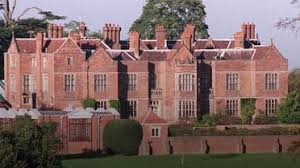
In fact the ever reliable Daily M**l reported the location which was the PM’s country retreat Chequers in Buckinghamshire.

Symonds and Johnson spent Sunday and Monday there.

Chequer is a grace and favour residence for PMs- in other words a sinecure of Office. In the pre-democratic era before the 1832 Reform Bill William Cobbett refered to such practices as ‘Old Corruption’.

Johnson stayed there after he contracted COVID and before that for a period after he was sacked as Foreign Secretary by Theresa May and apparently had nowhere to stay.

Chequers is paid for primarily by the taxpayer through an official grant. Its good to know that Johnson managed to get even his honeymoon publicly funded

Articles

Showing racism the red card in sport requires persistence

In Uncategorized on June 3, 2021 by kmflett

Showing Racism the red card in sport requires persistence

It’s year since the murder of George Floyd the resurgence of the Black Lives Matters movement and in Britain taking the knee in solidarity in football and sometimes cricket.

Boris Johnson never someone to show solidarity with anyone except himself doesn’t approve of course. Even so it has been an important symbol and it has been accompanied by new anti-racist policies and attempts to promote equality.

Organisations like Show Racism the Red Card and Stand Up to Racism have been active in promoting solidarity.

It’s early days yet and progress comes with persistence.

The booing that happened as players took the knee at the start of Wednesday’s England v Austria friendly was drowned out eventually by applause.  On the same day racist and sexist tweets by an England cricketer making his debut in the Lords Test against New Zealand came to light.

The tweets were from a few years back and Robinson immediately apologised and committed to anti-racism. Even so he was 18-19 when the tweets were made, old enough to vote and old enough to know what he was doing. One hopes his match fee is being donated to Show Racism the Red Card.

In the mean-time England won the football match by a single goal from the black Arsenal player Saka. It was his first and the best possible answer on the night to the racists.

But its not time to declare job done. It’s time to push on with making anti-racism matter in sport