Articles

Jeremy Clarkson denied place on Beard of Spring 2021 shortlist after Times comments

In Uncategorized on March 19, 2021 by kmflett

Beard Liberation Front

Media Release 19th March

Contact: Keith Flett 07803 167266

Jeremy Clarkson denied place on Beard of Spring 2021 shortlist after Sunday Times comments

The Beard Liberation Front, the informal network of beard wearers, has said that despite the fact that Jeremy Clarkson has grown a lockdown #3 beard, he will not have a place on the Beard of Spring 2021 shortlist.

Clarkson has beard history and it is not always positive.

He grew a beard in 2014 but by 2015 he was writing in a tabloid paper in 2015 that people with beards should be arrested. It appears however that he did not turn himself into police.

The Beard Liberation Front Beard Award review team met on 14th March to discuss comments that Clarkson had made in his Sunday Times column on 7th March. They included his view that he had dribbled in his beard and food had become lodged in it. The team noted that whether or not these comments were accurate they are amongst the well-known pogonophobic tropes in existence. Accordingly Jeremy Clarkson will not feature on the Beard of Spring shortlist whether he keeps his beard or not.

The shortlist for Beard of Spring 2021 will be unveiled on 20th March and the winner announced after a public on-line vote on Easter weekend.

It is the second seasonal vote of 2021 that goes towards the Beard of the Year vote in December 2021

Those on the shortlist must have promoted a positive image of the hirsute in the public eye during the quarter. They don’t need to have a permanent full-time beard.

BLF Organiser Keith Flett said, it appears that Mr Clarkson’s main aim in growing a beard is to use the occasion to make comments which denigrate beard wearers. He will not appear on the Beard of Spring 2021 shortlist.
Articles

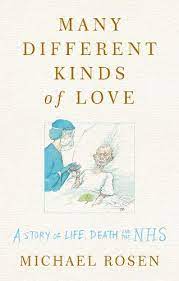
Many Different Kinds of Love. A history of the present by Michael Rosen

In Uncategorized on March 18, 2021 by kmflett

Many Different Kinds of Love. A history of the present by Michael Rosen

Michael Rosen does not describe himself as an historian but that doesn’t stop him from writing interesting and important histories mainly of the present or near present.

His memoir of the 1950s and some of the 1960s, So They Call You Pisher, is relatively rare account of someone growing up on the left in that period. It’s not only that of course, but its an important addition to a, so far, relatively slim number of volumes covering the period from that perspective.

His more recent The Missing is the account of his search for his relatives- a search which took many years and involved painstaking research- and what happened to them. Some, too many, ended up murdered by the Nazis.

His latest book which covers the present day is Many Different Kinds of Love (Penguin).

It spans the period from March 2020 when he fell ill with COVID-19, the time- 47 days- he spent unconscious in the ICU at the Whittington Hospital in North London, and his subsequent rehab. It continues to this day.

The book consists of prose poetry, extracts from a daily diary nurses wrote while he was in the ICU and a range of messages and tweets.

When we think of COVID in Britain over the last year, it tends to be about how many(far too many) have died, how many have been infected, how many have been and are in hospital. Its all about statistics and graphs and models.

But its not just a Gradgrindian exercise in counting how dreadful its been. There are people involved here and Michael Rosen is one of them.

Particularly in the era of texts, tweets, e-mails, WhatsApp messages and so on (yes I use all of those) the chances of the historical record capturing events, compared to periods when things were written down and filed, is significantly reduced.

Of course Rosen’s book is not yet history, but it will in due course be an important part of the historical record of COVID.

Perhaps this all sounds a bit dull, as if I’d just emerged from the archives to write a quick post. The book is not dull but compelling perhaps most of all in focusing on what  Long COVID is.

Many will already know through personal experience about what the impact of COVID is but Michael Rosen has written and put together a very human account which helps us to make sense of the last year.

It will also be part of the public record that allows future generations to do that too.

Keith Flett convenes the socialist history seminar at the Institute of Historical Research, University of London

Articles

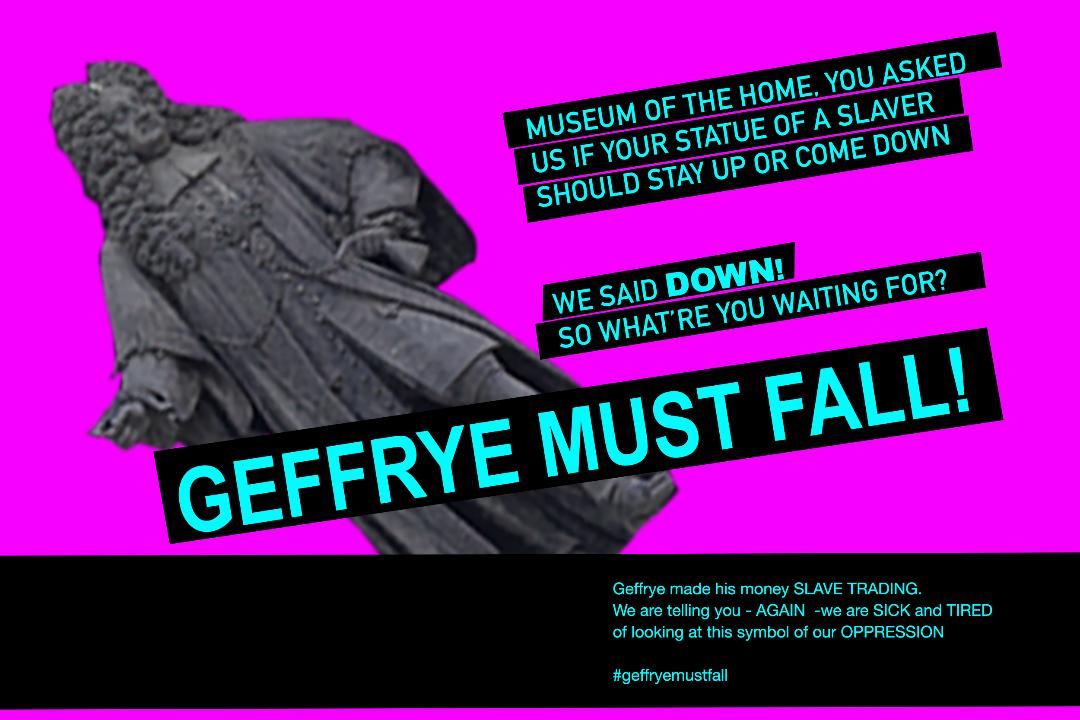
Oliver Dowden asks which statues should come down: Slave Trader Robert Geffrye

In Uncategorized on March 18, 2021 by kmflett

Oliver Dowden asks which statues should come down: Slave Trader Robert Geffrye

Labour MP for Cardiff Central, Jo Stevens, now thankfully back in Parliamentary action after suffering from COVID-19, has raised with Culture Secretary Oliver Dowden, the current and important issue of why the Government is proposing a potential 10 year sentence for damaging statues, significantly longer than those which are often given for sexual offences such as rape.

Dowden’s response avoided that point-mentioning the sentences for the most serious offences (not that they aren’t all serious clearly) but then moved on to one of his favourite subjects. Statues.

Dowden is an enthusiast for putting up more statues and he has said so several times recently. Nothing has actually happened but he has blocked a community supported plan to remove a statue of the slave trader Robert Geffrye from the front of the Museum of the Home in Hackney and situate it elsewhere on site.

Well done to Jo Stevens both for raising the matter and underlining the unsatisfactory, at best, position the Government is taking

Jo Stevens

I thank the Secretary of State for his words. I know that he has a very well-publicised interest in the nation’s heritage, particularly in statues, telling museums and gallery experts how to do their jobs through the policy of “retain and explain”, so perhaps he can explain today what input his Department had into the Government’s legislation this week that provides for longer sentences for hitting statues than those that have been given for raping women.

Oliver Dowden

I really wish that Members in this House would take a more temperate approach towards this. The hon. Lady knows full well that the most serious violent and sexual offences, including grievous bodily harm with intent to rape, already carry a maximum sentence of life imprisonment. The purpose of what we are introducing in respect of statues is to help protect statues that have tremendous emotional value—for example, the Cenotaph and others—but that may have quite low financial value.

If it is now the Labour party’s position to oppose “retain and explain”—that may be the case; I have heard from the Leader of the Opposition that he thinks that some statues may need to come down—perhaps she could explain which statues she thinks should be removed from this country’s glorious heritage.

Hansard 18th March 2021

Articles

E P Thompson on the Paris Commune (began 18th March 1871)

In Uncategorized on March 18, 2021 by kmflett

E P Thompson on the 1871 Paris Commune

Its 155 years since the Paris Commune which ran from 18 March 1871 until 28 May 1871 saw a workers Government in Paris, the first anywhere in the world. It was bloodily suppressed and remains controversial even today.

There is a fascinating reference to it in E P Thompson’s 1963 Making of the English Working Class, still the classic history of the early working class in England from the 1790s to the 1830s.

It seems odd that Thompson would reference the Commune, 40 years or so outside of the time frame of the book.

Thompson wrote:

In the autumn of 1831 and in the ‘days of May’ (1832) Britain was within an ace of revolution which, once commenced, might well (if we consider the simultaneous advance in cooperative and trade union theory) have prefigured in is rapid radicalisation, the revolutions of 1848 and the Paris Commune.

Thompson is referring to the upheaval in the period immediately before the 1832 Great Reform Act, but the wider point is around how far working class consciousness and ideas had developed in England at this point. His view focuses on it being potentially as capable of a workers Government as the Commune was.

It is certainly an interesting and little known comparison

Articles

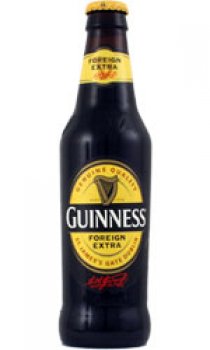
Guinness Foreign Extra Stout: an imperial beer twice over

In Uncategorized on March 17, 2021 by kmflett

Guinness Foreign Extra Stout: an imperial beer twice over

There are of course plenty of excellent Irish craft beers around so it was not a liking for big beer (Guinness is owned by Diageo) that made me decide to drink a Foreign Extra Stout (7.5%) to mark St Patrick’s Day. It was the fascinating if perhaps disturbing (albeit well hidden) history.

It was first brewed for export to the West Indies in 1802 and later to a range of African countries. In some cases it is now brewed there with extract from Dublin so the beer originally called West Indies Porter is sometimes known as Nigerian Porter.

But why West Indies? What were the Irish doing in the Carribbean in the early nineteenth century?

The answer inevitably lies with British imperial endeavour.

Cromwell who was not keen on most of the Irish despatched some to the West Indies in the 1650s, where they became indentured servants working on plantations:

https://en.wikipedia.org/wiki/Irish_immigration_to_Montserrat

150 years on some had become wealthy and no doubt slave owners (slavery was not officially abolished until 1833 by the UK Parliament). No doubt the stout was primarily for their consumption.

The spread of the Foreign Extra Stout around the world was also of course in large part to what was once known as the British Empire.

The strength now at 7.5% appears to have been once as high as 9% but has been at is current ABV for over a century.

Reportedly 500,000 bottles were requisitioned by the Government for hospitals in World War Two.

It’s now available as befits a product of Big Beer in many large supermarkets.

It remains though an excellent beer (albeit as Roger Protz and others remind us, it would be better bottle conditioned, as it was until 1948) and imperial in more than one dimension.

Articles

Extension of goat rule in Llandudno welcomed by beard campaigners

In Uncategorized on March 17, 2021 by kmflett

Beard Liberation Front

17th March

Extension of goat rule in Llandudno welcomed by beard campaigners

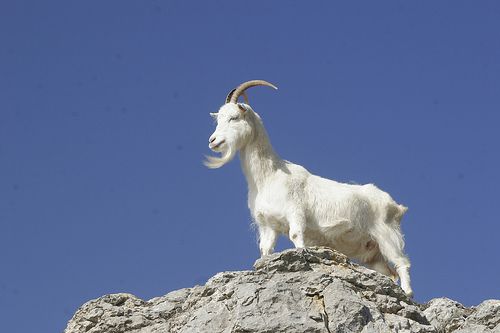
The Beard Liberation Front, the informal network of beard wearers, has welcomed the news that in the current lockdown period goat rule in the seaside town of Llandudno, North Wales has been extended.

The goats traditionally reside on the Great Orme in the town, but with it being much quieter than usual in lockdown, they first started to roam further a year ago in Spring 2020.

The BBC now reports that they have extended their domain to an area two miles from the Great Orme.

The campaigners say that human beings aside, goats are one of the best adverts for hirsuteness and beard wearing to be found and have welcomed the news that they have consolidated their presence in Llandudno.

BLF Organiser Keith Flett said, goats have real beard power and to be honest if its rule by the present clean-shaven Government or rule by goats many might choose the latter,

BBC Report

https://www.bbc.co.uk/news/uk-wales-56423211

Articles

Beard of Ireland 2021: Retail Chief shaves Health Minister for the Award

In Uncategorized on March 17, 2021 by kmflett

Beard Liberation Front

Press release 17th March

Contact Keith Flett 07803 167266

BEARD OF IRELAND 2021: RETAIL CHIEF SHAVES HEALTH MINISTER FOR THE AWARD

The Beard Liberation Front, the informal network of beard wearers, has said that competition for the Irish Beard of the Year 2021 has seen a record vote.

Northern Ireland Retail supremo Aodhan Connolly, last year’s runner up, has won with 79% of the vote. Northern Ireland Health Minister Robin Swann came a creditable second.

The 2017 winner was politician Colum Eastwood who bearded broadcaster William Crawley for the annual Award.

In 2018 the DUP’s Lee Reynolds shaved writer Dominic O’Reilly for the honour with Colum Eastwood in a steady third place.

In 2019 Lee Reynolds retained the title

The 2020 winner was Maynooth academic Peter Coles

The BLF says that while traditionally a land of predominantly clean-shaven cultures, Ireland has in recent times become something of a centre for stylish and trendy beards and the interest in the 2021 poll has underlined the point

Contenders for the title in 2021 included a diverse range of the hirsute- a golfer, political activists, journalists, an academic as well as the two Health Ministers in Belfast and Dublin who are both hirsute.

The campaigners say the poll is specifically about the impact the beard of an individual has made in Irish public life and no other factor.

BLF Organiser Keith Flett said, Adohan Connolly was just shaved for Beard of Ireland 2020 but 2021 is his year. He is a great ambassador for the hirsute.

There were two preliminary Beard Off votes between 5-8th March and 9-12th March. The top two from each round went through to a Best Beard of Ireland vote between 13-16th March

Beard of Ireland 2021

William Crawley, broadcaster

Matthew O’Toole, politician

Sam McBride, journalist

Peter Coles, academic, Maynooth University

Shane Lowry, golfer

Aodhán Connolly, Businessman

Robin Swann, Health Minister, Belfast

Stephen Donnelly, Health Minister, Dublin

Articles

From the Six Acts 1819, to the Police,Crime,Sentencing & Courts Bill 2021. Tory attacks on the right to protest

In Uncategorized on March 16, 2021 by kmflett

From the Six Acts 1819 to the Police, Crime, Sentencing and Courts Bill 2021. Tory attacks on the right to protest

The Tories Police, Crime, Sentencing and Courts Bill has passed its Second Reading in the Commons. At least Labour voted against.

The Bill is a ragbag of measures which proposes amongst other things a possible 10 years in prison for damaging a statue, rather more than the penalty for rape. It also gives the police even greater power to restrict protests.

The Tories have a long history of this sort of thing.

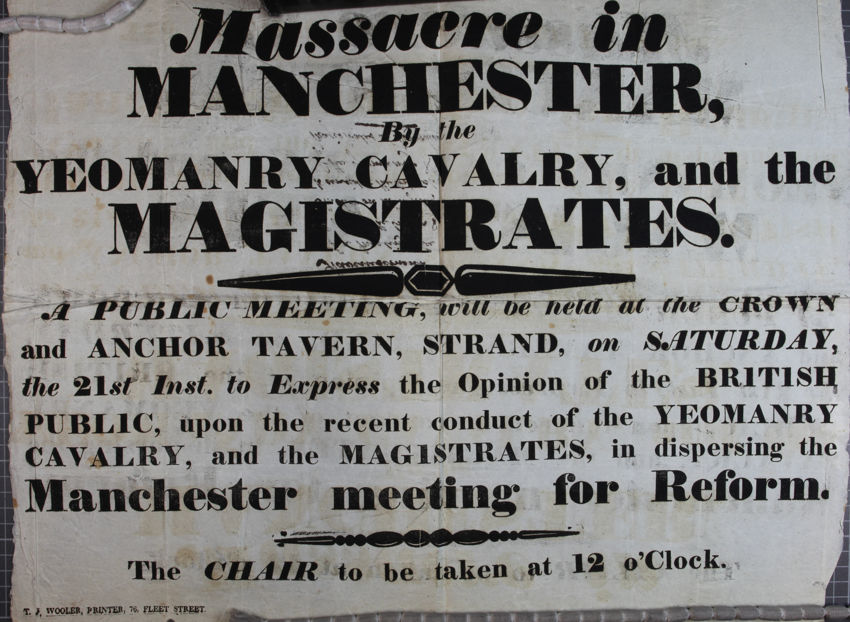
One of the Six Acts, which were actually formally passed in December 1819 after Peterloo, was the Seditious Meetings Act.

Under the Act all meetings of more than 50 people- in reality no more than 49 persons- were allowed. This included any meeting: “for the purpose…of deliberating upon any public grievance, or upon any matter or thing relating to any trade, manufacture, business, or profession, or upon any matter in church or state,”.

The only exception were meetings called by an ‘authorised official’. In addition a meeting of people in one specific area could be called provided permission was given by a Justice of the Peace. He of course required six days-notice. At such meetings no banners, flags or emblems of any sort were allowed.

While the Act was repealed in 1824 a related limit of no more than 49 delegates at any representative gathering remained in place through the Chartist period up to1848.

Indeed in order to try and avoid official interference in protest meetings, these were often held out of town in remote rural spots well away from the reach of the authorities.

It took  many years of political organising by the trade unions, the Chartists and others to get rid of these restrictions. It is a perpetual fight but the perspective is important. The Tories talk of freedom, in practice its actual defenders come from a rather different place.

Articles

CAMRA at 50. Hop Back Summer Lightning revisited

In Uncategorized on March 16, 2021 by kmflett

CAMRA at 50. Hop Back Summer Lightning revisited

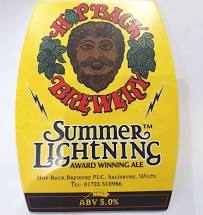
One classic beer perhaps well associated with CAMRA is Hop Back Summer Lightning.

It won the Best Strong Bitter category at the Great British Beer Festival in August 1993

I used to drink it(mainly on cask) on a regular basis-often in Wetherspoons pubs where it was frequently available.

Wetherspoons??  some may say. Indeed, this was in the 1990s. There were no craft beer pubs and no craft beer. If you wanted any kind of interesting beer range (cask only) then Spoons was often a good bet.

Summer Lightning was a 5% golden beer, as they were then called. 5% was then at the top of range of beer strength that was regularly available and what marked the beer out was that, for the time, it was hoppy. That is to say that in the balance between malt and hops that makes a decent, drinkable beer, it was tilted a little way towards the hop. That marked it out from many beers of the era where the balance was a good deal more towards the malt. There is nothing wrong with that but Summer Lightning offered a different taste in beer that just hadn’t been around.

I was motivated to revisit it by a social media discussion about which beers had started those who now drink ‘craft’ on a journey in that direction.

I found a couple of bottles in Waitrose (it’s also in Morrisons) and duly tried one. The taste was much as I remembered, although the bottled version is no longer bottle conditioned. Did it still taste hoppy? Up to a point but not as hoppy as many beers now. Rather the malt side of things was a bit more pronounced than might be usual in 2021.

Cloudwater tweeted that Summer Lightning was one of the beers that started the developments in brewing that led to where we are now. I agree, but its still a decent drinkable beer 30 odd years on. In short still a classic.

I wonder if Hop Back have ever considered doing a Double Summer Lightning….

Articles

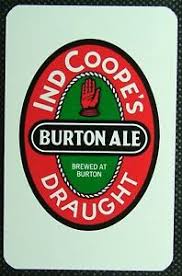
Draught Burton Ale. Proof that CAMRA did change things for the better

In Uncategorized on March 16, 2021 by kmflett

Draught Burton Ale. Proof that CAMRA did change things for the better

Roger Protz made the discovery in 2015 that Carlsberg Tetley had quietly buried a former Champion Beer of Britain, Draught Burton Ale.

Most recently, according to Protz, it had been brewed at JW Lees but Carlsberg decided that it was uneconomic to continue production and stopped in September.

Protz has provided an admirable summary of the history of the beer:

https://protzonbeer.co.uk/comments/2015/01/06/dba-gone-for-a-burton

It was economic vandalism of Carlsberg to first keep very quiet that they were still brewing the beer and then state that since nobody wanted it they’d stop making it.

That said I hadn’t tasted a pint for many years and it might not be to my taste now, even assuming it was still being brewed to broadly the 1976 recipe.

In 1976 though to (then) youthful fans of real ale like myself certainly in North London it was proof that the early campaigning work of CAMRA had an impact.

At that time there was little real ale available and much that was, was hardly inspiring then, let alone now. Charringtons ipa and sometimes Bass (by far the best cask available), Courage Best (but very rarely Directors). Watneys and Trumans (Grand Met) were all keg. There were a very small number of outlets for Youngs and Fullers.

DBA at an official OG of 1048 was both markedly stronger and much tastier than anything else on offer though. No wonder, as Protz records, it sold so well.

Often in Ind Coope pubs it was the only handpump on the bar and it was far from always available.

The alternative of craft keg was not then available I’m afraid. Rather it was bottled Guinness which in those days was still bottle conditioned.

I distinctly recall drinking it in afternoon and evening sessions at the Royal Oak in Pages Lane Muswell Hill a pub that I don’t think would otherwise have attracted me at all.

The popularity of DBA was not lost on other brewers. Indeed Watneys introduced a ‘fined ale’ though so reluctant were they to admit that they had been completely wrong about hand pumps that it was sold through an electric engine.

Anyway DBA was a trail blazer and really should not have been allowed to die at the whim of Carlsberg.

Its also a reminder on its 50th birthday that CAMRA changed the world of beer and pubs for the better. Without we might have ended up stuck with old style keg beer.